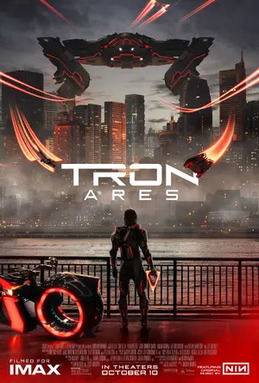
Tron Ares is this year’s Spawn for me.
For those unaware (and I really should write about Spawn one of these days), I saw Spawn with a friend when it first came out. I loved it, walking out the theatre and raving about it. Over pizza, my friend explained in great detail the many ways it actually sucked. Even Michael Jai White hated it.
With my expectations being lower than they ever were for anything, Tron Ares surprised me. I leaned forward in my seat. I chuckled, and bobbed my head to the music and stayed until all of the credits were done. It could have done many things much better than it chose to do, but given the distance in time between Legacy and the choices for where the story could go, it’s not the worst film in the world. It’s not like Tron as an entire franchise was ever that deep with its storytelling (with the clear exception being Tron Uprising, of course). It brings some new elements to the overall tale that I didn’t even consider. Imagine what the writers could have done if they started working on this right after Legacy. With 15 years gone, it’s hard to get actors together for a project.
Both Trent Reznor and Atticus Ross are Executive Producers on Tron Ares. They threw money at this. They even have cameos in the film. At best, Tron Ares is the coolest looking Nine Inch Nails feature length music video to have ever existed since perhaps The Perfect Drug. The music compliments the film exactly as Daft Punk’s did for Legacy and Wendy Carlos’ did for the original. The sights are dazzling and the sounds are sharp. The music isn’t so much the subtle Reznor/Ross we’ve had with Bones and All, or the weirdness of Teenage Mutant Ninja Turtles: Mutant Mayhem. This is loud and kind of booming. We finally get light cycles in the real world (which isn’t giving anything away that wasn’t already in the trailers). In that sense, it’s a win on a few levels.
If it’s a deep story with characters you’ll root for and possibly worry about, however, Tron Ares is not that film. You’re probably better off with either One Battle After Another or Weapons, both of which are equally good. I will say that what Tron Ares lacks in story, it does make up for with some generous fan service moments. There are tons of references to both Tron and Legacy if you pay attention, even if the story itself veers off tangent. I felt it handled this so much better than Legacy ever did. You can’t say the other films weren’t considered in making this. It’s not that far from another Disney project, F/X’ and Hulu’s Alien: Earth in some ways.
In the years after Tron Legacy, there have been many changes. Encom encounters some competition in the form of the Dillinger Corporation, lead by genius Julian Dillinger (Evan Peters, X-Men: Days of Future Past) and his mother, Elizabeth (Gillian Anderson, The X-Files). Kevin Flynn’s (Jeff Bridges, The Big Lebowski) dream of crossing the digital frontier has become a race to see who can make their digital assets a reality. Dillinger’s newest, greatest program is Ares (Jared Leto, Morbius), who is fully versed in various fighting techniques and security protocols. What does this mean for life in The Grid, the universe inside the machine? Can Ares be trusted, or controlled, for that matter?
Acting-wise, everyone has a job to do. To his credit, Leto is not bad in this. It’s not robotic, but it’s not quite the second coming of Jordan Catalano (if anyone even recalls who that is). It’s not like the script, written by Jesse Wigutow (Daredevil: Born Again) and David DiGilio (The Terminal List & The Terminal List: Dark Wolf) calls for his character to have a great depth of emotion. Greta Lee (Past Lives) and Evan Peters do most of the work, along with Jodie Turner-Smith, who seemed to have the most fun. Anderson also does a good job, but again, there’s not a whole lot to work with.
Tron Ares hovers right above the Incident mark for me. It could have been so much better than what it was, and who knows how long the visuals will stay with me. Yet, just like the films before it, it’s rescued by a score that may be remembered more than the film itself in the years to come. I don’t know if I’d go back out to see this, but would happily catch it once it comes to digital.

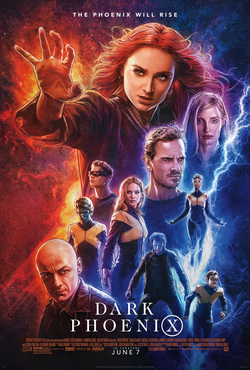
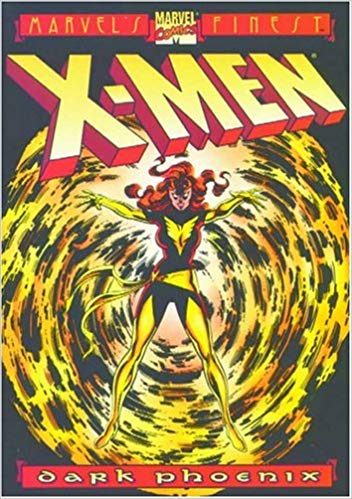
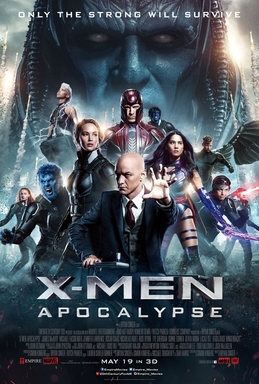 It is easy to forget what a big deal the first X-Men movie was in 2000. At a time when Joel Schumacher was still the industry’s go-to director for super hero films, X-Men announced that films based on comic books did not have to be campy, silly, stupid, or feature Alicia Silverstone. When X-Men was first released, critics and audiences were surprised to see a comic book film that was intelligent, well-acted, and actually about something.
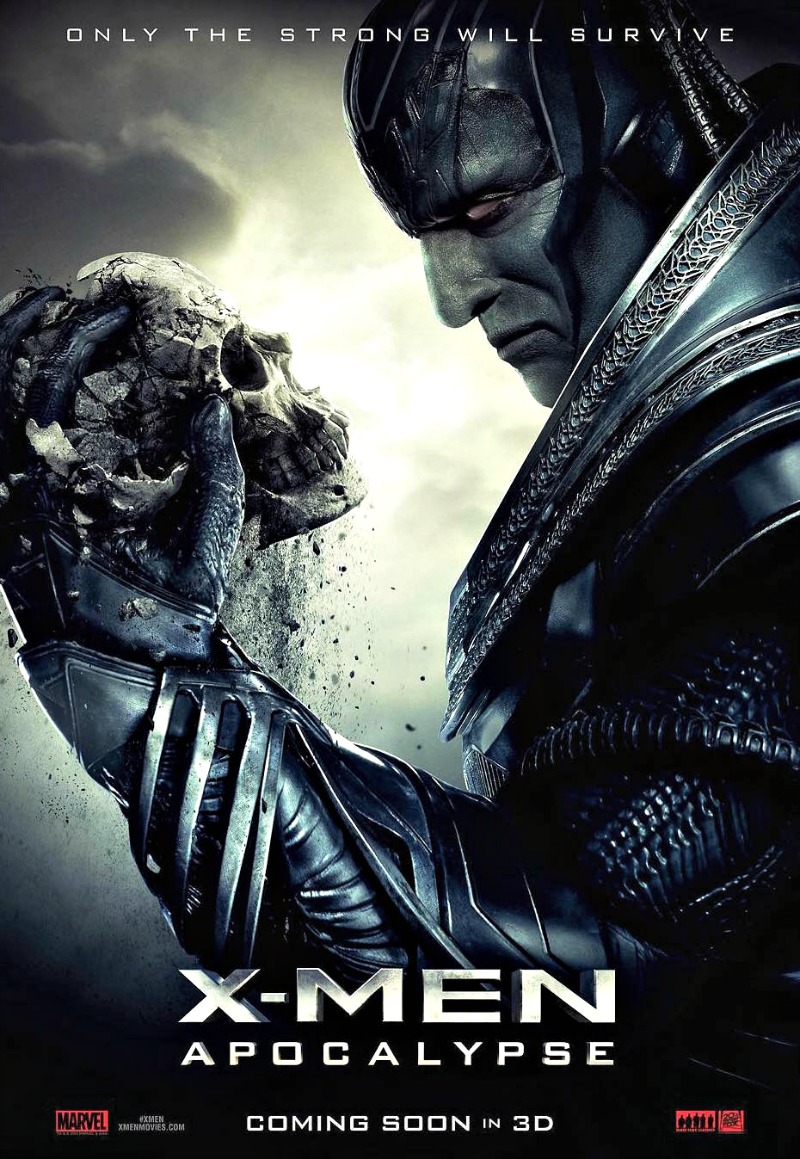
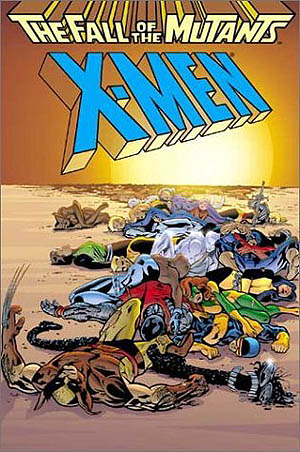 The success of X-Men has also led to a 16 year-old franchise of movies about mutants and their struggle to live in a world that fears them. X-Men: Apocalypse is the 9th installment in that franchise and it is based on the Fall of the Mutants storyline, which ran through several Marvel comics in 1988.
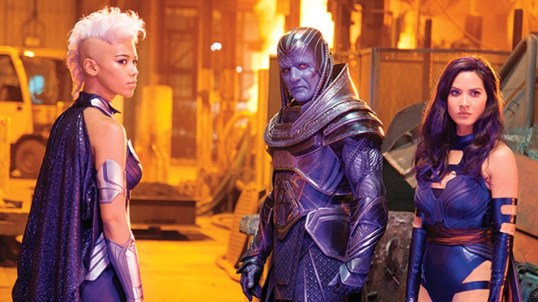
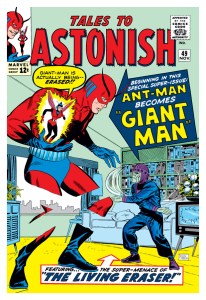 What’s interesting is that, even though Fassbender and McAvoy share a few scenes, this is the first X-Men film to not feature any sort of debate between Xavier and Magneto. Magneto, one of the greatest comic book villains of all time, is actually a little boring here and, without those debates, Apocalypse lacks the subtext that distinguished the best of the previous X-Men films. The emphasis is less on what it means to be an outsider and more on defeating Apocalypse. Unfortunately, Apocalypse is a great character in the comic books but he does not translate well into film. Unlike Magneto, who has several good and justifiable reasons for not trusting humanity, the film version of Apocalypse is portrayed as being pure evil and little else. His plan to destroy the world never makes much sense and he is almost as bland as Dr. Doom in the latest Fantastic Four reboot. Apocalypse could be any villain from any comic book movie that has been released over the past 16 years. He could just as easily be the Living Eraser.





 Through the Shattered Lens