Embracing the Melodrama #37: Dangerous Liaisons (dir by Stephen Frears)


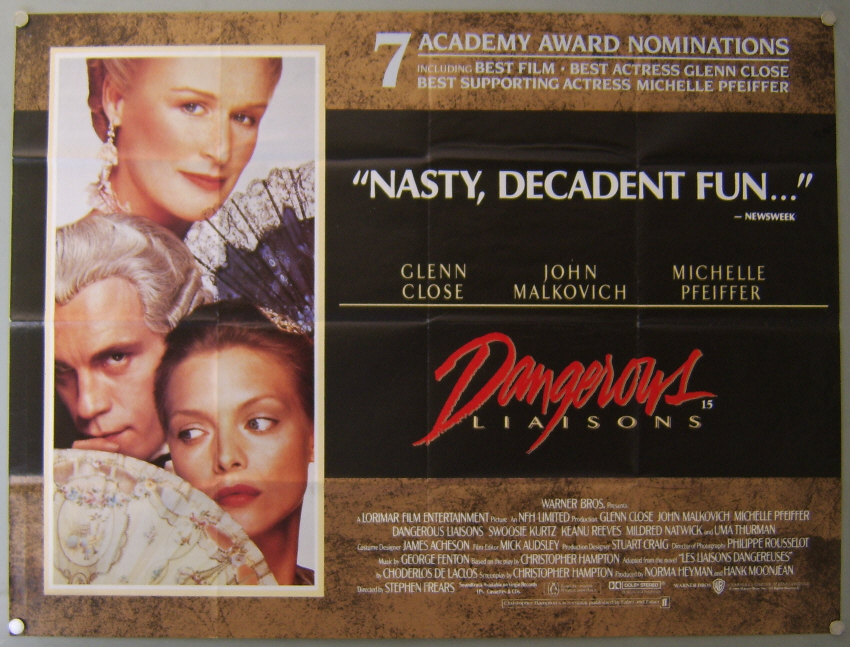
When watching a film like the 1988 best picture nominee Dangerous Liaisons, it helps to know something about history.  The film takes place in 18th century France and, even though it’s never specifically stated in the film, I watched it very much aware that the story was taking place just a few years before the French Revolution.  Even the aristocratic libertines who survive until the end of the film are probably destined to end up losing their lives at the guillotine.  Even though you don’t see anyone losing their head during Dangerous Liaisons (nor do you hear anyone say, “Let them eat cake.”), the film offers up such an atmosphere of decadence and manipulation that it leaves the viewer with little doubt as to why the people occasionally feel the need to rise up and destroy their social betters.

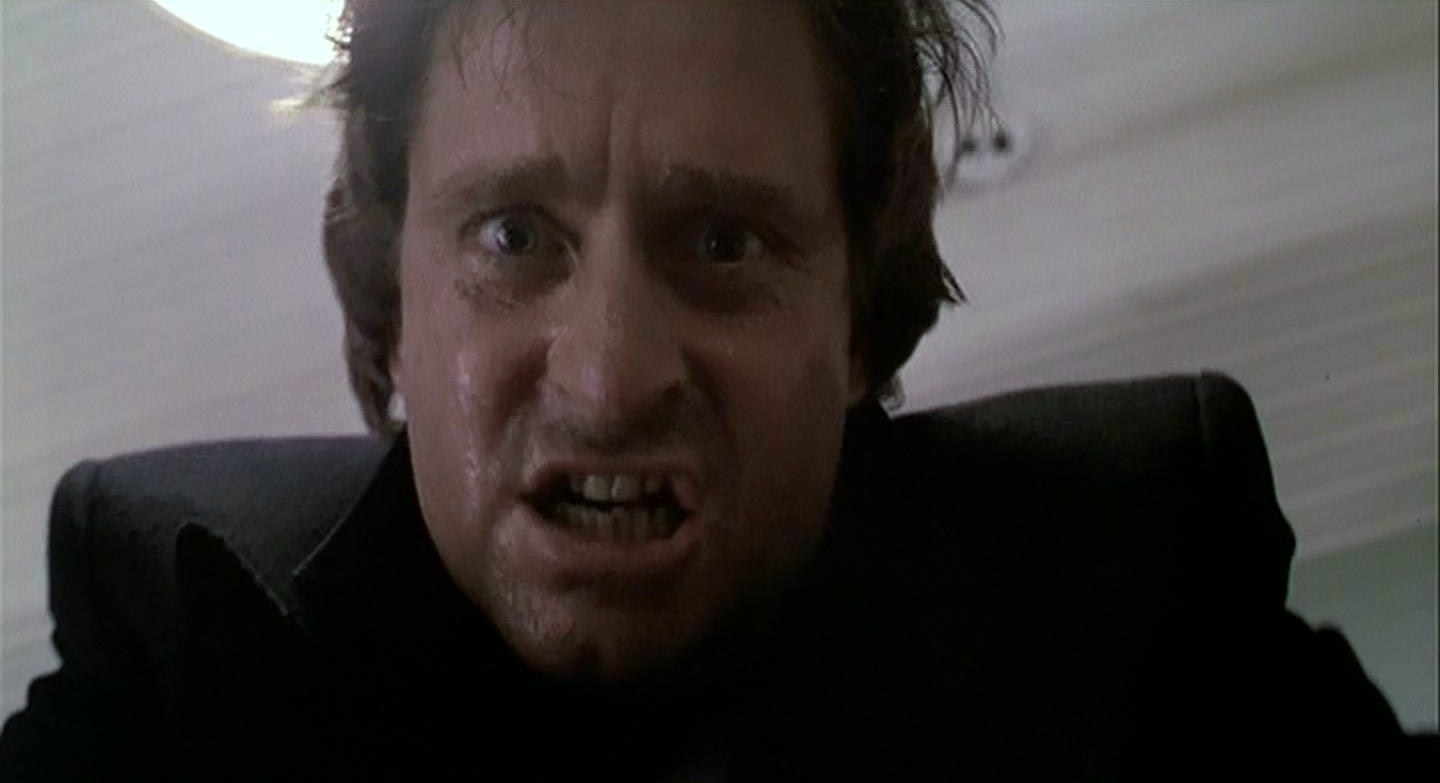
Dangerous Liaisons tells the story of the Vicomte de Valmont (John Malkovich) and the Marquise de Mertuil (Glenn Close), two amoral members of the aristocracy who deal with their boredom by playing games with the emotions of others.  Valmont is a notorious womanizer while Mertuil is obsessed with “dominating” the male sex and “avenging my own.”  At the start of the film, Mertuil has discovered that a former lover is planning on marrying the innocent Cecile (18 year-old Uma Thurman, stealing every scene that she appears in), who has basically spent her entire life in a convent.  Mertuil asks Valmont to seduce and take Cecile’s virginity before the wedding.  At first, Valmont says that Cecile is to easy of a challenge and declines.  Instead, Valmont has decided that he wants to seduce Madame de Tourvel (Michelle Phieffer), a married woman who is renowned for both her strong religious feelings and her virtuous character.  Mertuil agrees that she will sleep with Valmont if he can provide her with written proof that he’s managed to seduce Tourvel.

Tourvel is staying with Valmont’s aunt (Mildred Natwick), which gives Valmont — with the help of his servant, Azolan (Peter Capaldi) — several chances to try to trick Tourvel into believing that he’s a better man than everyone assumes him to be.  (With Azolan’s help, Valmont finds a poor family and donates money to them.  Of course, he makes sure that word of this gets back to Tourvel.)  However, Valmont then discovers that Cecile’s mother (Swoosie Kurtz) has been writing letters to Tourvel, warning her about Valmont’s lack of character.  To get revenge, Valmont agrees to seduce Cecile.

Dangerous Liaisons, which is based on a play that was based on a novel, is sumptuous costume drama.  If you’re like me and you love seeing how the rich and famous lived in past centuries, you’ll find a lot to enjoy in Dangerous Liaisons.  With the elaborate costumes and the ornate sets, the film is a real visual feast.

The film is also a feast for those of us who enjoy good acting as well.  With the exception of a very young Keanu Reeves (who is oddly miscast as the poor music teacher who falls in love with Cecile), the entire film is perfectly cast, right down to the most minor of characters.  (I particularly enjoyed listening to Peter Capaldi, even if his Scottish accent occasionally did seem rather out-of-place in a film about the pre-Revolution France.)  For me, the biggest shock was John Malkovich.  Don’t get me wrong — I’ve always felt that Malkovich was a good character actor but he’s never been someone that I would think of as being sexy.  However, he gives close to a perfect performance as Valmont and, oddly enough, the fact that he’s not really conventionally handsome only serves to make Valmont all the more seductive.  Purring out his cynical dialogue and openly leering at every single woman in Paris, Malkovich turns Valmont into a familiar but all too appealing devil.

Dangerous Liaisons was later remade as Cruel Intentions, which is a film that I’ll be taking a look at very soon.
liaisons

Embracing the Melodrama #36: Fatal Attraction (dir by Adrian Lyne)


fatal-attraction

(This review has spoilers because I felt like it and I’ll do whatever the Hell I want.)

Today, we continue embracing the melodrama by taking a look at the 1987 best picture nominee, Fatal Attraction.

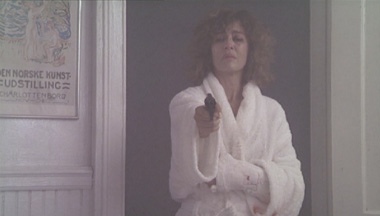
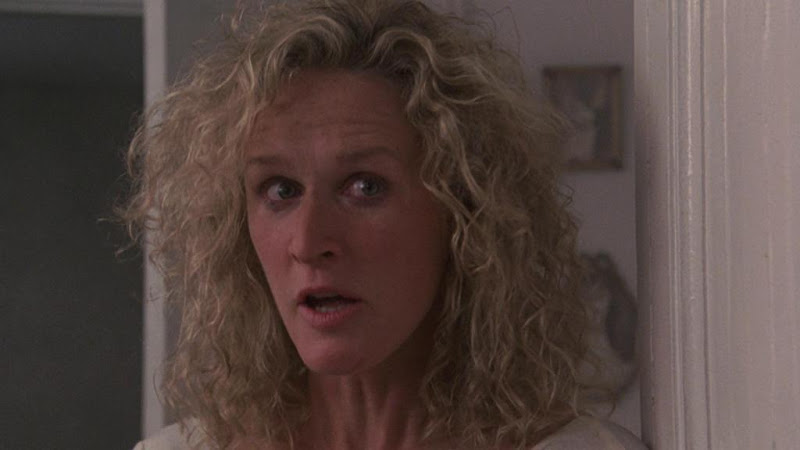
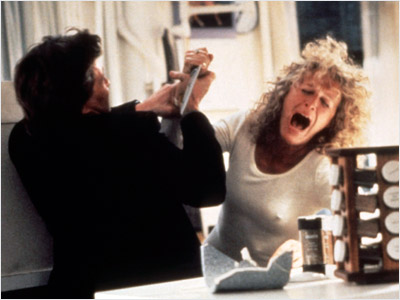
Fatal Attraction opens on a scene of domestic bliss, with lawyer Dan Gallagher (Michael Douglas) and his wife Beth (Anne Archer) in their luxurious Manhattan apartment, getting ready to go out for the night and waiting for the babysitter to arrive.  Dan would appear to have it all: a successful career, a fat best friend, and a beautiful wife.  However, when Beth and their daughter go out of town for the weekend, Dan ends up having an affair with Alex (Glenn Close).  Dan assumes that it was just a weekend thing but Alex is soon stalking Dan.  Trying to escape her, Dan moves his family out to the suburbs but Alex follows them.  Soon, pet rabbits are being killed, Alex is breaking into the house with a knife, and it’s up to Beth to step up and reclaim her man.

I have to admit that I have mixed feelings about Fatal Attraction.  On the one hand, it’s an undeniably well-made film.  It’s well-acted and director Adrian Lyne pushes all of the right emotional buttons and keeps the action moving quickly.  That the film is predictable doesn’t make it any the less effective.  As a lover of horror movies, I appreciated the skill with which Lyne crafted the film’s scare scenes.  Watching the movie, it was easy to see why Fatal Attraction was a huge box office success and why it continues to influence our culture to this very day.

fa05

And yet, at the same time, Fatal Attraction really annoys me.

The film is so well-made and so manipulative that it’s easy to miss the fact that Dan Gallagher is not only never punished for betraying his wife but he’s actually not held responsible for his actions in any way.  Instead, the only person who is truly punished for their transgression is Alex.  The film, after all, makes clear that Alex is the one pursuing Dan.  In fact, it could be argued that when it comes to Dan and Alex, the traditional gender roles have been reversed.  Alex (who, as opposed to the idealized Beth, has a name that is both masculine and feminine) is the aggressive one while Dan is the passive one who gives into temptation and, afterwards, feels guilty.  After admitting his transgression, Dan is allowed to reclaim his manhood and continue on with his perfect life.  However, Alex has no place in conventional society and therefore, she must be destroyed.

And so much the better if she’s destroyed by Beth, a woman who has no problem with accepting a traditionally domestic role.

Far too often, in the past, I know that my girl friends and I always assumed that men were simply incapable of resisting temptation.  Therefore, if your boyfriend cheated on you, it really was not his fault.  He was just being a guy.  Instead, it was the other woman’s fault because she was the one who tempted him.  (And, though we acknowledged this a lot less, it was also his girlfriend’s fault for allowing him to get into a position where he could be tempted in the first place.)  But it was never truly guy’s fault and, as long as you made him suffer for a bit, it was always expected that you would forgive him and take him back.

ff562f_50a74289f9f696cf59a7125eec69b111

That’s the same mentality that runs through Fatal Attraction (not to mention countless daytime talk shows where girlfriends and wives always beat up mistresses while their boyfriend or husband stands over to the side and watches, untouched).  Yes, Dan did cheat on his perfect wife and yes, he feels terrible about it.  But the real threat comes from the woman who pursued him despite knowing that he was married and then, afterwards, had the nerve to demand not to be ignored.  (If anything, the film seems to be suggesting that everything would have been okay if Dan had just fucked someone who works in his office, as opposed to someone who he can’t control through money or the threat of societal shaming.)  When, at the end of the film, Beth shoots Alex, it’s a crowd-pleasing moment but it’s also Beth’s way of reclaiming her man.  Since Dan — being male — can’t be expected to exercise any sort of self-control, it’s the responsibility of Beth to step up and destroy the temptation.

For not respecting the vows of marriage, Alex is a monster who must be destroyed.  Dan, on the other hand, is merely inconvenienced and ultimately, he ends up with a far stronger marriage as a result of having strayed.

In Fatal Attraction, the only thing more dangerous than sex with Alex is examining subtext.

Fatal Attraction-22

Embracing the Melodrama #35: Dance or Die (dir by Richard Munchkin)


Dance or Die

Every month, the Alamo Drafthouse has something that they call the Video Vortex.  This is where, for one night only, they show a movie that are only available on VHS.  For the most part, these movies are usually very obscure, often quite strange, and, not surprisingly, really, really bad.  However, on the plus side, it only costs a dollar to get into Video Vortex and it gives people like me a chance to see films with titles like Dance or Die.

In all probability, of the 50 films that I’m reviewing in this series, Dance or Die is probably the one that nobody else has ever heard of.  That’s understandable because Dance or Die is a pretty bad film and, when it was released way back in 1987, it apparently went straight to video.  If not for the fact that the Alamo Drafthouse is just a few blocks away from me, I would probably never have heard of — much less seen — Dance or Die.

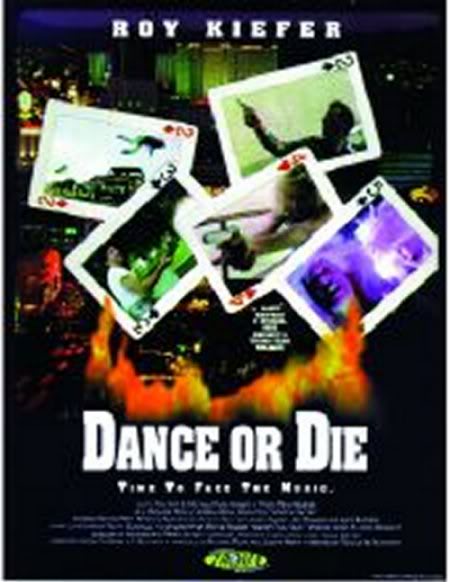
Dance or Die tells the story of Jason Chandler (Roy Kieffer), a choreographer who is also a recovering drug addict.  Jason spends his time either choreographing a show or teaching a dance class.  That’s not me being a vague reviewer.  That’s me pointing out the fact that the film itself seems to be unsure just what exactly it is that Jason spends all of his time doing, beyond the fact that it somehow involves dancing.  At the end of the movie, there’s a hilariously bad dance performance that Jason apparently choreographed.  (I say bad but I have to admit that it’s believably bad and I’ve been involved in worse.)  Are the dancers Jason’s students or are they supposed to be professionals?  Who knows?

We’re also left uncertain as to just when exactly Jason was a drug addict or what he was addicted to or anything else like that.  All we know is that he goes to meetings that have a definite AA feel to them and he has heart-to-heart talks with his drug counselor.  He often says that he’s feeling tempted to return to his old way but what were those ways?

And another thing — if Jason’s a recovering drug addict, is it really a good idea for him to be roommates with a guy who spends all of his spare time selling cocaine out of their apartment?  If I was Jason’s counselor, I’d probably tell him to find a new roommate.  However, in all fairness, the roommate (whose name I never caught — in fact, I’m not sure if it’s ever stated) does tell Jason not to touch any of the cocaine.

And here’s another question for you — why do Jason and his roommate keep an aquarium in their back yard?  It’s just sitting out there with a bunch of confused fish wondering why they’re not being kept in the living room.  When Jason’s roommate holds an outdoor barbecue, a bunch of gangster pop up out of nowhere and gun everyone down and, sad to say, the aquarium is destroyed.

Fortunately, during the massacre, Jason was out doing whatever the Hell it is that he does all day.  (For the most part, it looks like he spends most of his time driving his car.  The film takes place in Las Vegas and you better believe that whenever Jason goes out for a drive, he makes sure to go by a few locations that scream, “Hey, we filmed in Vegas!”)  Jason is naturally upset to discover a bunch of dead people in his house and he’s even more upset when a homicide detective suggests that maybe Jason knows more than he’s telling.  But Jason doesn’t do anything crazy like move out of the house.  Even after he starts to get threatening phone calls, Jason stays in the house.

It turns out that Jason’s roommate hid a file somewhere in the house.  Jason spends most of the movie searching for that file and he even gets desperate enough to bring in a psychic at one point.  However, the file really doesn’t matter.  What does matter is whether or not Jason will be able to resist the temptation to start using drugs again.  Will Jason resist his demons?  Will he find love with one of the two women who are inexplicably attracted to him?  And will the presence of gun-toting gangsters ruin the big dance performance?

Oh, the drama!

Yes, Dance or Die is a pretty inept film but it’s one of those films that, quite unintentionally, has a compellingly surreal feel to it.  It may not work as a thriller or an attempt to explore addiction but it does definitely work as a piece of performance art.  Add to that, there’s dancing!  To be honest, I could have used a lot more dancing but the final performance of Jason’s dance troupe (or students or whatever they’re supposed to be) simply has to be seen to be believed.

Now, I know what you’re wondering.  “Gee, Lisa, how can I see this movie?”

Well, fear not.

The movie is below!

Embracing the Melodrama #34: The Lonely Lady (dir by Peter Sasdy)


The_lonely_lady

“I guess I’m not the only who has had to fuck her way to the top!” — Jerilee Randall (Pia Zadora), accepting an award at The Awards Ceremony in The Lonely Lady (1983)

When I first started doing research on which movies were worthy of being considered for inclusion in this series about embracing the melodrama, I had no idea that it would eventually lead to me watching the worst film ever made.

However, that is exactly what happened.  1983’s The Lonely Lady is without a doubt the worst film that I have ever seen.  Normally, this is where I would say that the film is entertaining specifically because it is so bad but no, this movie just terrible.  Is it so bad that its good?  No, it’s just bad.  Is it one of those films that you simply have to see to believe?  Well, that depends on how much faith you have in God.  Does the film at least have a curiosity value?  Well, maybe.  As bad as you think this movie may be, it’s even worse.

Seriously, to say this film is a piece of crap is to do a disservice to crap.

The Lonely Lady tells the story of Jerilee Randall (Pia Zadora, who also played the girl martian in the classic Santa Claus Conquers the Martian), an aspiring writer who learns about the dark side of Hollywood.  The movie opens with Jerilee graduating from Valley High School and receiving a special prize for being the school’s most promising English major.  Now, from the very beginning, we run into several issues.  Number one, Pia looks way too old to be in high school and the fact that they decided to put her hair in pig tails doesn’t change the fact.  Number two, Pia Zadora is even less convincing as a writer than she was as a girl martian.

At the graduation party, Joe (played by Ray Liotta, of all people) violates Jerilee with a garden hose, in an amazingly ugly scene that pretty much sets the tone for the rest of the film.  No longer an innocent optimist, Jerilee moves out to Hollywood where she ends up married to award-winning screenwriter Walter Thornton (Lloyd Bochner).  When she secretly helps Walter rewrite his latest script (she replaces a long monologue with two lines of dialogue: “Why!?  Why!?”), Walter grows jealous and starts to taunt her by holding up a garden hose.  Jerilee and Walter divorce and Jerilee ends up sleeping with everyone else in Hollywood in an attempt to get a screenplay of her own produced.  Eventually, this leads to Jerilee having a nervous breakdown in which the keys of her typewriter are replaced with the accusatory faces of everyone in her life…

Bleh!  You know what?  Describing this plot is probably making The Lonely Lady sound a lot more interesting than it actually is.  Imagine if Beyond The Valley Of The Dolls was meant to be taken seriously and you have a pretty good idea what The Lonely Lady is like.

Furthermore, I’ve seen a lot of films that claim to be about writers.  Occasionally, we get lucky and the writer is played be an actor who you could actually imagine writing something worth reading.  (Perhaps the best recent example would be Paul Dano, who was completely believable as a critically acclaimed writer in Ruby Sparks.)  However, most of the time, we end up with actors who you can hardly imagine having the either the discipline or the intellectual ability to write anything worth reading.  And then, in the case of The Lonely Lady, we get Pia Zadora who is not only unbelievable as a writer but also as a human being as well.  Watching her performance, you’re shocked that she can remember to breathe from minute to minute, much less actually write anything longer than her first name.

I know it’s a pretty big claim to say that one movie is the worst ever made.  So, feel free to watch The Lonely Lady and then let me know if you agree.

(Be warned — this movie is NSFW and generally sucks.)

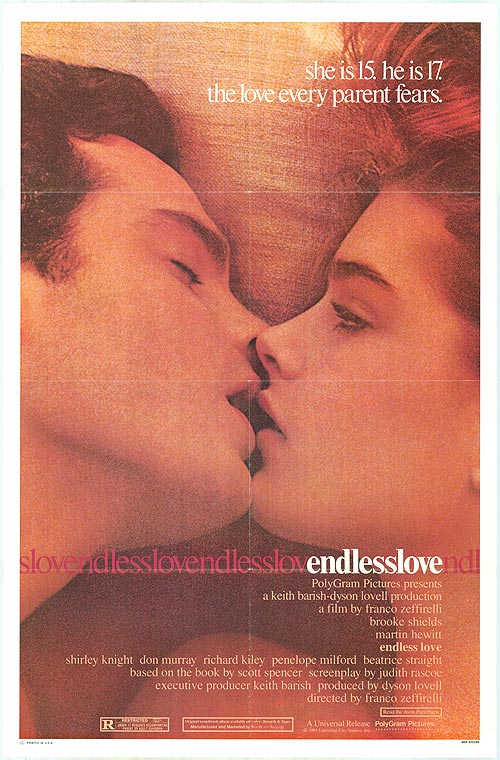
Embracing the Melodrama #33: Endless Love (dir by Franco Zefferilli)


endless love

Do anyone remember a movie that came out in February that was called Endless Love? If you do, you’ve got a better memory than I do because, even though I saw it, I really can’t really remember much about it beyond the fact that I was disappointed by it. I know I had high hopes because the trailer was damn sexy but the film itself just turned out to be rather bland and forgettable.

Well, the 2014 version of Endless Love may have been forgettable but the same can not be said of the original 1981 version.

Endless Love tells the sweet story of two teenagers who want to have sex.  Well, actually, it’s debatable how sweet the story is  because the boy is a creepy stalker-type and the girl appears to be suffering from Stockholm Syndrome but director Franco Zefferilli directs the film as if he’s bringing to life the greatest romance of all time.  The entire film is full of lush images and the swelling musical score suggests that we should hope that these two end up together, even as the boy is burning down the girl’s house.

(Believe me, I love elaborate expressions of love and romantic feelings as much as the next girl but I draw the line at burning down my house.)

David (Martin Hewitt) and Jade (Brooke Shields) both live in the suburbs of Chicago.  Jade’s parents are aging hippies.  Her father (Don Murray) may smoke weed with the neighborhood teenagers and play the trumpet at wild parties but he’s still very protective of his daughter.  Her mother (Shirley Knight) is far more permissive and open-minded.  Jade’s brother, Keith (played by a really young and dangerous-looking James Spader), is friends with David and invites him to a party at his house.  David meets Jade and soon, the two of them are obsessed with each other.

However, not everyone is happy about their newfound love.  Jade’s father doesn’t trust David.  Keith soon starts saying stuff like, “Just because you’re fucking my sister, that doesn’t make you a part of the family.”  (And, as rude as that may be, it’s really hot when said by a young and dangerous-looking James Spader.)  Meanwhile, David’s mom (Beatrice Straight) doesn’t want David hanging out with a family that she describes as being “a relic of the 60s.”

Eventually, Jade is spending so much time thinking about David that her grades start to suffer and she finds that she can no longer sleep.  She starts stealing her father’s sleeping pills.  When she’s caught in the act, David is forbidden from seeing her until the end of the school year.  “It’s only 30 days,” Jade’s mom promises him.

Well, that’s 30 days too long for David!

Taking the advice of a young arsonist (played, in his film debut and with a notably squeaky voice, by Tom Cruise), David decides to set Jade’s house on fire.  His original plan is to save Jade and her family and be hailed as a hero.  Instead, the fire ends up raging out of control and the house is destroyed.

Arrested for arson, David spends some time in a mental asylum and is legally forbidden from ever seeing Jade or her family again.  Eventually, David gets out of the asylum and that’s when the movie gets really weird…

Endless Love is a really creepy movie that makes the mistake of equating stalking with true romance.  There’s no other way to put it.  Yet, at the same time, Franco Zefferilli’s images are so vividly romantic and Martin Hewitt and Brooke Shields are both so physically attractive (never mind that neither one of them apparently knew how to act back in 1981) that you can’t help but sometimes get swept up in the film’s silliness.  Add to that, the film has a great soundtrack and you also get a chance to see Tom Cruise act like a total jackass.

Check it out below!

Embracing the Melodrama #32: Ordinary People (dir by Robert Redford)


ordinary_people_oc87rd_1

For the past seven days, I’ve been reviewing — in chronological order — fifty of the most memorable melodramas ever filmed.  We started with a silent film from 1916 and now, we have reached the 80s.  What better way to kick off the decade than by taking a look at the 1980 Best Picture winner, Ordinary People?

Directed by Robert Redford, Ordinary People tells the story of the upper middle class Jarrett family.  On the surface, the Jarretts appear to be the perfect family.  Calvin Jarrett (Donald Sutherland) has a successful career.  Beth (Mary Tyler Moore) keeps a perfect home and appears to be the ideal suburban matriarch.  However, one summer, their oldest son drowns in a sailing accident and their youngest son, sensitive Conrad (Timothy Hutton), attempts to commit suicide.  After spending four months in a psychiatric hospital, Conrad come back home and the family struggles to put their lives back together.  Even though he starts to see a therapist (Judd Hirsch) and starts dating his classmate Jeannine (Elizabeth McGovern), Conrad still struggles with his feelings of guilt over having survived.  Beth’s struggle to maintain a facade of normalcy leads to several fights between her and Conrad with Calvin trapped in the middle.

Among my fellow film bloggers, there’s always going to be a very vocal group that is going to hate Ordinary People because it won the Oscar for best picture over challenging black-and-white films directed by Martin Scorsese (Raging Bull) and David Lynch (The Elephant Man).  They always tend to complain that Ordinary People is a conventional film that tells a conventional story and that it was directed by a very conventional director.  More than once, I’ve seen an online film critic refer to Ordinary People as being a “big budget Lifetime movie.”

Well, you know what?

I love Lifetime.  Lifetime is the best network on television and to me, a big budget Lifetime movie would be the best Lifetime movie of all.  And, at the risk of alienating all of my film-loving friends, if I had to choose between watching Raging Bull and Ordinary People, I’m going to pick Ordinary People every time.  Raging Bull is visually stunning and features great performances but it’s also two hours spent watching an incredibly unlikable human being beating the crap out of anyone who is foolish enough to love him.  Ordinary People may essentially look like a TV show but it’s also about characters that you can understand and that, as the film progresses, you grow to truly care about.

Yes, I do wish that the character of Beth had been given more of a chance to talk about her feelings and it’s hard not to feel that Ordinary People places too much blame on the mother.  But, even so, the film still ends with vague — if unlikely — hope that Beth will eventually be able to move past her anger and reconnect with her family.  The film may be hard on Beth but it never gives up on her.  That’s what distinguishes Ordinary People for me.  In many ways, it’s a very sad film.  It’s a film that was specifically designed to make you cry and I certainly shed a few tears while I watched it.  But, even with its somewhat ambiguous ending, Ordinary People is also a very optimistic movie.  It’s a movie that says that, as much pain as we may have in our life,we can recover and life can go on and it’s okay to be sad and its also okay to be happy.

And that’s an important lesson to learn.

(That said, if I had been alive and an Academy voter in 1981, I would have voted for The Elephant Man.)

And, for all you Oscar lovers out there, here are clips of Timothy Hutton and Robert Redford winning Oscars for their work on Ordinary People.

Embracing the Melodrama #31: When Time Ran Out (dir by James Goldstone)


If I had been alive in the 70s, I would have been terrified if I had ever found myself in the same general location of Paul Newman, William Holden, Ernest Borgnine, Red Buttons, Jacqueline Bisset, or Burgess Meredith.  Just based on the movies that they spent that decade appearing in, it would appear that disaster followed them everywhere.

Just consider:

Both Paul Newman and William Holden were trapped in The Towering Inferno. 

Ernest Borgnine and Red Buttons both ended up taking an unexpected Poseidon Adventure together.

Jacqueline Bisset was a flight attendant in the first Airport and nearly got killed by a mad bomber.

And finally, Burgess Meredith was a passenger on The Hindenburg.

Seriously, that’s a dangerously disaster-prone bunch of thespians!

So imagine how terrifying it must have been on the set of the 1980 film When Time Ran Out when all 6 of those actors — along with a lot of other disaster film veterans — were first gathered in one place.  People were probably running for their lives, both on-screen and off.

Lava3

When Time Ran Out takes place on an island in the South Pacific.  Shelby Gilmore (William Holden, playing yet another ruthless but essentially good-hearted businessman) owns a luxury resort that happens to be sitting dangerously close to an active volcano.  Oil rigger Hank Anderson (Paul Newman) is convinced that the volcano is about to erupt but Shelby’s son-in-law, Bob Spangler (James Franciscus), refuses to listen and claims that even if the volcano does blow, the resort will be safe.

(As a sidenote, why were William Holden’s son-in-laws always too blame in disaster movies?  First, you had Richard Chamberlain in The Towering Inferno and now, it’s James Franciscus in When Time Ran Out…)

Suspended over a volcano

Suspended over a volcano

You can just look at the film’s title (When Time Ran Out!) and guess that Bob is probably wrong.  However, Bob has other things on his mind.  First off, he’s cheating on his neurotic wife (Veronica Hamel) with a native islander (Barbara Carrera) who happens to be married to the hotel’s general manager, Brian (Edward Albert).  Brian also happens to be Bob’s half-brother and is therefore owed at least half of Bob’s fortune but nobody but Bob realizes that.

And, of course, there are other colorful guests at the hotel who will soon find themselves either fleeing from or drowning in molten lava.  There’s a white-collar criminal (Red Buttons) who is being pursued by a detective from New York (Ernest Borgnine, of course).  There’s also two retired tightrope walkers (Burgess Meredith and Valentina Cortese) and you better believe that there’s going to be a scene where one of them is going to have to walk across a plank that happens to be suspended over a river a lava…

Told ya!

Told ya!

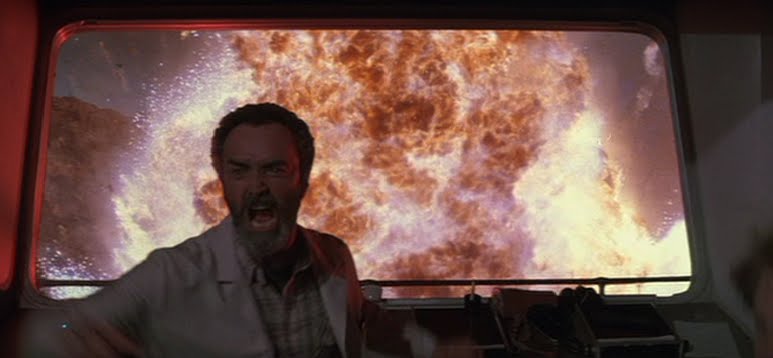
Eventually, that volcano does erupt and…well, let’s just say that When Time Ran Out is no Towering Inferno as far as the special effects are concerned.  The scene where one random fireball flies out of the volcano and heads for the resort is particularly amusing for all the wrong reasons.  Not only does the volcano apparently have perfect aim but it’s also painfully obvious that the fireball is streaking across a matte painting.  This is the type of film where, when people plunge into a river lava, they do so with heavy lines visible around their flailing bodies.  That, along with the cast’s obvious lack of interest in the material, adds up to make When Time Ran Out a film that is memorable for being so ultimately forgettable.

The Horror!

The Horror!

(It’s odd to consider that this film was directed by the same James Goldstone who directed such memorable films as Rollercoaster and Brother John.)

When Time Ran Out is something of a historical oddity because it was the last of the old 70s all-star disaster films.  (This may have been released in 1980 but it’s a 70s film through and through.)  The movie was such a monumental failure at the box office that it pretty much ended an era of disaster films.

For that reason, it also feels like an appropriate film with which to close out the 70s.  Tomorrow, we’ll continue to embrace the melodrama with the 1980s.

when time


Embracing the Melodrama #30: The Greek Tycoon (dir by J. Lee Thompson)


Theo and Liz: A Love Story

Theo and Liz: A Love Story

“The characters in this film are fictitious and any resemblance to persons living or dead is purely coincidental”. — Completely And Totally False Disclaimer From The Greek Tycoon (1978)

In order to appreciate a film like 1978’s The Greek Tycoon, it helps to be a history nerd like me.

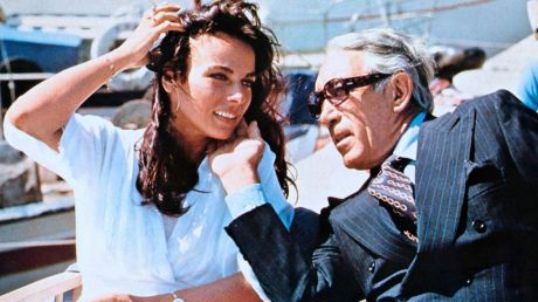
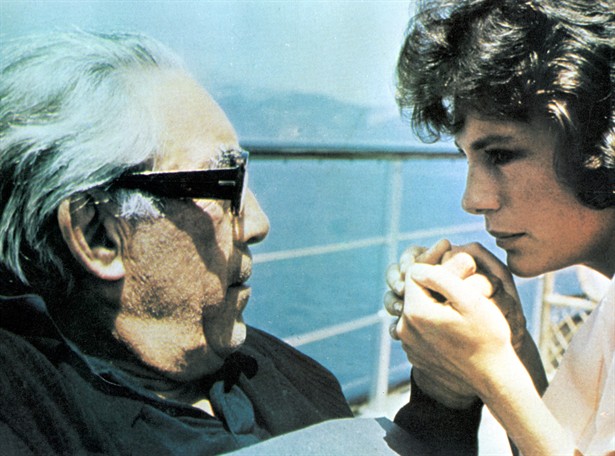
If you are, then you probably know that, 5 years after her husband was assassinated in Dallas, former first lady Jacqueline Kennedy remarried.  Her new husband was Aristotle Onassis, a Greek shipping magnate who was 23 years older than her and who had an unsavory reputation.  Onassis was one of the world’s richest men and was known for both his extravagant life style and for being a ruthless operator.  Depending on which books you read, Onassis is portrayed as either being either one of the world’s greatest villains (and, in fact, there’s a whole school of conspiracy theorists who believed that Onassis was somehow involved in John Kennedy’s assassination) or just a casually amoral rich man who treated his new wife like his latest trophy.  Either way, he was not the sort of person who Americans expected to become the second husband of a widowed first lady.

Of course, the Greek Tycoon is not about Aristotle and Jackie Onassis.  It’s about another Greek shipping magnate with a ruthless reputation who shocks the world by marrying the widow of a martyred President.  And, if you stick with the film all the way through the end credits, you’ll even see a disclaimer to prove it!

Anthony Quinn plays Theo Tomasis.  When we first meet him, he’s content to spend his time making crooked business deals and attending parties on a seemingly endless collection of white yachts.  He is grooming his son (Edward Albert) to take over the family business.  He loves both his wife Simi (Camilla Sparv) and his mistress (Marilu Tolo).  In fact, the only problem he has in his life is his business rival, Spyros (Raf Vallone, who played another Greek tycoon in The Other Side of Midnight).  Spyros happens to be Theo’s brother.  But other than that, Theo is content to spend all of his time dancing and breaking plates because, as the film reminds us every chance that it gets, he’s Greek.

However, things change for Theo when he meets Liz Cassidy (Jacqueline Bisset), the wife of young and charismatic Senator James Cassidy (James Franciscus).  Within minutes of meeting her, Theo is hitting on her but Liz loves her husband.  However, Sen. Cassidy soon becomes President Cassidy and this, of course, leads to Cassidy being assassinated while he and Liz are strolling down the beach.

Liz is soon married to the freshly divorced Theo and proving herself to be far more strong-willed than anyone realized.  Despite the anger and efforts of both Theo’s son and the dead President’s brother (Robin Clarke), Liz and Theo’s love endures and soon, they are such a glamorous and famous couple that its surprising that nobody ever suggests making a movie about them.

The Greek Tycoon is a big mess of a movie but it’s enjoyable if you know what inspired it.  (Of course, if you’re not into history and you don’t know anything about Aristotle and Jackie then you’ll probably find The Greek Tycoon to be one of the most boring movies ever made.)  To be honest, the story is never important in a film like this.  Instead, you watch for the clothes and the sets and they’re all properly glamorous in a 1970s sort of way.  Finally, you can watch this movie for Anthony Qunn’s unapologetically over-the-top performance as Theo.  I don’t know if you could necessarily say that Quinn gave a good performance here but, watching the film, it certainly does look like he was having fun.

The_Greek_Tycoon_36374_Medium

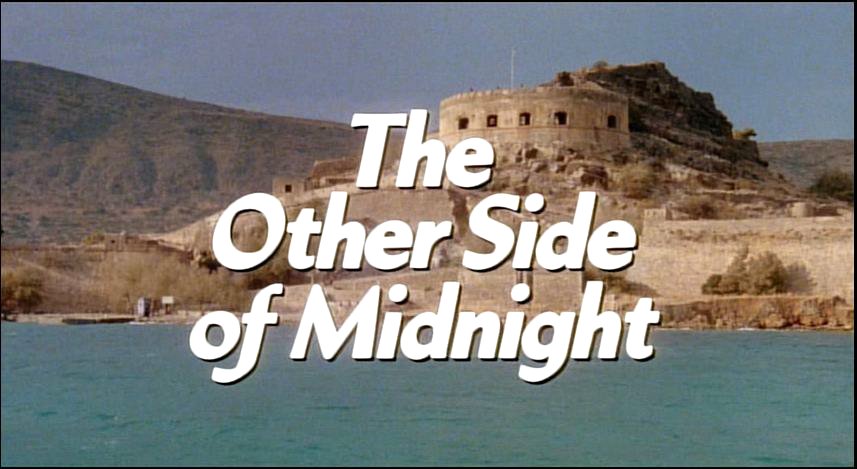
Embracing the Melodrama #29: The Other Side of Midnight (dir by Charles Jarrott)


The Other Side of Midnight 1977

First released in 1977, The Other Side of Midnight is one of those film that literally seems to have everything a viewer could want: sex, love, betrayal, sex, war, melodrama, intrigue, sex, expensive clothes, private island, see-through nightgowns, sex, hurricanes, murder, a surprise twist ending that involves a convent, and sex.  Did I mention that this film has sex in it, because it so does.

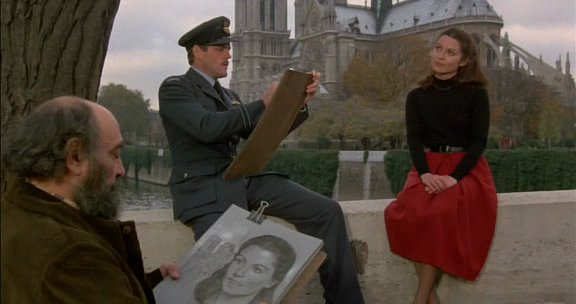
The film opens in Paris during the years leading up to World War II.  Beautiful Noelle (Marie-France Pisier) meets Larry Douglas (John Beck), a handsome American who is serving with the Canadian Air Force.  Noelle agrees to go out on a date with Larry and they get to have the of the movie’s many falling-in-love montages.  Fortunately, they’re in Paris which has a lot of great scenery in front of which they can pose.  Unfortunately, Larry is ordered back to the United States.  He promises Noelle that he’ll return but he never does.  What Larry doesn’t realize is that Noelle’s pregnant — or at least she is until a harrowing scene where she climbs into a bathtub with a wire hanger.

Montage!

Montage!

This is followed by another montage.  Call this the “Out-of-Love-And-Growing-Bitter” montage.  Noelle survives the German occupation by seducing and using every powerful man that she meets.  Along the way, she becomes one of the most glamorous and famous film stars in all of Europe.  Finally, she becomes the mistress of the wealthy and somewhat shady Constantin Demaris (Raf Vallone, doing his best Anthony Quinn impersonation).

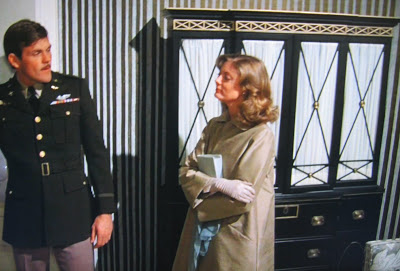
Meanwhile, Larry is back in America and, after going through another falling-in-love montage, has ended up married to innocent Catherine Alexander (Susan Sarandon).  What Larry doesn’t realize is that Noelle has hired a detective to keep track of him.  After the war, Larry gets a job as a commercial airline pilot but Noelle secretly arranges for him to lose that job.  Unemployed and desperate, Larry accepts a job to work as the private pilot for Demaris and his mistress.

Montage!

Montage!

Though it takes him a while to recognize her, Larry eventually does realize that his new boss is his former lover, Noelle.  As Larry starts to truly fall in love with Noelle all over again, Noelle starts to pressure him to do something about his new wife.  As is the case with several Hollywood melodramas, it all ends in a courtroom.  The courtroom scenes may not be exactly exciting but they do feature my favorite image from the entire film: at one point, we see that literally every single character who has appeared in the movie up to this point is sitting in that courtroom, all lined up like a bunch of disparate figures in an Edward Hopper painting.

The Other Side of Midnight is one of those big films where a lot of stuff happens but very little of it really seems to add up to anything.  It has a nearly 3 hour running time but it’s story could have just as easily been told in 90 minutes.  Instead, director Charles Jarrott pads out the running time with endless falling-in-love and falling-out-of-love montages.  This is the type of film that never says anything once that it can say an extra three times.

Montage!

Montage!

Susan Sarandon and Marie-France Pisier both give good performances.  Susan Sarandon is likable, even if her character is unbelievably naive while Marie-France Pisier gives a performance worthy of any good film noir but neither one of them has much chemistry with John Beck.  Fortunately, some of the supporting players — like Raf Vallone and Christian Marquand — take full advantage of every chance that they get to chew every piece of scenery that’s available.  Clu Gulager, the father of horror director John Gulager, pops up as well, playing perhaps the only good male in the entire film.

In the end, The Other Side of Midnight (and what the Hell does that title mean anyway?) is a rather silly movie about a bunch of shallow characters wearing beautiful clothes and wandering through wonderfully baroque locations.  Fortunately, I love elaborately decorated locations and glamorous outfits so I enjoyed The Other Side of Midnight despite myself.

Montage!

Montage!

One final thing about The Other Side of Midnight: 20th Century Fox was so sure that The Other Side of Midnight would be a huge success that they used it to blackmail theater owners into agreeing to show an obscure science fiction film called Star Wars.  Theaters would only be allowed to show The Other Side of Midnight if they also agreed to show Star Wars during the week before Midnight opened.

The end result, of course, is that The Other Side of Midnight was a bomb at the box office and Star Wars is still making money.

Below is a behind-the-scenes documentary on the making of The Other Side of Midnight.

Embracing the Melodrama #28: The Towering Inferno (dir by John Guillermin)


The_Towering_Inferno_1974-500x300

I have a weakness for the old, all-star disaster movies of the 1970s.  It could be because those movies remind me of how fragile life really is and encourage me to make the most of every minute.  Or maybe it’s because I have my phobias and, by watching those movies, I can confront my fears without having to deal with a real-life tornado, hurricane, tidal wave, avalanche, or fire.

Or maybe I just have a weakness of glitz, glamour, and melodrama — especially when it involves a huge cast of stars and character actors.  Yes that’s probably the reason right there.

Case in point: the 1974 best picture nominee, The Towering Inferno. 

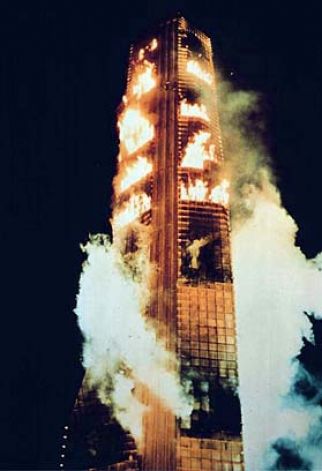
As is the case with most of the classic disaster films, The Towering Inferno is a long and big movie but it has a very simple plot.  The world’s tallest building — known as the Glass Tower — has been built in San Francisco.  On the night of the grand opening, a fire breaks out, trapping all the rich and famous guests on the 135th floor.  Now, it’s up to the fire department to put out the fire while the trapped guests simply try to survive long enough to be rescued.  Some will live, some will die but one thing is certain — every member of the all-star cast will get at least 15 minutes of screen time and at least one chance to scream in the face of the film’s still effective special effects.

628x471

As for the people trapped by the towering inferno, we don’t really get to know them or their motivations.  (Add to that, once the fire breaks out, everyone pretty much only has one motivation and that’s to not die.)  As a result, we don’t so much react to them as characters as we do to personas of the actors who are playing them.

Steve-McQueen-in-The-Towe-001

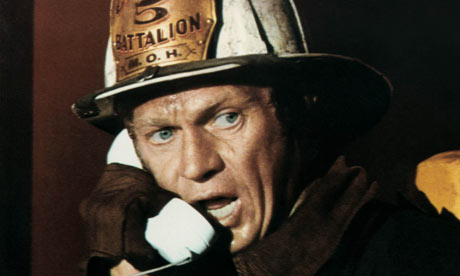
For instance, we know that Fire Chief O’Halloran is a fearless badass and a natural leader because he’s played by Steve McQueen.  McQueen brings a certain blue collar arrogance to this role and it’s a lot of fun to watch as he gets progressively more and more annoyed with the rich people that he’s been tasked with rescuing.

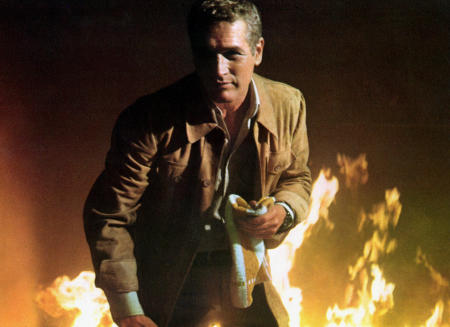
We know that architect Doug Roberts is a good guy because he’s played by Paul Newman.  Reportedly, Newman and McQueen were very competitive and, in this movie, we literally get to see them go-head-to-head.  And, as charismatic as Newman is, McQueen pretty much wins the movie.  That’s because there’s never a moment that O’Halloran isn’t in charge.  Doug, meanwhile, spends most of the movie begging everyone else in the tower to exercise the common sense necessary to not die.  (Unfortunately, despite the fact that he looks and sounds just like Paul Newman, nobody in the tower feels like listening to Doug.  If Towering Inferno proves anything, it’s that most people are too stupid to survive a disaster.)

paul-newman-inferno1

The tower’s owner, James Duncan, is played by William Holden so we know that Duncan may be a ruthless businessman but that ultimately he’s one of the good guys.  Holden gets one of the best scenes in the film when, after being told that people in the building are catching on fire, he replies, “I think you’re overreacting.”

Roger Simmons is Duncan’s son-in-law and we know that he’s ultimately to blame for the fire because he’s played by Richard Chamberlain.  Roger might as well have a sign on his back that reads “Doomed.”  The same can be said of publicity executive Dan (Robert Wagner) and his girlfriend, Lorrie (Susan Flannery).

The_Towering_Inferno_1974_Faye_Dunaway_Mike_Lookinland

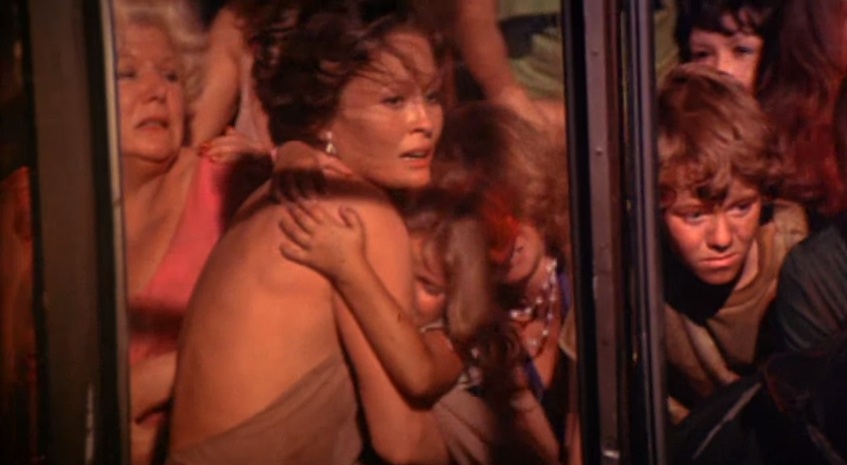
Faye Dunway is Susan.  She is Doug’s fiancée and she really doesn’t do much but she does get to wear a really pretty dress.  The same can be said of Susan Blakely, who plays Roger’s dissatisfied wife, and Jennifer Jones, who plays a recluse.  And good for them because if you’re going to be stuck in an inferno without much to do, you can at least take some comfort in looking good.

Then there’s Fred Astaire, who does not dance in this film.  Instead, he plays a kind-hearted con artist who ends up falling in love with Jennifer Jones.  Fred Astaire received his only Oscar nomination for his brief but likable performance in The Towering Inferno.

And finally, there’s the building’s head of security, Jernigan.  We know that he’s a murderer because he’s played by O.J. Simpson and … oh wait.  Jernigan is actually probably the second nicest guy in the whole film.  The only person nicer than Jernigan is Carlos, the bartender played by Gregory Sierra.

OJ

The real star of the film, of course, is the fire.  In the 40 years since The Towering Inferno was produced, there’s been a lot of advances in CGI and I imagine that if the film was made today, we’d be watching the fire in 3D and it would be so realistic that we’d probably feel the heat in the theater.  That said, the fire effects in The Towering Inferno are still pretty effective.  Now, I have to admit that I have a phobia (and frequent nightmares) about being trapped in a fire so, obviously, this is a film that’s specifically designed to work itself into my subconscious.  But that said, the scenes with various extras thrashing about in the flames are still difficult to watch.  There’s a scene where Robert Wagner and Susan Flannery find themselves trapped in a blazing reception area and it is pure nightmare fuel.

The Towering Inferno 9

The Towering Inferno is an undeniably effective disaster film.  At the same time, when one looks at the 1974 Oscar nominees, it’s odd to see The Towering Inferno nominated for best picture along with The Godfather Part II, Chinatown, and The Conversation.  Unlike those three, The Towering Inferno is hardly a great film.

But it is definitely an entertaining one.

toweringinferno2