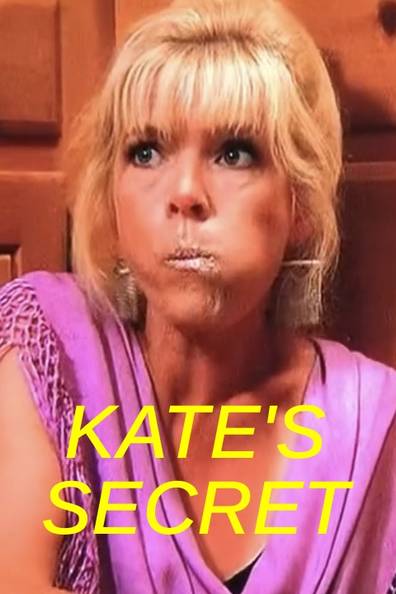
In this 1986 melodrama, Kate (Meredith Baxter) has a secret. She may look like healthy and young and blonde. She may have a beautiful house and a handsome husband (Ben Masters). She and her fitness instructor best friend (Shari Belafonte) may spend their time making fun of how fat everyone else. But deep down, Kate is convinced that she’s overweight. She gets on the scale and that declaration of 120 pounds feels like a slap in the face.
How does Kate lose weight? She exercises frequently. And she spends a lot of time staring at herself in the mirror, as if trying to mentally burn away the pounds. Mostly, though, Kate just binges on food whenever she gets stressed and then she throws up. Kate has a lot of reasons to be stressed and they are almost entirely due to her mother (Georgann Johnson), who rarely has a nice word to say to Kate and who constantly tells Kate that she’s going to lose her husband to his assistant (Leslie Bevis).
(Who does everyone always assume that assistants are going to be homewreckers?)
Now, to be clear, eating disorders are a serious thing. I know more than a few people who have had eating disorders. During my first semester of college, I got very used to the sound of the girl in the room next to mine throwing up every morning. There’s nothing funny about the idea of someone having an eating disorder. However, there is something funny about an overwritten movie about an eating disorder that features Meredith Baxter literally attacking a chocolate cake then blaming the mess in the kitchen on the dogs. This is one of those well-intentioned programs that takes a real problem and then goes so overboard in portraying it that it’s more likely to make you snicker than feel horrified. You might not feel good about laughing but the crazed look in Meredith Baxter’s cake-filled eyes will make it difficult not to. Hence, the term guilty pleasure.
As always happens in these type of movies, Kate ends up in a treatment center where a doctor (Edward Asner) tries to reach her and the other patients are all either extremely nice or extremely rude. Kate’s roommate (Tracy Nelson) is a model with anorexia. Another patient (Mindy Seeger) harps on Kate’s “perfect life.” Meanwhile, poor Deyna (Mackenzie Phillips) freaks out when someone moves the garbage can. It’s all very well-meaning but also very over-written and overacted to the point that, once again, it’s more likely to illicit a guilty laugh than anything else.
In the end, Kate realizes that it’s all her mother’s fault. That was kind of obvious from the first time her mother told Kate that her husband was obviously planning on leaving her. “I’m getting better,” Kate says as the credits roll. Yay, Kate!
In celebration of the January 8th birthday of the great Elvis Presley, I decided to watch his 1962 film KID GALAHAD, the only film where he co-stars with my movie hero Charles Bronson. I’ve always been a fan of Elvis Presley and seeing him on-screen with Bronson is a real treat for me.
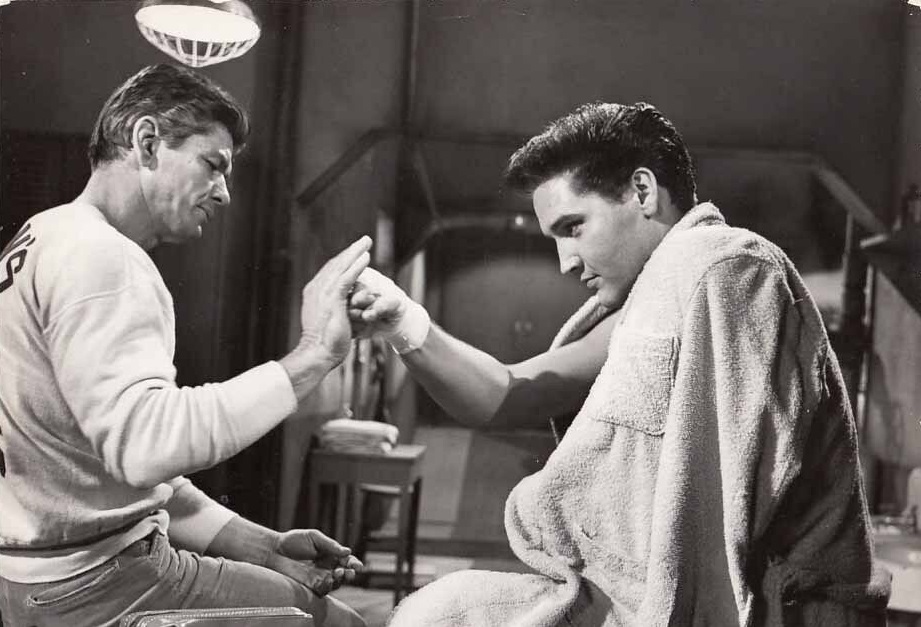
KID GALAHAD opens with Walter Gulick (Elvis Presley) returning to his hometown in upstate New York. Recently discharged from the army, and in the need of money, the aspiring mechanic finds his way to Willy Grogan’s (Gig Young) boxing camp and agrees to spar with one of his up-and-coming young boxers. Walter doesn’t have much boxing skill, but he ends up having one hell of a right hook and knocks the young boxer flat on his ass. Seeing this, Willy Grogan, who has all sorts of personal and financial problems, thinks Walter might be the answer to getting out of debt to his bookie. Willy asks his trainer Lew (Charles Bronson) to work with the young, strong Walter, who’s now been dubbed “Galahad” by Willy’s girlfriend Dolly (Lola Albright) after he had protected her honor from a “man who doesn’t know how to behave around a lady.” Pretty soon, Willy has fights arranged for Walter under the name of “Kid Galahad.” The first fight begins with Galahad getting his faced being punched repeatedly until he gets one opening and then knocks the other fighter out with one punch. After that, with Lew’s help, Galahad’s skills start showing definite improvement. When he’s not working with Lew at the gym, Galahad finds time to romance and propose to Willy’s sister, Rose (Joan Blackman). This causes problems with the troubled Willy who doesn’t want his sister married to some “meatball” or “grease monkey.” Even worse, smelling money, gangster Otto Danzig (David Lewis) and his henchmen start putting pressure on the financially troubled Willy to force Galahad to take a dive in his big fight with “Sugar Boy” Romero so they can clean up on the fix, going so far as breaking Lew’s hands. Will Willy get the balls to say no to the gangsters? Will Galahad be able to beat Sugar Boy Romero and then retire to open his garage with Rose by his side? You probably already know, but you’ll just have to watch and see!
1962’s KID GALAHAD is a remake of a 1937 movie of the same name directed by Michael Curtiz, and starring cinematic legends Edward G. Robinson, Bette Davis, and Humphrey Bogart. I’ve never seen the earlier version, so I will not compare the two in any way. And to be completely honest, I haven’t watched very many Elvis Presley movies either. As I type this, I can’t think of a single moment I remember in his filmography not included in KID GALAHAD, and I wouldn’t have watched this one without the presence of Charles Bronson. With that said, I think Elvis gives a good performance in KID GALAHAD. He’s very likable, with his character having an old-fashioned chivalry towards women, a friendly, open way with men, and an appreciation for a strong work ethic. I think Elvis handles each of these parts of his character in a way to that makes me want to root for him. As good as Elvis is as Kid Galahad, Gig Young does most of the heavy lifting as the story really revolves around his character’s troubles even more than it does around Galahad. I think he does a pretty good job of taking a character who’s a pretty sorry guy, and by the end of the movie we actually find ourselves starting to like him. Even though he’s in a true supporting role, Charles Bronson is excellent as the trainer who teaches Galahad how to box. Every scene Bronson’s in is elevated by his enormous screen presence and authority. With Bronson in his corner, you feel Galahad is capable of anything. The most powerful scene in the entire film is when the gangsters try to buy his character off under the threat of violence, and he refuses, leading to his hands being broken. After becoming one of the biggest stars on the planet a number of years later, it’s easy to look back at these moments and wonder how in the hell was he not already a huge star in 1962.
Of course, this being an Elvis Presley movie, there are several musical numbers spread throughout the movie. While I don’t remember too much about the songs themselves, they didn’t really take me out of the drama of the movie either. I actually enjoyed seeing Elvis perform, with the people around him clapping along and enjoying themselves. I do remember a specific scene where Elvis is singing as he’s driving down the road, and Bronson’s sitting in the back seat with a big smile on his face like he’s having a great time. That’s my favorite moment of all the songs.
Although I haven’t watched many of his movies, I’ve been an appreciative fan of Elvis Presley all my life. I can’t tell you how many times I heard his Christmas album in my younger years, as my mom would play it almost on repeat once we got to November. He was a talented, versatile singer whose charisma and stage presence have never been matched, and whose influence on music and entertainment is immeasurable. The fact that Elvis Presley and Charles Bronson made KID GALAHAD together means something to me, and I had a great time revisiting the film on his birthday!
Welcome to Late Night Retro Television Reviews, a feature where we review some of our favorite and least favorite shows of the past! On Thursdays, I will be reviewing Highway to Heaven, which aired on NBC from 1984 to 1989. The entire show is currently streaming on Freevee and several other services!
This week, it’s time for a theological debate!
Episode 2.17 “The Last Assignment”
(Dir by Michael Landon, originally aired on February 12th, 1986)
While he and Mark drive through another run-down American city, a radio news report of a man dressed as Santa Claus giving people exactly what they ask for even though it’s not even Christmas leads Jonathan to suspect that Harold might be in the area. As Jonathan explains to Mark, Harold is an angel who has been on probation for hundreds of years because he can’t obey the rules. Instead of encouraging people to find it in themselves to do the right thing and to create their own opportunities, Harold just gives people exactly what they want. If Jonathan is all about teaching people to have faith no matter what, Harold is about creating sudden miracles.
It’s actually an interesting plot, in that it really does capture one of the central debates at the heart of any religion. Should God just give people what they want or should people’s faith in God give them the strength to understand and pursue what they truly need? It’s the battle between those who take a vow of poverty and show their devotion through sacrifice and suffering and those who preach the so-called prosperity gospel, insisting that God is some sort of celestial regulatory agency.
(It’s also a reflection of the ongoing debate as to how involved the government should get in other people’s lives. Jonathan argues for a hands-off approach that respects and promotes the idea of individual freedom. Harold, for his part, seems to be a big government guy. Jonathan supports encouraging people to pull themselves up. Harold supports hand-outs. Jonathan is a Republican. Harold probably wants to be Bernie Sanders’s guardian angel.)
Jonathan tracks down Harold (Ed Asner). Harold has opened a fire hydrant and turned water into wine, making all of the neighborhood alcoholics vey happy. Harold says that he performed a miracle and gave the people what they wanted. Jonathan argues that the people needed to learn that they had the power within themselves to find their own happiness. Taking it upon himself to keep an eye on Harold, Jonathan can only watch as Harold bends the rules to help a woman sell her stamp collection for $500 and also reunites an older woman with her lost dog. Jonathan says that Harold isn’t teaching anyone anything or helping anyone to discover their inner strength. Harold argues that he’s helping out the faithful. But when Jonathan and Harold meet a priest who has lost his faith, both of their approaches are put to the test.
Theological debates aside, it’s obvious that the main point of this episode was to give Ed Asner a showy role. Asner makes the most of Harold, playing him as someone who may pretend to be a buffoon but who actually truly cares about people and who is truly angered by what he views as being cosmic injustice and holy indifference. Asner and Landon both give good performances here and, as a result, the rather episodic story is always watchable. The show may ultimately come down on Jonathan’s side but you’re still happy when it becomes clear that Harold isn’t going to change his ways for a second.
Welcome to Retro Television Reviews, a feature where we review some of our favorite and least favorite shows of the past! On Sundays, I will be reviewing the made-for-television movies that used to be a primetime mainstay. Today’s film is 1972’s Haunt of the Very Rich! It can be viewed on YouTube!
The 1972 made-for-TV movie Haunts of the Very Rich opens with a lengthy shot of Lyle (Tony Bill) and Laurie (Donna Mills) sharing a very long kiss. Obviously, they’re very happy and why shouldn’t they be? They’re young. They’re beautiful. They’re in love. They’re newly married. And …. they’re on an airplane!
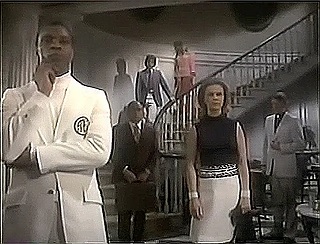
It’s a private plane, one that’s heading towards a resort called The Portals of Eden. There’s only a few other people on the plane. David Woodrough (Lloyd Bridges) is a businessman who is looking forward to spend some time away from his wife, especially if it means a chance to get to know one of the other passengers, Ellen Blunt (Cloris Leachman). Annette Larner (Anne Francis) is also traveling alone and is hoping she might finally be able to get some sleep without having to take a handful of pills beforehand. Rev. Fellows (Robert Reed) appears to have lost his faith. And then there’s Al Hunsicker (Ed Asner). Hunsicker’s a little bit confused about how he ended up on the airplane. As far as he knows, he’s supposed to be on his way to a business meeting in Dallas. Portals of Eden? Al’s never heard of the place! Of course, nobody on the plane really seems to be sure where they’re going or how they even got on the plane in the first place. Strangely, Al appears to be the only one who finds any of this to be strange.
When the plane lands, they discover that the Portals of Eden is a large hotel sitting at the edge of a tropical wilderness. Their host, the always polite Mr. Seacrist (Moses Gunn), welcomes them but avoids answering anyone’s questions. Seacrist tells them to enjoy their stay.
For the first day, that’s exactly what everyone does. They relax. They indulge in a little pampering. David gets to know Ellen. Al is still worried about getting to his business meeting but he is assured that he can always fly out to Dallas the following day.
The night, a violent storm hits. The next day, everyone wakes up to discover that the resort is nearly deserted. There’s no electricity. There’s no way to call out. There’s not much food. Seacrist tells them not to worry. He assures them that help is on the way. As the guests wait to be rescued, they finally start to wonder just how exactly the ended up at the resort in the first place. They realize that they’ve almost all had a recent brush with death. David swears to Ellen that he’ll file for divorce as soon as they get back home but what if they don’t have a home to which to return? Occasionally, the guests hear a plane flying overhead. At one point, they even see one land. But every time, just when it seems like they’re on the verge of finally being rescued, the plane vanishes.
And things just get stranger from there.
If Jean-Paul Sartre had ended up in the United States, writing for The Bold and the Beautiful, the end result would probably look a lot like Haunts of the Very Rich. Considering that this is a made-for-TV movie from the early 70s, Haunts of the Very Rich is a surprisingly effective and atmospheric little horror film. The story itself won’t exactly win any points for originality. You’ll guess the secret of Portals of Eden long before any of the characters in the film. But still, it’s a well-directed and nicely acted film, one that’s topped off with a suitably surreal (if somewhat abrupt) finale.
Haunts of the Very Rich can currently be found on YouTube and I recommend it for anyone who likes their melodrama served with a side of existential dread.
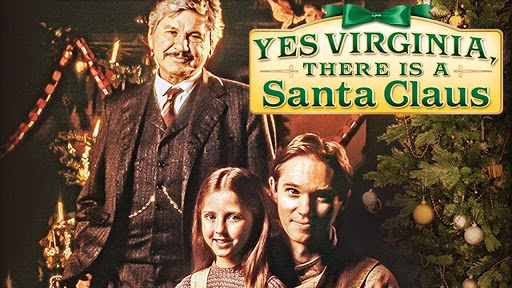
The year is 1897 and eight year-old Virginia O’Hanlan (Katharine Isabelle — yes, that Katharine Isabelle) has a problem. All of her “little friends” say that there is no Santa Claus! When she asks her father (Richard Thomas) about whether or not there’s a Santa Claus, he suggests that she write a letter to the New York Sun. “If you see it in the Sun,” he says, “it must be true!” The letter ends up on the desk of a gruff editor (Edward Asner) who assigns Virginia’s question to Frank Church (Charles Bronson), an alcoholic who is still mourning the deaths of his wife and child. Conquering his own cynicism and depression, Church writes an editorial reply that goes on to become not just a holiday classic but also the most frequently reprinted editorial in history. Yes, Virginia, Church begins, there is a Santa Claus….
This 1991 film is a sweet-natured retelling of the famous story of Frank Church’s editorial. Of course, it takes considerable liberties with the actual story. Here’s just a few examples.
In real life, the editorial was published in September. In the movie, it’s published on Christmas Eve.
In real life, Virginia’s father was a doctor and she came from a middle class family. In the movie, Virginia’s father is an Irish immigrant and laborer who is so poor that the O’Hanlan’s might not be able to afford a Christmas! They live in a tenement and Virginia’s father is frequently harassed by not only the cops but also corrupt labor officials.
In real life, Frank Church was a notoriously cynical atheist who reportedly had little use for Christmas and specifically didn’t sign his name to his famous editorial because he didn’t think much of it. At the time that he wrote the editorial, he was also a bachelor. He did marry shortly after the editorial was published but he never had any children. In the film, Frank is a widower who rediscovers his zest for life and who smiles broadly while listening to Virginia’s father read it aloud.
And, of course, in real life, it’s very probable that the letter was written by Virginia’s parents because how many eight year olds would actually write something like, “Some of my little friends say there is no Santa Claus.” In the movie, however, Virginia writes the letter herself.
In other words, this is a nice movie that just happens to be terrible history. The film does end with a disclaimer that clarifies that “certain events have been fictionalized.” Actually, the entire story has been fictionalized, with the exception of the content of Church’s editorial. That said, this is a sweet-natured and generally likable movie. If nothing else, it’s a film that means well and, as tempting as it may be to roll your eyes at the film’s unabashed sentimentality, it’s sincerity feels right for the holiday season. It’s a made-for-TV movie from the early 90s so don’t expect any surprises but it’s nicely acted and even Charles Bronson seems to be in a good mood by the end of it.
As far as movies about journalists lying to children are concerned, this is a good one. Just don’t watch it for a history lesson.
That’s what we ask ourselves after every school shooting, isn’t it? Because the perpetrators are usually not around to explain themselves, there’s a tendency to look to the shooter’s parents and to demand to know how they could have allowed things to get so out of control. The assumption almost always is that the parents were negligent. If only the shooter’s mother or father had done a better job, we’re led to believe, the tragedy could have been prevented. It’s human nature. When faced with an unspeakable tragedy, people need someone to blame.
Of course, an actual examination of the history of most school shooting does reveal some bad parents but it also reveals parents who did their best under difficult circumstances or who were as fooled by their children as everyone else in the world. Yes, there are the parents who gave their obviously unstable children guns. But there are other parents who tried to get their children help and who tried to be tough disciplinarians and who sincerely believed that that their children were doing better in school or life or whatever. And if a parent does suspect that their child is a sociopath, what are they to do? Are they supposed to stop loving that child and cast them away? Too often, the trauma of violence leads people to seek out easy answers but often times, those easy answers are not there. We forget that no one sets out to raise a monster.
M.O.M. Mother of Monsters is a found footage film that attempts to explore some of these issues. Abbey Bell (Melinda Page Hamilton) is a single mom who suspects that her 16 year-old son, Jacob (Bailey Edwards), might be a psychopath. So, she plants hidden cameras around her house and she obsessively films their every interaction. She says that she’s doing it so that she can prove that her son is dangerous and also so she can help all of the other mothers out there who are struggling to raise psychotic children.
And yes, Jacob is certainly obnoxious. He’s frequently angry and he makes inappropriate jokes about killing people. He spends a lot of his time locked away in his room and he throws a fit when Abbey tries to take away his Playstation. He’s casually racist and he listens to loud and angry music and he’s a habitual liar. From the time he was 6 years-old, he’s been drawing disturbing pictures. The question, though, is whether he’s the next school shooter or if he’s just a 16 year-old boy.
Not helping matter is that Abbey herself seems to be even more unstable than her son. Abbey gets as mad at her own mother as Jacob does at her and she continually talks about whether or not evil is hereditary. Throughout the film, there are dark hints about an incident that occurred before Jacob was born. When we’re told that Abbey majored in psychology, we find ourselves wondering if she’s trying to use Jacob an his bed behavior to justify her own fears and obsessions. Who is the bigger threat, Jacob or Abbey? The film keeps you guessing all the way up to its violent conclusion.
The first two thirds of M.O.M. works pretty well. Though I’m usually not a fan of the found footage genre, M.O.M. actually comes up with a believable justification for the constant filming. It also makes good use of its low budget, setting almost all of the action in one claustrophobic house. Bailey Edwards and especially Melinda Page Hamilton do a great job playing the two main characters and the film keeps you guessing as to whether Abbey is right to be concerned or if she’s projecting her own instability onto her son.
Unfortunately, the final third of the film features a plot twist that just didn’t work for me. While I imagine that it will work for some people, it was just a bit too implausible for me to accept and the twist’s clumsy execution took me out of the film’s carefully constructed reality. The film went from being an intriguing character study of two damaged people to just being another found footage thriller. As such, the film’s final disturbing image didn’t quite have the power that it perhaps would have if not for that final twist.
That said, the first part of the film was undeniably effective and that’s enough for me to recommend it. If nothing else, this film identities Tucia Lyman as a director to watch out for. According to the imdb, this was first narrative feature film and she did a good job using the familiar rules of the found footage genre to tell an intriguing story. I look forward to her second film.
Today’s horror on the lens is a 1972 made-for-TV movie, Haunts of the Very Rich!
What happens when a bunch of rich people find themselves on an airplane with no memory of how they got there? Well, first off, they land at a luxury resort! But what happens when the resort suddenly turns out to be deserted and the guests discover that there’s no apparent way out!?
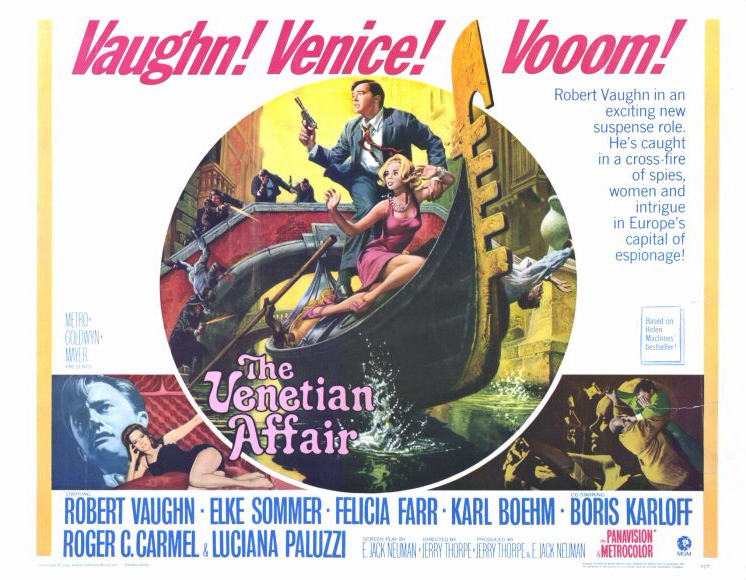
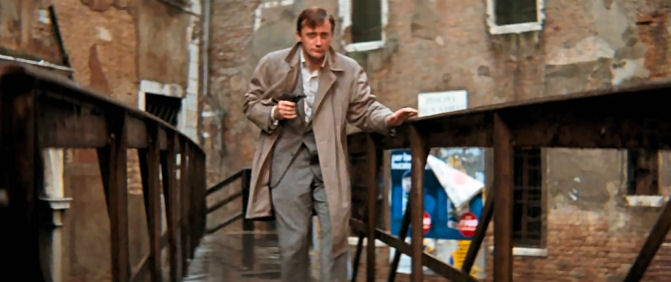
Robert Vaughn played superspy Napoleon Solo on TV’s THE MAN FROM U.N.C.L.E. from 1964 to 1968. The series was inspired by the James Bond craze, filled with outlandish gadgets and evil supervillains. Vaughn’s popularity led to a starring role in THE VENETIAN AFFAIR, a Cold War spy thriller with a much more adult theme. Here, he plays Bill Fenner, ex-CIA agent, now a hard-drinking reporter who gets caught up in international intrigue.
Fenner is sent to Venice after a U.S. diplomat supposedly sets off a bomb at an international nuclear disarmament conference. He soon learns the assignment was arranged by his former CIA boss, “Rosey” Rosenfeld (Edward Asner). Rosey wants to use Fenner to smoke out old flame Sandra Fane (Elke Sommer), a Communist agent with a mysterious link to the bombing. Fenner’s odyssey takes him through double-and-triple crosses in the world of international espionage he once left behind.
Unfortunately, there is no cowbell in this movie. Okay, this one is about a lady named Gwen Green (Andrea Roth). She works as an assistant editor. Delta Burke plays Dahlia Marchand who writes romance novels, but is going to pen an autobiography. Turning down more experienced editors, she picks Green to be her editor as soon as she sees her. I honestly had to watch this twice because the first time around I missed a few things so I was rather confused as to what Burke’s obsession with this woman was. Honestly, I thought she was a lesbian for a minute there and this shot near the end of the movie didn’t help.
The movie begins with one of Green’s friends getting married. Then her friend catches the bridal fever and becomes obsessed with getting married. She drags Green into her nuttiness. So we go speed blind dating. I have seen this scene done in numerous movies, but I think it’s the first time I’ve seen this in one of these montages.
Didn’t work for me no matter how much of a resemblance he might bare to Jeffrey Combs. Green doesn’t find her man here. Instead, she is passing by a bookstore and decides to go in and replace the window display with books by Dahlia Marchand. Sadly, this didn’t feel contrived because I can remember my Dad buying things from his business clients to support them. It doesn’t surprise me that now since she is editing one of Marchand’s books, she would do this. Of course a little slip and fall in the store, and she meets the guy she will end up with. He works at the store.
Sorry, I really didn’t mean to catch him with his “you’re gonna die now” look on his face. The rest of the film plays out like this. Marchand is going to launch her book at his store. Marchand oddly avoids the store. Green works with this guy getting closer and closer. Since her friend has poisoned Green’s mind and since the guy didn’t propose to her on the spot, she gets engaged to the wrong guy. Then we find out that Marchand picked her because she wanted someone who wouldn’t do their job and thus wouldn’t ask her about gaps in her biography. The big gap being her years working at that bookstore. Turns out it’s the guy’s uncle who owns the store that once had a thing with her. It wraps up like you think.
This was okay. Very cliched and it’s one of those ones I like to say sleepwalks through the formulaic plot, but the actors were likable enough, including Delta Burke. I did like that they borrowed the comparing scars scene from Lethal Weapon 3.
You can do worse, but you can also do better.
Audrey’s Rain (2003) – Where the hell did this Hallmark movie come from? It’s got cursing, people who act like real people (kids included), suicide, a mentally challenged or at least mentally cracked in some fashion character, sexual references, direct reference to breasts as “buzzards”, making out, use of the word horny, the kid tries to say Audrey’s sandwiches taste like shit, fart jokes, a fart joke directed at a reverend who just asked Audrey to consider returning to the church, and more.
Seriously, is this the kind of movie Hallmark initially made? Cause this is a far far far cry from the kind of stuff they make today and have for many years. I actually thought I was watching a real movie here. The only things I saw in common with other Hallmark movies were that Larry Levinson was involved. Well, I guess I should talk a little bit about it.
It starts off with Audrey (Jean Smart) trying to blow away a rodent with a rifle. Yay! That scene is the one time this film censors itself. Despite the word “bastard” showing up in the close captioning, the sound falls silent on that word. Funny they did that considering this follows shortly afterwards.
Sure, the sister got her hand on his mouth before he got the full word out, but still. I’ve seen Hallmark censor the word “butt”.
So, you’ve got Audrey, two kids from a sister who killed herself, and another sister who has mental issues. I’m pretty sure she’s supposed to be mentally challenged, but I don’t remember there being enough details to tell you any more than that. And that’s where this film’s real issue is. While you really don’t care too much about this sister, the film does feel like it jumps over sections that were once there or should be there telling us more.
A man from Audrey’s past gets close to her and they do end up together. There’s a quirky friend. There are flashbacks. The kids have problems with the memories of their dead mother. There’s a pretty gut wrenching scene where we think the little girl might have hung herself like her mom did. It all works quite well, but it feels like it should have been a mini-series rather than just a movie. Maybe it was, and then was edited down.
At the end of the day, if you like Hallmark, see it. It’s like no other Hallmark movie out of the 106 I’ve seen so far. Just know that it will feel like it was chopped up.
Love On The Air (2015) – I kind of felt bad watching this when it premiered cause some guy who claimed to have worked on the film tweeted me twice saying he was glad I was enjoying it. I felt bad because the majority of my tweets were complaints about the movie. I don’t think I even mentioned the problems with the actors. Oh, well.
Love On The Air begins with our two leads doing their radio shows on the same network. I don’t remember what the name of their shows were, if they had any, but a modern equivalent would be tweets with #NotAllMen attached for hers and #YesAllWomen for his. It’s that kind of stuff being slung at the beginning of this movie. The largely writing off the other gender based on bad experiences thing. Only it’s far tamer than the stuff you hear online and not as complex. Thank goodness. But it does have that isolationist/separatist rhetoric to it that people cry foul over when it’s skin color, but not as much with gender. She even says “be an island”. I honestly could have done without this as the setup seeing as it’s stuff like this that makes places like Twitter depressing, but that’s the setup.
Our leading lady is Sonia (Alison Sweeney). Our leading man is Nick (Jonathan Scarfe). The two of them end up going at it on the air for a few minutes and that leads to them doing it on a regular basis. You can guess where this goes.
A day for night shot, along with shots that were under lit or shot on cloudy days.
Odd choices of things to focus on or I swear at times the camera just going out of focus.
This blinding light that keeps shining at you during this scene.
And random obstructions in front of the camera for reasons beyond me.
What? You thought they were going to fall in love? Well, that happens too, which is another problem. They have both been burned by certain experiences in their past. Problem is, I think they needed to even out the two of them out a little more. He is noticeably easier to get along with than she is. I know it makes for a little more of a traditional romance of him winning her over, but it would have been nice for them to have dialed down Sonia a little bit. I also know that it begins with her engagement being called off so she’s fresh off a recent bad experience, but I still wanted them to be on more even ground.
However, if you can get past the odd cinematography and the characters starting out on uneven footing, I know I sure didn’t feel they had any chemistry together. Scarfe is kind of warm and a little likable. Sweeney not as much. I understand how spending time with each other reminds them that no matter how many or intensity of experiences you have with a section of the population, you can’t right the whole lot off. However, I didn’t really buy that they should end up together as anything but good friends who do a show together.
I guess this is the kind I say won’t kill ya!
A little personal side note. I think I have mentioned it before, but Sweeney also does a series called Murder, She Baked on Hallmark. I wish that had her killing people with her cooking. She really comes across to me as someone who could play a villain well. I never saw her on Days Of Our Lives so maybe she did there.
All Of My Heart (2015) – This is another one of those Hallmark movies that borrows a screwball plot that you’d find in the 1940’s. It begins with Jenny Fintley (Lacey Chabert) and Brian Howell (Brennan Elliott), I kid you not, each inheriting half of the same house in the country. Being a cook, she sees it as business opportunity to open a bed and breakfast. Being a stockbroker, he sees it as an asset that needs to be liquidated. Hilarity ensues? Not really. This isn’t like Growing The Big One, which is a Hallmark movie and not one of those late night cable movies I’ve reviewed. I still don’t know how Hallmark lucked out on that name.
It’s just them falling in love by spending time with each other. She’s there cause she wants to open a business. He gets stranded there after his job slips out from underneath him. Oddly, the film teases that it’s going to do something humorous like Funny Farm (1988), but doesn’t follow through.
That’s Ed Asner who you probably know as the guy who shoots people in the back on Hawaii Five-O. The other guy is Daniel Cudmore who is probably best known as Jaffa #1 from the Homecoming episode of Stargate SG-1. Asner sits on the bench in front of the General Store and makes humorous comments as well as some important ones at the end of the movie. Cudmore is the colossus who runs the store and is the local plumber. They are both funny in this movie. I wanted more quirky characters. Sure, hoping for the crazy mailman from Funny Farm would be asking too much, but I could have done with more of these two. I would have preferred Chabert and Elliott coming together dealing with the odd, but lovable town rather than just coming together because it’s Hallmark.
My only other complaint has to do with Lacey Chabert. I didn’t watch Party Of Five back when I was kid and have very limited exposure to her work. Largely just Hallmark, but I really want more personality out of her here. Along with looking like she’s wearing more makeup then I care for, she seems to act like she is a kid who just entered her first planetarium. He has some more personality, but I really wanted something like what Shannen Doherty and Kavan Smith had in Growing The Big One.
So, which one of these does this poor dog from one of the commercials on Hallmark say you should see? Audrey’s Rain. Despite it’s problems, it’s so different. If you like Hallmark, you should see it. I’m a little biased though, cause I like Jean Smart.
Governors, ranchers, former congressmen — nearly every prominent Democrat in Montana announced that he didn’t want the nomination. It looked like all hope was lost but then a petition appeared online, asking the Democrats to nominate Jeff Bridges for the U.S. Senate! This petition made national headlines and, in just a few hours, it had received thousands of signatures. For a few brief days, everyone was truly excited about the prospect of U.S. Sen. Jeff Bridges. I even signed the petition myself, despite the fact that 1) I don’t live in Montana and 2) I’m not even a Democrat!
(I’m a member of the Personal Choice Party. PCP in 2016!)
Ultimately, he announced that he had no interesting running and wasn’t even sure if he was registered to vote but, until that happened, why were so many of us excited about Jeff Bridges running for the Senate?
Because, in this time of division and conflict, everybody loves Jeff Bridges!
He’s just an incredibly likable actor. Even when he’s playing a villain, like in Iron Man, he still comes across like someone you would want to live next door to. He’s everyone’s perfect hippie uncle, the guy that even people who don’t smoke weed want to get stoned with. If you ever watch any of his early films — and Bridges has been making movies for nearly 50 years now — you’ll discover that this unique and likable charm is something that Jeff Bridges has always possessed.
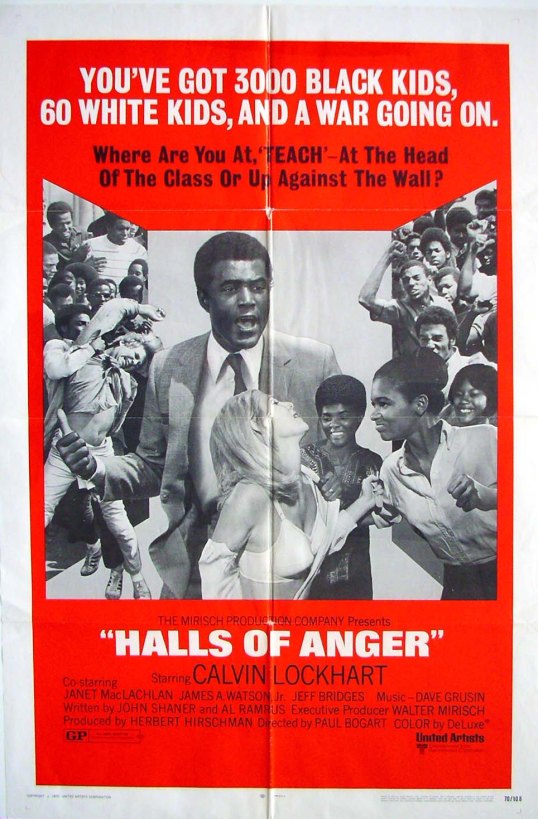
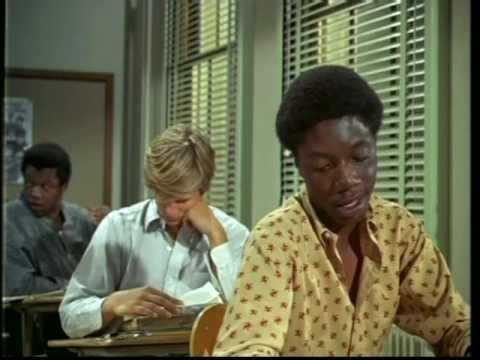
It’s certainly present in 1970’s Halls of Anger. This was Jeff Bridges’s film debut, made at a time when he could still pass for a high school student. He was 20 when he made this film and I have to say that for those of us who best know him as the Dude, Rooster Cogburn, and whoever he was playing in Crazy Heart, it’s always interesting to see just how handsome Jeff Bridges was when he was young.
Jeff Bridges, hiding his face in Halls of Anger
In Halls of Anger, he plays Doug, one of 60 white kids who have been transferred to a majority black inner city high school in an attempt to integrate it. Of all the new white students, Doug is probably the most confident and the most open-minded. He’s also the most friendly. His attempt to join the high school basketball team upsets the other students but — even after getting beaten up — Doug sticks with it. You knew that he would because, after all, he’s played by Jeff Bridges.
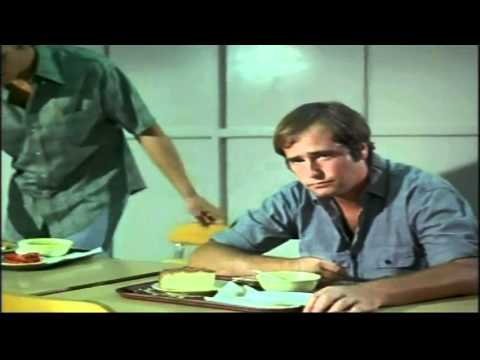
Of course, Doug’s story is just one of the many stories told in Halls of Anger. Another one of the transfers — a weak-willed and balding racist named Leaky (played by future director Rob Reiner!) — tries to provoke a fight with a black student, hoping that he’ll be sent back to his old school for his own protection. White Sherry (Patricia Stich) dates a black classmate and is savagely assaulted as a result. Newly assigned vice principal Quincy Davis (Calvin Lockhart) tries to both keep the peace and teach a group of functionally illiterate students how to read. Militant J.T. Walsh (James Edwards) wanders the hallways and speaks of revolution…
Rob Reiner in Halls of Anger
Actually, I’m probably making Halls of Anger sound a lot more interesting than it actually is. For the most part, it’s pretty much your standard 1970 social problem film, in that it’s full of good intentions but those good intentions don’t always add up to compelling drama. Paul Bogart’s direction is often flat (the scene where Davis teaches his students how to read seems to drag on for hours) and the characters don’t so much talk to each other as they make narratively convenient speeches.
That said, Halls of Anger is worth watching just to see Calvin Lockhart’s authoritative performance, Rob Reiner’s hilariously bad performance, and Jeff Bridges’s charismatic debut performance. He may never be a member of the U.S. Senate but everybody will always love Jeff Bridges.






 Through the Shattered Lens