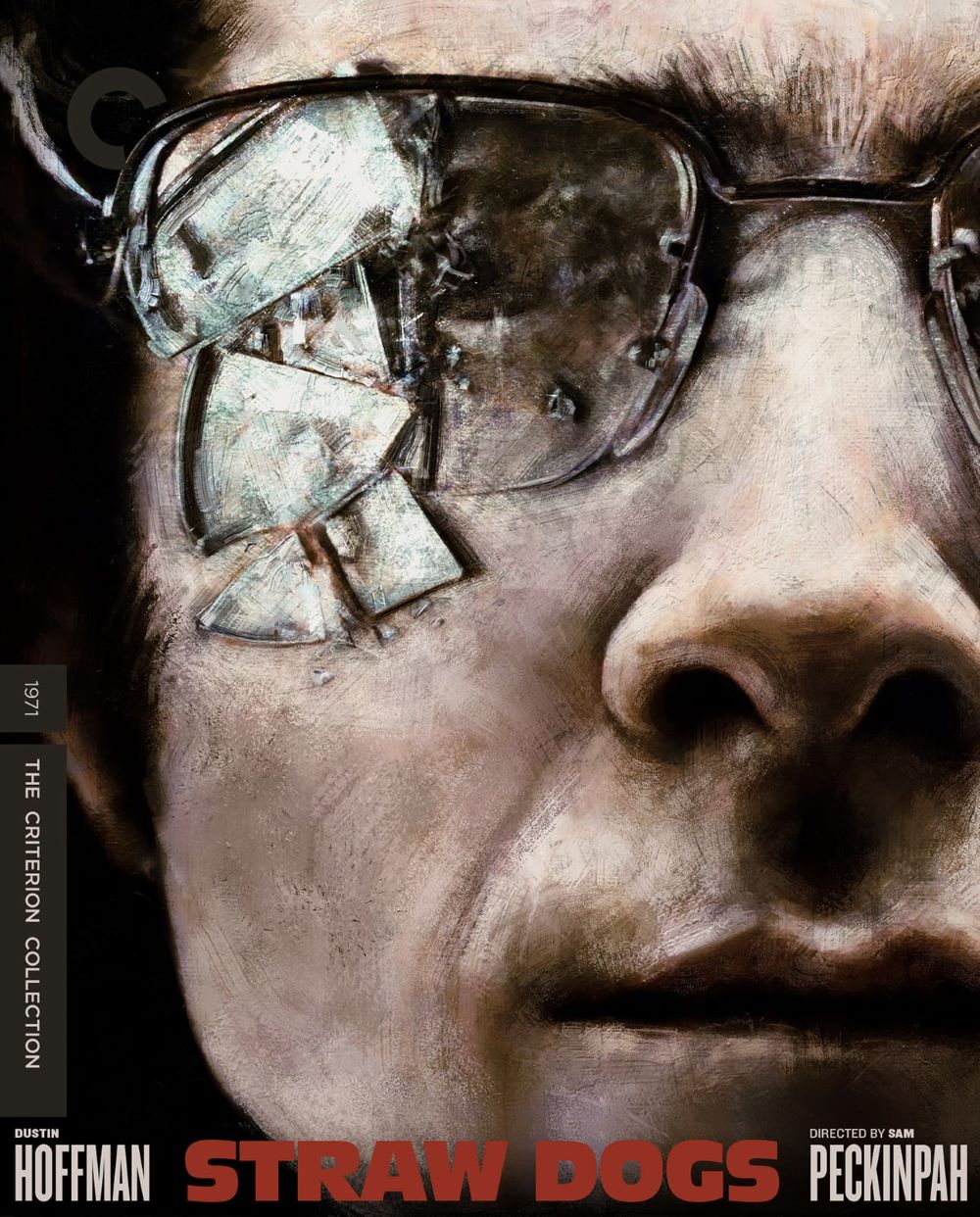
Review: Straw Dogs (dir. by Sam Peckinpah)


“Violence can be the only answer sometimes.” — David Sumner

Sam Peckinpah’s Straw Dogs is a raw, compelling dive into the breakdown of civility and the primal instincts bubbling underneath. The story follows David Sumner, a mild-mannered American mathematician, who moves with his wife Amy to her rural English hometown. The couple’s plan for a quiet life takes a sharp turn when tensions with the locals spiral out of control, resulting in a violent showdown. At its core, the film examines how far a person can be pushed before the veneer of civilization peels away, revealing something much wilder underneath.

The tension starts subtly, as David’s intellectual and pacifist nature clashes with the rough, territorial mindset of the local men. This brewing conflict isn’t just about cultural difference but taps into deeper themes around masculinity, power, and identity. Straw Dogs asks difficult questions about what it means to be a man, exploring how fragile male identity can be when confronted with real or perceived threats. David’s journey is less about heroism and more about the psychological and emotional transformation forced upon a man who initially seems ill-equipped for the violence unleashed around him. The whole film operates as a kind of symbolic stage where primal instincts and societal expectations collide, forcing each character to confront their own limits.

Amy’s role in the film is both pivotal and deeply complex. Her experience of assault, handled with subtle but unflinching attention, adds emotional and thematic weight without dominating the narrative. The film portrays her trauma through its impact on her and the shifting dynamics in her relationship with David, inviting reflection on resilience and struggle for control. Amy is depicted not merely as a victim but as a layered character navigating vulnerability and strength amid the hostile environment. This approach challenges viewers to consider the nuanced and often contradictory responses to trauma, avoiding simplistic victim narratives while emphasizing its profound consequences.

The rural setting of Straw Dogs is more than just a backdrop; it becomes a character in its own right. The close-knit, insular community embodies a microcosm where social order teeters and violence hides just beneath the surface. Law enforcement and authority figures seem ineffective or indifferent, which heightens the sense of isolation and lawlessness. The hostility from some village locals, including Amy’s ex-boyfriend Charlie, feeds into a toxic masculinity that sees David as weak and out of place. Peckinpah carefully stages this clash, using tension and silence as expertly as physical violence, making viewers feel the pressure ramping up until it finally snaps.

Dustin Hoffman’s portrayal of David is quietly brilliant in its subtlety. He plays David as a man trapped between worlds—intellectual and physical, passivity and aggression—with a restrained but deeply affecting performance. Hoffman’s ability to convey complex emotions beneath a calm exterior makes David’s eventual transformation all the more gripping. Susan George delivers an equally powerful performance as Amy, capturing the mixture of fear, defiance, and heartbreak her character endures. Their dynamic feels authentic and layered, making the viewer invested in their peril. The supporting cast, including actors like Peter Vaughan, add a layer of authentic menace, embodying the grim rural antagonists with convincing grit and intensity. The performances overall ground the film’s explosive themes in believable, relatable humans.

Themes in Straw Dogs extend beyond just personal violence to address ideas about identity and societal breakdown. The film explores the notion of the “symbolic order”—how individuals fit into and negotiate the rules and roles imposed by society. David’s identity crisis and his uneasy place within the village spotlight questions of power, emasculation, and rebirth. Peckinpah uses psycho-sexual imagery—such as symbols of emasculation and phallic power—to deepen the psychological stakes of David’s journey. The film conveys how deeply fragile human identity is and how violence can act as a brutal yet transformative force pushing individuals to redefine themselves. At the same time, the portrayal of Amy complicates these themes by challenging traditional gender roles, making the film as much about female agency as male dominance.

The film’s violence is famously brutal and unsettling. Peckinpah does not shy away from showing the full consequences of escalating conflict, culminating in an intense and chaotic finale where the line between victim and aggressor blurs. This isn’t violence for spectacle but a narrative and thematic necessity that Peckinpah uses to strip away pretenses and reveal the raw human instincts beneath. It’s this uncompromising depiction that both shocked audiences at the time and continues to provoke discussion about the nature of power and survival. The film is also notable for its innovative editing, with Peckinpah’s use of jump cuts and slow-motion heightening the emotional intensity and pacing the violence with a rhythmic, almost visceral punch.

Ultimately, Straw Dogs is a challenging film that forces viewers to confront disturbing truths about human nature, relationships, and societal order. Its exploration of violence and masculinity is complex and often uncomfortable, presenting no easy answers. The film remains a significant piece of cinema for its bold themes, outstanding performances, and the way it captures the frailty and ferocity of its characters. Peckinpah’s direction melds tension, psychological drama, and physical action into a gripping, unforgettable experience. Though controversial for its content, Straw Dogs endures as a powerful work that asks what truly happens when the thin line between civilization and savagery breaks down.
Scenes That I Love: Dustin Hoffman in The Graduate


Today, the Shattered Lens wishes a happy birthday to the legendary Dustin Hoffman.  This scene that I love comes from 1967’s The Graduate and it features Hoffman delivering one of the greatest lines of all time.

Lisa Marie Reviews An Oscar Winner: The Graduate (dir by Mike Nichols)


Hello darkness, my old friend….

After watching 1967’s The Graduate, I defy anyone to listen to Simon and Garfunkel sing about the darkness without immediately picturing a young-looking Dustin Hoffman (he was 30 when the film was made but he was playing 22) standing on a moving airport walkway with a blank expression on his face.

If you don’t picture that, maybe you’ll picture Dustin Hoffman floating in a pool, wearing dark glasses and barely listening to his parents asking him about graduate school.

Or maybe you’ll remember him driving his car across the Golden Gate bridge.  Or perhaps sitting at the bottom of his pool with a scuba mask on.  Or maybe you’ll see him awkwardly standing at the desk in the lobby of a fancy hotel, trying to work up the courage to get a room.  Or maybe you’ll just see him and Katharine Ross sitting at the back of that bus with a “what do we do now?” expression on their faces.

(Supposedly, that expression was not planned and was just a result of the shot running longer than expected.)

Ah, The Graduate.  Based on a novel by Charles Webb, Buck Henry’s script remains one of the quotable in history.  “Mrs. Robinson, you’re tying to seduce me …. aren’t you?”  “Plastics.”  “Elaine!”  Myself, I have an odd feeling of affection for the line “Shall I get the cops?  I’ll get the cops.”  Perhaps that’s because the line is delivered by a young and uncredited Richard Dreyfuss, appearing in his second film and adding to the film’s general atmosphere of alienation.

Alienation is the main theme of The Graduate.  As played by Hoffman, Benjamin Braddock feels alienated from everything.  He was a track star.  He was a top student in high school and college.  Now, he’s just a college graduate with no idea what he wants to do with the rest of his life.  One can argue, of course, that Braddock brings a lot of his alienation on himself.  He can be a bit judgmental, even though he’s the one who is having an adulterous affair with Mrs. Robinson (Anne Bancroft) while also falling for Mrs. Robinson’s daughter, Elaine (Katharine Ross).  His parents (William Daniels and Elizabeth Wilson) can be overbearing but it’s possible they have a point.  Is he planning on spending the rest of his life floating in their swimming pool?  Benjamin says that he just needs time to finally relax.  After being pushed and pushed to be the best, he just wants time to do what he wants to do before his life becomes about plastics.  When I first saw this movie, I was totally on Benjamin’s side.  Now, as I’ve gotten older, I’ve started to understand where his parents were coming from.  Still, it’s hard not to feel that Benjamin deserves at least a little bit of time to enjoy himself.  That’s what Mr. Robinson (Murray Hamilton) thinks, at least initially.

Mrs. Robinson is the most interesting character in the film, a force of chaos who lives to disrupt the staid world around her.  She’s bored with her marriage and her conventional but empty lifestyle so she has an affair with Benjamin.  Later, she grows bored with Benjamin and his desire to “just talk” for once and she moves on from him.  Benjamin and Elaine are both likable and you find yourself wishing the best for them but Mrs. Robinson is the character who you really remember.  Mrs. Robinson grew up without losing her sense of rebellion.  One doubts that Benjamin and Elaine are going to do the same.

A portrait of American suburbia and 60s alienation, The Graduate would prove to be one of the most influential social satires ever made.  A box office hit, it was nominated for seven Academy Awards.  It was nominated for Best Picture, Best Director (Mike Nichols), Best Actor (Dustin Hoffman), Best Actress (Anne Bancroft), Best Supporting Actress (Katharine Ross), Best Adapted Screenplay (Buck Henry and Calder Willingham), and Best Cinematography (Robert Surtees).  The Simon and Garfunkel songs that set the film’s mood were, for the most part, not eligible.  (Only Mrs. Robinson was written specifically for the film.)  I would argue that the film deserved to be nominated for its editing as well.  In the end, the film only won one Oscar, for Mike Nichols.  But, regardless of what awards it won or lost, The Graduate‘s legacy lives on.


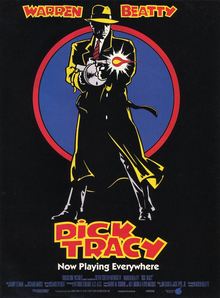
Dick Tracy (1990, directed by Warren Beatty)


The year is 1937 and “Big Boy” Caprice (Al Pacino) and his gang of flamboyant and often disfigured criminals are trying to take over the rackets.  Standing in their way is ace detective Dick Tracy (Warren Beatty), the yellow trench-wearing defender of the law.  Tracy is not only looking to take down Caprice but he and Tess Trueheart (Glenne Headly) are currently the guardians of The Kid (Charlie Korsmo), a young street kid who witnessed one of Caprice’s worst crimes.  Tracy’s investigation leads him through a rogue’s gallery of criminals and also involves Breathless Mahoney (Madonna), who has witnessed many of Caprice’s crimes but who also wants to steal Tracy’s heart from Tess.

Based on the long-running comic strip, Dick Tracy was a labor of love on the part of Warren Beatty.  Not only starring but also directing, Tracy made a film that stayed true to the look and the feel of the original comic strip (the film’s visual palette was limited to just seven colors) while also including an all-star cast the featured Madonna is an attempt to appeal to a younger audience who had probably never even heard of Dick Tracy.  When Dick Tracy was released, the majority of the publicity centered around Madonna’s participation in the film and the fact that she was dating Beatty at the time.  Madonna is actually probably the weakest element of the film.  More of a personality than an actress, Madonna is always Madonna no matter who she is playing and, in a film full of famous actors managing to be convincing as the members of Dick Tracy’s rogue gallery, Madonna feels out of place.  Michelle Pfeiffer would have been the ideal Breathless Mahoney.

It doesn’t matter, though, because the rest of the film is great.  It’s one of the few comic book films of the 90s to really hold up, mostly due to Beatty’s obvious enthusiasm for the material and the performances of everyone in the supporting cast who was not named Madonna.  Al Pacino received an Oscar nomination for playing Big Boy Caprice but equally good are Dustin Hoffman as Mumbles, William Forsythe as Flaptop, R.G. Armstong as Pruneface, and Henry Silva as Influence.  These actors all create memorable characters, even while acting under a ton of very convincing makeup.  I also liked Dick Van Dyke as the corrupt District Attorney.  Beatty knew audience would be shocked to see Van Dyke not playing a hero and both he and Van Dyke play it up for all its worth.  Beatty embraces the comic strip’s campiness while still remaining respectful to its style and the combination of Danny Elfman’s music and Stephen Sondheim’s songs provide just the right score for Dick Tracy’s adventures.  The film can be surprisingly violent at times but the same was often said about the Dick Tracy comic strip.  It wasn’t two-way wrist radios and trips to the Moon.  Dick Tracy also dealt with the most ruthless and bloodthirsty gangsters his city had to offer.

Dick Tracy was considered to be a box office disappointment when it was originally released.  (Again, you have to wonder if Beatty overestimated how many fans Dick Tracy had in 1990.)  But it holds up well and is still more entertaining than several of the more recent comic book movies that have been released.

Catching Up With The Films of 2024: Megalopolis (dir by Francis Ford Coppola)


It’s hard to know where to really start with Megalopolis.

Directed, written, produced, and financed by Francis Ford Coppola, Megalopolis takes place in an alternate version of the United States of America.  In this alternative world, New York is called New Rome and it is dominated by a handful of wealthy families.  Former District Attorney Franklyn Cicero (Giancarlo Esposito) has been elected mayor.  Everyone seems to hate Cicero and the character tends to come across as being a bit whiny so you really do have to wonder how he got elected in the first place.

Cicero is obsessed with the powerful Crassus-Catallina family, which is headed by banker Hamilton Crassus III (Jon Voight).  Hamilton’s nephew is Cesar Catallina (Adam Driver), a brilliant architect who won a Nobel Prize for inventing a type of invisible material.  Ever since Cesar’s wife vanished under mysterious circumstances, a cloud of scandal has hung over Cesar’s name and with that scandal has come popularity with both the masses and the tabloid press.  When Cesar was tried for murder, the prosecutor was Franklin Cicero.  Cesar was acquitted but he now spends his time drinking and mourning his wife.  Cesar also has the power to stop time for everyone but him.  Why he has this power and how he came to possess it is never made clear, though Cesar compares it to the way that a great painter or writer can capture one moment for eternity.

Cesar is driven through the rainy streets of New York by his chauffeur, Fundi Romaine (Laurence Fishburne).  Fundi also serves as the film’s narrator, ruminating about how the Roman Empire eventually became a victim of its own decadence.  Just in case the viewer somehow doesn’t pick up on the fact that the movie is comparing modern America to ancient Rome, Fundi informs us of this fact.  Thanks, Fundi!

After Cesar publicly denounces Cicero’s plans to turn New Rome into a casino, Cicero’s daughter Julia (Nathalie Emmanuel) decides to take a break from decadent partying to follow Cesar around and try to discover whether or not he actually murdered his wife.  Julia discovers that Cesar is not only still mourning his wife but she also witnesses him stopping time.  Soon, Julia is working for Cesar’s design firm.  At some point, she and Cesar become lovers.

Meanwhile, Cesar’s former lover, Wow Platinum (Aubrey Plaza), has married Crassus and is plotting to take control of his bank.  Working with Wow is Cesar’s buffoonish cousin, Clodio Pulcher (Shia LaBeouf), who organizes the angry citizens of New Rome into a mob that threatens the safety and power of both Cicero and Cesar.  “Make Rome Great Again,” a sign reads at one of Clodio’s rallies, just in case anyone was missing Coppola’s point.

Clodio is obsessed with destroying Cesar.  First, he frames Cesar for deflowering New Rome’s vestal virgin, the singer Vesta Sweetwater (Grace VanderWaal).  Then, he sends a 12 year-old assassin after Cesar.  Cesar fears that he’s lost his ability to stop time.  Julia falls more and more in love with him.  Cicero gets booed everywhere he goes and, after his fixer (Dustin Hoffman) is mysteriously killed, he finds himself helpless against Clodio’s mob.  Can Cesar be convinced to abandon his self-pity long enough to stand up to Clodio?

And what about the Russian spy satellite that just crashed into New Rome?  Who will rebuild the city?

And …. well, let’s just say that there’s a lot going on in New Rome.

Francis Ford Coppola originally came up with the idea for Megalopolis in 1977 and he spent decades trying to bring the film to the big screen.  Eventually, Coppola ended up producing and financing the film himself.  From 2023 to the the day of the film’s Cannes premiere, the trade papers were full of stories about how difficult the production had been, with the underlying theme being that everything was Francis Ford Coppola’s fault and that the movie would be an unmitigated disaster.  (In the coverage found in both Variety and The Hollywood Reporter, there seemed to be a good deal of hostility directed at Coppola’s decision to work outside of the Hollywood system.)  Disgruntled members of the crew complained that Coppola was an undisciplined director who spent most of the production high.  A half-baked attempt to generate a #MeToo scandal around the film made it obvious that Coppola had burned a lot of bridges with both Hollywood and the media.  The film was released to critical derision and poor box office returns.  Coppola is 85 years old and it’s entirely possible that Megalopolis will be his final film.

Critics be damned, I liked the majority of Megalopolis.  Though the film may be thematically and narratively incoherent, it is a feast for the eyes and it’s hard not to respect the fact that, in this age of overwhelming conformity, Coppola brought his own unique vision to the screen.  There are a few moments of genuinely macabre beauty to be found in the film.  When the Russian satellite crashes into New York, we don’t see the impact but, on the city walls, we do see the shadows of people screaming in fear.  When a drunk Cesar is driven through New Rome, he sees gigantic statues stepping off of their bases and slumping to the ground, exhausted with being on display.  Coppola films New Rome like a beautiful, open-air prison.  It’s an amazing view but don’t even think about trying to escape.  The scenes in New Rome’s Coliseum are filled with an epic yet seedy grandeur.  At times, the film’s scenes seem to be almost randomly assembled, leaving us to wonder if we’re seeing the past, the present, or maybe just something that Cesar is imagining in his head.

What is the film actually about?  It’s not always easy to say.  Even in his best films, Coppola has had a tendency to be self-indulgent.  Sometimes, that self-indulgence pays off.  Though few would admit it now, The Godfather Part II is one of the most self-indulgent films ever made.  But it’s also brilliant so it doesn’t matter.  However, with Megalopolis, it’s hard not to feel that this film was such a passion project for Coppola that he didn’t stop to consider whether or not he really had anything new to say.  Megalopolis is hardly the first film to compare the supposed decline of America to the fall of the Roman Empire.  As much as I enjoyed the film’s visuals, I cringed at the film’s ending.  One can only imagine how a past Coppola collaborator like John Milius would have reacted to a bunch of children reciting a pledge to take care of the “one Earth.”

It’s a random film, one in which plot points are raised and often quickly abandoned.  At one point, Cesar starts to recite Hamlet’s famous “to be or not to be” soliloquy.  The cast is huge and everyone seems to be acting in a different movie.  Surprisingly enough, neither Esposito nor Adam Driver are particularly believable in their roles, though I think that has more to do with the film’s loose narrative structure than anything else.  Shia LaBeouf is convincingly feral as Clodio while Jon Voight seems to be having fun as the wealthy and crude Crassus.  The best performance in the film comes from Aubrey Plaza, who plays her role like a vampish femme fatale who has somehow found herself in a science fiction story.  Plaza holds nothing back with her performance and she actually manages to bring some genuine human emotion to Coppola’s surreal epic.

Megalopolis is a monument to self-indulgence but it’s always watchable.  Coppola may not know what he’s trying to say but he captures the surreal beauty that comes from getting trapped in one’s own imagination.  Megalopolis is not a film for everyone but I’m glad it exists.  At a time when artistic freedom seems to be under constant attack, it’s hard not to be happy that Coppola did things his way.

Film Review: Kung Fu Panda 4 (dir by Mike Mitchell)


Po (voice by Jack Black), that Panda Bear who knows kung fu is back.

After finding fame as a Dragon Warrior and defending the Valley of Peace from numerous threats, he’s been told by his master, Shifu (Dustin Hoffman), that it is time for him to give up being the Dragon Warrior and move on to becoming the Spiritual Leader of the Valley of Peace.  Po doesn’t really want to do that so, after being passive aggressive about auditioning replacements, Po goes on a quest with a plucky corsac fox and thief named Zhen (voiced by Awkwafina).  Together, they head out to defeat a new threat, the Chameleon (voice of Viola Davis).  The Chameleon is summoning past villains from the Spirit Real and stealing their kung fu powers.

Meanwhile, Po’s two dads — one biological (voiced by Bryan Cranston) and the other a goose who adopted Poe when he was young (voiced by James Hong) — also set out on a quest to try to keep Poe from getting into trouble.  It’s actually kind of sweet, even if I did have a hard time telling all the various Panda Bears apart.  Actually, so did everyone else in the movie so at least I felt a little bit less dumb.

Kung Fu Panda 4 is a typical Dreamworks animated film.  The characters are cute and kid-friendly.  The humor is self-referential and occasionally, an adult joke will slip in  but it’s never anything that would threaten the film’s G-rating.  The plot is pretty predictable and by-the-numbers but then again, this is a Kung Fu Panda film that we’re talking about here.  There’s only so much that you can do with that.  That said, the animation is nicely done and the voice actors all do a good job of bringing their characters to life.  I especially liked Dustin Hoffman as Master Shifu.  It’s an entertaining movie, even if it does ultimately feel a bit generic.

The release of a new animated film, even one as low-key as Kung Fu Panda 4, used to be a huge event.  Now, we kind of take animated films and their star-studded casts for granted.  It’s a bit of a shame that we’ve lost that excitement.

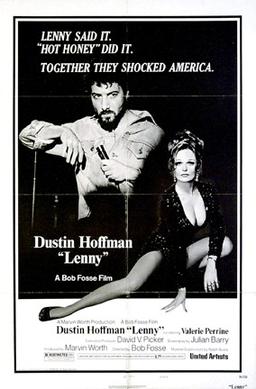
Lisa Reviews An Oscar Nominee: Lenny (dir by Bob Fosse)


Yes, it’s true.  Long before the creator of The Marvelous Mrs. Maisel was even born, Lenny Bruce was a real comedian who was challenging the status quo and going to jail for using words in his routine that were, at the time, considered to be so obscene that they couldn’t even be uttered in public.  Today, of course, we hear those words and they’re so commonplace that we barely even notice.  But, in the 50s and the early 60s, it was not uncommon for Lenny Bruce to get arrested in the middle of his act.  Club owners could literally be fined for allowing Lenny Bruce to perform on their stage.  At the height of his fame, it was a struggle for Lenny to find anyone willing to even consider booking him.

Whether it was his intention or not, Lenny Bruce became one of the first great warriors for the 1st amendment.  It made him famous and a hero to many.  Many people also believe that the pressure of being under constant legal threat led to his death from a drug overdose in 1966.  Lenny Bruce was only 40 years old when he died but he inspired generations of comedians who came after him.  It can be argued that modern comedy started with Lenny Bruce.

Directed by Bob Fosse and based on a play by Julian Barry, 1974’s Lenny takes a look at Lenny Bruce’s life, comedy, legal battles, and eventual death.  As he would later do in the thematically similar Star 80, Fosse takes a mockumentary approach to telling his story.  Clips of Lenny Bruce (played by Dustin Hoffman) performing are mixed in with “interviews” with actors playing the people who knew him while he was alive.  Because the story is told out of chronological order, scenes of a young and enthusiastic Lenny are often immediately followed by scenes of a burned-out and bitter Lenny reading from the transcripts of his trial during his stand-up.  Fosse never forgets to show us the audience listening as Lenny does his act.  Most of them laugh at Bruce’s increasingly outrageous comments but, to his credit, Fosse never hesitates to show us the people who aren’t laughing.  Lenny Bruce, the film tells us, was too honest to ever be universally embraced.

The film doesn’t hesitate to portray Lenny Bruce’s dark side.  For much of the film, Lenny is not exactly a likable character.  Even before his first arrest, Lenny comes across as being a narcissist who is cruelly manipulative of his first wife, stripper Honey Harlow (Valerine Perrine).  As opposed to the somewhat dashing Lenny of The Marvelous Mrs. Maisel, Dustin Hoffman’s Lenny Bruce comes across as someone who you would not necessarily want to be left alone with.  The film’s Lenny is a hero on stage and frequently a hypocrite in his private life but that seems to be the point of the movie.  Lenny argues that one of the reasons why Lenny Bruce could so perfectly call out society for being fucked up was because he was pretty fucked up himself.

As with all of his films, Lenny is as much about Bob Fosse as it is about Lenny Bruce.  As a director, Fosse often seems to be more interested in Bruce’s early days, when he was performing in low-rent strip clubs and trying to impress aging vaudevillians, than in Bruce’s later days as a celebrity.  (The world in which the young Lenny Bruce struggled was a world that Fosse knew well and its aesthetic was one to which he frequently returned in his films and stage productions.)  It’s also easy to see parallels between Lenny’s uneasy relationship with Honey and Bob Fosse’s own legendary partnership with Gwen Verdon.  The film’s grainy black-and-white cinematography captures not only the rough edges of Lenny’s life but also perhaps Fosse’s as well.  Just as Lenny Bruce performed confessional stand-up comedy, Lenny feels like confessional filmmaking.

Of course, it’s not always a pleasant film to watch.  Dustin Hoffman does a very good job of capturing Lenny Bruce’s drive but he doesn’t really have the natural comedic timing necessary to be totally convincing as a stand-up comedian.  (The film sometimes seems to forget that, as much as Lenny Bruce was admired for his first amendment activism, he was also considered to be a very funny stand-up.)  Still, it’s a valuable film to watch.  It’s a document of history, a reminder of a time when you actually could get arrested for saying the “wrong” thing.  Some people would say that we’re returning to those times and it’s easy to imagine that the real Lenny Bruce (as opposed to the idealized version of him) would not be welcome to perform on most college campuses today.  One can only imagine how modern audiences would react to a part of Lenny’s stand-up where he repeats several racial slurs over and over again.  (If Lenny Bruce had lived to get a twitter account, he would be getting cancelled every week.)  Lenny‘s vehement celebration of freedom of speech is probably more relevant in 2020 than it was in even 1974.

Lenny received several Oscar nominations, including best picture.  However, 1974 was also the year of both The Godfather, Part II and Chinatown so Lenny failed to win a single Oscar.

(Interestingly enough, Fosse’s previous film, Cabaret, was also prevented from winning the award for best picture by the first Godfather, though Fosse did win best director over Francis Ford Coppola.  Five years after the release of Lenny, Fosse would make All That Jazz, which was partially based on his own health struggles that he suffered with during the filming Lenny.  In All That Jazz, Cliff Gorman — who starred in the stage production of Lenny — is frequently heard reciting a Lenny Bruce-style monologue about death.  Fosse’s All That Jazz would again compete with a Francis Ford Coppola production at the Oscars.  However, Kramer vs Kramer — starring Lenny‘s Dustin Hoffman — defeated both All That Jazz and Apocalypse Now for the big prize.  22 years later, Chicago, which was based on Fosse’s legendary stage production and which featuring the song that gave All That Jazz it’s name — would itself win best picture.)

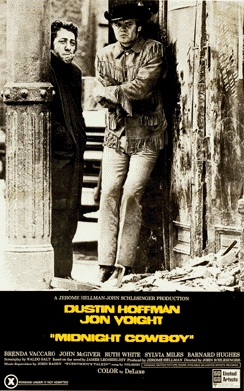
Lisa Watches An Oscar Winner: Midnight Cowboy (dir by John Schlesinger)


midnight_cowboy

Tonight, I watched the 1969 winner of the Oscar for Best Picture, Midnight Cowboy.

Midnight Cowboy is a movie about Joe Buck.  Joe Buck is played by an impossibly young and handsome Jon Voight.  Joe Buck — and, to be honest, just calling him Joe seems wrong, he is definitely a Joe Buck — is a well-meaning but somewhat dumb young man.  He lives in Midland, Texas.  He was raised by his grandmother.  He used to go out with Annie (Jennifer Salt) but she eventually ended up being sent to a mental asylum after being raped by all of Joe Buck’s friend.  Joe Buck doesn’t have many prospects.  He washes dishes for a living and styles himself as being a cowboy.  Being a Texan, I’ve known plenty of Joe Bucks.

Joe Buck, however, has a plan.  He knows that he’s handsome.  He’s convinced that all women love cowboys.  So, why shouldn’t he hop on a bus, travel to New York City, and make a living having sex with rich women?

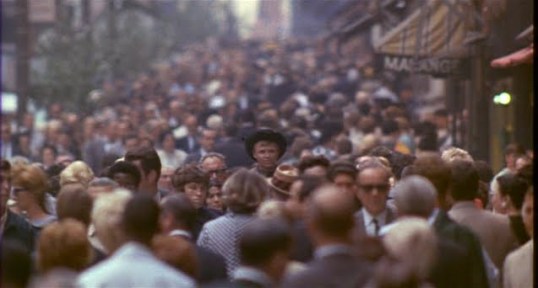
Of course, once he arrives in the city, Joe Buck discovers that New York City is not quite as inviting as he thought it would be.  He lives in a tiny and dirty apartment.  He can barely afford to eat.  Walking around the city dressed like a cowboy (and remember, this was long before the Naked Cowboy became one of the most annoying celebrities of all time) and randomly asking every rich woman that he sees whether or not she can tell him where he can find the Statue of Liberty, Joe Buck is a joke.  Even when he does get a customer (played, quite well, by Sylvia Miles), she claims not to have any money and Joe Buck feels so sorry for her that he ends up giving her his money.

midnight3crowd

As I watched the first part of the movie, it stuck me that the main theme of Midnight Cowboy appeared to be that, in 1969, New York City was literally Hell on Earth.  But then Joe Buck has flashbacks to his childhood and his relationship with Annie and it quickly became apparent that Midland, Texas was Hell on Earth as well.  Towards the end of the film, it’s suggested that Miami might be paradise but not enough to keep someone from dying on a bus.

Seriously, this is a dark movie.

Joe Buck eventually meets Ratso Rizzo (Dustin Hoffman).  Ratso’s real name is Enrico but, after taking one look at him, you can’t help but feel that he’s a perfect Ratso.  Ratso is a con man.  Ratso is a petty thief.  Ratso knows how to survive on the streets but New York City is still killing him.  As a child, Ratso had polio and now he walks with a permanent limp.  He coughs constantly, perhaps because he has TB.  Ratso becomes Joe Buck’s manager and roommate (and, depending on how you to interpret certain scenes and lines, perhaps more) but only after attempting to steal all of his money.

Unfortunately, Ratso is not much of a manager.  Then again, Joe Buck is not much of a hustler.  Most of his customers are men (including a student played by a young but recongizable Bob Balaban), but Joe Buck’s own sexual preference remaining ambiguous.  Joe Buck is so quick to loudly say that he’s not, as Ratso calls him, a “fag” and that cowboys can’t be gay because John Wayne was a cowboy, that you can’t help but suspect that he’s in denial.  When he’s picked up by a socialite played by Brenda Vaccaro, Joe Buck is impotent until she teases him about being gay.  In the end, though, Joe Buck seems to view sex as mostly being a way to make money.  As for Ratso, he appears to almost be asexual.  His only concern, from day to day, is survival.

Did I mention this is a dark movie?

And yet, as dark as it is, there are moments of humor.  Joe Buck is incredibly dense, especially in the first part of the movie.  (During the second half of the film, Joe Buck is no longer as naive and no longer as funny.  It’s possible that he even kills a man, though the film is, I think, deliberately unclear on this point.)  Ratso has a way with words and it’s impossible not to smile when he shouts out his famous “I’m walking here!” at a taxi.  And, as desperate as Joe Buck and Ratso eventually become, you’re happy that they’ve found each other.  They may be doomed but at least they’re doomed together.

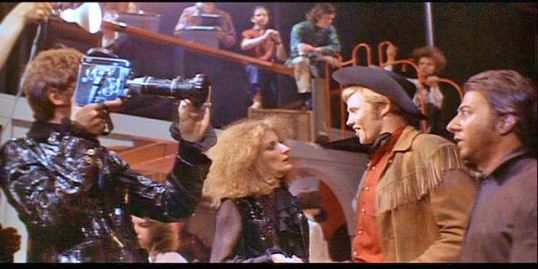
warhols-party

There’s a lengthy party scene, one that features several members of Andy Warhol’s entourage.  I was a bit disappointed that my favorite 60s icon, Edie Sedgwick, was nowhere to be seen.  (But be sure to check out Ciao Manhattan, if you want to see what Edie was doing while Joe Buck and Ratso Rizzo were trying not to starve.)  But, as I watched the party scene, I was reminded that Midnight Cowboy is definitely a film of the 60s.  That’s both a good and a bad thing.  On the positive side, the late 60s and 70s were a time when filmmakers were willing to take risks.  Midnight Cowboy could only have been made in 1969.  At the same time, there’s a few moments when director John Schlesinger, in the style of many 60s filmmakers, was obviously trying a bit too hard to be profound.  Some of the flashbacks and fantasy sequences veer towards the pretentious.

Fortunately, the performances of Voight and Hoffman have aged better than Schlesinger’s direction.  Hoffman has the more flamboyant role (and totally throws himself into it) but it really is Voight who carries the film.  Considering that he’s playing a borderline ludicrous character, the poignancy of Voight’s performance is nothing short of miraculous.

Midnight Cowboy was the first and only X-rated film to win best picture.  By today’s standards, it’s a PG-13.

Quick Review: Kung Fu Panda 3 (dir. by Jennifer Yuh & Alessandro Carloni)


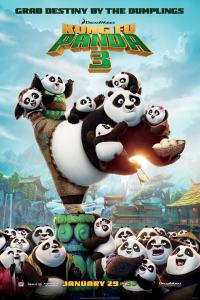
imagesHaving become the Dragon Warrior and the Champion of the Valley of Peace on many occasions, Po (Jack Black) has reached a point where its time for him to train others. All of this becomes complicated when Kai (J.K. Simmons), a former enemy of Master Oogway (Randall Duk Kim) returns to the Valley to capture the Chi of the new Dragon Warrior and anyone else that stands in his way.
The Legend of Korra geek in me hears the character of Tenzin whenever Simmons speaks in this film, only it’s Evil Tenzin vs. The Dragon Warrior. That alone was awesome.

Picking right up from Kung Fu Panda 2, Po is reunited with his birth father (Bryan Cranston), and discovers there are also other Pandas in the world. This, of course, causes a bit of tension for Po’s Goose Dad (James Hong) who raised him up until now. Can Po find a way to stop Kai? The theme of this film seems to be dealing with self discovery (as did the other films), but this focuses more on what we consider our Identity. Are we the role we take on from day to day at work or the role we have at home, or even a little of both? There’s also a nice family element to it as Po discovers what Panda life is like and deals with his Dads. Really young audiences may not exactly catch on to the theme, but there’s enough action and playful moments to keep them occupied.

On a visual level, the animation is beautiful. If you get a chance to see it in 3D, the Spirit Realm is a treat, with rocks and buildings floating around. The action scenes also move in a comic strip format, with the screen split in different ways to catch different elements. If you’re quick enough, you can catch it all. It can be jarring to anyone not used to it, I’d imagine. The Furious Five don’t have too much screen time in this one, save for Angelina Jolie’s Tigress, though it’s cute when you realize that some of the panda children in the village are played by the Jolie-Pitt kids. That was a nice discovery in the credits.

Musically, just like The Dark Knight Rises, Hans Zimmer takes what was a dual scoring effort (at least in the 2nd film) and makes it his. Though he’s assisted by Lorne Balfe (13 Hours: The Secret Soldiers of Benghazi), and drummer Sheila E. (Who worked with him on the Man of Steel score), it’s all Zimmer, really. Kai is given a nice theme to work with, one I can only describe as “Jazz Badass with Kung-Fu Swagger” and I enjoyed the music for the Panda village.

The only problem I had with Kung Fu Panda 3 was that it didn’t feel particularly epic in scope for me. In the first film, Tai Lung wanted to harness the power of the Dragon Scroll. In the second, the Peacock Shen brought cannons to decimate the Valley. This one was more personal and I enjoyed that, but it also felt like it could have been one of the Legends of Awesomeness episodes on Nickelodeon. It moved that quickly. Though it clocks in at an hour and 35 minutes — the same as the other films — it really whizzed by. It’s not a terrible thing at all, really, but I think I wanted something a little more.

Overall, Kung Fu Panda is a fun treat for the kids. While I didn’t go blind out of exposure to sheer awesomeness this time around, it gave me some inner peace and smiles.

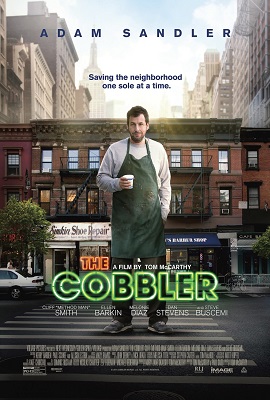
Embracing the Melodrama Part II #123: The Cobbler (dir by Thomas McCarthy)


The_Cobler_poster

Oh, Cobbler, Cobbler — what a frustrating film you are!

There was a time when everyone was excited about seeing The Cobbler.  It was originally scheduled to come out in 2014 and, along with Men, Women, & Children, it was supposed to be part of the dramatic recreation of Adam Sandler.

After all, one of the main reason why critics like me hate to see Adam Sandler devoting his time to stuff like That’s My Boy is because, in the past, Sandler has actually proven himself to be a surprisingly good and likable dramatic actor.  Unfortunately, dramatic Sandler films never seem to make much money and, as a result, Sandler goes back to making films where he, David Spade, and Chris Rock play former high school classmates.  If only one Sandler dramedy could be a success, we tell ourselves, then he’d never feel the need to make another movie like Jack and Jill

(And yes, I realize that’s probably wishful thinking on our part.  Even if Adam Sandler somehow won an Oscar, I get the feeling he’d follow the win by starting work on Grown Ups 3….)

The Cobbler promised that not only would Sandler be playing a more low-key role than usual but he would also be directed by Thomas McCarthy, who previously directed the excellent The Visitor and Win Win.  Based on his previous films, McCarthy seemed to be the perfect filmmaker to give Adam Sandler some credibility.

And, let’s not forget, that not only would Sandler be working with Thomas McCarthy but Men, Women, & Children was being directed by Jason Reitman!  At one point, it truly appeared that 2014 was going to be the year that we saw the rebirth of Adam Sandler.

And then Men, Women, & Children came out and was a disaster, despite the fact that Sandler got fairly good reviews.  Meanwhile, rumors started to swirl that just maybe The Cobbler wasn’t as good as McCarthy’s previous film.  When The Cobbler‘s release date was pushed back to 2015 … well, we all knew what that meant.

Anyway, The Cobbler was released in a few theaters earlier this year and on VOD.  It’s now available on Netflix.  I watched it last week and it’s really not as bad as I expected it to be.  Of course, that’s not to say that it’s particularly good either.  It’s not terrible but it is disappointing.  Considering the director and the supporting cast (Dustin Hoffman, Steve Buscemi, Dan Stevens, and Melonie Diaz, who was way too good in Fruitvale Station for you not to regret how this film totally wastes her), The Cobbler should at least be interesting.  Instead, it’s just kind of bland.

However, Adam Sandler does give a pretty good performance.  In this film, he plays Max, a shy and emotionally withdrawn cobbler.  He comes from a long line of cobblers and he inherited his store from his father (Dustin Hoffman).  Years before the film begins, Max’s father mysteriously vanished.  Now, Max spends his time going to and from work and taking care of his dementia-stricken mother.  His only friend is Jimmy (Steve Buscemi), the paternal barber who works next door.

In the basement of Max’s shop, there’s an old stitching machine.  About 30 minutes into the film, Max discovers that if be puts on a pair of shoes that have been repaired using the machine, he can physically transform into whoever owns the shoes.  After experimenting with being different people, Max eventually puts on his father’s shoes.  Transforming into his father, he has dinner with his mother.

The next morning, his mother dies.  Max cannot even afford to buy her a good headstone.  However, a local criminal (played by Method Man) has dropped off his shoes to be repaired.  Perhaps, by wearing the criminal’s shoes, Max can come up with the money…

I’m probably making The Cobbler sound a lot more interesting than it actually is.  And seriously, it sounds like it should a really good and thought-provoking movie.  Unfortunately, McCarthy awkwardly tries to combine the broadly comedic elements (i.e., Sandler transforming into a variety of eccentric characters) with the dramatic (which includes not only Max’s anger at his father but a few murders as well).  The film never finds a consistent tone and, as such, it remains an interesting idea in search of a stronger narrative.  Watching the film as it wanders from scene to scene, it’s impossible not to mourn all of the missed opportunities.

But, as I said, Adam Sandler does well.  Hiding his face behind a beard and only occasionally offering up a sad smile, Sandler gives a low-key performance that is full of very genuine melancholy.  In this film, he proves that he can act when he wants to.  You just wish that the rest of The Cobbler lived up to his performance.

Unfortunately, as far as the box office is concerned, The Cobbler is the least financially successful film that Sandler has ever appeared in.  This means that plans for Grown-Ups 3 are probably already underway…

(For those keeping track of the progress of Embracing The Melodrama Part II, we are now 123 reviews down with 3 to go.)