Ranking The Films of Quentin Tarantino


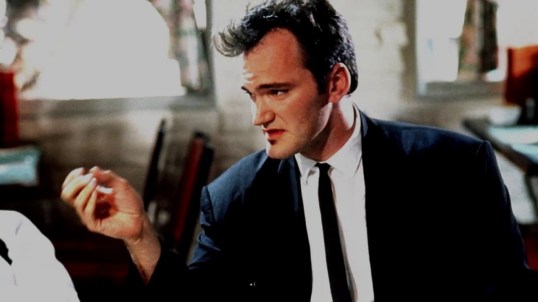
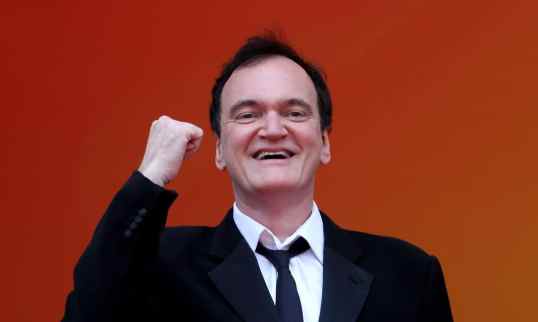
Since Today is Quentin Tarantino’s 57th birthday, I figured this would be a good time to rank the ten films that he’s directed so far!

Please note that I have not included things like Natural Born Killers, True Romance, Four Rooms, Sin City, or those episodes of CSI and ER on the list below.  These are just the feature films that Tarantino has directed.

So, without further ado, for worst to best, here are the ten film of Quentin Tarantino:
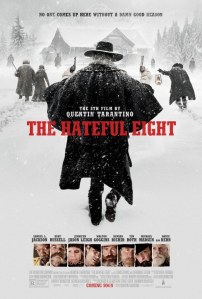
10) The Hateful Eight (2015)

The Hateful Eight is one of those films that people either seem to love or hate.  I personally think that it’s the one Tarantino film in which QT truly stepped over the line and became a parody of himself.  From the punishing run time to the lengthy “chapters” that went nowhere to the overwritten dialogue that read more like someone trying to write like Tarantino than Tarantino himself, The Hateful Eight is my least favorite of his films.  For me, the final straw was when — after already having forced audiences to endure two and half hours of this film — Tarantino stopped the action completely for a totally unnecessary flashback that apparently only existed so Tarantino could work in a Zoe Bell cameo.
9) Death Proof (2007)

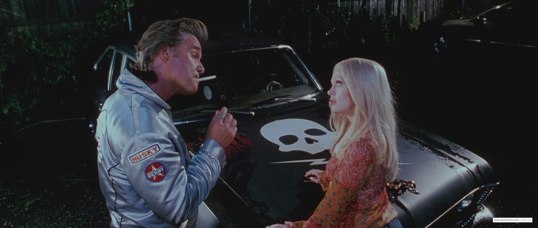
Oh, Death Proof.  I really liked Death Proof the first time that I saw it but whenever I’ve tried to rewatch it, it’s been a struggle to get through it.  Yes, Kurt Russell is great as Stuntman Mike and, unlike her previously mentioned cameo in The Hateful Eight, Zoe Bell is a welcome addition to Death Proof‘s ensemble.  But oh my God, why doesn’t the film just start in Tennessee?  Why do we have to suffer through all of that crap in Austin?
8) Kill Bill: Volume One (2003)

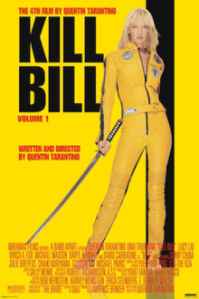
Now, it may seem like I’m ranking the first volume of Kill Bill fairly low on the list but you have to understand that, as far as I’m concerned, Tarantino has only made two bad films.  Kill Bill: Volume One is an exciting thriller and it not only features Uma Thurman at her best but it also has some of the best and most energetic fight scenes of all time.  If Kill Bill: Volume One seems ranked low, it’s just because it has some truly tough competition to deal with.
 

7) Jackie Brown (1997)

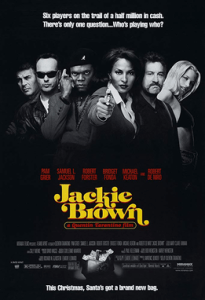
The first time I saw Jackie Brown, I thought it was a bit too slow and I guess I didn’t really “get” it.  As I’ve gotten older, I’ve come to better appreciate this surprisingly low-key and rather sad film.  Jackie Brown features Tarantino in the type of contemplative mood that he wouldn’t really return to until making Once Upon A Time In Hollywood.
6) Pulp Fiction (1994)

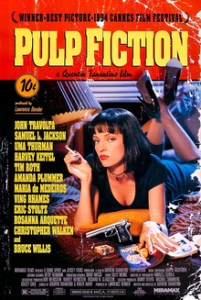
One of the most influential films ever made, Pulp Fiction was not only the first of Tarantino’s first film to be nominated for an Oscar but it was also his first film to truly establish that his filmography takes place in its own separate, pop culture-centered universe.  If there’s anything that’s keeping Pulp Fiction from being listed higher, it’s the painfully self-indulgent taxi cab conversation between Bruce Willis and Angela Jones and Quentin Tarantino’s own terrible cameo as Jimmy, the casually racist homeowner.  That said, this is still one of the most — if not the most — essential film for the 90s.  If you want to understand that decade, you have to watch Pulp Fiction.
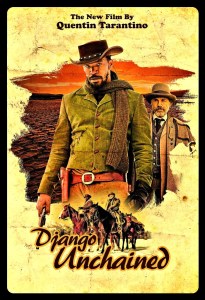
5) Django Unchained (2012)

Despite the fact that it features one of Leonardo Di Caprio’s worst performances (I know I’m the only one who thinks that), Django Unchained is still Tarantino at his most provocative and angry.  After decades of Hollywood films that attempts to explain away the history and legacy of slavery or that suggested that racism could easily be overcome, Tarantino and Django stepped up to say, “Fuck that.”  While the film received a lot of attention for its violence, I think it revealed that Tarantino is an artist with a conscience.  When Christoph Waltz speaks against the evils of slavery, it’s obvious that he’s speaking for Tarantino as well.  In much the same fashion of 12 Years A Slave (which would come out a year later), Django Unchained doesn’t flinch away from showing the horrors of slavery.
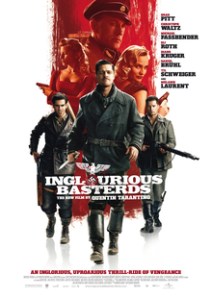
4) Inglourious Basterds (2009)

With Inglourious Basterds, Tarantino showed how art could be used to fix history’s mistakes.  In reality, many of the leaders of Nazi Germany escaped justice by committing suicide.  In Inglourious Basterds, they get blown away by a group of Jewish soldiers.  The film itself features some of Tarantino’s best set pieces and one of his best casts.  Despite the film’s length, this is also one of the few Tarantino films where there’s not a single scene that you can look at and say, “Well, that could have been cut.”  For once, every minute of the run time is needed to tell the film’s story.  Christoph Waltz became the first actor to win an Oscar for appearing in a Tarantino film.

3) Kill Bill: Volume Two (2004)

The Kill Bill saga concludes in grand fashion in Kill Bill: Volume Two.  For all of the fights and the violence, this film is more about accepting the consequences of your actions.  Uma Thurman and David Carradine give great performances but the heart of the film belongs to poor Michael Madsen, sitting in his trailer and waiting for justice to come and get him.  The scene where Thurman digs herself out of her grave is a justifiable classic and the final confrontation between Carradine and Thurman is Tarantino at his best.
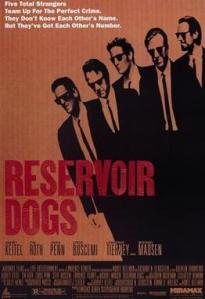
2) Reservoir Dogs (1992)

Tarantino’s debut film is still one of the most exciting and, in it’s way, funniest crime films ever made.  Every line is quotable.  Every performance is perfect.  Every song on the soundtrack is perfectly selected.  Who can forget Harvey Keitel’s incoherent scream of pain as he realizes that he’s been betrayed?  Personally, I just hope Mr. Pink escaped with the diamonds.


1) Once Upon A Time In Hollywood (2019)

Tarantino’s latest film is also his best, a love letter to the movies and the actors whose legacies live on in his own films.  For all the criticism that the film took for Margot Robbie’s lack of dialogue, her performance as Sharon Tate is the perfect epitome of everyone’s fantasy of what Hollywood was like in the years before the Manson murders made everyone lock their doors.  Leonardo Di Caprio and Brad Pitt are perfectly cast as Rick and Cliff and the film’s finale may be bloody but, at the same time, it corrected history in much the same way that Inglorious Basterds did.  By the end of the film, Rick Dalton knows that he’ll probably never be as big of a star as he could have been but at least he’s made some new friends.  He’s been accepted, in much the same way that a somewhat dorky former Hollywood video store clerk was eventually accepted by a film industry that, at first, wasn’t sure what to make of him.

Happy birthday, Quentin Tarantino!
4 Shots From 4 Films: Special Kurt Russell Edition


4 Shots From 4 Films is just what it says it is, 4 shots from 4 of our favorite films. As opposed to the reviews and recaps that we usually post, 4 Shots From 4 Films lets the visuals do the talking!

Today, we wish a happy 69th birthday to the patron saint of all thing that are cool about the movies, the one and only Kurt Russell!

And here to help us do that are:

4 Shots From 4 Films

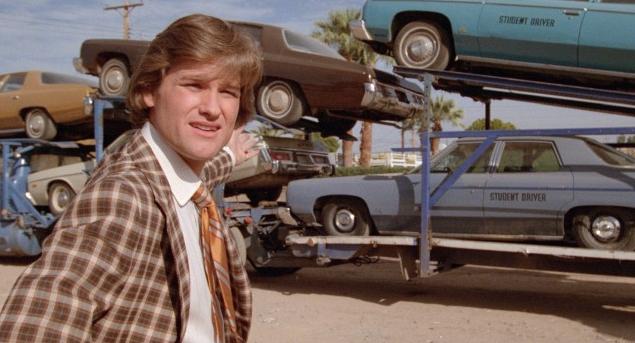
Used Cars (1980, directed by Robert Zemeckis)

Escape From New York (1981, directed by John Carpenter)

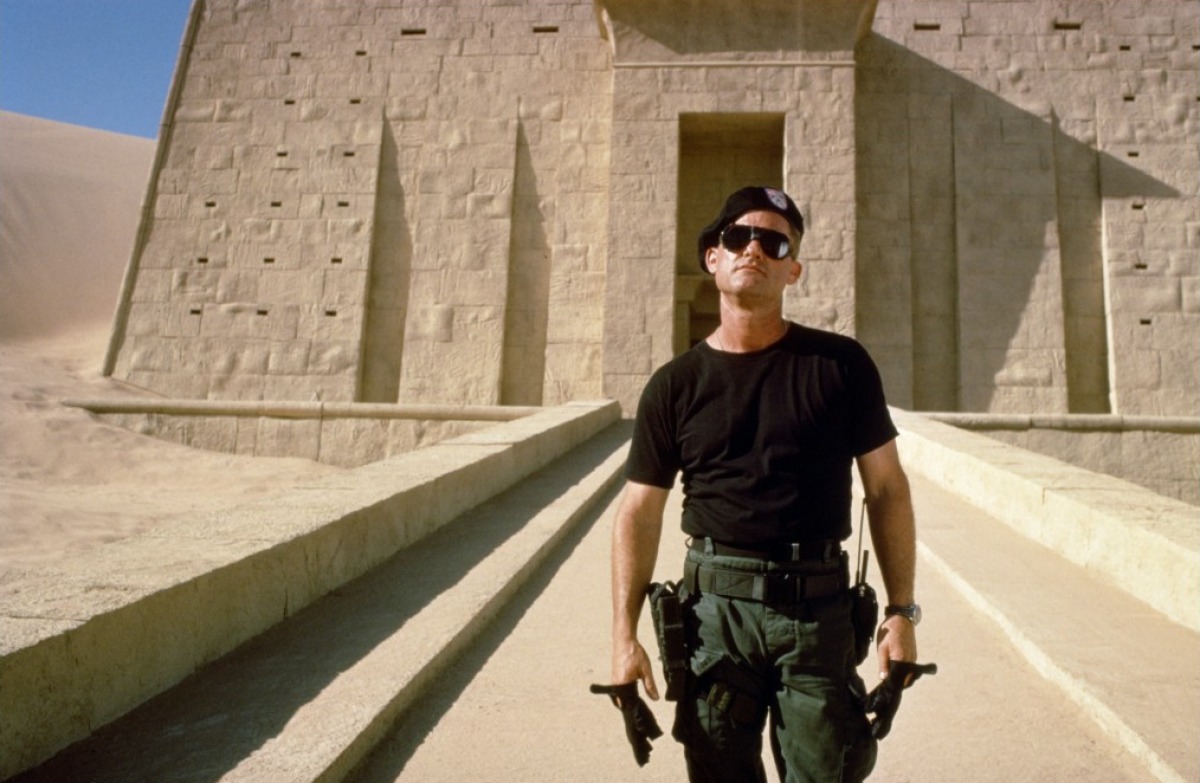
Stargate (1994, directed by Roland Emmerich)

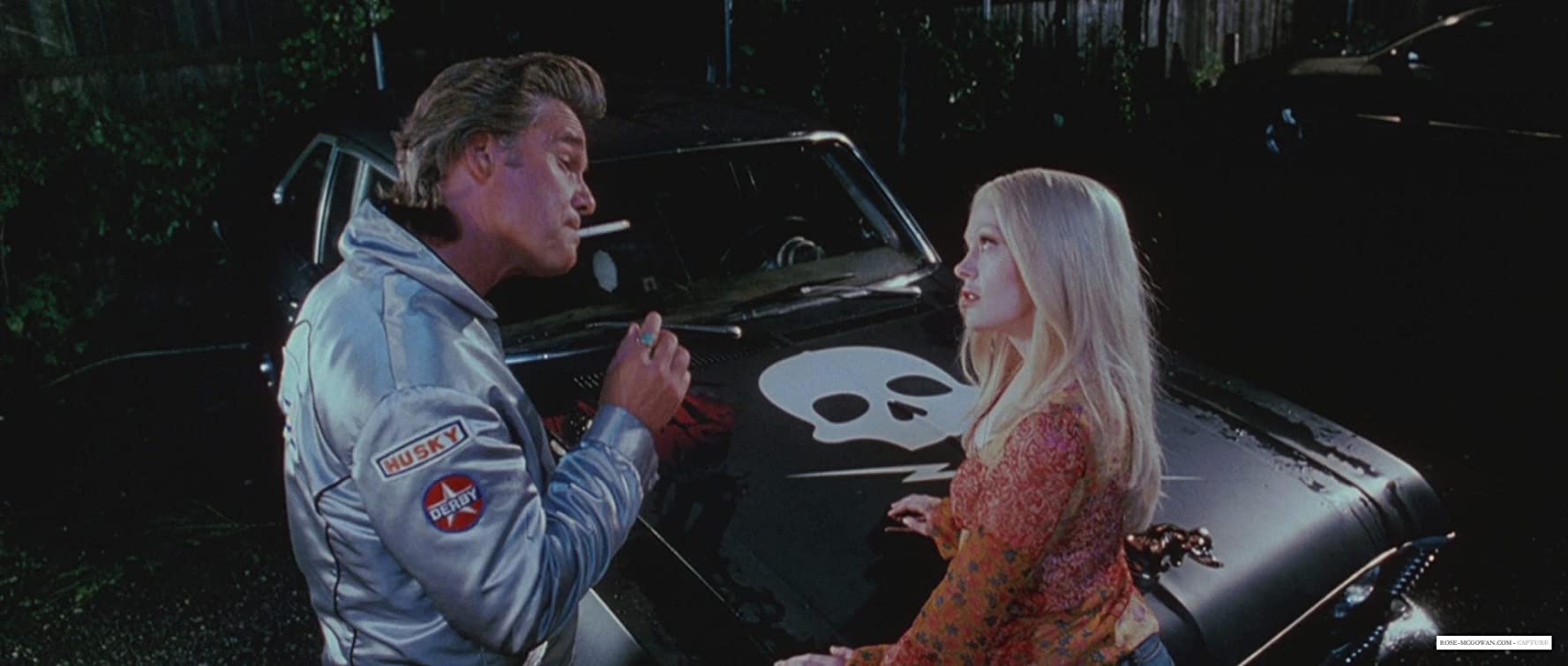
Death Proof (2007, directed by Quentin Tarantino)

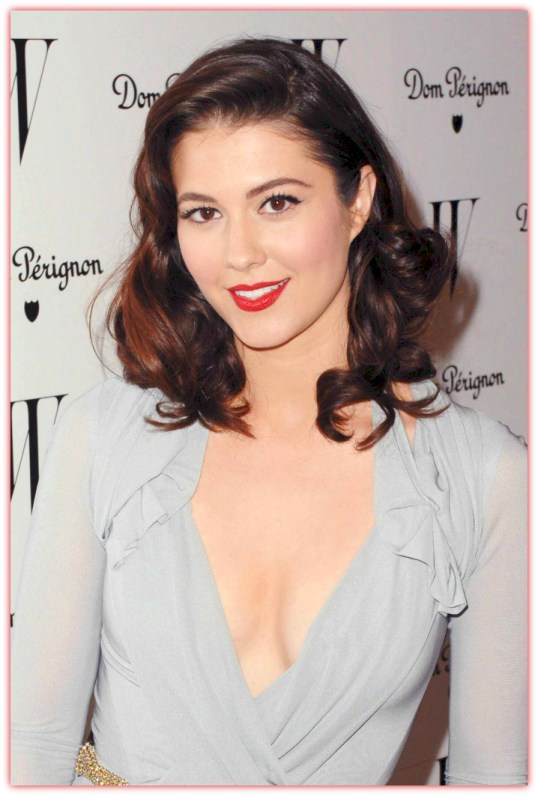
Hottie of the Day: Mary Elizabeth Winstead


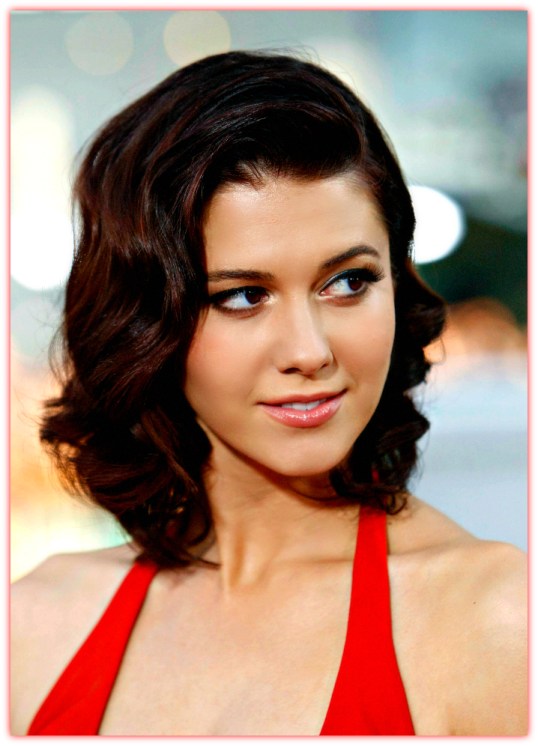
MARY ELIZABETH WINSTEAD

With this being horror-theme month here at Through the Shattered Lens I thought it was time for another “Hottie of the Day” entry and one who has some experience atbeing a scream queen in horror films these past couple years.

Mary Elizabeth Winstead is better known for the role (perfectly cast and played) of Ramona Flowers in Edgar Wright’s wright’s film adaptation of Scott Pilgrim vs. The World, but she has done quite a bit of work in the horror genre. One of her earliest films was as the lead in Final Destination 3. Then she has followed that up with roles in Quentin Tarantino’s half of Grindhouse as a naive young actress being stalked by Kurt Russell’s psychotic stuntman in Death Proof. Her last couple films have also been in the field of horror as she had major roles in both The Thing prequel and the fantasy horror mash-up this past summer with Abraham Lincoln: Vampire Hunter.

Ms. Winstead has become a favorite of genre fans and not just for her All-American girl-next-door look, but for the fact that she has talent as an actress and makes the most of every role she plays even in films that critically fails. Of late her work has gotten her noticed as a contender for the end of the year awards for best performance in a film with her performance as Kate Hannah in the comedy-drama Smashed.

Whether she wins awards later this year or not, here’s to hoping that she doesn’t stop doing genre projects while moving on towards more serious work.

PAST HOTTIES

From Vanishing Point To Shivers, Here’s 6 More Trailers


As the snow outside slowly melts and I try to decide what to wear when I go see The Rite tonight, why don’t you enjoy six more of Lisa Marie’s Favorite Grindhouse and Exploitation Trailers?

1) Vanishing Point (1971)

I had to include this trailer at some point since Vanishing Point is one of the key influences on Quentin Tarantino’s Death Proof section of Grindhouse.  Is Vanishing Point the ultimate trip?  Maybe but I think there’s one other film that came out the same year that might disagree…

2) The Jesus Trip (1971)

And here it is!  I haven’t seen this actual film but the trailer would seem to indicate that this is some sort of religious biker film.  But then you have that final scene in the trailer and you’re kinda like, “Uhmmm….sacreligious much?”  Anyway, this is one of those trailers that I find myself watching over and over again.  I guess I was destined to grow obsessed with this trailer as it appeals to both my exploitation fanatic side and my fallen Catholic side.  Put them both together and I guess you’ve got The Jesus Trip.

Seriously, this is just a weird trailer.

3) Horror House On Highway 5 (1985)

I’ve come across this film on DVD a few times and I’ve always been seriously temped to buy it just on the basis of the title.  However, I may just end up settling for having seen the trailer because, to be honest, the trailer would seem to indicate that there’s a lot of really, really ugly people in this movie.  And ugly people kinda sorta make me nervous.

4) Revenge of the Cheerleaders (1976)

I guess this is like the grindhouse version of Bring It On.  Watching the trailer, I have to wonder why high schools in 70s movies always looked so dirty and unwashed.  I mean — BLEH!  Seriously, if my school had been that dirty, I would have ended up dropping out of school when I was 15.  I mean, gawd damn!  Get out the Scrubbing Bubbles and every sanitizer you can find and just — oh my God.  I think it’s the cafeteria that really makes me shudder.  Anyway, as for the rest of the trailer, I asked my sister Erin if it looked like a truthful depiction of high school cheerleading since she used to be one and she said no because most cheerleader don’t survive getting blown up as easily as the ones in this trailer.

5) Bad Girls Go To Hell (1965)

This is a film from the notoriously odd Doris Wishman.  Someday, somebody — maybe even me — is going to turn the life of Doris Wishman into a great novel and an even better film.

6) Shivers (1975)

And let’s close things out with a little Cronenberg.  From 1975, it’s Shivers.

Review: Grindhouse (dir. by Robert Rodriguez and Quentin Tarantino)


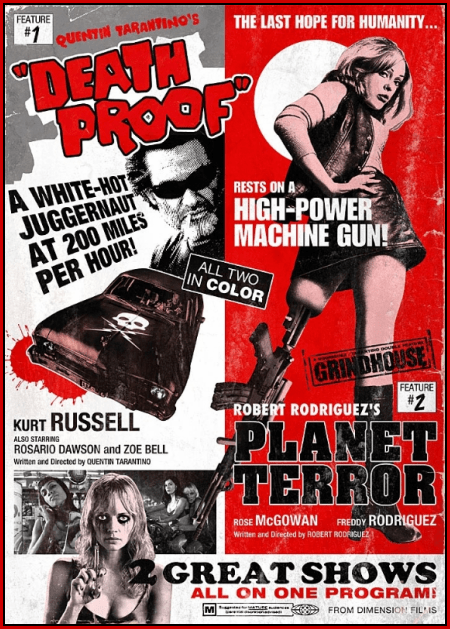
Robert Rodriguez and Quentin Tarantino have always professed to anyone within hearing distance their extreme and fanboyish love for the grindhouse days of filmmaking. Both directors’ resume of work look like a modern grindhouse films but with better writing, effects and directing. Anyone who grew up watching grindhouse film’s of the 70’s and 80’s can see it’s heavy influence on films such as From Dusk Til Dawn, Desperado, Pulp Fiction and Kill Bill. With 2007’s Grindhouse, both Rodriguez and Tarantino take their fanboy love for all things grindhouse and exploitation to a whole new level with personal take on the cheap John Carpenter-knock offs, zombie gorefests, slasher film and revenge-driven flicks that made being a young kid during the 70’s and 80’s quite enjoyable.

For those who do not know what grindhouse films are they’re the ultra-cheap and, most of the time, very bad, shlocky horror, revenge, softcore porn, badly-dubbed kung fu flicks and a myriad of other B- to Z-grade movies. These movies were shown in dingy, decrepit (usually former burlesque stagehouses) movie houses which showed double to triple-bills of titles for a low, cheap price all day long (where the popcorn and concession snacks were as stale as week-old coffee). These places and their films were book-ended by the cheap drive-in theaters which grew out of the suburban sprawl boom era of the 60’s and 70’s. One could not avoid the fact that the projector equipment were in bad shape and in desperate need of maintenance while the films played out. Then there’s the film reels themselves with their washed out sequences, out of focus scenes, burnt-in spots and missing film reels where the sex scenes would’ve been. This was the grindhouse experience and with the rise of Hollywood as a corporate entity even moreso than it’s been in the past and urban renewal projects by big city leaders, the grindhouse experience has pretty much faded away and kept alive only in the memories of its fans worldwide.

What Robert Rodriguez and Quentin Tarantino have cranked out with their three-hour long opus to those grindhouse days has been both a literal and thematic homage to an era long since gone. Grindhouse also has allowed Rodriguez and Tarantino to pull out all the stops in filming their respective halves of the film. Rodriguez went all-out in paying literal homage to the zombie gore-fests of George A. Romero, Lucio Fulci and Umberto Lenzi. Planet Terror plays like a hodgepodge of all the zombie movies from these masters of the walking dead but Rodriguez has the use of digital effects to match the over-the-top feel of the past zombie-fests without making the effects look too cheap.

The story for Planet Terror is quite simple yet full of so many incoherent subplots that trying to keep track with whats going on would just confuse a viewer even more. Rodriguez gets the grindhouse feel with such a ludicrous storyline. Whether it was done on purpose or not, the feeling of confusion in addition to the non-stop zombie action was only compounded even more by the digitally-added film stock scratches, burns to the edges of the reel and when the movie was about to get all hot and sexy, missing reel footage. Anyone who watched movies in grindhouse theaters would recognize the look quite well. Rodriguez goes all out in letting his zombie fanboy out. The violence in Planet Terror begins strong and just gets stronger and even more over-the-top right up to the final frame. Zombie’s getting their heads blown apart is shown in scratchy, loving detail with an impossible amount of blood, bone and brain for people to gawk at. The female characters are hot and sexy. Rose McGowan as Cherry Darling holds Planet Terror together with her spunky go-go dancer dreaming to be a stand-up comedienne turning into Ellen Ripley minus a leg but gaining an M16A3 w/ M203 grenade launcher as a leg prosthetic. Freddy Rodriguez as El Wray, her wayward and mysterious lover, almost seem to be channeling a hilariously bad version of Snake Plissken. These two make for quite the explosive couple as they must try and save their small Texas town from the infected townspeople turned pus-oozing, boil-ridden zombies.

Planet Terror sports a nice collection of current B-list actors like Josh Brolin (making like a Nick Nolte at his growliest) and Marley Shelton as a pair of married doctors with marital problems compounded by the increasing amount of zombies their hospital seem to be bringing in for medical help. There’s also genre veterans Michael Biehn, Jeff Fahey and Tom Savini to give Planet Terror the appropriate grindhouse look and feel to it. Ever the good friend and buddy collaborator, Rodriguez even gives Quentin Tarantino a role in his half of the film. He’s shown in the credits for Planet Terror as The Rapist. If any director seem destined to be one, if their love for movies didn’t steer them on the right path, Tarantino seem to look just like one to be called “Tha Rapist”.

There’s explosion and gore galore in Rodriguez’s ode to the zombie genre. Some who sees it might say there’s too much and they would be right if the title of the whole film wasn’t Grindhouse. I, for one, am glad Rodriguez decided to not hold back with what he threw onto the screen. I’m sure that when the dvd finally comes out and the unedited full version of Planet Terror is shown it’ll even surpass the 85-minute running time in the film. I think I can forgive Rodriguez for his gore excess and at times I actually wished for more, but then that would mean taking even more time before I get to Tarantino’s half of the movie. Planet Terror truly got the look of a grindhouse flick, but it’s Tarantino’s Death Proof half which got the spirit of grindhouse down to near-perfect.

Before Tarantino’s Death Proof half of Grindhouse begins the audience gets treated to a sort of intermission involving three fake trailers for movies which celebrate just how ridiculously fun grindhouse movies really were during the 70’s and 80’s. There’s Rob Zombie’s Werewolf Women of the SS which was this weird mish-mash of the women-in-prison flicks with that of the infamous Ilsa: She-Wolf of the SS films that brought about the exploitation in grindhouse. This trailer was great just for the inspired casting of Nicolas Cage as Fu Manchu and Sybil Danning as one of the so-called SS women werewolves. There’s also Edgar Wright’s fake trailer for Don’t (director of Shaun of the Dead and Hot Fuzz) which parodies the trailers for all the gothic, European haunted and horror movies where none of the actors in the trailer speak a word to make sure the film doesn’t get labeled as a “foreign film”. But it’s the third trailer in that intermission trio which had everyone in the audience reacting wildly.

Eli Roth’s Thanksgiving is a throwback to the seasonal-themed slasher flicks like Black Christmas but this time turns the yearly, turkey day and Pilgrim celebration into a trailer with some of the most disturbingly inventive scenes for a fake slasher movie. I don’t know what the Pilgrim serial killer was doing with that turkey at the end of the trailer but I’m sure it will have many people talking about it afterwards. It’s this Eli Roth trailer which fully captures the gritty and gratuitious nature of what makes a grindhouse horror movie. It’s also the one fake trailer I hope Roth would re-visit and turn into a full-length movie.

Now, with the trailers out of the way, Tarantino’s half of Grindhouse begins and we’re treated to a different take on the grindhouse experience. Death Proof begins as if it will continue Rodriguez’s literal examination and homage to the grindhouse experience, but after messing with the film’s focus, adding a few film scratches to the celluloid and even adding a missing reel gag, Tarantino suddenly slows all those grindhouse trickeries and actually ends up making a rip-roaring slasher-revenge-carchase flick. Tarantino takes one part slasher movie adds in a heavy dose of his own Reservoir Dogs (the talking between the female characters in Death Proof are as foul-mouthed and trivial as the diner scene in Reservoir Dogs) then mixes in equal amounts of Vanishing Point, Faster Pussycat! Kill! Kill! and I Spit On Your Grave. Instead of just mimicking these particular grindhouse classics, Tarantino uses his own flair for extended dialogue to slow down the pace of the film thus lulling the audience for the two pay-offs which happen in the middle and the end of Death Proof. Tarantino’s half of Grindhouse could’ve went nowhere with all its estrogen-laced talkies, but Kurt “I AM SNAKE PLISSKEN” Russell really saves the day once he makes his appearance as the automotive-themed serial killer, Stuntman Mike. Where Jason uses farming and bladed implements as his tool of the serial killing trade, Stuntman Mike uses both a 1971 Chevy Nova SS and a 1970 Dodge Charger R/T 440 as his weapons of choice. Both vehicles have been made death proof for filming violent car stunt sequences, but in order to appreciate it’s unique life-saving properties then one has to sit where Mike sits.

Kurt Russell can now add Stuntman Mike to his classic list of badass roles. Mike would feel quite welcome amongst the like of Snake Plissken, John J. MacReady, and Jack Burton to name a few of Russell’s classic characters. Mike comes across as cooly and slickly dangerous, yet not psychotic. His charm is quite disarming until it turns deadly. He really takes the slasher-character stereotype and turns it on its ear. Death Proof once again shows that when Tarantino gets to work with one of his boyhood idols he really gives them a role that they could sink their teeth into.

Death Proof captures the spirit of what makes a grindhouse exploitation film. Even with the heavy references to Vanishing Point, especially with a white 70’s Dodge Challenger used just like in that movie, Tarantino still injects his own brand of craziness to the whole movie. I know many who have complained that Death Proof was too much talk with only the car chase in the end being the saving grace. I politely disagree and say that it’s that very long periods of dialogue between the women in Death Proof that brings some of the spirit of grindhouse to the story. Many forget or don’t remember that most grindhouse cheapies had so much extraneous dialogue to hide the fact that the budget was low to none when the movies were being made so they had to fill-up the movie’s running time with as much nonsensical dialogue before the big effect shots payoff.

The final chase-scene between the Russell’s Stuntman Mike and the female-trio of Rosario Dawson, Tracie Thoms (channeling Jules from Pulp Fiction) and real-life stuntwoman Zoe Bell (she doubled as Uma Thurman in the more dangerous stunts in Kill Bill) has to go down as one of the craziest, whiteknuckling, barnburning car chase sequences of the modern times. No CGI-effects trickery and fancy MTV-style editing was used. George Miller, John Frankenheimer and Richard Sarafian would be proud of what Tarantino was able to accomplish with Death Proof‘s 20-minute long car chase. By the time Death Proof ends the audience have bee put through the wringer and one was hard-pressed not to cheer and root for Stuntman Mike even though we know we shouldn’t. Death Proof proves that “hell hath no fury like a woman scorned” or at least a trio of women endangered.

Grindhouse is a film not for everyone. There’s going to be quite a few people who won’t “get” the film homages and references by both Robert Rodriguez and Quentin Tarantino. Some would say that the movie was too over-the-top, badly made and just out there, but then they would be missing the point of the whole project altogether. For those who grew up watching these kind of films as kids and teenagers, it’s a belated Valentine’s gift from two fanboy filmmakers who finally were able to do the films they grew up idolizing and enjoying. For the rest who are not as well-versed in the grindhouse cinema, this is a good enough starter before they move on to try the classic ones which are now on video (I would suggest they find a worn-out VHS copy of it instead of the cleaned up DVD version). The film is over three-hours long, but one who goes in really can’t say that they didn’t get their money’s worth when they went in to watch Grindhouse.