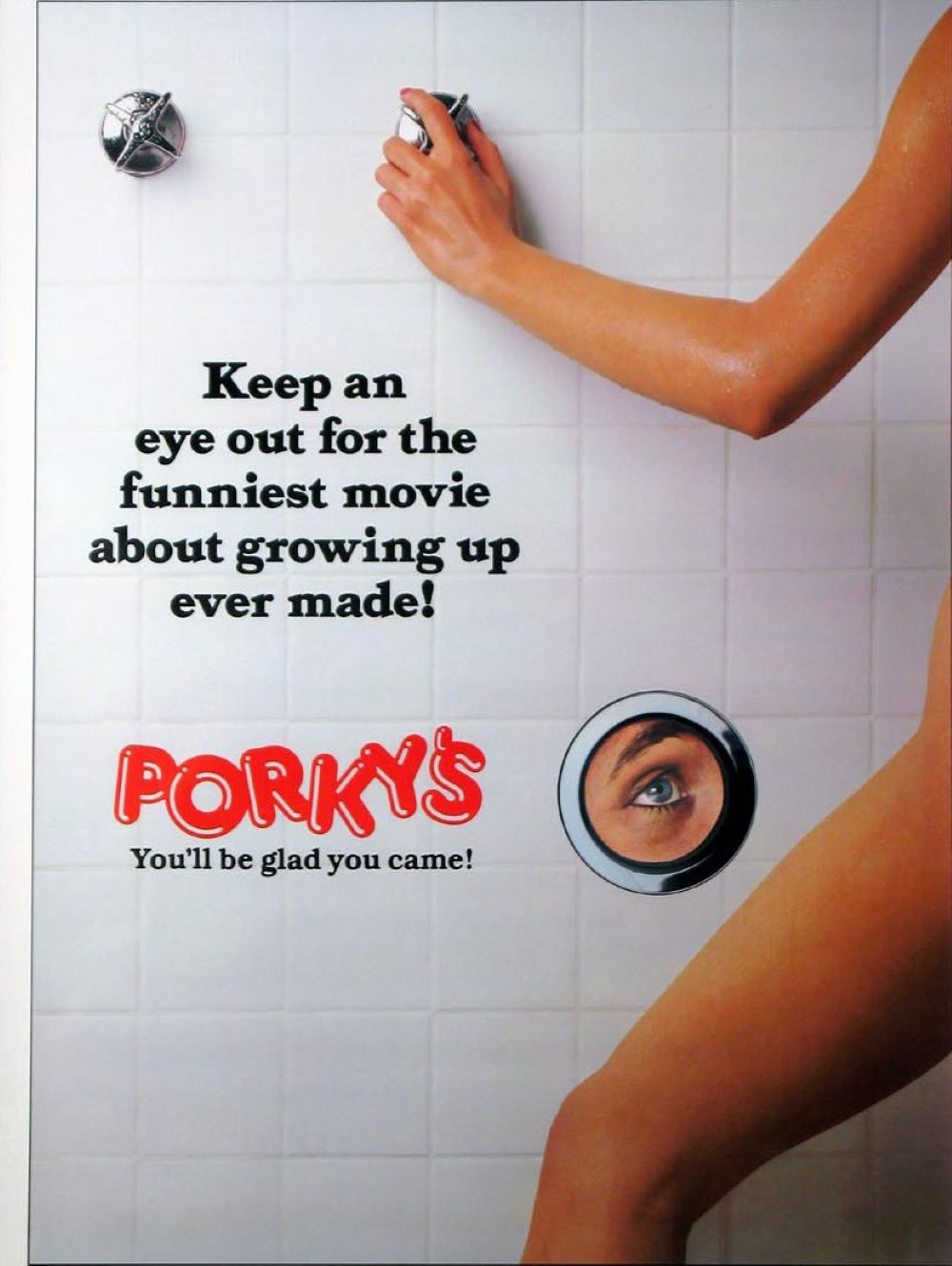
Guilty Pleasure No. 93: Porky’s (dir. by Bob Clark)


Porky’s is one of those movies that plays very differently depending on when you first see it. On the surface, it is a loud, lewd early‑’80s teen sex comedy about a bunch of high‑school boys in 1950s Florida trying to get laid and get even, but underneath the pranks and bare flesh there are streaks of surprisingly serious material about prejudice, masculinity, and power. That mix of dopey laughs and darker undercurrents is exactly what makes the film interesting to talk about, and also what makes it so divisive today.

Set in the 1950s and released in 1981, Porky’s follows a tight‑knit group of teenage boys whose main goals in life are sex, sports, and practical jokes. Their adventures eventually take them to Porky’s, a sleazy backwater strip club run by the hulking, corrupt Porky, who humiliates them and sets up the revenge plot that drives the back half of the film. Around that spine, the story wanders through locker‑room banter, elaborate pranks, and various attempts to sneak into the girls’ showers or otherwise spy on naked bodies. It is very much a “horny boys on the prowl” narrative, and the film never pretends to be anything else.

What keeps it from being just another disposable sex comedy is the way some of those side stories hit harder than expected. One of the kids is brutally abused by his father, and the film doesn’t treat it like a throwaway detail; those scenes have a rawness and anger that clash with the goofy tone elsewhere. There is also a thread about anti‑Semitism and racism in their community, with one character confronting his own bigoted upbringing as he befriends a Jewish classmate and pushes back against the prejudice around him. That material is handled in a pretty straightforward, earnest way, which is jarring given how crude the surrounding humor can be, but it does show that writer‑director Bob Clark had more on his mind than dirty jokes.

The humor, for better or worse, is what most people remember. Porky’s leans heavily on slapstick and sex‑obsessed gag setups: peeping through holes in shower walls, mistaken identities during sex, ridiculous anatomical bragging, prank phone calls, and elaborate schemes that escalate into full‑on chaos. Some of the set pieces are staged with real comic timing, and if you’re on its wavelength, these sequences can still land as big, cathartic laughs. Others feel juvenile in the worst way, stretching one joke way past its breaking point, or punching down at easy targets rather than punching up at the hypocritical adults the boys are constantly butting up against.

Viewed from today’s lens, a big chunk of that humor is undeniably uncomfortable. The movie is saturated with sexist, homophobic, and racist language, and a few of the “pranks” involving the girls are essentially sexual harassment played for laughs. At the time, it was sold as a gleefully politically incorrect romp; now, those same scenes read as mean‑spirited or creepy in a way that undercuts the supposed lighthearted tone. The film occasionally tries to complicate this by giving some of the female characters sharper edges or letting them turn the tables, but it never fully escapes the fact that the camera is mostly aligned with the boys and their fantasies.

That said, Porky’s is not entirely dismissive of its women. There are moments where adult women, in particular, are allowed to call out the boys’ behavior or assert their own sexuality in ways that undercut the usual “conquest” narrative. The movie also makes a point of ridiculing hypocritical authority figures—teachers, coaches, cops, and parents—whose prudish public morals don’t match their private behavior. When Porky’s is skewering bigotry, religious hypocrisy, and small‑town moral panics, it feels sharper and more progressive than its reputation as a dumb “tits‑and‑ass” comedy suggests. Those flashes of insight are part of why some viewers argue that, beneath the sleaze, the film is quietly critical of the very attitudes it seems to indulge.

Performance‑wise, the cast is made up largely of unknowns who sell the illusion that this is a real, scrappy group of friends rather than polished Hollywood teens. The camaraderie feels genuine; their constant ribbing, in‑jokes, and shifting alliances are believable enough that you can see why the movie became a touchstone for a certain generation of viewers. Bob Clark’s direction is surprisingly controlled for such an anarchic script. He keeps the story moving, balances multiple subplots, and stages the bigger comic payoffs in a way that feels almost like a live‑action cartoon. The downside is that this slickness can make the nastier gags pop more, for better and worse.

On a technical level, Porky’s is very much a product of its time, but not a cheap one. The period detail—cars, music, clothing, diners, and dingy roadside bars—helps sell the 1950s setting, giving the film a nostalgic sheen that softens some of its rougher edges. The soundtrack leans on era‑appropriate rock and roll, which adds energy to the locker‑room and party scenes. The film also doesn’t shy away from male nudity, which was less common in comedies of the time and adds to its reputation as equal‑opportunity when it comes to what it exposes, even if the gaze is still clearly tilted toward ogling women.

Where Porky’s can stumble is in tone. The shifts between broad farce and serious drama can be abrupt. One minute you are watching a drawn‑out gag about a teacher trying to identify a student by his anatomy; the next, you are plunged into a grim confrontation with an abusive parent. That whiplash can pull you out of the movie, because the emotional weight of the dramatic scenes doesn’t always get enough breathing room before the script lurches back to naughty antics. As a result, some viewers feel the darker elements trivialize real issues, while others think those same scenes give the film more substance than its imitators.

Even if someone has never seen Porky’s, they have probably felt its influence. The film was a massive box‑office hit relative to its budget and paved the way for a wave of raunchy teen comedies through the ’80s and ’90s, eventually echoing into movies like American Pie and beyond. Its success made it clear that there was a huge audience for R‑rated, adolescent sex comedies that mixed crude jokes with a veneer of coming‑of‑age sentiment. You can see its blueprint in later films: packs of horny friends, elaborate revenge schemes, school authority figures as comic foils, and a big, raucous set piece as the payoff.

Whether Porky’s “holds up” is going to depend a lot on your tolerance for outdated attitudes and offensive language. If you go in expecting a cozy nostalgia trip, you may be surprised by how sour some jokes taste now, and how casually the film treats behavior that would be framed very differently in a modern story. If you approach it as both a time capsule and the prototype of a genre, it becomes easier to see its strengths—the lively ensemble, the willingness to poke at racism and hypocrisy, the low‑budget ingenuity in its set pieces—alongside its very real flaws.

Porky’s is neither the hidden gem some defenders make it out to be nor the irredeemable trash its harshest critics describe. It is a messy, uneven, often funny, often cringeworthy movie that captures a particular moment in pop culture, both in what it laughs at and what it takes for granted. If you are curious about the roots of modern raunchy teen comedies and prepared for the rough, politically incorrect ride, it is still worth a look as a piece of film history and as an example of how comedy ages—for better and for worse.

Previous Guilty Pleasures

  1. Half-Baked
  2. Save The Last Dance
  3. Every Rose Has Its Thorns
  4. The Jeremy Kyle Show
  5. Invasion USA
  6. The Golden Child
  7. Final Destination 2
  8. Paparazzi
  9. The Principal
  10. The Substitute
  11. Terror In The Family
  12. Pandorum
  13. Lambada
  14. Fear
  15. Cocktail
  16. Keep Off The Grass
  17. Girls, Girls, Girls
  18. Class
  19. Tart
  20. King Kong vs. Godzilla
  21. Hawk the Slayer
  22. Battle Beyond the Stars
  23. Meridian
  24. Walk of Shame
  25. From Justin To Kelly
  26. Project Greenlight
  27. Sex Decoy: Love Stings
  28. Swimfan
  29. On the Line
  30. Wolfen
  31. Hail Caesar!
  32. It’s So Cold In The D
  33. In the Mix
  34. Healed By Grace
  35. Valley of the Dolls
  36. The Legend of Billie Jean
  37. Death Wish
  38. Shipping Wars
  39. Ghost Whisperer
  40. Parking Wars
  41. The Dead Are After Me
  42. Harper’s Island
  43. The Resurrection of Gavin Stone
  44. Paranormal State
  45. Utopia
  46. Bar Rescue
  47. The Powers of Matthew Star
  48. Spiker
  49. Heavenly Bodies
  50. Maid in Manhattan
  51. Rage and Honor
  52. Saved By The Bell 3. 21 “No Hope With Dope”
  53. Happy Gilmore
  54. Solarbabies
  55. The Dawn of Correction
  56. Once You Understand
  57. The Voyeurs 
  58. Robot Jox
  59. Teen Wolf
  60. The Running Man
  61. Double Dragon
  62. Backtrack
  63. Julie and Jack
  64. Karate Warrior
  65. Invaders From Mars
  66. Cloverfield
  67. Aerobicide 
  68. Blood Harvest
  69. Shocking Dark
  70. Face The Truth
  71. Submerged
  72. The Canyons
  73. Days of Thunder
  74. Van Helsing
  75. The Night Comes for Us
  76. Code of Silence
  77. Captain Ron
  78. Armageddon
  79. Kate’s Secret
  80. Point Break
  81. The Replacements
  82. The Shadow
  83. Meteor
  84. Last Action Hero
  85. Attack of the Killer Tomatoes
  86. The Horror at 37,000 Feet
  87. The ‘Burbs
  88. Lifeforce
  89. Highschool of the Dead
  90. Ice Station Zebra
  91. No One Lives
  92. Brewster’s Millions

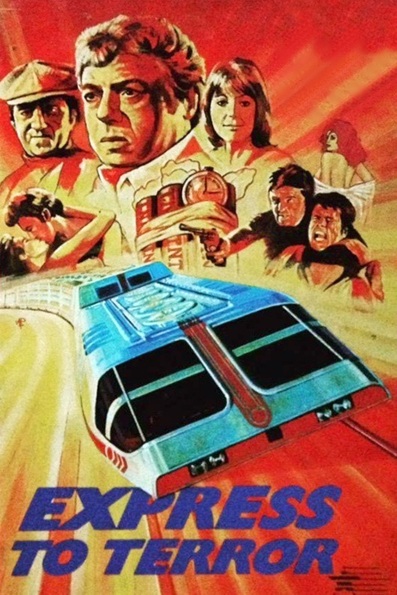
Icarus File No. 24: Express to Terror (dir by Dan Curtis)


The year was 1979 and Fred Silverman, the president of NBC, had an idea.

How about a television series in which each week’s episode would depict a different group of passengers going on a trip?  The passengers would all be dealing with their own stories, some of which would be dramatic and some of which would be humorous.  With any luck, some of them might even fall in love over the course of their journey!

To keep the audience interested, the show would also feature a cast of regular characters, the crew.  Edward Andrews would play the captain, a sensible and by-the-book type.  Robert Alda played Doc, the doctor who was also a bon vivant.  Patrick Collins was the goofy purser.  Nita Talbot played Rose, the perky director of entertainment.  Michael DeLano was the bartender who always had the best advice for the passengers….

Does this sound familiar?

If you think that it sounds like Fred Silverman just ripped off The Love Boat …. well, you’re wrong.  The Love Boat took place on a boat.  Supertrain took place on a train.

At the time that Supertrain went into production, it was the most expensive television production of all time.  Before the pilot film was even shot, NBC had spent ten million dollars on the Supertrain sets.  Not only was a fake train built but two models were also constructed for the shots of the train moving through the countryside.  At the time, the assumption was that the costs would be easily covered by the money that NBC stood to make from broadcasting the 1980 Summer Olympics.  Unfortunately, Jimmy Carter decided that the U.S. would be boycotting the Olympics as a way to protest Russia’s invasion of Afghanistan.  The only thing that kept NBC from going bankrupt was that the BBC was apparently run by someone even more incompetent than Fred Silverman.  The BBC paid $25,oo per episode for the rights to air Supertrain in the UK.  Supertrain proved to be such a disaster that the BBC never actually aired the episodes that they had purchased.

1979’s Express to Terror was the pilot to Supertrain.  (It was later released in some territories as a stand-alone film.)  Directed by horror impresario Dan Curtis (who was also brought in to produce the series), Express to Terror opens with an apparently drunk Keenan Wynn playing the role of railway baron Winfield Root.   Winfield loudly announces to a group of nervous investors that he has created ” an atom-powered steam turbine machine capable of crossing this country in 36 hours!”  A few months later, Supertrain sets off from New York to Los Angeles.

The main thing that one notices about the train is that it’s incredibly tacky.  For all the money that Winfield Root (not to mention NBC) poured into the thing, it looks awful.  The cabins are bland and also seem to be constantly shaking as the train rumbles over its tracks.  Whereas The Love Boat featured glorious shots of passengers enjoying themselves on an open-air deck, Express to Terror features a lot of shots of passengers trying to squeeze their way through narrow and crowded hallways.  There’s a disco car, which sounds like fun but actually looks like a prom being held in a locker room.  There’s a swimming pool but you can’t really lay out by it because it’s on a train.  Winfield is among the passengers and he continually refers to the train as being “Supertrain” in conversation, which just sounds dumb.  “The next person who stops Supertrain,” he announces “will be walking to L.A!”

The main drama features Steve Lawrence as Mike Post, a Hollywood agent with a gambling problem who thinks that someone on the train is trying to kill him.  Actually, the assassin is after a different Mike Post (Don Stroud) but that Mike Post is a criminal who, after entering the witness protection program, changed his name to Jack Fisk.  The criminal Post is hoping that the agent Post will be killed by mistake.  The criminal Mike Post has a girlfriend named Cindy (Char Fontane) who falls in love with the agent Mike Post.  Fred Williamson appears as a football player-turned-assassin.  George Hamilton plays a Hollywood executive.  Don Meredith is the alcoholic best friend of the agent Mike Post.  Stella Stevens is on the train as a diva.  So is Vicki Lawrence, playing a naive innocent.

Express to Terror tries to mix comedy and drama but it doesn’t really work because the “Good” Mike Post doesn’t really seem to be worth all the trouble.  Steve Lawrence gives a mind-numbingly bad performance in the role and, as a result, “Good” Mike Post really isn’t any more sympathetic than “Bad” Mike Post.  The main problem is that “Good” Mike Post comes across as being a coward and there’s only so much time that you can watch a coward act cowardly before you lose sympathy for him.  Being scared is one thing.  Being so dumb that accidentally gets your fingerprints on a knife that’s just been used to kill a man is another thing.

As for the members of the crew — the captain, the doctor, the bartender, and such, they take a back seat to the drama of the two Mike Posts.  It’s a bit odd because no one on the train — not even Winfield Root — seems to be that upset by the fact that one of their passengers is murdered while the train is going through a tunnel.  You would think that everyone would be worried about the future of Supertrain at that point.  A murder is not good for publicity but Winfield Root is oddly unconcerned about it.  I swear, light rail people are almost as heartless as bicyclists!

Of course, the worst thing about Express to Terror is that it promises terror but it doesn’t deliver.  When I see a the word “terror” in a film directed by Dan Curtis, I expect a little terror!  Other than Steve Lawrence’s overacting, there really wasn’t anything particularly terrifying about Express to Terror.

As for Supertrain, it ran for nine episodes and was promptly canceled.  Fred Silverman left NBC and spent the rest of his career as an independent producer.  Supertrain’s tracks got too close to the sun and they nearly took down a network.

Previous Icarus Files:

  1. Cloud Atlas
  2. Maximum Overdrive
  3. Glass
  4. Captive State
  5. Mother!
  6. The Man Who Killed Don Quixote
  7. Last Days
  8. Plan 9 From Outer Space
  9. The Last Movie
  10. 88
  11. The Bonfire of the Vanities
  12. Birdemic
  13. Birdemic 2: The Resurrection 
  14. Last Exit To Brooklyn
  15. Glen or Glenda
  16. The Assassination of Trotsky
  17. Che!
  18. Brewster McCloud
  19. American Traitor: The Trial of Axis Sally
  20. Tough Guys Don’t Dance
  21. Reach Me
  22. Revolution
  23. The Last Tycoon

Porky’s Revenge (1985, directed by James Komack)


The senior class of Angel Beach High finally graduate in Porky’s Revenge, the last official Porky’s film.  It’s a good thing, too.  Most of the members of the Porky’s cast were already in their late 20s when they were cast in the first Porky’s.  By the time Porky’s Revenge was made, most of them looked more like they should be planning for their retirement than for college.

Director Bob Clark did not return for Porky’s Revenge and it really shows.  The third film doesn’t have any messages about tolerance or fighting bigotry.  Instead, it’s just a typical teen sex comedy with a subplot about Brian Schwartz (Scott Colomby) trying to help Coach Goodenough (Bill Hindman) pay back his gambling debt to Porky (Chuck Mitchell).  Otherwise, the gang plays basketball, tries to arrange an orgy with the cheerleaders, and even helps Ms. Balbircker (Ellen Parsons) find love.  I guess everyone forgot about Ms. Balbricker allying herself with the Klan during the previous film.

Porky’s Revenge doesn’t really have enough ambition to be terrible though.  It’s just bland.  Just as it doesn’t have the social conscience of the first two film, it’s also not as raunchy.  There’s considerably less nudity and the occasionally rough edges of the first two films have been removed.  That makes Porky’s Revenge less problematic but it also makes it less interesting.  The first two films may have been imperfect but they did capture the feel of high school.  This one doesn’t do that because the actors are too old and suddenly their characters are too nice.  If not for the title, you would think this was just another dumb comedy that played for a week at the drive-in as opposed to being the second sequel to the most commercially-successful Canadian film of the 80s.

I did laugh when the gang went to the ruins of Porky’s to make sure that it hadn’t been rebuilt, just to discover that Porky now owned his own steamboat.  I’m also glad that everyone finally graduated and gave the Porky’s saga a fitting close.

There was a direct-to-video sequel to Porky’s Revenge.  It came out in 2009 and was called Porky’s Pimpin’ Pee Wee.  I think I can live without watching it.

Porky’s (1981, directed by Bob Clark)


Porky’s.

On the one hand, it’s a crude, juvenile, and raunchy sex comedy where a bunch of teenagers in 1960s Florida think that it’s a hoot and not at all problematic to spy on the girls shower and to hire a black man to scare all of their (white) friends.

On the other hand, it’s a heartfelt plea for tolerance where Tim (Cyril O’Reilly) finally stands up to his abusive father (Wayne Maunder) and makes friends with Brian Schwartz (Scott Colomby), who is apparently the only Jewish person living in Angel Beach, Florida.

What’s strange about Porky’s is that everyone knows it for being the template for almost every bad high school film that followed, with tons of nudity, jokes about sex, and characters with names like Pee Wee, Miss Honeywell, Cherry Forever, and Porky.  But, when you sit down and watch the movie, you discover that, for all the raunchiness, it actually devotes even more time to Brian Schwartz dealing with the local bigots than it does to any of the things that it’s known for.  Everyone remembers the shower scene but it’s obvious the film’s heart is with Brian and his attempts to make the world a better place.  Porky’s is a sex comedy with a conscience.

Porky’s is an episodic film about a group of teenage boys trying to get laid and also trying to get revenge on the owner of the local brothel.  There’s a lot of characters but I’d dare anyone to tell me the difference between Billy, Tommy, and Mickey.  I went through the entire movie thinking that Billy was Mickey until I turned on the subtitles and discovered who was who.  Porky’s has a reputation for being a terrible movie but it’s actually a pretty accurate depiction of the way that most men like to imagine how their high school years went.  It captures the atmosphere of good-spirited teenage hijinks if not the reality.

One of the interesting things about Porky’s is that Bob Clark went from directing this to directing A Christmas Story.  The innocence of A Christmas Story might seem like it has nothing in common with raunchiness of Porky’s but, actually, they’re both nostalgic films that are set in an idealized past.  (If you still think A Christmas Story has nothing in common with Porky’s, just remember that Ralphie didn’t actually say “fudge.”)  Of course, A Christmas Story struggled at the box office and only became a hit when it was released on video while Porky’s is still the most successful Canadian film to ever be released in the U.S.  Sex sells.  As cool as it was to see Brian Schwartz stand up for himself, I doubt the people who made Porky’s a monster hit were buying their tickets because they had heard the film struck a blow against anti-Semitism.  They were going because they knew there was a shower scene.

Porky’s deserves its reputation for being a not-so great movie but I would be lying if I said that I didn’t laugh more than once while watching it.  (Of course, I still didn’t laugh as much as the characters in the films laughed.  I’ve never seen a cast that was as apparently amused with themselves as the cast of Porky’s.)  There’s a lot of bad moments but it’s hard not to crack a smile when Miss Honeywell demonstrates why she’s known as Lassie or when one of the coaches suggests that wanted posters can be hung around the school to help catch the shower voyeur.  Plus, everyone learns an important lesson about tolerance and how to destroy a brothel.  As bad as it is, it’s hard to really dislike Porky’s.

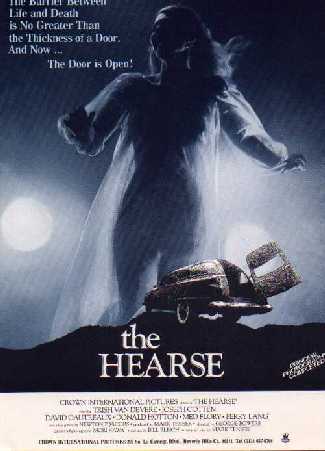
Horror on the Lens: The Hearse (dir by George Bowers)


The_Hearse

Today’s horror on the Lens in 1980’s The Hearse!

You can read my review here and you can watch it below!

Enjoy!


The Daily Grindhouse: The Hearse (directed by George Bowers)


The_Hearse

I feel no shame in admitting that I love horror movies. I don’t think that’s any secret to anyone who has ever read my reviews on this site. When I’m feeling so restless that I can’t sit still or focus, all you have to do is give me a horror film (especially if it’s one that I’ve never never seen before) and I’ll be quiet for at least 90 minutes.

That’s why I’m always on the look out for horror movies that I haven’t seen before. If it’s a horror movie, I’ll watch it regardless of obscurity, age, or critical disdain. At its best, this habit has led to me discovering neglected cinematic gems like Sole Survivor.

And it’s worst, it’s led me to me sitting through films like 1980′s The Hearse.

The Hearse is one of those public domain film that turns up in every other Mill Creek Box Set and it tells a very familiar story. A recently divorced woman named Jane (played by Tish Van Devere, who was married to George C. Scott at the time) leaves the big city to seek peace and solace in a creepy small town that’s full of rednecks who stare at her with a combination of lust and total disdain. Jane moves into a house that once belonged to her aunt and, pretty soon, she’s hearing strange sounds and having nightmares. On some nights, she sees a hearse (which, earlier, had attempted to run her off of the road) pull up in front of her house.

Jane attempts to tell the local sheirff about the strange happenings at her house but he responds by suggesting that maybe she should move. The local townspeople respond to her concerns by telling her that her aunt made a pact with Satan. The local priest comes by and tells Jane that the necklace her aunt gave her is a symbol of Satan.

None of this really makes much of an impression on Jane, mostly because she’s busy dating this creepy guy named Tom. Tom rarely ever shows any emotion and, on those rare occasions that he does smile, his face looks like a leering skull.

Again, Jane doesn’t seem to notice any of this…

Obviously, horror requires a certain suspension of disbelief but, seriously, it’s hard not to watch The Hearse and feel as if the scariest thing about the movie is the idea that anyone could be as stupid as Jane.

That said, The Hearse isn’t a total waste of time. The nightmare sequence is genuinely effective and the film itself features a few creepy visuals but, then again, there’s no way the sight of a hearse pulling up in front of a house in the middle of the night couldn’t be creepy. Trish Van Devere does okay as Jane, though she was far better in both The Changeling and One Is A Lonely Number.   (The film also features a few too many less-than-credible scenes where the town’s teenage boys talk about how “hot and sexy” they find the aristocratic and rather uptight Jane to be.)  If, like me, you’re into film history, you’ll enjoy this film as a relic of the past, an example of what horror movies were like in a less ironic age.

Back to School #40: Better Off Dead (dir by Savage Steve Holland)


Better-Off-Dead

There’s something really sad about knowing that John Cusack does not like the 1985 teen comedy, Better Off Dead, despite the fact that he himself starred in the film.

Just how much he dislikes the film depends on who you talk to.  I read an interview with the film’s director — the wonderfully named Savage Steve Holland — in which he said that Cusack approached him after a screening of the film and told him that he totally hated the film and would “never trust” Holland again.  (What’s truly sad is that Holland also said that this encounter caused him to momentarily lose all interesting in film making.)  However, a few years ago, Cusack said, while answering questions on Reddit, that he didn’t hate Better Off Dead, he just felt that it could be better and that he was glad that other people still like it.  In another interview, Cusack said that the “absurdist humor” of Better Off Dead just wasn’t his thing.

John, I understand that you’re a serious actor and I’ve always had a lot of respect for the fact that you’re an outspoken liberal who is still intellectually honest enough to hold Obama up to the same standard to which you previously held Bush.  But honestly, John, maybe you should loosen up just a little.  Not all of your movies have to be The Butler!  There’s nothing wrong with enjoying yourself onscreen.  And there’s nothing wrong with entertaining an audience and leaving them happy.  Better Off Dead may be one of more lightweight films that I’m reviewing for this Back to School series but it’s a lot of fun!  It makes people smile.  And you know what?  A lot of those smiling people are going to be more willing to see you in a film like The Butler because they’ve also seen you in films like Better Off Dead.

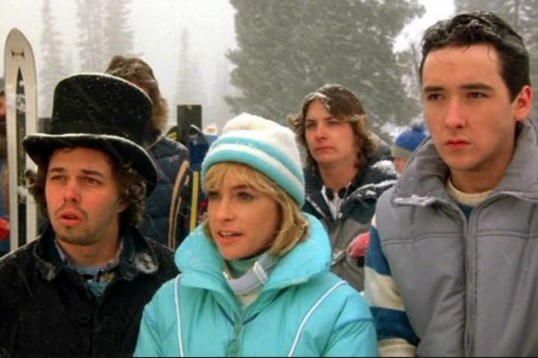
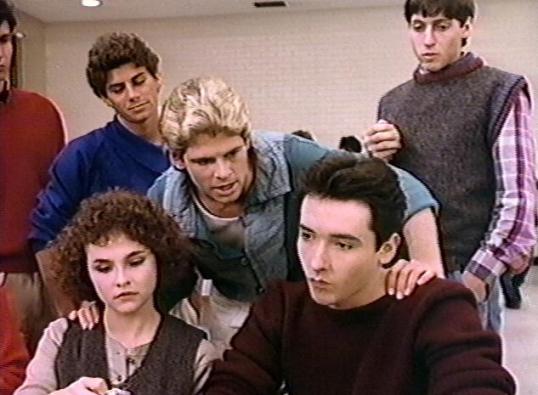
Add to that, you give a pretty good performance in Better Off Dead.  In fact, you provide the film with a much-needed center.  A lot of the comedy in Better Off Dead may be absurd but John, your performance is so likable and so grounded that you keep the film from getting too weird.  You do such a good job as Lane Myer and are so convincing as a well-meaning but dorky high school student who is trying to win back his ex-girlfriend (Amanda Wyss) by skiing down a mountain that it allows everyone else to be as weird as the film will allow.  Without your excellent performance, John, the film would be a total mess.

BOD

Better Off Dead is essentially a collection of skits.  There’s a plot but the plot is really only there as an excuse for the nonstop jokes.  For instance, there’s Lane’s best friend, Charles (Curtis Armstrong, essentially playing the same character he played in Risky Business) who spends the entire film looking for things to snort and who, when standing atop of snowy mountain, says, “This is pure snow!  Do you have any idea what the street value of this mountain is!?”

And then there’s Monique (Diane Franklin), the foreign exchange student who lives next door to Lane and who pretends that she can’t speak English because she’s trying to avoid being set up with creepy Ricky Smith (Daniel Schneider).

There’s Lane’s mother (Kim Darby), who cooks some of the strangest looking meals ever seen in an American film.  There’s also Lane’s younger brother, who never speaks but who knows how to build a laser gun.  Even Lane’s father (David Ogden Stiers). who seems relatively normal, still manages to destroy the garage door.

There’s the fact that Lane’s romantic rival is named Roy Stalin (Aaron Dozier).  Is that not just the perfect name for a villain?

There’s my favorite scene in the entire film, where a geometry teacher (Vincent Schiavelli) explains a complicated problem to his class and the class responds by cheering him along.  “Who wants to come up here and solve the problem?” the teacher asks.  The entire class raises their hands and goes, “Me!”

There’s quotable and memorable lines like: “I’ve been going to this high school for seven and a half years. I’m no dummy,” ” Now that’s a real shame when folks be throwin’ away a perfectly good white boy like that,” and “Gee, I’m really sorry your mom blow up, Ricky.”

And, of course, there’s that paperboy who wants his two dollars…

Seriously, John, Better Off Dead might not be your favorite movie but it’s really not that bad!

Want to see just how not bad Better Off Dead really is?  Watch it below!

http://www.youtube.com/watch?v=a3Q8oM_AnK8