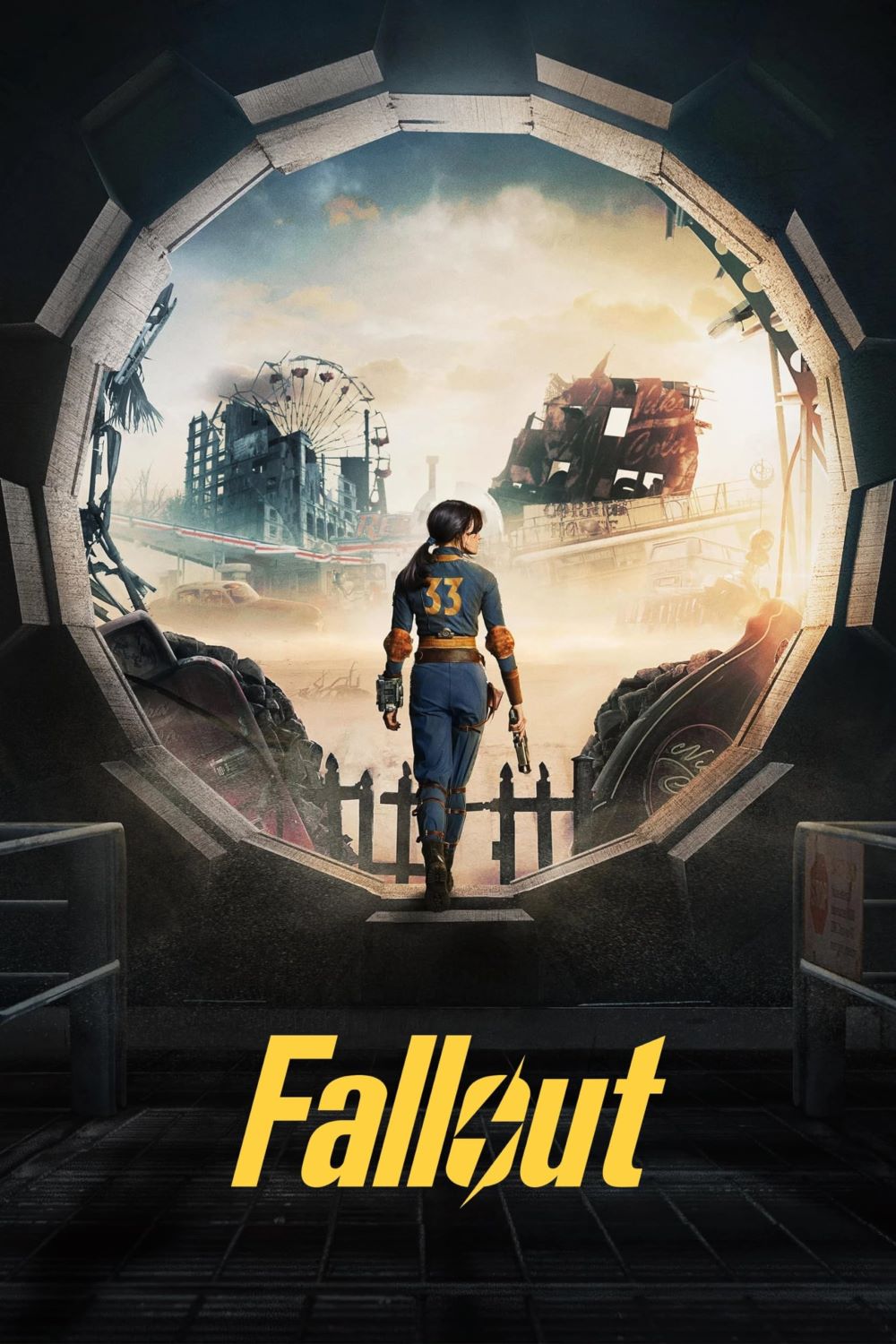
Review: Fallout (Season 1)


“War never changes. You look out at this Wasteland, looks like chaos. But here’s always somebody behind the wheel.” — The Ghoul

Fallout’s first season lands like a mini-nuke: messy around the edges, but undeniably powerful and surprisingly fun. It’s one of those adaptations that feels comfortable being both a love letter to the games and its own weird, often hilarious beast.

Set a couple of centuries after nuclear war, Fallout drops viewers into a retro-futurist wasteland where 1950s aesthetics collide with irradiated horror and corporate evil turned up to eleven. The show splits its focus between three main threads: Lucy, a bright-eyed vault dweller forced to leave her underground utopia; Maximus, an eager but insecure squire in the Brotherhood of Steel; and The Ghoul, a bounty hunter whose past life as a pre-war actor slowly bleeds through his charred exterior. The decision to juggle these perspectives is smart, because each storyline scratches a different itch: Lucy carries the emotional core and fish-out-of-water comedy, Maximus gives the militaristic, power-armor fantasy with a side of satire, and The Ghoul supplies the hard-boiled noir edge and moral ambiguity. The result is a season that rarely feels static; even when one plotline stalls a bit, another kicks in with fresh energy.

The tone is one of the show’s biggest strengths. Fallout leans hard into pitch-black humor without ever completely undercutting the stakes, which is harder to pull off than it looks. Limbs fly, heads explode, dogs get eaten, and yet the show keeps finding a way to make you laugh at the absurdity without turning the apocalypse into a joke. The violence is graphic and frequent, but it usually serves a purpose: to remind you that this world is brutal, even when the characters are cracking wise or bartering over chems. If the games felt like wandering into a deranged theme park built on the ruins of civilization, the series captures that same feeling of “this is horrible, but also kind of hilarious.” That balance, more than any specific lore reference, is what makes it feel like Fallout rather than just another grimdark sci-fi show.

Performance-wise, the casting is pretty inspired. Ella Purnell plays Lucy with this mix of optimism, naivety, and stubborn decency that could easily have been grating, but instead becomes the emotional anchor of the whole season. She brings just enough steel to the character that her idealism feels like a choice, not a default setting. Aaron Moten’s Maximus is a slower burn, and early on he risks fading into the background as “generic soldier guy,” but the more the show digs into Brotherhood politics, insecurity, and the pressure to be “worthy” of power armor, the more interesting he becomes. Walton Goggins, though, more or less walks away with the show. As The Ghoul, he’s vicious, funny, and weirdly tragic, and the flashbacks to his pre-war life give the season some of its most compelling dramatic beats. There’s a sense of continuity in his performance between the slick actor he was and the monster he becomes that keeps the character from feeling like a one-note cowboy caricature.

Visually, Fallout looks a lot better than a streaming adaptation of a video game has any right to. The production design leans into practical sets and tactile props where possible, and it pays off. Power armor has real heft, the vaults look lived-in rather than just glossy sci-fi hallways, and the wasteland feels like a place where people actually scrape out a living instead of just a CGI backdrop. The show has fun with the franchise’s iconography—Nuka-Cola, Pip-Boys, Vault-Tec branding, goofy radios—but it rarely pauses to point and wink too hard. The design team clearly understands that Fallout is basically “atomic-age corporate optimism weaponized into apocalypse,” and that theme is baked into everything from costumes to billboards rotting in the sand. Even the creature designs, like the mutated critters and ghouls, walk that line between unsettling and cartoonishly over-the-top, which fits the overall tone.

On the writing side, the structure of the season feels very much like an RPG campaign. Episodes often play like individual “quests” that build toward a bigger mystery: Lucy stumbling into a bizarre settlement, Maximus dealing with Brotherhood politics, The Ghoul chasing a lead that intersects with both of them. That quest-chain structure gives the first half of the season a propulsive, almost episodic energy, and it’s one reason the show is so watchable. At the same time, this approach has trade-offs. Sometimes character development feels a bit checkpoint-driven—people change because the story needs them to for the next “quest,” rather than as a smooth emotional progression. You can occasionally see the writers nudging the pieces into place, especially as the season barrels toward the finale.

Fallout sits in an interesting sweet spot when lined up against another prestige video game adaptation like HBO’s The Last of Us. Instead of treating the games as a sacred script that must be recreated line for line, it treats the Fallout universe as a shared sandbox—a tone, a style, a set of rules—rather than a fixed storyline that must be obeyed. Where The Last of Us is largely a faithful retelling of Joel and Ellie’s journey, Fallout seems far more interested in asking, “What else can happen in this world?” instead of “How do we restage that iconic mission?” It borrows the franchise’s black-comedy vibe, retro-futurist Americana, and corporate dystopia, then builds mostly original plots and character arcs on top.

That choice immediately gives the writers room to play. They’re not constantly checking themselves against specific missions, boss fights, or famous cutscenes; they’re free to jump around the timeline, invent new factions or townships, and reframe old ideas in ways that a beat-for-beat adaptation could never manage without sparking outrage. This approach also lets Fallout add to the lore instead of just reanimating it in live action. Because it’s not locked into recreating a particular protagonist’s path, the show can explore corners of the wasteland that were only hinted at in the games, complicate existing factions, or take big swings with backstory and world history. That kind of freedom inevitably creates some continuity friction for hardcore fans, but it also keeps the series from feeling like a lavish, expensive recap of something players already experienced with a controller in hand. Where The Last of Us excels by deepening and humanizing a story many already know, Fallout thrives by expanding its universe sideways, treating the source material as a toolbox rather than a template—and that makes it feel more like a genuine new chapter in the franchise than a live-action checklist.

Thematically, the show has more on its mind than explosions and fan-service, which is nice. Fallout keeps circling back to questions about corporate power, the illusion of safety, and how far people will go to preserve their own little slice of control. Vault-Tec’s smiling fascism is a blunt but effective metaphor for real-world systems that promise protection while quietly planning for everyone’s demise. The Brotherhood of Steel, meanwhile, becomes a vehicle for exploring militarized religion, hierarchy, and the dream of “owning” technology and knowledge. None of this is subtle, but Fallout isn’t a subtle franchise to begin with, and the series has enough self-awareness to let its satire stay sharp without slowing everything down for speeches. When it hits, it feels like the writers are asking, “Who gets to decide what’s worth saving when everything’s already gone?”

Where the season stumbles most is consistency. The pacing isn’t always smooth; some mid-season episodes are stacked with memorable set pieces and character moments, while others feel like they’re mostly there to set up endgame twists. The finale, in particular, is likely to be divisive. On one hand, it ties several plot threads together, drops a couple of bold lore swings, and sets up future seasons with a few big, crowd-pleasing reveals. On the other hand, it rushes emotional payoffs and leans heavily on explaining rather than letting certain developments breathe. The shift in tone in the last episode is noticeable enough that some viewers may feel like they suddenly switched to a slightly different show. It’s not a deal-breaker, but it does mean the season ends with more “wow, that was a lot” than a clean emotional landing.

As an adaptation, this freedom-to-expand strategy pays off by appealing to longtime fans and welcoming newcomers without getting bogged down in purist debates. Fans of the games will catch tons of details, locations, and tonal echoes that feel like affectionate nods rather than empty easter eggs. At the same time, the show isn’t just re-skinning existing game plots, which is a good call. It feels like a side story in the same universe rather than a strict retelling. That said, the lore choices late in the season—especially around the broader timeline and certain factions—are bound to spark arguments. If someone is deeply attached to the canon of the older games, some of the retcons and reinterpretations might play like a slap in the face. If someone is more relaxed about canon and just wants an entertaining, coherent story in that world, the show will probably land much better.

The writing of individual scenes shows a lot of care, especially in the way humor and dread coexist. Some of the best moments aren’t the big action beats but the small conversations: a strange, tense chat in a ruined diner, a piece of pre-war media resurfacing at the worst possible time, or a casual bit of wasteland banter that suddenly turns threatening. The dialogue sometimes leans too modern for the retro setting, but the rhythm feels natural enough that it rarely jars. When the show is firing on all cylinders, it nails that specific Fallout flavor: characters staring at incomprehensible horror and responding with a joke, a shrug, or a desperate sales pitch.

If there’s one area where the season could improve going forward, it’s in fleshing out the secondary cast and giving certain arcs more emotional weight. Some supporting characters are memorable and sharply drawn, while others feel like they exist mainly to be lore-delivery devices or cannon fodder. The world feels rich enough that it can absolutely sustain more side stories and slower, character-focused detours. A little more breathing room for relationships—whether friendships, rivalries, or romances—would help the big twists land harder and keep the show from occasionally feeling like it’s sprinting from spectacle to spectacle.

Overall, Fallout’s first season is a strong, confident debut that understands what made the games stand out without being slavishly beholden to them. It’s funny, brutal, stylish, and surprisingly character-driven for a show that spends so much time reveling in bloodshed and nuclear kitsch. The missteps in pacing and the polarizing choices in the finale keep it from being flawless, but they also signal a series willing to take risks rather than play it safe. For viewers who enjoy genre TV with personality, and for gamers who have been burned by adaptations before, this season is absolutely worth the trip into the wasteland. It doesn’t just survive the jump to live action; it stomps into it in full power armor, flaws and all.
Holiday Film Review: Jingle All The Way (dir by Brian Levant)


Whatever else one may want to say about it, 1996’s Jingle All The Way is a cute film.

It’s necessary to point that out because Jingle All The Way has a terrible reputation and, if we’re going to be honest, it deserves a lot of the criticism that it has gotten over the years.  In many ways, it epitomizes the way a Hollywood studio can take an interesting idea and then produce a film that seems to have no understanding of what made that idea so interesting in the first place.  Arnold Schwarzenegger plays Howard Langston, an overworked mattress store manager who waits until Christmas Eve to try to buy his son a Turbo Man action figure.  (In the film, they call it a “doll,” which is one of the film’s false moments.)  The only problem is that the Turbo Man action figure is the most popular gift of the year and everyone is looking for one.  What starts out at as a satire of commercialism ultimately becomes a celebration of the same thing as Howard ends up dressed up as Turbo Man and taking part in his town’s Christmas parade.   The film becomes a comedy without any sharp edges.

That said, it’s a cute film.  It’s not cute enough to really be good but it is cute enough that it won’t leave you filled with rage.  Arnold Schwarzenegger is in True Lies mode here, playing a seemingly boring and suburban guy who is secretly a badass.  (In True Lies, Schwarzenegger was secretly a spy who had killed man people, though all of them were bad.  In Jingle All The Way, he’s just a parent who has waited too long to go Christmas shopping.)  Schwarzenegger’s main strength as an action star — even beyond his physique — was that he always seemed to have a genuine sense of humor and he’s the best thing about Jingle All The Way.  This film finds him acting opposite actual comedic actors like Jim Belushi and Phil Hartman and holding his own.  (The film also features Sinbad as another dad trying to get the Turbo Man action figure but Sinbad comes across as being more of a stand-up comedian doing bits from his routine than an actual character.)  The film’s set pieces grow increasingly bizarre and surreal as Howard searches for his Turbo Man and the film actually becomes less effective the stranger that it gets.  A scene of Howard fighting a crowd in a toy store works far better than a later scene where Howard battles a bunch of men dressed as Santa Claus and his elves.  (It doesn’t help that, after an intelligent and well-edited opening thirty minutes, the film seems to lose all concept of comedic timing.)  But there’s a sincerity to Schwarzenegger’s performance that keeps you watching.

Of course, today, Jingle All The Way feels like a relic from a different age.  All the kids want a Turbo Man and you’re so busy at work that the stores are closed by the time you get home?  Fine.  Hop on Amazon at three in the morning and order one.  Christmas shopping is a lot easier nowadays.

It’s just not as much fun.

I Re-Watched Anchorman (2005, Dir. by Adam McKay)


“Ron Burgundy was the balls.”

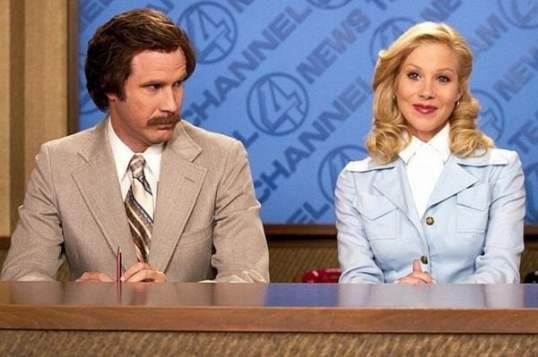
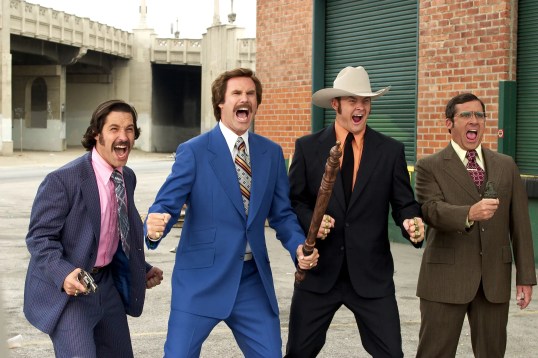
You got that right!  That’s one reason why I’ve lost track of the number of times that I’ve watched Anchorman.  Whatever’s going on in the world or my life, I know that Anchorman is going to make me laugh and make me feel better about things.  The adventures of anchorman Ron Burgundy (Will Ferrell) and his news team (Paul Rudd, David Koechner, Steve Carell) never cease to amuse me, whether they’re capturing the birth of a panda or getting involved in a street fight with their rival newsmen.

“Brick killed a guy.”

He did!  Where did Brick get a trident from?  When the street fight started, he only had a hand grenade.  Ron Burgundy suggests that Brick should find a safehouse and I hope Brick took his advice.  There’s a lot of funny people in Anchorman but Steve Carell, playing the weatherman with an IQ under 80, is my favorite.  Brick saying that he loves the lamp is so touching.

“Fare thee well, Baxter.  You shall always be a friend of the bears.”

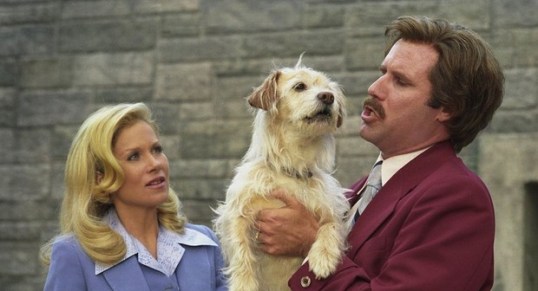
The first time I saw Anchorman, I couldn’t believe it when Baxter was drop-kicked off that bridge.  I swore that I would never watch another movie featuring Jack Black!  Baxter was so cute!  When Ron broke down over the loss of his dog, I wanted to break down with him.  Later, when Baxter emerged from the river and barked, “I’m coming, Ron!,” I was so relieved.  Baxter lives!  Baxter’s conversation with the bears warmed my heart.

“Stay classy, San Diego.”

That’s right, San Diego!  Stay classy.  Anchorman is in a class all of its own.  Ron Burgundy makes beautiful music with his jazz flute.  Brian Fantana is a walking advertisement for Sex Panther.  Veronica Corningstone (Christine Applegate) strikes a blow for women’s liberation and teaches Ron an important lesson about teleprompters.  It’s the little moments that make me laugh the most, whether it’s Fred Willard talking to his son’s school about why his son has been expelled or Tim Robbins as the PBS anchor who smokes a pipe and chops off Luke Wilson’s arm or Vince Vaughn shouting about the ratings.  Best of all, Will Ferrell has never been better than as the pompous Ron Burgundy, so stupid but so committed to his job that you can’t help but love him.

“Wow, that really escalated.”

You bet it did, Ron!  Each moment of Anchorman is funnier than the last.  (I wish the same was true of Anchorman 2.)  That’s why Anchorman is a film that I watch and rewatch.  In fact, I think I’ll go watch it right now!

“Thanks for stopping by, San Diego.”

Playing Catch-Up With 6 Mini-Reviews: Amy, Gloria, Pitch Perfect 2, Sisters, Spy, Trainwreck


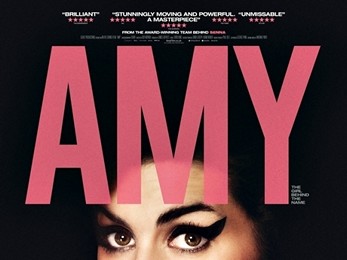
Amy_Movie_Poster

Amy (dir by Asif Kapadia)

Amy opens with brilliant and, in its way, heartbreaking footage of a 14 year-old Amy Winehouse and a friend singing Happy Birthday at a party.  Even though she’s singing deliberately off-key and going over-the-top (as we all tend to do when we sing Happy Birthday), you can tell that Amy was a star from the beginning.  She’s obviously enjoying performing and being the center of attention and, try as you might, it’s impossible not to contrast the joy of her Happy Birthday with the sadness of her later life.

A star whose music touched millions (including me), Amy Winehouse was ultimately betrayed by a world that both wanted to take advantage of her talent and to revel in her subsequent notoriety.  It’s often said the Amy was self-destructive but, if anything, the world conspired to destroy her.  By focusing on footage of Amy both in public and private and eschewing the usual “talking head” format of most documentaries, Amy pays tribute to both Amy Winehouse and reminds us of what a great talent we all lost in 2011.

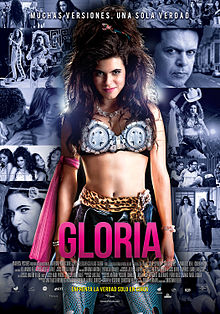
Gloria_(2014_Film_Poster)

Gloria (dir by Christian Keller)

The Mexican film Gloria is a musical biopic of Gloria Trevi (played by Sofia Espinosa), a singer whose subversive songs and sexual image made her a superstar in Latin America and challenged the conventional morality of Catholic-dominated establishment.  Her manager and lover was the controversial Sergio Andrade (Marco Perez).  The movie follows Gloria from her first audition for the manipulative Sergio to her arrest (along with Sergio) on charges of corrupting minors.  It’s an interesting and still controversial story and Gloria tells it well, with Espinosa and Perez both giving excellent performances.

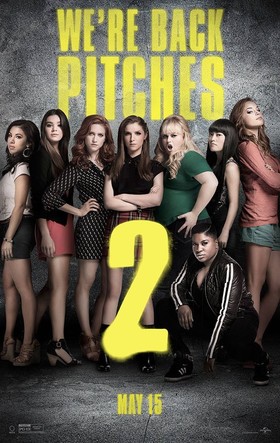
Pitch_Perfect_2_poster

Pitch Perfect 2 (dir by Elizabeth Banks)

The Bellas are back!  As I think I’ve mentioned a few times on this site, I really loved the first Pitch Perfect.  In fact, I loved it so much that I was a bit concerned about the sequel.  After all, sequels are never as good as the original and I was dreading the idea of the legacy of the first film being tarnished.

But the sequel actually works pretty well.  It’s a bit more cartoonish than the first film.  After three years at reigning ICCA champions, the Bellas are expelled from competition after Fat Amy (Rebel Wilson) accidentally flashes the President.  The only way for the Bellas to get the suspension lifted is to win the World Championship of A Capella.  The plot, to be honest, really isn’t that important.  You’re watching the film for the music and the interplay of the Bellas and, on those two counts, the film totally delivers.

It should be noted that Elizabeth Banks had a great 2015.  Not only did she give a great performance in Love & Mercy but she also made a respectable feature directing debut with Pitch Perfect 2.

Sisters_movie_poster

Sisters (dir by Jason Moore)

It’s interesting how opinions can change.  For the longest time, I really liked Tina Fey and I thought that Amy Poehler was kind of overrated.  But, over the past two years, I’ve changed my opinion.  Now, I like Amy Poehler and Tina Fey kind of gets on my nerves.  The best way that I can explain it is to say that Tina Fey just seems like the type who would judge me for wearing a short skirt and that would get old quickly, seeing as how I happen to like showing off my legs.

Anyway, in Sisters, Tina and Amy play sisters!  (Shocking, I know.)  Amy is the responsible one who has just gotten a divorce and who wants to make everyone’s life better.  Tina is the irresponsible one who refuses to accept that she’s no longer a teenager.  When their parents announce that they’re selling the house where they grew up, Amy and Tina decide to throw one last party.  Complications ensue.

I actually had two very different reactions to Sisters.  On the one hand, as a self-declared film critic, it was easy for me to spot the obvious flaw with Sisters.  Tina and Amy should have switched roles because Tina Fey is simply not believable as someone who lives to have fun.  Sometimes, it’s smart to cast against type but it really doesn’t work here.

However, as the youngest of four sisters, there was a lot of Sisters that I related to.  I saw Sisters with my sister, the Dazzling Erin, and even if the film did not work overall, there were still a lot of little scenes that made us smile and go, “That’s just like us.”  In fact, I think they should remake Sisters and they should let me and Erin star in it.

Spy2015_TeaserPoster

Spy (dir by Paul Feig)

There were a lot of very good spy films released in 2015 and SPECTRE was not one of them.  In fact, the more I think about it, the more disappointed I am with the latest Bond film.  It’s not so much that SPECTRE was terrible as there just wasn’t anything particular memorable about it.  When we watch a film about secret agents saving the world, we expect at least a few memorable lines and performances.

Now, if you want to see a memorable spy movie, I suggest seeing Spy.  Not only is Spy one of the funniest movies of the year, it’s also a pretty good espionage film.  Director Paul Feig manages to strike the perfect balance between humor and action.  One of the joys of seeing CIA employee Susan Cooper (Melissa McCarthy) finally get to enter the field and do spy stuff is the fact that there are real stakes involved.  Susan is not only saving the world but, in the film’s best scenes, she’s having a lot of fun doing it and, for that matter, McCarthy is obviously having a lot of fun playing Susan and those of us in the audience are having a lot of fun watching as well.

Spy also features Jason Statham as a more traditional action hero.  Statham is hilarious as he sends up his own macho image.  Seriously, who would have guessed that he could such a funny actor?  Here’s hoping that he, McCarthy, and Feig will all return for the inevitable sequel.

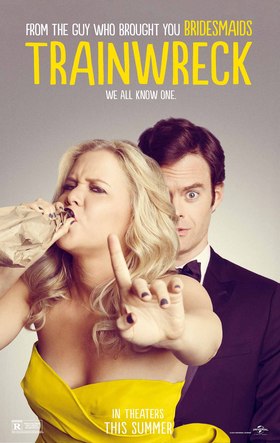
Trainwreck_poster

Trainwreck (dir by Judd Apatow)

There’s a lot of great things that can be said about Trainwreck.  Not only was it the funniest film of 2015 but it also announced to the world that Amy Schumer’s a star.  It was a romantic comedy for the 21st Century, one that defied all of the conventional BS about what has to happen in a romcom.  This a film for all of us because, let’s just be honest here, we’ve all been a trainwreck at some point in our life.

But for me, the heart of the film was truly to be found in the relationship between Amy and her younger sister, Kim (Brie Larson).  Whether fighting over what to do with their irresponsible father (Colin Quinn) or insulting each other’s life choices, their relationship is the strongest part of the film.  If Brie Larson wasn’t already guaranteed an Oscar nomination for Room, I’d demand that she get one for Trainwreck.  For that matter, Amy Schumer deserves one as well.

Seriously, it’s about time the trainwrecks of the world had a film that we could truly call our own.

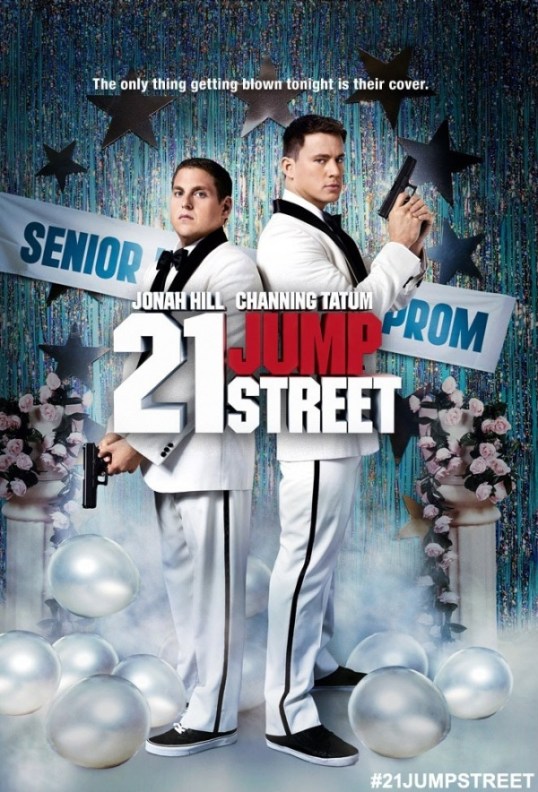
Back to School #73: 21 Jump Street (dir by Phil Lord and Christopher Miller)


21-jump-street-poster__span

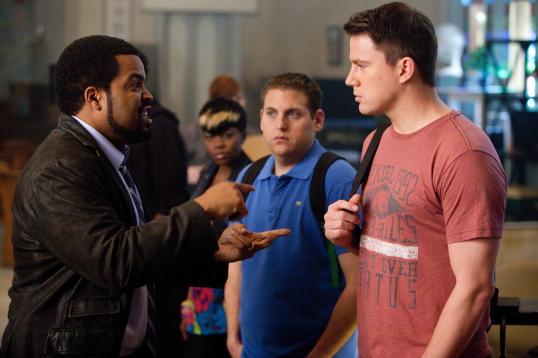
Though the TV series that its based is a bit before my time, the 2012 comedy 21 Jump Street is a personal favorite of mine.  The film tells the story of how nerdy Morton Schmidt (Jonah Hill) and popular but none-too-intelligent jock Greg Jenko (Channing Tatum) first met in high school, went to the police academy together, both turned out to really bad cops together, and then returned to high school together.

Why did they return to high school?  Because they’re both working undercover now!  As part of a recently revived program from the 80s (and that would apparently be the original television series), young cops are being sent undercover into high school.  As all the other cops involved with the program appear to be super cops, Capt. Dickson (Ice Cube) has every reason to believe that Schmidt and Jenko will be able to discover who is responsible for dealing a dangerous new synthetic drug known as HFS.

One of the things that makes 21 Jump Street work is that, at no point, does the film pretend that either Channing Tatum or Jonah Hill could still pass for a high school student.  One of the film’s best moments comes when a drug dealing environmentalist/student named Eric Molson (Dave Franco, brother of my beloved James) tells Jenko that he suspects that Jenko may be a cop.  “Why?” Jenko asks.  “You’re taste in music. The fact that you look like a fucking forty-year old man,” Eric replies.

Not surprisingly, Jenko and Schmidt prove themselves to be fairly clueless about how high school has changed.  One thing that I’ve always found interesting about high school films is that often times, regardless of when a particularly film might be set, it still feels like it’s taking place ten to twenty years in the past.  That’s largely because most high school films are made by directors who are trying to relive their youth and, as a result, they end up making a film about a high school in 2014 where all of the students look and act as if they’re living in the 90s.  The truth of the matter is that things change pretty quickly.

That’s one reason why I haven’t set foot back in my high school since I graduated.  As much fun as I did have in high school and even though I’ve been told that I can still pass for high school age (and I still constantly get asked for ID), the fact of the matter is that it’s no longer 2004.

When Jenko and Schmidt return to high school, they do so expecting to have to return to their previous teenager personas.  That’s good news for Jenko and not so good news for Schmidt.  However, once they arrive (and after their class schedules accidentally get switched), they discover that high school has changed.  Jocks like Jenko no longer rule the school and Schmidt is now one of the popular kids…

Before I saw 21 Jump Street, I knew that Jonah Hill was funny.  But the film’s big surprise was that Channing Tatum is just as funny.  Throughout the film, Tatum shows a willingness to poke fun at his own image and proves that he can deliver an absurd one-liner as masterfully as just about anyone else working today.  There’s a lot of reasons why 21 Jump Street is a funny film.  It’s full of funny lines and the movie features a lot of very sharp satire of both the action and the teen genres.  But the true pleasure of the film comes from the comedic chemistry between Tatum and Hill.

It’s just a lot of fun to watch.

21-jump-st-1-