Lisa Reviews The Oscar Nominees: Nicholas and Alexandra (dir by Franklin J. Schaffner)


Nicholas_and_Alexandra-831476012-large

(Depending on how much you know about world history, the review below may contain spoilers.)

It was nearly four years ago that I decided that my goal in life was to watch and review every single film — no matter how obscure or potentially disappointing — that had ever been nominated for best picture.  Of course, that’s not my only goal.  If anything, I may have too many, often contradictory goals in my life.  But seeing all of the best picture nominees was definitely one of them and, all these years later, it’s a goal that I’m still trying to achieve.  With the help of TCM and their nonstop schedule of movies made long before I was born, it’s also a goal on which I am slowly but surely making progress.

Last night, as I scrolled through the guide, I noticed that TCM would be showing Nicholas and Alexandra, a three and a half hour film from 1971.  Now normally, I would be hesitant about watching a film that long, if just because I have ADHD and I doubt I’d be able to concentrate on it.  In a theater, watching the action unfold on a big screen, it wouldn’t be a big deal.  However, it’s totally different when you’re talking watching a movie on TV in a house that is full of potential distractions.  Add to that, Wednesday night is when I usually watch shows like Survivor, Hell’s Kitchen, and South Park.

But, here’s the thing.  The title Nicholas and Alexandra sounded familiar to me and not just because I’m an obsessive history nerd.  I did some checking and I discovered that, regardless of how obscure the film may be today, Nicholas and Alexandra was nominated for best picture.  It lost to The French Connection but it was nominated.

So, of course, I had to watch it.

And you know what?
NA

It’s not a terrible movie.  It’s certainly not great.  It has multiple flaws and it’s hard to imagine this film being nominated alongside films like The French Connection, Last Picture Show, and A Clockwork Orange.  Watching the movie, I got the feeling it was probably nominated because it was a big, expensive epic and not because it was one of the best of the year.  But, if you stick with the film (which, if we’re going to be honest here, is much easier said than done), it’s not quite as disappointing as you might expect it to be.

Nicholas and Alexandra tells the story of the last monarch of Russia, Tsar Nicholas II (Michael Jayston).  Struggling to escape the shadow of his father and incapable of understanding what life is like for those not born into royalty, Nicholas is portrayed as being well-meaning but autocratic and blind to the fact that the days of royalty are rapidly coming to an end.  His wife, Alexandra (Janet Susman) is also unpopular with both the Russian citizenry and the royal court on account of being German.

Alexandra spends most her time doting on her youngest son, Alexei, who suffers from hemophilia.  When a flamboyant Serbian monk named Rasputin (Tom Baker) claims that he has the power to heal Alexei, Alexandra immediately brings him into the court.  Soon, rumors are flying across Russia about Rasputin’s relationship with Alexandra.

Meanwhile, men with names like Lenin (Michael Bryant), Trotsky (Brian Cox), and Stalin (James Hazeldine) are plotting to lead a “worker’s revolution…”

If you know anything about history, it’s not really a spoiler to reveal what happens in the second half of Nicholas and Alexandra.  (And if you’re not into history, you probably would not have any interest in watching the movie in the first place.)   Archduke Franz Ferdinand is assassinated, plunging the entire world into war.  Russia declares war on Germany and the German-born Alexandra becomes even more unpopular than before.  The rest of the royal court, jealous over the mad monk’s influence, plots against Rasputin.  The Tsar is forced from the throne and Nicholas and his family spend their last days as captives of the people they once ruled.  Now a powerless prisoner, Nicholas finally starts to understand the world beyond his palace walls.  However, in the end, Nicholas, Alexandra, their children, and their loyal servants are taken into a small room and violently executed.  End of movie.

NA2

So, there are a lot of things wrong with Nicholas and Alexandra.  Not the least of the film’s problem is an unwieldy length and generally slow pace.  (The film was directed by Franklin J. Schaffner, who also directed the still-fun original Planet of the Apes.  Little of the flair he brought to Planet of the Apes is present here.)  This is one of those films that is full of incident with various characters popping up and discussing the intricacies of international politics with little concern as to whether or not any of this is the least bit cinematic or even compelling on a narrative level.  The film has a huge cast but very few memorable characters.

Even worse is that neither Nicholas nor Alexandra never come across as being all that interesting.  The film makes the case that Nicholas’s downfall was largely a result of him being unlucky enough to rule at a time when people across Europe and Asia were rejecting the old ways for the new ways of revolution and industrialization.  Nicholas is continually portrayed as being well-meaning but isolated and that has the potential to be interesting but, at times, the film feels almost as emotionally detached as its characters.

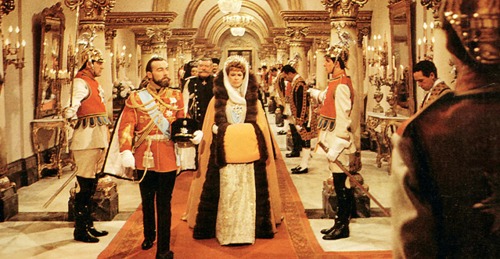
That said, Nicholas and Alexandra does work as a spectacle, as a showcase for beautiful clothing and ornate scenery.  As a character study, Nicholas and Alexandra largely fails but, as a fashion show, it’s actually a lot of fun.    Early on in the film, there’s a lengthy sequence in which Nicholas and Alexandra walk down the red-carpeted hallways of their palace.  It’s shot through Nicholas’s eyes and we see a collection of guards and noblemen and women standing to the side and bowing their heads as the Tsar and his wife walk past.  It’s a good scene and one that perfectly shows not only the life that Nicholas is used to but also why Nicholas doesn’t want to change that life.

baktna03

Perhaps not surprisingly, the first two hours of Nicholas and Alexandra work best when they focus on the flamboyant character of Rasputin.  Baker does a really go job as Rasputin, delivering all of his lines with a ferocious intensity while staring with obviously unhinged eyes.  When he’s with Alexandra, Rasputin is calculating and coldly conniving, providing just enough comfort to keep her under his control.  When he’s with Nicholas or any of the other male members of the court, he reveals himself to be an arrogant libertine, making profane jokes and bragging about his conquests.  It’s a really good performance but, as with so many other good performances in this film, it occasionally gets lost in the film’s dense production.

The best moments of Nicholas and Alexandra come towards the end, with the humbled Nicholas finally revealing his humanity and the Tsar’s family struggling to maintain their dignity even as their inevitable fate approaches.  At this point, the performers came to life.  The film suddenly had an emotional resonance.  It finally became about something!  For those final 20 or so minutes, Nicholas and Alexandra suddenly seemed worthy of being awarded.

In fact, based on those final 20 minutes, I would even be willing to see a sequel called Nicholas and Alexandra and Rasputin Makes Three.  

(Though I’m not sure how that sequel could ever be made.  As @Kev1Media pointed out when I suggested it on twitter, Adam Sandler would have to be somehow involved.)

As for Nicholas and Alexandra, it’s not a great film but if you’re into history or you’re an Oscar completist like me, the film has its occasional charms.  You just have to be willing to look for them.

Nicholas and Alexandra

Embracing the Melodrama #11: All About Eve (dir by Joseph L. Mankiewicz)


Bette Davis

“Fasten your seat belts, it’s gonna be a bumpy night!” — Margo Channing (Bette Davis) in All About Eve (1950)

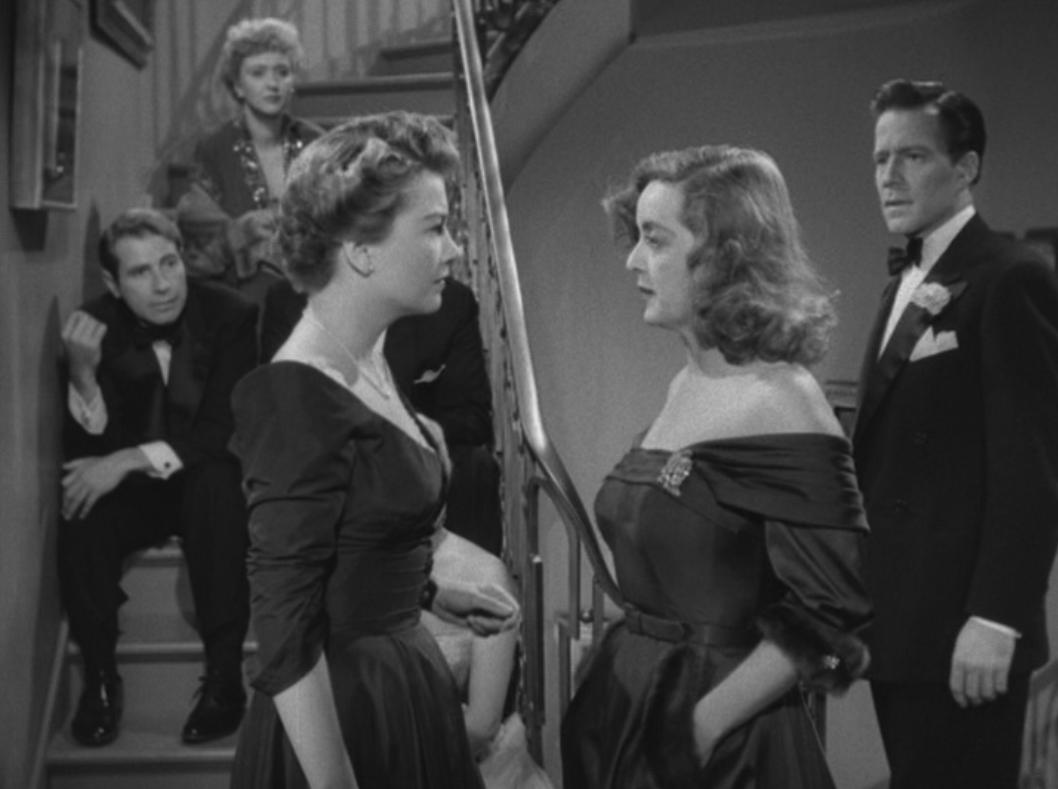
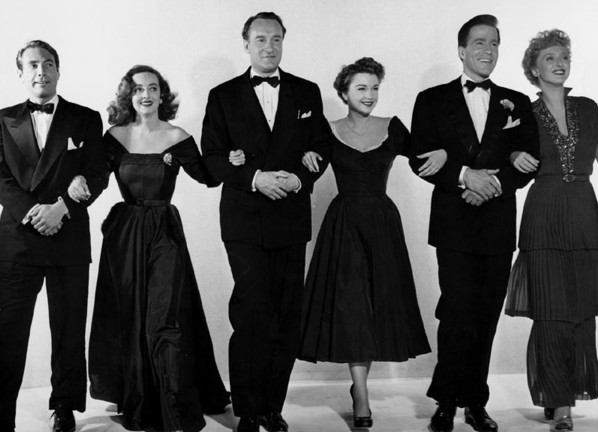
If you’re a lover of classic films or even if you’re just someone who occasionally watches TCM, chances are that you already know All About Eve.  It’s one of those films that is endlessly quoted and it features at least two performances — Bette Davis’s turn as aging Broadway diva Margo Channing and George Sanders’ acidic theater critic Addison DeWitt — that serve as frequent inspiration for professional impersonators.  It’s the film that was named best picture of 1950 and it continues to hold the record for both the most Oscar nominations overall and it’s the only film in Oscar history to receive four female acting nominations.

Even more importantly, it’s a film that everyone already knows it great.

So, that brings up the question that every film blogger dreads: how do you review a classic film that everyone already knows about?  I’ve often said that it’s easier to review a bad film than a great one.  It’s easy to pinpoint why a film fails but when it comes time to explain why a film is great, it’s often difficult to put to words the intangible qualities that elevate it.

Eve and Margo

For instance, I could tell you that the film has a fascinating plot but that barely only begins to scratch the surface of everything that’s going on underneath the glossy and melodramatic surface of All About Eve.  The movie tells the story of how scheming young actress Eve Harrington (Anne Baxter) becomes a star with the help of Addison DeWitt and at the expense of the talented but aging Margo Channing.  In telling Eve and Margo’s stories, All About Eve explores issues of female friendship and competition, sexuality, and why older men are celebrated while older women are constantly at risk of being pushed to the side for a newer model.  The complexity and power of All About Eve’s storyline can be summed up by the fact that right now, when I watch the film, I relate to Eve but I imagine that  twenty years from now, I’ll rewatch and I’ll relate to Margo.

I could tell you that this is a film that is full of bigger-than-life characters and iconic performances but that doesn’t even begin to scratch at the surface of how well-acted and perfectly cast this film is.  Even boring old Hugh Marlowe is a perfect choice for playing boring old playwright Lloyd Richards.  (His wife is played by Celeste Holm.  Reportedly Bette Davis hated working with Celeste Holm but onscreen, their friendship feels very real and poignant and leads to some of the best scenes in the entire film.)  Gary Merrill, who later married Bette Davis, is likable as Margo’s boyfriend and Thelma Ritter is great as Margo’s outspoken assistant, largely because she’s Thelma Ritter and she was always great.  Marilyn Monroe famously makes the most of her minor role in All About Eve, playing an aspiring actress who has a very good reason for calling the butler a waiter.  And then there’s Bette Davis and George Sanders, both of whom are simply brilliant.

My favorite scene from All About Eve

My favorite scene from All About Eve

But to me, the best performance in All About Eve comes from Anne Baxter.  Baxter plays Eve as a perpetually smiling schemer and one of the great pleasures of the film is watching as Eve wrecks passive-aggressive havoc through Margo’s circle of friends.  Just watch the scenes where she deftly manipulates Celeste Holm.  All About Eve is usually referred to as being a vehicle for Bette Davis but if you actually watch the film, you see that the title is absolutely appropriate.  The film really is all about Eve.

And I could always tell you about how wonderfully sardonic the dialogue is but you already know that.  There’s a reason why even people who have never seen the film still quote Margo’s suggestion that everyone fasten their seat belts!

Bette Davis 2

So, in the end, what can I tell you about All About Eve?  Well, all I can really tell you is that it’s a great film and, if you haven’t seen it, you need to make time to learn all about Eve.

AllAboutEvecastpromo

Let’s Second Guess The Academy: 1987 Best Picture


Near-Dark-Bill-Paxton

It’s time for another edition of Let’s Second Guess the Academy!  This time, we’re taking a second look at the race for Best Picture of 1987.

Can you remember which film won Best Picture for 1987?  Don’t feel bad if you can’t because Bernardo Bertolucci’s The Last Emperor is one of the lesser known Oscar winners.  The film’s relative obscurity leads to one natural question: was it truly the best film released in 1987?

Or should the Oscar have gone to one of the other films nominated — Broadcast News, Hope and Glory, Fatal Attraction, or Moonstruck?

Let your voice be heard by voting below!

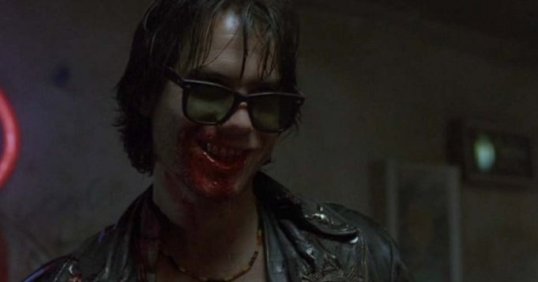
After voting for which nominated film you think should have won, give some thought to some of the 1987 films that were not nominated.  Was Moonstruck truly a better film than Near Dark or Full Metal jacket?  Ask yourself what would have happened if The Last Emperor hadn’t been released in the United States or what if Fatal Attraction hadn’t been a huge box office smash.  What if none of the five best picture nominees had been eligible to be nominated in 1987?  Which five films would you have nominated in their place?

Let us know by voting below.  As always, you can vote for up to five alternative nominees and write-ins are accepted!

Happy voting!

dirty-dancing-lift

Let’s Second Guess The Academy: Best Picture 1993


Dazed and ConfusedOccasionally, I like to do a little thing that I call “Let’s second guess the Academy.”  This is when we look at the films that have won Academy Awards in the past and we ask ourselves, “Should that film have won?”

For this latest edition of Let’s Second Guess the Academy, let’s take a look at 1993.  The 1993 Academy Awards were dominated by Schindler’s List.  Steven Spielberg’s powerful Holocaust drama won both best picture and best director.   It remains the film by which all other Holocaust dramas are judged.

But did Schindler’s List deserve to win?  Or would you have preferred to see one of the other four nominees win the title of Best Picture of 1993?  Let us know by voting below!

Now, here comes the fun part.  Let’s say that Spielberg never got around to directing Schindler’s List.  And maybe The Piano never played in the states and The Fugitive bombed at the box office.  Let’s say that none of the five best picture nominees had been eligible to be nominated in 1993.  Which five films would you have nominated in their place?

Below, you can vote for up to five alternative nominees.

Dazd

Let’s Second Guess The Academy: Best Picture 1986


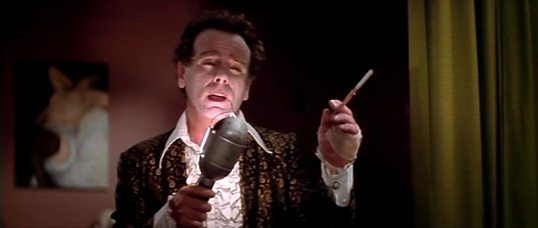
Dean Stockwell in Blue Velvet

Dean Stockwell in Blue Velvet

Last week, we considered whether or not Out of Africa deserved the title of best picture of 1985.  As of this writing, the votes would seem to indicate that most of you feel that it did not.

For this week, let’s jump ahead one year to 1986.  According to the Academy, the five best films of the year were:

1) Children of a Lesser God, an adaptation of play about an angry deaf girl and the teacher who falls in love with her,

2) Hannah and Her Sisters, a Woody Allen film about three sisters and the neurotic people they know,

3) The Mission, a film about Jesuit missionaries in South America that also won the Palme d’Or at Cannes,

4) Room With A View, James Ivory’s super romantic adaptation of E.M. Forster’s novel,

and finally, the winner,

5) Platoon, Oliver Stone’s autobiographical film about the Viet Nam war.

Unlike Out of Africa, Platoon has remained a fairly respected winner.  Still, was Platoon actually the best film of 1986?  If I had been a member of the Academy back in 1986, I would have been torn between A Room With A View and Hannah and Her Sisters with my final vote going to Room With A View.  How about you?

Now, here comes the fun part.  Let’s say that Platoon turned out to be a disaster.  Let’s say that Room With A View never made it over to American theaters and maybe Woody Allen decided to retire early.  Let’s say that none of the best picture nominees had been eligible to be nominated.  Which five films would have nominated in their place?

You can vote for up to five films and yes, write-ins are accepted!

(I voted for Blue Velvet, Ferris Bueller’s Day Off, Pretty In Pink, Betty Blue, and Something Wild.)

Let’s Second Guess The Academy: Best Picture 1985


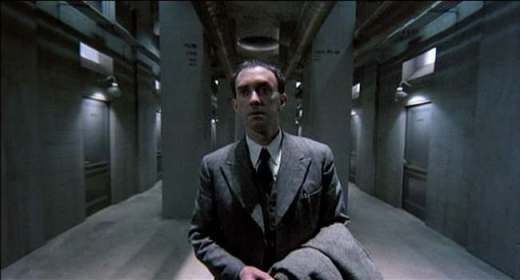
Jonathan Pryce in Brazil

Last week, we reconsidered whether or not The Hurt Locker deserved the title of Best Picture of 2009.

This week, let’s go back to the year of my birth, 1985.  According to the Motion Picture Academy, the five best films of the year were:

1) Steven Spielberg’s controversial adaptation of Alice Walker’s The Color Purple,

2) Witness, a film about a tough cop (Harrison Ford) who hides out with the Amish,

3) Kiss of the Spider Woman, one of the first independent films to ever be nominated for best picture,

4) Prizzi’s Honor, a darker than dark Mafia comedy from John Huston that starred Jack Nicholson,

and finally,

5) Out of the Africa, the film that was eventually named best picture of 1985.

Despite its victory at the Oscars, Out of Africa hasn’t aged well.  If any year seems to be worthy of a little second guessing, it would certainly be 1985.  If you were a member of the Academy in 1985, which nominee would you have voted for?  Personally, I would have voted for Witness.  How about you?

Now, here comes the fun part.  Let’s say that Out of Africa wasn’t released in 1985.  Let’s say that Steven Spielberg never made The Color of Purple and that Jack Nicholson refused to star in Prizzi’s Honor.  Let’s say that none of the five nominated film had been eligible in 1985.  Which films would you have nominated in their place?

You can vote for five of the film listed below and yes, we do accept write-ins!

(Incidentally, I voted for Brazil, The Breakfast Club, To Live and Die In L.A., The Purple Rose of Cairo, and Insignificance.)

Let’s Second Guess The Academy: Best Picture 2009


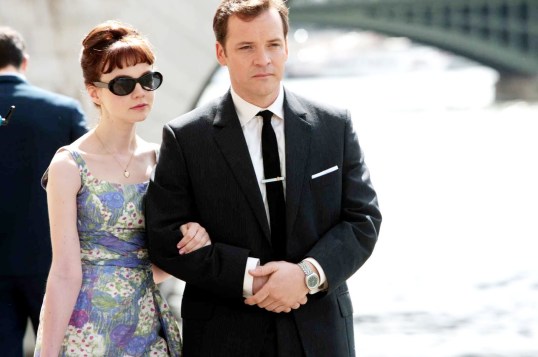
An Education

Back in 2011, I experimented with something that I like to call “Let’s second guess the Academy.”  Basically, we take a look at past Oscar contestants and we ask ourselves if 1) the Academy made the right choice and 2) what else would we have nominated if we had all the power.  It was always a lot of fun (and occasionally surprising) to see which films ended up getting the most love in hindsight.

So, I figured why not revive the tradition by considering the race for best picture of 2009.  This was the first contest, since the 1943, to feature 10 nominees.  At the time, most critics felt that the race was between Avatar and The Hurt Locker.  Personally, as happy as I was to see a woman finally win best director, I thought The Hurt Locker was overrated and I hated Avatar.  Which of the 10 nominated films would I have voted for?  Well, as much as I loved both District 9 and A Serious Man, I would have voted for An Education.  How about you?

Now, here comes the fun part.  Let’s say that James Cameron never made Avatar.  Let’s say that An Education never made it over from the UK.  And maybe The Hurt Locker never got a distributor and just remained an independent film that occasionally popped up on the program at various film festivals.  In other words, let’s say that none of the 10 best picture nominees for 2009 had been available to be nominated.  Which ten films would have nominated in their place?

You can vote for up to 10 of the films listed below and yes, we do accept write-ins!

Personally, I voted for: Adventureland, The Girlfriend Experience, Moon, (500) Days of Summer, The Informant!, Bright Star, Where The Wild Things Are, The Fantastic Mr. Fox, The Bad Lieutenant: Port of Call New Orleans, and Me And Orson Welles.

Happy voting!


The Academy Was Wrong: 20 Times That The Wrong Film Won Best Picture


Hi everyone! It’s Oscar Sunday which, as we all know, is a national holiday. 

And, like many holidays, things occasionally don’t go the way they should.  Often times, the day starts with such promise and ends with such bitterness as the Academy announces that the best film of the year is a film that we all know didn’t deserve the title.

Below, you’ll find a list of 10 instances when the Academy got it wrong.  Please note that these are just my own personal picks.  You may disagree and you are welcome to do so (as long as you understand that, ultimately, I’m always right.)

Also, please note that I have limited myself to only considering films that were actually nominated for best picture.  You could make a great argument for films like Psycho, 2001, The Dark Knight, and others.  However, none of those films were even nominated for best picture and therefore, I have not considered them for this list.

(Also, if this list seems to be dominated by more recent Oscar picks, that’s because it’s more likely that I’ve been able to see a film that was released in 2007 as opposed to film from 1927.)

Anyway, here’s my chronological list of 20+ nominees that should have won:

1941 — Citizen Kane (lost to How Green Way My Valley)

1952 — A Place In The Sun (lost to An American In Paris)

1967 — The Graduate (lost to In The Heart of The Night)

1973 — The Exorcist or American Graffiti (lost to The Sting)

1976 — All The President’s Men (lost to Rocky)

1986 — Hannah and Her Sisters or A Room With A View (lost to Platoon)

1990 — Goodfellas (lost to Dances With Wolves)

1994 — Pulp Fiction (lost to Forrest Gump)

1995 — Sense and Sensibility or Babe (lost to Braveheart)

1996 — Fargo (lost to The English Patient)

1999 — The Sixth Sense (lost to American Beauty)

2000 — Crouching Tiger, Hidden Dragon (lost to Gladiator)

2001 — In The Bedroom (lost to A Beautiful Mind)

2002 — Lord of the Rings: The Two Towers (lost to Chicago)

2003 — Lost in Translation (lost to Lord of the Rings: The Return of the King)

2004 — The Aviator (lost to Million Dollar Baby)

2005 — Capote or Brokeback Mountain (lost to Crash)

2006 — Babel (lost to The Departed)

2009 — An Education (lost to The Hurt Locker)

2010 — Black Swan (lost to The King’s Speech)

Lisa’s Thoughts On 10 Best Picture Nominees That She’s Recently Seen: The Alamo, Becket, Elmer Gantry, Gaslight, Gladiator, Kramer Vs. Kramer,Marty, Of Mice and Men, Out of Africa, and Wilson


Since it’s Oscar weekend, I’ve been watching past and present Best Picture nominees like crazy.  Here are my thoughts on ten of them.

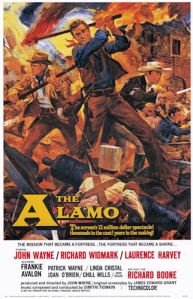
The Alamo (1960, directed by John Wayne, lost to The Apartment) — I’m a Texan which means that I’m legally required to watch both this film and the 2004 remake whenever they show up on television.  Both films are way too long and feature way too many characters speaking speeches as opposed to dialogue but, if I had to choose, I would have to go with the 1960 version of the story.  The original Alamo might be heavy-handed, poorly paced, and awkwardly acted but at least it’s sincere in its convictions.  I always cry when Richard Widmark dies.

Becket (1964, directed by Peter Glenville, lost to My Fair Lady) — This one is a personal favorite of mine.  The film is about the friendship and the eventual rivalry of King Henry II (Peter O’Toole) and Thomas Becket (Richard Burton).  Becket and Henry II start out the film drinking and whoring but eventually, Henry makes Becket Archbishop of Canterbury.  Becket, however, rediscovers his conscience and soon, Henry is famously asking, “Who will rid me of this troublesome priest?”  Becket is an exciting historical drama and Peter O’Toole is at his absolute best as the flamboyantly decadent Henry.

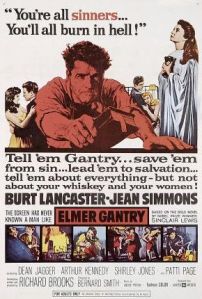
Elmer Gantry (1960, directed by Richard Brooks, lost to The Apartment) — Burt Lancaster plays Elmer Gantry, a traveling salesman and con artist who ends up falling in love with a saintly evangelist (played by Jean Simmons).  Gantry soon starts preaching himself and soon has an army of loyal followers.  However, Gantry’s new career is threatened when an ex-girlfriend-turned-prostitute (Shirley Jones) pops up and starts telling people how Gantry “rammed the fear of God into” her.  With its unapologetically corrupt lead character and its looks at how commerce and religion are often intertwined, Elmer Gantry makes a perfect companion piece to Paul Thomas Anderson’s There Will Be Blood.  Lancaster won an Oscar for his powerful and intense performance in the title role.

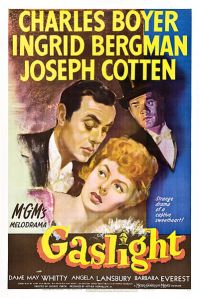
Gaslight (1944, directed by George Cukor, lost to Going My Way) — Evil Charles Boyer marries Ingrid Bergman and then attempts to drive her crazy.  Luckily, Inspector Joseph Cotten is on the case.  Gaslight is, in many ways, an old-fashioned melodrama but it’s still a lot of fun to watch.  Boyer is a suave devil and Joseph Cotten (one of my favorite of the old film actors) is a dashing hero.

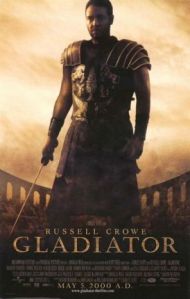
Gladiator (2ooo, directed by Ridley Scott, won best picture) — One thing that I’ve recently discovered is that men love Gladiator.  Seriously, they obsess over this film and hold Russell Crowe’s surly gladiator up as some sort of mystical ideal and if you dare to say a word against it in their presence, be ready for big and long argument.  So, I won’t criticize Gladiator too much other than to say that the film has always struck me as being kinda overlong, that the CGI is occasionally cartoonish, and that, despite his fearsome reputation, Russell Crowe is a lot more interesting as an actor when he plays a thinker as opposed to a fighter.  Joaquin Phoenix, playing the Emperor Commodus, is a lot of fun to watch.

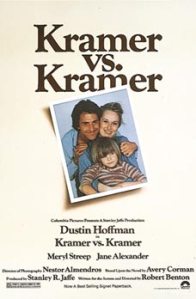
Kramer Vs. Kramer (1979, directed by Robert Benton, won best picture) — Dustin Hoffman plays a workaholic New York advertising executive who, after his wife Meryl Streep leaves him, ends up as a single father.  Kramer Vs. Kramer won best picture in 1979 but I have to admit that I didn’t care much for it.  Then again, I don’t think that I was the intended audience.  Instead, Kramer vs. Kramer appears to have been made to appeal to men frustrated with women wanting to have a life outside of being a domestic servant.  The film is well-acted though Hoffman’s character becomes insufferably smug once he gets comfortable with being a single father.

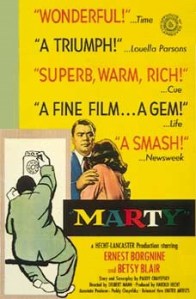
Marty (1955, directd by Delbert Mann, won best picture) — Lonely butcher Marty (Ernest Borgnine) romantically pursues a shy school teacher named Clara (Betsy Blair).  However, Marty’s friends and his family don’t like Clara and Marty soon finds himself having to choose between them.  Marty is a bit of an anomaly when it comes to best picture winners.  It’s not an epic, it doesn’t claim to solve any of the world’s problems, and it’s based on a tv show.  However, it’s also a sincerely sweet and heartfelt  film and also features excellent performances from Borgnine and Blair.

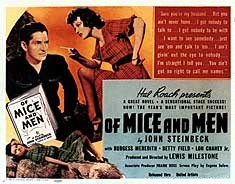
Of Mice and Men (1939, directed by Lewis Milestone, lost to Gone With The Wind) — “Tell me about the rabbits, George.”  Yes, it’s that film.  Smart and little George (Burgess Meredith) and big but simple Lenny (Lon Chaney, Jr.) are migrant farm workers who get a job working at ranch where Lenny ends up accidentally killing the rancher’s daughter-in-law.  Despite the fact that we all now tend to naturally smirk when we hear anyone say “Tell me about the rabbits, George,” Of Mice and Men remains an effective tear-jerker and both Meredith and Chaney give strong performances.

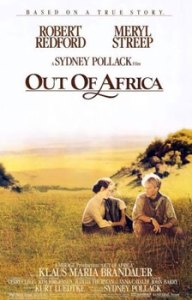
Out of Africa (1985, directed by Sydney Pollack, won best picture) — I recently sat down to watch this film because 1) my aunts love this film and get excited whenever they see that it’s going to be on TV and 2) Out of Africa was named the best film of the year I was born.  So, I sat down and watched it and then three or five hours later, I realized that the film was nearly over.  Anyway, the film is about a Danish baroness (Meryl Streep) who moves to a plantation in Africa and ends up having an affair with a British big game hunter.  The hunter is played by Robert Redford, who refuses to even try to sound British. (USA! USA! USA!)  Anyway, the film is pretty in that generic way that most best picture winners are but the film ultimately suffers because its difficult to care about any of the characters.  Streep acts the Hell out of her Danish accent but she and Redford (who seems to be bored with her) have absolutely no chemistry. I saw one review online that dismissed Out of Africa as a “big budget Lifetime movie” but Lifetime movies are a lot more fun.

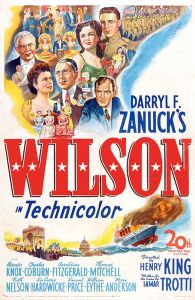
Wilson (1944, directed by Henry King, lost to Going My Way) — Wilson is a two-and-a-half biopic about Woodrow Wilson and his presidential administration.  Wilson is well-played by Alexander Knox, who later showed up in countless exploitation films.  Wilson shows up on cable occasionally and every time I’ve seen it, I’ve had mixed feelings about it.  The critical part of me tends to be dismissive of this film because it’s way too long, extremely stagey, and it glosses over the fact that Wilson was a virulent racist who idolized the Ku Klux Klan.  However, as a secret history nerd, I can’t help but enjoy seeing a film where Vincent Price plays the Secretary of the Treasury.

A Quickie With Lisa Marie: The Conversation (dir. by Francis Ford Coppola)


As a result of my continuing effort to see every single film ever nominated for best picture, I’ve been lucky enough to both discover and rediscover a handful of excellent films that, for whatever reason, have ended up forgotten and neglected in the years since they scored their nominations.  One of the more recent of these films was Francis Ford Coppola’s masterpiece of a paranoia, the 1974 Best Picture nominee The Conversation.*

The Conversation tells the story of Harry Caul (played by Gene Hackman), a surveillance expert who, along with his colleague Stan (played by the great John Cazale), is hired by a businessman (Robert Duvall) to bug a conversation between Duvall’s much younger wife (played by Cindy Williams) and a man who might be her lover (played by Fredric Forrest).  Harry, we quickly discover, is a man who values his privacy and who manages to find a balance between his unsavory job and his devout religious faith by maintaining an impenetrable shield of detachment from the rest of humanity.  He is a man who hides from the world inside of his apartment, only allowing himself to show the slightest hint of emotion when playing his saxophone.  In one of the film’s best scenes, Harry finds himself awkwardly socializing with a far more sleazy acquaintance (played by Alan Garfield, one of the great character actors of the 70s) and it becomes apparent that Harry may be the best in the business but he’s still the ultimate outsider.

However, Harry is forced to confront the contradictions of his own lifestyle when he listens to the conversation between Forrest and Williams and believes that he might have found evidence that both Forrest and Williams are in fear for their lives.  With Duvall’s operatives demanding the surveillance tapes, Harry Caul soon finds himself becoming more and more paranoid and unstable as he finds it more and more difficult to justify his detachment.  Harry finds himself obsessively listening to the conversation over and over again, going over every possible nuance and emphasis to try to figure out what’s actually being said.  Of course, by the end of the film, it’s obvious to both Harry and the audience that nothing is as simple as it sounds. 

Compared to the Godfather films and Apocalypse Now, the Conversation is a surprisingly low-key and rather muted film.  A lot of this is because, as opposed to the Corleones and Martin Sheen’s Captain Willard, Gene Hackman’s Harry Caul is a complete and total introvert, a man who makes his living by observing a world that he refuses to be a part of.  Though the film works quite well as a thriller, it works best when viewed as a sympathetic character study of a paranoid and anti-social human being.  Hackman full inhabits the role, bringing Harry — with all of his frustrating contradictions and conflicted actions — to oddly vibrant life.  The film ultimately serves as a sad-eyed look at how a good person can justify doing bad things and how the inevitable consequences of those bad things can only be delayed for so long.

On a final note, an impossibly young Harrison Ford shows up here as Duvall’s sinister assistant.  He plays the role with just the right amount of prissy arrogance and he has a great scene where he asks Harry is he wants to try a homemade cookie.  “They’re good,” Ford assures him.

So is The Conversation.

—–

* Of course, another Coppola film — The Godfather, Part II — beat the Conversation for best picture.  However, The Conversation did win the Palme D’Or at Cannes that year.  It was a good year to be Francis Ford Coppola.