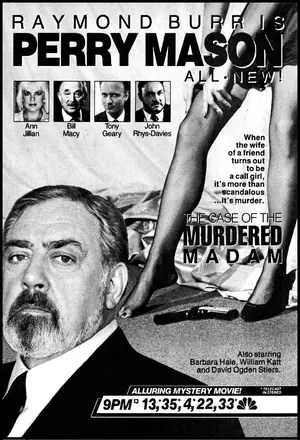
Former madam Suzanne Domenico (Ann Jillian) attempts to blackmail four rich men who are planning on embezzling money from a bank and is found dead by her husband, Tony, shortly afterwards. Tony (Vincent Baggetta) is arrested and charged with murdering his wife. Tony’s older brother used to run around with Della Street (Barbara Hale) and Della is able to get Perry Mason (Raymond Burr) to defend him in court. Paul Drake, Jr. (William Katt) is brought in to do the investigative legwork. Once again, Paul falls for a younger woman (Daphne Ashbrook) who will probably never be mentioned again in any of the other movies.
This movie was a little sad because it was obvious that Raymond Burr was not in good health. He spends most of the movie sitting or moving with crutches. In the movie, they say that Perry is using crutches because of a skiing accident but looking at Raymond Burr, there’s no way to imagine him skiing. Burr is still as sharp as ever when asking questions in the courtroom but it’s still clear that he was in pain when he did this movie. Perry being sidelined does mean that Barbara Hale and William Katt get to do more than usual. After spending the last few movies constantly getting outrun and smacked around, Katt finally gets to beat someone up in the movie.
The mystery isn’t bad, even though I guessed who the murderer was long before the trial started. The entire embezzlement scheme comes down to embezzling a few cents a day so that no one will notice. That’s the same thing they tried to do in Office Space! Luckily, no one got murdered that time.
Overall, this was a good entry in the Parry Mason movies, especially for those of us who like watching Paul Drake, Jr. I’m starting to wonder if all of Perry and Della’s friends are going to end up getting accused of murder at some point. My aunt and I always used to joke about how often Jessica Fletcher’s nephew was accused of murdering someone. It might be just as dangerous to be a friend of Perry Mason’s!
David Hall (Matthew Faison) is an obnoxious horror writer who invites a group of associates and former friends to spend the night at a “haunted” hotel. He’s invited them because all of them are on the verge of suing him for writing about them in his latest book, The Resort. Over the course of the night, he plays cruel practical jokes on all of them. Finally, someone gets fed up and tosses him over a railing. The police arrest publisher Jordan White (Robert Stack) and charge him with the murder. It’s a good thing that Jordan’s best friend is Perry Mason (Raymond Burr).
Perry uses a cane in this movie and is not that active outside of the courtroom. That means that it’s up to Paul Drake, Jr. (William Katt) to do most of the investigating. As usual, Paul falls for an attractive, younger woman, in this case the hotel’s owner, Susan Warrenfield (Kim Delaney). Every movie features Paul falling for someone and then we never hear about them again. Does Paul have commitment issues?
I enjoyed this Perry Mason mystery. The hotel was a great location and I appreciated that the movie tried to add some horror elements to the story. The Perry Mason movies can be predictable so I always like it when they at least try to do something a little bit different. This was a fun entry in Perry Mason’s career.
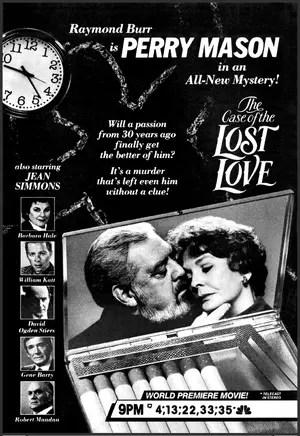
Perry Mason’s ex-girlfriend, Laura Robertson (Jean Simmons), is about to be appointed to the Senate when blackmailer Pete Dixon (Jonathan Banks) threatens to reveal that she once underwent shock treatment after having a nervous breakdown. When Dixon is murdered, Laura’s husband (Gene Barry) is arrested. Laura hires Perry (Raymond Burr) to serve as his attorney.
At first, this movie felt weird to me because it didn’t seem right for Perry to have an ex-girlfriend when we all know that he and Della (Barbara Hale) were in love. When Laura is at the office waiting to see Perry, she and Della have a conversation and it’s obvious that each is jealous of the other. When Laura asks, “What about you and Perry?,” Perry shows up before Della can answer. We all know what the answer was though. Della loves Perry and, probably because she was so upset over Perry dating Laura, she threw herself at Paul Drake, Sr. and that’s how we got Paul Drake, Jr.
As for Paul Drake, Jr. (William Katt), he flirts with two different women in this movie but he doesn’t get to do as much investigating as he did in the first few films. This movie is almost all Perry Mason interrogating people. Raymond Burr uses a cane in this movie and there’s a few scenes where it’s obvious that he was in pain but he still gives a very good performance. The movie is very talky but it also has the best courtroom confession scene yet and Raymond Burr really sells Perry’s ambivalent feelings. The identity of the killer actually took me by surprise!
It was weird to see Perry in love with someone oter than Della but this was still an excellent entry in the series.
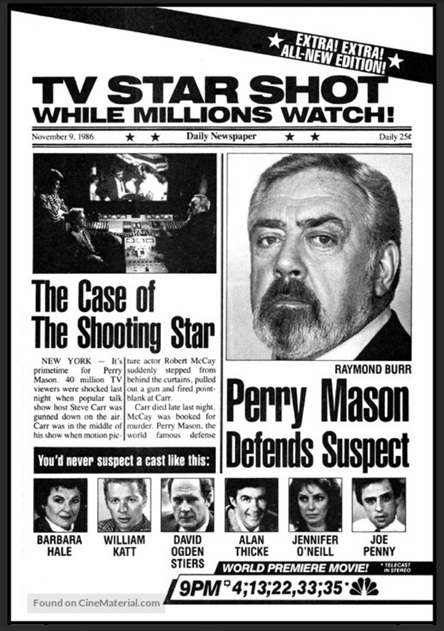
Actor Robert McCay (Joe Penny) decides that it would be hilarious to shoot talk show host Steve Carr (Alan Thicke) on live television. McCay thinks that the gun is loaded with blanks but, before he goes on the show, someone slips a live round into the gun. McCay kills Steve Carr and there are a million witnesses who see him do it. Time to call in Perry Mason (Raymond Burr)!
The third Perry Mason movie isn’t as good as the first two. Shooting someone on television as a joke and then leaving the studio immediately afterwards is a really stupid thing to do. As my sister pointed out while we were watching, even if Robert McCay wasn’t guilty of premeditated murder, he was probably guilty of negligent homicide for not bothering to double check whether or not there was a live round in the gun. McCay goes right back to shooting his movie, even while he’s on trial for murder. As for the trial, it was ridiculous. How many people can confess under cross examination in one trial? “Mistrial!” my sister yelled whenever Perry pulled one of his stunts and I agreed.
Paul (William Katt) teams up with a photojournalist (Wendy Crewson) and his investigation somehow leads to him playing a priest in a cheap vampire movie. For once, Perry didn’t give Paul a hard time about anything. Maybe he realized Paul’s scenes were the best part of The Case of the Shooting Star.
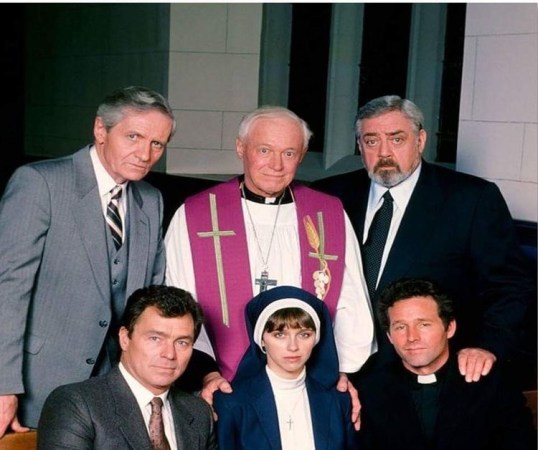
In the second Perry Mason movie, Perry (Raymond Burr) defends Sister Margaret (Michele Greene), who has been accused of murdering Father Thomas O’Neil (Timothy Bottoms). The D.A. (David Ogden Stiers) says that Sister Margaret was having an affair with Father O’Neil and she killed him when he tried to break it off. However, the movie shows us that, just like in the last movie, Father O’Neil was actually killed by a hitman (Hagan Beggs). Perry, Della (Barbara Hale), and Paul Drake, Jr. (William Katt) have to figure out who ordered the priest’s murder.
I enjoyed the Case of the Notorious Nun, even if it wasn’t as good as the previous film. It was still entertaining and I loved watching Perry constantly give Paul a hard time about every little thing but this time, it was really obvious who the actual killer was. Paul, of course, had romantic feelings for Sister Margaret but nothing came from them, other than a chaste kiss on the cheek. Sorry, Paul. You’re charming but you’re not that charming.
Father O’Neil was far more sympathetic than the previous movie’s victim. Father O’Neil was trying to make the world a better place and his death with was a real tragedy. That made it all the more satisfying when Perry was able to get his cross-examination confession. There was an alarming scene early on in the movie where Perry checked into a hospital because he was feeling faint and I get the feeling that they framed the scene to make Raymond Burr look even heavier than he was. (This movie justified Paul Drake doing all the leg work while Perry stayed at the office.) But even if he moves a little slower than he used to, Perry Mason is still the best lawyer out there.
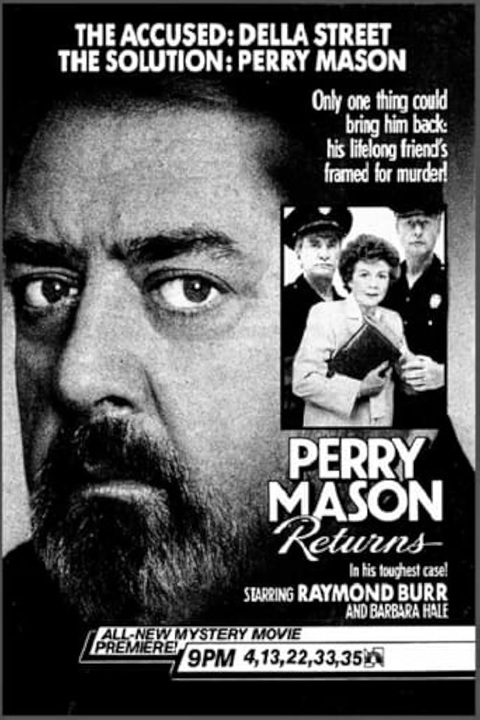
When his former secretary, Della Street (Barbara Hale), is arrested for murdering wealthy businessman Arthur Gordon (Patrick O’Neal), Judge Perry Mason (Raymond Burr) resigns from the bench so that he can defend her in court.
Perry Mason Returns reveals who the killer is when the murder happens. The killer is a lowlife named Robert Lynch (James Kidnie), who is wearing a gray wig and a frumpy dress so that everyone will mistake him for Della. It doesn’t take Perry and private detective Paul Dark, Jr. (William Katt) long to discover that Lynch is the murderer but, after someone shoots Lynch, they have to figure out who hired Lynch to kill Gordon. Gordon had recently disinherited his entire family so Perry and Paul have a lot of suspects to consider. 30 minutes in, I thought I knew who the killer was but it turned out I was wrong.
My Aunt Kate loved her detective stories and, when I was growing up, I would always watch them with her whenever we were visiting for the holidays. Watching Perry Mason Returns really made me feel nostalgic, even if it also made me feel dumb for not being able to guess who the killer was. Perry gives up being a judge so that he can defend Della Street in court. That’s true love. William Katt, who plays Paul Drake’s son, was Barbara Hale’s real-life son so I think that proves my theory that Della loved both Perry and Paul.
Perry Mason Returns was fun to watch. It had more action than I was expecting because Paul Drake, Jr. was always getting into tight situations. The movie really tried to make William Katt into an action star. The murder mystery held my attention and, of course, Perry got the murderer to confess on the stand and on the record. Some things never change! One thing that really amused me was that, as soon as Perry took the case, everyone naturally assumed he would win. Della wasn’t worried for a minute, even though she was facing life in prison. “You didn’t tell me Perry Mason was her lawyer!” Robert Lynch yelled at the person who hired him. He knew the gig was up. Perry Mason always wins!
Watching Perry Mason Returns, I felt like I was a kid again, watching movies with my Aunt Kate and trying to solve the mystery with her. All of the Perry Mason made-for-TV movies are on YouTube so I’ll be reviewing more of them in the future.
First released in 1970, Airport is a real time capsule.
As one can guess from the title, it takes place over 12 hours at an airport. The airport in question is a fictional one, Chicago’s Lincoln International Airport. Over the course of one night, almost everything that can happen does happen.
A sudden snowstorm causes almost all of the other airports in the midwest to shut down for the night. On Lincoln’s Runway 29, one of the airplanes gets stuck in the show when it lands. No one is hurt but, until Joe Patroni (George Kennedy) and his men can dig out and move that plane, no one is going to be able to land on 29.
Runway 22 is still open but the homeowners association is currently picketing the airport to protest the amount of noise pollution that is caused whenever airplanes use Runway 22. Using 22 in the middle of the night is sure to prove their point and make trouble for the airport. Mel Bakersfield (Burt Lancaster), the airport manager, thinks that the only solution is to buy up all of the land around the airport but the Board of Commissioners disagrees. Mel says that airports have to adjust to changing times but no one is willing to put up the money.
Mel is unhappily married to the wealthy and socially ambitious Cindy (Dana Wynter), who is not happy to learn that, due to the storm, Mel is going to miss an important dinner party. Tanya Livingston (Jean Seberg), head of customer relations for Trans Global Airlines, is in love with Mel but Mel isn’t the type to cheat, even if his marriage is troubled.
On the other hand, Mel’s brother-in-law, pilot Vernon Demerest (Dean Martin, the hippest pilot in the sky), has absolutely no problem cheating on his wife (Barbara Hale). Vernon is currently having an affair with flight attendant, Gwen Meighen (Jacqueline Bisset). When Gwen tells Vernon that she’s pregnant, Vernon says that “it” can be taken care of in Sweden. Gwen says that she wants to have the baby.
Meanwhile, Ada Quonsett (Helen Hayes, who won an Oscar for her performance here) is an elderly woman who has developed an addiction to stowing away on flights. She manages to sneak onto a plane flying to Rome, the same plane on which Vernon is the co-pilot. (Technically, Vernon is on the plane to evaluate the captain, who is played by Barry Nelson. Yes, the same Barry Nelson who played Jimmy Bond in 1954’s Casino Royale and Mr. Ullman in The Shining.) Ada ends up sitting next to a nervous man named D.O. Guerrero (Van Heflin). Having failed as a businessman, Guerrero has a bomb in his briefcase and is planning on blowing himself and the airplane up so that his wife (Maureen Stapleton) can receive an insurance payment.
Seriously, that’s a lot of drama! It seems like this airport has a little bit of everything! But you know what this airport doesn’t have? It doesn’t have the TSA groping people and telling them what they can and cannot take on the plane with them. It doesn’t have the endless lines full of tired travelers who just want to be allowed to get on with their business. It doesn’t have the suspicious atmosphere that has become a part of modern air travel. Compared to the average airport experience of 2026, the movie’s airport is a paradise, full of people who are working hard, who are polite to each other, and who all seem to know what they’re doing. I’d take the drama of 1970’s Airport over the reality of a modern airport any day.
Airport is very much a celebration of competent people getting the job done. On the whole, we really don’t learn much about the characters played by Burt Lancaster, Dean Martin, Jean Seberg, Barry Nelson, and George Kennedy but we definitely learn that they’re all very good at their jobs. Even Helen Hayes’s stowaway is meant to be likable precisely because she is so good at stowing away. The only person who is portrayed as being a failure as Van Heflin’s D.O. Guerrero and he’s so upset about not being good at his job that he decides to blow himself up. Though the film is full of split screens and dialogue that was probably risqué by the standards of a 1970 studio film, one gets the feeling that Airport probably felt old-fashioned even when it was first released. One can only imagine what George Kennedy’s hard-working Joe Patroni would have thought about the characters in a film like Easy Rider. About as close as Airport gets to the counterculture is Dean Martin mockingly calling Burt Lancaster “dad” while telling him to get his favorite runway cleared. This is a film where even Dean Martin is a stickler for regulations.
Based on a best-selling novel, Airport is often listed as being one of the worst films to ever be nominated for best picture. And …. well, okay, it’s definitely not a great film, especially when compared to some of the other films of the early 70s. The film was the highest grossing film of 1970 and that, more than anything, probably explains why it was nominated. Airport moves at a very deliberate pace and and visually, it is pretty flat. It looks like a competently made television pilot. When I first did a capsule review of Airport in 2010, I was fairly harsh towards it. I have to admit, though, that when I recently rewatched the film, I actually kind of liked it. Compared to today’s world, there’s something comforting about the competence of the characters in Airport. Airport has its flaws and it definitely should not have been nominated for 11 Oscars but it presents a world that seems almost cozy compared to what we have to deal with nowadays.
Dean Martin as a pilot? Helen Hayes as a chatty stowaway? George Kennedy chewing on an unlit cigar and complaining to Burt Lancaster about how incompetent the TGA pilots are? Hey, why not? If it means not having to deal with the TSA and knowing that everyone is dedicated to getting me to where I’m going in comfort, I’m all for taking my next flight out Lincoln International.
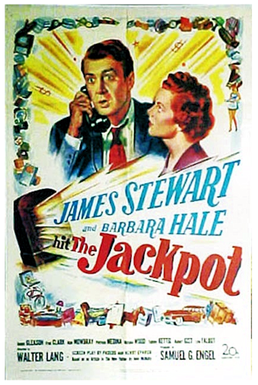
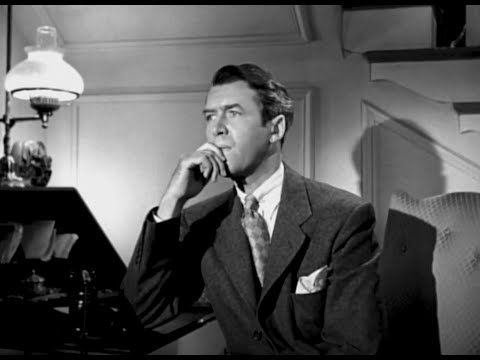
In 1950’s The Jackpot, James Stewart plays Bill Lawrence.
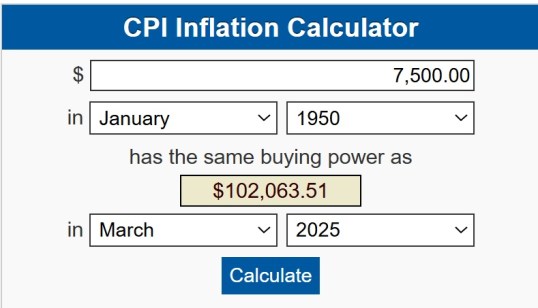
Bill has a job at a department store. He’s not the manager but he’s still a respected member of the staff and who knows? Maybe his boss (Fred Clark) will give him a promotion someday. He lives in a big, two-story home with his wife, Amy (Barbara Hale). He and Amy have two children, one of whom is played by a 12 year-old Natalie Wood. By all appearances, Bill is doing pretty good for himself. At one point, it’s mentioned that makes a grand total of $7,500 a year.
That definitely caught my attention. “I make more than that!” I snapped at the screen. I pulled up an inflation calculator and I discovered that $7,5000 in 1950 is the equivalent of — wait for it — $102,000 today! (Technically, I still make more than that but still, it’s six figures.)
When Bill answers a phone call from a radio station and guesses the correct answer to a trivia question, he wins $24,000-worth of prizes. (I didn’t bother to figure out how much that $24,000 would be be in 2025 dollars but we can safely assume that it would be quite a bit.) Unfortunately, a lot of the prizes end up costing more than their worth. Bill wins a side of beef , 7,500 cans of soup, and a 1,000 fruit trees but he doesn’t win anywhere to store it all. He also wins a maid, an interior designer, a pony, a swimming pool, a trip to New York, and a session with portrait painter Hilda (Patricia Medina). He also ends up with an income tax bill for $7,000. Remember, he only makes $7,500 a year. Damn the IRS!
Realizing that he’s going to have to sell the majority of his winnings, Bill loses his job when he’s caught trying to sell to the store’s customers. Needing money to pay off his tax bill, he tries to pawn a diamond ring and ends up getting arrested. With his anniversary coming up, he asks Hilda to paint a portrait of Amy from his description of her but Bill ends up spending so much time with Hilda that Amy becomes convinced that he’s having an affair.
Basically, one terrible thing after another happens to Bill, all the result of having won a contest. (The film is loosely based on a true story, with James Gleason playing a fictionalized version of the reporter who wrote the original story.) The movie’s a comedy but, as with the majority of the films that James Stewart made after World War II, there’s a sense of melancholy running through it. Even before he wins the money, Bill doesn’t seem satisfied with his life. Much like George Bailey, he’s restless and wondering if there will ever be more to his life than just his house in the suburbs and his job in the city. Also, like George, Bill learns to appreciate what he has as the result of getting what he wants and discovering that he was happier before. Few actors were as skilled at capturing ennui and dissatisfaction as Jimmy Stewart. The Jackpot is a silly comedy but it’s also an effective portrait of a middle-aged man trying to find peace with the way his life has turned out. That’s almost entirely due to Stewart’s likable but honest performance.
TheJackpot may not be one of Stewart’s most-remembered films but it’s entertaining, with the supporting cast all providing their share of laughs while Stewart provides the film with a heart. The film may be a comedy but it’s also a look at America and Americans adjusting to life in the years immediately following World War II. Suddenly, abundance is everywhere but, as Bill Lawrence, not without a price.
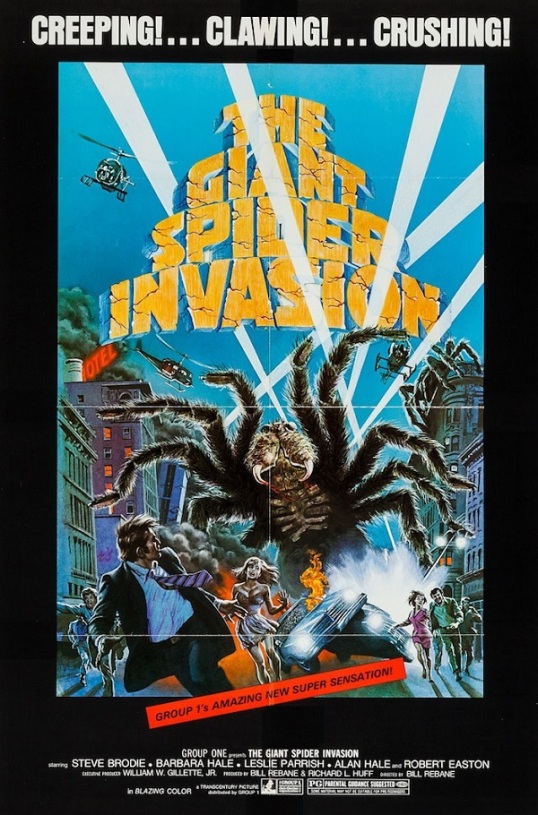
For today’s Horror on the Lens we have the 1975 classic, The Giant Spider Invasion!
Directed by Wisconsin’s own Bill Rebane, The Giant Spider Invasion works specifically because it delivers exactly what the title promises. The title says that you’re going to see giant spiders invading the Earth and that’s exactly what happens! And, as someone who cannot stand spiders, I can only say, “AGCK!”
This is a fun movie. Sadly, I don’t think it would be as entertaining if it were made today. The budget would be too high. The actors wouldn’t be in on the joke. The whole production would be more concerned with creating the perfect CGI spider than just having fun with the concept. For a film like this to work, you need someone who is willing to work with a low budget and you need someone willing to fully embrace the the idea of spiders invading the farmlands of Wisconsin and wrecking havoc, regardless of how silly it might seem. You need a director like Mr. Bill Rebane.
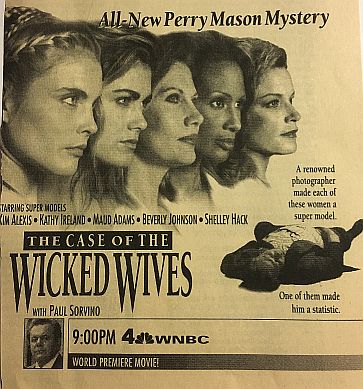
Famed fashion photographer David Morrison (Eric Braeden) has fallen on hard times but things are looking up. The American Museum of Art wants to do a retrospective of his work. He just has to get the permission of his current wife, Dee (Kathy Ireland), and his four ex-wives (Shelley Hack, Kim Alexis, Maud Adams, and Beverly Johnson). All of them are super models who owe their careers to David but four of them hate his guts and Dee isn’t happy when she sees evidence that he has been cheating on her. When David turns up dead, Dee is arrested. She claims that she’s innocent but the prosecution is sure that they have an airtight case.
This sounds like a case for Perry Mason!
However, Perry’s out of town so it falls to Perry’s never previously mentioned best friend, Tony Caruso (Paul Sorvino), to solve The Case of the Wicked Wives! With the help of Perry’s tireless associates, Della Street (Barbara Hale) and Ken Malansky (William R. Moses), Caruso works to solve the case and prove the Dee is innocent. He also prepares many pasta dinners and frequently sings.
So, where was Perry? As everyone knows, Raymond Burr played Perry Mason for 9 seasons in the 50s and the 60s. 20 years after the show aired its final episode, Burr returned to the role in a series of highly rated, made for television movies. Unfortunately, Burr died in 1993 with several movies left to be filmed. In his will, Burr specifically requested that production on the remaining films continue so that the cast and crew wouldn’t lose their jobs. Since the role of Mason obviously could not be recast that soon after Burrs’s death, it was decided that the remaining movies would feature guest lawyers. Enter Paul Sorvino.
The Case of the Wicked Wives was the first Perry Mason film to be made after Burr’s death. As his replacement, Tony Caruso has much in common with Mason, including the ability to make the guilty confess in open court. Unlike Mason, Caruso is also obsessed with cooking elaborate spaghetti dinners and singing operatic arias. This movie came out just a year after Sorvino left Law & Order to specifically pursue his opera career. Sorvino sings a lot in The Case of the Wicked Wives, sometimes in court. Unfortunately, a love of singing and pasta are the only two personality traits that are really given to Caruso. Through no fault of Paul Sorvino’s, Caruso is never as compelling a character as the coolly calculating Mason. Mason could trick anyone into confessing through perfectly asked questions. Caruso is more into courtroom stunts that would get most lawyer disbarred.
Because the mystery itself is a dud, the main reason to watch The Case of the Wicked Wives is for the wives. Who wouldn’t want to keep Kathy Ireland from being wrongly convicted? All of the wives get at least one big moment to shine and tear up the scenery. You’ll guess who the murderer is long before anyone else in court.

 Through the Shattered Lens