Retro Television Review: Miami Vice 4.22 “Mirror Image”


Welcome to Retro Television Reviews, a feature where we review some of our favorite and least favorite shows of the past!  On Mondays, I will be reviewing Miami Vice, which ran on NBC from 1984 to 1989.  The entire show can be purchased on Prime!

This week, season 4 comes to a close.

Episode 4.22 “Mirror Image”

(Dir by Richard Compton, originally aired on May 6th, 1988)

Trying to recover from the assassination of his wife, Sonny Crockett throws himself back into his Sonny Burnett persona.  As this episode starts, Sonny has managed to get close to a ruthless drug dealer named Gutierrez (Antonio Fargas).  When Guiterrez blows up a boat that is full of rival drug dealers, the Vice Squad assumes that Gutierrez died in the explosion.  They also assume that Sonny was lost as well.

They are incorrect.  Gutierrez got off the boat before the bomb went off and somehow, Sonny was able to survive being blown up without suffering any sort of physical injuries.  However, mentally, he wakes up with amnesia.  When Gutierrez’s doctor tells Sonny that he’s a drug dealer and this his last name is “Burnett,” Sonny believes him.

In Ft. Lauderdale, Sonny quickly moves up in the organization of drug lord Miguel Manolo (Tony Azito).  Now believing himself to be a criminal, Sonny has no hesitation about murdering anyone who he views as being a threat.  He kills Gutierrez in cold blood about halfway through the episode.  At the end of the episode, he shoots a corrupt detective (Chris Cooper) in cold blood.  Tubbs, who has been investigating Manolo, witnesses that final murder.  “SONNY!” he yells as Sonny escapes in a speedboat and season 4 comes to an end.

Season 4 was truly uneven, featuring some terrible episodes and also some episodes that were good but not particularly memorable.  Before I started this season, I read that it was considered to be the worst of Miami Vice‘s five seasons and, having now watched every episode, I can see why.  Sonny marrying Caitlin never made any sense.  Most of the villains were either generic or ludicrous.  Most of the episodes just didn’t have the style that made the first three seasons so memorable.  Even worse than the boring episodes were the ones that tried too hard to be quirky.  Trudy going into space was definitely not a great idea.  With all that in mind, this final episode was great.  The action was stylish, Don Johnson actually seemed invested in the story for once, and Phillip Michael Thomas got to show off his own skills as an actor.  If only the entire season had been this good!

As well, I should mention that, along with Chris Cooper as a bad cop, this episode also featured Julia Roberts as Manolo’s girlfriend.  Roberts didn’t really get to do much but, even in a small role, her screen presence was obvious.  It’s not a surprise she became a star.

Next week …. we’ll start the final season of Miami Vice!

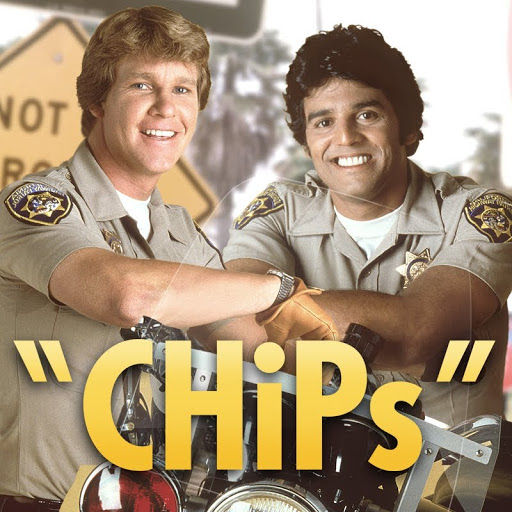
Late Night Retro Television Review: CHiPs 3.1 and 3.2 “Roller Disco”


Welcome to Late Night Retro Television Reviews, a feature where we review some of our favorite and least favorite shows of the past!  On Mondays, I will be reviewing CHiPs, which ran on NBC from 1977 to 1983.  The entire show is currently streaming on Prime!

This week, season three begins with a classic episode!

Episode 3.1 and 3.2 “Roller Disco”

(Dir by Don Weis, originally aired on September 22nd, 1979)

It’s the roller disco episode!

From the moment that I first announced that I would be watching and reviewing CHiPs for this feature, people have been telling me about the legendary roller disco episode.  Having finally reached it, I can say that it lived up to the hype.  You’re not likely to see anything more 70s than the third season premiere of CHiPs.

Now, this was a two-hour episode so there were actually quite a few subplot going on, all of which were typical CHiPs storylines.  In no particular order:

  1. A kid named Mark (Bobby Rolofson) is roller skating around the beach and idolizing three criminals.  Can Baker show him that the good guys always win?
  2. The three criminals are Lita (Helena Kallianiotes), Ty (Fred Williamson), and Romo (Jim Brown).  Lita sets up the targets.  Ty and Romo steal their purses and their wallets and then escape on roller skates.  Ty and Romo are tired of breaking the law.  Lita demands that they continue to steal.  Eventually, it falls to Baker and Ponch to arrest them.
  3. Carlin (Larry Linville) and Franco (Larry Storch) continually cause accidents on the highway.
  4. Rock star Jimmy Tyler (Leif Garrett) is so tired that he sleeps through one of those accidents.  Looking to break free from his well-meaning but overbearing manager (Bill Daily), Jimmy decides to manage his own affairs while staying at Jon Baker’s apartment.

There’s a lot going on but the main plotline is Ponch trying to find celebrities to take part in the annual highway patrol fund raiser.  Even with his big smile, Ponch struggles to charm the celebs.  He pulls over Ed McMahon at one point but fails to recognize him until McMahon drives off.  Gatraer tells Ponch that police work comes first but also tells him that he has to find celebrities.  Gatraer’s been giving Ponch a hard time ever since the first season.  Some things never change.

Fortunately, Jimmy feels guilty for overstaying his welcome at Baker’s apartment and he makes it up to Baker and Ponch by asking his celebrity friends to take part in the fund raiser.  It’s time for a roller disco with the stars!

It all leads to this classic scene:

I recognized a few of the stars, though certainly not all of them.  I recognized Victor French because I’ve been reviewing Highway to Heaven.  I’ve also seen enough old sitcoms that I immediately recognized Robert Mandan, who was apparently the best roller skater in Hollywood.  Melissa Sue Anderson, I knew from Happy Birthday To Me.  Cindy Williams, who got two shout-outs, I knew from American Graffiti.  Is it just me or did Nancy Kulp look kind of lost?  Neither Melissa Sue Anderson nor Cindy Williams seemed to want to talk to her.

The roller disco actually goes on for fifteen minutes, which I appreciated.  The show promised a roller disco and it delivered.  It was like stepping into a time machine and traveling to the 70s.  It was a great way to start season three!

Because of the holidays, this is going to be my final CHiPs review of 2024.  My reviews of this show will return on January 6th!

Retro Television Reviews: The Love Boat 1.25 “Pacific Princess Overtures / Gopher, the Rebel / Cabin Fever”


Welcome to Retro Television Reviews, a feature where we review some of our favorite and least favorite shows of the past!  On Wednesdays, I will be reviewing the original Love Boat, which aired on ABC from 1977 to 1986!  The series can be streamed on Paramount Plus!

The Love Boat

Today, we wrap up season one of The Love Boat!  All aboard!

Episode 1.25 “Pacific Princess Overtures / Gopher, the Rebel / Cabin Fever”

(Dir by Alan Baron, originally aired on May 20th, 1978)

As I sat down to watch this episode on Paramount Plus, I was once again confronted with that weird commercial featuring P!nk and Michael Phelps tossing a big red COVID germ at each other.  I’ve seen this commercial a few times.  It’s popular not only on Paramount Plus but also on Hulu and Peacock.  For a commercial that’s all about the terrors of COVID, I have to say that representing the risk by using a big rubber ball feels a bit …. well, counterproductive.  (Actually, perhaps silly would be a better way to describe it.)  To be honest, P!nk and Michael Phelps look like they’re almost having too much fun tossing COVID at each other.  Someday, someone will actually take a serious look at how and why the combined efforts of the media and the advertising industry struggled to convince people to take the vaccine and this commercial will hopefully be remembered.  Considering that it’s the elderly who are at the greatest risk when it comes to COVID, it’s interesting that almost all of the vaccination commercials that I’ve seen have been stylistically aimed at older millennials.  Michael Phelps saying that his depression puts him at a greater risk of COVID is not the sort of thing that’s going to convince an 80 year-old to get a booster.

Speaking of commercials, the first season finale of The Love Boat featured Antonio Fargas as an advertising exec named Lee Graham.  When we first see him, he’s saying goodbye to his wife as he boards the ship.  He tells her that he’ll miss her and that the only reason he’s going to be on the boat is because he’s working on ad campaign for the cruise company.  Of course, he’s lying.  He’s actually taking the cruise so that he can spend some time with his mistress, Andrea (Jonelle Allen).  Lee and Andrea are excited to finally have a few days where they can be with each other without feeling like they have to hide for everyone.  However, Lee soon discovers that his nosy neighbors (played by Kaye Bass and Elias Jacob) are also on the boat!  As a result, Lee doesn’t get a chance to cheat on his wife and, at the end of the cruise, he and Andrea realize that they don’t want to continue their adulterous ways.  Fortunately, it turns out that Lee’s wife already knew about the affair and is incredibly forgiving.  I’m not really sure why she’s so forgiving but hey, it was the 70s!  It’s not like The Love Boat is going to end with a divorce.  That’s more of a 90s thing.

While this is going, ruthless business tycoon Mr. Yamashiro (Pat Morita — yes, you read that correctly) is determined to convince Ruth Newman (Diane Baker) to sell him her late husband’s factory.  Yamashiro even orders his assistant, Ken Davis (Gary Collins), to trick Ruth by pretending to fall in love with her.  However, Ken really does fall in love with her and he loses his job as a result.  Fear not, though.  Ruth hires him and agrees to invest in a special, voice-activated word processor that he’s created.  Yamashiro is so impressed that he agrees to invest as well.  Yamashiro says that they can consider his investment to be a wedding present.  Ruth and Ken have only known each other for a few days but sure, why shouldn’t they get married?  I mean, it’s the 70s!  People get married about knowing each other for a weekend and then they forgive each other for cheating.  Love is all around, no need to waste it.  They’re all going to make it, after all.

However, none of those stories can compare to what happens to Gopher.  After starting the cruise in a bad mood because he feels that Captain Stubing doesn’t respect him,  Gopher falls for a young communist named Vanessa!  And Vanessa is played by Eve Plumb.  That’s right!  This episode features the original Jan Brady filling Gopher’s head with a bunch of Marxist nonsense!  Vanessa is traveling on the boat with her wealthy father (Don Porter) and she sure does resent all of the money that’s being spent on the cruise.  When she tells Gopher that he should stop taking orders from the Captain because, as “members of the Personhood,” no one has any right to order anyone else around, Gopher takes her words to heart and he ended up getting fired for insubordination!  Fortunately, it doesn’t take long  for both Vanessa and Gopher to see the errors of their ways and the Captain hires Gopher back, with the understanding that Gopher will never again bring a certain impractical economic theory.  It’s a bit like that episode where the Captain told Isaac that he was spending too much time learning about black history.  The Captain’s not going to let his purser go down the Marxist rabbit hole!

And so, the first season comes to a close.  This was a good episode with which to end the season.  Though his storyline was undeniably icky, Antonio Fargas proved himself to be a talented physical comedian as he tried to keep his neighbors from noticing his girlfriend.  The second story was a bit bland but Pat Morita transcended his stereotypical role.  And seriously, how can you not enjoy Eve Plumb radicalizing Gopher?

When The Love Boat began, the crew was unsure of how to react around Captain Stubing.  As the first season comes to a close, they’ve learned that Stubing will always have their back, as long as they don’t talk about Black History or Marxism.  What will the crew discover about their captain during season 2?  We’ll find out soon!

Horror Film Review: Firestarter (dir by Mark L. Lester)


Adapted from Stephen King novel, 1984’s Firestarter is a film about a girl with a very special power.

Back in the day, a bunch of college students needed weed money so they took part in a government experiment.  Half of them were told that they were being given a placebo.  The other half were told that we would be given a low-grade hallucinogen.

Surprise!  The government lied!  It turns out that everyone was given the experimental drug!  Some of the students ended up going crazy.  One unfortunate hippie clawed his eyes out.  Meanwhile, Vicky (Heather Locklear) gained the ability to read minds.  She also fell in love with Andy McGee (David Keith), a goofy fellow who gained the ability to mentally control people’s actions.  They married and had a daughter named Charlie (played by a very young Drew Barrymore).  Charlie, it turns out, can set things on fire!  She’s a firestarter!

Well, of course, the government can’t just leave the McGees out there, controlling minds and setting things on fire.  Soon, the McGees are being pursued by the standard collection of men in dark suits.  Vicky is killed off-screen, leaving Charlie and Andy to try to find some place where they’ll be safe.

Good luck with that!  This is the government that we’re talking about.  The thing with films like this is that the government can do practically anything but it never occurs to them to not all dress in dark suits.  I mean, it just seems like it would be easier for all of these secret agents to operate if they weren’t automatically identifiable as being secret agents.  Anyway, Andy and Charlie are eventually captured and taken to The Farm, a really nice country estate where Andy and Charlie are kept separate from each other and everyone keeps talking about national security.

Running the Farm is Capt. Hollister and we know that he’s a bad guy because he wears a suit and he’s played by Martin Sheen.  Working with Hollister is John Rainbird (George C. Scott), a CIA assassin who kills people with a karate chop across the nose.  When Charlie refuses to show off her firemaking abilities unless she’s allowed to talk to her father, Rainbird disguises himself as a custodial engineer and proceeds to befriend Charlie.  Of course, Rainbird’s plan is to kill Charlie once she’s displayed the extent of her powers….

Stephen King has written that he considers this film to be one of the worst adaptations of one of his novels but, to be honest, I think the movie is actually a bit of an improvement on the source material.  Firestarter is probably the least interesting of Stephen King’s early novels.  Supposedly, Charlie was based on King’s youngest daughter and, reading the book, it’s obvious that everyone’s fear of Charlie is mostly a metaphor for a father trying to figure out how to raise a daughter.  Unfortunately, instead of concentrating on those primal fears, the book gets bogged down in boomer paranoia about MK-ULTRA experiments.

The movie, however, is just silly enough to be kind of charming.  For example, consider the way that Andy grabs his forehead and bugs out his eyes whenever he uses his powers.  Andy’s powers may be slowly killing him but he just looks so goofy whenever he uses them that you just can’t help but be entertained.  And then you’ve got Drew Barrymore sobbing while setting people on fire and George C. Scott growling through all of his dialogue and even Martin Sheen gets a scene where he gets excited and starts jumping up and down.  (And don’t even get me started on Art Carney and Louise Fletcher as the salt-of-the-Earth farmers who try to protect Andy and Charlie….)  Some of the special effects are a bit hokey, as you might expect from a film made in 1984 but occasionally, there’s a good shot of something (or someone) burning up.  It’s all so over-the-top and relentlessly dumb that you can’t help but be entertained.  You can even forgive the fact that basically nothing happens between the first 10 and the last 15 minutes of the movie.

Firestarter‘s silly but I liked it.

Horror on TV: Kolchak: The Night Stalker 1.2 “The Zombie” (dir by Alexander Grasshoff)


Tonight, on Kolchak: The Night Stalker:

Chicago gangsters are turning up dead!  Is it a mob war or is it something else?  Kolchak suspects the latter and, as you can guess from this episode’s title, he’s right.  This episode features gangsters, numbers runners, and voodoo!

It originally aired on September 20th, 1974!

Enjoy!

http://www.youtube.com/watch?v=aN_GstECzL0

A Movie A Day #251: Cisco Pike (1972, directed by Bill L. Norton)


Yesterday, the great character actor Harry Dean Stanton passed away at the age of 91.   Cisco Pike is not one of Stanton’s best films but it is a film that highlight why Stanton was such a compelling actor and why his unique presence will be missed.
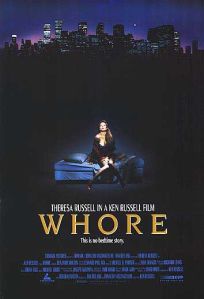
Cisco Pike (Kris Kristofferson) is a musician who has fallen on hard time.  After having been busted several times for dealing drugs, Cisco now just wants to spend time with his “old lady” (Karen Black) and plot his comeback as a musician.  However, a corrupt narcotics detective, Leo Holland (Gene Hackman), approaches Cisco with an offer that he cannot refuse.  Holland has come into possession of 100 kilos of marijuana.  He wants Cisco to sell it for him and then Leo plans to take the money and retire.  Cisco has the weekend to sell all of the weed.  If he doesn’t, Holland will arrest him for dealing and sent him back to prison,

About halfway through this loose and improvisational look at dealers, hippies, and squares in 1970s Los Angeles, Harry Dean Stanton shows up in the role of Jesse Dupree, an old friend and former bandmate of Cisco’s.  Jesse is a free-living wanderer, too old to be a hippie but too unconventional to be a member of the establishment.  Unfortunately, Jesse also has a nasty heroin habit.  Jesse Dupree is a prototypical Harry Dean Stanton role.  Like many of Stanton’s best roles, Jesse may be sad and full of regrets but he is not going to let that keep him from enjoying life.  Stanton may not appear in much of the film but he still takes over every scene in which he appears.

Stanton is, by far, the best thing about Cisco Pike.  As always, Gene Hackman is entertaining, playing the inverse of The French Connection‘s Popeye Doyle and Karen Black is her usual mix of sexy and weird.  The weakest part of the movie is Kris Kristofferson, who was still a few years away from becoming a good actor when he starred in Cisco Pike.  It is interesting to consider how different Cisco Pike would have been if Stanton and Kristofferson had switched roles.  Stanton may not have had Kristofferon’s movie star looks but, unlike Kristofferson, he feels real in everything that he does.  With his air of resignation and his non-Hollywood persona, Stanton brought authenticity to not only Cisco Pike but to every film in which he appeared.

Along with Stanton, several other familiar faces appear in Cisco Pike.  Keep an eye out for Roscoe Lee Browne, Howard Hesseman, Viva, Allan Arbus, and everyone’s favorite spaced-out hippie chick, the one and only Joy Bang.

A Movie A Day #93: Whore (1991, directed by Ken Russell)


Liz (Theresa Russell) is a prostitute trying to survive on the mean streets of Los Angeles.  With the help of a homeless performance named Rasta (Antonio Fargas), Liz tries to escape from her abusive pimp, Blake (Benjamin Mouton).
To its credit, Whore was made as a response to the glamorous and irresponsible way that prostitution was portrayed in Pretty Woman but Whore had too much going against it to succeed.  It was based on a theatrical monologue, which was almost always a bad sign.  The majority of the movie was Liz talking straight to the camera, which was another red flag.  Most ominously, it was a Theresa Russell movie that was not directed by Nicolas Roeg and those never seemed to turn out well.  The director of Whore was Ken Russell but it featured none of the excess that Russell was known for.  Stuck with a low-budget and a reportedly unenthusiastic studio, Russell’s direction was uncharacteristically restrained.  (That’s a polite way of saying boring.)

The one good thing about Whore, and the reason why I’m writing about it during this site’s look back at Twin Peaks, was the presence of Jack Nance, playing one of the few men who actually tries to help Liz.  Nance, of course, not only played fishing-obsessed Pete Martell in Twin Peaks but also starred in Eraserhead and appeared in all of Lynch’s films (with the exception of The Elephant Man) up until Nance’s mysterious death in 1996.  Literally credited as playing “Helpful passerby.” Nance only had a few minutes of screen time but made a definite impression as one of the few kind people to be found in Liz’s dark world.

As a reflection of how much times have changed, Whore‘s title was so controversial that, in 1991, it was released in some areas under an alternative title: If You Can’t Say It, Just See It.