Brad reviews BREAKING IN (1989), starring Burt Reynolds!


BREAKING IN (1989) opens with veteran safecracker Ernie Mullins (Burt Reynolds) pulling a job at a rich guy’s house, only to be surprised when a young, amateurish thief named Mike (Casey Siemaszko) turns up at the same place to raid the fridge. Immediately taking a liking to the kid, Ernie decides to offer Mike a chance to learn his trade. Thus begins a partnership, and odd-couple friendship, where the two men pull a series of jobs together, with Ernie passing on his knowledge to his young protege who seems to be enjoying the sudden influx of cash into this life. Unfortunately, the generation gap causes some problems as Mike doesn’t necessarily take heed to Ernie’s advice to never being too greedy or flashy. Soon, Mike is renting high rise apartments and buying fancy cars with cash. When they pull a big job on the 4th of July, will Mike’s less than frugal ways drag them both down?!

Written by the excellent, independent writer and director John Sayles (MATEWAN, EIGHT MEN OUT) and directed by Scottish director Bill Forsyth (LOCAL HERO), BREAKING IN is a reminder of just how great Burt Reynolds is in the right role. In his 50’s at the time this was filmed, Reynolds gives a relaxed, lived-in, character performance that comes across as effortlessly cool, and he does it without having to rely on his trademark charm and big grin. The late 80’s were a time when Burt was no longer a box office superstar, and BREAKING IN seems to be an unjustly forgotten entry in his hugely successful career. After this, Burt would find TV success on EVENING SHADE, and he’d be nominated for an Oscar for his role in BOOGIE NIGHTS (1997), but his Ernie Mullins stands out to me as one of his last great film roles. Casey Siemaszko is good as Mike, but this is Reynolds’ show and he’s overshadowed even in a solid performance. As far as the other supporting performances, Sheila Kelley stood out to me as a sharp-tongued prostitute who Siemaszko falls in lust with. The poem she shares about a man’s “balls” is a highlight of the film as far as I’m concerned, and further illustrates the quality of Sayles’ screenplay!

I like the way that BREAKING IN feels low-key, even as the characters engage in their various criminal heists. This can be credited to director Bill Forsyth who turns what could have been a standard master / apprentice crime film into something that feels somewhat realistic. The pacing is slow as Reynolds passes on his knowledge, and for some people it may be too slow, but that’s one of the things I really liked about the movie. The two men really get to know each other. That way, when they have disagreements and blow ups a couple of times, they’re still able to respect each other and patch things up. That’s how things are in the real world, as opposed to most movies where a simple disagreement will almost certainly lead to ridiculous consequences. BREAKING IN respects its characters in a way that’s unique to most crime films. 

At the end of the day, BREAKING IN is a gem that is at its best as a lighthearted character study of a professional thief whose time is passing him by. Burt Reynolds rarely got to play roles this subtle, and I think he made the most of the opportunity. As a big fan of Reynolds, I highly recommend this one. 

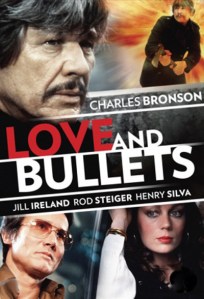
Brad’s “mini-review” of LOVE AND BULLETS (1979), starring Charles Bronson! 


Charles Bronson is an Arizona cop who goes to Switzerland to bring back a gangster’s girlfriend (Jill Ireland). The gangster (Rod Steiger) sends a hitman (Henry Silva) to kill her so she can’t tell his crime secrets to the authorities.  

This isn’t one of Bronson’s best films, but it’s still a fun movie to watch on a chilly, rainy day. There are some good action scenes set in various cold & snowy European locations. This is Bronson in “Bond” mode which is kind of fun and different. And what can you say about a stuttering Rod Steiger screaming at his advisors about the meaning of “love.” It’s fun stuff when you like Steiger as much as I do. I do deduct half a star because Steiger gets so mad at one point that he turns over a table with some of the biggest, most scrumptious looking shrimp I’ve ever seen. That was completely uncalled for and wasteful, but not quite as wasteful as Bronson and Henry Silva in the same movie without an epic battle of some sort. The fact that they didn’t fight it out on the Matterhorn itself can only be described as a missed opportunity. 

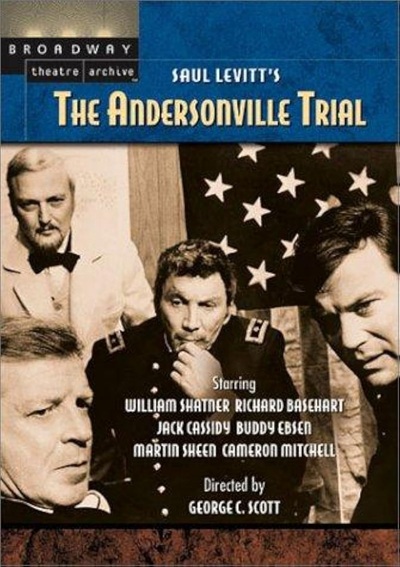
On Stage On The Lens: The Andersonville Trial (dir by George C. Soctt)


1970’s The Andersonville Trial takes place in one muggy military court room.  The year is 1865.  The Civil War is over but the wounds of the conflict are still fresh.  Many of the leaders of the Confederacy are still fugitives.  Abraham Lincoln has been dead for only a month.  The people want someone to pay and it appears that person might be Captain Henry Wirz (Richard Basehart).

Originally born in Switzerland and forced to flee Europe after being convicted of embezzlement, Henry Wirz eventually ended up in Kentucky.  He served in the Confederate Army and was eventually named the commandant of Camp Sumter, a prison camp located near Andersonville, Georgia.  After the war, Captain Wirz is indicted for war crimes connected to his treatment of the Union prisoners at the camp.  Wirz and his defense counsel, Otis Baker (Jack Cassidy), argue that the prison soon became overcrowded due to the war and that Wirz treated the prisoners as well as he could considering that he had limited resoruces.  Wirz points out that his requests for much-needed supplies were denied by his superiors.   Prosecutor Norton Chipman (William Shatner) argues that Wirz purposefully neglected the prisoners and their needs and that Wirz is personally responsible for every death that occurred under his watch.  The trial is overseen by Maj. General Lew Wallace (Cameron Mitchell), the same Lew Wallace who would later write Ben-Hur and who reportedly offered a pardon to Billy the Kid shortly before the latter’s death.  Wallace attempts to give Wirz a fair trial, even allowing Wirz to spend the trial reclining on a couch due to a case of gangrene.  (Agck!  The 19th century was a scary time!)

The Andersonville Trial started life as a 1959 Broadway production.  On stage, George C. Scott played Chipman, an experience he described as difficult because, even though Chipman was nominally the play’s hero, Wirz was actually a much more sympathetic character.  When the play was adapted for television in 1970, Scott returned to direct.  Admittedly, the television version is very stagey.  Scott doesn’t make much effort to open up the play.  Almost all of the action is confined to that courtroom.  We learn about the conditions at Fort Sumter in the same way that the judges learned about the conditions.  We listen as the witnesses testify.  We listen as a doctor played by Buddy Ebsen talks about the deplorable conditions at Fort Sumter.  We also listen as a soldier played by Martin Sheen reports that Wirz has previously attempted to suicide and we’re left to wonder if it was due to guilt or fear of the public execution that would follow a guilty verdict.  We watch as Chipman and Baker throw themselves into the trial, two attorneys who both believe that they are correct.  And we watch as Wirz finally testifies and the play hits its unexpected emotional high point.

As most filmed plays do, The Andersonville Trial demands a bit of patience on the part of the viewer.  It’s important to actually focus on not only what people are saying but also how they’re saying it.  Fortunately, Scott gets wonderful performances from his ensemble cast.  Even William Shatner’s overdramatic tendencies are put to good use.  Chipman is outraged but the play asks if Chipman is angry with the right person.  With many of the Confederacy’s leaders in Canada and Europe, Wirz finds himself standing in for all of them and facing a nation that wants vengeance for the death of their president.  Wirz claims and his defense attorney argues that Wirz was ultimately just a soldier who followed orders, which is what soldiers are continually told to do.  The Andersonville Trial considers when military discipline must be set aside to do what is morally right.

Admittedly, when it comes to The Andersonville Trial, it helps to not only like courtroom dramas but to also be a bit of a history nerd as well.  Fortunately, both of those are true of me.  I found The Andersonville Trial to be a fascinating story and a worthy production.

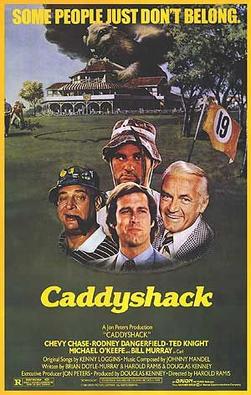
Caddyshack (1980, directed by Harold Ramis)


Whenever I think about Caddyshack, which is one of the funniest moves ever made, I think first of the Gopher, burrowing across the course and dancing to the music.

I then think about Bill Murray, playing the demented groundskeeper and growing his own special grass that you can both play golf on and smoke afterwards.

I remember Rodney Dangerfield dancing on the green while Ted Knight throws a fit.  This was the first film that I ever saw Rodney Dangerfield in.  “It looks good on you, though,” was one of those simple lines that Rodney could turn into a classic.

I remember Ted Knight, appearing in one of his few film roles, and saying, “Well, we’re waiting!” and drawing out every single word.

I remember the scene in the pool.  You know which one I’m talking about.

I remember Chevy Chase, back when he was still funny.

Then I remember how Rodney Dangerfield’s classic last line, “We’re all going to get laid,” was changed to “We’re all going to take a shower!” for television.  Why the censors thought that sounded less dirty than the original, I’ll never know.

I remember the Bishop getting struck by lightning while playing the best game of his life.

And, of course, I remember Cindy Morgan as Lacy Underall.

I remember so many classic moments and funny lines that I’m always surprised when I rewatch the movie and discover that it’s not really about the Gopher, Bill Murray, Rodney Dangerfield, Chevy Chase, or even Lacy Underall.  Instead, the main character in the movie is Danny Noonan (Michael O’Keefe), a teenage caddy at Bushwood Country Club who wants to win a scholarship so he can go to college and avoid having to work in the lumber yard with his father (Albert Salmi).  Danny has a friendly rivalry with caddy Tony D’Annuzio (Scott Colomby) and is dating Maggie (Sarah Holcomb).  Danny has to decide whether to ally himself with the snobs (led by Ted Knight) or the slobs (led by Rodney Dangerfield).

Caddyshack was originally envisioned as being Danny’s story but, once filming started, Harold Ramis (making his directorial debut) realized that the comedic characters were actually more interesting.  The movie went from being a straight-forward coming-of-age story to an almost plotless collection of gags and jokes, with both Bill Murray and Rodney Dangerfield improvising the majority of their dialogue and the Gopher emerging as the film’s true star.  That was bad news for the younger actors playing the caddies, who all found their roles greatly reduced in the film’s final cut but that was good news for audiences.  Caddyshack may not have much of a narrative structure but it does have some of the funniest people who ever lived at the peak of their powers.

Despite a legendarily troubled production, Caddyshack was a huge success with audiences and eventually, the critics came around as well.  Harold Ramis always said that he had a hard time watching it because all he could see were the mistakes that he made.  All audiences could see, though, was a hilariously funny movie that continues to bring people joy to this day.

Retro Television Review: St. Elsewhere 1.6 “Legionnaires: Part One”


Welcome to Retro Television Reviews, a feature where we review some of our favorite and least favorite shows of the past! On Fridays, I will be reviewing St. Elsewhere, a medical show which ran on NBC from 1982 to 1988.  The show can be found on Hulu!

This week, Peter White continues to disappoint everyone.

Episode 1.6 “Legionnaires: Part One”

(Dir by Thomas Carter, originally aired on December 7th, 1982)

Dr. Peter White (Terence Knox) is perhaps the most incompetent doctor at St. Eligius.  Over the course of the first few episodes, we have watched as he’s taken advantage of his fellow residents, been rude to patients, misdiagnosed obvious medical conditions, and complained nonstop about how difficult his life is.  Dr. White is struggling to balance the punishing schedule of being a resident with also being a husband and the father to a young girl and a newborn.  He’s in over his head.

What’s interesting is that, despite all of his problems, he’s not a particularly sympathetic character and I don’t think he’s meant to be.  He’s never going to be a good doctor and he doesn’t have the courage to admit it.  Instead of finding a career for which he’s suited, he insists on being a doctor and risking the life of anyone unlucky enough to be his patient.  What makes Dr. White an especially disturbing character is that there are probably a lot of doctors in the real world who are just like him.  They’re overwhelmed and they make stupid mistakes.  I get overwhelmed sometimes too, as does everyone.  And, like everyone, I occasionally make mistakes.  However, my mistakes usually amount to something like missing a cringey typo that causes me to feel embarrassment until I get a chance to fix it.  A doctor’s mistake can lead to people dying.

This week, Dr. White attempts to give penicillin to a patient who is allergic.  Fortunately, Dr. Westphall is able to stop White from putting his patient into a coma.  Dr. White also manages to lose his hospital-issued pager and, when he’s told that it will cost him $300 to get a new one, he freaks out.  A chance meeting with a lawyer in the hospital cafeteria leads White to offer to sell out the hospital by recommending the lawyer to anyone willing to sue because they ended up with a doctor like Peter White.  White finally raises the money by donating his sperm.  The nurse at the sperm bank says that it’s really generous for a doctor to donate.  Not this doctor!

While Peter is screwing up his life, Dr. Westphall is dealing with what appears to be an outbreak of Legionnaire’s Disease in one of the wards.  Westphall wants to immediately shut down the ward.  Dr. Auschlander and board member H.J. Cummings (Christopher Guest — yes, that Christopher Guest) disagree.  However, after another young woman dies of what appears to be Legionnaire’s, Westphall orders the ward to be closed and the patients to be relocated.

Meanwhile, Kathy Martin broke up with Fiscus because she felt their fling was turning into a relationship and Dr. Cavanero dealt with a nurse who disliked her.  Neither one of those subplots did much for me, though Kathy is emerging as one of my favorite characters on this show.  Before breaking up with Fiscus, she goes to a funeral of a stranger just so he won’t be buried without someone there to mourn him.  She wears white to the funeral.  One doctor comments that she’s never seen Kathy wear white before.  Kathy’s a great character and deserves better than just being Fiscus’s girlfriend.

This episode was an improvement over the last episode I watched.  According to the title, it’s also only “Part One” so I imagine there will be some fallout over closing that ward next week.  We’ll see what happens.

Horror Film Review: Empire of the Ants (dir by Bert I. Gordon)


Ants are interesting creatures.  On the one hand, they work hard and they can design and build a complex home in just a matter of hours.  They’re loyal to the other members of their tribe and they all happily do whatever needs to be done to keep their community healthy and moving forward.  They’re family-orientated.  They take care of their children.  They eat earth worms.  They fight other ants.  They can carry several pounds over their own weight.  They like to move in a single-file line.  These are all things that people, in general, admire.  If you had to hire someone to do some yardwork, you would want someone who had the attitude of an ant.

At the same time, ants also have no respect for privacy, they tend to get everywhere, and they bite you and leave behind those ugly red marks that take forever to go away and that can itch like heck.  I was once outside barefoot, helping someone wash his car, when I suddenly felt a really intense pain in my foot.  I looked down and saw that I had stepped straight into an ant hill.  It was not only an ant hill but it was a FIRE ANT HILL!  I grabbed a hose and I washed all of the ants off my foot but it was still one of the most painful experiences of my life.  Ants are hard-working and industrious but they’re also kind of mean and they really don’t like humans.  (Maybe they would like us more if people stopped kicking ant hills and using magnifying glasses to set them on fire.)  Ants will break into your house and then bite you when you tell them to go away.  My point is that you might like ants but ants do not like you and you better remember that!

The 1977 film, Empire of the Ants, is all about humanity’s mixed feelings towards ants.  Joan Collins plays a shady real estate agent who leads a group of potential home buyers into the bayou because she wants to trick them into buying some worthless property on a nearby island.   What Collins and her clients don’t know is that a barrel of radioactive waste was recently dumped off of a nearby boat and when the waste washed on shore, a bunch of ants got into it and it caused them to become giant ants!  The giant ants are industriously creating their own sugar-based society but they’re also attacking and brainwashing humans!

Needless to say, this is a Bert I. Gordon film.  Gordon took his “Mr. Big” nickname quite literally and, as a result, he spent almost his entire career making movies about animals and occasionally humans who were turned into giants by radiation.  Apparently, radiation can do anything!  Empire of the Ants is a typical Gordon film, in that the special effects are just bad enough to be kind of charming.  The ants are either awkwardly super-imposed into the scene or they are clearly made out of plastic.  There’s a scene where an ant grabs a man by his neck and it would be really terrifying if not for the fact that the ant’s head appears to have been made from Styrofoam.  Unfortunately, even though the special effects are bad in an amusing way, Empire of the Ants is still a pretty boring film.  Gordon devotes way too much time to the people heading out to look at Joan Collins’s beachfront property.  No one is watching a film like this for human drama.

This movie is based on a short story by H.G. Wells.  Wells, reportedly, considered it to be the worst thing he had ever written.

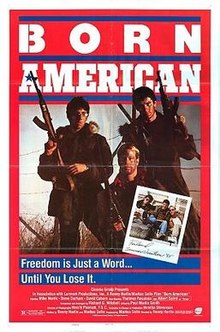
Born American (1986, directed by Renny Harlin)


The year is 1986 and the Cold War is raging between the United States and the Soviet Union.  Three American college students are on vacation in Finland.  Mitch (Steve Durham) and Savoy (Mike Norris) think it would be a great idea to secretly cross the border into Russia and just hang out for a few hours.  The more cautious KC (David Coburn) thinks that would be a mistake but he’s outvoted.

Of course, it turns out that KC was correct.  No sooner have the three students crossed the border than they find themselves being chased by Soviet soldiers and getting accused of raping a woman in a nearby village.  When the three of them attempt to flee back over the border, they instead end up accidentally destroying the village instead.  Arrested by the Russians, KC is tortured by the KGB until Savoy agrees to confess to being an intelligence agent.

Sentenced to a prison camp in Siberia, Savoy and KC are forced to take part in forced labor while Mitch is used as a pawn in an underground human chess match where the pawns are all prisoners and capturing a pawn means that prisoner is then executed.  (I don’t get it either.)  After KC dies due to the abuse to which he’s been subjected, Savoy discovers that there’s a former American intelligence agent known as The Admiral (Thalmus Rasulala) living underneath the prison.  The Admiral is willing to help Savoy escape but he wants Savoy to help him by smuggling a book that The Admiral has written to publishers in the West.

What type of name is Savoy anyways?

Despite the name and the pro-American subject matter, Born American was produced in Finland.  At the time, it was the most expensive Finnish film ever made.  It was also the directorial debut of Renny Harlin and the surprise box office success of Born American led to Harlin getting offers from Hollywood.  If not for Born American, Renny Harlin would never have gotten the chance to direct Die Hard 2 or to marry Geena Davis.  Of course, he also wouldn’t have gotten the chance to direct Cutthroat Island.

The best thing about Born American are the action scenes.  They rarely make much sense in the context of the film’s plot but Renny Harlin proved that, even with his directorial debut, he knew how to film people blowing things up and shooting guns at each other.  The scenes in the prison camp are believably intense, or at least they are until The Admiral shows up in his well-furnished underground lair.

The worst thing about Born American is the plot, which never makes any sense.  I’m about as anti-communist as they come and even I still found it hard to have much sympathy for three obviously wealthy college students who were stupid enough to try to sneak into Russia just so they’d have a story to tell later.  Savoy is not much of a hero because almost all of his troubles could have been avoided by him not acing like an idiot.  Plus, what type of name is Savoy?

Originally, Savoy was to be played by Chuck Norris.  When Chuck withdrew from the project, the producers instead hired his son, Mike Norris, and rewrote the script to make the three Americans college students.  This was Mike Norris’s first starring role and, unfortunately, he’s not very good.  He’s believable as a tourist but once he’s taken prisoner and has to emote, he starts delivering all of his lines in a high-pitched whine and it becomes difficult to listen to him.  Watching Mike Norris in the role of Savoy Brown, I couldn’t help but think to myself that Chuck Norris never would have gotten captured in the first place.

The Take (1974, directed by Robert Hartford-Davis)


Lt. Terrence Sneed (Billy Dee Williams), a tough and suave cop from San Francisco, is sent to New Mexico to help Police Chief Berrigan (Eddie Albert) take down the local crime syndicate.  No sooner has Sneed arrived in town than he’s helping to prevent a prison break and killing gangsters.  Berrigan is impressed and explains to Sneed that the local crime boss is Victor Manso (Vic Morrow).  Even though everyone knows that Manso is crooked, the police haven’t ever been able to put together a case that will stand up in court.  Maybe Sneed is the man who can do it.

What Berrigan doesn’t know is that Sneed is a crooked cop, himself.  As soon as Sneed leaves his meeting with Berrigan, he goes over to Manso’s office and collects his money.  Manso assigns Sneed to work with another crooked cop, Captain Dollek (Albert Salmi).  However, it turns out that Sneed has plans of his own.  While still on Manso’s payroll, Sneed starts to put together a case that might finally take Manso down.

The Take is full of good actors in small roles.  If you have ever wanted to see Billy Dee Williams share a scene with Frankie Avalon, The Take is the film for you.  Avalon plays Danny James, a small-time hood who is arrested and interrogated by Sneed.  At first, Danny is cocky and arrogant but, as soon as Sneed removes his jacket and his watch and makes a fist, Danny starts crying and begging Sneed not to beat him.  Danny is soon turned into an informant and then disappears from the movie.  The beautiful model Kathirine Baumann plays Danny’s girlfriend.  While only wearing a towel, she gives Capt. Dollek the finger and looks amazing doing it.  Sorrell Brooke, who later found fame as Boss Hogg on The Dukes of Hazzard, also has a few good scenes as Sneed’s deceptively respectable money launderer.

The Take can be a confusing film to watch because it’s never firmly established just how corrupt Sneed actually is.  Sometimes, Sneed just seems like he’s trying to make a little extra money and then, other times, he comes across as being a full-blown gangster.  Despite being on Manso’s payroll, Sneed seems to be determined to take him down and the film never makes clear why.  Billy Dee Williams is his usual supremely cool self but he seems almost too cool to play a morally ambivalent cop.  More impressive are Vic Morrow and Eddie Albert, who both shamelessly chew the scenery as two leaders on opposite sides of the law.

The Take is often mistakenly referred to as being a blaxploitation film but it’s really just a cop film with a lead actor who happens to be black.  Unlike the best blaxploitation films, there’s no political subtext to be found in the movie.  Sneed could just as easily be a corrupt white detective and, with the exception of one throwaway line, race is never mentioned.  While this is a minor cop film, it features a few good action scenes and, again, it’s your only chance to see two very different pop cultural icons, Billy Dee Williams and Frankie Avalon, acting opposite of each other.  That’s not a bad pay-off for 91 minutes of your life.

Viva Knievel (1977, directed by Gordon Douglas)


Last night, I watched one of the greatest movies of all time, Viva Knievel!

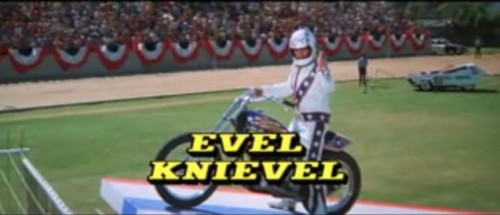
Viva Knievel! starts with the real-life, motorcycle-riding daredevil Evel Knievel breaking into an orphanage in the middle of the night, waking up all the children, and giving each of them their own Evel Knievel action figure.  When one of the kids says, “You actually came!,” Evel replies that he always keeps his word.  Another one of the orphans then throws away his crutches as he announced that he can walk again!

From there, Viva Knievel! only gets better as Evel preaches against drug use, helps his alcoholic mechanic (Gene Kelly) bond with his son, and flirts with a glamorous photojournalist (Lauren Hutton).  Evel was married at the time that Viva Knievel! was produced but his wife and family go unmentioned as Evel, Kelly, and Hutton travel through Mexico, jumping over fire pits, and battling drug dealers.

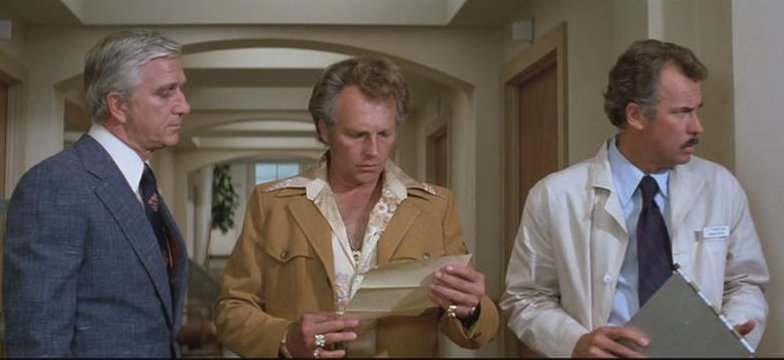
Evel’s former protegee, Jessie (former child evangelist Marjoe Gortner), has fallen in with a bad crowd and gotten messed up on the same drugs that Evel spends the entire movie preaching against.  An evil drug trafficker (Leslie Nielsen, a few years before Airplane! and The Naked Gun) pressures Jessie to convince Evel to do a dangerous stunt.  The plot is to replace Evel’s trusted mechanic with a crooked mechanic (Cameron Mitchell) who will sabotage the jump.  When Evel dies, he will be shipped back to the U.S. in a coffin and, hidden within the walls of the coffin, will be several kilos of cocaine.  Oh, the irony!  Evel Knievel, America’s number one spokesman against drugs, will be responsible for bringing them into the United States!  Can Evel thwart the nefarious plans of Leslie Nielsen while still finding time to fall in love with Lauren Hutton and break Gene Kelly out of a psychiatric ward?  If anyone can do it, Evel can.

Even Dabney Coleman’s in this movie!

From the start, Viva Knievel! is a vanity project but in the best, most loony and entertaining way possible.  There are many well-known actors in this film and all of them take a backseat to Evel Knievel, whom they all speak of as if he’s a cross between Gary Cooper and Jesus Christ.  Watching this movie, you learn three things: 1) Evel Knievel was high on life but not dope, 2) Evel Knievel always kept his word, and 3) Evel Knievel always wore his helmet.  He even makes sure that Lauren Hutton is wearing one before he takes her for a spin on his motorcycle.  You also learn that Evel Knievel liked to get paid.  He nearly beats up his manager (Red Buttons) when he thinks that he’s been cheated but they’re still friends afterwards because how could anyone turn down a chance to be in Evel’s presence?

There are plenty of stunts and jumps to be seen in Viva Knievel!, though watching Leslie Nielsen play a villain is almost as fun as watching Evel jump over a fire pit.  Judging from his performance here, Evel Knievel probably could have had a film career.  He had a natural screen presence and delivered even the worst dialogue with sincerity.   Unfortunately, three months after Viva Knievel! opened in the United States, Evel attacked a promoter with an aluminum baseball bat and ended up doing 6 months in jail.  Evel said it was because the promoter was spreading lies about him but, regardless, Evel lost most of his sponsorships and his toyline was discontinued.  Viva Knievel! sunk into an obscurity from which it has only recently reemerged.  Viva Knievel! is cheesy fun, a relic of a bygone era.  Watch it, think about whatever problems you may be dealing with in your own life, and then ask yourself, “What would Evel do?”


A Movie A Day #302: Love and Bullets (1979, directed by Stuart Rosenberg)


Joe Bomposa (Rod Steiger) may wear oversized glasses, speak with a stutter, and spend his time watching old romantic movies but don’t mistake him for being one of the good guys.  Bomposa is a ruthless mobster who has destroyed communities by pumping them full of drugs.  Charlie Congers (Charles Bronson) is a tough cop who is determined to take Bomposa down.  When the FBI learns that Bomposa has sent his girlfriend, Jackie Pruit (Jill Ireland), to Switzerland, they assume that Jackie must have information that Bomposa doesn’t want them to discover.  They send Congers over to Europe to bring her back.  Congers discovers that Jackie does not have any useful information but Bomposa decides that he wants her dead anyway.

Love and Bullets is an uneasy mix of action and comedy, with Bronson supplying the former and Ireland trying to help out with the latter.  Not surprisingly, the action works better than the comedy.  Because Charlie is an American in Switzerland, he is not allowed to carry a gun and he is forced to resort to some creative ways to take out Bomposa’s assassins.  Unfortunately, the scenes where Charlie and Jackie fall in love are less interesting, despite Bronson and Ireland being a real-life couple.  Ireland occasionally did good work when she was cast opposite of Bronson but here, she’s insufferable as a ditzy gangster moll with a strange accent.  While everyone else is trying to make an action movie, she’s trying too hard to be Judy Holliday.  Steiger’s peformance starts out as interesting but soon devolves into the usual bellowing and tics.

Love and Bullets does have a good supporting cast, though.  Bradford Dillman, Michael V. Gazzo, Val Avery, Albert Salmi, and Strother Martin all pop up.  The two main hit men are played by Paul Koslo and Henry Silva.  Silva’s almost as dangerous here as he was in Sharky’s Machine.