This October, I’m going to be doing something a little bit different with my contribution to 4 Shots From 4 Films. I’m going to be taking a little chronological tour of the history of horror cinema, moving from decade to decade.
Today, we continue the 1960s!
4 Shots From 4 Horror Films
Blood and Black Lace (1964, dir by Mario Bava)
2,000 Maniacs (1964, dir by Herschell Gordon Lewis)
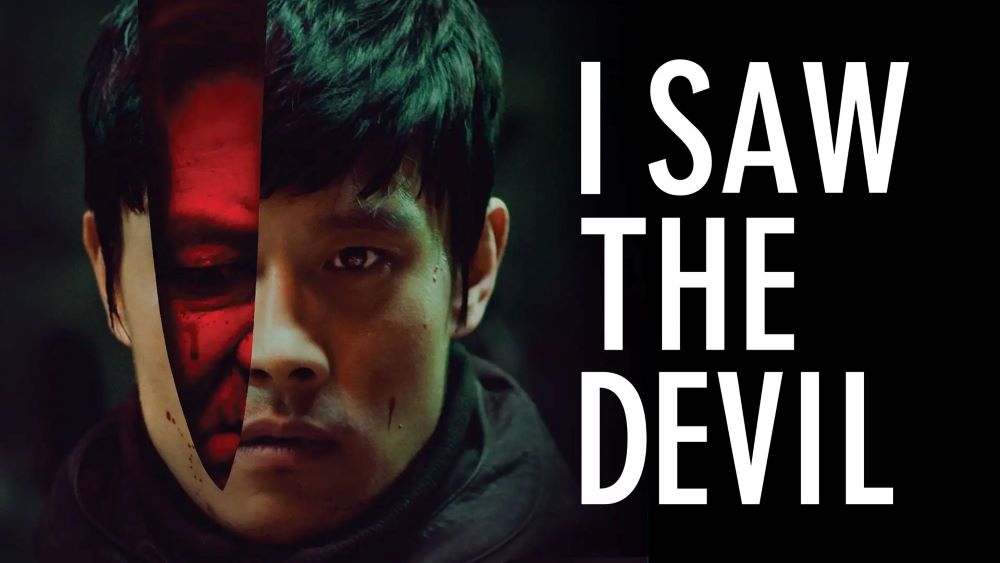
I Saw the Devil (2010) is a film that refuses to play by the rules of typical revenge thrillers. Instead, it pushes the boundaries into some of the most brutal and unflinching territory South Korean cinema has to offer. Directed by Kim Ji-woon, the movie blends elements of horror and psychological thriller, creating a hybrid that’s as disturbing as it is compelling. Much like Kingdom, it blurs the lines between genres—what starts as a revenge story quickly morphs into something darker and more extreme, turning familiar tropes into a raw exploration of evil’s destructive power.
The story follows Soo-hyeon (Lee Byung-hun), an intelligence agent whose fiancée becomes the victim of a sadistic serial killer named Kyung-chul (Choi Min-sik). Instead of a straightforward pursuit of justice, Soo-hyeon dives into a nightmarish game of cat and mouse. His goal? To inflict suffering on Kyung-chul in return, not for closure but for unleashing a kind of revenge that is almost self-destructive. Repeatedly capturing and releasing Kyung-chul, Soo-hyeon becomes trapped in a cycle of violence that steadily erodes his moral boundaries.
That cyclical pattern forms the backbone of the film, adding a rhythm that oscillates between moments of calm and bursts of brutal violence. Scenes of horror are often tinged with dark humor, adding an unsettling layer to the narrative. One standout moment occurs in a remote farmhouse, where Kyung-chul meets his twisted friend Tae-joo, a cannibalistic serial killer who treats violence like a casual dinner conversation. This scene exemplifies the film’s unsettling ability to find morbid humor in the most horrific circumstances, emphasizing how evil—when normalized—becomes almost banal.
Choi Min-sik’s performance in I Saw the Devil is chilling, showcasing his ability to embody pure evil. It’s a stark contrast to his role in Oldboy, where he played Oh Dae-su, a man seeking revenge for his own suffering. Here, Choi’s Kyung-chul is the embodiment of savagery—an inhuman predator with no remorse, no moral compass, just pure chaos. The role reversal highlights the incredible range of an actor whose presence can turn the screen into a nightmare. This flip from sympathetic avenger to monstrous villain makes the film’s exploration of morality even more compelling.
The film’s approach to violence is unabashed and graphic. Scenes of sexual assault, torture, and murder are depicted in unflinching detail, sparking inevitable debates about whether it’s gratuitous or necessary. Kim Ji-woon doesn’t hold back — he wants you to feel the full weight of evil in its most visceral form. This isn’t horror for shock’s sake; it’s a brutal mirror held up to the darker sides of human nature, exploring how unchecked vengeance can corrupt and destroy everything in its path.
Beyond the violence, I Saw the Devil probes deeper questions about morality and obsession. Soo-hyeon’s transformation from devastated lover to relentless avenger is portrayed with subtlety—they’re not just chasing a killer; they’re unraveling themselves. Lee Byung-hun brings a quiet intensity to his role, capturing the tragic descent into obsession and madness. The film makes you ask: how far can you go to punish someone before you become what you hate? And is vengeance ever truly justified? These aren’t easy questions, but I Saw the Devil forces you to sit with them.
Visually, the film is bleak and cold—mirroring its themes of alienation and moral decay. Kim Ji-woon keeps things straightforward, focusing on clear visuals that highlight the starkness of both urban and rural settings. The action scenes are brutal but precise, often choreographed with a sense of dark beauty that enhances their impact. The pacing is tight—about two hours—delivering a relentless story that never quite lets go of the tension.
The soundtrack and sound design don’t overshadow the visuals but add to the sense of dread. Quiet moments are ominous; violent sequences are thunderous, immersing viewers fully into this nightmare landscape. Every detail, from lighting to camera angles, emphasizes the film’s mood: raw and unsettling from start to finish.
The themes extend beyond personal revenge, touching on broader issues of societal trauma and the cyclical nature of violence. Korea’s history of brutal trauma and social upheaval echoes in the film’s exploration of how wounds—personal or national—can perpetuate more violence if left unresolved. It’s a brutal reminder that revenge can become a self-fulfilling prophecy, devouring everyone involved.
But make no mistake: I Saw the Devil is a challenging film. It doesn’t shy away from explicit content or disturbing themes. It’s brutal, unrelenting, and sometimes hard to watch. But that’s its power. It forces viewers out of their comfort zones and confronts uncomfortable truths about justice, evil, and our capacity for cruelty.
I Saw the Devil is a landmark in Korean cinema—an uncompromising look at revenge as a corrosive force. Its fusion of extreme horror and psychological drama creates a haunting experience that stays with you long after the credits roll. It’s not just a revenge story; it’s a primal reflection on what it means to be human—and what it costs to seek vengeance in a world full of monsters.
“Man is a feeling creature, and because of it, the greatest in the universe….”
Hell yeah! You tell ’em, Peter Graves!
Today’s Horror on the Lens is 1956’s It Conquered The World. Graves plays a scientist who watches in horror as his small town and all of the people who he loves and works with are taken over by an alien. Rival scientist Lee Van Cleef thinks that the alien is going to make the world a better place but Graves understands that a world without individual freedom isn’t one that’s worth living in.
This is one of Corman’s most entertaining films, featuring not only Graves and Van Cleef but also the great Beverly Garland. Like many horror and science fiction films of the 50s, it’s subtext is one of anti-collectivism. Depending on your politics, you could view the film as either a criticism of communism or McCarthyism. Watching the film today, with its scenes of the police and the other towns people hunting anyone who fails to conform or follow orders, it’s hard not to see the excesses of the COVID era.
Of course, there’s also a very persuasive argument to be made that maybe we shouldn’t worry too much about subtext and we should just enjoy the film as a 50s B-movie that was directed with the Corman touch.
Regardless of how interpret the film, I defy anyone not to smile at the sight of ultra-serious Peter Graves riding his bicycle from one location to another.
Here, for your viewing pleasure, is It Conquered The World!
1999’s TheMomentAfter opens with the world in a panic. Millions of people have suddenly vanished into thin air, leaving only their clothes and their loved ones behind. On a news program, three expects are brought in to discuss what might have happened. A New Age-y woman argues that “Mother Earth” is eliminating overpopulation. A wild-eyed man argues that people have been abducted by UFOs. And finally, a man with a neatly trimmed beard argues that it’s the rapture. The bearded man is dismissed as being a crank.
Two FBI agents — Adam Riley (David A.R. White) and Charles Baker (Kevin Downes) — are assigned to investigate the disappearances. Charles is himself shaken because he knew a few people who disappeared. As they drive around the city and talk to people, they hear the same story. People who went to church regularly and were Christian vanished while their less faithful loved ones watched. Adam comes to suspect that there might be something to the Rapture Theory. Charles, bitter because his wife recently suffered a miscarriage, has no time for it.
As often happens in a crisis, the government grows heavy-handed and sinister. The President announced that he’s going to follow the lead of Europe and “suggest” that everyone get a chip implanted in their hand. Charles gets the chip without hesitation. Adam keeps finding excuses to put it off, even though he’s mandated to get one as a federal employee. With the country turning into an authoritarian dystopia, Charles and Adam are assigned to track down a renegade preacher (Brad Heller), who is telling his followers not to get chipped.
Stories about the end time have always been popular when it comes to faith-based films. A lot of that is because the Book of Revelations is written in such a way that there’s a lot of different ways that one can interpret it. As a result, it’s always interesting to see how “the mark of the Beast,” will be represented in these films. Sometimes, it’s a tattoo. Sometimes, it’s an invisible mark that only demons can see. In this one, it’s a chip that works as a credit card. And while it’s easy to scoff at this film’s conspiracy theories and the shots of people staring at their palms, some of us still remember how, during the COVID lockdowns, there were more than a few people in positions of influence who argued that the citizenry shouldn’t be allowed in stores or restaurants or anywhere else unless they could show proof they had gotten the vaccine and kept up with the boosters. There were even some who said that the National Guard should go door-to-door and force the shot on people. (For the record, I did get the vaccine but, when I started hearing about monthly boosters and all that other stuff, I decided that one shot was more than enough for me.) There is definitely an authoritarian impulse out there, one that comes out whenever there’s a crisis. One reason why films like this one continue to find an audience is because real-life governments often behave like the dictatorship portrayed in The Moment After. Of course, in the movie, everyone can at least say they were influenced by the Devil. In real life, it just comes down to pettiness and a need to tell other people what to do.
As for The Moment After, it’s a low-budget but fairly well-done thriller, one that keeps the preaching to a minimum and doesn’t feature a lot of the problematic elements that one tends to find in movies like this. White and Downes both give effective performances. It avoids the histrionics that tend to define a lot of other apocalyptic films. This is not a film that’s going to convert anyone but it does a good enough job creating an atmosphere of paranoia and growing dread that it works as a thriller.
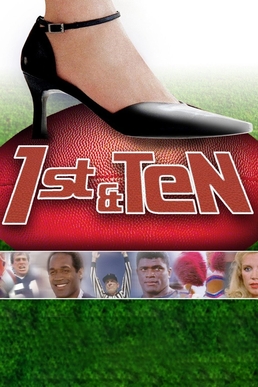
Welcome to Late Night Retro Television Reviews, a feature where we review some of our favorite and least favorite shows of the past! On Wednesdays, I will be reviewing 1st and Ten, which aired in syndication from 1984 to 1991. The entire series is streaming on Tubi.
This week, the 2nd season begins!
Episode 2.1 “The Rookies”
(Dir by Bruce Seth Green, originally aired on August 25th, 1986)
It’s time for another season of Bulls football and …. hey, where did everyone go?
As soon as the opening credits for the first episode of the second season started, I noticed that there were quite a few people missing. Delta Burke, Reid Shelton, Prince Hughes, and Cliff Frazier were all listed. However, not listed were Geoffrey Scott, Sam Scarber, Clayton Landey, Ruta Lee, Marshall R. Teague, Michael V. Gazzo, and Robert Miranda. That’s the majority of the cast!
Instead of Geoffrey Scott’s veteran quarterback Bob Dorsey, we now have Jason Beghe as rookie quarterback Tom Yinessa. We now have Stan Kamber as assistant coach Fred Griner. We now have Marcus Allen as rookie running back Rick Lambert. And, as the veteran running back T.D. Parker, we have …. O.J. SIMPSON!
Oh yeah, this isn’t going to be awkward.
O.J, only appears for a few minutes in this episode. As T.D. Parker, he talks to his wife about how much he loves playing football and how he feels that he has one more season left in him as the Bulls’s starting running back. Uhmm …. I thought Carl Witherspoon was the Bulls’s running back. All last season, Carl was the Bulls’s running back. What the Hell is T.D. Parker talking about? Is he delusional? Maybe he’s a crazed fan who just thinks that he was the running back last year. All of that said, T.D. does come across as being a very nice guy and definitely someone who you can trust to slash his way through all of the ego and hype surrounding professional football.
(Probably not coincidentally, the other Bulls assistant coach is played by A.C. Cowlings, who was a friend of O.J.’s. Remember A.C?)
Anyway, this episode deals with rookie training camp. While the veterans get a week off, rookies like Tom Yinessa try out for the Bulls. Yinessa played football in the Army and the only reason he’s being given a tryout is because “Captain Pete” is a friend of Denardo’s. Denardo is shocked to discover that Yinessa is a good quarterback but he’s already got two veteran quarterbacks and Diana has signed a deal to bring in a third. Denardo is forced to cut Yinessa. Yinessa smashes the mirror in Denardo’s office and says that he’s done Denardo a favor because now Denardo won’t have to face what’s he done. Okay, weirdo….
Yinessa returns to his job at the auto yard and Bulls football continues! While hotshot rookie Rick Lambert continues to ask for more money before he’ll even show up at training camp, Diana is informed that the players are threating to strike if the League institutes mandatory drug testing. Diana says a strike will bankrupt the team. Why are the Bulls always on the verge of going bankrupt? Diana needs to hire better people to look after the books.
Here’s my prediction for the rest of the season! Yinessa will be back because he’s in the opening credits. And, whatever problems may come up, O.J. Simpson will always cut right to the heart of the matter.
As for this particular episode, it got the job done. It re-introduced us to the team and, even more importantly, it seemed to signal that all of the nonsense from the first season — the Mafia, Diana’s ex-husband and all the rest of it — was over with. The show is ready to move on so let’s give it more of a chance than Coach Denardo gave Tom Yinessa.
Suspense is a ten-minute blast from the past that comes to us all the way from 1913.
In this film, the Woman (played by Lois Weber) and her baby are menaced by the Tramp (Sam Kaufman), a sinister figure who cuts her phone lines and breaks into her home. While the Woman tries to protect herself, the Husband (Val Paul) rushes home to save his wife.
Suspense was one of the first thrillers and it introduced many elements that are still used to today, including the cut phone lines and the isolated location. This was also one of the first films to use the split screen as a narrative technique. There are many modern horror films that owe a debt to Suspense, whether the filmmakers realize it or not.
Suspense was written and directed by Lois Weber, who is widely acknowledged as being America’s first female filmmaker.
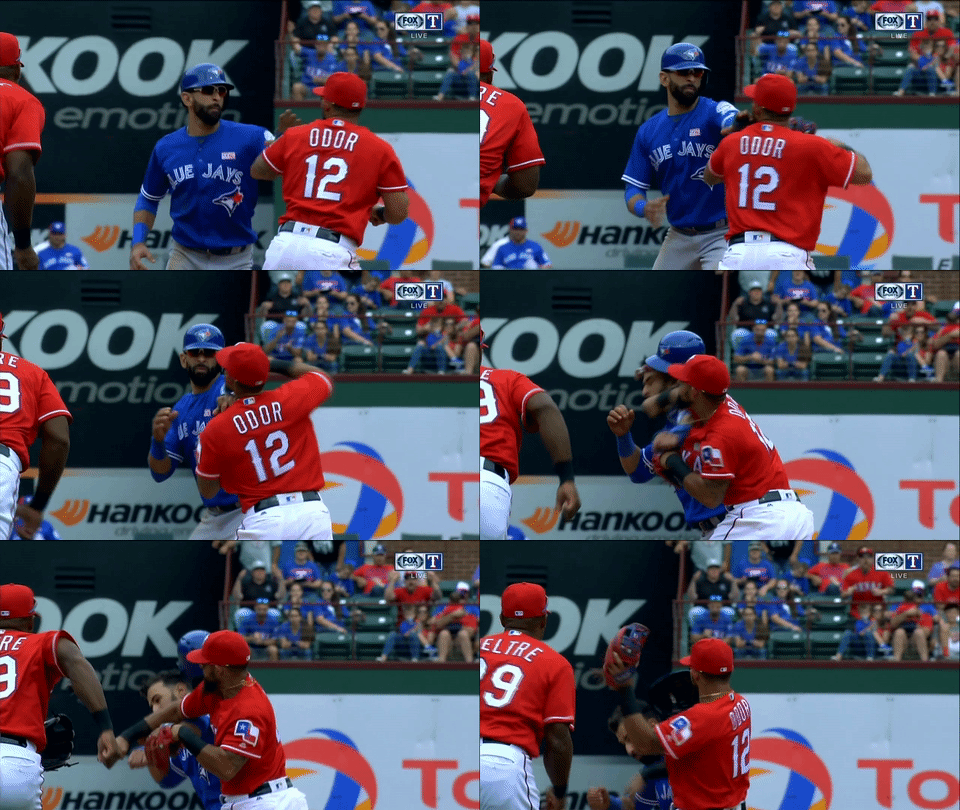
I don’t like the Blue Jays and the last thing I want is to see them win any games during the ALCS but, as a baseball fan, I have to give credit where credit is due. And, as a Rangers fan, I have to share this GIF of Rougned Odor flattening Jose Bautista.
A 13-4 victory over the Mariners cannot be ignored and the Blue Jays got it at the exact time they needed it. They’re still down in the series, 2-1. But they’ve proven that they’re not out of this.
I’m depending on you, Mariners. Don’t let me down!
Tonight, we have the final episode of Hammer House of Horror and it is a macabre one indeed! A morgue attendant (Peter McEnery) becomes obsessed with both the number nine and a recently deceased neurosurgeon who died after trying to drill a hole in his own head in an attempt to let out all of his evil thoughts. McEnery finds himself becoming consumed by disturbing thoughts as well. Is he going mad or is he somehow seeing what no one else can see? This episode is effectively creepy and not for the squeamish.




 Through the Shattered Lens