Great Moments In Television History #40: Johnny Carson Talks To Vincent Price


I saw that today is the 100th birthday of one of the few men to have actually earned the right to be called the “King of Late Night,” Johnny Carson.  In honor of the occasion and the month, here’s Johnny interviewing Vincent Price.

This clip is from the September 27th, 1973 episode of The Tonight Show.  Vincent was on the show to promote his upcoming movie, Theatre of Blood.  During the interview, he also discussed Boris Karloff and Peter Lorre.  This clip features two class acts at their best.

Previous Moments In Television History:

  1. Planet of the Apes The TV Series
  2. Lonely Water
  3. Ghostwatch Traumatizes The UK
  4. Frasier Meets The Candidate
  5. The Autons Terrify The UK
  6. Freedom’s Last Stand
  7. Bing Crosby and David Bowie Share A Duet
  8. Apaches Traumatizes the UK
  9. Doctor Who Begins Its 100th Serial
  10. First Night 2013 With Jamie Kennedy
  11. Elvis Sings With Sinatra
  12. NBC Airs Their First Football Game
  13. The A-Team Premieres
  14. The Birth of Dr. Johnny Fever
  15. The Second NFL Pro Bowl Is Broadcast
  16. Maude Flanders Gets Hit By A T-Shirt Cannon
  17. Charles Rocket Nearly Ends SNL
  18. Frank Sinatra Wins An Oscar
  19. CHiPs Skates With The Stars
  20. Eisenhower In Color
  21. The Origin of Spider-Man
  22. Steve Martin’s Saturday Night Live Holiday Wish List
  23. Barnabas Collins Is Freed From His Coffin
  24. Siskel and Ebert Recommend Horror Films
  25. Vincent Price Meets The Muppets
  26. Siskel and Ebert Discuss Horror
  27. The Final Scene of Dark Shadows
  28. The WKRP Turkey Drop
  29. Barney Pops On National TV
  30. The Greatest American Hero Premieres
  31. Rodney Dangerfield On The Tonight Show
  32. The Doors Are Open
  33. The Thighmaster Commercial Premieres
  34. The Hosts of Real People Say “Get High On Yourself”
  35. The 33rd NFL Championship Game Is Broadcast In Color
  36. The Sopranos Premieres on HBO
  37. Eisenhower Hosts The First Televised Press Conference
  38. The Twilight Zone Premieres On CBS
  39. The Wolverines

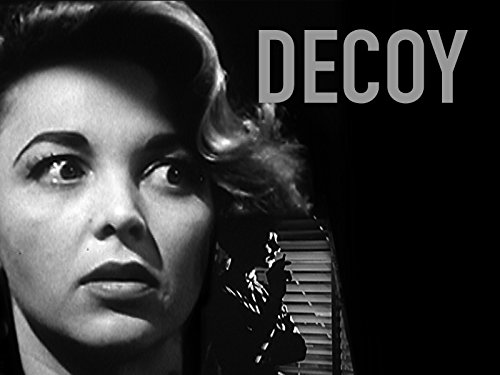
Retro Television Review: Decoy 1.9 “Necklace of Glass”


Welcome to Retro Television Reviews, a feature where we review some of our favorite and least favorite shows of the past!  On Thursdays, I will be reviewing Decoy, which aired in Syndication in 1957 and 1958.  The show can be viewed on Tubi!

This week, Casey discovers that New York can be a lot of fun when you know the right people.

Episode 1.9 “Necklace of Glass”

(Dir by Teddy Sills, originally aired on December 9th, 1957)

Casey goes undercover as a rich socialite in order to investigate a spree of jewelry thefts.  Unfortunately, Casey isn’t very good at her job in this episode.  Not only does she suspect the wrong person, a shady gigolo named Larry Babson (Martin E. Brooks), she also comes on too strong while trying to trick Larry into confessing.  Larry figures out that she’s a cop, finds the microphone that Casey hid in the apartment, and then storms out.  Fortunately, Larry’s wife (Rita Grapel) then shows up shortly afterwards and, not having had a chance to talk to Larry, reveals that she’s the one who has been masterminding the jewelry thefts.  Casey, who had been feeling pretty bad up until that point, promptly pulls out her badge.

I actually appreciated the fact that Casey basically blew her assignment in this episode.  Characters who are flawless and who never make mistakes are boring.  In the episode, Casey says that she was distracted by how much fun it was to pretend to be rich and it makes perfect sense.  Why wouldn’t the working class Casey enjoy the chance to live the high life for once?

The important thing is, even though she initially screwed up, Casey solved the case.  This was a good episode.  Casey wasn’t flawless but, in the end, luck was on her side.

Scenes That I Love: The Inevitability of Doom In The Dead Don’t Die


Jim Jarmusch’s The Dead Don’t Die is a film that definitely grew on me. When I first watched it, I thought it was intriguing but perhaps a bit too cutesy and enamored with itself. However, I later came to realize that Jarmusch actually found the perfect tone for his look at our zombie-saturated culture.

In the scenes below, Bill Murray, Chloe Sevigny, and the wonderful Adam Driver all deal with the inevitability of doom that comes with being a character in a zombie film.


October True Crime: Ed Kemper (dir by Chad Ferrin)


In 1964, 15 year-old Edmund Kemper murdered his grandparents.  When he was asked why he had killed the two people who basically raised him, Kemper reportedly replied, “I just wanted to see what it was like to kill grandma.”

Kemper spent the next five years imprisoned by the California Youth Authority.  He was discovered to have an IQ of 138.  The psychiatrists who examined him all commented on what a friendly and conscientious prisoner Kemper was.  Kemper never caused trouble.  He always cleaned up after himself.  He seemed to be truly happy while incarcerated.

When Kemper turned 21, he was released back into the world.  He moved in with his domineering mother, who worked as an administrative assistant at the local college.  Because it had been determined that he would probably never reoffend, his juvenile record was expunged.  Kemper went to community college.  He hung out at a local cop bar.  (He applied unsuccessfully to be a police officer.)  He got a job with Departments of Highways.  Because he stood 6’9, everyone knew him as the friendly and somewhat dorky “Big Ed.”

Edmund Kemper went on to kill eight more people, including his mother and her best friend.

Kemper turned himself into the police and confessed to his crimes.  At his trial, his lawyers unsuccessfully went with an insanity defense.  When he was convicted, Kemper requested the death penalty, just to learn that the Supreme Court had (temporarily) outlawed capitol punishment.  Kemper was sent to prison, for life.  And that’s where he is to this day.

What’s odd about Kemper is that, once he was back in prison, he again impressed everyone by being a friendly, polite, and conscientious prisoner.  Unlike most convicted murderers, Kemper admitted his crimes and was even willing to analyze the darkness that drove him to commit them.  In the early days of criminal profiling, Edmund Kemper was frequently interviewed by FBI agent Robert Ressler and his insights into his own mind are still frequently used to profile serial killers to this day.  Both Ressler and profiler John Douglas described Kemper as being a sensitive and likable man with a good sense of humor.  Thomas Harris has said that Kemper was one of the inspirations for Dr. Hannibal Lecter.

Released earlier this year, Ed Kemper stick fairly closely to the facts of the case.  Brandon Kirk may not be as a tall as the real-life Kemper but he’s still convincing as a socially awkward, somewhat nerdy man who seems to be as shocked as anyone by his crimes.  The majority of the film deals with Kemper’s relationship with his mother (Susan Priver), who is portrayed as being a deranged tyrant who alternates between gently teasing Kemper and telling him that he’s destined to be miserable and alone forever.  Gava gives a convincing performance but, at times, the film almost seems as if it’s putting all the blame for Kemper’s crimes on his mother.  In the end, Kemper’s the one who killed those hitchhikers, regardless of how much his mom yelled at him beforehand.

Ed Kemper is a bit of an uneven film.  Brandon Kirk, Susan Priver, and Brinke Stevens (cast as Kemper’s mom’s best friend) all give good performances but some of the other actors are a bit less convincing in their roles.  The film deserves some credit for not shying away from the darkness of Kemper’s crimes but the pacing is also off, with some scenes dragging forever and others ending quickly.  The film’s best scene comes towards the end, when Ed Kemper is interviewed by the FBI and points out that he could kill the agent anytime that he felt like it.  It’s a tense scene that reminds us that even the likable killers are still killers.

(An earlier version of this review mistakenly listed Cassandra Gava as the actress who played Kemper’s mother.  Gava plays Kemper’s grandmother.  Susan Priver played Kemper’s mother.  I regret the error and I apologize to both actresses.)

Horror AMV of the Day: Here Comes Trouble


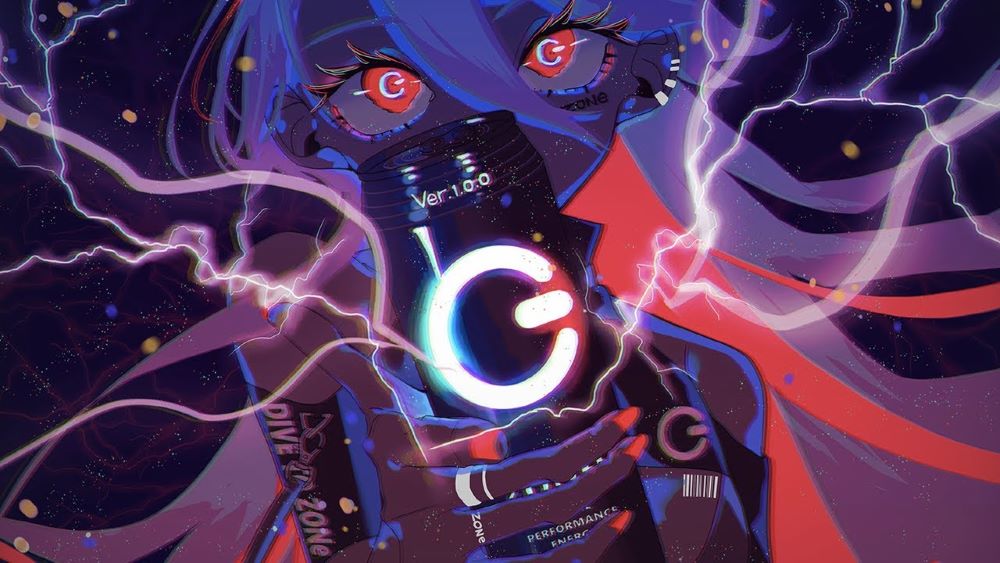
CHUNZ’s “Here Comes Trouble” AMV is definitely worth checking out. It brings together a range of clips from well-known series like Corpse Party, Shiki, and Tokyo Ghoul, blending them skillfully with a haunting soundtrack that really sets the mood. The editing is tight and deliberate, syncing scenes with the music to create a suspenseful, eerie atmosphere that draws you in. It feels less like just a montage and more like a crafted experience that captures the unsettling spirit of these shows in just a few minutes.

What makes this AMV stand out is how it balances energy with a dark, atmospheric tone. ItzMona knows how to keep things engaging without losing the creepy vibe, which makes for a satisfying watch whether you’re a longtime fan of horror anime or just looking for a quick dose of spine-chilling visuals. It’s a great example of how AMVs can be an art form in their own right, blending visuals and sound to tell a mood-driven story. If you want a neat way to revisit some iconic horror anime moments or just want something atmospheric and well-edited to watch, this AMV is an excellent pick.

SongHere Comes Trouble by Neoni

AnimeAldnoah Zero, Cowboy Bebop, Canaan, Megalo Box, W’Z, Elfen Lied, Tokyo Ghoul, Mirai Nikki, Tengen Toppa Gurren Lagann, Another, Jujutsu Kaisen, The Promised Neverland, Gleipnir, Corpse Princess, Ga-Rei-Zero, Koutetsujou no Kabaneri, Overlord, Darling In The FranXX, Blood C, Kekkai sensen, Tales of Zestiria the X, Youjo Senki, Tate no Yuusha no Nariagari, Kimetsu No Yaiba, Fire Force, Your Lie In April, Hunterxhunter, One piece, Gintama, One punch man, Ao no Exorcist, Taboo Tattoo, Fullmetal Alchemist, Monogatari, Shinmai Maou no Testament, Mahou Shoujo Madoka Magica, Highschool Of The Dead, Akame Ga Kill, Dororo, Hellsing, Owari no Seraph, Parasite, Black Rock Shooter, Magi, Kill la kill, No Game No Life, Noragami

CreatorCHUNZ

Past AMVs of the Day

Horror Song of the Day: The Dead Don’t Die by Sturgill Simpson


Jim Jarmusch’s The Dead Don’t Die still tends to get a mixed response from horror fans and I can certainly understand that.  It’s one of those films where you’re either on its wavelength or you aren’t.

That said, I do like the theme song.  From Sturgill Simpson, here is The Dead Don’t Die.


4 Shots From 4 Horror Films: The 1980s Part 3


This October, I’m going to be doing something a little bit different with my contribution to 4 Shots From 4 Films.  I’m going to be taking a little chronological tour of the history of horror cinema, moving from decade to decade.

Today, we complete the 80s!

4 Shots From 4 Horror Films

The Fly (1986, dir by David Cronenberg)

The Fly (1986, dir by David Cronenberg)

Near Dark (1987, dir by Kathryn Bigelow)

Near Dark (1987, dir by Kathryn Bigelow)

Evil Dead 2 (1987, dir by Sam Raimi)

Evil Dead 2 (1987, dir by Sam Raimi)

The Church (1989, dir by Michele Soavi)

The Church (1989, dir by Michele Soavi)

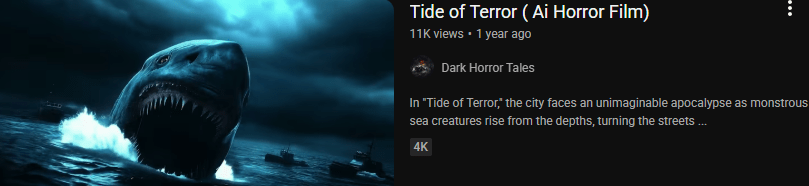
Tide of Terror, AI Short Film Review by Case Wright


Clowns scare me and AI used to scare me, but I just don’t think it’s gonna be all that bad. I wasn’t going to review another AI short because…. well, they are terrible, BUT just as I was about to move on to real people- I saw this:

Lisa knows that I can’t turn down a shark movie or Torchy’s Tacos. A shark movie is like Torchy’s Tacos because even if they made mediocre taco- it’s still EXCELLENT. Furthermore, you are still eating a taco; so, how bad could your life really be?!

The short opens with a terribly flooded New York City. Uh oh, here comes a tidal wave and if that isn’t bad enough…. sharks…wait…no a lot sea creatures appear, which are kinda scary… to someone. I got halfway through and there’s something shark-like.

They cut away from the shark to a large squid; so, I’m like who brought the peanut oil? It’s time for some calamari!!! Finally, there is a shark again sort of… and zombies? Is it good? No, but there is a shark… so, fine. The short was all over the place and really tested the depths of punishing me. Then, Adele showed up because she’s….

If you want to check this short out….

The Pulps Have The Halloween Spirit! Do You?


By Jack Davis

Halloween is right around the corner!  Are you ready?  I’m disappointed because my neighborhood really hasn’t decorated much for Halloween this year.  It’s supposed to rain for the next three days so my neighbors better hurry up and put up some ghosts and some pumpkins and get in the holiday spirit!

Do you need help getting in the holiday spirit?  Here’s some help from the pulps!

Artist Unknown

By Earle Bergey

Artist Unknown


by Doris Stanley

artist unknown

By Frank Frazaetta

by Rudolph Zirn

Artist Unknown

by Rafael De Soto

by Robert Stanley

by Rudolph Belarski

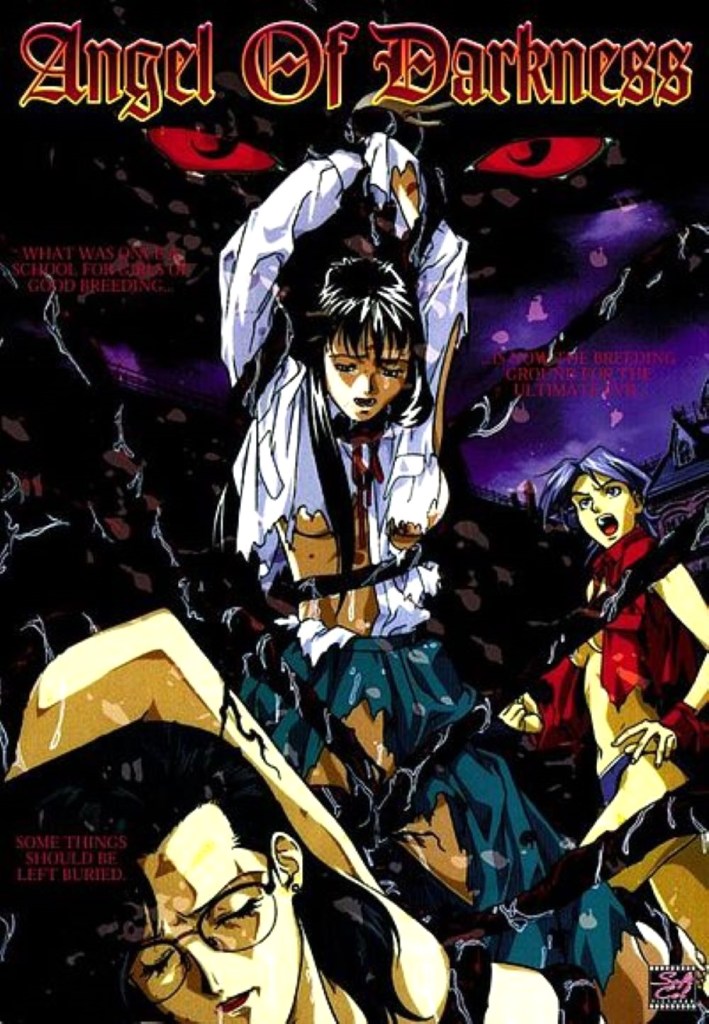
Anime You Should Be Watching (Horror Edition): Angel of Darkness (Injū Kyōshi)


shokushu zeme: “tentacle attack” erotica that explores taboo themes using tentacle-based sexual fantasy as a narrative and visual motif to circumvent Japanese censorship laws.

Angel of Darkness (Injū Kyōshi) holds a notorious place in the lineage of erotic horror anime, bridging the transgressive extremities of Chōjin Densetsu Urotsukidōji and the occult eroticism that would later define Bible Black. This four-episode OVA series from 1994 encapsulates the tentacle horror subgenre with uncompromising explicitness, wrapping its unsettling imagery in a narrative set within the seemingly innocent confines of a girls’ boarding school. The series exemplifies a distinctive moment in adult anime history, when grotesque sexuality and supernatural horror merged to explore themes of control, corruption, and forbidden knowledge.

Like UrotsukidōjiAngel of Darkness does not shy away from cataclysmic violence or graphic sexual transgression. However, rather than sprawling cosmic battles and apocalyptic carnage, it opts for a claustrophobic setting where the boundaries between predation and education collapse. The boarding school, an archetype of sheltered innocence, becomes a crucible for spiritual decay where evil—in the form of demonic possession and twisted rituals—lurks beneath routine façades. This subversion of a sacred educational environment highlights the series’ investment in moral and sexual transgression as intertwined forces.

The plot centers on Professor Goda, whose discovery of a strange stone beneath a campus tree unleashes an ancient, tentacled spirit that begins a viral corruption throughout the school. His transformation into a monstrous sex demon initiates an escalating cycle of ritual abuse and possession among the students and faculty. Against this backdrop, the developing relationship between Sayaka and Atsuko—the relatively innocent lovers trying to find connection amid chaos—provides a tragic human center to the nightmarish events unfolding. The series’ focus on lesbian romance adds emotional depth while diverging from typical harem or fetishistic formulas, instead using sexuality as both refuge and vulnerability under the shadow of demonic influence.

The narrative frequently returns to graphic scenes of domination, bondage, and forced extraction of bodily fluids, imagery that serves symbolic purposes as much as titillation. The recurring S&M rituals, scenes of rape by tentacles, and the desecration of once-hallowed spaces—such as the chapel turned site of torment—communicate a profound collapse of innocence and spirituality. This fusion of sex, violence, and the supernatural positions Angel of Darkness not as mere pornography, but as a stark allegory for power, control, and the corruption of purity.

Visually, the series operates within the constraints of mid-1990s adult OVA budgets, but its simplistic, shadow-heavy animation effectively evokes a mood closer to gothic horror than glossy erotica. The color palette is muted, alternating between the sterile luminescence of the school’s daytime routine and the ominous shadows of ritual scenes. This dichotomy underscores the narrative’s tension between surface normality and subterranean evil. Though the character designs lack the polish of contemporary works like Bible Black, with rougher lines and stilted motion, these limitations amplify the uncanny atmosphere, making the viewer uneasy in a way polished animation rarely achieves.

Sexual content dominates explicitly and persistently, refusing to separate eroticism from horror. This integration exemplifies Angel of Darkness’ commitment to challenging viewer boundaries and expectations. The tentacle horror motifs—ubiquitous in the genre but here rendered with disturbing severity—represent not just physical assault but a symbolic invasion of autonomy and identity by dark forces. The series’ interest in bodily horror situates it firmly within the tradition of Japanese erotic horror, yet its blend of sexuality with a narrative of supernatural possession elevates it beyond titillation toward a meditation on corruption and loss of self.

The series’ narrative and visual style contributed significantly to the evolution of adult anime as a genre willing to explore complex themes within erotic content. It is a clear spiritual predecessor to later occult-erotic works such as Bible Black, which would refine this formula with denser storytelling and atmospheric lighting but owe much to Angel of Darkness’ bold fusion of sex and the supernatural. The taboo-challenging spirit of the series also helped popularize tentacle pornography as a distinctive fetish category internationally, with Angel of Darkness frequently cited as a touchstone in underground anime communities.

Critically, Angel of Darkness remains polarizing. Its extreme explicitness and depiction of violent, non-consensual acts alienate many viewers while fascinating others with its raw thematic ambition. While it is impossible to discuss the anime without acknowledging its deeply problematic content, dismissing it purely as objectionable obscenity overlooks its place as a cultural artifact that pushes the limits of storytelling in adult animation. Indeed, the series critiques institutional complicity and the violation of trust—from teacher to student, from sacred institution to corrupted shrine—embedding its sexual horror within a larger allegory for power abuse.

Despite—or perhaps because of—its intense imagery, Angel of Darkness has maintained a lasting cult status for nearly three decades. Its influence reaches beyond hentai audiences, with many anime historians and scholars referencing it as a foundational work in the erotic horror niche. Its legacy is one of transgression not just for shock, but as a deliberate aesthetic and narrative strategy that challenges the viewer’s comfort zones and probes darker aspects of desire and domination.

Ultimately, Angel of Darkness is a complex and disturbing work that defies simple categorization. It is a horror anime that uses explicit sexuality and supernatural menace to explore themes of corruption, power, and forbidden love. As a historical piece, it represents both the creative ambition and the social taboos of 1990s adult Japanese animation, offering a grim yet compelling experience for those prepared to confront its darkness.