October True Crime: The Stalking of Laurie Show (dir by Norma Bailey)


2000’s The Stalking of Laurie Show takes place in Pennsylvania, a wonderful state as long as you don’t count Philadelphia.  Even more specifically, the film takes place in Pennsylvania Dutch country.  An Amish man occasionally appears, sitting in his buggy when it moves down the road.  One character, a lunkhead named Butch (Rel Hunt), goes to an Amish coffeeshop while his girlfriend is committing a horrific murder.

The Amish don’t play a huge role in The Stalking of Laurie Show, which is ultimately a story of a murder amongst high school students.  Still, seeing them in the background is a reminder of a simpler life and also a reminder that not everyone is consumed by hate.  That’s a welcome reminder because this film, much like our present world, is full of irrational hate.

Michelle Lambert (Marnette Patterson) is, at least when the film starts, the queen of her high school.  Everyone wants to be her friend and everyone fears getting on her bad side.  She’s a master manipulator, someone who obviously feels that she has the right to take whatever she wants.  And yet, when we first meet her, it’s hard not to feel at least a little sympathy for her.  Her homelife isn’t the best.  She doesn’t get along with her father.  She’s very protective of her younger siblings.  Despite appearances, she’s not rich.  The only reasons she has expensive clothes and makeup is because she’s very good at shoplifting.  When I was a teenager, I was very good at shoplifting too so I could …. well, I don’t want to say that I related to her because there is a difference between pocketing purple eyeshadow and stealing an entire wardrobe.  As well, it soon becomes clear that Michelle has a mean streak that no amount of a bad family life could justify.

Michelle takes a new student, innocent Laurie Show (Jennifer Finnigan) under her wing and, for a while, she and Laurie are best friends.  But then, when Michelle’s lunkhead boyfriend Butch takes an interest in Laurie, things change.  Michelle is fiercely jealous of Butch and soon, Michelle and her friends are conspiring on ways to humiliate Laurie.  When Michelle gets pregnant, she drops out of school, moves into a trailer with Butch, and eventually alienates almost all of her friends after she attacks Laurie in a bowling alley parking lot.  Only Tabitha (Joanne Vannicola) remains loyal to Michelle.  Soon Tabitha and Michelle are plotting Laurie’s death….

Agck!  It’s a disturbing story, especially since it’s true.  Michelle and Tabitha murdered Laurie Snow in December of 1991, just five days before Christmas.  (There’s some debate as to whether or not Butch took part in the actual murder or not.)  Michelle is currently in prison while Tabitha, a juvenile at the time of the murder, was paroled in 2019.  Today, of course, Michelle and her friends would have hounded Laurie online, sending her anonymous messages, filming every fight between the two of them, and telling her to “kill yourself.”  Every time I read about a teenager who committed suicide due to cyberbullying, my immediate response is that they didn’t kill themselves.  They were murdered.  Anyone who would taunt a fragile person to the point of suicide is as guilty as if they pulled the trigger or tightened the noose themselves.  And don’t give me any of that, “They didn’t know it would happen” crap either.  In every case, they knew what they were doing.

As for the film itself, it’s definitely sensationalized.  Marnette Patterson fully embraces the melodrama as Michelle, at first playing her as just being a standard mean girl before then going totally over-the-top as Michelle’s grip on reality becomes more and more loose.  Jennifer Finnigan is sympathetic as Laurie and Jessica Greco gives a good performance as a friend of Laurie’s who is also drawn into Michelle’s crowd.  If the film wasn’t based on a true story, it would probably be a camp classic.  But since it is based on a true story, it works best as a plea for people to stop turning a blind eye to bullying.  That’s not a bad message.
Horror Book Review: Night Shift (by Stephen King)


“Some fears are not of ghosts or demons but of loss, regret, and the quiet mistakes that haunt us long after the night has ended.”

Stephen King’s Night Shift is a fascinating look at the beginnings of one of the most prolific horror writers of our time. Many of these 20 stories first appeared in men’s magazines like CavalierPenthouse, and Gallery, where King started building his reputation from the ground up. This collection offers a wide range of horror—from supernatural thrills to deeply emotional tales—crafted with a realism that makes the scares hit harder. The book naturally moves from more traditional horror into stories that shine a light on human fears and regrets.

Although the collection opens with “Jerusalem’s Lot,” a story about haunted history, one of the more striking horror tales is “The Mangler.” It tells of a demon-possessed industrial laundry machine that becomes a deadly force. King’s detailed storytelling turns familiar machinery into something terrifying, driving the suspense from beginning to end.

“Sometimes They Come Back” takes a more emotional route. It centers on a man who is haunted by the death of his brother, with ghostly bullies from his past making a frightening return. This story blends the supernatural with raw grief, showing that some wounds never fully heal.

“The Last Rung on the Ladder” provides a quiet but powerful punch. It reflects on childhood, family, and the pain that comes with lost chances. This tale stands out by demonstrating King’s skill in generating a deep sense of dread through emotional weight rather than monsters.

In “One for the Road,” the tension ratchets up with a story set during a harsh snowstorm near a vampire-infested Maine town. The narrative grips you with its chilling atmosphere, isolation, and fight for survival. Notably, this story acts as a postscript to King’s novel Salem’s Lot, offering an eerie glimpse into what happens long after the main events, expanding that dark world in a satisfying way.

“Strawberry Spring” unspools slowly like creeping fog. Set on a college campus haunted by a serial killer, the story uses an unreliable narrator and a murky atmosphere to create a sense of growing paranoia and confusion.

Finally, “I Know What You Need” explores obsession cloaked in supernatural mystery. A college student experiences an unsettling friendship that appears to improve his life, but underlying this is a dark manipulation. King carefully builds this eerie tale with layers of tension and reveals the dangerous side of desire.

What makes these tales work so well together is King’s ability to vary tone and pace while grounding the stories with believable characters and locations. The rapid heartbeat of “The Mangler” contrasts with the quiet heartbreak of “The Last Rung on the Ladder.” The claustrophobic fear in “One for the Road” stands alongside the fog-thickened dread of “Strawberry Spring,” and the slow-burning menace in “I Know What You Need” rounds out the mood spectrum.

More than just scary stories, Night Shift taps into fears we all recognize: loss, guilt, loneliness, and obsession. King layers excitement with emotional truths, creating stories that stick with you. These fears aren’t just the stuff of monsters—they’re very real and human.

The order of the stories themselves feels intentional—starting with classic supernatural spins like “Jerusalem’s Lot,” and moving toward more internal, emotional terrors in stories like “Sometimes They Come Back” and “The Last Rung on the Ladder.” Some stories also ground horror in real-life struggles, like dangerous, grueling jobs in “Graveyard Shift” and “The Mangler,” where the horror is as much about the setting as the supernatural.

A lot of these stories have found their way to the screen, but while the films are entertaining, most take only loose inspiration from the originals and often don’t capture the full power of the tales. This disconnect doesn’t lessen the strength or impact of King’s writing, which remains impressive and affecting.

Ultimately, Night Shift is a journey through many forms of fear—from sharp shocks to slow-building unease—and its stories feel personal and alive. Whether it’s an industrial machine come to life, ghostly revenge, or a vampire town trapped in eternal winter, King’s tales connect with readers on multiple levels.

If you want horror that thrills but also hits close to home, Night Shift is a brilliant starting place. These stories show early signs of why King remains a master: he discovers monsters not just in the shadows, but woven into the fabric of everyday life. Sometimes, those are the ones that scare us the most.

4 Shots From 4 Horror Films: The 1980s Part One


This October, I’m going to be doing something a little bit different with my contribution to 4 Shots From 4 Films.  I’m going to be taking a little chronological tour of the history of horror cinema, moving from decade to decade.

Today, we begin the 80s!

4 Shots From 4 Horror Films

Friday the  13th (1980, dir by Sean S. Cunningham)

Friday the 13th (1980, dir by Sean S. Cunningham)

The Shining (1980, dir by Stanley Kubrick)

The Shining (1980, dir by Stanley Kubrick)

The Beyond (1981, dir by Lucio Fulci)

The Beyond (1981, dir by Lucio Fulci)

The Howling (1981, dir by Joe Dante)

The Howling (1981, dir by Joe Dante)

Mother, AI Short Film Review by Case Wright


I suppose this is becoming the October of AI. I wanted see if there was ANYTHING good being churned out. They are quite terrible usually. I think it’s fair to say that they are all bad, but some flirt with a D+.
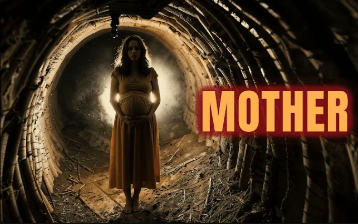
Mother is haunted house story. A pregnant mother decides to go exploring in her own home …. for some reason. It did not look like she just moved in; so, exploring your home is kinda nuts. So, she explores and hears children giggling and goes into a room that looks like a grenade exploded in it. She decides to touch a wall, which opens to a sewer tunnel and decides to go spelunking… as you do.

She’s going through the home sewer and find a ghost child and evil spirit. There was no reason at all for her to do the things she did. I supposed we assume she drunk on stupid juice and turned into a ghost hunter.

What positive things can I write? It was a film. It had a beginning, middle, and an end. There were scenes and the color yellow, which is maybe not positive, but I’m really trying. Also, the sewer was pretty clean, if you’re into that- this is the film for you!

Horror Review: The Dead Zone (dir. by David Cronenberg)


“Bless me, Father, for I have sinned. I had the power… and I tried to prevent what I saw.”Johnny Smith

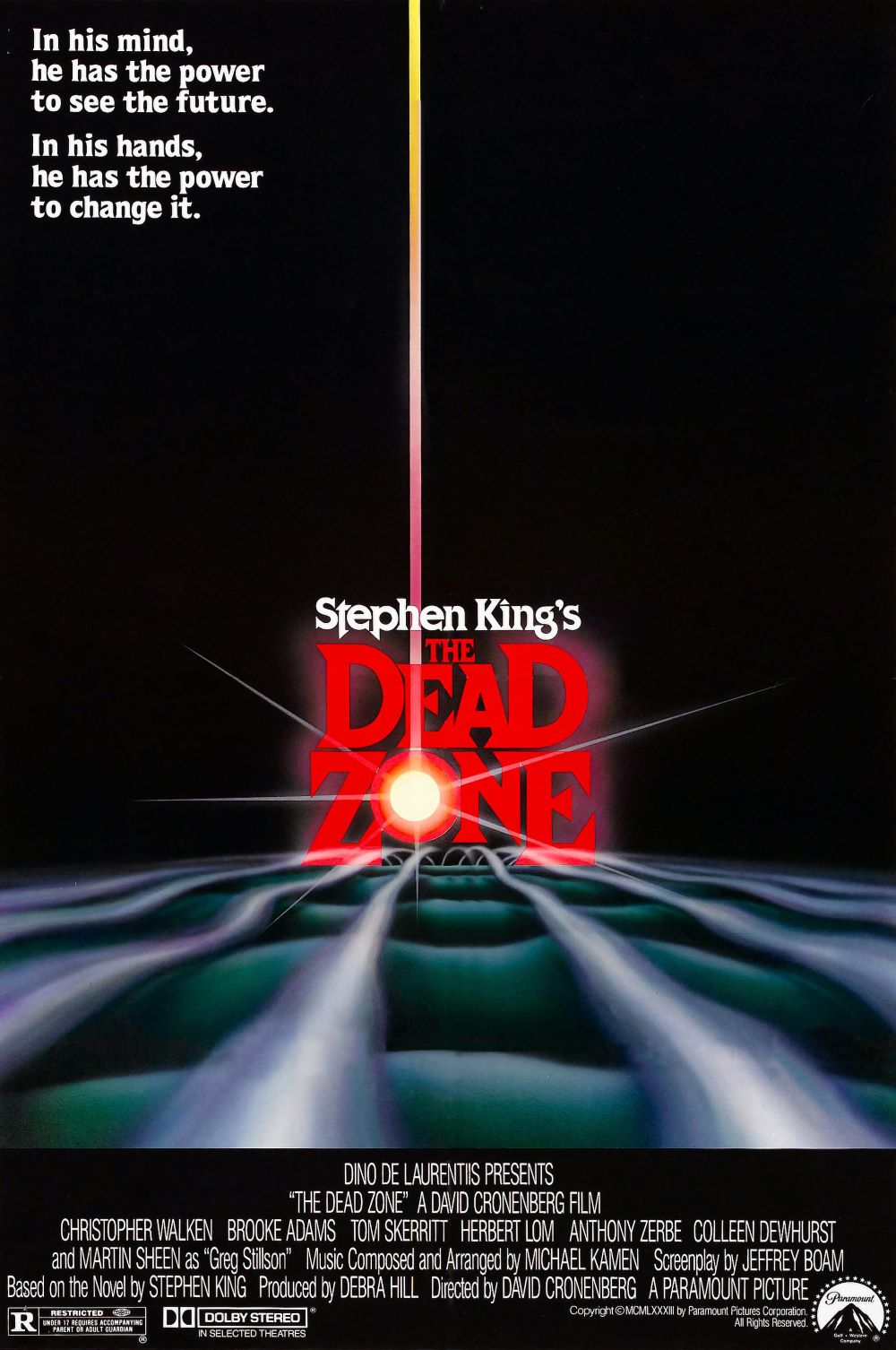
In 1983, David Cronenberg adapted Stephen King’s The Dead Zone with a distinctive emphasis on mood, morality, and psychological depth rather than traditional horror spectacle. The film follows Johnny Smith (Christopher Walken), a small-town schoolteacher whose life transforms irrevocably after a traumatic car accident leaves him in a five-year coma. Upon awakening, Johnny discovers he possesses psychic abilities that allow him to see the past and future by touch. Rather than a gift, this power becomes a heavy burden, isolating him and forcing him into wrenching moral choices.

Cronenberg’s direction is meticulous and deliberately restrained. The film’s muted color palette and stark winter landscapes visually echo Johnny’s emotional isolation and the fragility of human existence. His careful, often gliding camera movements create a mounting sense of quiet dread, while minimalistic sound design underscores moments of revelation with haunting subtlety. This subdued style elevates the film’s psychological impact, transforming it into a thoughtful and melancholy meditation on the cost of harrowing knowledge.

Significantly, The Dead Zone marks a departure from Cronenberg’s signature body horror. Instead of the grotesque physical transformations and visceral mutations that characterize much of his other work, here Cronenberg turns inward. The real horror lies in the malleability of the mind and the elusive nature of perception—how reality, memory, and the future are unstable constructs that can shift and fracture under psychic strain. This thematic focus on the impermanence and distortion of mental reality touches on some of Cronenberg’s deepest artistic fascinations.

The restrained treatment of body horror in The Dead Zone previews the director’s later, more psychologically driven films such as A History of ViolenceEastern Promises, and A Dangerous Method, where character studies and narrative depth take precedence over startling visuals. In this early pivot, Cronenberg demonstrates that his mastery lies not only in visual spectacle but in probing the profound emotional and moral dilemmas faced by his characters. The vision-focused horror here is cerebral and grounded, rooting supernatural phenomena in human frailty and ethical complexity.

Christopher Walken’s nuanced portrayal is the emotional heart of the film. He captures Johnny’s vulnerability, weariness, and profound solitude, portraying a man burdened by a cursed knowledge that isolates him from the world. Martin Sheen plays Greg Stillson, the ambitious and morally bankrupt politician whose rise Johnny must foretell and who embodies the film’s central threat. The supporting cast, including Brooke Adams as Johnny’s lost love Sarah and Tom Skerritt as Sheriff Bannerman, delivers compelling and authentic performances that humanize the film’s intimate, small-town environment.

Several changes from King’s novel sharpen the film’s thematic focus. The novel’s sprawling plot, including a serial killer subplot and a brain tumor storyline symbolizing Johnny’s mortality, is pared down or omitted. Despite this trimming, the serial killer element retained in the film remains chilling and effective. It highlights the darker repercussions of Johnny’s psychic gift and injects a tangible sense of dread, reinforcing the psychological weight Johnny carries. This subplot grounds the supernatural within a disturbing reality, illustrating the violent and tragic circumstances Johnny must grapple with as part of his burden.

The concept of the “dead zone” itself shifts in meaning. Originally, the term referred to parts of Johnny’s brain damaged by the accident, blocking certain visions. Cronenberg reinterprets it as a metaphor for the unknown and unknowable parts of the future—the gaps in psychic clarity that allow for free will and change. This subtle shift reshapes the narrative toward a more ambiguous, hopeful meditation on destiny and human agency.

Compared to King’s novel, Cronenberg’s Johnny is more grounded and isolated. The novel frames Johnny’s struggle within a broader spiritual and fatalistic context, highlighted by the looming presence of a brain tumor and a nuanced exploration of hope versus resignation. The film, by contrast, focuses on the emotional and moral fatigue induced by Johnny’s psychic gift, emphasizing his loneliness and reluctant responsibility rather than supernatural destiny.

Walken’s restrained, haunting performance strips away mythic grandeur to reveal a deeply human character. The film’s narrowed narrative tightens focus on Johnny’s internal anguish and his difficult ethical choices, making his plight intimate and richly relatable.

On a thematic level, The Dead Zone contemplates fate, free will, and sacrifice. Johnny’s psychic abilities act as a draining, almost chthonic force, transforming him into a reluctant prophet who is tasked with intervening in grim futures at great personal cost. The film’s bleak winter setting visually reflects Johnny’s alienation, while its deliberate pacing highlights the exhaustion and heartbreak that comes with such knowledge.

Ultimately, Cronenberg’s The Dead Zone goes beyond supernatural thriller conventions. It is a profound meditation on empathy, sacrifice, and the human condition—where the greatest horrors are internal, and the cost of knowledge is both psychic and emotional. Johnny Smith emerges as a tragic, flawed figure wrestling with unbearable burdens.

Cronenberg’s direction and the impeccable performances make The Dead Zone a standout in King adaptations. The film’s enduring impact lies in its rich thematic texture, its moral ambiguity, and its unflinching exploration of human frailty, all conveyed through a director shifting skillfully from physical body horror to psychological and existential terror. The film remains as haunting and resonant now as it was upon release, a testament to the synergy of Cronenberg and King’s extraordinary talents.

Horror On The Lens: The Creeping Terror (dir by Vic Savage)


Today, we have got a true classic.  First released in 1964, The Creeping Terror is the best film ever made about a carpet eating people.

This film is famous for its use of narration.  Apparently, the original soundtrack was lost and, after attempting to dub a few scenes, director Vic Savage instead just hired radio news reader Larry Burrell to tell people what was happening in each scene.  As well, Savage himself later vanished when the film’s investors came looking for their money.  No one is really sure what happened to Vic Savage, though there is some evidence that he subsequently died of liver failure in 1975.  I like to think that Vic Savage faked his dead and that he is still alive somewhere, probably in his 90s and drinking pina coladas on a beach.

Some consider this film to be one of the worst ever made.  I love it.


Music Video of the Day: The Valley by Bill Wyman and Terry Taylor (1985, dir by Michele Soavi)


Today’s music video of the day is for an instrumental piece that was composed by Bill Wyman and Terry Taylor for Dario Argento’s 1985 film, Phenomena.

Put together by Michele Soavi, this music video features not only scenes from the film but also clips of Dario Argento directing both Jennifer Connelly and Fiore Argento.  Soavi, of course, went on to have a directorial career of his own, directing four classic horror films before stepping away from feature films to take care of his ailing son.  Soavi has since returned to directing, though most of his subsequent work has been for Italian television.

Enjoy!

October Positivity: Meant To Be (dir by Bradley Dorsey)


2012’s Meant To Be tells the story of …. well, it tells a few stories.

Tori (Erin Sossamon) is a teenage girl who has a bright future but only if she can survive her less-than-wonderful present.  She has an abusive boyfriend.  Her parents seem to be absent.  She’s a photographer and her high school counselor (Michael Gross) has helped her to find a scholarship but Tori has recently discovered that she’s pregnant!

Linda Dickson (Erika Eleniak) is a social worker, who lives in a nice house and who has a wonderful husband (Dean Cain) but who also seems to be struggling with an overwhelming depression.  Maybe it’s because her 18 year-old daughter has recently left home for college.  She obsesses on finding newspaper stories about 20 year-olds doing wonderful things.  She cuts them out of the paper and puts them in a shoebox.  (I do the same thing with well-written obituaries.)  When a call comes in about a loud argument at Tori’s house, Linda is the one who investigates.  When she realizes that Tori is pregnant, Linda becomes a part of Tori’s life, giving her advice.  Linda is determined to convince Tori to not get an abortion, even if it means that Tori will lose her scholarship.

And finally, there’s Nathan (Bradley Dorsey), a twenty year-old aspiring writer who doesn’t know what he should write about.  In a voice-over, he says that he’s learned that writing about only what you know can be a trap so he’s decided to write about what he doesn’t know.  (By that logic, my next short story should be about trigonometry.)  Nathan grew up in the foster system.  He doesn’t know who his mother was.  He’s not even fully sure where he was born.  But he’s still going to search for her so he can discover not only where he came from but also why he was abandoned.

Nathan finds himself staying at a mysterious hotel, one where all of the other guests also appear to be people who never knew their mother.  Even though Nathan puts a do-not disturb sign on his door, the motel maid (Della Reese) still regularly enters his room and encourages him to get out of bed and continue his search.  With the help of two other guests, Shelly (Kristen Renton) and Becky (Colleen Foy), Nathan is able to track down his mother and her address….

Can you guess who she is?

Of course, you can!  Now, in all fairness to the movie, it doesn’t present the fact that Linda is Nathan’s mother as some sort of surprise twist.  From the moment that Nathan figures out that his mother was named Linda and then Becky comes across an old glamour shot of Erika Eleniak in a high school yearbook, it’s pretty clear that Linda Dickson gave up Nathan and she’s never stopped thinking about him and that’s why she’s so obsessed with Tori.  That’s not the twist.

But there is a twist and here it is….

Are you ready?

Nathan and all the residents at the hotel and most of the passengers on the flights that Nathan takes in  and out of town are …. ABORTION GHOSTS!  That’s right.  Linda had an abortion.  Nathan was the son she was meant to have but didn’t.

Is it heavy-handed?  Yes.  Is it effective?  Well, the answer to that question probably depends on how you feel about abortion.  That’s one thing about all of these abortion movies.  It’s hard for me to imagine that any of these films — whether it’s the church-produced Pro-Life films or the studio-produced Pro-Choice films — have ever changed anyone’s mind about abortion.  As such, movies about abortion largely exist to preach to the choir.  Abortion movies, regardless of which side they come down on, are largely movie that people watch so that they can nod and think to themselves, “My side really is the only correct one.”

As for the film itself, it’s rather slow and the voice-over tends to get rather portentous.  Dean Cain was probably on the set for one day.  Colleen Foy gave the best performance while Erika Eleniak was a bit bland in the lead role.  On the plus side, it looked like a real movie, which is more than one can say for a lot of faith-based films.  Again, how you react to the film will largely depend on whether or not you agree with its message.