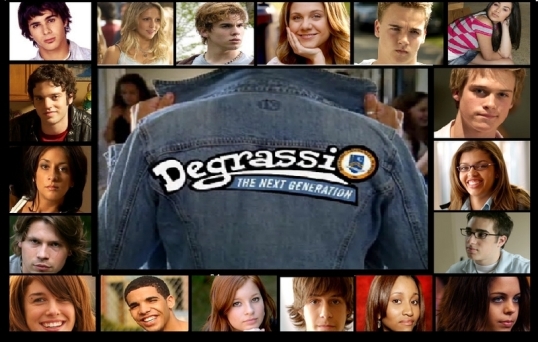
Welcome to Late Night Retro Television Reviews, a feature where we review some of our favorite and least favorite shows of the past! On Sunday, I will be reviewing the Canadian series, Degrassi: The Next Generation, which aired from 2001 to 2015! The series can be streamed on YouTube and Tubi.
Degrassi goes there!
Episode 2.11 “Don’t Believe The Hype”
(Dir by Anais Granofsky, originally aired on December 23rd, 2002)
“A hate crime has been committed here,” Snake declares in this episode. He declares it very seriously. In fact, he’s a little bit too serious. His voice and his expression are so grim that the line actually has the opposite effect of what it intended. The same can be said of this episode itself. Degrassi was always political but, up until its final seasons, it was usually smart enough to understand that encouraging audiences to look between the lines was preferable to hitting them over the head. Occasionally, though, this show did give us an episode like this one.
As for the hate crime, it’s the vandalization of a display about Iraq. It’s International Day and Fareeza (Jessica Rose) made the display to inform people about her home country. Fareeza is sure that her display was vandalized by Hazel because, earlier, Hazel give Fareeza a fashion ticket because her hijab was judged to be “terrorist chic.” Hazel also said that Fareeza needed to back off before “Jamaica declared war on Iraq.”
Fareeza replies that Hazel’s last name — Aden — doesn’t sound Jamaican. (It doesn’t? Really?) “You look Somalian,” Fareeza says.
Anyway, it turns out that the displays was vandalized by two unnamed students. But Mr. Raditch still tells Hazel that she committed a hate crime by joking about declaring war on Iraq. At first, Hazel is defensive but then she becomes so overwhelmed with guilt that she admits that she isn’t Jamaican. She actually is Somalian! Of course, I think one could argue that Fareeza committed a hate crime with her “You look Somalian” comment. I mean, talk about stereotyping! It’s like telling me I look Irish just because I have red hair and I’m half-Irish.
(At this point, I should mention that Andea Lewis, who played Hazel, was not Somalian. In fact, in real life, she’s half-Jamaican. But then again, Jessica Rose, who played Fareeza, was not from Iraq.)
Now, needless to say, Hazel being a Somalian refugee is one of those plot points that will hardly ever be mentioned again. And Fareeza will never appear in another episode of Degrassi. Fareeza showed up. She taught everyone a lesson. Having fulfilled her plot obligations, her character is never seen again.
Hazel later gives a presentation about her Somalian heritage and the school loves her. (We don’t see the presentation that Fareeza gave about Iraq. Sorry, Fareeza, this is Hazel’s episode.) Meanwhile, JT’s friends discover that he’s good at sewing and everyone, except for Liberty, makes fun of him. It’s easy to roll one’s eyes at Liberty’s crush on JT until you remember that JT is destined to end dying on Liberty’s birthday. But that’s far in the future. For now, JT is an adorable scamp who has no idea that he’s going to be literally stabbed in the back.
There’s nothing subtle about this episode and the end result is that it feels almost more like a parody of Degrassi than anything else.
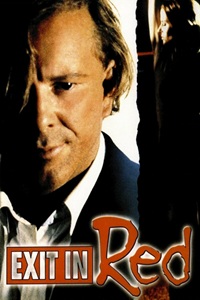
After a patient that he’s sleeping with commits suicide, psychiatrist Ed Altman (Mickey Rourke) moves to Palm Springs and sets up a new practice in the desert. His attorney (Carre Otis) is able to get Altman off the hook legally but Ed is soon in more trouble as he meets and falls for Ally Mercer (Annabel Schofield). When Ally’s husband is murdered, Ed realizes that Ally and her fur coat-wearing boyfriend (Anthony Michael Hall) are trying to frame him for the crime.
Plotwise, this is a standard late night cable neo-noir, the type that was very popular in the late 90s. The one thing that distinguishes this Showtime production from the film that were airing on Cinemax at the time is the lack of explicit onscreen sex. (Despite the pairing of Mickey Rourke and his then-wife, Carre Otis, this is not another Wild Orchid. Carre Otis is somehow even less convincing as an attorney in Exit to Red than she was in the earlier film.) Instead, Ed just talks about sex constantly and even gives us a long monologue about why he loves long legs as if that’s something that makes him somehow unique. Every guy loves long legs but most of us can appreciate them without having to recite a Spalding Gray-style performance piece about them. If you’ve ever wondered what it would be like to listen to Mickey Rourke read one of those “How To Be A Player” books, you can just listen to his narration in Exit in Red.
Director Yurek Bogajevicz is one of the many 90s filmmakers who went from doing arthouse films like Anna to directing films like Exit In Red. Watching the movie, I got the feeling that Bogajevicz was trying to be subversive with his genre film, in the style of Paul Verhoeven. There are a few times when he almost succeeds but, far more often, his direction seems as if it’s trying too hard to keep audiences from noticing the bad script and the wooden performances. Luckily, Mickey Rourke goes all out as Dr. Altman. The film would have been incredibly dull if he hadn’t.
Welcome to Retro Television Reviews, a feature where we review some of our favorite and least favorite shows of the past! On Sundays, I will be reviewing Homicide: Life On The Street, which aired from 1993 to 1999, on NBC! It can be viewed on Peacock.
This week, the show gets a new co-star.
Episode 5.5 “M.E., Myself, and I”
(Dir by Michael Fields, originally aired on November 1st, 1996)
There’s a new medical examiner in town! Julianna Cox (Michelle Forbes) drinks too much, smokes too much, and she takes her job personally! She drives too fast! She speaks her mind! She fires the incompetent and the corrupt! She shows up at crime scenes! Lewis moves a body before Dr. Cox arrives. She tells him to never do it again!
She’s a new regular and this entire episode is essentially dedicated to hitting us over the head with the fact that she’s awesome. And she is awesome and she’s also played by Michelle Forbes so I’m sure she will be a worthwhile addition to the show’s ensemble. That said, this episode sometimes seem to be so desperate to convince us that we’re going to love Dr. Cox that it forgets to craft a compelling story. She helps Bayliss to solve a case. Bayliss likes her. Well, Bayliss like everyone. Indeed, Bayliss gets so excited whenever an attractive woman appears that he sometimes seems like a cartoon wolf, with his eyes popping out of his head.
In other news, Kellerman is still under investigation and he’s not taking it well. The great Edward Herrmann played the officious FBI agent who took over the Box and spent the episode asking the other Homicide detectives if Kellerman seemed to be corrupt. “How did Detective Kellerman afford a new boat?” Actually, how did Detective Kellerman afford a new boat?
Pembleton went off his blood pressure meds so he could make love to his wife on his anniversary. Pembleton — how are you going to recover from this stroke if you keep finding excuses not to take your medication?
Finally, Brodie got kicked out of Bayliss’s apartment so he moved in with Lewis. Brodie praised a black velvet painting of Teddy Pendergrass, leading to a fight between Lewis and his wife. It was an amusing scene. Brodie, you stand accused of murdering a marriage! The jury finds you guilty!
It was an okay episode. Homicide is one of those shows that is enjoyable watch because of the ensemble and Michelle Forbes seems like she’ll be a good addition. When you’ve got a cast this good, you can get away with an episode where not that much really happens.
Today would have been the birthday of actor Tom Noonan. Today’s scene that I love is a short scene featuring Noonan from 1995’s Heat. Noonan doesn’t have a lot of screentime but his character is key to the plot. In this scene, Noonan shows how much a great character actor can do, even with limited screentime.
4 Or More Shots From 4 Or More Films is just what it says it is, 4 shots from 4 of our favorite films. As opposed to the reviews and recaps that we usually post, 4 Shots From 4 Films lets the visuals do the talking!
Today, we pay tribute to the year 1993 with….
4 Shots From 4 1993 Films
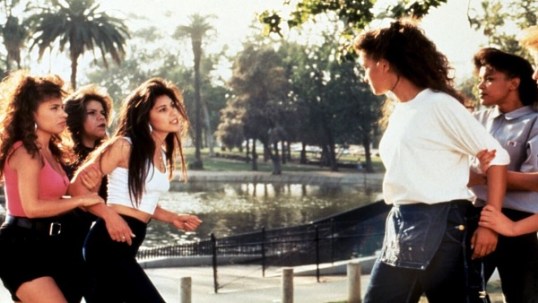
Mi Vida Loca (1993, dir by Allison Anders, DP: Rodrigo Garcia)
Short Cuts (1993, dir by Robert Altman, DP: Walt Lloyd)
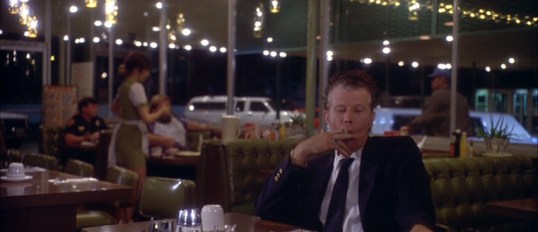
Sliver (1993, dir by Phillip Noyce, DP: Vilmos Zsigmond)
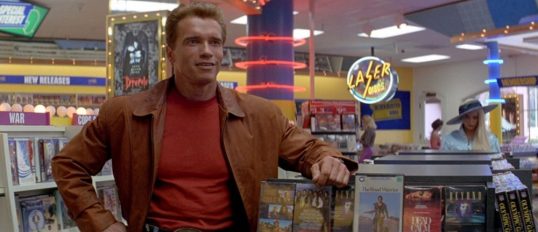
The Last Action Hero (1993, directed by John McTiernan, DP: Dean Semler)
“She kept covering her eyes, whispering ‘please take me home, please take me home, please take me home…’ a week later I got her outta there and I brought her home… but she just kept repeating it. At that point I realized… she didn’t mean OUR home.” — Victoria Dempsey
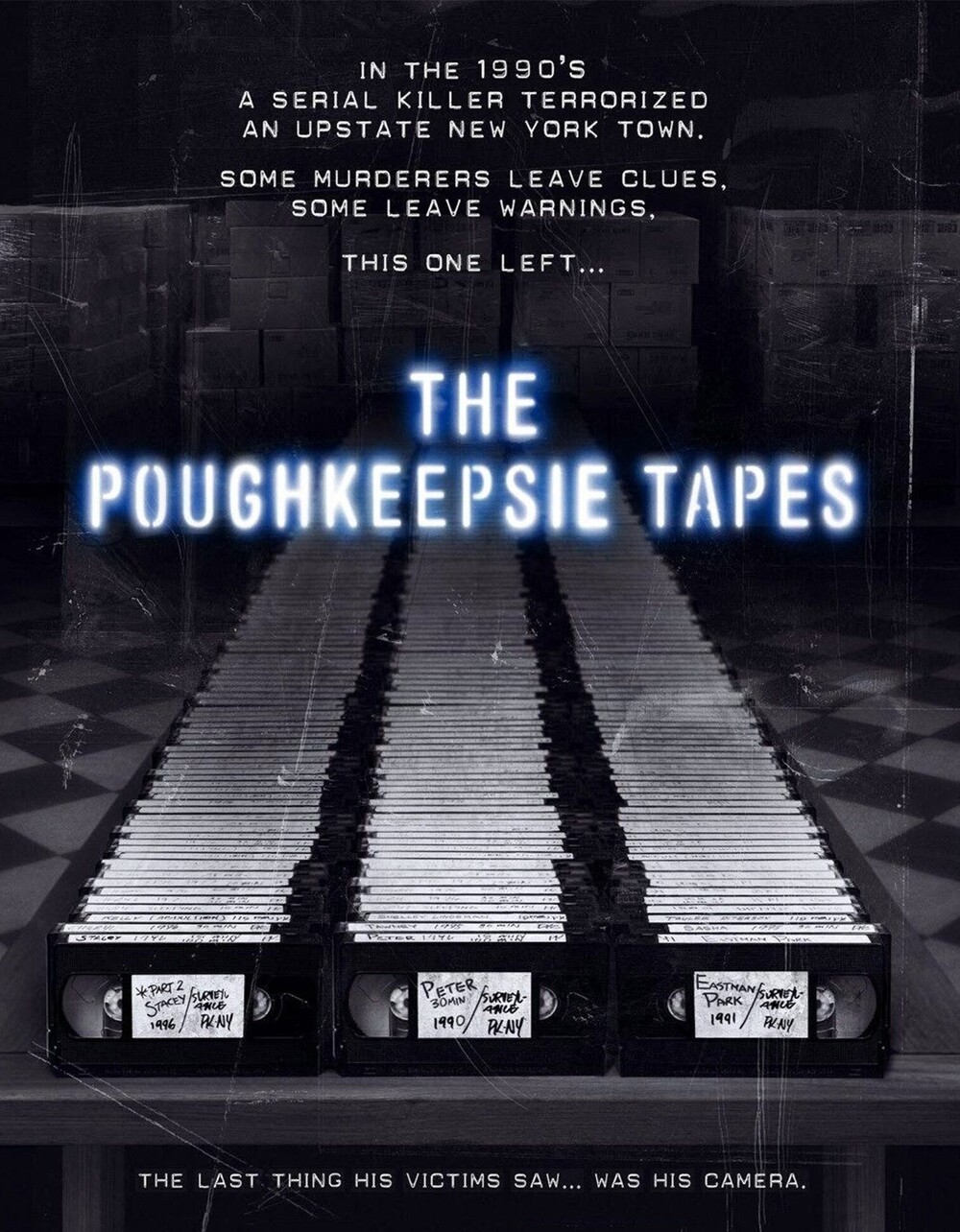
The Poughkeepsie Tapes emerges from the shadows of independent horror like a grainy artifact unearthed from some forgotten police evidence locker, its found-footage aesthetic not merely a gimmick but a deliberate plunge into the abyss of real-world atrocity documentaries. Directed by the Dowdle brothers—John Erick and Drew—this 2007 effort masquerades as a television special pieced together from hundreds of VHS recordings left behind by a serial killer known only as the Waterworks Killer, operating in upstate New York during the late 1990s and early 2000s.
What sets it apart in the crowded found-footage subgenre is its unyielding commitment to procedural authenticity: interviews with beleaguered detectives, forensic psychologists, and shell-shocked family members intercut with the killer’s own unfiltered home movies, creating a mosaic that feels less like scripted cinema and more like a leaked FBI file. The film clocks in at a taut 86 minutes, yet its impact lingers far longer, burrowing into the psyche with the relentless persistence of damp rot. For those weaned on the polished shocks of mainstream slashers, this is horror stripped bare, a methodical dissection of evil that prioritizes psychological dread over jump scares or excessive gore.
From the outset, the mockumentary framework establishes an ironclad verisimilitude, opening with a SWAT raid on a nondescript Poughkeepsie home where authorities uncover not just dozens of bodies meticulously cataloged in black trash bags, but over 800 videotapes chronicling the killer’s decade-long reign of terror. These tapes, purportedly shot on consumer-grade camcorders, capture everything from mundane abductions in broad daylight to the most intimate depravities imaginable, all rendered in that telltale analog fuzz that evokes early 2000s true-crime broadcasts.
Edward Carver—unforgettably embodied by Ben Messmer—remains an enigma, never fully named in the tapes themselves, his face often obscured, voice distorted into a childish lisp that veers from playful taunting to guttural rage, embodying pure, motiveless malignancy without the monologuing backstory that humanizes figures like Hannibal Lecter. Messmer invests the role with a chilling physicality, his lanky frame clad in a grotesque yellow rain slicker becoming an iconic silhouette of suburban nightmare. Yet the film’s true brilliance lies in its restraint; rather than revel in spectacle, it lets the banality of evil seep through, as when Carver methodically dresses a victim in ballerina attire for a mock performance, or forces another into a twisted tea party, the domesticity amplifying the horror. This isn’t about blood sprays or final girls—it’s a taxonomy of sadism, each tape labeled with clinical precision: “Victim 31 – Jennifer,” “Victim 42 – Dance Recital.”
The ensemble of talking heads grounds the proceedings in stark realism, with standouts like Stacy Chbosky as Cheryl Dempsey, the survivor whose tormented recollections form the emotional core of the investigation. Their discussions—ranging from behavioral profiling to Carver’s fetishistic rituals—mirror actual criminology seminars, lending intellectual weight without descending into exposition dumps. These interludes humanize the victims, transforming statistics into shattered lives: a missing jogger here, a single mother there, their absence rippling through communities with quiet devastation. The Dowdles excel at pacing these elements, crosscutting between tape horrors and investigative fallout to build a suffocating tension, where the real terror is Carver’s omnipresence—he films himself stalking malls, taunting police press conferences, even infiltrating a family Thanksgiving. In a genre often criticized for laziness, The Poughkeepsie Tapes weaponizes its format, making viewers complicit voyeurs, questioning why we’re watching at all.
Thematically, the film probes the pornography of violence, echoing the likes of Henry: Portrait of a Serial Killer or the Paradise Lost documentaries, but with a rawer edge that anticipates the analog horror wave of the 2020s. It grapples with voyeurism’s allure, as detectives pore over tapes like addicts, one admitting the footage “gets into your dreams.” Carver’s escalating fetishes—binding victims in spiderwebs of duct tape, staging puppet shows with their limbs—escalate from perverse play to outright desecration, culminating in a sequence involving a captured police officer that tests even hardened viewers. Yet amid the depravity, glimmers of perverse artistry emerge: the meticulous framing of shots, the almost balletic choreography of assaults, suggesting a mind as creative as it is corrupt. This duality fascinates—evil as both banal and sublime—without ever excusing it. The film’s independent ethos shines through its low-budget ingenuity; shot on digital video run through VHS filters, it achieves a patina of age that rivals big-studio recreations. Sound design deserves special mention—the muffled whimpers, the hiss of tape rewind, the sudden shrieks—crafting an auditory assault that lingers in the ears long after the screen fades.
Of course, no film this ambitious escapes imperfection. The grainy visuals, while immersive, occasionally border on opacity, turning key moments murky when clarity might heighten the impact; a few tapes feel repetitious, padding runtime before the finale’s revelations. Acting varies—some interviews veer toward community theater stiffness, and the killer’s voice modulation can grate like a parody of itself. Pacing sags in the midsection amid procedural minutiae, demanding patience from those expecting non-stop carnage. Distribution woes didn’t help; shelved for years post-Tribeca premiere, it finally surfaced on home video in 2017, its cult status now cemented online but still niche. These are quibbles, though, in a landscape of forgettable slashers; they don’t undermine the core achievement.
Ultimately, The Poughkeepsie Tapes endures as a gut-punch reminder of horror’s primal function: to confront the void within humanity. It doesn’t titillate or moralize—it documents, with unflinching gaze, the machinery of monstrosity. Fans of vérité terrors like Lake Mungo or The Bay will find kin here, a film that trades spectacle for seepage, leaving stains no bleach can remove. In an era of sanitized streaming chills, its refusal to look away remains a defiant virtue. Seek it out on a lonely night, but keep the lights on after.
It wasn’t by choice! On Wednesday, I watched a movie on Tubi and then Tubi sent me to an episode of Diff’rent Strokes before I could stop it. Mr. Drummond’s friend, Larry (McClean Stevenson), visited from Oregon. Drummond got Larry a chance to audition for his own talk show. Larry’s daughter (Kim Richards) didn’t want to move and, for some reason, she blamed the whole thing on Gary Coleman.
Fridays (Prime)
This was a comedy sketch show from the early 80s. I watched the premiere episode on Saturday morning. There were a lot of familiar faces in the cast, including a dark-haired Larry David. Unfortunately, none of the skits were really that funny.
The Greatest Event In Television History (Prime)
In this Adult Swim series, Adam Scott recreated the opening credits of classic television shows and destroyed his life in the process. Jeff Probst hosted. Jon Hamm guest-starred and “died” shortly after filming his scenes. (Don’t worry, his ghost later appeared.) Paul Rudd slept with Adam’s wife. Host Jeff Probst said, “Adam’s life is now ruined.” Billy Joel played piano. I watched all four episodes on Tuesday and it was funnier than it had any right to be.
Jesus of Nazareth (Tubi)
On Easter, I binged this seven hour miniseries from 1977. Written by Anthony Burgess and directed by Franco Zeffirelli, this gorgeously produced production took the idea of having an all-star cast quite literally. Even the minor roles were played by familiar faces, everyone from Donald Pleasence to Rod Steiger to Ernest Borgnine to James Earl Jones, Ian McShane, Laurence Olivier, Stacy Keach, Christopher Plummer, and Michael York. Olivia Hussey played the Virgin Mary. Anne Bancroft played the Magdalene. It was very well-done and surprisingly moving.
The Masters (Prime and Paramount+)
I watched a bit of the Masters this week. On Saturday, when it was storming outside and I had just returned from attending a memorial service for an old friend of my father’s, it provided a nice distraction.
Nero Wolfe (A&E)
I watched the final two episodes of Nero Wolfe on Tuesday. It was a truly entertaining show, featuring great work from Maury Chaykin and Timothy Hutton. It’s a shame that it was canceled after only two seasons.
Sledgehammer (Prime)
This was an 80s sitcom, featuring David Rasche as an out-of-control cop. I watched two episodes on Friday and it was actually pretty funny. Rasche talked to his gun and made fun of liberals. I enjoyed it.

 Through the Shattered Lens