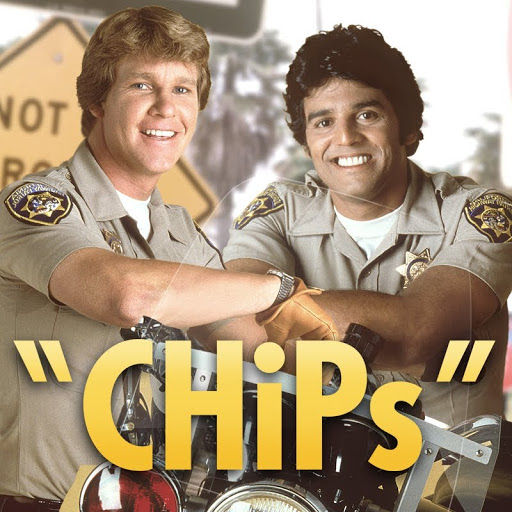
Welcome to Late Night Retro Television Reviews, a feature where we review some of our favorite and least favorite shows of the past! On Mondays, I will be reviewing CHiPs, which ran on NBC from 1977 to 1983. The entire show is currently streaming on Prime!
This week, Ponch is back!
Episode 5.10 “Fast Money”
(Dir by Leslie H. Martinson, originally aired on December 5th, 1981)
This is getting weird.
After being either absent or only appearing in one or two scenes over the past few episodes, Ponch returns this week. He’s once again on active duty, patrolling the California highways with Baker. As much as I notice and joke about the obvious disdain that Erik Estrada and Larry Wilcox held for each other, they do make a surprisingly good team. They just seem to belong together. If I’ve learned anything over the past few weeks, it’s that Larry Wilcox needed Estrada’s flamboyance and that Erik Estrada needed Wilcox’s cool professionalism. They balanced each other out.
With Ponch (and Estrada) back, there’s really no reason for Steve McLeish to stick around. And yet, during this episode — there he was!
He didn’t really have anything to do. Ponch and Baker were after some van-driving engineers who were using a hydraulic lift to hijack other cars. When they figured out which company had developed the hydraulics being used in the crime wave, Steve called the company’s chairman. (Steve says the chairman of the board is an old friend and no one acts surprise. I’m guessing maybe that was an inside joke or some sort of reference to the Olympics.) Later, Steve showed them a mansion that was fixing up so he could flip it. The scenes felt awkward and not just because of the Caitlyn Jenner’s total lack of acting ability. There really wasn’t any reason for them to be in the episode. There was no reason for Steve to be around. Ponch and Baker should have been out there, taking down those nerdy engineers and warning people about the dangers of technology. Instead, they were having to make time to hang out with Steve.
As I watched this episode, it occurred to me that maybe Caitlyn Jenner just refused to go home. Maybe Jenner showed up on set and wouldn’t leave until the writers wrote Steve a few scenes. That theory is really the only one that makes sense.
Anyway, this episode had a few good car crashes. The hydraulic lift was incredibly silly and so was Harlan’s suggestion that they could catch the thieves by tricking them into trying to lift a car that was weighted down with rocks. There was also a big subplot that was centered around Ponch trying to get the shower fixed in his apartment. I always like it whenever the show finds an excuse to show us either Ponch or Jon’s apartment. The wood paneling and the shag carpeting amuses me. They should have called this show Disco Cops.
According to the imdb, next week will be Jenner’s final episode. So, we’ll see how the saga of Steve McLeish comes to an end. I think he’s going to get arrested for taking payoffs from the mob. We’ll see if I’m right!
Welcome to Retro Television Reviews, a feature where we review some of our favorite and least favorite shows of the past! On Mondays, I will be reviewing Miami Vice, which ran on NBC from 1984 to 1989. The entire show can be purchased on Prime!
This week, Crockett goes undercover as a Neo-Nazi.
Episode 5.16 “Victim of Circumstances”
(Dir by Colin Bucksey, originally aired on May 5th, 1989)
When a Miami coffeeshop is the scene of a violent shooting that leaves several dealers and the coffeeshop’s owner dead, Crockett and Tubbs assume that it’s just another part of an ongoing drug war. However, when it’s discovered that the owner of the coffeeshop was a Holocaust survivor who was scheduled to testify against a former guard named Hans Kozak (William Hickey), Crockett comes to suspect that the hit was ordered by a Neo-Nazi group. Crockett and Switek go undercover to infiltrate the group but it turns out that the killer was actually Helen Jackson (Karen Black), a reporter who is the daughter of Hans Kozak and who is trying to kill everyone who can testify against her father. Crockett and Tubbs manage to capture Helen but Helen is subsequently gunned down by Angelo Alvarez (John Leguizamo), the brother of one the dealers who was killed at the coffeeshop.
This was an interesting episode. On the one hand, it was based in reality. In the days following World War II, several concentration camp commandants were put on trial and executed for war crimes but the Allies were so busy going after the people in charge that there were several guards, doctors, and other personnel who were able to escape justice and who immigrated elsewhere. Quite a few went to South America. Several turned up in the Middle East. And there were many who ended up in America. It wasn’t until decades after the war that people started to get serious about tracking down and putting on trial the camp personnel who were often as brutal as the people giving the orders. By the time many of them started going on trial, they were elderly and often frail, like Hans Kozak. And, just as in this episode, there were many Neo-Nazi groups who protested the trials and sometimes tried to help the accused escape justice.
On the other hand, this episode played out in such a surreal manner that it often felt rather dream-like, with Hans Kozak being haunted by nightmares and the Neo-Nazis themselves meeting in ceremonies that felt as if they could have been lifted from one of Fritz Lang’s Dr. Mabuse films. Karen Black plays her role with such wild-eyed intensity that the revelation that she was the killer isn’t really that much of a surprise. As for William Hickey, he doesn’t so much chew the scenery as he treats it like a buffet. This was one of those episodes that felt like it could spin off into space at any given moment. If James Brown had returned as the alien who abducted Trudy, I would not have been surprised.
This episode was definitely watchable and Stefan Gierasch gave a strong performance as the Nazi hunter who was determined to track down Hans Kozak. There was nothing subtle about it but it’s still one of the more memorable episodes of the show’s final season.
Speaking of final season, next week will feature Crockett and Tubbs in their final adventure. And then, we’ll look at the four “lost” episodes, which aired in syndication after the show’s network run ended. And then, we’ll done with Miami …. for now.
“Being a pirate is not about raiding villages or perfect plans; it’s about adventure and freedom.” — Monkey D. Luffy
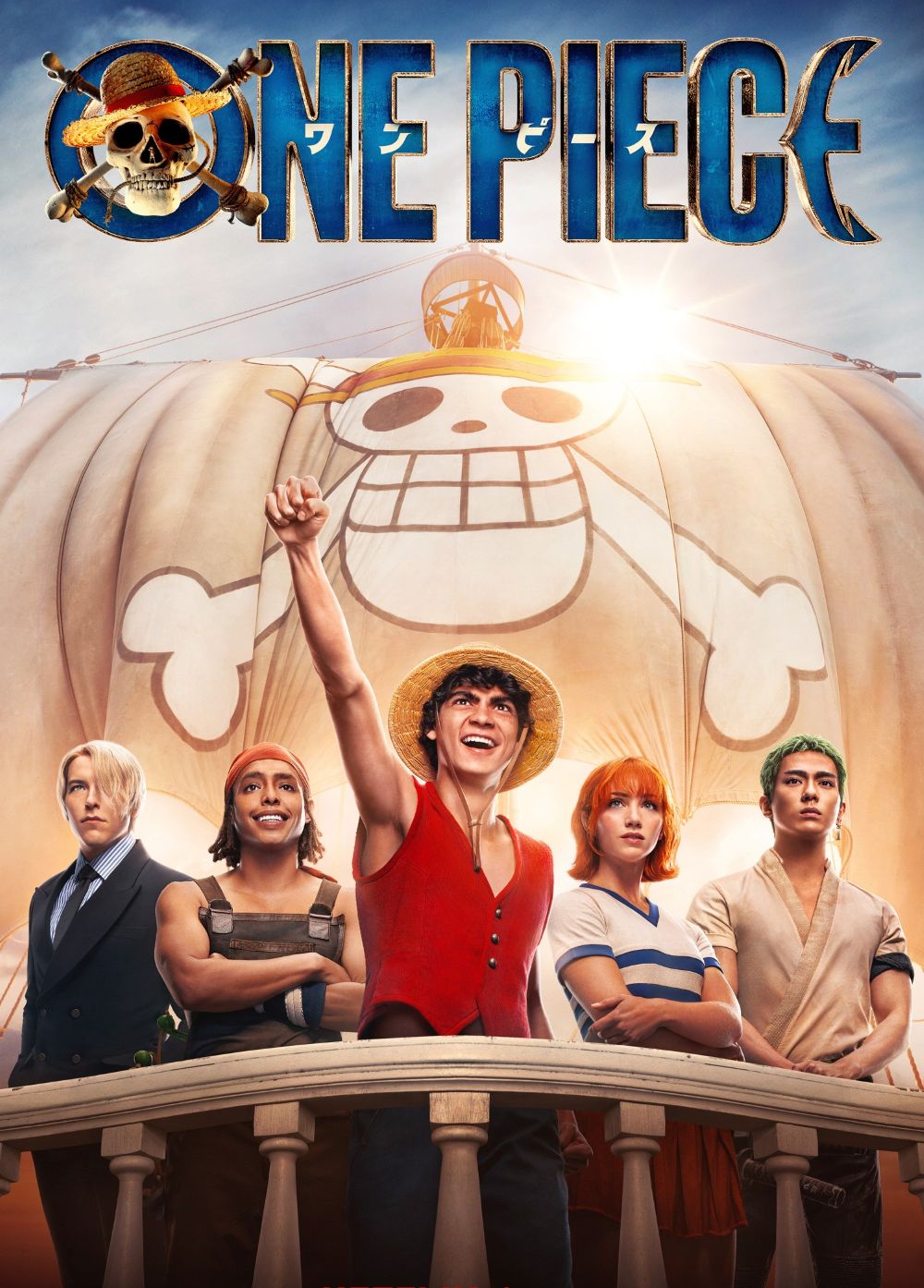
Netflix’s first season of the live-action One Piece is one of those rare anime adaptations that’s both messy and genuinely charming, often in the same scene. It doesn’t completely escape the usual problems that come with translating wild, cartoon logic into real people and real sets, but it gets enough right—especially the cast dynamics and worldbuilding—that it feels more like a real show than a cosplay experiment.
The basics: this first season covers the East Blue saga, following Monkey D. Luffy as he puts together the early Straw Hat crew and heads off toward the Grand Line. You get the big beats fans expect: Romance Dawn, Zoro’s introduction, Orange Town and Buggy, Syrup Village with Usopp and Kaya, Baratie with Sanji, and Arlong Park with Nami’s backstory as the emotional anchor. It’s condensed into eight hour-ish episodes, so you’re not getting a one-to-one remake of either the One Piece manga or the anime; this is very much a “greatest hits” version of that early stretch, with a ton of trimming, merging, and reordering to make it work as a bingeable live-action series.
Probably the easiest part to recommend is the core cast and their chemistry, which does a lot of heavy lifting. Iñaki Godoy’s Luffy is unapologetically goofy, earnest, and loud in a way that could’ve gone horribly wrong in live action, but he leans into the character’s optimism so hard that it mostly works. He feels like someone who really does believe he’ll be King of the Pirates and doesn’t see any reason to question it, and that unshakable confidence becomes the emotional center of the crew. Godoy also nails Luffy’s mix of childlike wonder and sudden steel; he can flip from grinning over a new ship to staring down a villain in a way that sells Luffy as more than just a rubbery himbo. His turn as Luffy ends up being the highlight performance of the season, because if he doesn’t work, nothing else does—and he absolutely carries the show’s heart on his sleeve.
Mackenyu’s Zoro is basically the polar opposite energy, which is why their dynamic works so well. He plays Zoro with a dry, deadpan coolness that never tips completely into parody, even when he’s doing something as inherently ridiculous as fighting with three swords. His line delivery is often clipped and understated, and that restraint gives him room to land some of the show’s funnier reactions just by raising an eyebrow or sighing at Luffy’s nonsense. Importantly, Mackenyu makes Zoro feel like someone who’s constantly sizing up the room and quietly choosing when to step in, which fits the character’s “honor-bound mercenary slowly becoming a real crewmate” vibe.
Emily Rudd’s Nami brings a different energy altogether, mixing competence, guardedness, and flashes of vulnerability in a way that really pays off once the Arlong Park material kicks in. Early on, she plays Nami with a kind of wary charm—she’s clearly the most practical person on the ship, always thinking about maps, money, and survival, and Rudd lets that edge peek through even when Nami is going along with Luffy’s madness. When the show finally digs into her backstory, she shifts gears into something rawer and more emotional without it feeling out of character, and her scenes in the latter part of the season give the story a genuine emotional spine. Alongside Godoy, Rudd’s performance is another standout, since the season’s biggest emotional payoff basically hinges on whether you buy Nami’s pain and eventual trust in the crew.
Jacob Romero as Usopp leans into the character’s role as the lovable coward and storyteller, but he doesn’t make him a total joke. His performance captures that mix of bluster and insecurity—he’s a guy who talks a big game, clearly doesn’t always believe himself, and still steps up when it matters. Romero’s physicality and timing help sell Usopp’s more exaggerated reactions, but he also gives the quieter moments with Kaya and the Going Merry a sincerity that keeps the character from being just comic relief. You can see why this crew keeps him around, even when he’s clearly terrified half the time.
Taz Skylar’s Sanji doesn’t show up until later in the season, but he makes a strong impression once he does. Skylar leans into Sanji’s suave, flirtatious side without making him completely insufferable, and he brings a surprising amount of warmth to the character’s loyalty toward Zeff and the Baratie. His fight scenes, built around kicks and flashy movement, give the action a slightly different flavor whenever he’s involved, and his banter with Zoro and Luffy slots into the group dynamic quickly. The show dials back some of Sanji’s more over-the-top anime tendencies, and Skylar’s performance sells that reined-in version pretty well.
One thing that helps the whole project feel less like a random “Hollywood take” and more like a genuine extension of the franchise is how closely One Piece creator Eiichiro Oda worked with the team to adapt his manga and anime for live action. His involvement doesn’t magically make every creative choice perfect, but it does temper some of the bigger changes from the original, since you get the sense that the tweaks to pacing, structure, and certain character beats were made with his blessing rather than behind his back. Even when the show compresses arcs or reshuffles events, it still feels guided by the spirit of One Piece as Oda sees it, which goes a long way toward making the adaptation easier to accept for fans who might otherwise bristle at every deviation.
The show spends a lot of time on relationships and backstory, and that’s both a strength and a weakness. On the plus side, those flashbacks—Luffy and Shanks, Zoro’s childhood, Nami’s history with Arlong, the way characters like Kaya and Usopp connect—give emotional weight to what might otherwise just be colorful pirate antics. By the time Arlong Park rolls around, you actually care enough about Nami and her village that the standoff with Arlong lands as the season’s big payoff rather than just another boss fight. On the minus side, the early episodes can feel overstuffed with introductions and tone-setting. There are a lot of characters and a lot of lore thrown at you quickly, and if you’re not already familiar with One Piece, it can feel chaotic and hard to latch onto at first.
Visually, the show is kind of wild—in a good way. One of the big fears with live-action anime is that the production design ends up feeling cheap, empty, or embarrassed by the source material. Here, the sets are large, busy, and distinct: each island or town has its own look and vibe, from circus-horror weirdness with Buggy to the ocean-front glam of the Baratie to the more oppressive, grimy feel of Arlong Park. There’s a sense that this is a big, strange world rather than just three reused soundstages and a backlot. The costumes, props, and little bits of world detail—like the transponder snails and offbeat outfits—lean into the original’s absurdity instead of trying to “ground” it into blandness, and that helps the show retain a lot of its personality.
The CGI and action are… pretty good, with caveats. Luffy’s rubber powers were always going to be a challenge, and sometimes the stretching looks a little off, but the show smartly leans into the inherent ridiculousness rather than pretending it’s supposed to look “realistic.” The action scenes are choreographed to be big and theatrical rather than gritty, which fits One Piece’s energy. There are moments where the limitations show—fights can be shorter than fans might want, and some sequences are clearly staged to avoid pushing the visual effects too hard—but when the show goes all-in, the results are genuinely fun. The key is that the action is always driven by character: Zoro’s swordsmanship, Sanji’s kicks, and Luffy’s unshakeable confidence all feel distinct and recognizable.
That brings us to the fishmen, which are easily one of the trickiest elements to pull off in live action. The make-up effects and prosthetics do a lot of heavy lifting, and from a distance the designs are bold and striking, but when the camera gets up close, things can get pretty rough. You can see the seams, the stiffness, and the slightly rubbery, mask-like quality that’s hard to completely disguise when you’re turning heavily stylized cartoon fish-people into real actors in costumes. By the time the show gets to that particular section of the season, though, the audience has more or less made its peace with the whole experiment: either you’ve bought into the concept that this is a live-action One Piece—with all the heightened, cosplay-adjacent weirdness that implies—or you haven’t, and the fishmen are just going to be one more thing you can’t get past. For viewers already on the show’s wavelength, the emotional stakes of Arlong Park matter more than the occasional rubbery jawline.
Performance-wise beyond the core Straw Hats, there are a few clear standouts in the supporting cast, and the obvious high point is Jeff Ward as Buggy. He takes a character who’s primarily used as broad, loud comedic relief in the manga and anime and plays him the same way on the surface—still ridiculous, still theatrical, still a clown-themed pirate—but with a bit more bite and cynicism underneath. There’s a mean streak and a sense of bruised ego in his version of Buggy that makes him feel less like a one-note gag and more like an actual threat who just happens to be funny. That extra edge helps his scenes pop whenever he’s on screen and makes Buggy one of the side characters you actually want to see come back later instead of just being a one-arc villain.
Tone-wise, season 1 walks a tightrope between over-the-top anime goofiness and more grounded live-action drama. The first couple of episodes lean heavily into cartoonish humor and big, exaggerated deliveries, which can feel jarring if you’re not already on board with that style. As the season goes on, though, the show settles into a more comfortable rhythm where the comedy and drama balance better. The horror-tinged atmosphere in some mid-season episodes, the emotional flashbacks, and the quieter character moments give it some texture beyond “loud and wacky.” Still, there’s no getting around the fact that some jokes are pushed too hard and some lines land awkwardly; not every animated beat translates cleanly to actors on a physical set.
One of the more interesting aspects is how the story has been compressed and rearranged. Plotlines that took multiple episodes in the anime get condensed, combined, or reordered so that they fit into an eight-episode season with a clear build toward Arlong Park as the climax. On the positive side, this keeps things moving and avoids the bloat that long-running anime can fall into. There aren’t many filler-feeling stretches; almost every scene is trying to push plot, character, or worldbuilding forward. On the negative side, there are moments where you can feel the rush: some conflicts resolve faster than they arguably should, certain relationships don’t get as much space to breathe, and some secondary characters end up feeling like sketches rather than fully realized people.
If you’re a long-time fan of the One Piece manga or anime, that editing is going to be a bit of a mixed bag. Some changes genuinely help the story flow better in live action, tightening up arcs that were originally more meandering. Other changes will probably rub purists the wrong way, especially when beloved scenes are trimmed, altered, or moved around. That said, the adaptation is more faithful in spirit than many other anime-to-live-action attempts. The Straw Hats act like themselves, the world still feels strange and adventurous, and the show never seems ashamed of its source material. It’s clearly designed as an accessible starting point for newcomers rather than a frame-by-frame recreation for existing fans.
Pacing is another area where the season both succeeds and stumbles. The length of the episodes means there’s room for characterization and little worldbuilding beats, but they can sometimes feel bloated, especially in the early going when you’re still figuring out how seriously to take anything. Some viewers may bounce off before the show fully finds its groove. However, once the series gets deeper into the crew’s emotional histories—especially in the middle episodes and leading into the Arlong material—it becomes easier to invest in what’s happening on screen. The season builds nicely toward its finale, even if the path there is occasionally uneven.
As a whole package, season 1 of Netflix’s One Piece is far from perfect but genuinely enjoyable if you’re open to what it’s trying to do. It’s big, colorful, sometimes clumsy, and often surprisingly heartfelt. Fans looking for a meticulous, panel-accurate adaptation are going to notice every shortcut and deviation. People who hate anime-style humor may find parts of it grating or too over-the-top. But if you’re okay with a show that’s earnest, occasionally awkward, and unafraid to be strange, there’s a lot here to like—especially the way the crew’s bond slowly becomes the emotional core of the story.
In the end, this first season feels less like a flawless triumph and more like a strong proof of concept. It shows that One Piece can work in live action without losing its identity, even if compromises have to be made in pacing, tone, and scale. The highlight performances from Godoy as Luffy and Rudd as Nami, backed by a solid ensemble that includes scene-stealers like Jeff Ward’s Buggy, Oda’s guiding hand, the ambitious production design, and the emotional beats of arcs like Arlong Park are strong enough that, by the time the final stinger hints at more adventures to come, it’s easy to imagine sticking around for another voyage with this crew—even if the make-up isn’t always convincing and the rubber powers don’t always look great.
Welcome to Late Night Retro Television Reviews, a feature where we review some of our favorite and least favorite shows of the past! On Saturdays, I will be reviewing Saved By The Bell, which ran on NBC from 1989 to 1993. The entire show is currently streaming on Prime and Tubi!
This week, Kelly is irresponsible.
Episode 1.13 “The Babysitters”
(Dir by Don Barnhart, originally aired on December 1st, 1990)
This episode stresses me out.
Kelly’s parents go off on a ski vacation and leave Kelly with the responsibility of taking care of her infant brother. (Really?) When they get stranded at the lodge, Kelly has to bring the baby to school. She asks her idiot friends to help look after him.
Of course, Zack loses the baby. Fortunately, Mr. Belding finds him but still…
Seriously, I hate this episode. I hate that Kelly’s parents are irresponsible enough to abandon their baby so that they can go skiing. I hate that Kelly has to find someone to take care of the baby while she goes to cheerleader practice. I hate that Zack is dumb enough to lose the baby. I hate that no one ever says, “Wow, this whole situation is really messed up.” This is the one episode that I always turned off whenever I came across it on TV.
Welcome to Late Night Retro Television Reviews, a feature where we review some of our favorite and least favorite shows of the past! On Fridays, I will be reviewing Freddy’s Nightmares, a horror anthology show which ran in syndication from 1988 to 1990. The entire series can be found on Tubi!
This week, more and more people are coming to Springwood.
Episode 2.3 “Welcome to Springwood”
(Dir by Ken Wiederhorn, originally aired on October 22nd, 1989)
Roxanne (Leah Ayres) and her husband, Doug (Michael Horton). have just moved to a new house in Springwood, Ohio. Doug, a lawyer, has to go to his office and he leaves Roxanne, who is recovering from a mental breakdown, alone with the boxes that the moves have already brought into the house. He tells her not to worry about opening them and promises her that they’ll unpack when he gets home.
Roxanne, however, opens the boxes. And she finds things that clearly don’t belong to her. She calls Doug at work. Doug says that there must have been a mix-up with the moving company and that he’ll call and make sure that their stuff gets delivered as soon as possible.
Meanwhile, at the house, Roxanne starts to see people who may or may not be there….
As surprised as I am to say this, the first segment of this episode of Freddy’s Nightmares was an enjoyably macabre story. Yes, the final twist is one that you’ll see coming but director Ken Wiederhorn does a great job creating and maintaining atmosphere and Ayres, Horton, and Todd Allen all give strong performances.
The second story isn’t close to be anywhere as interesting. Emily Jamison (Dey Young) has moved into a new home and she finds a hidden stack of letters that were written years before. The letters detail a doomed romance and Emily soon starts to see ghosts. The story isn’t terrible but it’s a bit bland.
Still, this was another good episode of Freddy’s Nightmares. So far, at least, the show appears to have found its footing during its second season. It’ll be interesting to see if that continues next week.
Welcome to Retro Television Reviews, a feature where we review some of our favorite and least favorite shows of the past! On Fridays, I will be reviewing St. Elsewhere, a medical show which ran on NBC from 1982 to 1988. The show can be found on Daily Motion.
This episode proves that Dr. Cavanero is the worst.
Episode 3.10 “Girls Just Want To Have Fun”
(Dir by Bruce Paltrow, originally aired on November 28th, 1984)
The struggle is real.
Seriously, I am thankful that someone uploaded St. Elsewhere to Daily Motion. With the show no longer on Hulu and Prime only having the first season available, Daily Motion is pretty much the only place where I can stream the show. That said, the sound quality is not great. The sound quality wasn’t particularly good when the show was on Hulu either but at least then I could turn on the captions. The Daily Motion uploads don’t have that option. I had to strain to hear the dialogue and, as a result, this review is not going to be as in-depth as it could be.
What I can tell you is that Dr. Cavanero is now one of the least sympathetic characters that I have ever seen on a television show. Last week, Dr. Christine Holz (Caroline McWilliams) told Cavanero that she was a lesbian. This week, Cavanero blabbed that information around the hospital, leading to a lot of homophobic comments from certain members of the stuff. (Not surprisingly, Victor Ehrlich was there to say something stupid.) Cavenero admitted to Christine that she found Christine’s lifestyle to be “unnatural.” Christine smiled sadly and left Cavanero’s apartment and left the show. Keep in mind, Dr. Holz was portrayed as being a brilliant surgeon and bone marrow expert. It probably would have been good to keep her around the hospital for a little while but nope. Sorry. Dr. Cavanero — who really hasn’t done anything of note since the first season — felt uncomfortable.
(Originally, Christine and Cavanero were supposed to have a romantic relationship but Cynthia Sikes, the actress playing Cavavero, objected to the storyline. As a result, the story was rewritten and perhaps it’s not a coincidence that Cavanero comes across as being a bit of a homophobe.)
Meanwhile, Dr. Chandler was concerned when he discovered that a neighborhood woman (Beah Richards) was practicing medicine out of her apartment. This storyline at least gave Denzel Washington more to do than usual, which was good. St. Elsewhere, at least so far, has often tended to underuse both Chandler as a character and Washington as an actor.
Jack’s friend (John Schuck) insisted on doing an experimental kidney procedure to try to save the life of his daughter (Brandy Gold) and Dr. Auschlander finally gave his approval for it to be done. I would say that was a good thing except for the fact that Jack’s storylines hardly ever have a happy ending. There’s a reason why Morrison is the most depressed resident in the hospital.
Nurse Rosenthal continued her affair with Richard Clarendon, even though Richard’s wife (Beverly Sanders) is now working at the hospital. Wow, that’s going to be awkward. In fact, I hope it’s really awkward. I’m tired of Nurse Rosenthal and her holier-than-thou attitude.
Dr. Craig testified at a city council hearing. The poor sound quality kept me from fully understanding what the hearing was about but at Dr. Craig told everyone off. It’s always fun to watch William Daniels tell people off.
Here’s hoping the sound will be a bit less muddy next week!
Welcome to Late Night Retro Television Reviews, a feature where we review some of our favorite and least favorite shows of the past! On Thursdays, I will be reviewing Highway to Heaven, which aired on NBC from 1984 to 1989. The entire show is currently streaming on Tubi and several other services!
This week, it’s time for yet another student protest.
Episode 5.8 “Goodbye, Mr. Zelinka”
(Dir by Michael Landon, originally aired on June 23rd, 1989)
The students at Lincoln High are upset to learn that beloved English teacher Mr. Zelinka (Lew Ayres) is going to have to retire because he’s reached the mandatory age of 70. The school’s new maintenance workers — Jonathan Smith and Mark Gordon — suggest that they should all conduct a walk-out to demand that Zelinka be allowed to keep his job. The evil school board president (James Karen) says that Zelinka can stay if he takes and passes an exam. However, the exam is rigged for Zelinka to fail. Jonathan uses “the stuff” to make sure that Zelinka not only passes but that he also gets the highest score ever. In the past, Jonathan always refused to use “the stuff” to help people cheat. Instead, Jonathan would have shown the school board president the error of his ways. But, for this episode, Jonathan rigs the rigged exam and the villain is left in power so that he can presumably continue to make Mr. Zelinka’s life miserable.
I did not like this episode. Yeah, it’s heart was in the right place but the entire school walking about in support of Mr, Zelinka just felt kind of silly. I mean, did every student at the school have Mr. Zelinka for English? What did everyone’s parents think about the protest? If Mr. Zelinka had been a compelling character, may be I would have felt differently but Mr. Zelinka was instead a pretty passive character and I have to admit that I wondered about all the other good teachers who had been forced to retire at 70. Why didn’t Jonathan show up to help any of them out? What made Mr. Zelinka so special? It didn’t help that Lew Ayres was 80 years old when he played Mr. Zelinka and that he looked and sounded even older. The obviously frail Ayres comes across as someone who maybe does need to retire.
I’ve sat through a lot of Highway to Heaven episodes about clean-cut teenagers walking out of class so that they can protest injustice. Highway to Heaven was a very earnest show and that was one of the things that made it likable. But, by the fifth season, Highway to Heaven‘s formula was a bit less effective than it had been in the past. This is an episode just just seems to be going through the motions. This is also the rare Highway to Heaven episode in which I wanted someone to tell Jonathan and Mark to just mind their own business.
Welcome to Retro Television Reviews, a feature where we review some of our favorite and least favorite shows of the past! On Thursdays, I will be reviewing Decoy, which aired in Syndication in 1957 and 1958. The show can be viewed on Tubi!
Casey goes under cover at yet another cocktail lounge.
Episode 1.21 “The Showplace”
(Dir by David Alexander, originally aired on March 3rd, 1958)
There’s been a murder at a cocktail lounge. One of the girls who worked there has been found in alley, strangled. That means that it’s time for Casey to go undercover as a clip-joint girl, convincing men to buy her drinks. It’s a sleazy place, run by two brothers (Bill Hayes and Lewis Troy) and featuring a sad-eyed bartender (Lou Polan) with a mysterious past. Casey’s investigation uncovers all sorts of nefarious dealings. In the end, the murderer is revealed and it’s not who you might have thought. In a cocktail lounge full of largely ugly people, the murderer is the one handsome man. Casey mentions that he may have been handsome on the outside but, on the inside, there was nothing.
This was a great episode, a moody slice of downbeat noir that featured Casey doing actual undercover work. The cocktail lounge was a wonderfully atmospheric location, the supporting cast was full of strong character actors, and Beverly Garland did a great job as Casey both empathized and suspected the men with whom she was working.
This episode ended, as the best ones always did, with Casey talking about the tragedy of it all. Casey’s New York is a city of dreams but it can also be a nightmare.
Reality Check: Inside America’s Next Top Model is the latest three-episode docuseries from Netflix. It takes a look at the history of the groundbreaking reality show that was once loved and which has since been declared problematic. It features interviews with some of the models, most of whom share some very harrowing stories about how they were treated while appearing on the show. (Shandi Sullivan’s story epitomizes everything that is exploitive about reality television.) Producer Ken Mock talks about how the show’s format was inspired by the first season of Making the Band. (Ken seems to be under the impression that O Town is currently a beloved cultural institution.) Jay Manuel talks about being a part of the show and how he was treated by Tyra Banks after he tried to leave. J Alexander talks about how, after he suffered a stroke, Tyra never reached out to him. Nigel Barker pretends to be ashamed of some of the challenges that he photographed and judged. We get clips of TikTokers watching the show during the COVID lockdown and complaining about …. well, everything.
Tyra Banks is also interviewed. The series paints Banks as a villain and yet, she not only consents to be interviewed but actually seem to enjoy it. That’s because Tyra Banks isn’t stupid. She apologizes without actually apologizing because she understands that a real apology would be seen as a sign of weakness, even by those demanding one. Even more importantly, she understands that reality television demands a villain. It demands someone who can say outrageous things with style. It demands someone that people will watch so that they can be shocked and scandalized. While being interviewed, Tyra mentions that she’s trying to put together at least one more season of America’s Next Top Model. If you look at the online reactions, you’ll find a lot of people and entertainment reporters who claim to be angered by her audacity but let’s be honest. If Tyra gets her 25th season of America’s Next Top Model, most of the people complaining about the show will watch. The sites that are currently posting lists of the “Most Disturbing Revelations From Inside America’s Next Top Model” will recap the entire season and post galleries of “Tyra’s Most Outrageous Looks.” They might complain about it. They would definitely make room in their reviews to post the usual litany of complaints. (To be honest, whenever I hit those paragraphs, I always skip over them because it’s always the same thing.) They might claim to hate the show but they would still recap it and they would still get the clicks and they would accept the money the comes from those clicks.
For all the criticism to be found in this docuseries, it was ultimately a commercial for America’s Next Top Model. There’s a reason why you can find the first sixteen seasons on Disney Plus, Hulu, and Pluto TV.
Oh yeah, I thought as I watched, I remember the crime scene photo shoot! Yeah, you’re right, that was totally insensitive. And the photoshoot were the girls had to pretend to have an eating disorder! That was so messed up! And which episodes were those again?
In the end this docuseries doesn’t so much inspire outrage as much as it inspires nostalgia for a time before outrage. Some people would consider that to be a good thing. Some people definitely wouldn’t. But the end result is the same. The viewer wants to go back and rewatch, either to bask in the nostalgia or to have an excuse to get angry.
As for the docuseries itself, it’s only three episodes long. The first episode and the first half of the second episode are effective. Then, the series falls apart as it tries to cram ten years worth of scandal and drama into the remaining 90 minutes. The interviews with Jay Manuel are interesting, though Jay seems to be even worse than Tyra when it comes to dodging responsibility for the show’s more infamous moments. (He says that he asked not to take part in a blackface challenge but, significantly, he did not threaten to quit.) My heart broke for Miss J and for Shandi Sullivan and for Dani Evans, the model who was ordered to close between her front teeth. There was so much wrong with America’s Next Top Model and yet, we’ll all be watching Season 25.
And if Tyra offers him enough money, she can probably get Jay Manuel back.
Welcome to Retro Television Reviews, a feature where we review some of our favorite and least favorite shows of the past! On Wednesdays, I will be reviewing the original Love Boat, which aired on ABC from 1977 to 1986! The series can be streamed on Paramount Plus!
Love won’t hurt anymore….
Episode 7.9 “Long Time No See/The Bear Essence/Kisses and Makeup”
(Dir by Don Weis, originally aired on November 12th, 1983)
This week, it’s a carnival cruise!
No, I don’t mean the type of cruise that starts as a dance party and devolves into a riot. I mean, there’s an actual carnival occurring on the cruise. The head of the carnival (Howard Keel) is an old friend of Captain Stubing’s and Stubing loves a carnival. That’s all good and well but I hope they gave the passengers fair warning what type of cruise they were buying tickets for. I don’t mind carnivals but I wouldn’t necessarily want to deal with one while on a romantic cruise.
Young photographer Aurora Adams (Jan Smithers) takes an interest in the carnival owner. Is she hitting on a man old enough to be her father? No, specially because the man is her father! She doesn’t reveal this until towards the end of the cruise.
Meanwhile, Chip Ryan (Michael Lembeck) and Chester O’Brien (Christopher Mayer) are a comedy team who are training a bear. When it turns out that the bear cannot be trained to follow orders, they decide that one of them should wear a bear suit and…. no, I’m not making this up. Anyway, Chip and Chester both fall for Dottie Becks (Randi Oakes) and, by the end of the cruise, it looks like they’re going to have a very modern arrangement. *wink* *wink*
Newlywed Scott Pryor (Dean Butler) is overwhelmed by the beauty of his wife (Crystal Bernard). His wife takes off her makeup and he doesn’t recognize her. Eh. Let’s just ignore this storyline.
So, this episode …. you know, the newlywed and the long lost daughter stories were both pretty dumb but the bear storyline was just silly enough to be fun. I would not have chosen to take this particular cruise but, if I did, I’d spend the whole time watching the bear.


 Through the Shattered Lens