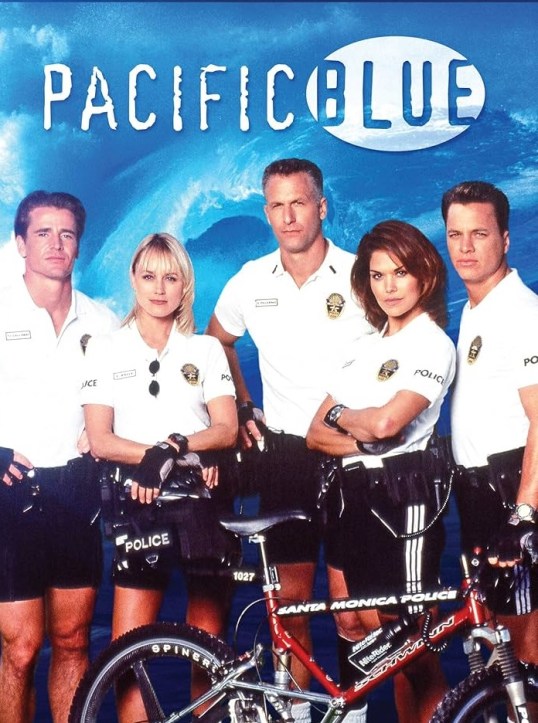
Welcome to Late Night Retro Television Reviews, a feature where we review some of our favorite and least favorite shows of the past! On Tuesdays, I will be reviewing Pacific Blue, a cop show that aired from 1996 to 2000 on the USA Network! It’s currently streaming everywhere, though I’m watching it on Tubi.
This week, infedility is in the air.
Episode 3.20 “With This Ring”
(Dir by Michael Levine, originally aired on April 5th, 1998)
When Cory and Victor find a dead man on the beach, all of the evidence seems to indicate that he was killed as a result of an extramarital affair. His widow previously hired a detective agency to test his fidelity. His killer forced his own wedding ring down his throat. Someone is killing cheaters.
So, of course, Palermo has Cory and Victor go undercover as a married couple.
This isn’t the first episode of Pacific Blue to feature the bike cops going undercover. It’s actually something that has happened fairly frequently during the third season. On the one hand, it gets the characters off of those stupid bicycles. On the other hand, why would a bunch of bike cops be investigating crimes? Bicycle cops are like any other uniformed cop. Their job is to keep general order, issue tickets, and secure crime scenes until the actual detectives can show up. The bicycle cops are police officers but they’re not detectives. At least, that’s the way it works in the real world. In the world of Pacific Blue, the Malibu PD apparently doesn’t have a plainclothes department and all of the work is done by the same 5 bicycle cops.
While Cory and Victor go undercover, TC tries to deal with the fact that his parents are splitting up, He really struggles with the news of their upcoming divorce. TC is also in his mid-30s. Once you’re closer to 40 than 30, you should be able to handle your parents splitting up with a modicum of maturity. The only good thing about this storyline is that wonderful Andy Buckley made one of his far-too infrequent appearances as TC’s older brother.
This episode ended with TC and Chris promising each other that, in 35 years, they would still be together. Those will probably be the 35 most boring years of anyone’s lives.
This was another forgettable episode. At least there’s only two episodes left this season. And starting with season 4, Mario Lopez arrives as a new member of Pacific Blue! It can’t happen soon enough.
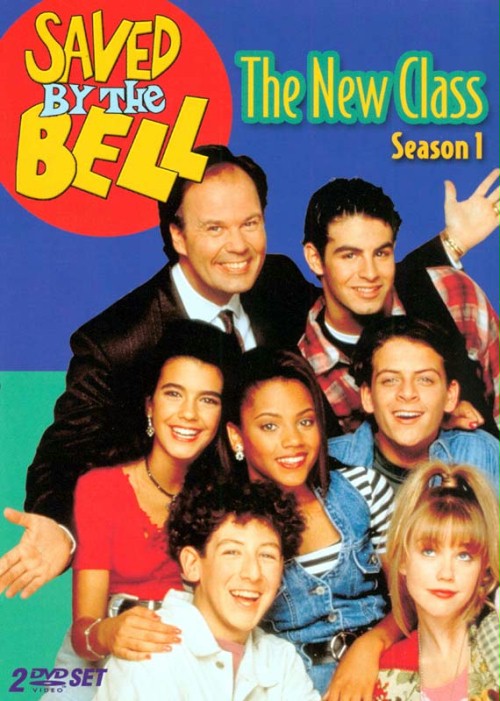
Welcome to Retro Television Reviews, a feature where we review some of our favorite and least favorite shows of the past! On Tuesdays, I will be reviewing Saved By The Bell: The New Class, which ran on NBC from 1993 to 2o00. The show is currently on Prime.
It’s time for the annual school swap meet!
Episode 1.10 “Swap Meet”
(Dir by Don Barnhart, originally aired on November 13, 1993)
It’s time for the Swap Meet, the annual Bayside tradition that has never been mentioned before this week’s episode. All of the students — and Mr. Belding — go to the gym to sell the old stuff that they don’t need anymore. Does anyone in this school actually go to class?
Weasel, Scott, and Tommy D. have their own table, where they are apparently selling random things from Weasel’s garage. Scott desperately needs some money so that he can take Rachel Meyers (Sarah Lancaster, who would become a regular starting with season 2) to the Janet Jackson concert. Scott is not happy when Weasel takes the ten dollars that Scott and Tommy D have made at the table and spends it all on comic books. Fortunately, one of those comic books turns out to be Defender Dog #59, the one with the “famous misprint!” Scott and Weasel go to call the comic book shop to find out how much the comic book is worth. “It’s worth 600 raviolis!” Weasel announces. Huh? Who talks like that?
While Scott and Weasel are dancing in the hallway, Tommy D sells the comic book for nine dollars to Marv and Harv Dorkman (played by Grant Gelt and Karl Michael Maschek).
Marv and Harv, as you guessed, are two of Saved By The Bell‘s stereotypical nerd characters. They refuse to sell the comic book back to Scott. When Scott realizes that Marv and Harv have crushes on Megan and Vicki, he convinces Megan and Vicki to go to the movies with them and to lie about loving comic books. Megan and Vicki think that, by doing this, they’ll get the Defender Dog comic book. Instead, Marv and Harv sell the comic book to Crunch Grabowski (Ryan Hurst) and then use the money that they made to buy necklaces for Megan and Vicki, which Megan and Vicki promptly reject.
“I can’t believe this,” Scott says.
“Getting that comic book back is harder than Chinese square dancing,” says Weasel.
It’s hurting my head just to recap this.
Anyway, Crunch doesn’t want to sell the comic book so Scott convinces Crunch to come to the local comic book shop, which is owned by Honolulu Harry. So, of course, Weasel puts on an old man mask and pretends to be Honolulu Harry and Tommy D. pretends to be a nerd who wants to sell a copy of Defender Dog so that Weasel (as Harry) to tell him that no one likes Defender Dog. Crunch cannot handle being seen with an unpopular super hero so he trades Defender Dog for Lou the Ant. Scott gets the comic book but then the real Honolulu Harry shows up and refuses to buy it from him because he caught Tommy D. in the back of the comic book shop. “You touched my comics!” Harry yells. What are people supposed to do in a comic book store?
Poor Scott! Well, no, not really. There’s a hundred smart things that Scott could have done during this episode and he didn’t do a single one of them. He deserves what he gets….
Oh wait, the Dorkmans spent a lot of money to get four tickets to the Janet Jackson concert. Megan tells them that she and Vicki would love to go to the concert with them. Megan says she’ll hold on to two of the tickets and that she and Vicki will meet them at the concert. The Dorkmans give the tickets to Megan and Vicki and then Megan and Vicki give them to Scott so he can take Rachel to the concert.
“You guys did this for me? You guys are the best.” Scott says.
Rachel shows up to go to the concert with Scott. She asks if the tickets were hard to get.
“No, not when you have really great friends,” Scott says.
Awwwww! the audience replies.
The audience has probably forgotten that Vicki had a huge crush on Scott just a few episodes ago and Megan and Scott were hinted to be a couple-in-the-making at the start of the season. Beyond continuity, the main message here seems to be that, if your friend is a pathological liar, it’s okay to to lie to help him out. The Dorkmans, who apparently spent a lot of money on the tickets that Megan just gave away, are already at the concert waiting on their dates. Vicki and Megan’s actions would perhaps be justified if the Dorkmans were creeps but, for the most part, they’re just two guys who wears glasses and like comic books. And while it is true that the Dorkmans bought those tickets without bothering to ask Vicki and Megan out beforehand, it’s also true that Megan flat-out lied so that she could then give the tickets to Scott.
One thing that I have noticed about Saved By The Bell: The New Class is that it seems to really hate its nerd characters. The original series had stereotypical nerds as well but they were still, more or less, likeable and the show’s characters may not have hung out with them but they weren’t intentionally cruel to them. Saved By The Bell: The New Class, on the other hand, feels as if it was written by the same people who spilled the pig’s blood on Carrie White.
Anyway, this episode was terrible. Thank goodness there’s only three more episodes of the first season to go.
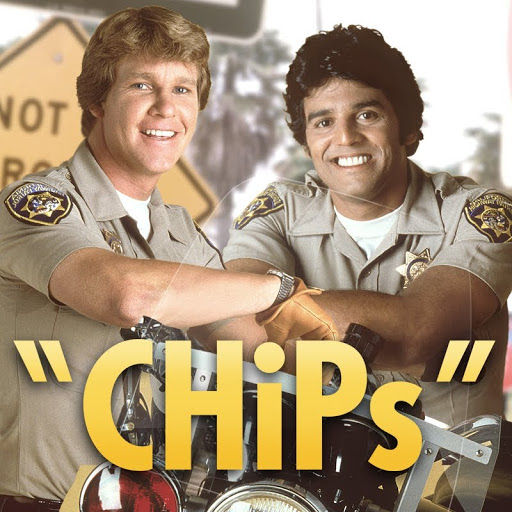
Welcome to Late Night Retro Television Reviews, a feature where we review some of our favorite and least favorite shows of the past! On Mondays, I will be reviewing CHiPs, which ran on NBC from 1977 to 1983. The entire show is currently streaming on Prime!
This week, there’s a big cat on the loose!
Episode 5.14 “Tiger In The Streets”
(Dir by Charles Bail, originally aired on January 10th, 1982)
Ponch and Baker wonder why someone is digging deep holes in the Los Angeles hills and filling them with raw meat. Could someone by trying to capture a tiger that’s recently gotten loose from a wildlife park? Yes, that’s exactly what’s happening! The owner of the park wants to keep the cops from finding out but, when it turns out that the tiger is a mother and is missing her cubs, only the highway patrol can help Animal Control capture her. Baker likes Stephanie, the Animal Control officer. This is one of the rare episodes where Baker actually gets to have a romance while Ponch stands around and looks awkwardly out-of-place.
As for Ponch, he is more concerned with an ex-con who is at the center of a series of violent confrontations involving various car clubs. I’m pretty sure I’ve seen this plot before. CHiPs has been repeating itself a lot during the fifth season. That said, the car chases led to a slow motion wreck and a scene of bouncing hydraulics. I’ve never been in one of those bouncing cars before. It seems like you would get ill riding in one of those.
Finally, Grossie wants to be a comedian. Harlan is a friend of legendary funny man Slappy White. Harlan gives Grossie a bunch of Slappy’s jokes about how black people are different from white people. Needless to say, the jokes don’t go over that well when they’re told be a white guy in a policeman’s uniform.
Welcome to Retro Television Reviews, a feature where we review some of our favorite and least favorite shows of the past! On Mondays, I will be reviewing Miami Vice, which ran on NBC from 1984 to 1989. The entire show can be purchased on Prime!
When is Miami Vice not Miami Vice?
Episode 5.20 “Leap of Faith”
(Dir by Robert Iscove, originally aired on June 28th, 1989)
A crazed college professor named Terry Baines (Keith Gordon) is making his own designer drugs and selling them to the cult-like college students who worship his every move. Terry thinks that the drugs will help people move into a dream state. However, Terry also doesn’t care how many people die as a result of entering that dream state. Terry is obviously crazy but he’s got tenure.
Fortunately, the youthful cops of the Young Victims Unit are able to go undercover as college students and infiltrate Terry’s organization. Joey Harden (Justin Lazard) is the newest member of the squad. He’s a cop who does things his way! Zach (Cameron Dye) is the wild man. He’s from Arkansas! And Ray Mundy (Adam Storke), he’s a surfer from California! Their boss is Lt. Paul Cutter (Kiel Martin). Tania Louis (Laura San Giacomo) is their computer expert. Together, they’re….
….not Crockett and Tubbs!
Crockett and Tubbs appear at the start of the episode and then Crockett appears in another scene, in which it’s established that he and Cutter have a contentious relationship. Otherwise, this really isn’t an episode of Miami Vice. Instead, it’s a pilot for a show about the Young Victims Unit. The pilot never became a series and, watching this episode, one can see why. The three undercover cops are all way too similar. They seem like three different versions of the same guy. Kiel Martin and Laura San Giacomo at least manage to bring some life to their characters but the rest of the cast is just bland. The best performance comes from Keith Gordon and he’s dead by the end of the episode.
Next week …. Miami Vice comes to an end as Tubbs falls in love and Crockett refuses to get a haircut.
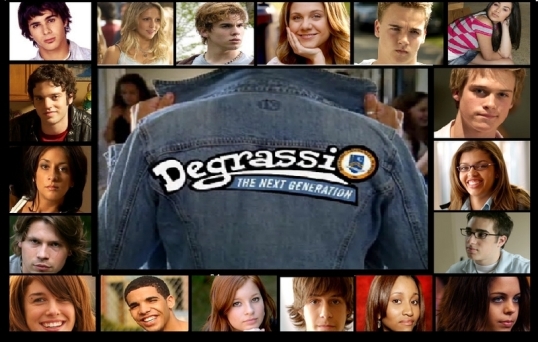
Welcome to Late Night Retro Television Reviews, a feature where we review some of our favorite and least favorite shows of the past! On Sunday, I will be reviewing the Canadian series, Degrassi: The Next Generation, which aired from 2001 to 2015! The series can be streamed on YouTube and Tubi.
Whatever it takes, I know I can make it through….
Episode 2.10 “Take My Breath Away”
(Dir by Stefan Scaini, originally aired on December 9th, 2002)
How you respond to this episode depends on how much you know about what’s eventually going to happen to the students at Toronto’s Degrassi Learning Center.
When watched for the first time, it seems like a sweet episode about how crushes can hurt and how they can also pay off. Ellie has a crush on Marco and, after discovering that he likes Edward Gorey just as much as she does, Ellie starts to send him anonymous rhyming emails. However, Hazel also likes Marco and Marco thinks that Hazel is the one sending him the emails. Marco thinks this despite Hazel having never shown any poetic ability and also despite the fact that he just sat down at lunch and discussed Edward Gorey with Ellie!
When Marco receives an anonymous email telling him to meet his crush at the Zen Garden, Marco is shocked to discover Ellie waiting for him. Ellie assumes Marco is disappointed and runs away. Marco later tracks Ellie down and reveals that he wasn’t disappointed at all. Marco and Ellie are now a couple!
Meanwhile, Craig and Manny go on their first date. Craig wants to see a movie. Manny gets excited when she sees a rather childish carnival. Manny later tells Emma and Liberty that the date was wonderful and that she and Craig are totally in love. Craig tells Spinner and Jimmy that the date was awkward and that Manny is still too immature for him. Craig says that Manny reminds him of his five year-old half-sister, Angela. (Angela was played by Alexa Steele, Cassie Steele’s real-life sister.)
The episode ends with Manny telling Craig that he shouldn’t talk to Ashley and asking him what they’re doing on Friday night. Craig replies that they’re not doing anything because he doesn’t like Manny. AGCK!
Again, it’s a good episode. The contrast between Craig’s recollection of the date and Manny’s version is genuinely amusing. Meanwhile, Ellie finally gets a boyfriend….
Of course, veteran Degrassi watchers know that Marco is both gay and deeply closeted and that he’s destined to hurt Ellie before becoming her best friend. (Ellie was always way too forgiving.) Meanwhile, Craig and Manny are going to end up together, with Craig first getting Manny pregnant and then, several seasons later, introducing her to cocaine. Craig is also going to nearly kill Joey while having a manic episode before breaking Ashley’s heart and nearly driving Ellie to suicide in Los Angeles. Yikes!
This is a cute episode that, for veteran Degrassi watchers, is decorated with red flags.
Welcome to Retro Television Reviews, a feature where we review some of our favorite and least favorite shows of the past! On Sundays, I will be reviewing Homicide: Life On The Street, which aired from 1993 to 1999, on NBC! It can be viewed on Peacock.
This week, drug lord Luther Mahoney returns.
Episode 5.4 “Bad Medicine”
(Dir by Kenneth Fink, originally aired on October 25th, 1996)
Someone is selling bad heroin in Baltimore. This episode opens with a montage of dead junkies being discovered. Detective Munch explains to a uniformed cop why he has to stick around until it’s firmly established that the latest dead junkie died of an overdose and not something like a hit to the back of the head. Munch says that everything he knows, he learned from his ex-partner. Hey, Munch, Bolander’s not coming back! You have to accept it.
Things are looking grim for Giardello’s detectives. Megan Russert has run off to Europe. Bolander is retired. Felton is missing. Frank is recovering from his stroke and still needs to pass his firearms exam. And now, Kellerman has been accused of taking bribes while working as an arson investigator. Kellerman is given desk duty, which means that he can’t help Lewis pursue drug kingpin Luther Mahoney (Erik Todd Dellums).
Mahoney returns in this episode, dragged into the box and accused of murdering a rival dealer. Mahoney is his usual smug snake self but Lewis and his temporary partner, Narcotics Detective Terri Stivers (Toni Lewis), are convinced that they’ve finally got him where they want him. First off, there’s a junkie who has been bullied into informing on Luther. Plus, Luther slips up and reveals that he knew some facts about the murder that were not released to the press. Is Luther Mahoney going down!?
Well, don’t get too excited. Ed Danvers informs them that their evidence isn’t enough to get a conviction. Juries don’t trust junkies. Luther could have heard the details of the murder on the street. Everyone knows that Luther is guilty but no one can prove it beyond a reasonable doubt. Luther goes free and the informant ends up dead.
Meanwhile, Frank Pambleton stops taking his medicine so that he can concentrate on passing his firearms exam. He still fails. Even though he was able to hit the target, he took too long reloading his gun. Pembleton starts to take his medicine again.
Finally, Brodie still doesn’t have anywhere to live. He stayed with Munch for one night and then voluntarily left. (The reasons why are left ambiguous but it’s suggested that Brodie came across Munch’s private drug stash and freaked out.) Brodie moves in with Bayliss and quickly makes things awkward by overanalyzing the Mighty Mouse cartoon that Bayliss is watching. Brodie explains that Mighty Mouse is an agent of chaos and Bayliss looks like he’s already realized this living arrangement is not going to work.
This was a properly cynical episode, one where the main theme seemed to be that our heroes are fighting a losing war. Giardello is running low on detectives. Kellerman is put on desk duty because of one weak accusation. Pembleton has to pass a firearms exam, despite rarely having to draw his gun. In the end, men like Luther Mahoney walk free while the addicts caught in-between end up dead in the street.
Welcome to Late Night Retro Television Reviews, a feature where we review some of our favorite and least favorite shows of the past! On Saturdays, I will be reviewing Saved By The Bell, which ran on NBC from 1989 to 1993. The entire show is currently streaming on Prime and Tubi!
This week, it’s prank war time!
Episode 1.17 “Save That Tiger”
(Dir by Don Barnhart, originally aired on December 16th, 1989)
Historically, this is an important episode.
This is the episode that establishes that Valley is Bayside’s rival. It also introduces us to the annual prank war. It’s the episode in which Jessie (reluctantly) becomes a cheerleader. This episode establishes that Screech is the dork in the Bayside tiger costume. This is also the episode in which we first learn that Mr. Belding was a wild man in high school. His nickname? Mad Dog!
That said, what most people remember about this episode is “Stinky” Stingwell, the principal of Valley. Played by veteran comic Ronnie Schell, Mr. Stingwell is a prank war veteran who encourages his students to kidnap Screech and who greets Mr. Belding with a joy buzzer. Stinky Stingwell is a great character and it’s a shame that he only appeared in one episode.
This episode ends with a cheer competition between Valley, Bayside, and an unnamed school. Valley attempts to ruin the Bayside cheer by kidnapping Screech and putting a Valley student in the tiger costume. When Slater and Zack find out, they pour a bunch of fire ants into the costume and this leads to the Bayside Tiger having what appears to be a seizure. (It’s a good thing that the guy in the costume wasn’t allergic to fire ants because he could have died. Is that the legacy they want for their prank war?) Somehow, this leads to Bayside winning the competition. Even though Mr. Belding said he didn’t want any more pranks, he seems to be okay with them as long as it leads to Bayside winning a trophy.
I decided to get an expert opinion when it came to judging the cheer competition so I forced my sister to watch it with me. She said Valley should have won and I have to agree. Their cheer was good without requiring any gimmicks like a spastic tiger.
“We won the prank war,” Zack tells us.
Eh. Sorry, Zack. Stinky Stingwell won this round. TPing the school? Abducting Screech? Stealing the costume? Wrapping up the school’s students in 2-ply toilet paper? Somehow setting bobby traps in Zack, Slater, and Screech’s lockers?
I watched an episode of this classic detective series on Tuesday. Maury Chaykin was a great Wolfe and Timothy Hutton was a wonderful Archie Goodwin. The late James Tolkan also appeared in the episode, wearing an eyepatch.
Saved By The Bell (Tubi)
My review of Saved By The Bell will drop in 30 minutes.
Show Me A Hero (HBO Max)
“….and I’ll show you a tragedy.” I rewatched this 2015 HBO miniseries on Wednesday. The miniseries dealt with the fight over low-income housing in Yonkers, New York and it starred Oscar Isaac as Nick Wasicsko, who went from being elected mayor at the age of 28 to committing suicide 6 years later. Supporting roles were played Catherine Keener, James Beluhsi, Peter Riegert, Jon Bernthal, Winona Ryder, Alfred Molina, and Carla Quevado. The show was written by David Simon and each episode was directed by Paul Haggis. Not surprisingly, several actors from The Wire popped up in small roles.
Show Me A Hero really impressed me when it originally aired. Rewatching it, it still held my attention but I could see that the miniseries was a bit more heavy-handed than I remembered and that Simon and Haggis were clearly more interested in the political storyline than they were in the stories of the people who eventually moved into the new housing developments. Some of the performances were better than other. Catherine Keener and Winona Ryder both overacted while, cast as the show’s three mayors, Belushi, Isaac, and Molina all gave strong performances. Carla Quevado was exceptionally good as Isaac’s wife.
In the end, Show Me A Hero works best as a portrait of an ambitious politician who peaked too young, suffered due to things out of his control, and then spent the rest of his life trying to regain his lost promise. Some people feel that Nick Wasicsko was a hero. This miniseries ultimately focuses on the tragedy.
Jeff and I watched an episode of this old 80s music program on Friday night. John Kassir, who played the kicker on 1st and Ten and who would later voice the Crypt Keeper on Tales From the Crypt, was one of the hosts. He was a bit hyperactive.
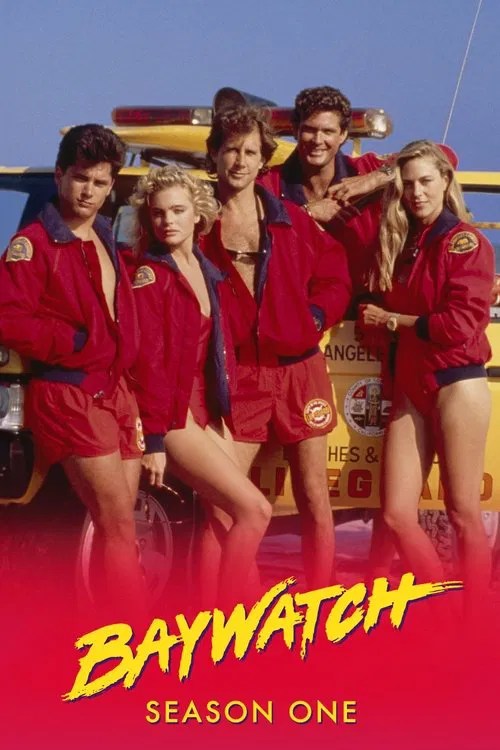
Welcome to Retro Television Reviews, a feature where we review some of our favorite and least favorite shows of the past! On Saturdays, I will be reviewing Baywatch, which ran on NBC and then in syndication from 1989 to 2001. The entire show can be viewed on Tubi.
This week, a lifeguard dies!
Episode 1.18 “Shark Derby”
(Dir by Gregory J. Bonann, originally aired on March 2nd, 1990)
Hey, remember Jill?
Jill, played by Shawn Weatherly, was a major character at the start of the season. She was the tough, seasoned lifeguard who was one of Mitch’s best friends. She was also Shauni’s mentor. If Shauni was often silly and superficial, Jill was all business. She also had a brief flirtation with Trevor, before Trevor vanished from the show.
As the first season progressed, Jill became less and less important. In this week’s episode, Jill finally gets to do something, She dies! She dies after being attacked by a shark who was drawn to the beach by an unethical restaurant owner (Peter Brown) who has been pouring chum into the ocean and who has also placed some sort of transmitter underwater that sends out a high-pitched tone that only sharks can hear. The restauranter is just doing it to promote his annual shark derby. However, when one of the sharks attacks a raft full of school children, Jill swims out into the ocean to save them. And she ends up getting bitten by a shark. She doesn’t lose any limbs. In fact, we don’t see any blood at all. But, at the hospital, it’s announced that Jill has over two hundred sutures. Yikes!
Despite getting chomped by a shark, it first appears as if Jill will survive. But towards the end of the episode, even as she’s preparing to leave the hospital, she develops a blood cot that kills her, off-screen. David Hasselhoff gets to show off his ability to cry onscreen. To be honest, that’s the main reason this episode works. We don’t really know enough about Jill to get too emotionally involved in her situation. But Hasselhoff is so incredibly earnest and sincere in his grief that he gets to you. Jill must have been someone amazing if the Hoff is crying.
This episode was shameless and emotionally manipulative and it was pure Baywatch. This episode also featured a record number of slo mo of doom scenes. The shark attacked in slow motion. Jill and Craig yelled at people to get out of the water in slow motion. Is it really slow motion if no one yells? I’m not sure.
So, Jill is dead. But the Hoff and the rest are still alive and ready to save swimmers across California.

 Through the Shattered Lens