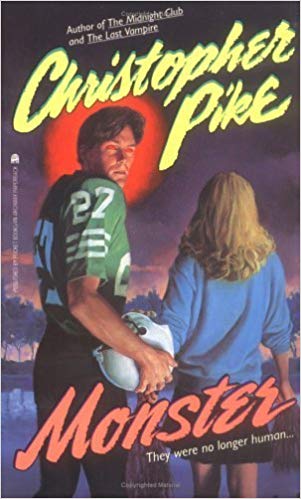
Horror Book Review: Psycho II by Robert Bloch


So, first things first.

This 1982 novel by Robert Bloch is indeed a sequel to the novel that inspired Alfred Hitchcock’s legendary horror film.  Yes, Norman Bates does return.  For that matter, so do Lila and Sam Loomis.  However, this novel should not be mistaken for Richard Franklin’s film, Psycho II, which came out a year later.  In fact, according to a later interview with Robert Bloch, Universal actually pressured him not to release this novel because they disliked the story Bloch had come up with and they also felt it would harm the financial prospects of their sequel.  Bloch, of course, did what he wanted to and was subsequently not invited to any screenings of Franklin’s film.

As for Bloch’s novel, it’s easy to see why Universal wasn’t enthusiastic about it.  It’s perhaps one of the most anti-Hollywood books ever written.  When Norman Bates escapes from a mental asylum and goes on another rampage, his doctor, Adam Claiborne, is convinced that Norman is heading to Hollywood to try to stop production of a movie called Crazy Lady, a movie that’s based on Norman’s crimes.  Even though everyone else is convinced that Norman’s been killed, Claiborne remains convinced that Norman faked his own death and is still out there.

Needless to say, the book’s Norman is considerably different from the vulnerable manchild that Anthony Perkins played in the films.  However, Norman is off-stage for the majority of Bloch’s sequel, the better to keep you wondering whether or not he actually is dead.  The majority of the book is dedicated to Claiborne getting to know the cast and crew of Crazy Lady, the majority of whom turn out to be sleazy Hollywood stereotypes.  Reading the book, it’s easy to see why Universal didn’t care much for it but, at times, Bloch occasionally comes across as if he think he’s the first person to ever be critical of Hollywood.

Another reason why Universal may have balked at adapting Bloch’s novel was because of a surreal chapter in which Paul Morgan, the actor who has been cast to play Norman, goes undercover at a brothel where all of the escorts look like then-Hollywood stars.  Since each escort is referred to by his star’s name, the entire chapter is basically Robert Redford, Clint Eastwood, and John Travolta making bitchy comments about Hollywood and religion.  It’s an odd chapter that doesn’t advance the story but, at the same time, it’s also Bloch at his most subversive.

Though the book’s take on Hollywood was hardly revolutionary, Bloch was a born storyteller and the story moves at a good pace.  It all ends with an effective twist, one that provides a proper ending to Bloch’s version of the Norman Bates story.  For Psycho and Bloch fans, it’s a must read.

Great Moments In Comic Book History: “Even in Death…”


The Uncanny X-Men #144 finds Scott Summers (better known as Cyclops, the occasional leader of the X-Men) working on a fishing boat in the Florida Everglades.  Scott’s new boss, Lee Forrester, is obviously interested in him but Scott is still mourning Jean Grey.  It’s been months since Jean, consumed by the Dark Phoenix, chose to protect the universe by destroying herself.  Scott has taken a leave of absence from the X-Men to grieve and, as they used to say back in the day, find himself.

When the fear-inducing demon D’Spayre shows up, it not only drives Lee’s father to suicide but it also forces Scott to deal with his deepest fears.  Scott hallucinates the plane crash that led to him and his brother being separated from their parents.  He visualizes the X-Men dead, having been killed by Sentinels.  And finally, in the issue’s most famous scene, he finds himself walking down a church aisle with Jean.

As they walk down the aisle, Jean’s costume changes to reflect all of the different roles that she played as member of the X-Men.  She goes from being in her underwear to being in her green Ms. Marvel costume to being the Phoenix to being the Hellfire Club’s Black Queen to finally being the Dark Phoenix.  When they reach the minister, Jean is dressed as a bride.  When the minister tells Scott that he may kiss the bride, Jean suddenly reaches up and lifts Scott’s visor.  A blast a red energy brings the wedding to an abrupt end.

Eventually, Scott teams up with the Man-Thing (who is Marvel’s version of Swamp Thing) and is able to easily defeat D’Spayre.  Since all you have to do to make D’Spayre go away is refuse to believe what he’s showing you, he is not one of Marvel’s most intimidating villains.  Still, Scott’s church hallucination provides not only a perfect coda for the Dark Phoenix saga but it also shows a comic book character dealing with depression.  That’s an emotion that, until Chris Claremont started writing the X-Men, super heroes rarely had to deal with for more than an issue or two.  Even Spider-Man, with all of his problems and guilt, always kept his sense of humor.  This issue of the X-Men finds Scott deeply mired in his grief.  Even after Scott defeats D’Spayre, the sadness remains but he swears to himself that will not surrender to it.

Of course, the impact of this issue is lessened by the fact that Marvel would later reveal that the Dark Phoenix who sacrificed herself was just an energy force that took on Jean’s memories and personality while the real Jean remained in suspended animation at the bottom of Jamaica Bay.  X-Men #144 is still a good issue and a good example of Chris Claremont’s ability to bring out the humanity in even those with super powers.

Plus, we learn how Cyclops plays pool

The Uncanny X-Men #144 (April, 1981)

“Even in Death”

  • Writer: Chris Claremont
  • Guest Penciler: Brent Anderson
  • Inker: Josef Rubenstein
  • Letterer: Tom Orzechowski
  • Colorist: Glynis Wein
  • Editor: Louise Jones
  • Editor-in-Chief: Jim Shooter

Previous Great Moments In Comic Book History:

  1. Winchester Before Winchester: Swamp Thing Vol. 2 #45 “Ghost Dance” 
  2. The Avengers Appear on David Letterman
  3. Crisis on Campus

International Horror Film Review: Incubus (dir by Leslie Stevens)


The 1966 film Incubus is unique for being one of the few films to have been made in the international language.

What?

No, not love!  WE’RE TALKING ABOUT ESPERANTO!

Esperanto is a language that was invented in 1887 by a Polish idealist who wrote under the name — I kid you not — Dr. Esperanto.  The idea behind Esperanto was that it was a simple language that anyone could learn and, if the whole world learned to speak this one language, there would be far less misunderstandings, conflicts, and wars.  There’s probably some truth to that idea and the language has gone through the occasional period of popularity.  (If Lincoln Chafee runs for President again, I’m sure he’ll probably make learning Esperanto a part of his platform.)  Still, Esperanto never really caught on.  I imagine that most people were like, “But what if I go through the trouble to learn a new language but no one else does?  Then I’d look stupid!”  That’s what kept me from learning trigonometry.

Still, when director Leslie Stevens and producer Anthony Taylor was trying to decide what gimmick they could use to set Incubus apart from other low-budget horror films, they decided that the entire film would be in Esperanto.  Since the film was about a succubus trying to steal soul of a “pure man,” the feeling was that Esperanto would give the film an otherworldly feel.  The idea of having the demons all speaking Esperanto actually worked out well because, seriously, why wouldn’t otherworldly denizens have their own language?  But of course, then William Shatner shows up as the pure man and he’s speaking Esperanto too.  It gets a bit confusing.

The film takes place in the village of Nomen Tuum, where there’s a well that can both heal the sick and make the ugly look reasonably more appealing.  As a result, the village has become a popular spot for not only those who are dying but also those who are incredibly vain.  Kia (Alyson Ames) is one of the many succubi who hang out around the village, leading arrogant and foolish men into the ocean where their souls are claimed by the Incubus (played by Milos Milos).  Kia, however, has grown bored with only tempting the morally corrupt.  She wants a challenge!  She wants to tempt someone pure of heart!  All the other succubi tell her to be careful because dealing with the pure of heart might make it difficult for her to retain her demonic nature, which would upset the Incubus.  Kia shrugs them off and heads out to seduce a clergyman….

Unfortunately, all the available clergymen turn out to be just as vain, greedy, and corrupt as the people drinking from the well!  Whatever is a succubus to do!?  Kia is on the verge of giving up when she spies a wounded soldier named Marc (William Shatner) and his sister, Arndis (Ann Atmar).  They’ve come to the village to heal Marc of his wounds.  And yes, they are “pure of heart.”

It would be easy (and, let’s be honest, a bit tempting) to glibly dismiss Incubus as being the film that proves that, in the 60s, William Shatner could overact even in Esperanto.  And William Shatner does give a very Shatneresque performance.  But Incubus is actually a surprisingly effective film.  The film’s black-and-white cinematography was by Conrad Hall (with the uncredited assistance of William A. Fraker) and the film is full of wonderfully atmospheric images.  When Marc dreams, he sees haunting images of dead men floating in the ocean.  When the Incubus abducts Arndis, they travel through a shadowy landscape before finally arriving at a house that that appears to be on fire with demonic evil.  As the film progresses, the imagery becomes more and more surreal, as if we’ve entered into a dream, a filmed nightmare of sorts.  And, long before The Witch, Incubus features a character wrestling with a Satanic goat.

Incubus was filmed with the actors learning their lines phonetically and with no one on set to correct their pronunciations.  When the film was previewed for 60 people who spoke Esperanto, the audience laughed at how the actors butchered their precious little international language.  After that, Milos Milos — the actor who played the Incubus — was found dead with his girlfriend in what was assumed to be a murder/suicide, though many continue to claim that it was a murder/murder.  (Milos’s girlfriend was also Mickey Rooney’s wife and both were discovered dead at Mickey’s house and, well …. I don’t like where this is heading.  Sorry, Mick!)  As a result of all of the scandal, no reputable U.S. distributor would handle Incubus.  (This was 1966, after all.)  So, the film was only released in France.  Though I have no evidence to say for sure, I choose to believe that the French got it.

The film was long believed to be lost until the last remaining print was discovered in the collection of the Cinematheque Francaise in Paris.  From that badly damaged print, Incubus was restored and, as a result, history’s first Esperanto horror film can once again be appreciated by audiences everywhere!

Mi amas feliĉan finon!

4 Shots From 4 Films: Dellamorte Dellamore, Nadja, The Stand, Wes Craven’s New Nightmare


4 Shots From 4 Films is just what it says it is, 4 shots from 4 of our favorite films. As opposed to the reviews and recaps that we usually post, 4 Shots From 4 Films lets the visuals do the talking!

This October, we’re using 4 Shots From 4 Films to look at some of the best years that horror has to offer!

4 Shots From 4 1994 Horror Films

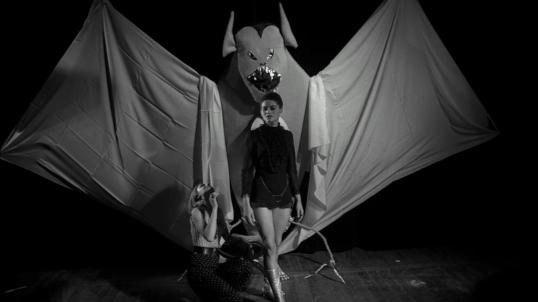
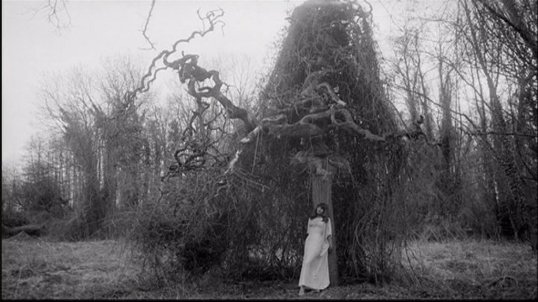
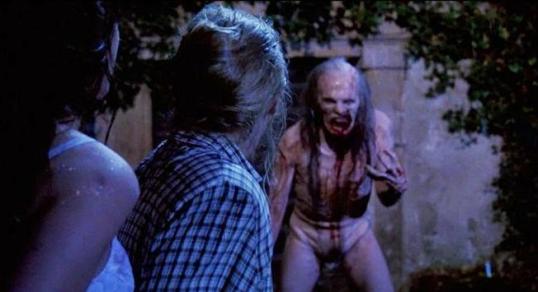
Dellamorte Dellamore (1994, dir by Michele Soavi)

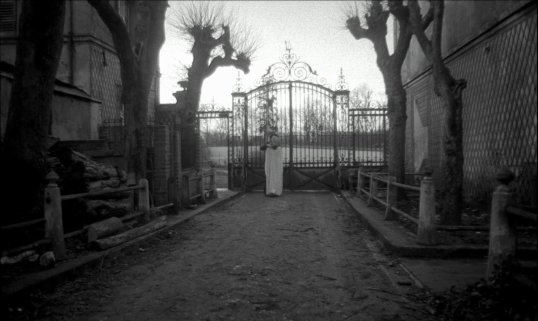
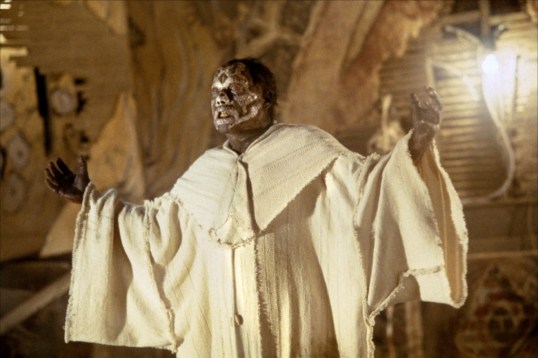
Nadja (1994, dir by Michael Almereyda)

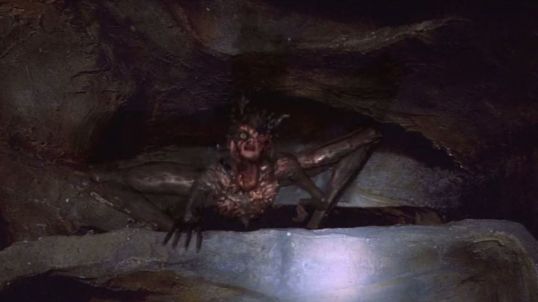
The Stand (1994, dir by Mick Garris)

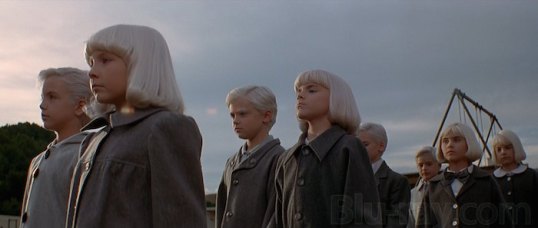
Wes Craven’s New Nightmare (1994, dir by Wes Craven)


Horror Film Review: Psycho II (dir by Richard Franklin)


Norman Bates is back!

No, I don’t mean Freddie Highmore from Bates Motel or Vince Vaughn from the odd Psycho remake that I keep seeing on Showtime.  No, I’m talking about the original Norman Bates, Anthony Perkins!

First released in 1983, Psycho II is a direct sequel to the classic shocker from Alfred Hitchcock.  The film opens with a replay of the original film’s famous shower scene and then immediately jumps forward 22 years.  Having been found not guilty by reason of insanity, Norman Bates has been in a mental institution ever since he was arrested for the murders of Marion Crane and Milton Arborgast.  However, Norman’s psychiatrist, Dr. Raymond (Robert Loggia, who was considered for the role of Sam Loomis in the original film), now feels that Norman has been cured and is no longer a danger to himself or others.  A judge agrees.  Marion Crane’s sister, Lila Loomis (Vera Miles, reprising her role from the original) does not.  She presents the judge with a petition demanding that Norman not be released.  When the judge ignores her, Lila yells that Norman will murder again!

Now free, Norman returns to the Bates Motel and discovers that it’s now being run by the sleazy Warren Toomey (Dennis Franz).  When Norman finds various party favors in the motel rooms and asks Warren what they are, Warren laughs and says, “They’re drugs, Norman.”  Norman’s not too happy about that.  As Dr. Raymond tells him, the world has changed considerably over the past two decades.

However, Norman has other issues to deal with.  For the most part, most of the people in town are not happy that their most famous resident has returned.  Emma Spool (Claudia Bryar) gets Norman a job at a local diner because, in her words, she believes in forgiveness and second chances.  Norman gets to know the new waitress, Mary Samuels (Meg Tilly) and, when Mary tells him that she’s had a fight with her boyfriend, he invites her to stay at the hotel until she can get things together.

From the minute that he returns home, Norman is struggling to keep it together.  When he first reenters his former house, he hears his mother’s voice but he tells himself that she’s not really there.  But if his mother isn’t there, then who keeps calling him on the phone and yelling at him about the state of the motel?  Who keeps taunting him about his awkward (yet rather sweet) relationship with Mary?  And when two teenagers are attacked after breaking into the house, who else could it possibly be but Norman’s mother?

I was really surprised by Psycho II, which turned out to be a really entertaining little movie, an effective thriller with a healthy dash of dark humor.  It’s a very plot-heavy film, with almost every scene introducing a new twist to the story.  With the exception of the sleazy Warren Toomey, no one in this film turns out to be who you initially expected them to be, including Norman.  Meg Tilly does a good job in the somewhat oddly written role of Mary Samuels and even manages to make an awkward line like “Norman, you’re as mad as a hatter” sound natural.  Not surprisingly, the film is dominated by Perkins’s performance as Norman Bates and what a great performance it is.  The best moments are the ones where Norman awkwardly tries to fit back in with society, nervously laughing at his own jokes and struggling to maintain eye contact with whoever he’s talking to.  You really can’t help but feel sorry for him, especially as the film progresses.

Wisely, Psycho II set out to establish it own identity as a film, as opposed to just trying to duplicate the shocks of Psycho.  (There is a shower scene that’s filmed similarly to the one from the first scene, with a key difference that I won’t spoil.)  It’s what a sequel should be, not a remake but a continuation of the original’s story.  This is definitely a film that’s far better than you may expect.


Horror On The Lens: The Phantom of the Opera (dir by Rupert Julian)


Today’s horror movie on the Shattered Lens is both a classic of silent era and one of the most influential horror films ever made.  It’s one that I previously shared in 2013, 2015, 2016, and 2108 but it’s such a classic that I feel that it is worth sharing a second (or fifth) time.

First released in 1925, The Phantom of the Opera is today best known for both Lon Chaney’s theatrical but empathetic performance as the Phantom and the iconic scene where Mary Philbin unmasks him. However, the film is also a perfect example of early screen spectacle. The Phantom of the Opera was released during that period of time, between Birth of the Nation and the introduction of sound, when audiences expected films to provide a visual feast and Phantom of the Opera certainly accomplishes that. Indeed, after watching this film and reading Gaston Leroux’s original novel, it’s obvious that the musical was inspired more by the opulence of this film than by the book.

This film is also historically significant in that it was one of the first films to be massively reworked as the result of a poor test screening. The film’s ending was originally faithful to the end of the novel. However, audiences demanded something a little more dramatic and that’s what they got.

Music Video of The Day: Ghost by ERAAS (2013, dir by ????)


Daaaaaaamn….

Seriously, this video is dark but it’s so good!

The message appears to be that you should be careful who you murder because he might have a bunch of friends who will all form a drum circle and bring his ghost back to life to get revenge.  That’s actually a pretty important message.  There would be a lot less violence in the world if everyone took it to heart.

Enjoy!

Creepshow, S1, Ep3, All Hallow’s Eve, The Man in the Suitcase, Review By Case Wright


Creepshow.jpg

Happy Horrorthon! I’m am once again reviewing Creepshow.  It is officially a true Guilty Pleasure, but come on, aren’t those all of our go to pleasures anyway? To the uninitiated, Creepshow is a GOOD horror anthology series, but really it’s a showcase for short-films.  How? It’s broken down into two stories and neither of them are over 23 minutes.  Aside from giving writers like Christopher Buehlman his big break (before this he’d only written skits for Renaissance Faires….really), they are the short short brought to life.

Many of Stephen King’s short stories are made into movies, but they are always lengthened into something (usually better) than their original quick-paced short story.  Creepshow keeps that fast pace…mostly.  Well, they keep it for the second story.  The second story is always the better story and moves at the quick pace that you’d expect in a short story.  Even at 22 minutes, the first story tends to drag.

All Hallow’s Eve follows 5 youths trick or treating in a terrified neighborhood.  It was obvious to anyone with a pulse that these kids were dead and out to cause trouble.  Turns out that during a vigorous D&D session in their treehouse, some bullies from the neighborhood thought it would be funny to set it on fire, with the D&D nerds in it.  As you do.  Well, their door gets stuck and they all die.  So, they haunt the neighborhood setting fire to one bully each Halloween until they are all briquettes.

The acting in story A is ….ok.  Story A is a bit slow-paced, which is really hard to do in 20 minutes, but here we are.  I still watched it and so should you.  It’s not like 2 Sentence Horror we are talking about, which is garbage wrapped in rotten bacon.

Story 2 was The Man in the Suitcase, which could’ve worked as a twilight zone episode.  Justin is a loser stoner who is dumped by his girlfriend and used by his roommate.  He is arriving home after visiting his family and he gets a carry-on from the airport and it’s not his stuff that’s inside; it’s a Middle-Eastern man bent so he can fit into the carry-on.  It turns out the Man wants to leave the suitcase, but every time Justin tries to move him, it causes the Man pain, which in turn causes the Man to spit out a gold coin.

Well, Justin isn’t sure what to do, but Justin’s roommate and his ex-girlfriend do and they all decide to torture the man in the suitcase so that he’ll spit out loads of gold.  The torture gets pretty gross, but Justin eventually has a change of heart and tries to free the Man, but his girlfriend and roommate want to keep the gold so she tries to kill Justin with a wrench, which is just lying about.  I won’t spoil what happens next because this was a lot of fun and really makes Shutter worth my subscription fee.

This story really had some good pacing.  Yes, it was predictable and very over the top, but that is just the Creepshow way.

Again, relax and enjoy!


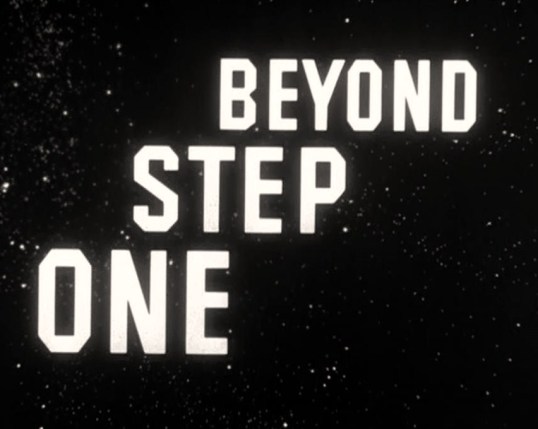
Horror on TV: One Step Beyond 1.2 “Night of April 14th” (dir by John Newland)


For today’s televised horror, we have an episode of the 1960s anthology series, One Step BeyondOne Step Beyond was like (and aired at the same time as) The Twilight Zone, except that it often claimed that it’s stories were all based on fact.

In this episode, a young Englishwoman is haunted by dreams of drowning.  Try as she might, she can’t get the feeling of doom out of her mind.  Perhaps her upcoming trip to New York will help to relax her.  Her fiancee even tells her that they’ll be traveling to New York on the most luxurious ship ever built.  The name of that ship?  Why, the Titanic, of course.

For the record, there actually were quite a few people who apparently did have psychic premonitions of doom when it came to the Titanic.  Perhaps the most infamous example was the author Morgan Robertson, who wrote a novel in 1898 that was called The Wreck of the Titan: Or, Futility.  That book managed to perfectly predict that sinking of the Titanic, right down to the iceberg and the number of lives lost.

This episode originally aired on January 27th, 1959.

Enjoy!

Home Invasion: Twice Dead (1988, directed by Bert Dragin)


Twice Dead is twice dumb but also twice the fun.

The fine and upstanding Cates family have recently inherited a mansion and are eager to move in.  The only problem is that the mansion is already inhabited!  Not only has a gang of street punks declared that the mansion belongs to them but the house is also home to the ghost of Tyler Walker (Jonathan Chapin).  A great actor, Tyler committed suicide after being swindled out of his possessions by the love of his life, Myrna.  After the Cates family plays an elaborate practical joke on the street gang (and the joke simply has to be seen to believed), the gang declares that they will take revenge.  Because the Cates’s daughter, Robin (Jill Whitlow), is dead ringer for Myrna, Tyler’s ghost decides to help take out the street punks.  Death by shotgun, dirt bike, and dumb waiter follows.

The two Cates children are played by Jill Whitlow and Tom Bresnahan.  Whitlow and Bresnahan ended up dating after they finished shooting the film and their obvious chemistry brings an apparently unintended subtext to all of their sibling interactions in Twice Dead.  Jill Whitlow also appeared in Night of the Creeps and, with her ability to be both sexy and wholesome at the same time, was one of the first crushes of many an 80s and 90s child.

A mix between The Amityville Horror and Death Wish 3, Twice Dead was one of the many horror films to come out of Roger Corman’s Concorde Pictures in the 80s.  It’s dumb but it has both Jill Whitlow and enough of a sense of humor to be entertaining.  The street punks, who all have names like Crip, Silk, Stony, and Candy, are all annoying so you don’t mind seeing them get killed in various ways.  Todd Bridges proves that the world don’t move to the beat of just one drum by playing a Petie, a friendly guy who likes to hang out at the library, while the amazing Charlie Spradling, who appeared in several films like this back in the day, plays a member of the gang.  Sadly, neither one of them comes to a good end.