A Blast From The Past: Combat America (narrated by Clark Gable)


Today is the birthday of one of America’s greatest screen legends, the one and only Clark Gable!

Clark Gable was born 119 years ago today and, in honor of the birthday of this cinematic icon, we’re sharing a little blast from the past.   When in the past?  1945, to be exact.  In Combat America, Gable takes you on a tour through the world of aerial combat during World War II.  Gable joined the U.S. Army in 1943, shortly after the death of his wife, Carole Lombard.  (Lombard died in a plane crash.  She had been traveling across the country, working to build up support for the war effort.  Shortly after Lombard’s death, Gable’s co-star from Gone With The Wind, Leslie Howard, was also killed when the Germans shot down a plane in which he was traveling.)  Gable trained as an aerial gunner and flew five combat missions in 1943. Reportedly, Gable was ordered to stop flying because it was feared that the American morale at home would never recover if he was shot down.

Combat America was one of Gable’s contributions to the war effort, as well as a tribute to all the men who sacrificed their lives to defeat the Nazis.  Gable both narrates and appears on camera.

Incidentally, I know that Clark Gable will always be Rhett Butler to most people but my favorite Gable performance is his Oscar-winning work in It Happened One Night.  If I had been Claudette Colbert in that film, the Walls of Jericho would have come down very quickly.  Just saying.


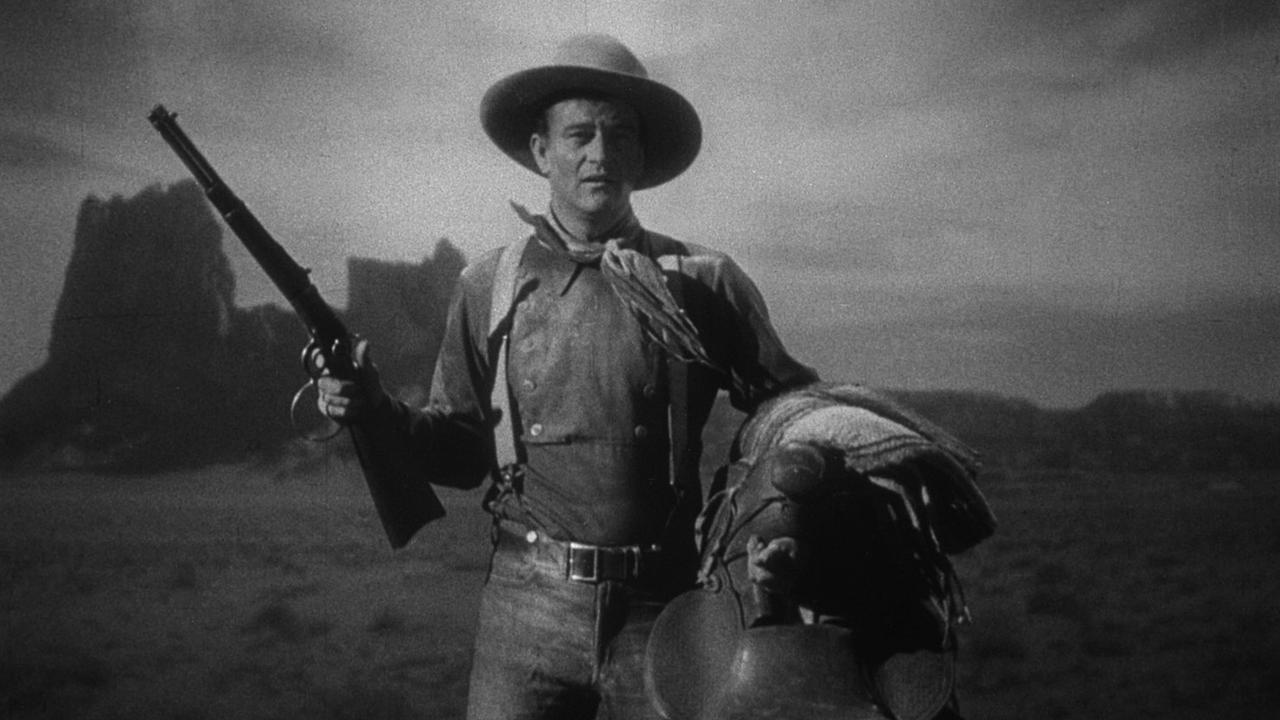
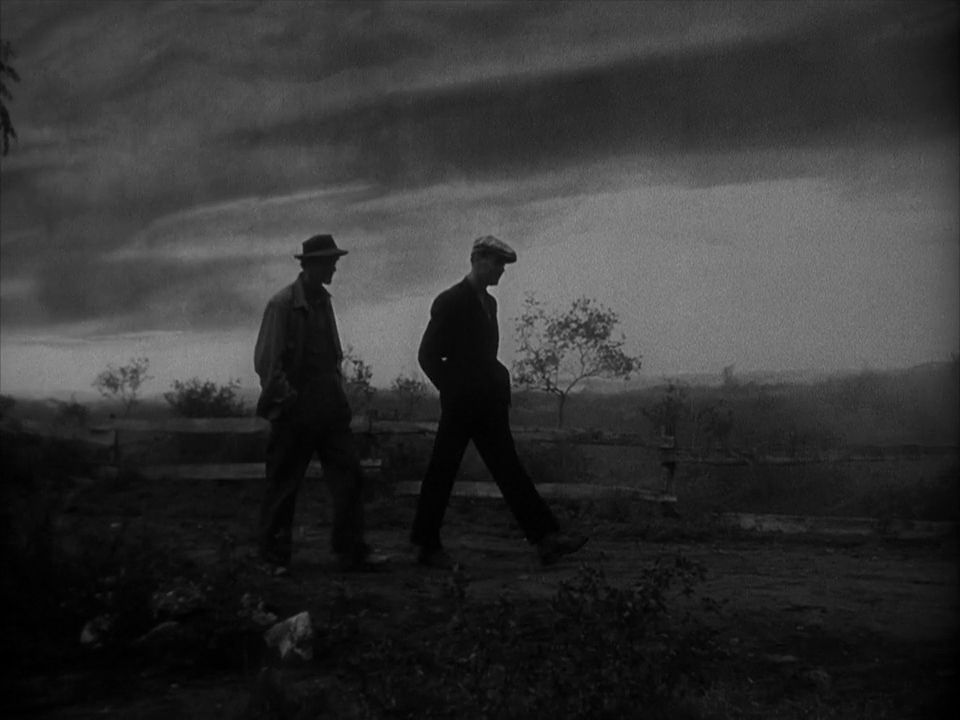
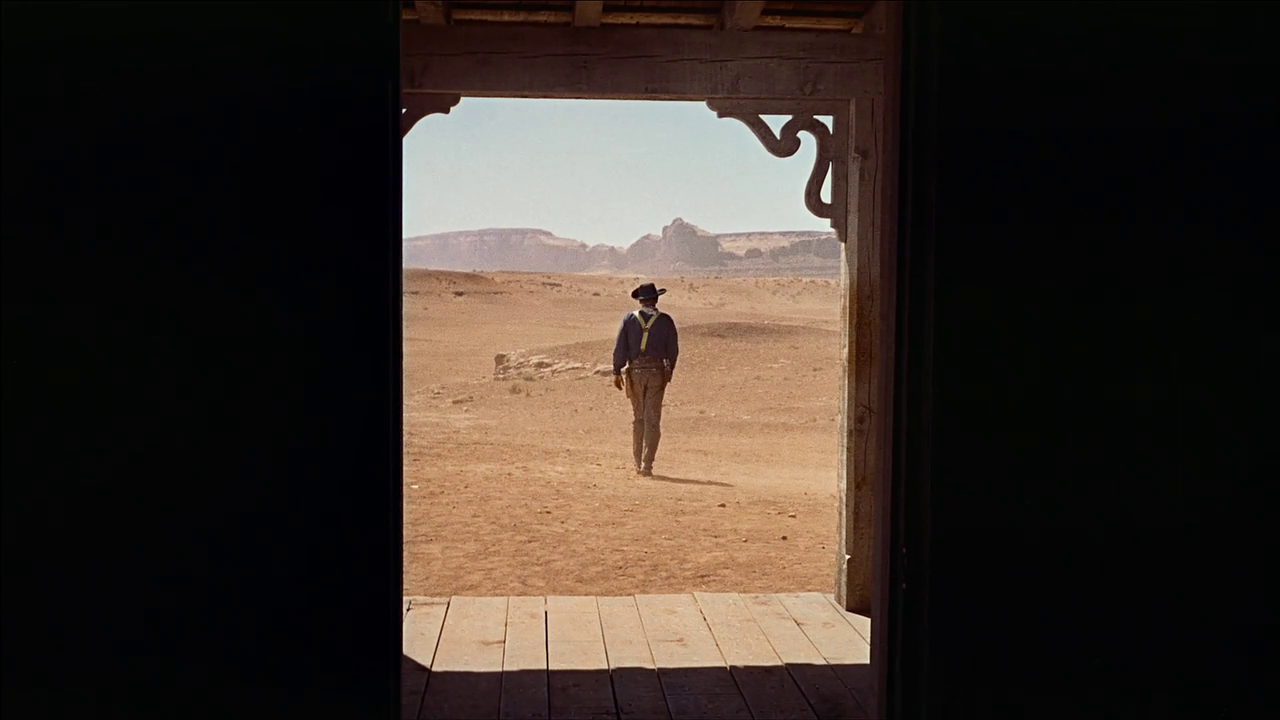
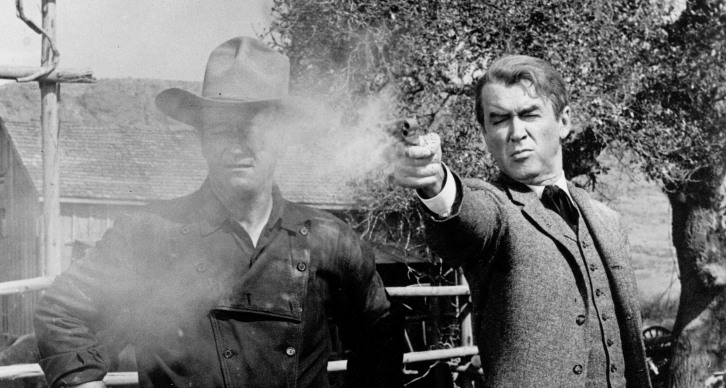
4 Shots From 4 Films: Special John Ford Edition


4 Shots From 4 Films is just what it says it is, 4 shots from 4 of our favorite films. As opposed to the reviews and recaps that we usually post, 4 Shots From 4 Films lets the visuals do the talking!

John Ford.

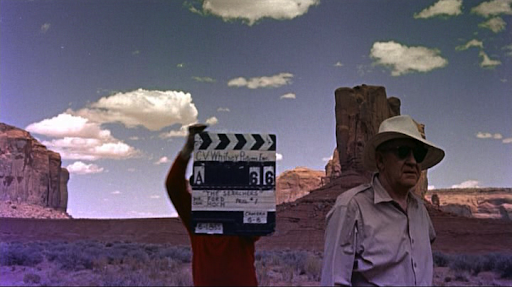
The very name brings to mind sweeping vistas, the grandeur of the old west, and stories about men doing what men had to do.  John Ford began his directing career during the silent era and he continued to work through the 1960s and, along the way, he created a unique and very American sort of cinema.  Though Ford may be known for his westerns, he also directed his share of war films, historical epics, and even a classic romantic comedy.  The son of Irish immigrants, Ford made several films that took place in Ireland.  The Quiet Man featured one of the greatest fight scenes in film history.  Stagecoach introduced the world to John Wayne and The Searchers proved that he could act.  With The Grapes of Wrath, Ford provided, for future generations, the definitive look at the Great Depression.  Twenty-two years later, The Man Who Shot Liberty Valance told us to always “Print the legend.”

John Ford was born 126 years ago today.  In honor of his legacy, here are 4 shots from 4 films.

4 Shots From 4 Films

Stagecoach (1939, directed by John Ford)

The Grapes of Wrath (1940, directed by John Ford)

The Searchers (1956, directed by John Ford)

The Man Who Shot Liberty Valance (1962, directed by John Ford)

Scenes That I Love: Audrey’s Dance From Twin Peaks: The Return


So, today is Sherilyn Fenn’s birthday and I figured that this would be the perfect time to share a scene that I love from Twin Peaks: The Return.  It’s also one of the most controversial scenes from the entire 18-hour film (and make no mistake, Twin Peaks: The Return is a film).  That’s saying something, considering that just about every single minute of David Lynch’s masterpiece was, at the very least, a little bit controversial.

From Twin Peaks: The Return Part 16, it’s Audrey’s Dance!

So, what’s happening here?  That Audrey has undergone a great personal trauma is obvious to anyone who compares the Audrey in Twin Peaks: The Return to the Audrey in the original series.  The original series ended with Audrey in a coma.  In between the end of the first series and the start of the second, she was raped by the Doppelganger (apparently while she was still comatose) and she subsequently gave birth to the thoroughly evil Richard Horne.  There’s a lot of horrifying things in Twin Peaks but there’s nothing as horrific as what happened to Audrey.

Where things get murky is what happened to Audrey after the birth of Richard.  According to the books that Mark Frost wrote before and after Twin Peaks: The Return aired, Audrey later became a beautician and married her business manager.  For that reason, I think we can discount the theory that Audrey is still in the coma and having a dream in this scene.  Another popular theory is that Audrey is hallucinating in a mental hospital but again, I think we can discount that because, if she’s institutionalized, how could she become a beautician and marry her business manager?

I think a far more probable theory is that the Audrey who is living in Twin Peaks is another doppelganger and the real Audrey, like the original Cooper, is trapped in one of the lodges.  I also think that it can be argued that the Road House, where Audrey dances, is itself a portal.  It’s not an actual Lodge but it does seem to have a connection to the Black Lodge.  Perhaps the master of ceremonies is like emcee from Mulholland Drive, revealing that everything is an illusion.

Who knows, right?

As for Audrey’s dance in this scene, it’s a callback to a time when Audrey had her entire future ahead of her.  What Audrey once did playfully, she now does wistfully and with regret.  And yet, there’s a lot of hope to be found in her dance, or at least there is until reality intrudes in the form of two idiots getting into a fight.  That’s when Audrey (or Audrey’s doppelganger) is reminded that the world has changed and there’s no more room for happiness.

Hopefully, things have gotten better for Audrey since we last saw her.

Ghosts of Sundance Past #4: Frozen River (dir by Courtney Hunt)


The 2008 film, Frozen River, tells the story of two desperate mothers.

Ray Eddy (Melissa Leo) has spent two years working as a clerk in a discount store and still cannot convince her boss to promote her to full time because, in his opinion, she’s just not “long-term employee” material.  Ray’s husband, a compulsive gambler, has vanished and taken the majority of their money with him.  Ray and her two sons live in a mobile home, where they subsist on a diet of popcorn and tang.  Every few days, a man comes by and threatens to repossess the home and leave Ray and her children homeless.  Ray always manages to talk him out of it.  If there’s anything that Ray can do, it’s talk her way out of trouble.

Lila Littlewolf (Misty Upham) is a Native American who lives on the St. Regis Mohawk Reservation and who works at a bingo parlor.  Because Lila is struggling financially and often resorts to illegal means to make ends meet, Lila’s mother-in-law has taken away her infant son.  If Ray’s defining characteristic seems to be her ability to talk her way out of trouble, Lila is quiet and often seems to be hiding from the world.

One day, while Ray is out looking for her husband, she spots Lila driving his car.  Lila claims that she found the car, sitting deserted at a gas station.  (It’s never established whether Lila is telling the truth or if she actually stole the car.)  Ray discovers that Lila makes her money by smuggling undocumented immigrants over the Canadian border and Ray soon joins her.

Frozen River takes place a few days before Christmas in Upstate New York.  There’s snow on the ground and a Christmas tree in the mobile home but there’s little holiday cheer to be found in the film.  In order to smuggle people across the border, Ray and Lila take them across the frozen St. Lawrence River and, just like the ice on the river, Ray’s occasional moments of happiness seem to be destined to only be temporary.  Just as the ice is eventually going to break, so is Ray and Lila’s operation.  One gets the feeling that it’s only a matter of time.  Ray and Lila almost immediately attract the attention of the stern State Trooper Finnerty (Michael O’Keefe).  Significantly , Finnerty’s suspicions are initially limited to only Lila and he even tries to warn Ray that she’s hanging out with a known smuggler.

Frozen River is dominated by two strong lead performances.  Melissa Leo is the one who was nominated for best actress but I actually think that Misty Upham (who tragically died a few years after this film was released) is even better.  Leo is the one who gets the big scenes and who gets to deliver all of the best lines and she does a great job with a richly written character.  Upham, meanwhile, has to largely create her character in silence.  She rarely speaks but, when she does, she makes it count.  When Ray and Lila get pulled over by Finnerty and Lila snaps that Ray will be okay because she’s white, the way Upham delivers that one line tells you so much about what has led her to be in her current situation.  When you see Upham in the background, watching Ray or Finnerty or anyone else who is standing in the way of her seeing her baby, her glare is worth a thousand monologues.  Both Leo and Upham are so good that they hold your interest even when the film’s script and direction veers towards the heavy-handed.  (Director Courtney Hunt, for the most part, does a good job of keeping things credible but it’s hard not to roll your eyes a bit when a duffel bag being carried by two refugees turns out to not contain, as Ray originally suspects, explosives but a baby instead.)

Frozen River was a hit at the 2008 Sundance Film Festival, where it won the U.S. Dramatic Grand Jury Prize.  Leo went on to receive an Oscar nomination for Best Actress, though she lost to Kate Winslet in The Reader.

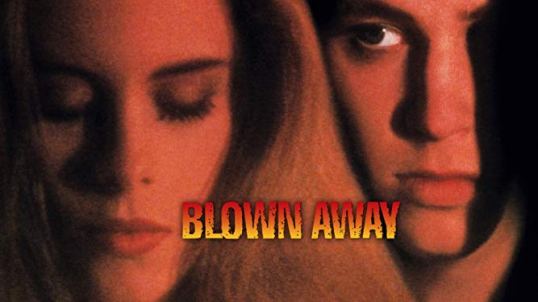
Cinemax Friday: Blown Away (1993, directed by Brenton Spencer)


Rich Gardner (Corey Haim) and his brother, Wes (Corey Feldman) both work at a ski resort in Canada.  When Rich rescues the wealthy Megan (Nicole Eggert) from being trampled by a horse, she invites him to attend her 17th birthday party.  Despite the fact that he’s already dating Darla (Kathleen Robertson), Rich goes to Nicole’s party.  Nicole greets him in her underwear and soon, the two of them are having softcore, late night Cinemax-style sex.  It’s only in the morning that Rich discovers that Megan is the daughter of his boss, Cy (Jean LeClerc).

With Wes’s encouragement, Rich continues the affair, even after Cy demands that Rich never see his daughter again.  Megan eventually tells Rich that she believes that Cy was responsible for the death of her mother and that she thinks they should kill Cy and, after Megan has gotten her inheritance, run off together.  At first, Rich is hesitant but when Megan turns up bruised and claiming that her father beat her up, Rich reconsiders Megan’s proposition.

In many ways, Blown Away is typical of the neo-noirs that used to dominate late night Cinemax in the 90s.  Take a faded TV or a film star.  Toss in an up-and-coming starlet who is willing to do nudity.  Add a dimly lit sex scene or two and a surprise twist at the end.  In this case, the surprise twist was actually a good one, the faded stars were the Two Coreys, and the up-and-coming starlet was Nicole Eggert.

Before they become direct-to-video mainstays in the 90s, both Corey Haim and Corey Feldman had a good, if brief, run as legitimate film stars.  With their subsequent notoriety, it’s easy to forget that they were two of the busiest and most critically acclaimed child actors of the 80s.  Corey Haim appeared in movies like Murphy’s Romance and Lucas while Corey Feldman did The Goonies and Stand By Me.  They co-starred in films like The Lost Boys and License to Drive.  Unfortunately, neither one of them was able to make the transition from being child stars to adult actors.  (It didn’t help that both of them had very public struggles with substance abuse and that the 90s saw both of them developing a unique talent for tracking down the worst projects possible and agreeing to star in them.)  Blown Away was one of the first of their post-stardom films and, whatever else you may say about it, it’s definitely better than the majority of the films that the pair made afterwards.  (Just try sitting through Dream A Little Dream 2.)  After years of playing best friends, Blown Away cast them as brothers who always seem to be on the verge of throwing a punch at each other.  When Rich and Wes say that they secretly hate each other, it feels less like a movie and more like real-life couples therapy.

Blown Away is a classic of its kind.  Though Rich is not a very sympathetic hero and there’s a few scenes where Haim’s tendency to overact gets in the way of the film, Nicole Eggert is a perfect femme fatale and Corey Feldman again shows that he had more talent than he was usually given credit for.  If you can overlook a few plot holes (and not spend too much time worrying about how a bunch of teenagers became experts in setting explosives), the film’s storyline is interesting and far darker than the usual late night Cinemax fare.  When people like me talk about being nostalgic for the old days of watching Cinemax after midnight, this is the type of film that we’re talking about.

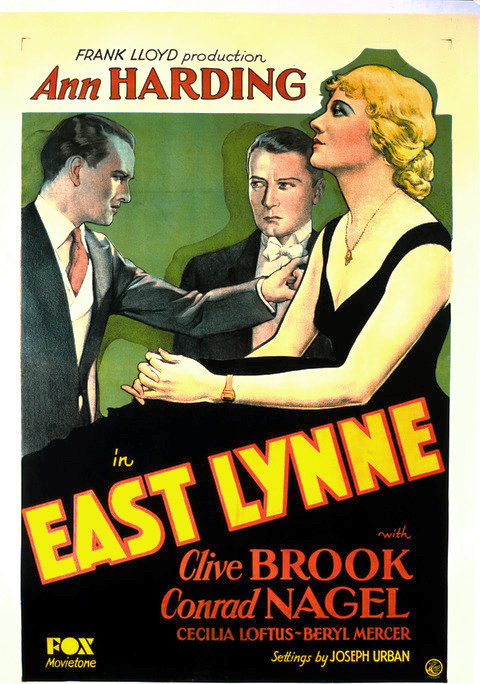
Lisa Reviews An Oscar Nominee: East Lynne (dir by Frank Lloyd)


In the history of the Academy Awards, East Lynne is a curiosity.

Released in 1931, East Lynne was one of the five films to be nominated for Best Picture at the fourth annual Academy Awards.  Best Picture was the only nomination that East Lynne received, which of course leaves you to wonder just what exactly was so good about it.  Why was it nominated as opposed to something like A Free Soul, which received nominations for Best Actress and Director and which won the Best Actor Oscar for Lionel Barrymore?  East Lynne was a success at the box office but so were The Public Enemy, Little Caesar, and Scarface.  None of those classic gangster films made much of an impression with the Academy but all of them are better remembered today than East Lynne.

One reason why East Lynne has fallen into obscurity is because it’s not an easy film to see.  There is only one complete print of East Lynne still in existence.  It’s housed at the UCLA’s Instructional Media Lab but it can only be viewed by appointment.  There are, however, a few bootleg copies on DVD.  The picture is grainy.  The sound is inconsistent.  Even worse, the bootleg is missing the last 12 minutes of the film.  Still, for those of us who don’t live near UCLA, that bootleg copy is the only convenient way to watch East Lynne.

That’s how I watched it.  (I also looked up how the film ended so I know where the story eventually led, despite those missing 12 minutes.)  Having now seen the film, I can now say that it makes even less sense that the film was nominated because it’s pretty bad.  I can only imagine that it received its nomination as a result of Fox Film Corporation (which would later merge with 20th Century Pictures to be come 20th Century Fox) demanding that its employees vote for it.

Based on a Victorian novel that had already been filmed several times during the silent era, East Lynne tells the story of Lady Isabella (Ann Harding), a British noblewoman who marries a stuffy attorney named Robert Carlyle (Conrad Nagel).  From the beginning it’s an awkward marriage.  Isabella is sociable and popular and wants to enjoy life.  Carlyle is a humorless jerk.  Not even the fact that they live in a nice mansion called East Lynne provides much comfort.

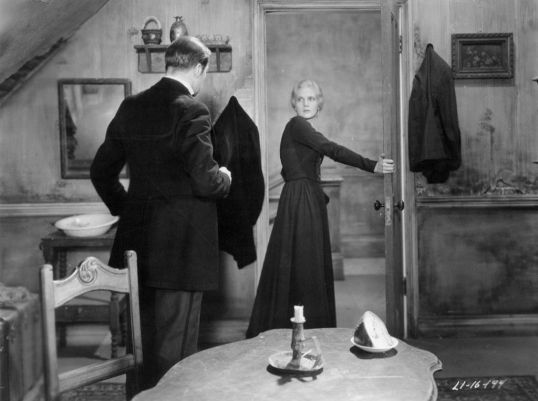
When Isabella accepts a kiss from a cad named Captain William Levinson (Clive Brook), Isabella’s sister-in-law uses it to drive a wedge between Isabella and Carlyle.  Carlyle, being a jerk, kicks Isabella out of the house and takes custody of their child.  Now viewed as being a figure of scandal, Isabella goes abroad with Levinson.  (Since this is a pre-code film, going abroad amounts to going to a then-racy show in Vienna.)  However, through a series of improbable events, Levinson ends up dead and Isabella ends up very slowly going blind.  However, Isabella is determined to see her child just once more before losing her sight so it’s up to her to convince a maid to sneak her back into East Lynne late at night….

And then the bootleg version of the film ends!  Now, I did my research and I discovered — here’s your SPOILER ALERT — that the film apparently ends with a blind Isabella stumbling over a cliff and her husband realizing too late that maybe he was kind of a jerk.  I’m kind of sorry that I didn’t get to see that.  I may have to book a flight to UCLA.

Anyway, from what I did see, East Lynne is a creaky old film.  This is one of those films where you can tell that the cast was still adjusting to the new sound era.  Ann Harding’s screen presence is a bit too insubstantial to keep the film’s melodramatic story grounded and neither Conrad Nagel nor Clive Brook seem to be worth all of the trouble that Isabella goes through.  Frank Lloyd’s direction is painfully slow and stagy, though things do pick up briefly when the action moves to Vienna.  Worst of all, the film is pretty much on Carlyle’s side.  He’s a jerk, the movie says, but Isabella should have made more of an effort to keep him happy.  Welcome to 1931!

East Lynne lost the best picture race to Cimarron, which was another fairly forgettable film.  Though there were plenty of good films to choose from in 1931, it doesn’t appear that the Academy nominated any of them.  Of course, that wouldn’t be the last time that would happen.


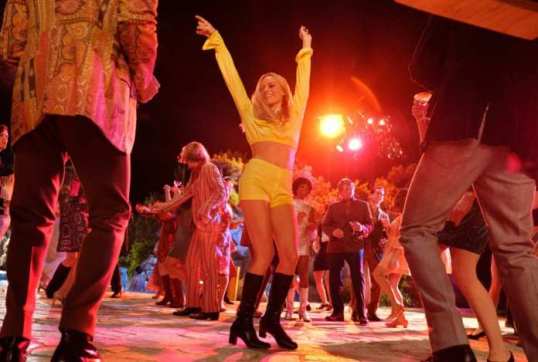
The Casting Society of America Honors Once Upon A Time In Hollywood


The Academy does not have a category to honor Best Casting.  They really should, though.

Until the Academy gets their act together, the Casting Society of America will have to do the job.  Here are their picks for the best of 2019:

BIG BUDGET – DRAMA
Once Upon A Time…In Hollywood – Victoria Thomas

BIG BUDGET – COMEDY
Knives Out – Mary Vernieu, Angela Peri (Location Casting), Bret Howe (Associate)

STUDIO OR INDEPENDENT – COMEDY
Jojo Rabbit – Des Hamilton

STUDIO OR INDEPENDENT – DRAMA
Marriage Story – Francine Maisler, Douglas Aibel, Kathy Driscoll-Mohler (Associate)

LOW BUDGET – COMEDY OR DRAMA
The Last Black Man in San Francisco – Julia Kim, Nina Henninger (Location Casting),
Sarah Kliban (Associate)

MICRO BUDGET – COMEDY OR DRAMA
Skin in the Game – Matthew Lessall

ANIMATION
(tie) The Lion King – Sarah Halley Finn, Jason B. Stamey (Associate)
and Toy Story 4 – Kevin Reher, Natalie Lyon

THE ZEITGEIST AWARD
Star Wars: The Rise of Skywalker – Nina Gold, April Webster, Alyssa Weisberg,
Angela Young (Associate)

TELEVISION PILOT AND FIRST SEASON – COMEDY
“Russian Doll” – Christine Kromer, Andrew Femenella (Associate)

TELEVISION PILOT AND FIRST SEASON – DRAMA
“Pose” – Alexa L. Fogel, Kathryn Zamora-Benson (Associate), Caitlin D. Jones
(Associate)

TELEVISION SERIES COMEDY
“The Marvelous Mrs. Maisel” – Cindy Tolan, Juliette Ménager (Location Casting),
Anne Davison (Associate)

TELEVISION SERIES – DRAMA
“Game of Thrones” – Nina Gold, Robert Sterne, Carla Stronge (Location Casting)

LIMITED SERIES
“When They See Us” – Aisha Coley, Billy Hopkins (Location Casting), Ashley Ingram
(Location Casting)

FILM – NON-THEATRICAL RELEASE
To All the Boys I’ve Loved Before – Tamara-Lee Notcutt, Tiffany Mak (Location
Casting), Alexis Allen (Associate)

LIVE TELEVISION PERFORMANCE, VARIETY OR SKETCH COMEDY
“Live in Front of a Studio Audience: ‘All in the Family’ and ‘The Jeffersons’” – Marc
Hirschfeld, Geralyn Flood, Katrina Wandel George (Associate)

CHILDREN’S PILOT AND SERIES (LIVE ACTION)
“Andi Mack” – Amber Horn, Danielle Aufiero, Steven Tylor O’Connor (Associate)

TELEVISION ANIMATION
“Big Mouth” – Julie Ashton-Barson

REALITY SERIES
“Queer Eye” – Gretchen Palek, Danielle Gervais, Ally Capriotti Grant, Quinn Fegan,
Pamela Vallarelli

SHORT FILM
Skin – Jessica Sherman

SHORT FORM SERIES
“It’s Bruno!” – Bess Fifer

NEW YORK BROADWAY THEATRE – COMEDY OR DRAMA
To Kill a Mockingbird – Daniel Swee

NEW YORK BROADWAY THEATRE – MUSICAL
Hadestown – Duncan Stewart, Benton Whitley

NEW YORK BROADWAY THEATRE – REVIVAL, COMEDY OR DRAMA
The Waverly Gallery – David Caparelliotis, Lauren Port

NEW YORK BROADWAY THEATRE – REVIVAL, MUSICAL
Oklahoma! – Adam Caldwell, Will Cantler

NEW YORK THEATRE – COMEDY OR MUSICAL
Fiddler on the Roof in Yiddish (Fidler Afn Dakh) – Jamibeth Margolis

NEW YORK THEATRE – DRAMA
Daddy – Judy Henderson, Nick Peciaro (Associate)

REGIONAL THEATRE
In the Heights (Westport Country Playhouse) – Tara Rubin, Claire Burke

LOS ANGELES THEATRE
Sweat – Heidi Levitt, Billy Hopkins (NY Casting), Ashley Ingram (NY Casting), Marin
Hope (Associate)

SPECIAL THEATRICAL PERFORMANCE
Annie – Margery Simkin, Michael Donovan, Beth Lipari, Richie Ferris (Associate)

THEATRE TOURS
Hamilton – Bethany Knox, Lauren Harris (Associate)

Brexit: The Uncivil War (2019, directed by Toby Haynes)


It’s finally happening.

Nearly four years after a narrow majority voted in favor of leaving the European Union, the UK is finally doing so.  The success of Brexit not only took the world by surprise but it shocked much of the UK as well.  I didn’t expect the Leave Campaign to win.  My relatives in the UK, all of whom voted to leave, never expected to win.  The British media establishment certainly didn’t expect Leave to win and their anguished reaction largely mirrored the reaction of their American counterparts when, a few months later, Donald Trump defeated Hillary Clinton.

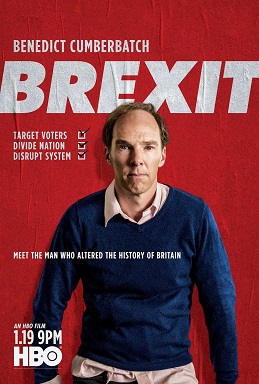
One person who was probably not, in any way, shocked by Leave’s victory was Dominic Cummings, who was the lead political strategist for the Vote Leave campaign.  At least that’s the impression that one gets from watching Benedict Cumberbatch play Cummings in Brexit: The Uncivil War.  

This television film originally aired on Channel 4 and subsequently, it made its American premiere on HBO.  Featuring sharp direction from Toby Hayes and an even sharper script by playwright James Graham, Brexit presents fictionalized accounts of both the Vote Leave Campaign and the Britain Stronger In Europe Campaign, which is led by Craig Oliver (Rory Kinnear).  As the film shows, while the conventional wisdom was that Leave didn’t have a chance, Cummings instinctively grasped what others were missing.  Cummings understood that people across the UK were angry because they felt that they had lost control of their own lives.  They were sick of being told that a bureaucrat in Belgium knew what was better for the UK than the people who actually lived there and who took more pride in being British than in being European.  While Oliver and the Remain campaign relied on the traditional politics that had always worked in the past, Cummings used new techniques (like social media databases) to reach out to people who might not have always voted but whose posts and tweets indicated that they might be open to Leave’s message.

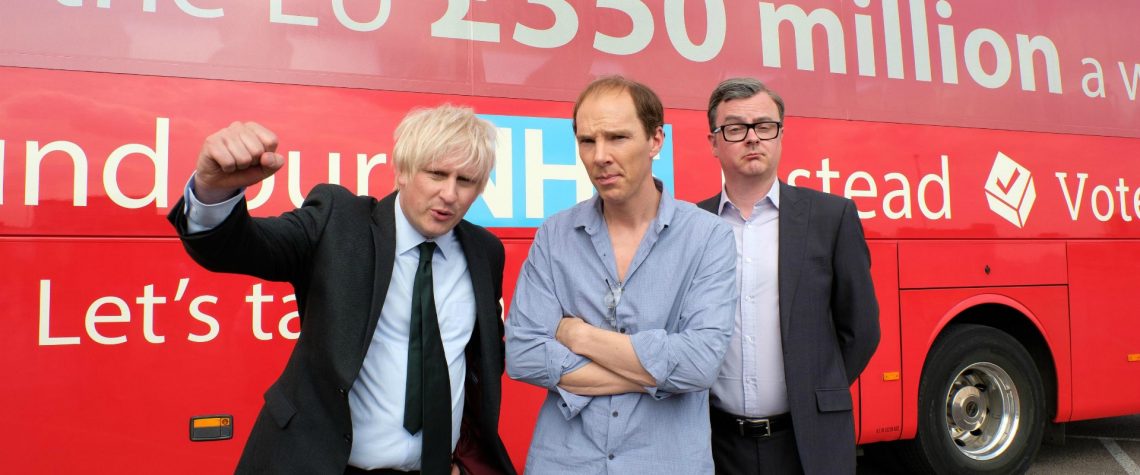
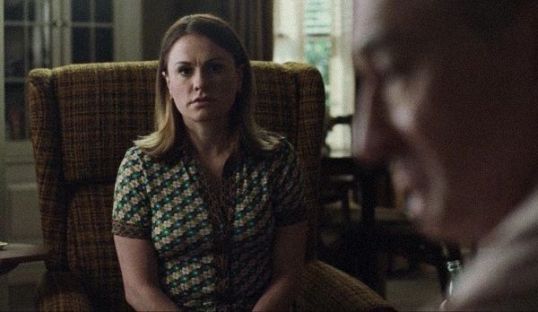
Towards the end of the film, one of Oliver’s focus groups descends into chaos and a woman memorably cries, “I’m sick of feeling like nothing, like I have nothing! Like I know nothing. Like I am nothing. I’m sick of it!”  and, for the first time, Oliver realizes that Leave could win.  By that point, it’s too late.  With Leave’s strength growing every day, the British political establishment has descended into chaos.  Boris Johnson (Richard Goulding) and Michael Grove (Oliver Maltman) both throw their support behind Leave.  After the assassination of Jo Cox, Cummings and Oliver meet for a drink and, in a scene that ranks up there with the famous De Niro/Pacino meeting in Heat, they discuss what will happen if Leave wins.

The meeting between Oliver and Cummings never happened but the accuracy of the majority of the film has been verified by those who were involved in both campaigns.  (Oliver himself served as a consultant to the filmmakers.)  This is the film to see if you want to understand not only why Leave won but also why so many commentators were caught by surprise.  Though it was written by a Remainer and, in one of the film’s few missteps, Nigel Farage is portrayed as being a cartoonishly vapid twit, Brexit is one of the few examinations of the vote to understand why Leave’s “Take Back Control” slogan resonated with so many voters.  Though Brexit may be ultimately sympathetic to the Remain position, it refuses to dismiss the concerns of those who voted for Leave or to commit the sin of painting those voters as merely being uneducated or afraid of progress.  If the Remain campaign had made as much of an effort to understand those voters as the film about the campaign does, the vote may have gone a different way.

(Instead, much of Remain’s supporters reacted to defeat by 1) demonizing the voters and 2) demanding a second referendum so that the same voters could presumably get it right the second time around.  For four years, they said that the UK leaving the EU would be the end of western civilization and that the sky would fall.  As of right now, the sky is exactly where it has always been.)

When this film was produced, Theresa May was still in Number 10 Downing Street and there were real doubts as to whether Brexit would ever happen.  The film is book-ended by fictional scenes in which Cummings is interviewed during a public inquiry.  In these scenes, which were meant to be taking place in what was then the near future of 2020, Cummings insinuates that Brexit is still on hold.  In the real world, though, Brexit is finally happening and Dominic Cummings is currently the Chief Special Adviser to Prime Minister Boris Johnson.


The Irishman and The Lion King Are Honored By The Visual Effects Society


Here are the winners from last night’s meeting of the Visual Effects Society!

Outstanding Visual Effects in a Photoreal Feature
The Lion King
(Robert Legato, Tom Peitzman, Adam Valdez, Andrew R. Jones)

Outstanding Supporting Visual Effects in a Photoreal Feature
The Irishman
(Pablo Helman, Mitchell Ferm, Jill Brooks, Leandro Estebecorena, Jeff Brink)

Outstanding Visual Effects in an Animated Feature
Missing Link
(Brad Schiff, Travis Knight, Steve Emerson, Benoit Dubuc)

Outstanding Visual Effects in a Photoreal Episode
The Mandalorian; “The Child”
(Richard Bluff, Abbigail Keller, Jason Porter, Hayden Jones, Roy K. Cancion)

Outstanding Supporting Visual Effects in a Photoreal Episode
Chernobyl; “1:23:45”
(Max Dennison, Lindsay McFarlane, Clare Cheetham, Paul Jones, Claudius Christian Rauch)

Outstanding Visual Effects in a Real-Time Project
Control
(Janne Pulkkinen, Elmeri Raitanen, Matti Hämäläinen, James Tottman)

Outstanding Visual Effects in a Commercial
“Hennessy: The Seven Worlds”
(Carsten Keller, Selcuk Ergen, Kiril Mirkov, William Laban)

Outstanding Visual Effects in a Special Venue Project
Star Wars: Rise of the Resistance
(Jason Bayever, Patrick Kearney, Carol Norton, Bill George)

Outstanding Animated Character in a Photoreal Feature
Alita: Battle Angel; Alita
(Michael Cozens, Mark Haenga, Olivier Lesaint, Dejan Momcilovic)

Outstanding Animated Character in an Animated Feature
Missing Link; Susan
(Rachelle Lambden, Brenda Baumgarten, Morgan Hay, Benoit Dubuc)

Outstanding Animated Character in an Episode or Real-Time Project
Stranger Things 3; Tom/Bruce Monster
(Joseph Dubé-Arsenault, Antoine Barthod, Frederick Gagnon, Xavier Lafarge)

Outstanding Animated Character in a Commercial
“Cyberpunk 2077”; Dex
(Jonas Ekman, Jonas Skoog, Marek Madej, Grzegorz Chojnacki)

Outstanding Created Environment in a Photoreal Feature
The Lion King; The Pridelands
(Marco Rolandi, Luca Bonatti, Jules Bodenstein, Filippo Preti)

Outstanding Created Environment in an Animated Feature
Toy Story 4; Antiques Mall
(Hosuk Chang, Andrew Finley, Alison Leaf, Philip Shoebottom)

Outstanding Created Environment in an Episode, Commercial, or Real-Time Project
Game of Thrones; The Iron Throne; Red Keep Plaza
(Carlos Patrick DeLeon, Alonso Bocanegra Martinez, Marcela Silva, Benjamin Ross)

Outstanding Virtual Cinematography in a CG Project
The Lion King
(Robert Legato, Caleb Deschanel, Ben Grossmann, AJ Sciutto)

Outstanding Model in a Photoreal or Animated Project
The Mandalorian; The Sin; The Razorcrest
(Doug Chiang, Jay Machado, John Goodson, Landis Fields IV)

Outstanding Effects Simulations in a Photoreal Feature
Star Wars: The Rise of Skywalker
(Don Wong, Thibault Gauriau, Goncalo Cababca, François-Maxence Desplanques)

Outstanding Effects Simulations in an Animated Feature
Frozen 2
(Erin V. Ramos, Scott Townsend, Thomas Wickes, Rattanin Sirinaruemarn)

Outstanding Effects Simulations in an Episode, Commercial, or Real-Time Project
Stranger Things 3; “Melting Tom/Bruce”
(Nathan Arbuckle, Christian Gaumond, James Dong, Aleksandr Starkov)

Outstanding Compositing in a Feature
The Irishman
(Nelson Sepulveda, Vincent Papaix, Benjamin O’Brien, Christopher Doerhoff)

Outstanding Compositing in an Episode
Game of Thrones; “The Long Night”; “Dragon Ground Battle”
(Mark Richardson, Darren Christie, Nathan Abbot, Owen Longstaff)

Outstanding Compositing in a Commercial
“Hennessy: The Seven Worlds”
(Rod Norman, Guillaume Weiss, Alexander Kulikov, Alessandro Granella)

Outstanding Special (Practical) Effects in a Photoreal or Animated Project
The Dark Crystal: Age of Resistance; “She Knows All the Secrets”
(Sean Mathiesen, Jon Savage, Toby Froud, Phil Harvey)

Outstanding Visual Effects in a Student Project
The Beauty
(Marc Angele, Aleksandra Todorovic, Pascal Schelbli, Noel Winzen)
Ghosts of Sundance Past #3: Crown Heights (dir by Matt Ruskin)


The 2017 film, Crown Heights, tells the story of two friends and a miscarriage of justice.

In 1980, a 19 year-old Trinidadian named Colin Warner (Lakeith Stanfield) is arrested in the Crown Heights neighborhood of Brooklyn.  Taken down to the police station, Colin is told that he has been arrested for the murder of Marvin Grant, a man who he has never heard of.  When Colin says that he is innocencent, he’s informed that eyewitnesses saw him at the scene of the crime.  Though he continues to protest his innocence, Colin is transferred to a jail where he is to await his trial.

From the start, it’s obvious that Colin didn’t have anything to do with the shooting of Marvin Grant.  What’s messed up is that the people prosecuting him know it as well.  When another prisoner tell the detectives the name of the man who actually committed the murder, his statement is ignored because he refuses to name his source.  When one of the prosecution’s witnesses testifies that he saw someone other than Colin fire the gun, the prosecutor “corrects” his witnesses’s testimony in open court. After the jury returns a guilty of verdict for Colin and another man, the judge says that he can’t be sure whether or not Colin is guilty but that he can only follow the law.  And the law says that, as an adult convicted of a crime, Colin is going to spend the rest of his life in prison.  No one in the legal establishment cares that Colin is obviously not guilty.  He’s a young black man with a minor criminal history and, by convicting him, the police can close one homicide investigation and move on to the next one.

In prison, Colin finds himself isolated, both literally and figuratively.  When he refuses to get involved with any of the prison gangs, the other prisoners shun him and he finds himself being targeted.  When a prison guard pushes Colin until Colin finally snaps and throws a punch, Colin ends up spending two years in solitary confinement.

Meanwhile, on the outside, Colin’s best friend, Carl King (Nnamdi Asomugha), attempts to prove that his friend is innocent.  That proves to be even more difficult than Carl initially expects.  No one is interested in reopening a closed case and Carl can’t even afford a good attorney to help him pursue Colin’s appeal.  Still, Carl never gives up.  He even trains to become a process server so that he can have an excuse to hang out at the court house and hopefully meet a lawyer who will be willing to take on Colin’s case.  Amazingly, that’s exactly what happens.

Of course, by this point, Colin Warner has been in prison for 20 years….

Based on a true story, Crown Heights was a hit at the 2017 Sundance Film Festival, winning the Audience Award for the U.S. Dramatic Film competition.  Watching the film, you can easily see why it was such a crowd pleaser.  Not only does the film deal with serious issues of race and economic disparity but, when watching the film, it’s impossible not to be moved by the strength of Carl and Colin’s friendship.  Despite all of the difficulties that are placed in front of him, Carl never gives up in his quest to prove Colin’s innocence and get him out of prison.  The film works as both a cry for freedom and a celebration of friendship.

The film’s execution is not quite as strong as its message.  Matt Ruskin’s direction occasionally veer towards made-for-TV (or, at the very least, made-for-HBO) territory and the film’s constant switching back and forth between Colin in prison and Carl searching for witnesses sometimes seems to prevent either storyline for really maintaining a consistent momentum.  20 years is a long time to cover in just 90 minutes and sometimes, it’s hard not to feel as if important parts of the story have been left out or, at the very least, glossed over.  That said, it’s a heartfelt film and it’s blessed with two wonderful lead performances from Lakeith Stanfield and Nnamdi Asomugha.

Crown Heights is not a perfect film but the story and the performances are powerful enough to make you think and to leave you moved.