After School (1988, directed by William Olsen)


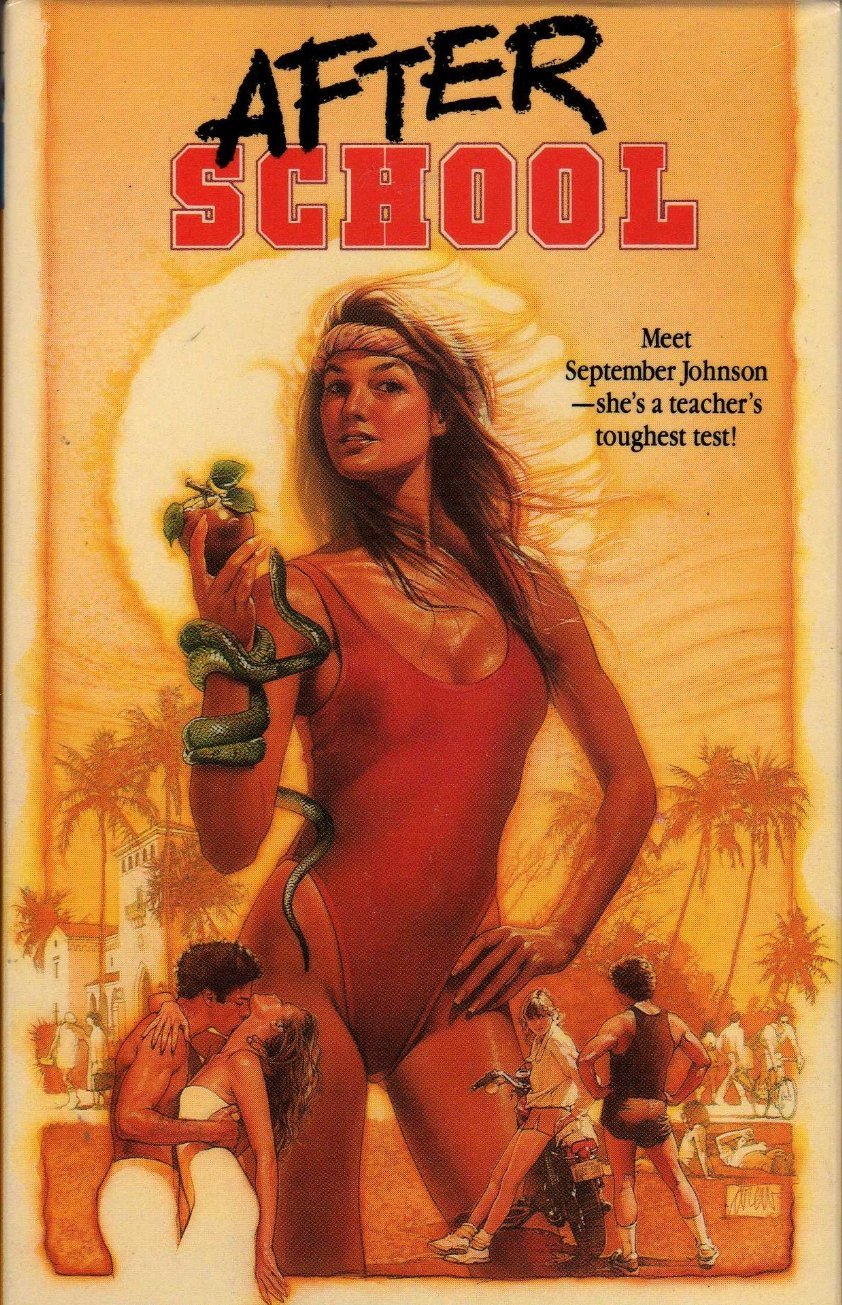
After School is a strange “what were they thinking?” type of movie.  It’s also probably the only movie to end with a religious debate that’s moderated by Dick Cavett.

Cavett plays himself.  In this film, he still has a talk show and one of his guests is going to be C.A. Thomas (Robert Lansing), a former priest who has written a novel claiming that man created God and not the the other way around.  Cavett has reached out to the Catholic Church to ask them to send someone to represent their views on the show.

For reasons that are never clear, the Church selects Father Michael McClaren (Sam Bottoms), who teaches at a college in Florida.  Father McClaren is youngish and he rides a motorcycle, which the monsignor thinks will appeal to younger viewers of Cavett’s show.  (Did The Dick Cavett Show have younger viewers?)  Because Dick Cavett is legendary for investigating the pasts of all of his guests (that’s what they say in the movie, anyway), another priest is sent down to Florida to make sure that Father McClaren does not have any skeletons in his closet.

At first, Father McClaren seems to be perfect but it turns out that he’s having a crisis of faith.  It’s not just that the local bikers don’t have much respect for a priest, even when who does ride a bike.  It’s also that he’s become attracted to one of his students, the improbably-named September Lane (Renee Coleman).  It doesn’t take the movie long to settle into a familiar pattern of September coming on Father McClaren and then Father McClaren having to run off so that he can pray for strength.

So far After School might sound like a typical movie about a priest being tempted to break his vows.  However, what sets After School apart from other films of its type is that there are frequent scenes featuring a group of cavemen living in prehistoric times.  It’s never really made clear why the cavemen are in the film.  The main caveman yells a lot and there’s a scene with a snake that suggests that he might live in the Garden of Eden.  (The movie was originally released under the title Return to Eden.)  There’s also several naked cavewomen who are in the film so that they can be ogled by the cavemen.  Oddly, the cavepeople scenes are full of broad comedy while the rest of the movie takes itself fairly seriously.

Why are the caveman there and what does it have to do with Dick Cavett?  Who knows?  That’s one of the many unanswered questions to be found in After School.  When C.A. Thomas and Father McClaren do finally meet on the Dick Cavett Show, they debate the origins of mankind.  Neither one has nothing new to say on the subject.  Even though everything that C.A. Thomas says sounds like New Age gobbledygook, Father McClaren proves himself to be incapable of countering him.

I don’t know what the point of After School was.  There were so any scenes, like one in which Father McClaren attends an aerobics class, that didn’t seem to have any purpose.  September’s lust for Father McClaren never makes any sense and his sudden declaration of love makes even less.  Even if you can make sense of all that, there’s still the cavemen and Dick Cavett to deal with.

After School thinks that it is about something but who knows what?
4 Shots From 4 Films: Special Lance Henriksen Edition


4 Shots From 4 Films is just what it says it is, 4 shots from 4 of our favorite films. As opposed to the reviews and recaps that we usually post, 4 Shots From 4 Films lets the visuals do the talking!

Today, Lance Henriksen is 80 years old!  In honor of this day, here are….

4 Shots From 4 Films

Dog Day Afternoon (1975, dir by Sidney Lumet)

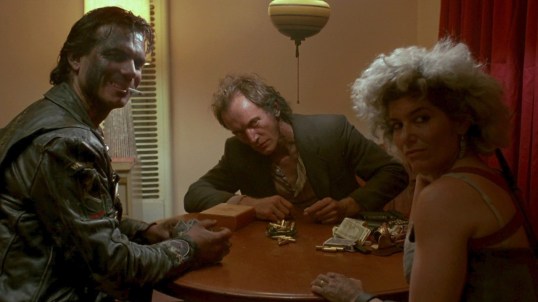
Near Dark (1987, dir by Kathryn Bigelow)

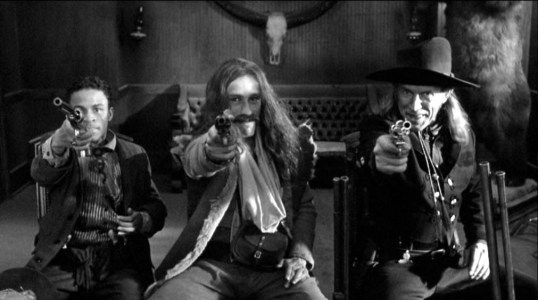
Dead Man (1995, dir by Jim Jarmusch)

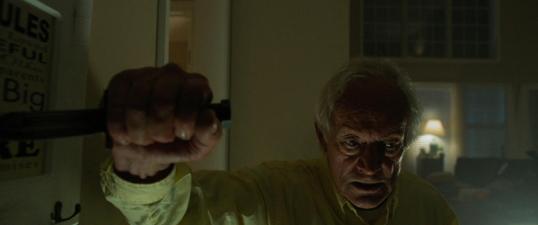
Mom and Dad (2017, dir by Brian Taylor)

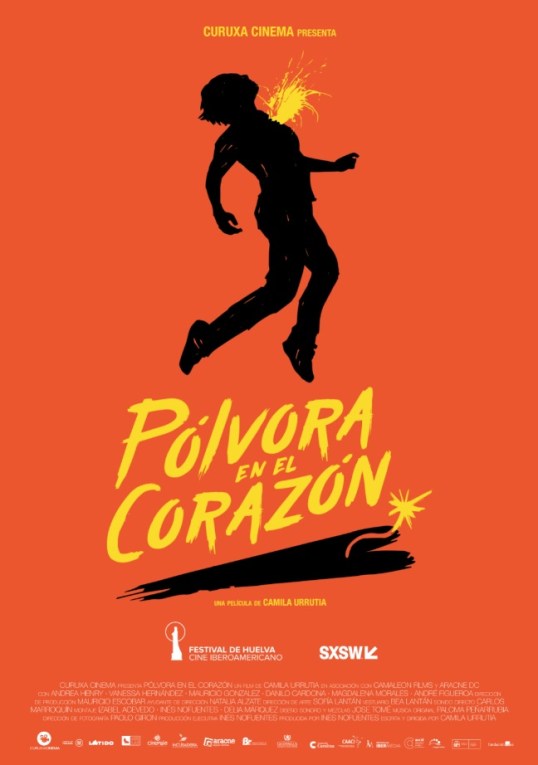
SXSW 2020 Review: Gunpowder Heart (dir by Camila Urrutia)


Also known as Pólvora en el corazón, Gunpowder Heart is a raw and angry film from Guatemala.

Set (and filmed in) Guatemala City, Gunpowder Heart tells the story of two girlfriends.  Claudia (Andrea Henry) is the calmer of the two and works at a call center, where she says that she spends almost all of her time talking to “gringos.”  Maria (Vanessa Hernandez) is the more emotional of the two.  Whereas Claudia always seems to be holding back, Maria is in constant motion.  She lives in a dilapidated house with her mother.

One night, when Claudia and Maria go to a local carnival, Maria reveals to Claudia that she’s carrying a gun for their protection.  From what we’ve seen of Guatemala City, it seems like Maria has a point.  The streets — or at least, the streets in the neighborhoods in which this film takes place — are filthy.  The walls are covered in graffiti.  The police who patrol those streets often appear to be more dangerous and menacing than the criminals from which they’re supposed to be providing protection.  From the minute that we see Claudia riding her motorcycle through the streets of the city, there’s an ominous atmosphere of unease that just grows heavier and heavier as the film progresses.

However, Claudia does not want Maria to carry a gun and, when Maria isn’t looking, Claudia takes the gun and hides it from her.  Later that night, as they leave the carnival, Maria and Claudia are attacked by three men who force the girls to strip and then sexually taunt and abuse them.  It’s only the arrival of a clueless security guard that gives Claudia and Maria the chance to escape.

Angry that she didn’t have a weapon to protect herself, Maria manages to find the gun.  Maria is determined to use that gun to get revenge.  However, it turns out that getting revenge is not as easy as it may appear to be in the movies.  Maria’s plan is a messy and disorganized one and Claudia finds herself torn between her desire for vengeance and her knowledge that there’s no way things are going to end well.  Perhaps not surprisingly, it all leads to disaster and tragedy.

As I said at the start of this review, Gunpowder Heart is a raw and angry film, one that seems to be conflicted about whether or not to embrace Maria’s fury or to tolerate Claudia’s caution.  (That’s a conflict that many in the audience will share as well.)  Using the techniques of cinéma vérité, Gunpowder Heart put you right in the middle of Maria and Claudia’s shared existence.  The camera never stops moving, perfectly mirroring not only the anxiety of their lives but also the anxiety of those of us watching the two of them.  Throughout the film, Maria talks about leaving Guatemala.  She says that she wants to go to Europe and then later to America.  But, ultimately, there is no easy escape from the reality of what it means to be a woman (especially a woman who identifies as being queer) in a society controlled by violent and entitled men.

It’s a rough film and probably one that won’t appeal to everyone.  By refusing to come down firmly on the side of either Maria or Claudia, the film will probably alienate those who like their films to have a clear cut point of view.  As some reviewers have pointed out, we don’t learn much about who Maria and Claudia were before that night but I would argue that who they were before doesn’t matter.  From the moment that they’re assaulted outside of the carnival, Maria and Claudia’s old life ends and their new one begins.

Blessed with two brave and outstanding lead performances from Andrea Henry and Vanessa Hernandez, Gunpowder Heart is a powerful and anxiety-filled film.  It’s currently available to be viewed, for a limited time, on Prime.

Scenes That I Love: Audrey Hepburn Says Goodbye to Buddy Ebsen in Breakfast at Tiffany’s


Wow.  I am really running behind!  I nearly let this day come to an end without paying tribute to the amazing Audrey Hepburn.  Hepburn was born 91 years ago, on May 4th, 1921 in Belgium.  She went on to become one of history’s best actresses, as well as a role model for us all.  It’s not every actress who could say that she was also an active member of the anti-Nazi Dutch resistance during World War II.  After she became famous and could have very easily gotten away with turning her back on the world, Hepburn continued to make a name for herself as a humanitarian, working as Goodwill Ambassador for UNICEF.

In honor of her birthday, here’s a wonderfully acted scene from 1961’s Breakfast at Tiffany’s.

Missile to the Moon (1958, directed by Richard E. Cunha)


At a secret laboratory located just a few miles from the local prison, scientist Dirk Green (Michael Whalen) is working with Steve Dayton (Richard Travis) to build a missile that’s capable of flying to the Moon.  Dirk’s obsession about traveling to the moon is not just scientific.  Dirk is secretly from the Moon himself and is desperate to return.

Dirk gets his opportunity when two convicts escape from the prison and hide out in his rocket.  Dirk agrees not to turn Gary (Tommy Cook) and Lon (Gary Clarke) over to the authorities but only if they agree to help him fly the rocket to the Moon.  It turns out that it doesn’t take any special training to fly a rocket.  According to this film, you don’t even have to worry about oxygen in space.  Anyone can travel to the Moon, even two escaped convicts who have only had about an hour’s worth of instruction in how to pilot a rocket!  Gary and Lon agree because dying in space is preferable to serving out a prison sentence.

Once Dirk, Gary, and Lon are in space, they discover that Steve and his fiancee, June (Cathy Downs), have stowed away on the ship.  Gary takes a liking to June but Steve tells him to back off.  After a journey through a meteor field, the missile finally lands on the Moon, which is ruled over by The Lido (K.T. Stevens), a beautiful woman who enforces order through the help of a giant spider.

This afternoon, Lisa and I watched Missile to the Moon because today is May 4th, which is also known as Star Wars Day.  (May the 4th be with you, get it?)  Since every Star Wars film has already been reviewed on this site, I had to find a different science fiction film to review for today.  And because Lisa claimed Starcrash for herself, I got stuck with Missile to the Moon.

Missile to the Moon is science fiction with an emphasis on the fiction.  In this film, space travel is easy and certain parts of the moon have a breathable atmosphere.  Not to mention, of course, that there are all sorts of creatures living on the Moon.  It’s easy to laugh at Missile to the Moon today but this movie was made before anyone had ever set foot on the Moon so, for all people knew, there could have been aliens and giant spiders living underneath the surface.  In fact, maybe there still are.  It’s been a while since anyone went up there and checked.

The main thing I liked about Missile to the Moon was the implication that anyone, no matter how dumb, can learn how to fly a spaceship in under an hour.  That’s what we all believed when we were kids.  Want to go into space?  Just put me in the pilot’s seat, show me where the booster button is, and let’s go into hyperspace!  The other thing I liked about the movie is that the Moon was populated by attractive belly dancers.  That’s exactly what you want to find on another planet.  The paper mache spiders were pretty cool too.

It’s a dumb movie but I enjoyed it.  I’d rather go to the movie’s Moon than the real Moon.

SXSW 2020 Review: Broken Orchestra (dir by Charlie Tyrell)


In the 13-minute documentary, Broken Orchestra, a camera glides through a deserted high school in Philadelphia, moving down hallways and up stairwells and occasionally entering into classrooms that are full of broken-down instruments.  Throughout the high school, there are television sets and, on each television, a different persons talks about being a part of the Broken Orchestra.

At a time when the schools of Philadelphia (which, we’re told, is the poorest big city in America) were struggling, budget cuts were leading to the cancellation of music programs.  Those programs that managed to survive often had to make due with damaged instruments.  Because students were having to use damaged tools, they often couldn’t play the type of music that they wanted create.

When a huge amount of damaged instruments were found in an abandoned high school, the Broken Orchestra was born.  The all-volunteer orchestra played on those instruments and proved that even a damaged instrument could be used to make unique music and, in much the same way, greatness can even come out of a damaged school or a damaged city.  Even a damaged instrument still has something to say.  Even a damaged instrument is still worth listening to.

It’s certainly in inspiring story and one that also makes a good argument for funding music and other artistic programs.  Everyone who discusses their part in the Broken Orchestra was obviously touched by the experience and it’s impossible not to get swept up in their emotions.  If I do have a complaint, it’s that I wish we had heard a bit more of the orchestra but still, it’s an inspiring story.

May the 4th Be With You: Star Wars Thoughts


Today is May 4th, which is known to some people as being Star Wars Day.  (May the 4th be with you.  Get it?)  I love the original Star Wars movies, even if Return of the Jedi deserves its less than stellar reputation.  The first three prequels I could do without, even though Revenge of the Sith was actually fairly good.  Of the three sequels, The Force Awakens was good.  The Last Jedi and The Rise of Skywalker were both overstuffed and forgettable.  Solo was adequate.  I liked Rogue One.  It was the only one of the new films to really seem to get what Star Wars was all about.

If I had to rank them all, I think it would go something like this:

  1. The Empire Strikes Back
  2. Rogue One
  3. New Hope
  4. The Force Awakens
  5. Revenge of the Sith
  6. Return of the Jedi
  7. Solo
  8. The Rise of Skywalker
  9. The Last Jedi
  10. Attack of the Clones
  11. The Phantom Menace

I’m not going to rank the two Ewok movies or The Holiday Special.  You have to draw the line somewhere.

Looking over the franchise as a whole, I think Star Wars shows the danger of overexplaining.  In a New Hope, it didn’t matter whether or not we actually knew what the Kessel Run was or the exact details of The Clone Wars.  They just sounded cool and they sparked our imaginations.  We also didn’t know how the Empire came to exist or how Darth Vader could be both Luke and Leia’s father.  We didn’t know how the Force worked, exactly.  Nor did we know the exact details of how the Jedi were wiped out.  We really didn’t need to know.  We just accepted what the films told us and then let our imaginations fill in the missing pieces.

Then the prequels came along and suddenly, we discovered that everyone in the Star Wars universe was obsessed with trade routes and suddenly, The Clone Wars lost all of their mythic grandeur as we learned, in pain-staking details, every reason why the wars began and how they ended.  They just became another collection of CGI space battles.  And then Solo showed us the Kessel Run and we discovered that it really wasn’t anything that special.  Probably the only prequel (and sequel) that didn’t diminish the other films was Rogue One.  In fact, Rogue One brought some of that epic grandeur back to the films.  With its scenes of Death Star destroying entire cities and planets, it actually made A New Hope more effective.  After watching Rogue One, it’s not as easy to mock the Empire’s super weapon.

Today’s big news is that Taika Waititi will be directing the latest Star Wars film.  Waititi was the first director to actually understand what to do with Thor (who, up until Thor: Ragnarok, had been Marvel’s least interesting hero) and, of course, he also directed JoJo Rabbit.  My hope is that Waititi will be given the freedom to bring some new life to Star Wars.  I think he’s capable of bring some wonder back to a universe that could definitely use it.

May the force be with him.

SXSW 2020 Review: Blocks (dir by Bridget Moloney)


I have to admit that, when it comes to people spitting things up, I’m kind of a wimp.  It’s something that I typically have a hard time watching.  It’s one reason why, in college, I usually left the room if someone had too much to drink.  I seriously didn’t want to be there when that person started throwing up a combination of beer and nacho cheese.  I mean, bleh!

So, Blocks was not always easy for me to watch.  Blocks is a 12-minute comedy about Ashleigh (Claire Coffee), the mother of two young children who, one day, starts to vomit up toy blocks.  Now, fortunately, the film doesn’t get particularly graphic when it comes to the vomiting.  Usually, we only see the aftermath, which is often Claire lying on the floor, exhausted and surrounded by toy blocks while her children (and sometimes, her husband) knock on the bathroom door and demand to know why she’s not spending time with them.  Ashleigh can’t tell anyone about the toy blocks, of course.  She just pretends like the family has always owned the toy blocks that are mysteriously appearing around the house.  Her children refuse to play with them.  Eventually, Ashleigh finds a use for them.

As I said, I’m a wimp when it comes to people vomiting but still, Blocks was a well-done and frequently funny film.  In her introduction to the film, director Bridget Moloney says that the film was based on her own feelings and experiences as a mother and I think anyone who has ever been stuck in a house with two hyperactive, inquisitive kids will be able to relate to Ashleigh’s feeling of being overwhelmed.  Before I watched Blocks, I was going through one of my “I really want to start a family now!” phases.  Having watched it, I now think that maybe I should wait a year or two because, seriously — if I can’t handle someone vomiting legos, I don’t know how I’ll be able to handle all of the disgusting stuff that toddlers do.

Blocks, like many other films that were going to be shown at this year’s SXSW festival, is currently available on Amazon for a limited time.

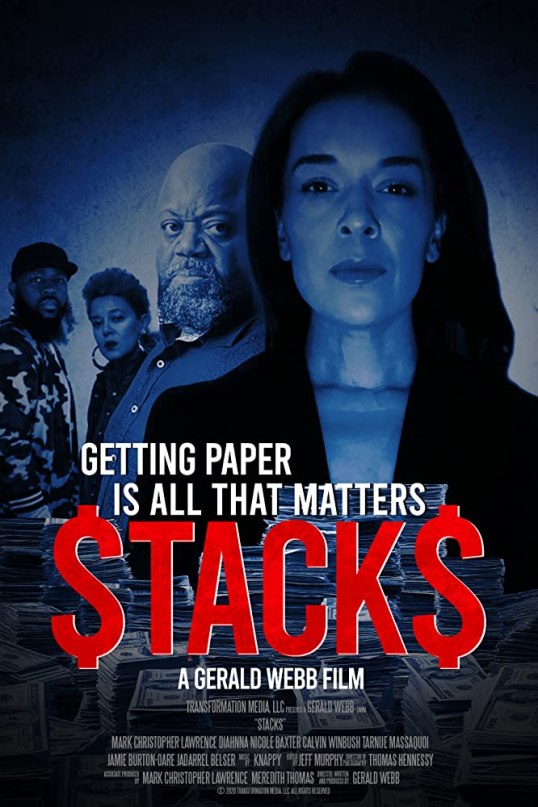
Short Film Review: $tack$ (dir by Gerald Webb)


Sometimes, you have to laugh.

That may seem like odd advice to give at this moment in history because, right now, there’s a lot of people who are convinced that we’ll never share a joke or a smile again.  They look at the news about the spread of COVID-19 and the empty grocery store shelves and everything else that’s going on and they say to themselves, “Laughter is dead.”  Of course, what they’re failing to understand is that often, it’s laughter and comedy that help people survive tough times.  It’s much easier to deal with a problem if you laugh at it first.  Sacrificing one’s sense of humor is the first step towards surrender and surrendering is not what we, as a people, are about.

The 7 and a half-minute short film, $tack$, opens with a familiar cinematic situation.  Two men are in an underground garage, standing next to their car and waiting for someone else to arrive.  They exchange a few words, the type of tough guy talk that we’ve heard in countless crime films.  Both of them are armed.  Both of them know that the situation is serious.  Both of them are ready for whatever happens.

Another vehicle pulls up and more people get out.  More guns are displayed.  A sell is being made.  The second group of people is assured that they’re getting the best, “pure white.”

As I said, it’s a situation that we’ve seen in countless crime films but this one has a humorous COVID-19 inspired twist, one that I will not spoil here.  It’s a clever little twist, though and it’s one to which everyone — and I do mean everyone — will be able to relate.  Making his directorial debut, Gerald Webb plays the action straight, even when $tack$‘s main joke is revealed.  The audience may laugh but, to the characters in the film, there’s nothing more important than the business transaction being conducted in that underground garage.  And really, who can blame them?

A rap and a music video play over the end credits, on that not only details the hardships of living in the COVID-19 era but which also pays tribute to all of the essential workers on the front lines, which is a nice touch.  If nothing else, it’ll make you feel better about the times that we’re living than watching a hundred “this is the new normal” brand name commercials will.

Be sure to track down $tack$.  It’ll make you laugh and that’s an important thing right now.

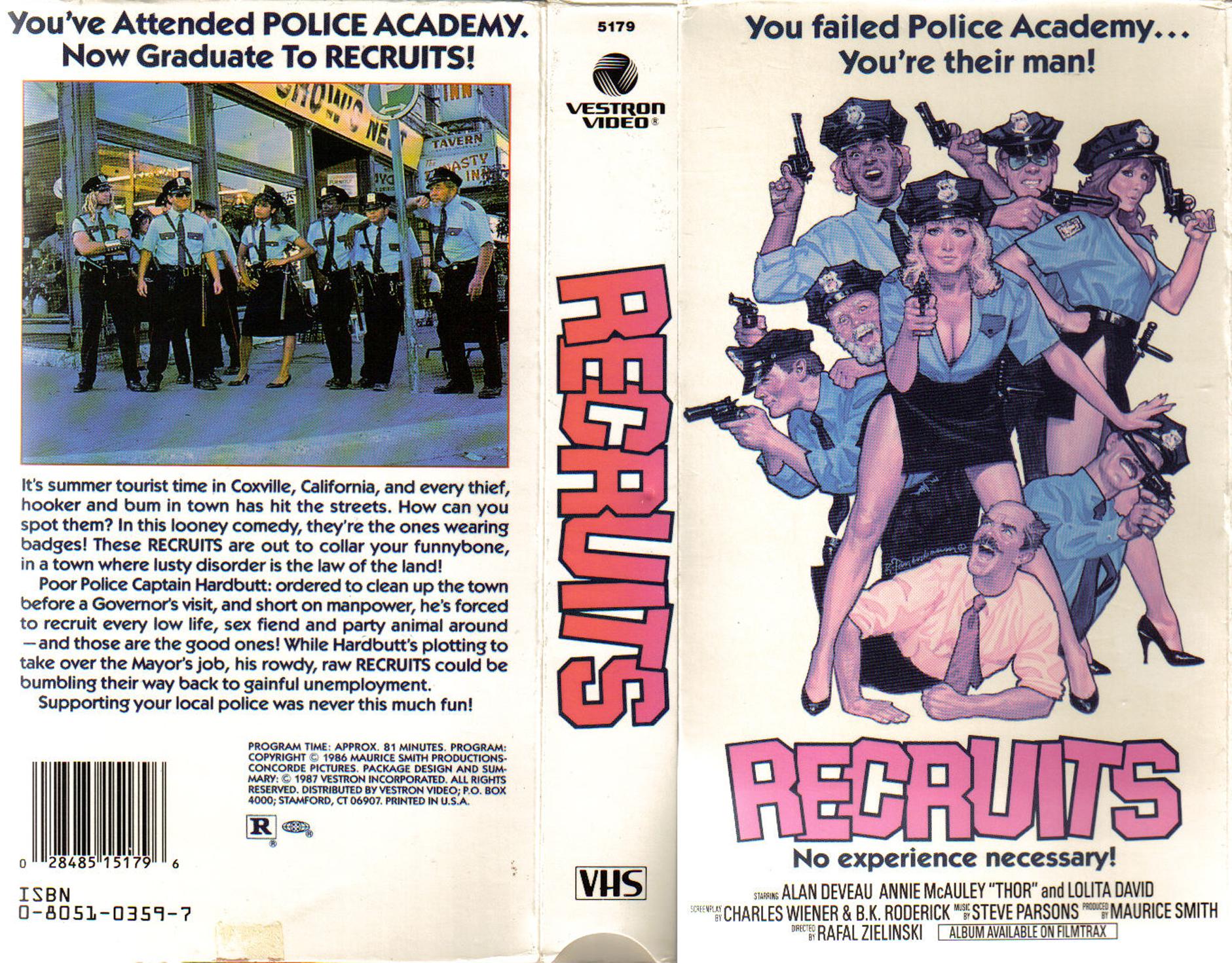
Recruits (1986, directed by Rafal Zielinski)


Stop me if this sounds familiar.

The governor of Californa is planning on visiting the small town of Corvette so that he can announce the opening of a new highway.  The mayor is concerned that the town’s small police force might not be big enough to handle all of the pomp and drama that goes along with an executive visit.  He orders Captain Magruder (Mike McDonald) to lower the department’s standards and to recruit civilians off the street so that they can quickly be trained to become police officers.  Magruder starts by going to down to the jail and recruiting for low-level offenders.

If you think this sounds a lot like Police Academy, you’re absolutely right.  Just as Police Academy was pretty much a rip-off of Stripes, Recruits is a rip-off of Police Academy.  Once again, the recruits are a lovable gang of misfits who screw up big time before getting a chance to prove that they have what it takes to be real cops.  There’s the usual beach patrol scenes, a lot of nudity, and one manic nerdy recruit whose antics would inspire even Jerry Lewis to say, “Tone it down a little.”  However, there is a major difference between Recruits and Police Academy.  In Recruits, there is no lovable Commandant Lassard.  Instead, Captain Magruder wants the recruits to fail because he’s hoping that the governor will fire the mayor and appoint Magruder in his place.  I’m not sure that’s how municipal politics actually works but maybe it’s just a California thing.

As far as brainless rip-offs of movies that weren’t particularly good to begin with go, Recruits isn’t that bad.  The humor is even more juvenile here than it was in Police Academy and trying to apply too much logic to the plot will make your brain hurt but it’s a breezy 90 minutes and it’s got a game cast, a few of whom went on to better things.  (Lolita Davidovich, for instance, is the recruit who ends up naked in a limo that turns out to belong to the governor.)  Jon Mikl Thor made his feature film debut as a recruit named Thunderhead and he gets to battle a bunch of outlaw bikers while one his songs plays in the background.  It’s a pretty cool scene.  If you’re nostalgic for these types of unapologetically dumb comedies, Recruits will satisfy that nostalgia.