May Positivity: Never Ashamed (dir by Edward T. McDougal)


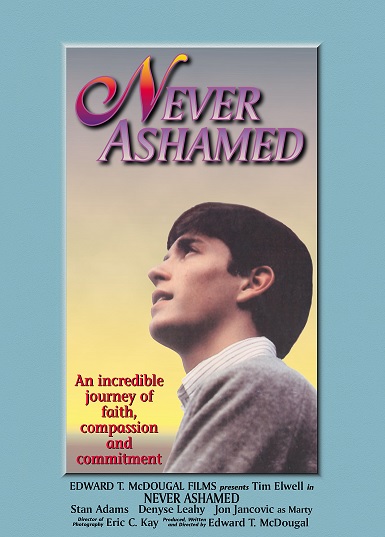
The 1984 film, Never Ashamed, gets off to a lawles start with two teenagers, Tim Hughes (Tim Elwell) and Marty Sullivan (Jon Jacovic) stealing an ice cream truck.  Even though the ice cream man yells at them that he owns the truck and that he needs it for his job, Tim and Marty take off with it.  They speed down the street.  They play the ice crea, music.  They toss out the ice cream.  And, eventually, they get stopped by the police.

Tim’s father, a liberal talk show host named Sid Hughes (Stan Adams), thinks that Tim is just being a normal, out-of-control teenager.  Tim’s mother (Denyse Leahy) is far more concerned and she suggests that perhaps Tim should attend a special summer camp for juvenile delinquents.  Sid is not happy to hear that it’s a Christian summer camp.  (At one point, we see Sid getting upset when Ronald Reagan gives a speech about prayer in school so we know how Sid feels about religion.)  However, Sid finally gives in.

This is followed by a montage of Tim doing summer camp stuff.  For me, not being a camp-type of person, the montage was horrifying.  I cringed at all of the canoeing, the playing, the laughing, the singing, and all the rest.  It was a montage of happiness but all of the smiles seemed a bit too wide and calculated.  To be honest, it reminded me of the type of activities that were used to brainwash Nick Mancuso in Ticket to Heaven and Michael O’Keefe in Split Image. 

Still, Tim has a great time and, when his parents pick him up from camp, Tim announces that he’s now a Christian.  Sid is horrified and starts talking about Jim Jones and the People’s Temple.  Tim’s old friends are astonished, especially Marty.  Marty is not happy when Tim starts hanging out with a new crowd at school.

Here’s the thing.  We’re supposed to like Tim’s new friends but, honestly, Marty does kind of have a point.  Tim’s new friends are so bright and cheery and perfect and well-behaved that they really do come across as being a little creepy.  And when Marty says that he wants to be able to spend some time with his oldest friend without having a bunch of strangers following them around, Marty again has a point.  At times, it seems as if Tim’s new friends really do expect him to spend every waking moment with them.  If Tim’s not going to their study group, then he’s going to the “Christian car wash.”  When Marty says, at one point, that he really needs to talk to Tim about some problems that he’s having in his life, Tim’s response to tell him to come to church with Tim and his new friends.  Marty gets upset about that and again, it’s hard not to feel that he has a point.  Marty needs someone to talk to and it wouldn’t kill Tim to have a sincere, one-on-one conversation with Marty.  If Tim wants to invite Marty to church after that conversation, there’s nothing wrong with that.  But, at that moment, it was obvious that Marty needed to feel that he was more to Tim than just another invitee.

Marty feels that he has a lot to be upset about.  He runs for junior class president on a platform of parties and drugs but he loses to the nerdy and boring Wayne, who is one of Tim’s new friends.  Marty doesn’t feel close to his family.  His grades are slipping.  His best friend is pretty much ignoring him.  Marty is supposedly a drug dealer who regularly goes down to Mexico to pick up cocaine.  While Marty is definitely a bit cocky and irresponsible, there’s absolutely nothing about him that suggests he’s the type to sneak across the borders with bricks of cocaine in a duffel bag and I was shocked when I discovered that the movie was actually being serious about that.  In a surprisingly well-directed sequence, Marty has his friends toss firecrackers at the Christian car wash while he sneaks into the church and steals some money.

Never Ashamed is only 64 minutes long.  It’s obviously one of those films that was made specifically to be viewed by church youth groups.  It’s definitely a product of its time and, in the end, it is perhaps most interesting as a time capsule.  I imagine that watching this film is the equivalent of stepping into a time machine and setting the destination for 1984.  (“You look like Scott Baio!” one of Tim’s new friends excitedly tells him.)  It’s a sincere film but, at the same time, it’s also a film that is very much about preaching to the choir.  As happy as Tim and his new friends are, I think most people would feel that Marty seems like he would be more fun to hang out with.
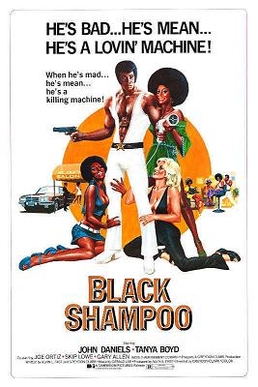
The TSL Grindhouse: Black Shampoo (dir by Greydon Clark)


The 1976 film, Black Shampoo, tells the story of Mr, Jonathan (played by an expressionless actor named John Daniels).  Mr. Jonathan is the hottest hairstylist on the Sunset Strip.  Rich women flock to his salon so that Mr. Jonathan can do their hair and, as the first scene in the film makes clear, do a lot more as well.  Black Shampoo begins with a wash and rinse that soon leads to Mr. Jonathan’s client saying, “It is bigger and better!” while the singers on the film’s funk-heavy soundtrack tell us that, “He’s a real man.”

Mr. Jonathan is so popular that the women who come into his salon are visibly upset if they’re told that their hair will be done by Mr. Jonathan’s two associates, Artie and Richard.  “Artie doesn’t have the right equipment!” one woman exclaims while another complains, “My hair’s a mess …. I haven’t had my hair done in over a month.”  Fortunately, helping to keep the place running is Mr. Jonathan’s new administrative assistant, Brenda St. John (Tanya Boyd).  In fact, Mr. Jonathan could even see himself settling down with Brenda.

Unfortunately, Brenda is the ex-girlfriend of a white gangster named Mr. Wilson (Joe Ortiz).  And Mr. Wilson is determined to get Brenda back, even if it means sending two of his thugs down to Mr. Jonathan’s and messing the place up.  It’s easy for them to vandalize the salon and to harass Artie and Richard because Mr. Jonathan hardly ever seems to be there.  He’s always either visiting a client at home or taking part in a falling in love montage with Brenda.  When Brenda is kidnapped, Mr. Jonathan falls into a deep depression.  Eventually, though, Mr. Jonathan realizes that he has to rescue Brenda and retrieve the black book that proves that Mr. Wilson is a crime lord.  Fortunately, Mr. Jonathan is as handy with a chainsaw as he is with a hair blower.

Ugh.  This film …. I mean, to be honest, the movie seems like it’s going to be fun when it starts.  Yes, the acting is terrible and the dialogue is risible but it’s such a 70s film that I assumed it would be kind of fun.  And there are some enjoyably silly moments, like the whole falling in love montage.  But, as the film progresses, the violence and the film’s overall tone just gets uglier and uglier.  That, in itself, is not a problem.  In fact, you could argue that violence should be ugly because it’s violence.  But, in the case of Black Shampoo, too much of that ugly violence is played for titillation.  When Mr. Wilson threatens to sodomize a character with a curling iron, the film seems to take a certain delight in Mr. Wilson’s sadism.  The film is certainly not on the side of the poor guy who is being threatened.  Instead, it feels like the film is saying, “Do you think will show this happen or do you think will cut to another scene?  Keep watching to find out!”  It’s gross.

It would help if Mr. Jonathan were himself an engaging character but John Daniels’s performance in painfully dull.  He has a definite physical presence, though he definitely looks a lot better on the film’s poster than he does in the actual movie.  But, when he has to deliver dialogue or show emotion, he’s so awkward that it’s like staring at a brick wall and waiting for it to do something.  As a character, Mr. Jonathan should be someone who moves with a certain confidence and swagger.  John Daniels usually seems like he’s more busy trying not to look straight at the camera.

On the plus side, everyone’s hair looks beautiful.

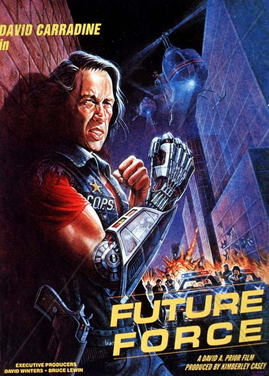
Future Force (1989, directed by David Prior)


The time is the future, which looks a lot like 1990s Los Angeles.  Because of out of control crime, the police have been deemed useless and have been defunded.  (Like that could ever happen in real life!)  Seeing a need and a decent profit margin, private enterprise has stepped up.  The law is enforced by C.O.P.S., which stands for Civilian Operated Police Systems.  Not held back by the Constitution or any oversight at all, C.O.P.S. has become just as corrupt and dangerous as the criminals that it battles.  When a reporter named Marion (Anna Rapagna) threatens to do a story about the out of control C.O.P.S., the head of the company hacks the justice system and puts out a warrant for Marion on the charge of treason.  Because of the seriousness of the charge, the bounty hunters of C.O.P.S. don’t have to bring her in alive to get paid.  In fact, they are encouraged to bring her in dead.

Tucker (David Carradine) is weary and disillusioned member of C.O.P.S. but he is still enough of an idealist that he wants to arrest Marion without killing her.  When he discovers that Marion is being set up, Tucker goes out of his way to protect her from the evil Becker (Robert Tessier) and all the other C.O.P.S.  It turns out to be pretty easy because Tucker is apparently the only members of C.O.P.S. who isn’t terrible at his job.   Helping Tucker out is a wheelchair-bound hacker named Billy (D.C. Douglas) and a robotic glove that can shoot laser beams.

A Robocop rip-off that lacks that film’s satiric bite, Future Force takes place in a future where everyone drives cars from the 70s and where every bar is a strip club that looks like it could have been used in the type of movies that used to show up on late night Cinemax.  It’s a future of empty warehouses, deserted streets, and fires in trash cans.  Robot glove aside, the movie’s future is unconvincing even by the standards of 1989.  There’s a lot of car chases and strange gunfights where no one seems to be aiming at each other but there’s also many scenes that were added to pad out the movie’s running time.  Marion gets upset when Tucker ruthlessly kills two people who were trying to kill her but she barely shrugs when she later discovers that the bad guys have killed her sister.  As bad the movie is, give some respect, though, to David Carradine whose general air of “I don’t want to be here, just give me my paycheck so I can go home,” fits his character like a glove.

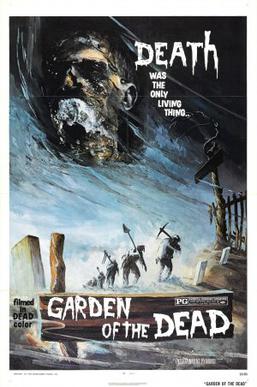
Live Tweet Alert: Watch Garden of the Dead with #ScarySocial


As some of our regular readers undoubtedly know, I am involved in a few weekly live tweets on twitter.  I host #FridayNightFlix every Friday, I co-host #ScarySocial on Saturday, and I am one of the five hosts of #MondayActionMovie!  Every week, we get together.  We watch a movie.  We tweet our way through it.

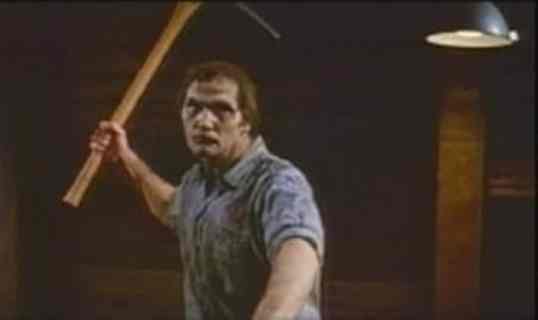
Tonight, for #ScarySocial, I will be hosting 1972’s Garden of the Dead!  What happens when a bunch of deceased prisoners come back to life?  


If you want to join us on Saturday night, just hop onto twitter, start the film at 9 pm et, and use the #ScarySocial hashtag!  The film is available on Prime.  I’ll be there co-hosting and I imagine some other members of the TSL Crew will be there as well.  It’s a friendly group and welcoming of newcomers so don’t be shy.


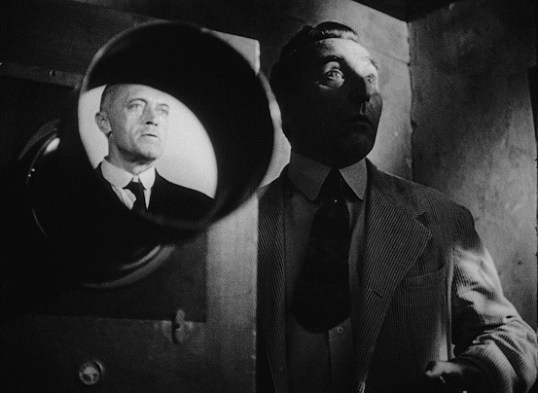
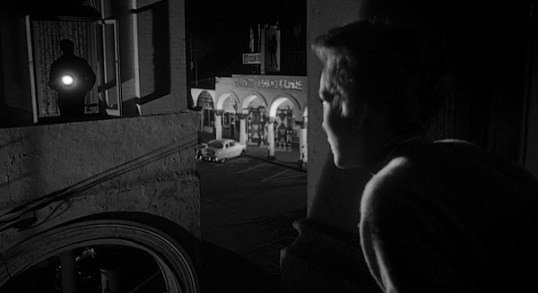
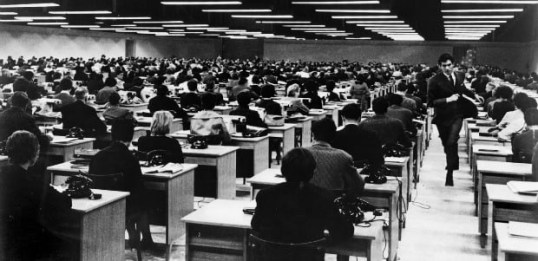
4 Shots From 4 Films: Special Orson Welles Edition


4 Or More Shots From 4 Or More Films is just what it says it is, 4 shots from 4 of our favorite films. As opposed to the reviews and recaps that we usually post, 4 Shots From 4 Films lets the visuals do the talking!

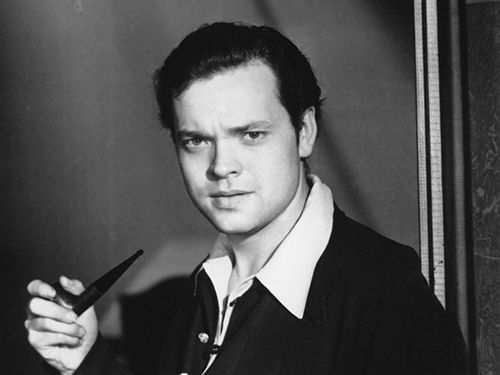
Today we celebrate what would have been the 108th birthday of the great Orson Welles!  It’s time for….

4 Shots from 4 Orson Welles Films

Citizen Kane (1941, dir by Orson Welles, DP: Gregg Toland)

The Stranger (1946, dir by Orson Welles, DP: Russell Metty)

Touch of Evil (1958, dir by Orson Welles. DP: Russell Metty)

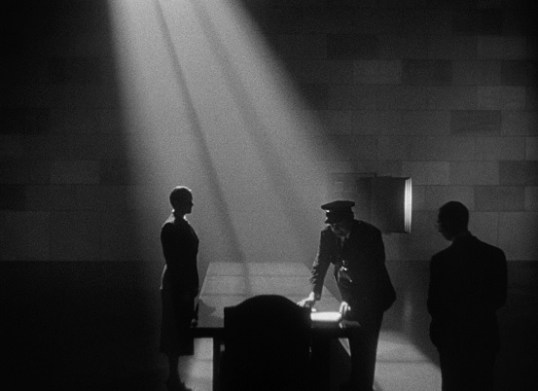
The Trial (1962, dir by Orson Welles, DP: Edmond Richard)


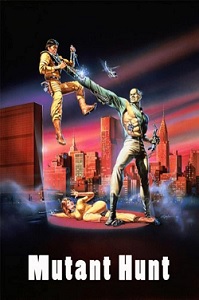
Mutant Hunt (1987, directed by Tim Kincaid)


The time is the near future.  Paul Haynes (Mark Umile) has invented the Delta 7 cyborgs, who are supposed to help humanity.  However, the evil Z (Bill Peterson) has somehow gotten the cyborgs addicted to a drug that causes them to commit a murder every six hours.  When Paul objects his cyborgs being turned into killing machines, Z takes him hostage.  Paul’s sister, Darla (Mary Fahey), runs from two of the cyborgs and they all end up in the apartment of Matt Riker (Rick Gianasi), a mercenary who is an old acquaintance of Paul’s.  Riker defeats the two cyborgs in his apartment, though his own pleasure droid is sadly sacrificed in the battle.  Riker then gets together with his friends Johnny Felix (Ron Reynaldi) and Elaine Eliot (Traunie Vrenon) so that they can destroy the remaining Delta 7s and rescue Paul.  Johnny knows martial arts and has come up with a way to track the remaining cyborgs.  Elaine is a stripper who is also one of the world’s best fighters.  They’re about as strong a group as I guess society could hope for.  What they don’t know is that Z and his associate, Domina (Stormy Spill), have got a Delta 8 waiting to meet them.  What Z does not know is that Riker is a pyromaniac who, unlike the typical movie hero, doesn’t worry about fighting with honor.  What the audience never knows is why Z corrupted the cyborgs to begin with or why he took Paul hostage instead of just having the cyborgs kill him.  It’s an evil plan but it’s not one that appears to really be about accomplishing anything.

Mutant Hunt is a low-budget science fiction film that has a plot that is impossible to follow.  Again, even though I sat through the entire movie, I am still not sure what Z was actually trying to accomplish with his murderous cyborgs.  This is one of those films where the future is represented by empty warehouses and plenty of neon signage.  Because the film is so low budget and the acting is so unconvincing, Mutant Hunt has developed a cult following among those who think that the film is so good that it’s bad.  Actually, despite some impressive makeup work with the mangled cyborgs, Mutant Hunt is just bad.  It takes a little from The Terminator and a little from Blade Runner and then mashes it all together with a plot that feels like dystopian mad libs.  The end result is an incoherent movie that feels much longer than just 77 minutes.

Live Tweet Alert: Join #FridayNightFlix for Rumble In The Bronx!


As some of our regular readers undoubtedly know, I am involved in a few weekly live tweets on twitter.  I host #FridayNightFlix every Friday, I co-host #ScarySocial on Saturday, and I am one of the five hosts of #MondayActionMovie!  Every week, we get together.  We watch a movie.  We tweet our way through it.

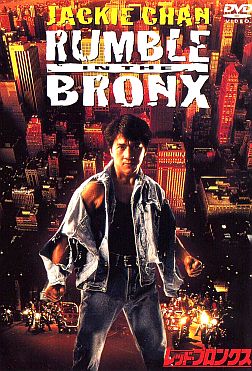
Tonight, at 10 pm et, #FridayNightFlix has got 1995’s Rumble in the Bronx!

Jackie Chan takes on the Bronx!  And wouldn’t you know it, the Bronx looks a lot like Canada!

If you want to join us this Friday, just hop onto twitter, start the movie at 10 pm et, and use the #FridayNightFlix hashtag!  It’s a friendly group and welcoming of newcomers so don’t be shy.

Rumble in The Bronx is available on Prime!  See you there!

Midnight Ride (1990, directed by Bob Bralver)


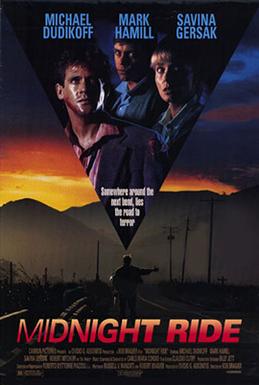
Driving to a friend’s house after getting into a late night argument with her husband, Lara (Savina Gersak) makes the mistake of picking up a hitchhiker.  At first, Justin McKay (Mark Hamill) seems like a nice guy but he quickly reveals himself to be a serial killer.  Haunted by his terrible childhood and the abuse he suffered at the hands of his mother, Justin has decided to get revenge on the world by going on a killing spree.  He’s even got a polaroid camera with him so that he can have a souvenir of every murder that he commits over the night.  Holding Lara hostage, Justin forces her to drive him to his ultimate destination, the hospital where he was once the patient of Dr. Hardy (Robert Mitchum).  Following behind Lara and her murderous passenger is Lara’s husband, Lawson (Michael Dudikoff).  Lawson is a former military policeman turned civilian cop and has experience taking down the bad guys.  But Lawson’s leg is also in a cast and not even he is prepared for how savage and dangerous clever Justin turns out to be.

What is Midnight Ride like?  Think of The Hitcher, just without that film’s subtext of an unacknowledged attraction between the driver and the hitcher.  Also replace Rutger Hauer giving a smooth, menacing, and seemingly indestructible performance with Mark Hamill sweating, bulging his eyes, and fidgeting throughout the entire film.  Midnight Ride is a competent thriller and Michael Dudikoff is a good working class hero but the main reason to see Midnight Ride is to watch Mark Hamill chew the scenery and play a character who is so evil and destructive that not even Luke Skywalker would have risked going anywhere near him.  Justin McKay has much more in common with The Joker than with Luke Skywalker.  Justin is the type of killer who, after murdering a hotel clerk, steals her glass eye and wears it as a necklace.  Hamill really throws himself into the role, savoring every crazy moment.  Dudikoff is stolid and dependable while Hamill often seems like he might be trying to burn the entire movie to the ground.  While Hamill chews up the scenery, Robert Mitchum barely seem to notice the scenery at all.  Hamill gives a masterclass in overacting while Mitchum gives a masterclass in barely bothering to act at all.  Mitchum was famous for saying that he didn’t give a damn and I can’t think of any film where he gave less of a damn than Midnight Ride.  Dudikoff may be top-billed but this is a Hamill/Mitchum joint all the way.

Film Review: Cocaine Bear (dir by Elizabeth Banks)


Cocaine Bear is the story of a duffel bag full of cocaine and the bear that gets into it.  It’s loosely based on a true story.  I say loosely because, in real life, the bear promptly overdosed and died.  In the film, the bear not only survives eating a bag of cocaine but it also subsequently goes on a coke-fueled rampage.

The film opens in 1985, with a series of anti-drug commercials airing on television and a drug smuggler flying high above Georgia.  The smuggler kicks his shipment of cocaine out of the plane, so that it can later be retrieved from the mountains below.  Unfortunately, for him, he also manages to slip and plummets out of the plane to his death.  A day later, in Georgia’s Chattahoochee–Oconee National Forest, two hikers are debating which band they should hire to play for their wedding when they happen to come across a black bear.  The hikers decide to snap a picture of the bear.  The bear, whose face is coved in cocaine, decides to eat the hikers.

Yep, both the bear and her two adorable cubs have discovered the joys of cocaine.  It would probably be best to close down the park until someone can hold an intervention but, unfortunately, more and more people keep showing up.  For instance, there’s a detective named Bob (Isiah Whitlock, Jr.) who is determined to track down the cocaine and use it to finally take down the St. Louis’s drug kingpin, Syd (Ray Liotta, in his final film role).  Syd, meanwhile, has sent his son Eddie (Alden Ehrenreich) and his employee Daveed (O’Shea Jackson, Jr.) to retrieve the drugs.  Daveed is determined to get the job done while Eddie, who is mourning the death of his wife, just wants to leave the family business behind.  Local criminal Stache (Aaron Holliday) wants to deal the drugs himself but instead ends up bonding with Eddie.  Park ranger Liz (Margo Martindale) wants to pursue her crush on animal inspector Peter (Jesse Tyler Ferguson).  Finally, two kids, Dee Dee (Brooklynn Prince) and Henry (Christian Convery) have skipped school and are lost in the park.  Dee Dee’s mother (Keri Russell) is determined to rescue them and then ground them for the rest of their lives.

Yes, there’s a lot of people in this film.  I haven’t even mentioned Stace’s partners-in-crime or the paramedics who pick an inopportune time to show up.  The majority of the people in this film end up getting ripped apart by the bear and, make no mistake about it, the bear is the true heroine of the film.  All of the actors do well with their roles, though I do wish that Liotta could have ended his career playing something other than just another psycho criminal.  Keri Russell, Margo Martindale, Isiah Whitlock, Jr., and Alden Ehrenreich all deserve a lot of credit for bringing their characters to life.  But the bear is the true star here.  The bear kills a lot of people and most of the deaths are pretty bloody but, at the same time, the bear doesn’t really mean any harm.  It just really likes cocaine and the majority of the people who the bear kills are killed precisely because they either got cocaine on their clothes (or face) or they allowed themselves to become a part of the cocaine trade.  The bear ultimately becomes a satirical representation of every anti-drug commercial that has ever aired.  If you’re not worried about overdosing, how do you feel about getting torn apart by a bear?  Not so much fun being a rebel now, is it?

Cocaine Bear is an admittedly dark comedy, one in which almost all of the human characters have at least one bizarre quirk to make them memorable.  Usually, I’m not a huge fan of gory comedies but the humor in Cocaine Bear has an appealingly weird edge to it.  Eddie, Stache, and an annoyed Daveed playing twenty questions while looking for a duffel bag full of drugs is amusing but it becomes hilarious when combined with scenes of the bear joyfully finding more cocaine.  As well, Henry and Dee Dee’s reaction to finding a brick of cocaine is every parent’s nightmare but also one to which everyone should be able to relate and maybe even chuckle at.  I laughed, even as I thought, “OH MY GOD, DON’T DO THAT!”

Finally, in a time when so many movies are full of unnecessary padding, Cocaine Bear deserves a lot of credit for telling its story in 90 quickly placed minutes.  The film doesn’t waste any time getting to the point and it doesn’t overstay its welcome.  A lot of filmmakers could learn a lesson from Cocaine Bear.

Boxing Time (2016, directed by Evan Jacobs)


About as pointless as a film can get, Boxing Time is 65 minutes of a boxing promoter named Art (played by director Evan Jacobs) talking on his phone.  He tries to convince his wife to allow him to talk to his daughter.  He talks to the boxing commissioner, who is being a real pain about the upcoming fight.  He talks to people who want to fix the fight.  Art talks and talks.  Usually, only his side of the conversation is shown and the movie doesn’t even show us the boxing match that everyone is so worked up about.  After all the build up, the movie cheats the audience by not letting them watch the main event.

It’s set up as a found footage film with a title card explaining that Art was filming himself because he had been diagnosed as having a paranoid personality disorder and that the footage comes from the last month of Art’s life.  Despite knowing that we’re watching the last days of a doomed man, it’s hard to care about Art.  He’s not a sympathetic character and watching him talk on the phone for 65 minutes is about as much fun as watching anyone talk on the phone for 65 minutes.  Boxing Time (also known as #boxingtime because why not?) is an extended acting exercise that ends up lying flat on the canvas.