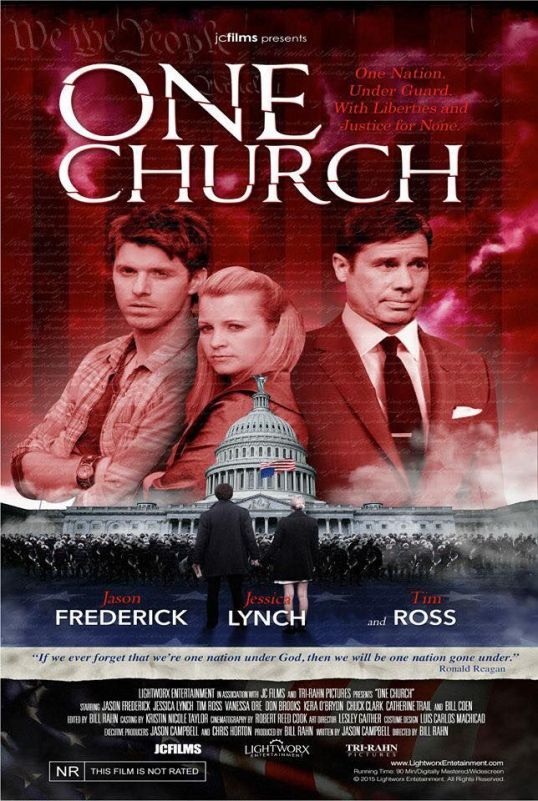
May Positivity: One Church (dir by Bill Rahn)


Originally released in 2016, this low-budget political/religious thriller opens with a rather unsettling scene.  An obviously disturbed woman wanders down a suburban street, loudly singing This Little Light of Mine.  She stops in front of one house and starts to screech the lyrics, like a banshee predicting future doom.

The house is the home of Congressman Neil Barlow (Don Brooks) and both he and his wife Catherine (Kera O’Bryan) are about to discover that their teenage daughter has been taken away.  She has left home and she is now living with a religious communal cult.  When the FBI approaches the cult’s headquarters, all of the members drink poison in a mass suicide.  Neil Barlow becomes determined to one day become President so that he can stamp out the scourge of religious extremism.

18 years later, Neil Barlow is president and he’s just announced the creation of the Department of Religious Freedom.  Televangelist Randy Mason (Tim Ross) is put in charge of the Department but it turns out that this is just the beginning of Barlow’s plan to change America.  Barlow soon announces that all religions are going to come together under the umbrella of one state-run church.  Across America, people watch the press conference and say things like, “This will cut down on division,” and “We all believe the same thing anyways.”  The Department of Religious Freedom proceeds to outlaw all of the old religious texts and requires that all religious leaders preach the same pre-approved sermon.  Failure to do so can lead to being sent to a reeducation camp.

Randy’s brother, Jake Mason (Jason Frederick), knows a little about what has happened but not everything.  He’s been down in Mexico, ministering to a small village.  When Jake returns to America, he discovers that it’s no longer the country that he once thought it was.  Along with his girlfriend, Beth Barlow (Jessica Lynch), Jake tries to stand up against the One Church.  Beth also happens to be the President’s daughter and she, more than anyone, understands the anger that is fueling Neil Barlow’s actions.

I have an admitted weakness for low-budget, conspiracy-themed movies and One Church is definitely qualifies.  Say what you will about the film’s plot and themes, it’s hard not to appreciate a film in which the President gives a major, history-changing press conference in what appears to be a high school auditorium.  The offices of a major news network are represented by a small room that has several televisions propped up against the wall.  The White House dining room is about the same size as my dining room.  The future president of the United States lives in a house that’s about the size of the house where I live.  Suddenly, I’m feeling very important!

As for the film itself, it actually makes the perfect case for maintaining the separation of Church and State.  As soon as the State gets involved in religion, it starts using the Church as a way to control the citizens and to make itself more powerful.  Preachers like Randy Mason are easily corrupted once they’re in partnership with the government.  As for the citizens, they’re portrayed as being eager to be ordered about, which is perhaps the most realistic thing about One Church.  Beth is played by the same Jessica Lynch who was, in 2003, captured by and subsequently rescued from the Taliban.  She has appeared in a few films over the past few years, usually in small roles.  She’s actually a surprisingly good actress and she certainly gives the best performance in One Church.
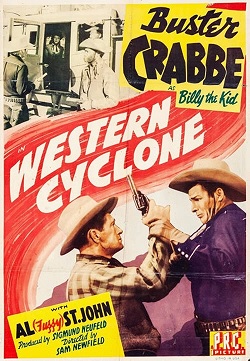
Western Cyclone (1943, directed by Sam Newfield)


Feeling that the old west has become a dangerous place, law-abiding gunslinger Billy the Kid (Buster Crabbe) fakes a stagecoach robbery and pretends to kidnap the governor’s daughter, all to show him that the west needs more law enforcers.  The governor is so impressed by Billy’s ruse that he agrees to stand tough on crime.  This upsets Dirk Randall (Glenn Strange, who also played Frankenstein’s monster is some of the later Universal horror films), a businessman who has been funding the criminals in order to make the governor look weak so that Randall could defeat him in the next election.

Randall orders one of his men to pull a gun on Billy while Billy is leaving the local saloon.  Billy pulls and fires his own gun in self-defense but it’s Randall who actually kills the man by shooting him in the back and then running off in the confusion.  Because the man was shot in the back, Billy is accused of murder, arrested, and sentenced to death in record time.  With Billy in jail, it falls to his comic relief sidekick, Fuzzy Jones (Al St. John), to prove that Billy didn’t actually fire the shot that killed the man.

By most accounts, Billy the Kid was a nasty piece of work who would kill anyone who look at him in the wrong way but, in the 30s, the character was the hero of a series of 42 Westerns that all featured him as a hero and a valued member of the community.  (Originally, Bob Steele played Billy.  Buster Crabbe took over the role with the seventh film.)  Western Cyclone was the 17th Billy the Kid film and, as long as you’re not a stickler for historical accuracy, it’s an entertaining B-western.  The plot is formulaic but Crabbe was a good hero, Strange was a diabolical villain, and, for once, Al St. John got to play an important role in resolving the film’s story.  Fuzzy Jones did some impressive detective work.  The real Billy the Kid probably could have used someone like Fuzzy in his corner.

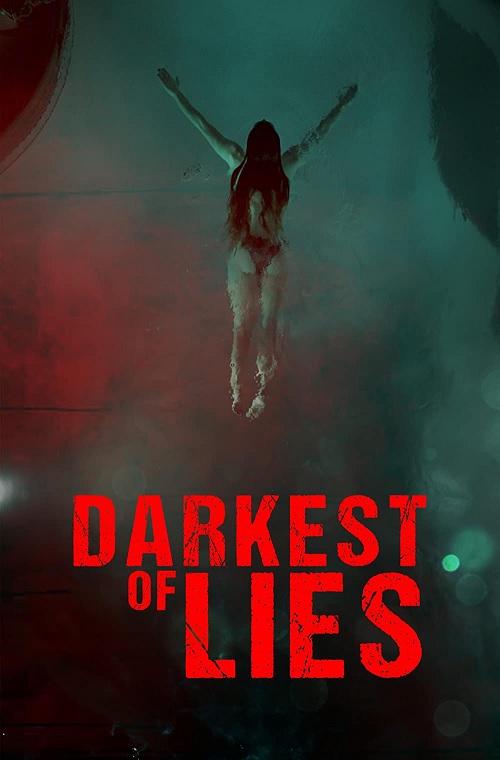
Film Review: Darkest of Lies (dir by Kelly Schwarze)


Travis (Christopher Brown) is a military veteran who is struggling with both PTSD and an addiction to pills.  After some unspecified troubles in New York City, Travis and Rochelle (Hailee Lipscomb) move into a new home.  The house isn’t particularly fancy and Travis isn’t really sure who Rochelle is renting it from but it does seem like a place where they can start to rebuild their lives.  Rochelle has a job at a law firm and is excited that the house has a pool.  “I’m going to swim everyday,” she says.  Travis, meanwhile, can work on his sculptures in the basement.  Travis has a show coming up and it’s important that he get his work done.  Perhaps not surprisingly, he spends most of his time sculpting replicas of heads.  Perhaps he feels that if he can create someone else’s head, he can figure out what is going on inside of his.

From almost the moment that Travis moves into the house, he starts to feel that there is something wrong with the place.  He is haunted by nightmares of finding a body in the pool and of Rochelle calling out for help.  He has sudden bursts of rage and paranoia and he soon becomes convinced that Rochelle is cheating on him.  It doesn’t help that Rochelle’s friends from college, the materialistic Linda (Sabrina Cofield) and the douchey Tom (Michael Forsch), keep coming by the house.  Rochelle is always happy to see her friends but Travis doesn’t feel that he has much in common with either of them.  As well, it’s hard not to notice that Tom seems to be obsessed with trying to get Travis, a recovering addict, to drink wine.  With Travis convinced that Rochelle is cheating on him with almost everyone that he sees, it doesn’t take much to set him off.  Even a simple card game is not a safe activity when Travis is around.

Early on, we discover that Travis and Rochelle’s house is sitting on a street called Shining Way and I imagine that was a deliberate decision on the part of the director.  The film has much in common with Stephen King’s classic novel and the subsequent Kubrick film version.  Much like Jack Torrance, Travis struggles with addiction and the dark memories of the past.  Jack Torrance tried to escape his demons through writing while Travis tries hold them at bay with his sculpting.  Much like Jack, Travis has to deal with people who seem to be intent on forcing him to drink despite the fact that they know that Travis has issues with substance abuse.  The viewer is left to wonder whether it’s the house that’s driving Travis mad or if Travis was always mad and the house just provided him with an excuse to embrace that madness.

It’s a deliberately paced film, one that occasionally feels a bit too slow for its own good.  The movie has a nearly 2-hour running time and it’s hard not to feel that some of the nights with Tom and Linda could have been trimmed down a bit.  That said, the overall film did hold my interest (which is no small accomplishment when you consider just how short my attention span actually is) and the film created a suitably ominous atmosphere of growing dread.  Travis, bearing both the physical and mental scars of his service, become a symbol of the damage that the horrors of war and addiction can do to both the individual and to society as whole.  Darkest of Lies is currently streaming on Tubi.

Live Tweet Alert: Watch The Odds with #ScarySocial


As some of our regular readers undoubtedly know, I am involved in a few weekly live tweets on twitter.  I host #FridayNightFlix every Friday, I co-host #ScarySocial on Saturday, and I am one of the five hosts of #MondayActionMovie!  Every week, we get together.  We watch a movie.  We tweet our way through it.

Tonight, for #ScarySocial, Tim Buntley will be hosting 2018’s The Odds!

If you want to join us on Saturday night, just hop onto twitter, start the film at 9 pm et, and use the #ScarySocial hashtag!  The film is available on Prime.  I’ll probably be there and I imagine some other members of the TSL Crew will be there as well.  It’s a friendly group and welcoming of newcomers so don’t be shy.

The Lucky Texan (1934, directed by Robert N. Bradbury)


After graduating from college, Jerry (John Wayne) travels down to the ranch owned by his uncle, Grandy (George “Gabby” Hayes).  Jerry wants to look after the cattle but it turns out that Grandy doesn’t have any more cattle.  They’ve all been stolen by rustlers.  What Grandy does have is a dog, some horses, and a granddaughter named Betty (Barbara Sheldon) who Jerry is eager to marry even though the two of them are related.  Things start to look up when Grandy and Jerry discover gold in a nearby creek.  When a crooked assayer named Mr. Harris (Lloyd Whitlock) and a rustler named Joe Cole (Yakima Canutt) find out about the creek, they scheme to steal both it and the ranch from Grandy.  It’s up to Jerry to save the ranch and to expose the bad guys, even after they attempt to frame him for murder.  Fortunately, both Jerry and Grandy have a few tricks up their sleeves.

This was one of the many B-westerns that John Wayne did for the poverty row studios in the years before Stagecoach made him a star.  (Though the film is a western with its ranches and its search for gold, the climax features Gabby Hayes driving a car so it’s hard to say for sure when it’s supposed to be taking place.)  Though he seems too old to be playing a recent college graduate (John Wayne was 27 when he starred in The Lucky Texan but he looked closer to 40), Wayne gives a relaxed and likable performance as Jerry.  Watching him in this film, it’s possible to see hints of the screen presence that led to John Ford casting him as the Ringo Kid in Stagecoach.  As always, Yakima Canutt is on hand to do some impressive stuntwork during the film’s many chase scenes and Gabby Hayes provides the comic relief.  Like most of the poverty row productions, the film can seem more than a little creaky by today’s standards but fans of John Wayne will not be disappointed with either his performance or the film’s action.

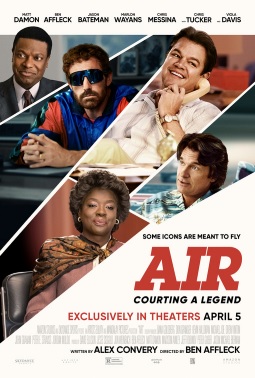
Film Review: Air (dir by Ben Affleck)


Air opens with a montage of the 80s.  Ronald Reagan is President.  MTV is actually playing music.  Wall Street is full of millionaires.  Sylvester Stallone is singing with Dolly Parton for some reason.  Because the specific year is 1984, people are nervously giving George Orwell’s book the side-eye.  Everyone wants an expensive car.  Everyone wants a big house.  Everyone wants the world to know how rich and successful and special they are.

What no one wants is a pair of Nike basketball shoes.  All of the major players are wearing Adidas and Converse while Nike is viewed as being primarily a company that makes running shoes.  CEO Phil Knight (played by Ben Affleck) is considering closing down the basketball shoe division.  Sonny Vaccaro (Matt Damon), however, has a plan that he thinks will save the division.  Instead of recruiting three or four low-tier players to wear and endorse Nike shoes, Sonny wants to spend the entire division’s budget on just one player.  Sonny is convinced that a young Michael Jordan is destined to become one of the best players in the history of basketball and he wants to make a shoe that will be specifically designed for Jordan.

The problem is that Michael Jordan doesn’t want to have anything to do with Nike because Nike is not viewed as being a cool brand.  Jordan wants to sign with Adidas, though he’s considering other offers as well.  He also wants a new Mercedes.  Even though everyone tells Sonny that he’s wasting his time and that he’ll be responsible for a lot of people losing their jobs if he fails, Sonny travels to North Carolina to make his pitch personally to Jordan’s mother (Viola Davis).

For it’s first 50 minutes or so, Air feels like a typical guy film, albeit a well-directed and well-acted one.  Almost all of the characters are former jocks and the dialogue is full of the type of good-natured insults that one would expect to hear while listening to a bunch of longtime friends hanging out together.  For all the pressure that Sonny is under, the underlying message seems to be one of wish fulfilment.  “Isn’t it great,” the film seems to be saying, “that these guys get to hang out and talk about sports all day?”  When Sonny runs afoul Michael Jordan’s agent, David Falk (Chris Messina), one is reminded of the stories of temperamental film executives who spent all day yelling at each other on the telephone.  The efforts to sign Jordan feel a lot like the effort to get a major star to agree to do a movie and it’s easy to see what attracted Damon and Affleck to the material.  Even though the majority of the film takes place in the Nike corporate offices, it deals with a culture that Damon and Affleck undoubtedly know well.

But then Jason Bateman delivers a great monologue and the entire film starts to change.  Despite his reluctance to sign with Nike, Michael Jordan and his family have agreed to visit the corporate headquarters.  Sonny has a weekend to oversee the creation of the shoe that will hopefully convince Jordan to sign.  When Sonny shows up for work, he’s excited.  But then he has a conversation with Rob Strasser (Jason Bateman), the head of marketing.  Strasser talks about his divorce and how he only sees his daughter on the weekends.  Every weekend, Rob brings his daughter the latest free Nike stuff.  His daughter now his 60 pairs of Nike shoes.  Rob admits that, even if he loses his job, he’ll probably still continue to buy Nike shoes because that’s now what his daughter expects whenever she sees him.  Rob compares Sonny’s plan to the Bruce Springsteen song Born in the USA, in that the tune sounds hopeful but the lyrics are much darker.  If the plan succeeds, Nike will make a lot of money.  If it fails, Rob and everyone in the basketball division will be out of a job and that’s going to effect every aspect of their lives.  Rob points out that Sonny made his decision to pursue only Michael Jordan without thinking about what could happen to everyone else.  Sonny says that success requires risk.  Rob replies that Sonny’s words are spoken, “like a man who doesn’t have a daughter.”

It’s an honest moment and it made all the more powerful by Bateman’s calm but weary delivery of the lines.  It’s the moment when the film’s stakes finally start to feel real, even though everyone knows how the story eventually turned out.  As well, it’s in this moment that the film acknowledges that the Air Jordan legacy is a complicated one.  Rob talks about how the shoes are manufactured in overseas sweatshops.  Later, when discussing whether or not Michael Jordan should get a percentage of the sales, Jordan’s mother acknowledges that the shoes aren’t going to be cheap to purchase.  They’re going to be a status symbol, just as surely as the Mercedes that Jordan expects for signing with the company.  Air becomes much like that Springsteen song.  On the surface, it’s a likable film about a major cultural moment, full of dialogue that is quippy and sharply delivered without ever falling into the pompous self-importance of one of Aaron Sorkin’s corporate daydreams.  But, under the surface, it’s a film about how one cultural moment changed things forever, in some ways for the better and in some ways for the worse.

It’s an intelligent film, one the creates a specific moment in time without ever falling victim to cheap nostalgia.  Matt Damon gets a brilliant monologue of his own, in which he discusses how America’s celebrity culture will always attempt to tear down anyone that it has previously built up.  Ben Affleck plays Nike’s CEO as being an enigmatic grump, alternatively supportive and annoyed with whole thing.  As for Michael Jordan, he is mostly present in only archival footage.  An actor named Damian Delano Young plays him when he and his parents visit Nike’s corporate headquarters but, significantly, his face is rarely show and we only hear him speak once.  In one of the film’s best moments, he shrugs his shoulders in boredom while watching a recruitment film that Nike has produced to entice him and, because it’s the first reaction he’s shown during the entire visit, the audience immediately understands the panic of every executive in the room.

Air is a surprisingly good film.  It’s currently streaming on Prime.

4 Shots From 4 Films: Special Jess Franco Edition


4 Shots From 4 Films is just what it says it is, 4 shots from 4 of our favorite films. As opposed to the reviews and recaps that we usually post, 4 Shots From 4 Films lets the visuals do the talking!

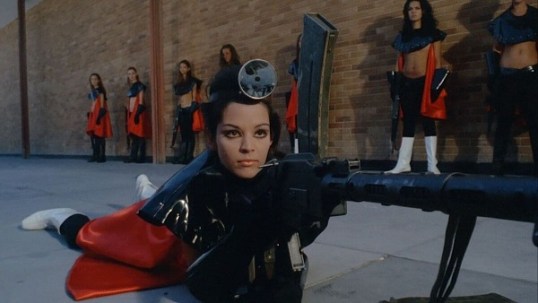
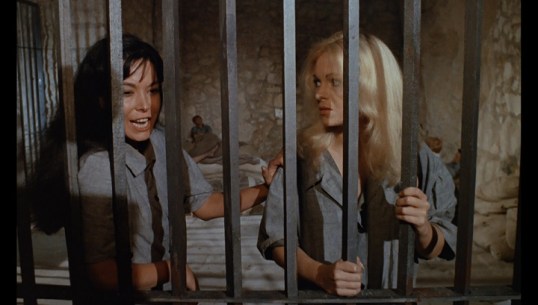
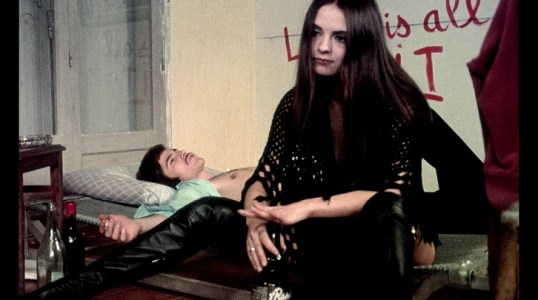
Today is the 93th anniversary of the birth of Jesus Franco in Madrid, Spain!  One of the most prolific filmmakers of all time, Franco made movies that …. well, they’re not easy to describe.  Jess Franco was responsible for some of the most visually striking and narratively incoherent films ever made.  He made films that you either loved or you hated but there was no mistaking his work for being the work of someone else.

Today, in honor of his birthday, here are….

4 Shots From 4 Jess Franco Films

The Girl From Rio (1969, dir by Jess Franco)

99 Women (1969, dir by Jess Franco)

Nightmares Come At Night (1970, dir by Jess Franco)

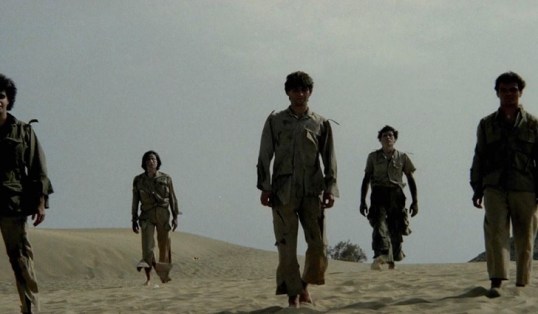
Oasis of the Zombies (1981, dir by Jess Franco)

Live Tweet Alert: Join #FridayNightFlix for Goon!


As some of our regular readers undoubtedly know, I am involved in a few weekly live tweets on twitter.  I host #FridayNightFlix every Friday, I co-host #ScarySocial on Saturday, and I am one of the five hosts of #MondayActionMovie!  Every week, we get together.  We watch a movie.  We tweet our way through it.

Tonight, at 10 pm et, #FridayNightFlix has got 2011’s Goon!

It’s a hockey classic!

If you want to join us this Friday, just hop onto twitter, start the movie at 10 pm et, and use the #FridayNightFlix hashtag!  It’s a friendly group and welcoming of newcomers so don’t be shy.

Goon is available on Prime!  See you there!

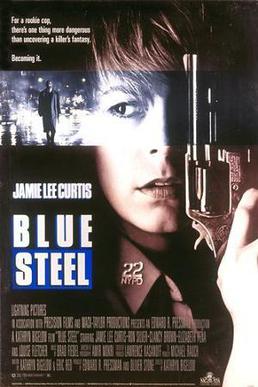
Blue Steel (1990, directed by Kathryn Bigelow)


On her first night on the job, rookie cop Megan Turner (Jamie Lee Curtis) blows away a robber (Tom Sizemore) who was holding up a convenience store.  The robber was holding a gun when he was shot but, right after his body hits the ground, the gun is stolen by a stockbroker named Eugene Hunt (Ron Silver).  Somehow, no one notices Eugene grabbing the gun from the floor and he improbably gets away from the crime scene without any of the investigating officers noticing that he’s concealing a gun in his suit.

Because Eugene stole the gun, Megan is accused of shooting an unarmed man and she is suspended from the force.  Meanwhile, Eugene becomes obsessed with the gun, hears voices, and starts to shoot random people.  He even carves Megan’s name on one of the bullets.  When the bullet is found in the body of one of Eugene’s targets, Megan becomes the number one suspect even though it wouldn’t make any sense for a murderer to carve their name on the evidence.  This isn’t The Wire.  None of the dead are going to be found with a note in their hand that says, “Tater Killed Me.”  It should be obvious to everyone that Megan is being set up but instead, everyone just assumes Megan is a stupid murderer who doesn’t know how to cover her tracks.  Eugene also starts to date Megan but when Megan rejects him after he confesses to being the murderer, Eugene starts to stalk her and her friends.  Not even Megan’s new boyfriend (Clancy Brown) can keep her safe from a stockbroker with a grudge.

Blue Steel benefits from Kathryn Bigelow’s stylish direction and Jamie Lee Curtis’s dedicated performance but it suffers because Eugene is so obviously crazy from the get go that it never makes sense that he would be able to get away with his crimes for as long as he does.  Even after Megan realizes that Eugene is crazy, she can’t get anyone to believe her even though everything about Eugene suggests that he’s the murderer.  Not even confessing to the crime is enough to keep Eugene in prison.  Somehow, Eugene is able to commit multiple murders and attempted murders right in front of Megan and then escape before Megan or anyone else can even react.  Megan’s been trained at the Police Academy while Eugene has no criminal training whatsoever but he’s still always able to outthink and outrun her.  It makes it seem as if Megan just isn’t a very good cop.  Luckily, Bigelow, Curtis, Silver, and Clancy Brown would all be involved with better movies in the future.

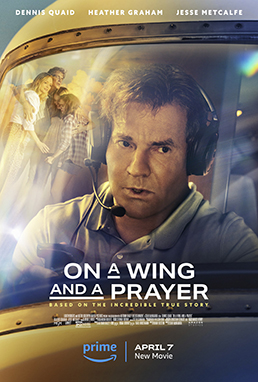
Film Review: On a Wing and a Prayer (dir by Sean McNamara)


Having just attended the funeral of his brother, Doug White (Dennis Quaid) and his family — wife Terri (Heather Graham) and daughters Bailey (Abigail Rhine) and Maggie (Jessi Case) — are flying back to their home in Louisiana.  Unfortunately, shortly after takeoff, their pilot suffers a heart attack and dies.  Now Doug, who’s had only one flight lesson in his entire life, has to not only fly the plane but also land safely.

Doug has people on the ground, trying to talk him through the landing even though they don’t know what is actually happening in the cockpit.  Hard-drinking Dan Favio (Rocky Myers) calls his friend, Kari Sorenson (Jesse Metcalfe).  Kari has never gotten over the death of his family in a similar plane crash so, for him, helping Doug land is about more than just saving Doug and his family.  It’s also about achieving his own personal redemption and hopefully finding the strength to forgive himself.

While this is going on, two kids — Donna (Raina Grey) and Buggy (Trayce Malachi) — follow the flight online and then head down to the airport so that they can watch it try to land.  To be honest, I’m really not sure why either one of them is in the movie.  When Donna first showed up, talking about how she wanted to be a pilot because “Mr. Jones” told her that girls can’t fly planes, I found myself dreading the inevitable moment when the kids would take it upon themselves to help Doug land the plane.  I dreaded Donna calling the cockpit and Doug going, “Wait a minute …. you’re just a kid!”  Fortunately, that moment didn’t happen but I was still left wondering why Donna and Buggy were in the film to begin with.

It feels almost churlish to be overly critical of a film like On a Wing and a Prayer because it is based on a true story.  Doug White really did have to land an airplane after the pilot died mid-flight and he really was instructed on what to do by a group of air traffic controllers and Kari Sorenson.  It’s a good story and the film ends with some undeniably touching shots of the real people involved in the landing.  That said, this is ultimately a film that many filmgoers will want to like more than they actually do.  Thanks to some dodgy special effects, the viewer never forgets that Dennis Quaid and his family aren’t really tapped up in the sky.  Instead, one is always aware that they’re just watching a movie and a rather cheap-looking one at that.  As well, the script is full of awkward dialogue and heavy-handed moments.  As soon as I saw that one of the daughters wouldn’t stop looking at her phone, I knew that she would be the one who would be forced to grow up in a hurry.  As soon as the other daughter ate something with nuts in it, I knew that there was going to be a desperate search for an epi-pen.

On the plus side, Dennis Quaid was as likable as ever and Heather Graham managed to wring some genuine feeling out of even the most sentimental of dialogue.  On A Wing and a Prayer was directed by Sean McNamara, who also directed one of my favorite films of 2011, Soul Surfer.  (Later this year, McNamara and Quaid have another project that is scheduled to be released, a biopic of President Ronald Reagan.)  On A Wing and A Prayer doesn’t really work as a film but, as a story, it at least reminds us of what people are capable of doing when they all work together.