In 1976’s Grizzly, something is making a national park a lot less inviting.
Campers are turning up dead. Bloody body parts are being found buried underneath leaves. It’s obvious that a bear is to blame but reports seem to indicate that this isn’t just any bear. This is a super bear, standing 8 feet tall and capable of knocking down an observation tower and picking up a helicopter. This is the most dangerous bear known to man and the park has to be closed.
Closing the park during tourist season!? Surely not!
Does this all sound familiar? Grizzly came out a year after Jaws. In all fairness to Grizzly, there were a lot of movies that ripped-off Jaws. As a matter of fact, there are still movies ripping off Jaws. The Jaws films eventually ended up ripping off themselves with three sequels. Still, it’s hard to ignore just how blatantly Grizzly rips off Jaws. We get shots from the bear’s point of view. Christopher George plays the sheriff who keeps demanding that the park be closed down until the bear has been taken care of. Andrew Prine is the hippie bear expert. Richard Jaeckel is the crotchety old man who knows more about bears that just about anyone else in the world. In Jaws, they needed a bigger boat. In Grizzly, they need a bigger helicopter. Jaws features scenes of people fleeing from the water. Grizzly features an unintentionally funny shot of hundreds of panicked campers fleeing down the side of a mountain.
Grizzly is Jaws, without the water and without the wit. And yet, in its own grim way, it works well enough. The fact of the matter is that bears are scary and the bear in Grizzly is really, really big. The gore effects are memorably grotesque and, perhaps even more so than Jaws, Grizzly goes out of its way to establish that anyone can die. As for the actors, I’ve always enjoyed seeing Christopher George in films like this. He was one of those actors who always seemed to try to give a convincing performance, even when he was appearing in a film that no one would mistake for a classic. Richard Jaeckel and Andrew Prine also do their best to bring their characters to life.
Finally, I should mention that the film ends on a properly silly and over-the-top note. Actually, it’s not that much different from the ending to Jaws. It’s just that Jaws was made with such skill that even the silly moments worked. Grizzly was directed by William Girdler, who was no Steven Spielberg. At the end of Grizzly, I found myself shouted, “Why didn’t someone just do that in the first place!?” Then again, if they had, we never would have gotten all of those point of view shots of the bear wandering through the forest while growling like an 70s obscene phone caller.
As a final note, I defy anyone to watch Grizzly without imagining Werner Herzog narrating the bear’s activities. It cannot be done!
And now, we reach the 2020s. The Oscars are heading towards their 100th year and a lot has changed between then and now. Many of the films that are nominated today would have been unthinkable as nominees in the 50s or even the 90s. I’m glad to see that the Academy is now more willing to nominate genres like horror and science fiction.
That said, this is the streaming age and this is the age of AI and I do worry about the future of movies in general. The Oscars are no longer the big event that they once were but then again, the same can be said of movies in general. The times are changing. Who knows what we’ll be talking about when Oscar Sunday rolls around in 2030?
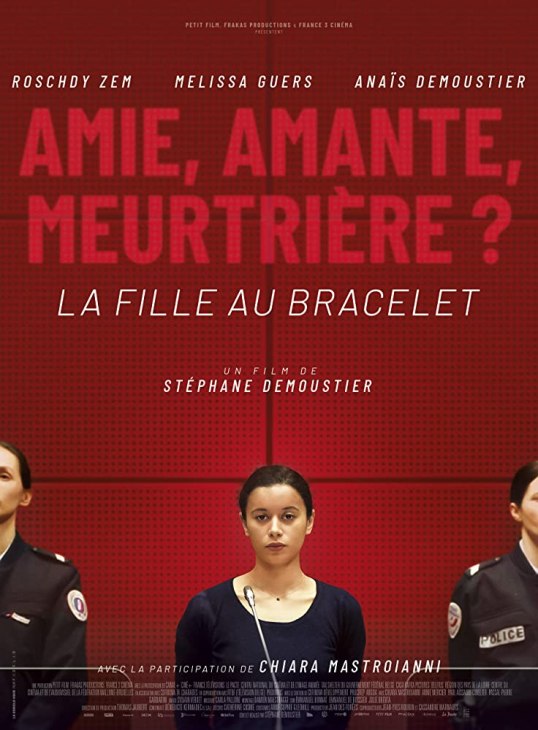
Should Have Won: These were the COVID Oscars. With the world shut down for a virus, movie theaters closed and the Academy was forced to give even more consideration than usual to the streaming platforms. A lot of studios held back on releasing their big movies and the end result was the weakest Best Picture line-up in recent history. Nomadland won, largely because it reflected the current national anxiety. (Interestingly, it was directed by the daughter of the type of communist official who would probably of thrown the majority of the Nomadland cast into prison for re-education.) Of the nominees, I would have voted for either Promising Young Woman or The Father. My favorite film of the year was an unnominated French film called Girl With A Bracelet.
Should Have Won: CODA. The Academy got it right. With the world still recovering from the (totally unnecessary) COVID lockdowns, the Best Picture lineup was still weaker than usual but there was something very satisfying about watching the sweet-natured CODA overtake the presumed front runner, Power of the Dog. Power of the Dog was well-made but heartless. CODA was obviously limited by its low budget but it was all heart and, after two years of totalitarian excess, that was what was truly needed.
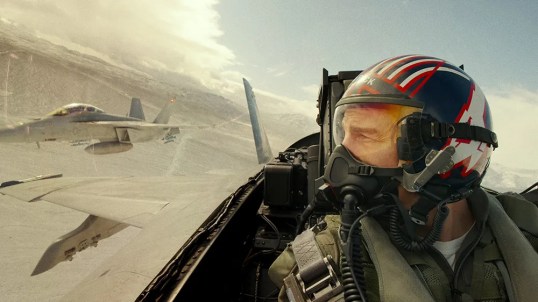
Should Have Won: Literally anything else. Seriously, Everything Everywhere All At Once is a mess of a movie and nowhere near as profound as it thinks it is. I personally would have voted for Top Gun: Maverick, a film that is unapologetic about being entertaining. After all of the COVID stupidity, Top Gun: Maverick was the film that world needed.
(That said, I could also make a case for voting for TAR, The Banshees of Inisherin, All Quiet On The Western Front, and even Elvis. After two rather weak Best Picture line-ups, the 2022 nominations were a return to form.)
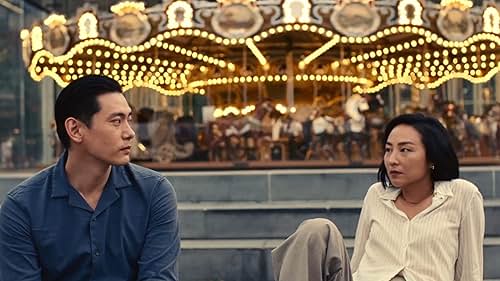
Should Have Won: I can’t complain about Oppenheimer winning. It’s a great film. That said, I probably would have voted for another great film, Past Lives. This was another strong line-up of best picture nominees.
Ah, the 2010s. Social media made anxiety the norm and Americans became obsessed with “red states” and “blue states.” Americans fetishized politicians and the Academy decided that it would be cool to do away with the idea of having a set number of best picture winners. One bright spot, for me at least: Arleigh invited me to write for this site! And the rest, as they say, is history!
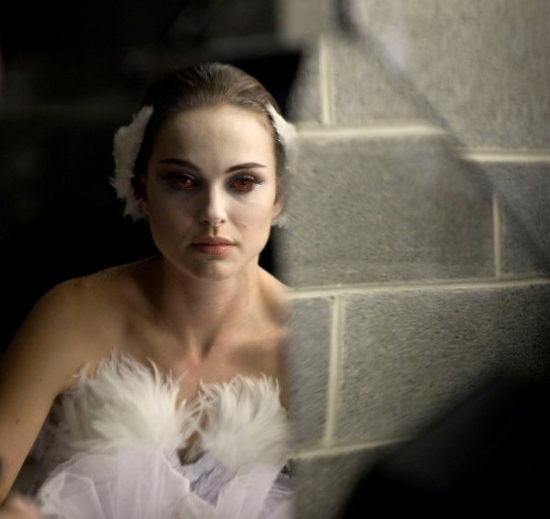
Should Have Won: Ah, The King’s Speech vs The Social Network. On the one hand, The King’s Speech was a far more conventional film than The Social Network. On the other hand, The Social Network‘s supporters tended to be so obnoxious about it that you kind of wanted it to lose just to spite them. Personally, I liked The King’s Speech on an emotional level. The Social Network holds up fairly well, though I still find it to be overrated. Inception is still exciting to watch and Winter’s Bone gets better every time I view it. In the end, though, my vote still goes to Black Swan, a film that gave me an asthma attack the first time I watched it.
Should Have Won: The Artist isn’t bad but its victory was still more about its novelty than its quality. The Tree of Life is visually stunning but the scenes with Sean Penn are a bit too heavy-handed for me. My vote goes to Hugo, a film that gets better each and every time that I see it. (My favorite film of the year remains the unnominated Hanna.)
Should Have Won: “Argo f*ck yourself!” Yes, I can see why this won! Actually, Argo‘s victory has always struck me as weird. Argo is a rather forgettable winner. (Has anyone even mentioned Argo when discussing the current war with Iran?) My vote goes to Life of Pi.
Should Have Won: This was a good year and I can make an argument for why American Hustle, Captain Phillips, Gravity, Her, and The Wolf of Wall Street all deserved to win. In the end, though, the power of 12 Years a Slave cannot be denied.
Should Have Won: We all love Michael Keaton but Birdman was a pretentious film that thought it was more profound than it actually was. Of the nominees, Boyhood is my pick. (My favorite film of the year was — and I make no apologies for this — the terrifically entertaining Guardians of the Galaxy.)
Should Have Won: Spotlight is a well-acted, visually flat movie that feels like it belongs on television as opposed to playing in theaters. Of the nominees, I really love Brooklyn but Mad Max: Fury Road is a masterpiece of the pulp imagination and that’s the film that gets my vote.
Should Have Won: This is one of the stronger best picture line-ups and the fact that I would pick a film other than Moonlight should not be taken as a criticism of the Academy’s decision. Moonlight is a worthwhile winner. La La Land would have been a worthy winner, as well. In retrospect, 2016 was a better year for movie than a lot of us realized a the time. Back then, I would have voted for Arrival but today, I would probably vote for Hell or High Water. “We ain’t got no g-dd-mned trout.”
Should Have Won: Considering how much I love Guillermo Del Toro, it pains me that I didn’t particularly care for The Shape of Water. But I have to admit that the film lost me as soon as the Fishman ate that cat. Of the nominees, I would have voted for Lady Bird.
Should Have Won: My favorite film of the year, Eighth Grade, was not nominated. In fact, a lot of good films weren’t nominated in 2018. What a strange year that sees both Vice and Bohemian Rhapsody nominated but not Eighth Grade or First Reformed. Spike Lee finally got his first nomination but it was for one of his most conventional films. It was a strange year. Of the nominees, I would vote for A Star is Born.
Should Have Won: My favorite film of the year was The Souvenir, which barely got any distribution at all in the States and went unnominated. Parasite‘s victory was a great moment and it’s certainly a good film. That said, I still would have voted for Once Upon A Time In Hollywood or The Irishman.
Up next, in 30 minutes, the 2020s …. so far!
Once Upon A Time In Hollywood (2019, dir by Quentin Tarantino)
Ah, the aughts. The new century started out with the terror of 9-11 and it ended with the collapse of the world’s economy. In between, a lot of films were released. Some of them were really good. A few of them were nominated for Best Picture. Most of them were not.
Should Have Won: I’m in a minority here but I’ve never particularly cared for Gladiator. Joaquin Phoenix is a good villain and I can certainly understand why some people have adopted it as a sort of a life manual but, for the most part, Gladiator just falls flat for me. If I was voting, I would have voted for Crouching Tiger, Hidden Dragon. There was a time when I would have voted for Traffic but Crouching Tiger has aged with a bit more grace the Steven Soderbergh’s look at the war on drugs.
Should Have Won: A Beautiful Mind gets criticized for being too Oscar bait-y but it’s not a bad film. What it does, it does well. That said, I would have voted for Todd Field’s haunting In The Bedroom.
Should Have Won: As much as I love Chicago, this is the year that I would have selected to honor Peter Jackson’s Lord of the Rings trilogy. The Two Towers is the darkest chapter in the saga and it’s also the best.
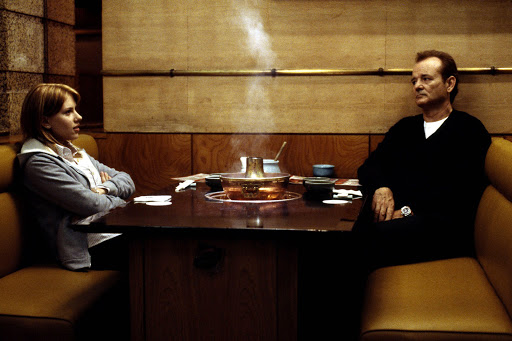
Should Have Won: Even while it was sweeping the Oscars, it was understood that Return of the King was being honored as a way to acknowledge the entire trilogy. Since I already honored the trilogy with The Two Towers, that frees me up to vote for Lost In Translation this year. Lost In Translation is a film that haunts me in a way that few other films ever have or ever will.
Should Have Won: Million Dollar Baby is good but The Aviator is Scorsese at his best. It also features Leonardo DiCaprio’s first legitimately great performance.
Should Have Won: Martin Scorsese finally won his first Oscar for The Departed. Sadly, The Departed is actually one of his weaker films. (Of course, a weak Scorsese film is still better than an average film from any other director.) Back in 2007, I thought Babel should have won but that’s just because I was going through a pretentious phase where I thought any film with multiple storylines was automatically brilliant. Today, I realize that The Queen was the proper winner.
Should Have Won: Of the nominees, I have to go with Slumdog Millionaire. This, of course, is the year that The Dark Knight was not nominated and the internet lost its mind as a result.
Should Have Won: This is the year that the Academy went back to ten nominees. The idea was that this would lead to a more diverse best picture lineup and it certainly worked the first year they tried it. This is one of the strongest best picture lineups in Oscar history and I say that as someone who really disliked Avatar and who thought The Hurt Locker was a bit overrated. I could make an argument for honoring Up In The Air, Up, District 9, A Serious Man, and Inglourious Basterds but my final vote would go to the underrated but wonderful An Education.
Coming up in 30 minutes, we look at the history of the Best Picture race with the 2010s!
Should Have Won: Goodfellas. It can be difficult to get a large group of film fans to feel the same way about anything but everyone seems to agree that Goodfellas has held up far better than Dances With Wolves and that Martin Scorsese’s gangster film should have won over Kevin Costner’s good-for-you western.
Should Have Won: The Silence of the Lambs is one of those films that’s both brilliant and ludicrous at the same time. Actually, you can probably say the same thing about the two other major contenders, Bugsy and JFK. You can really make a case for why all three of the films should have won, despite all three being a little overrated. That said, my vote goes to Beauty and the Beast because it’s a film that embraces life as opposed to death.
Should Have Won: I like all of the nominees, though I would have switched out The Fugitive for Dazed and Confused.The Piano is a haunting film but, in the end, the Academy picked the right winner. It’s become a bit fashionable to try to find flaws in Schindler’s List but you know what? Anti-Semitism is on the rise around the world and Schindler’s List is both a needed history lesson and an important film.
Should Have Won: Oh God, Titanic. I loved you when I was like 12 but today, I can’t watch the film without snickering at the dialogue. Of the nominees, my vote would go to L.A. Confidential. I wish Boogie Nights had been nominated.
Should Have Won: Shakespeare in Love is a film that I actually really like but knowing that it was a pet project of Harvey Weinstein’s makes the film a bit awkward to watch nowadays. I’m generally not a fan of war films but The Thin Red Line has moments of haunting beauty. That said, of the nominees, Elizabeth gets my vote. It’s a film that challenges our preconceived notions of an iconic historical figure. Add to that, a good deal of Shakespeare In Love‘s cast also appeared in Elizabeth so, by honoring Elizabeth, we ensure that Geoffrey Rush and Joseph Fiennes still get to brag about appearing in the best film of 1998.
Should Have Won: 1999 was a great year for movies so it’s kind of ironic that the Oscar went to one of the worst films of the decade. Are we finished pretending that American Beauty has anything worthwhile to say? My votes goes to The Sixth Sense, which holds up well even though we all now know about the big twist at the end.
Up next, in about 30 minutes, a new century begins! Welcome to the aughts!
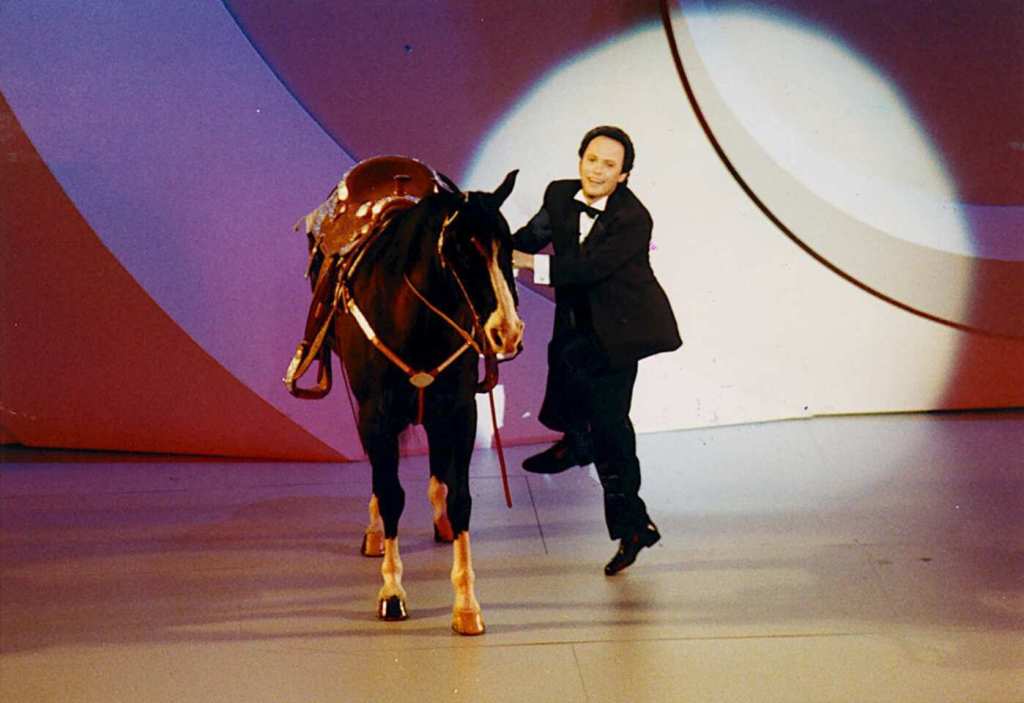
When I was a teenager in the late 1980’s and early 1990’s, I didn’t know a single person who loved movies like I did, not even close. I’d watch the Oscars by myself every year. The next day I’d have no one to talk to about my enjoyment of the show and my favorite winners or biggest disappointments. My family and friends loved me, but movies just weren’t their thing. As such, I couldn’t really talk to anyone about how happy I was that Sean Connery had won an Oscar, or how upset I was that GOODFELLAS didn’t win an Oscar, or then how excited I was that my hero Clint Eastwood had dominated the awards with UNFORGIVEN! This was the day and time where there was no social media so I was truly alone in my obsession. Being alone didn’t matter though, because there was just something about the world of film that I was fascinated with from the moment our family got our first VCR. Seeing my favorite stars all together in the same building was just so fun. My favorite host of my youth was Billy Crystal. He was just amazing, and I even remember him riding a horse off the stage at the 1991 show, the year I graduated high school.
I guess after heading off to college and then starting a family a few years later, the Oscars became less and less important to me over the years after that. I still didn’t know anyone who loved movies like me, but now I had a career to focus on and little league baseball games to coach. As much as I still enjoyed the cinema, I guess it’s fair to say my priorities changed. And then I got involved in the world of cinema on social media in 2021. I met people like Eric Todd, who shares my love for the actor Charles Bronson. I met people like Lisa Marie Bowman, Jeff “Who is not Joseph Cotten,” Stewart Moncure, and others on Twitter who love to watch movies together and tweet about them. This is the first time in my life that I actually know a group of people who love movies like I do. These folks take cinema seriously and don’t make fun of me for doing the same. I found my movie people. So I started watching the Oscars again. Watching OPPENHEIMER win 7 Oscars, including Best Picture, a couple of years back was especially enjoyable for me since one of my favorite actors of my youth, James Woods, served as an Executive Producer. I’m watching the Oscars again tonight. It’s just more fun knowing that there really are people out there who care about movies, and the people who make them, just as much as I do.
Ah, the 80s! Ronald Reagan was president. America was strong. Russia was weak. The economy was booming. The music was wonderful. Many great movies were released, though most of them were not nominated for any Oscars. This is the decade that tends to drive most Oscar fanatics batty. So many good films that went unnominated. So many good nominees that failed to win. Let’s dive on in!
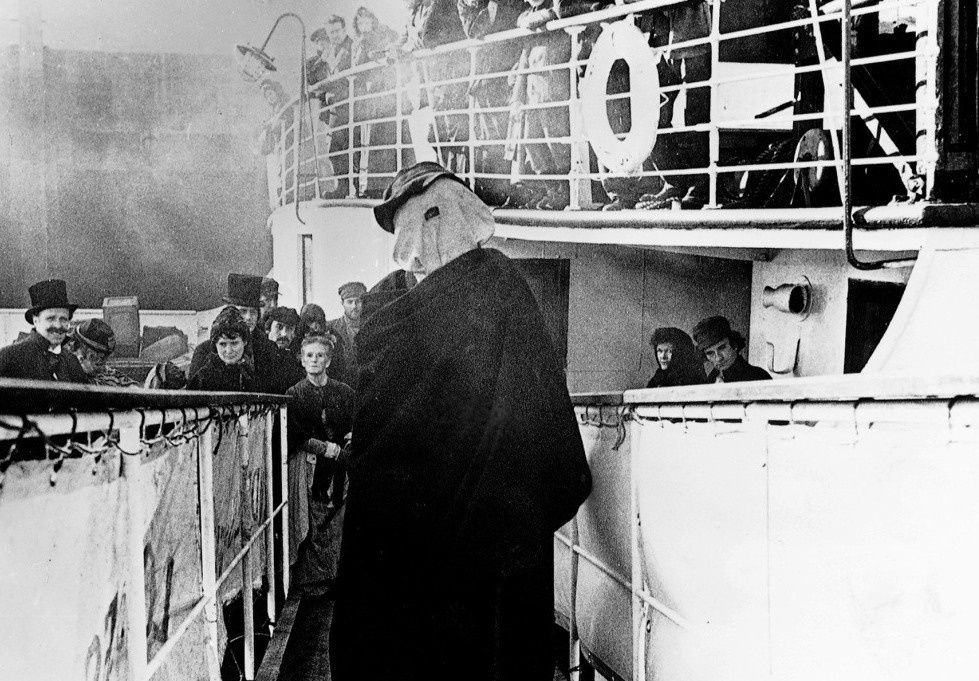
Should Have Won: Ordinary People is actually a pretty good film. It may feel more like a made-for-TV movie than a feature film but it’s well-acted and it deserves some credit for not offering up any easy solutions. A lot of people would say that the Oscar should have gone to Raging Bull but, as well-directed and acted as that film is, Jake La Motta is such an unlikable character that it’s hard for me to really get emotionally invested in his story. My vote would have gone to David Lynch’s The Elephant Man. Lynch tells an inspiring story without compromising his surreal vision.
Should Have Won: The victory of Chariots of Fire is an odd one. The music is great but the film itself isn’t particularly memorable. I really, really like Atlantic City but ultimately, my vote would go to Raiders of the Lost Ark, an adventure that doesn’t insult the intelligence of its audience.
Should Have Won: Gandhi is the epitome of the type of Oscar winner that won less because of any cinematic artistry involved in the production and more because of what it was about. To be honest, though, I’m not extremely enthusiastic about any of the other nominees either. Ultimately, I guess I would have to go with E.T. It’s a bit heavy-handed but it works.
(My pick for the best of 1982 would probably be …. I don’t know. Blade Runner? Diner? There are some really good 1982 films but it’s hard to find one that just leaps out and says, “This is the best of the year!” Actually, I’d probably go with Tenebrae, despite the fact that it wasn’t released in the States until 1984 and in a heavily edited version at that.)
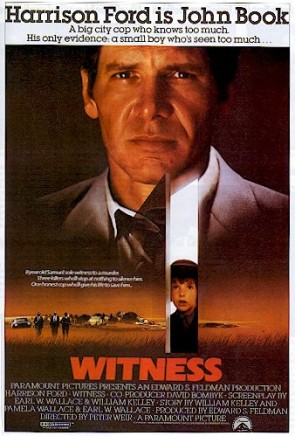
Should Have Won: Out of Africa is a pretty boring movie and Robert Redford is totally miscast as an Englishman. (To be honest, Redford is pretty much miscast as anyone but Robert Redford.) There were a lot of good films in 1985 that were not nominated: Brazil, Ran, Runaway Train, The Purple Rose of Cairo, Back to the Future, The Breakfast Club, Mask, After Hours, and quite a few more. Of the nominees, I would have gone for the beautiful and haunting Witness.
Should Have Won: Here’s one of my favorite exchanges from King of the Hill. It’s Peggy and Hank’s anniversary. They have the house to themselves for the weekend. Feeling that the romance has gone out of their lives, Peggy’s depressed. Hank tries to cheer her up.
Hank: “C’mon, Peg, we’ve got the house to ourselves. Plus, I rented an R-rated movie.”
Peggy (briefly hopeful): “Really? What movie?”
Hank (pauses, looks down): “Uhmmm …. Platoon.”
Some people love Platoon and some people don’t. You can put me in the latter category. Oliver Stone achieves a dream-like intensity but good God, was Charlie Sheen ever a good actor? Of the nominees, I would vote for A Room With A View.
Among the films not nominated this year: Blue Velvet, Aliens, Ferris Bueller’s Day Off, Stand By Me, Mona Lisa, Something Wild, and Top Gun.
Should Have Won: How about Full Metal Jacket? Oh wait, wasn’t nominated. Robocop? Not nominated. Dirty Dancing? Not nominated. Oh well. Even if those films were nominated, I would still have voted for Hope and Glory.
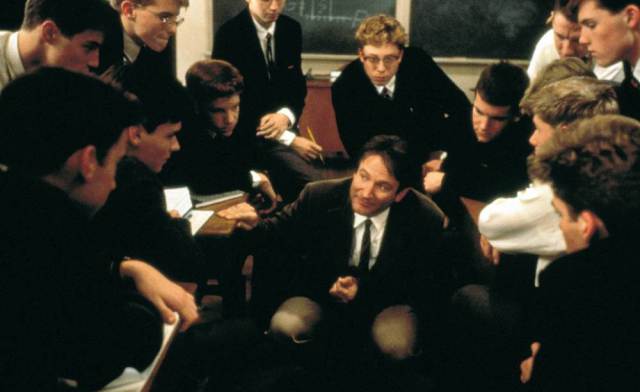
Should Have Won: This is an odd year. It’s kind of a weak line-up. Not nominated were films like Do The Right Thing, Scandal, Crimes and Misdemeanors, Enemies: A Love Story, and Henry V. Driving Miss Daisy gets criticized for obvious reasons but Jessica Tandy and Morgan Freeman both give strong performances. Born on the 4th of July has some good moments but Oliver Stone’s heavy hand eventually gets in the way and the scene where Tom Cruise-as-Ron-Kovic tracks down the parents of the soldier he accidentally killed only succeeds in making Kovic look like a selfish jerk. Dead Poets Society is, in many ways, just as heavy-handed as Born On the 4th of July but it’s also a lot more likable and I enjoyed the trio of Ethan Hawke, Robert Sean Leonard, and Josh Charles. In the end, Dead Poets Society gets my vote.
Coming up in thirty minutes — it’s time for the 90s!
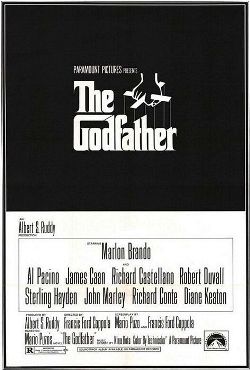
Ah, the 70s. The decade started with the collapse of the studio system and the rise of the so-called movie brats. For the first half of the decade, Hollywood was producing the type of challenging films on which they would never again be willing to take the risk. The 70s were indeed a second cinematic golden age, full of anti-heroes and dark endings. Then, in 1977, Star Wars changed all of that and ushered in the era of the blockbuster. The 1970s gave the world disco, The Godfather, and some of the best Oscar winners ever.
Should Have Won: I know that there are people who love Patton. I’ve never been able to sit through the whole film, despite the obvious power of George C. Scott’s lead performance. Airport is dull when compared to other disaster films and Love Story will leave you actively rooting for either divorce or death. Of the nominated films, M*A*S*H and Five Easy Pieces are the strongest. Both are flawed, of course. M*A*S*H is frequently misogynistic but, at the same time, it’s still one of the most effective anti-war films I’ve ever seen. (The scene where blood suddenly spurts out of a wounded soldier’s neck still shocks me.) Five Easy Pieces features a great performance by Jack Nicholson but, far too often, it doesn’t play fair by making everyone around him a caricature. In the end, my vote goes to M*A*S*H.
Should Have Won: With the exception of that nomination for Nicholas and Alexandra, this was a strong year and I can make a case for each other four remaining nominees. I love The Last Picture Show but, a few years ago, I saw a showing of The French Connection at the Alamo Drafthouse and it still wowed me, even though I knew everything that was coming. In this case, I agree with the Academy. The French Connection deserved its victory.
Should Have Won: Every time I watch The Sting, I discover that it’s actually better than I remembered. American Graffiti is another personal favorite of mine. That said, I’m a Catholic girl who loves horror movies so there’s no way I’m not picking The Exorcist here.
Should Have Won: This is a great lineup of nominees, with all five deserving a nomination and deserving to win as well. As for which film would get my vote, my mind says Nashville but my heart says Jaws. In this case, I’ll go with my heart.
Should Have Won: This one is difficult for me. For me, the race comes down to All The President’s Men, Network, and Taxi Driver. (I no longer feel as negatively about Rocky as I once did but I still feel like it shouldn’t have been nominated for Best Picture, much less won.) In the end, my love of horror films leads me to vote for Taxi Driver. So, even if I am taking away Rocky’s victory, I’m still voting for a film where an inarticulate man gets a job working for Joe Spinell.
Should Have Won: Annie Hall. Yeah, I know everyone’s pretending like they never liked any of Woody Allen’s films now. Annie Hall is still a charming bittersweet comedy.
Should Have Won: This is a year in which all of the nominees were flawed. An Unmarried Woman gets my vote, despite the fact that the film has its share of “It’s so tough being rich” moments.
Should Have Won: Ugh, I can’t stand Kramer vs. Kramer. Beloved by some, this is a film that makes me want to throw a shoe at the screen whenever I see it. (It’s that smug little smile that Dustin Hoffman gets on his face while talking to Jane Alexander that pushes me to my breaking point.) Though I love Breaking Away, All That Jazz is the film that gets my vote.
Ah, the 60s. Both the studio system and the production code collapsed as Hollywood struggled to remain relevant during a time of great social upheaval. The Academy alternated between nominating films that took chances and nominating films that cost a lot of money. It led to some odd best picture lineups.
Should Have Won: The two best and most influential films of 1960 — Hitchcock’s Psycho and Kubrick’s Spartacus — went unnominated. Of the nominees, The Apartment deserved its victory.
Should Have Won: Again, of the films nominated, the Academy made the right decision. West Side Story earned that victory. When you’re a Jet, you’re the best. That said, I do so wish that Breakfast at Tiffany’s had been nominated. (Of course, if I had the power to go back and change the nominees, I would also have the power to remove all of the scenes with Mickey Rooney as Holly’s neighbor. That’s the good thing about having power.)
Should Have Won: Now, this was a great year for films! With the exception of Mutiny on the Bounty, all of the nominees deserved to be there. There were a lot of other films released that year that probably deserved to be nominated as well: Advise and Consent, The Manchurian Candidate, The Man Who Shot Liberty Valance, Whatever Happened To Baby Jane, Days of Wine and Roses, Lolita, David and Lisa, The Miracle Worker, and so many others. It’s so hard for me to pick between Lawrence of Arabia and To Kill A Mockingbird. In the end, and this should not be taken as criticism of Lawrence of Arabia at all, I probably would have voted for To Kill A Mockingbird.
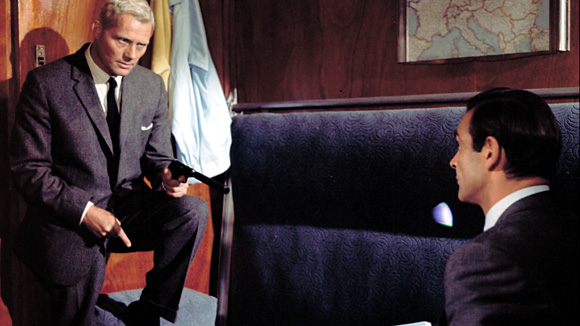
Should Have Won: If 1962 featured one of the strongest best picture lineups, 1963 features one of the weakest. In a unimpressive field in which only two best picture nominees also received nomination for best director, Tom Jones seems like the obvious winner. That said, Cleopatra is such an amazing disaster that I’d probably have to vote for it just to make sure that the world never forgot it. From Russia With Love was released in the UK during this year but it wasn’t released in the U.S. in time to qualify for the ’63 Oscars. Still, I’m going to pretend that it was and name it the best film of 1963.
Should Have Won: My Fair Lady is a good example of a film that won because the Academy was trying to pretend that it was still the 1950s. I would have voted for Dr. Strangelove.
Should Have Won: While international cinema was breaking boundaries and challenging audiences, the Academy was honoring My Fair Lady and The Sound of Music. The 1965 best picture line-up is not a particularly strong one and A Thousand Clowns is somehow even more annoying than The Sound of Music. (“Yessir, that’s my baby” — SHUT UP!) That said, for me, Darling is the clear winner.
Should Have Won: Another weird lineup. A Man For All Seasons isn’t bad but it still feels more like homework than cinema. Who’s Afraid of Virginia Woolf? was a groundbreaking film and featured Elizabeth Taylor and Richard Burton at their best. Alfie made a star out of Michael Caine. That said, the more I thought about it, the more I liked The Russians Are Coming, The Russians Are Coming. It’s a likable comedy. It’s a bit lightweight. But, of all the nominees in this admittedly imperfect lineup, it’s probably the one I would want to watch more than once.
(That said, if I was in charge of the ’66 nomination, the Best Picture lineup would have been: Blowup, Juliet of the Spirits, Seconds, Kill Baby Kill, A Man and A Woman, and The Oscar, just to mess with people. The ratings for my Academy Awards would be so low that the Oscars would probably never be televised again.)
Should Have Won: In The Heat Of The Night isn’t bad but it’s also not The Graduate.The Graduate gets my vote, even though I know Benjamin and Elaine probably broke up as soon as they got off that bus.
Should Have Won: What a weird line-up! Consider some of the eligible films that were not nominated: Petulia, Pretty Poison, The Good The Bad and the Ugly, 2001, Planet of the Apes, Rosemary’s Baby. Oliver! is better than My Fair Lady and The Sound of Music but it still feels like a film that won largely because it was a big production. Out of the nominees, I guess I would vote for …. Romeo and Juliet. I know The Lion in Winter is great but Romeo and Juliet brought Shakespeare to vibrant life.
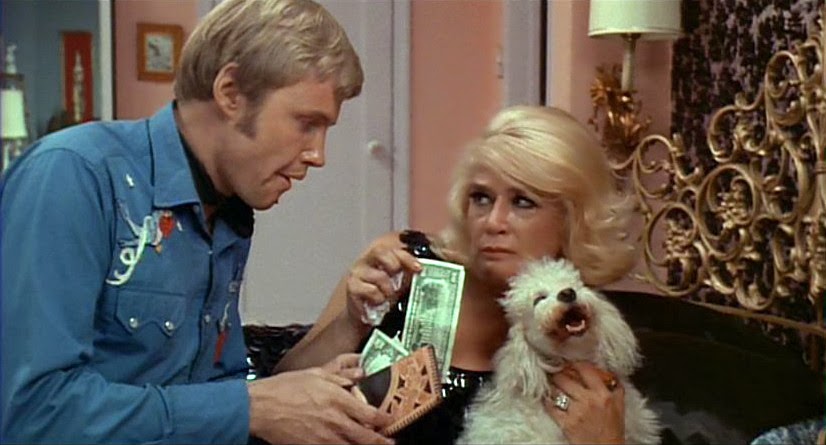
Should Have Won: The Academy was really struggling to find itself in 1969. Here are some of the eligible films that were not nominated: Once Upon A Time In The West, The Wild Bunch, Easy Rider, Medium Cool, Alice’s Restaurant, They Shoot Horses Don’t They?, Last Summer, and Bob & Ted & Carol & Alice. Instead, the best picture lineup was made up of: an international political thriller, a buddy comedy, an X-rated film about New York hustlers, an overproduced musical, and an old-fashioned historical drama. That said, out of the nominees, I think the Academy made the right choice. Though the film has a few pretentious moments, Midnight Cowboy remains an effective portrait of life on the fringes of society.
Now, put on your bell bottoms. Do a line of coke. Turn on the Bee Gees. Coming up in about an hour — it’s the 70s!



 Through the Shattered Lens