4 Or More Shots From 4 Or More Films is just what it says it is, 4 shots from 4 of our favorite films. As opposed to the reviews and recaps that we usually post, 4 Shots From 4 Films lets the visuals do the talking!
Today, the Shattered Lens honors both the birth and the legacy of the great filmmaker, Akira Kurosawa! It’s time for….
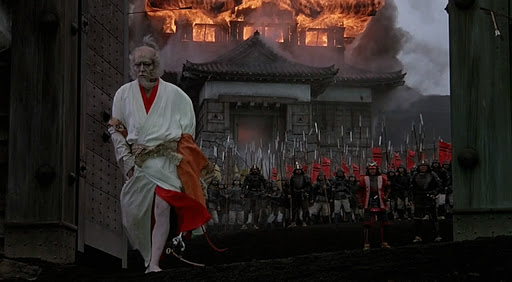
4 Shots From 4 Akira Kurosawa Films
The Hidden Fortress (1958, dir. by Akira Kurosawa, DP: Kazuo Yamasaki)
Yojimbo (1961, dir by Akira Kurosawa, DP: Kazuo Miyagawa)
Ran (1987, dir by Akira Kurosawa, DP: Takao Saito)
Dreams (1990, dir by Akira Kurosawa, DP: Takao Saito)
As some of our regular readers undoubtedly know, I am involved in hosting a few weekly live tweets on twitter and occasionally Mastodon. I host #FridayNightFlix every Friday, I co-host #ScarySocial on Saturday, and I am one of the five hosts of Mastodon’s #MondayActionMovie! Every week, we get together. We watch a movie. We snark our way through it.
Tonight, for #MondayActionMovie, the film will be Slaughter in San Francisco!
If you want to join this watch party, just hop onto Mastodon, pull up Slaughter in San Francisco on YouTube, start the movie at 8 pm et, and use the #MondayActionMovie hashtag!
“I am happy. You no die. Let’s save planets!” — Rocky
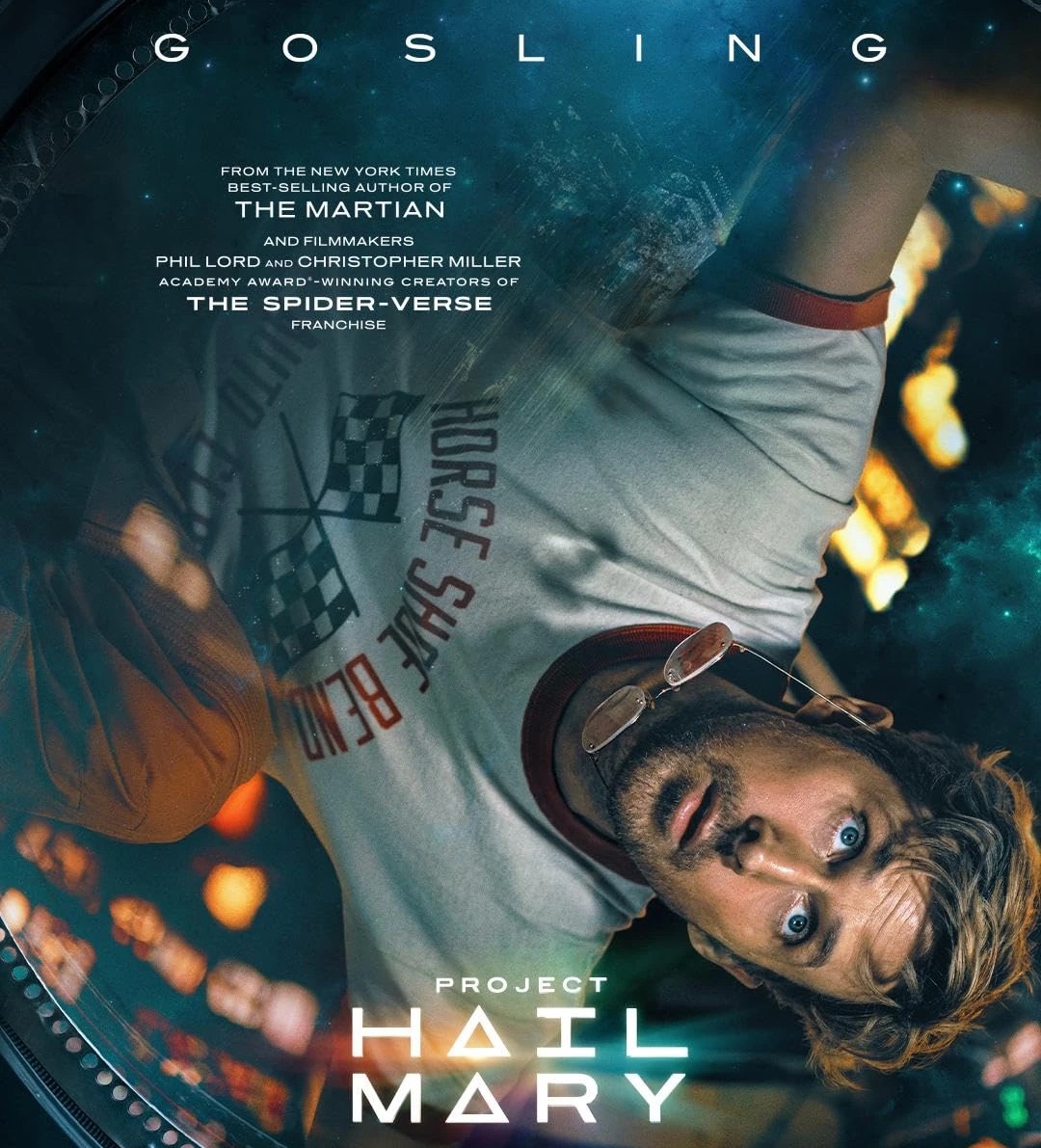
Project Hail Mary delivers a crowd-pleasing space adventure that captures the spirit of Andy Weir’s bestselling novel without reinventing the sci-fi wheel. Ryan Gosling shines as the reluctant hero, carrying the film through its mix of brainy puzzles and heartfelt moments. Directed by Phil Lord and Christopher Miller, this big-budget adaptation balances wonder with some familiar tropes, making it a solid popcorn flick for fans of hard science fiction laced with humor.
The story kicks off with Dr. Ryland Grace, a brilliant but socially awkward science teacher played by Gosling, who wakes up alone on a spaceship hurtling through the solar system. He has amnesia, no crewmates, and a mission he can’t quite remember—saving Earth from a mysterious microbe called Astrophage that’s dimming the sun and threatening global catastrophe. As Grace pieces together his past through flashbacks, we see how he went from a disgraced academic debunking fringe theories to humanity’s last-ditch savior. The setup echoes The Martian, Weir’s previous hit, with its lone survivor using wit and science to beat impossible odds.
Gosling nails the everyman genius vibe, blending wide-eyed confusion with deadpan quips that keep things light. His Grace is no stoic astronaut; he’s a guy who’d rather teach middle school than lead a suicide mission, cracking jokes about his fear of commitment even as he’s rigging experiments with duct tape and hope. The performance anchors the film’s emotional core, especially in quieter moments where Grace grapples with isolation and doubt. Sandra Hüller adds gravitas as Eva Stratt, the no-nonsense project leader who strong-arms world governments into action—she’s all icy efficiency, a nice counterpoint to Gosling’s rumpled charm.
Lord and Miller, the duo behind The Lego Movie and Spider-Man: Into the Spider-Verse, bring their signature visual flair to the vastness of space. The Hail Mary ship feels lived-in and jury-rigged, with practical sets that pop against sweeping CGI vistas of alien planets and swirling Astrophage clouds. Early scenes use dreamlike tilts and blurred transitions to mirror Grace’s foggy memory, creating a disorienting but captivating rhythm. It’s not always seamless—the nonlinear structure can jolt you out of the immersion—but it builds tension effectively as revelations stack up.
Screenwriter Drew Goddard, who collaborated with Weir on The Martian, stays faithful to the book’s plot beats and scientific grounding. Astrophage isn’t just a plot device; it’s a clever microorganism that feeds on starlight, explained through Grace’s whiteboard scribbles and explosive demos. The film dives into real astrophysics—like orbital mechanics and xenobiology—without dumbing it down, yet it keeps the pace brisk with problem-solving montages set to a retro-futuristic score. Think Guardians of the Galaxy vibes, complete with a catchy farewell tune that hits surprisingly hard.
About halfway through, the story pivots to its most memorable element: Grace’s encounter with Rocky, an alien engineer from the 40 Eridani system. Voiced and puppeteered by James Ortiz, Rocky is a spider-like creature with a high-pitched ammonia-breathing voice, communicated via a bulky translation rig à la Arrival. Their friendship is the heart of Project Hail Mary, turning a solo survival tale into a buddy sci-fi romp. The xenolinguistics—figuring out math and music as common ground—feels fresh and fun, with practical effects making Rocky endearing rather than creepy.
That said, the film isn’t flawless. Clocking in around two hours, it rushes some of the book’s deeper world-building, like the global panic on Earth or the crew’s backstories, which get condensed into quick flashbacks. Grace’s arc from coward to hero leans on a simple mantra—”bravery is fighting for someone else”—that’s uplifting but predictable. It doesn’t push cinematic boundaries like Interstellar or Dune, settling for feel-good spectacle over profound philosophy. The massive budget shows in the polish, but it occasionally feels like a theme-park ride: thrilling set pieces, like a high-stakes EVA gone wrong, prioritize awe over subtlety.
Visually, the film excels in its alien encounters and spacewalk sequences, with IMAX-friendly shots of Eridani b’s jagged landscapes and bioluminescent horrors. The Astrophage effects are a standout—tiny, shimmering specks that swarm like deadly fireflies, rendered with meticulous detail. Sound design amplifies the isolation, from the hum of life support to Rocky’s echolocating chirps. It’s all wrapped in a score that mixes orchestral swells with synth grooves, evoking 80s space operas while feeling modern.
Thematically, Project Hail Mary champions collaboration across species and borders, a timely nod amid real-world divisions. Grace’s growth isn’t just about smarts; it’s about vulnerability, learning to trust Rocky despite zero shared language or biology. The film handles this with sincerity, avoiding preachiness by grounding it in humor—imagine two nerds bonding over thermodynamics while one’s in a pressurized suit and the other’s a five-eyed rock. It’s optimistic sci-fi that posits curiosity as humanity’s superpower, even if the execution stays safely within blockbuster lanes.
Supporting cast fleshes out the ensemble without stealing focus. Tracy Letts chews scenery as a blustery politician, while smaller roles like the multinational crew add diversity to the stakes. Production design nods to NASA realism, with the Beetle probes (Grace’s mini-shuttles) stealing scenes in their plucky, R2-D2 fashion. Pacing dips in the mid-act info dumps, but Goddard trims the fat smartly, ensuring the climax—a desperate race against entropy—delivers white-knuckle payoff.
Early reactions praise its fidelity to Weir’s page-turner, with fans thrilled by the faithful visuals and emotional beats. Detractors might call it formulaic, but in a genre crowded with grimdark dystopias, this one’s a breath of fresh (oxygenated) air. It’s not the most original sci-fi, but it’s entertaining as hell, blending laughs, tears, and light-speed thrills.
For book purists, the adaptation honors the source without copying verbatim—key twists land with impact, and the science holds up under scrutiny. Weir himself has endorsed it, chatting about Rocky’s creation and making quantum mechanics accessible. If you’re burned out on capes or zombies, Project Hail Mary offers smart, hopeful escapism that sticks the landing.
Ultimately, this is peak “movie medicine”—a fun, moving reminder that lone wolves become legends with the right friends, human or otherwise. Gosling’s charisma, paired with Lord and Miller’s playful direction, makes it soar higher than its plot alone might suggest. Worth the ticket for any sci-fi buff craving brains with their spectacle; just don’t expect it to redefine the stars.
4 Or More Shots From 4 Or More Films is just what it says it is, 4 shots from 4 of our favorite films. As opposed to the reviews and recaps that we usually post, 4 Shots From 4 Films lets the visuals do the talking!
Today is William Shatner’s birthday, which means that it is time for….
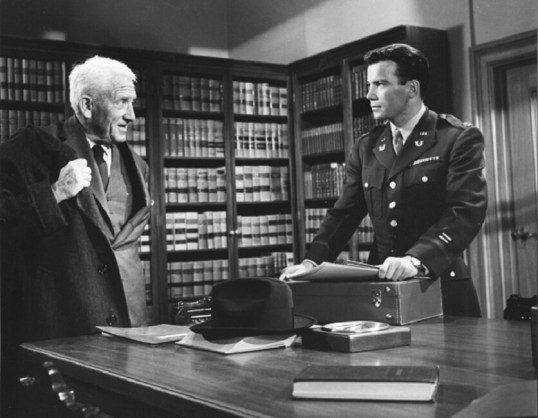
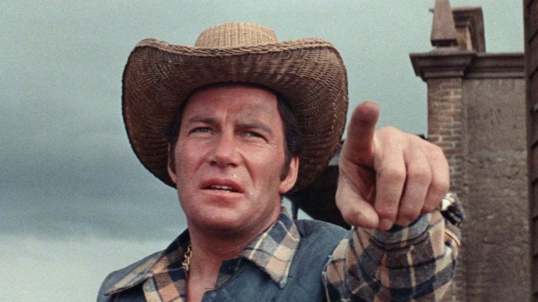
4 Shots From 4 William Shatner Films
Judgment at Nuremberg (1961, dir by Stanley Kramer, DP: Ernest Laszlo)
Incubus (1966, dir by Leslie Stevens, DP: Conrad Hall)
Big Bad Mama (1974, dir by Steve Carver, DP: Bruce Logan)
The Devil’s Rain (1975, dir by Robert Fuest, DP: Alex Phillips Jr.)
Today is Gary Oldman’s 68th birthday and, in honor of the occasion, here’s a scene from one of my favorite Oldman films, 2011’s Tinker Tailor Soldier Spy.
In this scene, British intelligence officer George Smiley (Gary Oldman) confronts his colleague and Russian mole Bill Haydon (Colin Firth). This scene is a masterclass of good acting, put on by both Firth and Oldman. As Haydon tries to justify his behavior, Smiley listens with deceptive calmness. When I first saw this film, Oldman suddenly raising his voice made the entire audience jump.
As some of our regular readers undoubtedly know, I am involved in a few weekly live tweets on twitter. I host #FridayNightFlix every Friday, I co-host #ScarySocial on Saturday, and I am one of the five hosts of #MondayActionMovie! Every week, we get together. We watch a movie. We tweet our way through it.
Tonight, for #ScarySocial, I will be hosting 2002’s Resident Evil!
If you want to join us on Saturday night, just hop onto twitter, start the film at 9 pm et, and use the #ScarySocial hashtag! The film is available on Prime! I’ll be there co-hosting and I imagine some other members of the TSL Crew will be there as well. It’s a friendly group and welcoming of newcomers so don’t be shy!
4 Or More Shots From 4 Or More Films is just what it says it is, 4 shots from 4 of our favorite films. As opposed to the reviews and recaps that we usually post, 4 Shots From 4 Films lets the visuals do the talking!
104 years ago, on the very day, Russ Meyer was born in San Leandro, California. Meyer would get his start filming newsreels during World War II, with much of his newsreel footage later showing up in films like the 1970 Oscar winner, Patton. When he returned to the United States, he continued to make films, though the subject matter changed a bit. Meyer was one of the pioneers of the adult film industry, though his once controversial films now seem rather quaint and innocent when compared to the industry’s later films. Meyer’s strong visual sense and his intentionally over-the-top plots made him a favorite amongst underground critics. In the 70s, he was briefly embraced by mainstream Hollywood but, unhappy with having to deal with the studio bosses, Meyer returned to making the type of independent, grindhouse films that made him famous.
Russ Meyer was 82 years old when he died in 2004. He was acclaimed as one of America’s first and most iconic independent filmmakers.
Here are 4 Safe-For-Work Shots From 4 Russ Meyer Films.
4 Shots From 4 Russ Meyer Films
Faster, Pussycat! Kill! Kill! (1965, dir by Russ Meyer, DP: Walter Schenk)
Motorpsycho (1965, dir by Russ Meyer, DP: Russ Meyer)
Cherry, Harry, & Raquel! (1970, dir by Russ Meyer, DP: Russ Meyer)
Beyond The Valley Of The Dolls (1970, dir by Russ Meyer, DP: Fred J. Koenekamp)
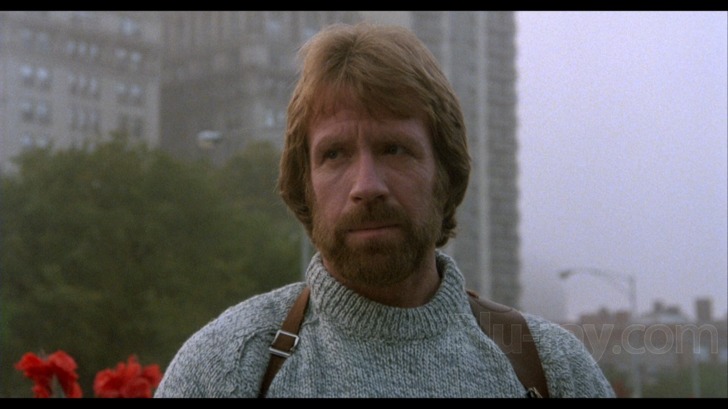
Chuck Norris was there for me at the very beginning. When I fell in love with action movies, it was primarily because of three men, first Charles Bronson, followed by Clint Eastwood and Chuck Norris. Back in the 80’s when I was too young to drive, I couldn’t just pull a movie up on my phone or TV anytime I wanted. I had to rely on certain TV channels, like Fox 16 out of Little Rock, and the occasional trip to the video store. Chuck Norris was a megastar on Fox 16 and on the shelves of the video store. Fox 16 would have movie weeks filled with movies like SILENT RAGE, LONE WOLF MCQUADE, MISSING IN ACTION, and CODE OF SILENCE. These movies are just a part of who I am, and Chuck Norris always came across as a fundamentally decent and courageous man on screen.
Chuck may not have been a critical darling, but he had a presence and charisma about him that drew me in from the very beginning. Even today, Norris has his own unique section in my massive collection of physical media. Up to this point, only the loss of my hero Charles Bronson back in 2003 has stirred up these same kinds of feelings that I’m feeling today. I remember when my son discovered the “Chuck Norris Facts” when he was about 10 years old or so. He loved them so much and would tell me his favorites constantly. It made me happy that my own son knew who Chuck Norris was, even if it was through extreme comedic myth making! I was so happy when Norris cameo’d in THE EXPENDABLES 2 and even told one of this Chuck Norris facts. We loved it and it’s definitely my favorite EXPENDABLES movie.
A little part of me is gone tonight knowing that Norris has passed away. From this point forward, anytime I think of Norris or watch his movies, it will be from a perspective that he’s know longer alive. But one of the great things about movies is that whenever I want to see a young, vibrant Norris, I just have to go to my movie shelves and I can be watching THE DELTA FORCE in a matter of moments. I had to learn how to deal with it for Charles Bronson. Now I’ll do the same with Chuck Norris.
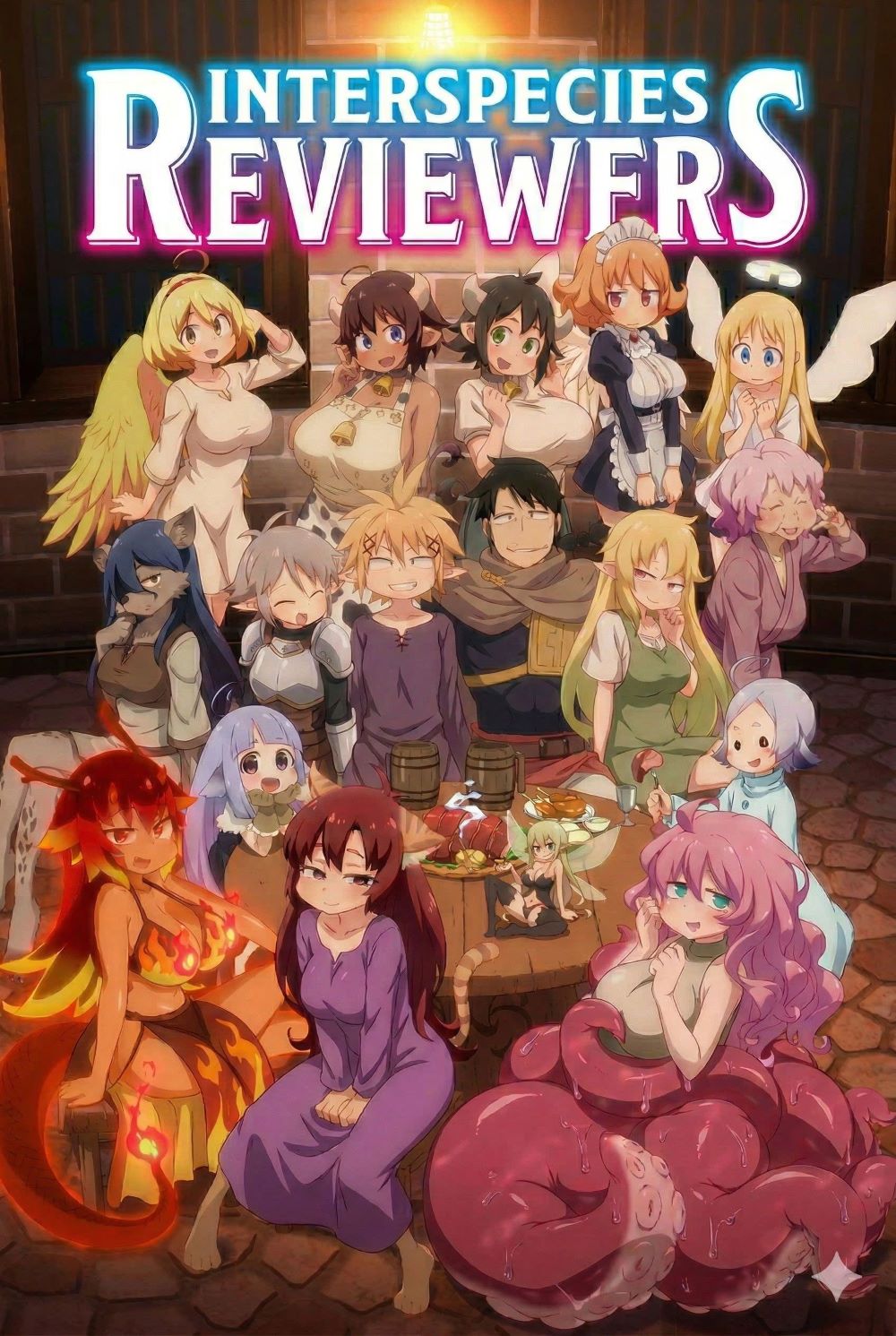
What really nudges Interspecies Reviewers into “guilty pleasure” territory is the production’s split personality. On one hand, it’s shamelessly explicit for a late‑night TV anime; on the other, it’s structurally tight and surprisingly imaginative with its worldbuilding. The fantasy ecosystem is treated almost like a handbook of interspecies compatibility: differences in mana, lifespan, physiology, and even perception of age all factor into how each reviewer scores their night out. You’ll get a gag about the dragon girl’s overwhelming presence right next to a mini‑lecture on why fairies have extremely strict size limitations for their patrons. That blend of horny premise and nerdy specificity makes it feel like your group chat’s “what if” jokes got adapted into a full production.
There’s also the whole meta layer: Interspecies Reviewers was so out there that major distributors and broadcasters backed away from it, dropping or canceling its run because of how far it pushed explicit content for television. For a modern TV anime to get pulled partway through its broadcast is rare, and that notoriety quickly became part of the show’s identity. Just knowing that multiple networks balked at it adds to the sense that you’re watching something you’re not “supposed” to be watching—always a potent ingredient in guilty pleasure status.
The humor, crucially, is broader than just “look, boobs.” A lot of the jokes revolve around how absurdly bureaucratic and normalized sex work is in this world, from porter guilds hauling review sheets across the land to rival reviewers trying to torpedo or inflate ratings. There’s even an incubus critic who takes offense at the main crew’s negative scores and starts leaving his own glowing reviews, only for his swagger to be cut short by a vengeful lover. Moments like that reframe the series as a raunchy workplace comedy disguised as fantasy porn: everyone has opinions, everyone’s hustling, and nobody’s as objective as they pretend.
None of this magically elevates Interspecies Reviewers into high art, but it does make the show a lot more watchable than its reputation suggests. The episodic structure gives it a breezy, “one more episode” pacing; you always want to see what weird race or gimmick they’ll tackle next. The scoring boards at the end of each brothel visit become their own running joke, with wildly varying ratings, petty commentary, and the occasional self‑own when a character realizes their kink is not shared by anyone else in the party. It’s almost like a fantasy version of Anthony Bourdain crossed with late‑night cable: travel to a new spot, experience the local flavor, then sit around and compare notes over drinks.
All that said, this is exactly the sort of series most people will feel weird admitting they enjoyed. The explicit content isn’t a light garnish; it’s the central axis of every single episode. There’s no serious emotional through‑line to hide behind, no grand plot twist, no lofty theme you can trot out to justify the time investment. It’s just well‑executed trash: unapologetically focused on sex, gleefully juvenile in its punchlines, and willing to go places that many “edgy” shows only flirt with. Even fans who praise it often do so with qualifiers, acknowledging that it’s “kind of weird” while admitting it’s hot, funny, or unexpectedly creative.
That tension—between embarrassment and enjoyment—is the core of why Interspecies Reviewers works as a guilty pleasure. One side of you rolls your eyes at how lowbrow the premise is, yet the other side recognizes that the show is actually doing some clever things with subjectivity, fantasy biology, and the review culture we live in. You can’t really defend it in polite company, and you probably won’t see it on anyone’s “Top 10 Must‑Watch Anime for Beginners” list, but you also might find yourself remembering specific gags, species breakdowns, or character reactions long after you’ve finished it.
So, is Interspecies Reviewers good? In a conventional sense, maybe not. In the “I had more fun with this than with half the safe, respectable shows in its season” sense, absolutely. It’s crude, controversial, and brazenly fixated on its own niche, but it’s also surprisingly consistent, inventive with its setups, and genuinely funny if you’re on its wavelength. That combination of shame and amusement, of “I really shouldn’t be enjoying this” tangled up with “but I kind of am,” is exactly what makes Interspecies Reviewers one of anime’s purest modern guilty pleasures.
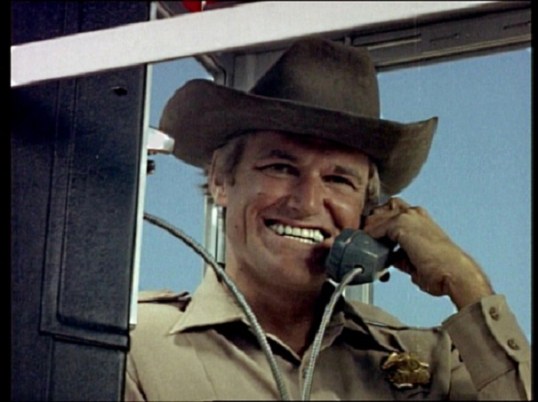
I honestly never thought I’d write those words. Chuck Norris has passed away at the age of 86. Chuck inspired generation of martial artists. He won the respect of Bruce Lee. He choreographed some of the best fight scenes of the early 70s. He never claimed to be a great actor but he still starred in some of the most entertaining films ever made. He is survived by five children and 13 grandchildren. By all accounts, he was a genuinely good guy who took his position as a role model seriously. He will be missed. It’s hard to know what else to say right now so I’ll let Chuck do the talking:








 Through the Shattered Lens