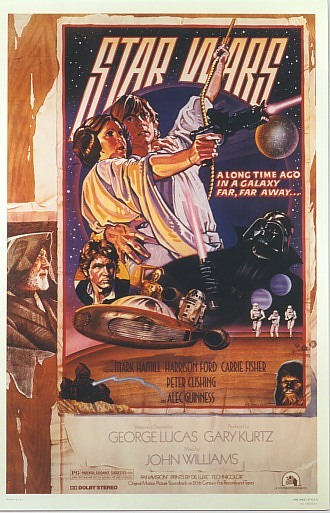
May The Fourth Be With You: Looking Back At Star Wars


Today is Star Wars Day.  (It’s May 4th.  May the Fourth Be With You!  I’ll stop now.)  Five years ago, I ranked all of the Star Wars feature films that had been released up until that point from best to worst.  Here’s how I ranked them:

  1. The Empire Strikes Back
  2. Rogue One
  3. New Hope
  4. The Force Awakens
  5. Revenge of the Sith
  6. Return of the Jedi
  7. Solo
  8. The Rise of Skywalker
  9. The Last Jedi
  10. Attack of the Clones
  11. The Phantom Menace

Since that was a while ago, I decided to take a look back and see if I still felt the same way.  Here are my brief thoughts on each film, in order of release.

Star Wars: Episode IV — A New Hope (1977, directed by George Lucas) — A New Hope may not be the best Star Wars film but it’s still the most entertaining, even if George Lucas doesn’t seem to realize that.  A tribute to the serials and space operas that Lucas grew up with, A New Hope features great action scenes, special effects that hold up well despite not being as slick as modern CGI, and great performances from Alec Guinness and Harrison Ford.  Mark Hamill would eventually become a much better actor, though you might not guess just from his performance here.  Watching New Hope today, I really appreciate that the movie doesn’t get bogged down in overexplaining things.  We don’t need to know what the Clone Wars were specifically about or what the Kessel Run actually was.  They sound cool and that’s all that was really required.  Despite what some claim, there is absolutely no evidence that Darth Vader was meant to be Luke’s father in this move.

Star Wars Holiday Special (1978, directed by Steve Binder) — Only aired once, I debated whether to include it here or not.  I eventually did just because it features the debut of Boba Fett.  It’s as bad as you’ve heard but the special’s real since is that it’s incredibly boring.  Harrison Ford still looks happier here than he did in Return of the Jedi.

Star Wars: Episode V — The Empire Strikes Back (1980, directed by Irvin Kershner) — The best of the original trilogy, this installment was surprisingly dark, downbeat, and violent.  Mark Hamill finally started to show some signs of growth as an actor while Harrison Ford’s Han Solo continued to be the coolest rebel in the universe.  Combining the more thoughtful scenes with Yoda with the action-orientated scenes on Cloud City made this the most intelligent of the Star Wars films.  The battle on Hoth remains one of the best action scenes ever.  I think every kid who saw this movie wanted an AT-AT Walker.  I know I did.

Star Wars: Episode VI — Return of the Jedi (1983, directed by Richard Marquand) — It’s not quite as bad as its reputation, largely due to the opening with Jabba the Hutt’s court.  Jabba is so grotesque and evil in this movie that it’s hard not to regret that the subsequent films made him into more of buffoon than a crime lord.  Brining back the Death Star made this film feel like a retread.  The Ewoks were created to sell toys but so was everything else in this movie.  Harrison Ford looks particularly grouchy at the end.

The Ewok Adventure (1984, directed by John Korty) and Ewoks: The Battle For Endor (1985, directed by Jim and Ken Wheat) — I guess if these had been successful, there would have been an Ewok television show.  The Ewok Adventure feels childish and features a narrator.  Battle for Endor is surprisingly violent for a movie about teddy bears.  Both films are more bland than truly bad.

Star Wars: Episode I — The Phantom Menace (1999, directed by George Lucas) — There’s been some revisionism about this film.  Some people actually defend it now.  Not me.  It’s still pointless.  This movie started the trend of every popular film having to have an in-depth “mythology” behind it.  It turns out that the Evil Empire was all about trade routes and tariffs.  Jake Lloyd gets more blame than he deserves.  Overexplaining the Force was a sign of things to come.  This movie would feature Natalie Portman’s worst performance if not for…

Star Wars: Episode II — Attack of the Clones (2o02, directed by George Lucas) — As painfully generic as its title, this movie was responsible for Hayden Christensen having an undeserved reputation for being a bad actor.  I doubt any actor, no matter how talented, could make Lucas’s dialogue feel natural.

Star Wars: Episode III — Revenge of the Sith (2005, directed by George Lucas) — The only one of the prequels that actually added anything to what we already knew, Revenge of the Sith is dark, violent, and it doesn’t have as many slow spots as the other prequels.  Ewan McGregor finally gets a chance to act and Hayden Christensen and Natalie Portman are finally given actual characters to play.  Today, some people say it’s the best of the Star Wars films.  They’re wrong but it’s still pretty good.

The Clone Wars (2008, directed by Dave Filoni) — The only animated Star Wars film doesn’t get much attention and it does get bogged down in the mythology of the of the prequels.  No one really cares about the specifics of the Clone Wars.  The fact that it’s animated and clearly marketed at kids makes the dialogue easier to tolerate.

Star Wars: Episode VII — The Force Awakens (2015, directed by J.J. Abrams) — When this first came out, a lot of people (including myself) were so happy to have a new Star Wars film that we overrated it.  It’s hard to watch today without thinking about how bad things got after it was released but it does still hold up well as a space adventure, though Daisy Ridley’s blandness is more apparent on subsequent viewings.  The performances of Adam Driver and John Boyega still hold up.  The main attraction, though, is Harrison Ford returning as Han Solo.

Rogue One: A Star Wars Story (2016, directed by Gareth Edwards) — The first stand-alone live action Star Wars feature film is a thrilling space adventures that holds up on subsequent viewings and works because the stakes actually feel real.  For the first time since New Hope, the Death Star is actually frightening.  This remains one of the best films in the franchise and it’s not surprising that it led to the best of the Star Wars television shows.

Star Wars: Episode VIII — The Last Jedi (2017, directed by Rian Johnson) — The haters are right about much of this film.  For all the complaints about Disney not allowing their Marvel directors much freedom, the Star Wars sequels shows what happens when a franchise isn’t sure where it wants to go.  Rian Johnson tries to bring Star Wars down to Earth but that’s not where we want Star Wars.  Rose Tico was an annoying character and her line about saving what we love deserves all of the mockery it received but Kelly Marie Tran still didn’t deserve to be run off of social media.  Turning Luke into a bitter old man was this film’s greatest sin.

Solo: A Star Wars Story (2018, directed by Ron Howard) — That this wasn’t a box office hit was the a clear warning sign that audiences were getting bored with Star Wars.  This Han Solo origin story isn’t bad.  Ron Howard could direct a film like this in his sleep.  It just feels unnecessary.  Alden Ehrenreich does his best but no one can replace Harrison Ford as Han Solo.

Star Wars: Episode IX — The Rise of Skywalker (2019, directed by J.J. Abrams) — J.J. Abrams tries to undo everything that Rian Johnson did in his film.  I don’t blame Abrams because Johnson’s film wasn’t great but just shrugging it all off doesn’t really work either.  The sequel trilogy, which started with such high hopes, ends with a whimper.  Daisy Ridley’s boring performance doesn’t help.

My rankings, as of 2025, are below:

  1. The Empire Strikes Back
  2. Rogue One
  3. New Hope
  4. Revenge of the Sith
  5. Return of the Jedi
  6. Force Awakens
  7. Solo
  8. Rise of Skywalker
  9. The Last Jedi
  10. Ewoks: Battle for Endor
  11. The Clone Wars
  12. The Ewok Adventure
  13. Holiday Special
  14. Phantom Menace
  15. Attack of the Clones

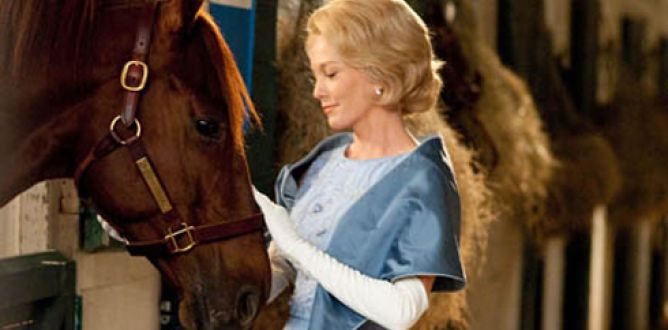
SECRETARIAT (2010) – The greatest racehorse of all time?


I’ll admit that I’m not a huge fan of horse racing, although I will periodically go to the Oaklawn Racetrack in Hot Springs, AR, and watch them run. I did enjoy the horse racing movie SEABISCUIT (2003) when I saw it a decade or so ago, and I always enjoy driving past the beautiful horse farms in Lexington, KY, when I’m on my way to see my wife’s family in West Virginia. This weekend was the Kentucky Derby, and I saw a stat that every horse running is a descendant of the 1973 triple-crown winner, Secretariat. I thought that was pretty cool stuff. I told my wife about it, so we decided to watch the movie SECRETARIAT (2010) this morning. 

The film centers on Penny Chenery Tweedy (Diane Lane), a Boulder, CO housewife who takes over the management of her dad’s horse stables in Virginia when his health gets so bad that he can no longer handle it himself. The business is facing a lot of financial problems, and her husband just wants her to sell everything and come on back home. But Penny doesn’t want to sell, especially when the stable acquires a young colt that just may have to the right combination of speed and stamina to become a great racehorse. Wanting to see her horse get a chance to run, she hires eccentric trainer Lucien Laurin (John Malkovich) and the aggressive jockey Ron Turcotte (Otto Thorwarth) in order to give “Secretariat” a chance to reach his potential. And boy does he ever, ultimately becoming the first “Triple Crown” winner in 25 years. 

I’ll go ahead and say that I pretty much got exactly what I was expecting with SECRETARIAT. It’s a “feel-good” movie that made me happy at the end. Outside of him being a triple crown winner, I didn’t know much about Secretariat’s story, so it was fun just seeing how dominant he truly was during his legendary run in 1973. And the performances from the leads are very good. Diane Lane is beautiful and convincing as the housewife determined to give every thing she has to make Secretariat a winner. John Malkovich’s eccentric horse trainer is the kind of role he excels in, and he’s both funny and emotionally engaging. I liked Otto Thorwarth and Nelson Ellis as Secretariat’s jockey and groomer, respectively. Each of them had their individual moments to shine. I also wanted to mention how impressive the camerawork is during the racing sequences. For a film like this to be exciting, the races have to be exciting and director Randall Wallace and cinematographer Dean Semler deliver in spades. If I had any complaint about the film, it would probably be the oversimplification of some of the supporting characters. For a film based on a true story, it was odd to see the owner of Secretariat’s primary competition reduced to almost a comic book villain in his behavior. That aside, I enjoyed the film and I’m glad I watched it. 

I’ve include the trailer for SECRETARIAT below:

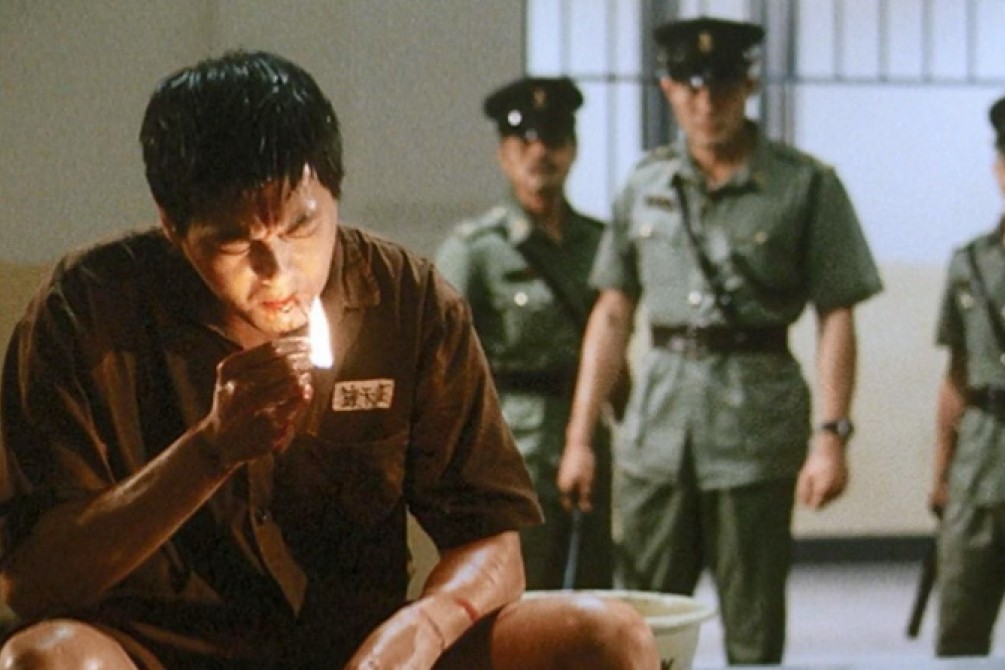
The Hong Kong Film Corner: PRISON ON FIRE (1987), starring Chow Yun-Fat and directed by Ringo Lam!


Chow Yun-Fat turns 70 years old on May 18, 2025. I’m going to celebrate his career by revisiting some of his best movies this month.  

PRISON ON FIRE begins with a young man named Lo Ka Yiu (Tony Leung Ka-fai) accidentally killing a thug who physically assaults his dad. He soon finds himself convicted of manslaughter and is sentenced to three years in a Hong Kong prison. Lo is not cut out for life in prison, and it doesn’t take long for him to get on the wrong side of the gang leaders. They immediately sniff out his weakness and go about terrorizing him and blaming him for everything that comes up. This extends to the head prison guard Scarface (Roy Cheung), a completely ruthless bastard who does his part to make life miserable for the newbie. Luckily for Lo, he meets Ching (Chow Yun-Fat), a seemingly happy go lucky fellow prisoner who takes pity on the young man and decides to show him the ropes. Ching is one of those guys who keeps things loose and seems to be able to get along with everybody. The two men form a good friendship, but that doesn’t stop gang leader Micky and Scarface from continuing to pick on Lo. When Ching and Lo have had enough and stand up for themselves, all hell breaks loose! 

PRISON ON FIRE is an excellent example of a high quality Hong Kong film of the time. The characterizations and tone are uneven and over the top at times, but director Ringo Lam knows how to rein everything in just enough to convey the power in the story without making us laugh at it all. Tony Leung Ka-fai (known as big Tony in 80’s & 90’s Hong Kong film circles to distinguish him from the great Tony Leung Chiu-wai), portrays his character as weak and afraid until he’s been pushed so far by the gang leaders that he basically loses control and begins attacking everyone with a huge shard of glass. I don’t love the performance, but he does effectively show what happens to a nice, but weak guy in this situation. Chow Yun-Fat is not the superhuman, cool badass of films like THE KILLER and HARD-BOILED in this film. Rather, Chow plays his character as funny, easy-going, and not especially tough, until the prison guard Scarface pushes him so far that he loses control and deforms the man for life in a scene that’s extremely exciting and ends with a gruesome exclamation point. It’s an endlessly likable performance. Scarface is played by the fine Hong Kong actor Roy Cheung. His portrayal of the character makes Clancy Brown’s Captain Hadley in THE SHAWSHANK REDEMPTION almost seem like a nice guy in comparison. You can’t help but be emotionally invested when a possessed Chow takes him on at the end. The other standout performances are from Ka-Hui Ho and Tommy Kwong as the gang leaders in the jail. Ho’s Micky is an absolutely garbage human being, while Kwong’s Bill is tough, but ultimately good to our heroes. 

For historical reference, PRISON ON FIRE was released in 1987, at the height of Chow Yun-Fat’s popularity and at a time when he was working non-stop. It was one of eleven movies he made in 1987, with CITY ON FIRE, AN AUTUMN’S TALE, and A BETTER TOMORROW II being other standouts. Just think about that, 11 different movies in one year alone. It’s quite the tribute to his talent that he was able to create unique and memorable characters that have stood the test of time. As a matter of fact he would win a Hong Kong Film Award in 1987 for his performance in the prior year’s A BETTER TOMORROW, and he would win one again the next year for Ringo Lam’s CITY ON FIRE. He is truly one of the great international stars of the last 40 years. He doesn’t work very often these days, but he’s still making movies and is generally considered one of the nicest, most humble humans on earth. He’s famous for the way he treats his fans, usually grabbing their phones and taking selfies with them with a big smile on his face! This is going to be a fun month as I rewatch many of the movies that made him famous. 

Here’s an extremely long Trailer for PRISON ON FIRE without subtitles. It focuses on the action elements of the film so it’s pretty easy to follow.

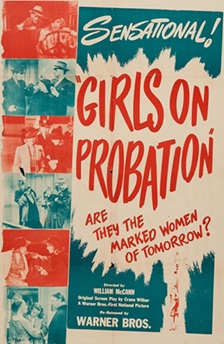
Girls On Probation (1938, directed by William C. McGann)


Eager to get away from her abusive father (Sig Ruman), Connie Heath (Jane Bryan) keeps making the mistake of hanging out with the ultimate bad friend, Hilda Engstrom (Sheila Bromley).  Hilda steals a dress from where they work and when the dress is torn, Hilda lets Connie take the blame.  When the dress’s owner (Susan Hayward, making her film debut) insists on pressing charges, insurance investigator Neil Dillon (Ronald Reagan) helps Connie get off the hook and out of jail.

Having not learned her lesson, Connie continues to hang out with Hilda and her new boyfriend, Tony Rand (Anthony Averill).  This time, Connie gets caught up in a bank robbery.  Will Neil be able to get her out of another jam?

63-minutes long, Girl on Probation is a Warner Bros. B-movie.  Ronald Reagan is surprisingly mellow as someone falling in love with a woman who keeps getting framed for his crimes she didn’t commit.  Sheila Bromley steals the show as the out-of-control dangerous blonde who tells a priest, “I’m about to meet your boss.”  The main problem with the film is that Connie is incredibly stupid.  How many times can one person be framed?  Jane Bryan, who played Connie, ended her acting career when she got married but she and her millionaire husband later helped to bankroll Reagan’s first political campaign and both of them were members of his unofficial “kitchen cabinet” when he was governor of California.

The movie has never been released on DVD and is hard to find.  It plays on TCM occasionally, which is where I saw it.  Online, the only place it appears to be streaming, ironically enough, is on a Russian site.

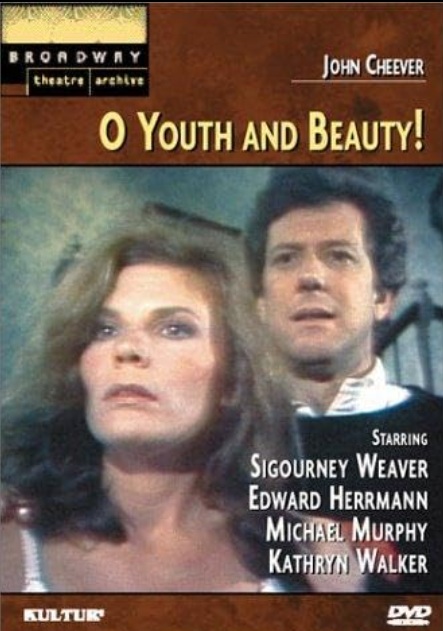
Retro Television Review: 3 By Cheever 1.2 “O Youth And Beauty!” (dir by Jeff Bleckner)


Welcome to Retro Television Reviews, a feature where we review some of our favorite and least favorite shows of the past!  On Saturdays, I will be reviewing 3 By Cheever, which ran on PBS in 1979.  The entire show can be purchased on Prime and found on YouTube.

Episode 1.2 “O Youth and Beauty!”

(Dir by Jeff Bleckner, originally aired on October 31st, 1979)

Back in the day, Cash Bentley (Michael Murphy) was an athletic marvel.  He was a track star who could jump the hurdles with ease and who everyone in high school looked up to.  Now, however, he’s 40 years old and he feels lost.  He’s aging and a new generation of young people have come along.  They certainly have no idea who Cash Bentley used to be.

At drunken neighborhood parties, Cash insists on recreating his youth by having his hosts set up their furniture like an obstacle course.  Giving them a starter’s pistol that he insists be fired to signify the start of the race, Cash will run through the house, jumping over chairs and couches and tables while everyone cheers.  Unfortunately, Cash’s luck runs out and he ends up breaking his leg during one of his demonstrations.

Forced to get around on crutches, Cash feels isolated from the rest of the world.  He doesn’t get a promotion because his bosses say they need someone who can start traveling immediately.  When all of his neighbors get on the train that is heading into the city at the usual morning time, a hobbled Cash arrives late and is forced to wait alone for the next one.  His wife, Louise (Kathryn Walker), gets a job working at a boutique to help pay the bills.  She says that maybe she’ll make enough that they’ll be able to take a vacation.  At the neighborhood parties, no one wants to deal with Cash and his broken leg.  His athleticism was all he had left.  It was what he was known for.  It was the source of all his confidence.  Now that he doesn’t have that, he’s lost.

Eventually, his legs comes out of the cast and he insists that Louise set up all the furniture in the house so that he can run another obstacle race.  He gives Louise the starter’s pistol and insists that she fire it when it’s time for him to start.  The scene cuts to the outside of their suburban home.  The sound of one gunshot upsets the calm.  Later, Louise and her children are seen moving out of the house.  Cash is nowhere to be seen.

The episode ends ambiguously.  Those who are familiar with the original John Cheever short story know that Louise shot Cash and that no one was sure whether she meant to do it or not.  The movie cuts away before the gun is actually fired.  For all we know, Cash did the obstacle course and then just never returned home.

O Youth and Beauty is one of John Cheever’s most acclaimed short stories.  The screen adaptation features an excellent performance from Kathryn Walker but the scenes of Cash running the furniture obstacle course are probably something that worked better on the page and in the reader’s imagination than when actually presented on film.  Michael Murphy is almost too confident and handsome as Cash.  The role calls for a former jock slowly going to seed and desperately trying to hold onto his youth whereas Murphy looks like he’s still in peak athletic form.  Murphy does a good job portraying Cash’s depression and his alienation after he breaks his leg but, physically, he still seems miscast in the role.

Edward Herrmann and Sigourney Weaver, who were the center of last week’s episode, make a brief appearance in this one, hovering in the background of the neighborhood’s endless parties.

Next week, we finish up 3 By Cheever.

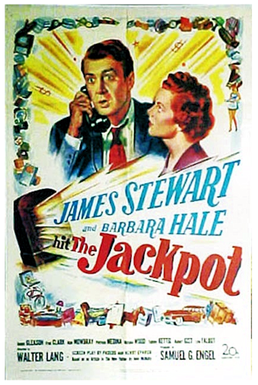
Film Review: The Jackpot (dir by Walter Lang)


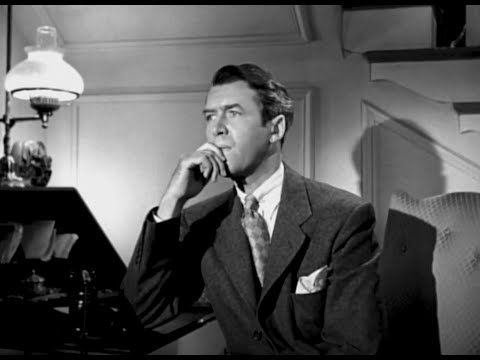
In 1950’s The Jackpot, James Stewart plays Bill Lawrence.

Bill has a job at a department store.  He’s not the manager but he’s still a respected member of the staff and who knows?  Maybe his boss (Fred Clark) will give him a promotion someday.  He lives in a big, two-story home with his wife, Amy (Barbara Hale).  He and Amy have two children, one of whom is played by a 12 year-old Natalie Wood.  By all appearances, Bill is doing pretty good for himself.  At one point, it’s mentioned that makes a grand total of $7,500 a year.

That definitely caught my attention.  “I make more than that!” I snapped at the screen.  I pulled up an inflation calculator and I discovered that $7,5000 in 1950 is the equivalent of — wait for it — $102,000 today!  (Technically, I still make more than that but still, it’s six figures.)

When Bill answers a phone call from a radio station and guesses the correct answer to a trivia question, he wins $24,000-worth of prizes.  (I didn’t bother to figure out how much that $24,000 would be be in 2025 dollars but we can safely assume that it would be quite a bit.)  Unfortunately, a lot of the prizes end up costing more than their worth.  Bill wins a side of beef , 7,500 cans of soup, and a 1,000 fruit trees but he doesn’t win anywhere to store it all.  He also wins a maid, an interior designer, a pony, a swimming pool, a trip to New York, and a session with portrait painter Hilda (Patricia Medina).  He also ends up with an income tax bill for $7,000.  Remember, he only makes $7,500 a year.  Damn the IRS!

Realizing that he’s going to have to sell the majority of his winnings, Bill loses his job when he’s caught trying to sell to the store’s customers.  Needing money to pay off his tax bill, he tries to pawn a diamond ring and ends up getting arrested.  With his anniversary coming up, he asks Hilda to paint a portrait of Amy from his description of her but Bill ends up spending so much time with Hilda that Amy becomes convinced that he’s having an affair.

Basically, one terrible thing after another happens to Bill, all the result of having won a contest.  (The film is loosely based on a true story, with James Gleason playing a fictionalized version of the reporter who wrote the original story.)  The movie’s a comedy but, as with the majority of the films that James Stewart made after World War II, there’s a sense of melancholy running through it.  Even before he wins the money, Bill doesn’t seem satisfied with his life.  Much like George Bailey, he’s restless and wondering if there will ever be more to his life than just his house in the suburbs and his job in the city.  Also, like George, Bill learns to appreciate what he has as the result of getting what he wants and discovering that he was happier before.  Few actors were as skilled at capturing ennui and dissatisfaction as Jimmy Stewart.  The Jackpot is a silly comedy but it’s also an effective portrait of a middle-aged man trying to find peace with the way his life has turned out.  That’s almost entirely due to Stewart’s likable but honest performance.

The Jackpot may not be one of Stewart’s most-remembered films but it’s entertaining, with the supporting cast all providing their share of laughs while Stewart provides the film with a heart.  The film may be a comedy but it’s also a look at America and Americans adjusting to life in the years immediately following World War II.  Suddenly, abundance is everywhere but, as Bill Lawrence, not without a price.

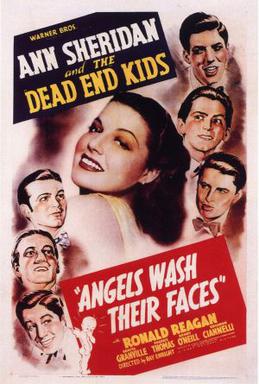
Angels Wash Their Faces (1939, directed by Ray Enright)


Gangster William Kroner (Bernard Nedell) and his henchman Martino (Eduardo Ciannelli) frame teenager Gabe Ryan (Frankie Thomas) for setting several buildings on fire.  Because Gabe has just gotten out of reform school and is a member of a local neighborhood gang, they know that no one will believe him or his sister, Joy (Ann Sheridan).

What Kroner and Martino did not count on were the Dead End Kids (Billy Halop, Bobby Jordan, Leo Gorcey, Gabriel Dell, Huntz Hall, and Benard Punsley).  They’re not going to sit by while the adults send their friend to jail.  Plus, one of their friends was killed in one of the fires.  The kids are out for revenge and sympathetic district attorney Pat Remsen (Ronald Reagan) is on their side.

As a publicity stunt, the city is holding an election for “Kid Mayor.”  The Kid Mayor gets to run the city for a week.  What could go wrong?  Billy Halop decides to run for Kid Mayor so that he can order the arrest of Kroner and then beat a confession out of him.

Angels Wash Their Faces was one of the last of the studio-made Dead End Kid films.  After this one, they would be sent down to Poverty Row and their films would be more obviously comedic.  Angels Wash Their Faces starts out as a juvenile delinquent drama, with Gabe struggling to rebuild his life and keep on the right track.  Then it becomes a goofy comedy, with Billy Halop running for mayor and unleashing vigilante justice on the bad guys.  I’m not sure that any city would actually give the “kid mayor” the power to lock people up.  Whoever came up with the idea of a kid mayor should be run out of politics.

On the positive side, Ann Sheridan is beautiful.  Future president Reagan is his usual friendly self.  On the negative side, the movie, overall, lacks the edge that made the first few Dead End Kids films memorable and the Dead End Kids themselves seem to be pretty much interchangeable.  Huntz Hall would have made a better mayor.


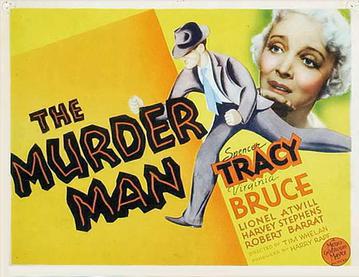
Film Review: The Murder Man (dir by Tim Whelan)


Seven minutes into the 1935 film, The Murder Man, 27 year-old James Stewart makes his film debut.

He’s playing a reporter named Shorty and, since this is a 30s newspaper film, he’s first seen sitting at a table with a bunch of other cynical reporters, the majority of whom seem to be alcoholics and gambling addicts.  Suddenly, words comes down that a corrupt businessman named Halford has been assassinated, shot by an apparent sniper.  (It is theorized that he was shot from one of those carnival shooting gallery games, which was somewhat oddly set up on a street corner.  Maybe there was shooting galleries all over place in 1935.  I supposed people had to do something to keep their spirits up during the Depression.)  While the other reporters run to the scene of the crime, Shorty is on the phone and calling his editors to let them know that a huge story is about to break.

Steve Grey (Spencer Tracy) is the reporter assigned to the story.  Crime is his beat and everyone agrees that no one’s better at covering criminals and understanding what makes them tick.  Unfortunately, it’s not always easy to track Steve down.  He’s a hard drinking reporter and lately, he’s been concerned about the collapse of his father’s business.  Still, when Steve is finally tracked down, he throws himself into covering the story and speculating, in print, about who could have killed Halford.  In fact, his girlfriend (Virginia Bruce) worries that Steve is working too hard and that he’s developing a drinking problem.  She suggests that Steve needs to take some time off but Steve is driven to keep working.

It’s largely as a result of Steve’s actions that a man named Henry Mander (Harvey Stephens) is arrested and convicted of Halford’s murder.  Steve should be happy but instead, he seems disturbed by the fact that he is responsible for Mander going to jail.  When his editor requests that Steve go to Sing Sing to interview Mander, a shocking truth is revealed.

Admittedly, the main reason that I watched The Murder Man was because it was the feature film debut of James Stewart.  (Stewart previously appeared in a comedy short that starred Shemp Howard.)  Stewart is only in a handful of scenes and he really doesn’t have much to do with the main plot.  To be honest, Shorty’s lines could have been given to anyone.  That said, Stewart still comes across as being a natural on camera.  As soon as you hear that familiar voice, you can’t help but smile.

Even if Stewart hadn’t been in the film, I would have enjoyed The Murder Man.  It’s fast-paced mystery and it has a decent (if not totally unexpected) twist ending.  It’s one of those films from the 30s where everyone speaks quickly and in clipped tones.  Casual cynicism is the theme for the day.  Spencer Tracy gives a wonderful performance as the hard-drinking and troubled Steve Grey and the scene where he meets Mander in prison is surprisingly moving.  Clocking in at only 68 minutes, The Murder Man is a good example of 30s Hollywood.

Film Review: …. And Justice For All (Dir by Norman Jewison)


First released in 1979, ….And Justice For All will always be remembered for one scene.

Yell it with me, “YOU’RE OUT OF ORDER!  THE WHOLE TRIAL IS OUT OF ORDER!  THEY’RE OUT OF ORDER!”

When attorney Arthur Kirkland (Al Pacino) starts screaming in the middle of the courtroom, it’s a cathartic moment.  We’ve spent nearly two hours watching as Arthur deals with one insane situation after another.  One of Arthur’s partners, Warren (Larry Bryggman), cares more about his car than actually delivering the right documents to a judge.  Another of Arthur’s partners, Jay (Jeffrey Tambor), has a nervous breakdown and, after shaving his head, ends up throwing cafeteria plates at people in the courthouse.  Arthur has three clients, one of whom is indigent, one of whom is innocent, and one of whom is a wealthy and despised judge (John Forsythe) who has been accused of a rape that Arthur suspects he committed.  The system offers no mercy for Arthur’s innocent (or, at the very least, harmless) clients while going out of it’s way to defend the judge.  Meanwhile, another judge (Jack Warden), is driven to take suicidal risks, like flying a helicopter until it runs out of fuel and comes down in a nearby harbor.  The assistant district attorney (Craig T. Nelson) only cares about his political ambitions and finally, after one incident after another, Arthur snaps.  And it’s cathartic because we’re all on the verge of snapping as well.

That final moment, with its signature Al Pacino rant, is such a strong and iconic scene that it’s easy to forget that the film itself is actually rather uneven.  The script, by Barry Levinson and Valerie Curtin, owes a good deal to the work of Paddy Chayefsky.  Just as Chayefsky often wrote about men being driven mad by institutional failure, ….And Justice For All features character after character snapping when faced with the screwed-up realities of the American justice system.  The final “out of order” speech is obviously meant to be this film’s version of Howard Beale’s “I’m as mad as Hell and I’m not going to take it!” speech from Network and, much like George C. Scott in the Chayefsky-written The Hospital, Arthur spends a lot of time talking about what he doesn’t like about his job.  The thing that sets ….And Justice For All apart from the best works of Chayefsky is that Levinson, Curtin, and director Norman Jewison all take Arthur Kirkland at his word while one gets the feeling that Chayefsky would have been a bit more willing to call out Arthur on his self-righteousness.  Arthur has every right to be angry when Warren forgets to give a judge an important document while Warren is substituting for him in court.  At the same time, Arthur is the one who trusted Warren to do it.  In the end, the document was not about one of Warren’s client.  In fact, Warren knew absolutely nothing about the case or Arthur’s client.  The document was about Arthur’s client and Arthur was the one who decided trust someone who had consistently shown himself to not be particularly detailed-orientated.  One gets the feeling that Chayefsky would not have let Arthur off the hook as easily as Levinson, Curtin, and Jewison do.  Arthur’s perpetual indignation can sometimes be a little hard to take.

It’s a very episodic film.  Arthur goes from one crisis to another and sometimes, you do have to wonder if Arthur has ever had any human or legal interactions that haven’t ended with someone either going insane or dying.  There’s no gradual build-up to the film’s insanity, it’s right there from the beginning.  And while this means the narrative often feels heavy-handed, it also makes that final speech all the more cathartic.  It’s an uneven film and, of all of the characters that Pacino played in the 70s, Arthur is probably the least interesting.  But that final rant makes up for a lot and, fortunately, Pacino was just the actor to make it memorable.  For all it’s flaws, the final few minutes of ….And Justice For All make the film unforgettable.


Days of Paranoia: Serpico (dir by Sidney Lumet)


In 1973’s Serpico, Al Pacino plays a cop who doesn’t look like a cop.

Indeed, that’s kind of the start of Frank Serpico’s problems.  He’s a New York cop who doesn’t fit the stereotype.  When we see him graduating from the Academy, he’s clean-shaven and wearing a standard patrolman uniform and he definitely looks like a new cop, someone who is young and enthusiastic and eager to keep the streets safe.  However, Serpico is an outsider at heart.  The rest of the cops have their homes in the suburbs, where they spend all of their time with their cop buddies and where they go also go out of their way not to actually live among the people that they police.  Serpico has an apartment in Greenwich Village and, as a plainclothes detective, he dresses like a civilian.  He has a beard.  He has long hair.  He has a succession of girlfriends who don’t have much in common with the stereotypical (and there’s that word again) cop’s wife.  Serpico is an outsider and he likes it that way.  In a world and a career that demands a certain amount of conformity, Frank Serpico is determined to do things his own way.

However, the real reason why Serpico is distrusted is because he refuses to take bribes.  While he’s willing to silently accompany his fellow officers while they collect their payoffs from not only the people that they’re supposed to be arresting but also from the storeowners that they’re meant to be protecting, Serpico refuses to take a cut.  Serpico understands that the small, everyday corruption is a way of forcing his silence.  The corruption may help the cops to bond as a unit but it also ensures that no one is going to talk.  Serpico’s refusal to take part makes him untrustworthy in the eyes of his fellow cops.

Serpico and Bob Blair (Tony Roberts), a politically-connected detective, both turn whistleblower but it turns out that getting people to listen to the truth is not as easy as Serpico thought it would be.  The Mayor’s office doesn’t want to deal with the political fallout of a police conspiracy.  Serpico finds himself growing more and more paranoid, perhaps with good reason.  When words gets out that Serpico has attempted to turn into a whistleblower, his fellow cops start to turn on him and, during a drug bust, Serpico finds himself deserted and in danger.

Serpico opens with its title character being rushed to the hospital after having been shot in the face.  This actually happened to the real Serpico as well.  What the film leaves out is that hundreds of New York cops showed up at the hospital, offering to donate blood during Serpico’s surgery.  That’s left out of the film, which at times can be more than a little heavy-handed in its portrayal of Serpico as an honest cop surrounded by nonstop corruption.  Filmed just three years after Serpico testified before New York’s Knapp Commission (which was the five-man panel assigned to investigate police corruption in the city), Serpico the movie can sometimes seem a bit too eager to idealize its title character.  (Vincent J. Cannato’s excellent look at the mayorship of John V. Lindsay, The Ungovernable City, presents far more nuanced look at the NYPD corruption scandals of the early 70s and Serpico’s role as a whistleblower.)  Director Sidney Lumet later expressed some dissatisfaction with the film and even made other films about police corruption — The Prince of the City, Q & A, Night Falls On Manhattan — that attempted to take a less heavy-handed approach to the subject.

That said, as a film, Serpico works as a thriller and as a portrait of a man who, because he refuses to compromise his ideals, finds himself isolated and paranoid.  Al Pacino, fresh from playing the tightly-controlled Michael Corleone in The Godfather, gives an intense, emotional, and charismatic performance as Serpico.  (One can see why the image of a bearded, hippie-ish Pacino was so popular in the 1970s.)  Sidney Lumet brings the streets of New York to vibrant and dangerous life and he surrounds Pacino with an excellent supporting cast, all of whom bring an authentic grit to their roles.  Serpico may not be a totally accurate piece of history but it is a good work of entertainment, one that works as a time capsule of New York in the 70s and as a portrait of bureaucratic corruption.  It’s also the film in which Al Pacino announced that he wasn’t just a good character actor.  He was also a movie star.