A Horror Blast From The Past: The Haunted Castle (dir by George Melies)


Oh my God, y’all — are you ready to see the very first horror movie ever made!?

Okay, so I guess I should be honest and admit that this is more of a comedy than a horror film.  But it was reportedly the first film ever made to contain horror elements.  (In this case, the film takes place in a haunted castle and features ghosts.)  The Haunted Castle is only 3 minutes long and it’s definitely a bit primitive but that’s understandable when you consider that The Haunted Castle was made in 1896!

The Haunted Castle was a French film and it was directed by George Melies.  Yes, the same George Melies who was played by Ben Kingsley in Hugo.

Watch it below!

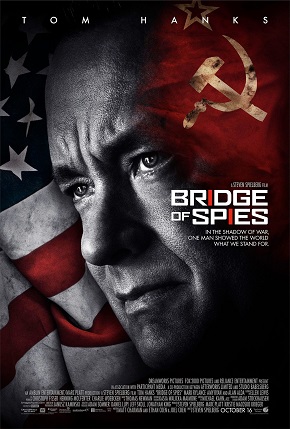
Film Review: Bridge of Spies (dir by Steven Spielberg)


Bridge_of_Spies_poster

I saw Bridge of Spies last weekend and I’m a little bit surprised that I haven’t gotten around to writing a review until now.  After all, this is not only the latest film from Steven Spielberg but it also stars the universally beloved Tom Hanks and it’s currently being touted as a possible best picture nominee.  (Mark Rylance, who plays an imprisoned spy in this film, is also emerging as a front runner for best supporting actor.)  The screenplay was written by the Coen Brothers.  (Oddly enough, films scripted by the Coens — like Unbroken, for instance — tend to be far more conventional and far less snarky than films actually directed by the Coens.)  Even beyond its impressive pedigree, Bridge of Spies is a historical drama and by now, everyone should know how much I love historical dramas.

And the thing is, I enjoyed Bridge of Spies.  I thought it was a well-made film.  I thought that Tom Hanks was well-cast as an idealistic lawyer who stands up for truth, justice, and the Constitution.  I agreed with the pundits who thought Mark Rylance was award-worthy.  It’s become a bit of a cliché for Amy Ryan to show up as an understanding wife but it’s a role she plays well and she made the most of her scenes with Tom Hanks.  Steven Spielberg knows how to put a good film together.  This really should have been a film about which I rushed home to rave.

And yet, at the same time, I just could not work up that much enthusiasm for Bridge of Spies.  It’s a good film but there’s nothing unexpected about it.  There’s nothing surprising about the film.  Steven Spielberg is one of the most commercially successful directors in history and the American film establishment pretty much orbits around him.  He’s good at what he does and he deserves his success.  Unfortunately, he doesn’t have a subversive bone in his body.  Bridge of Spies is a lot like his previous Oscar contender, Lincoln.  It’s very well-made.  It’s the epitome of competence.  But there’s not a truly surprising or unexpected moment to be found in the film.

And I have to admit that, even as I enjoyed Bridge of Spies, I still found myself frustrated by just how risk-adverse a film it truly was.  After all, we’re living in the age of Ex Machina, Upstream Color, and Sicario.  Bridge of Spies is a good movie and, in many ways, it provides a very valuable history lesson.  (The film’s best moments were the one that contrasted the U.S. with the cold desolation of communist-controlled East Germany.)  But, overall, it just didn’t make a huge impression on me.  It was just a a little bit too safe in its approach.

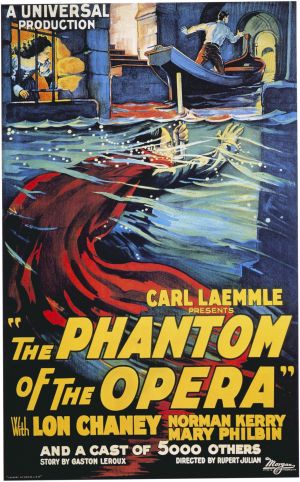
Horror on the Lens: The Phantom of the Opera (dir by Rupert Julian)


The_Phantom_of_the_Opera_(1925_film)

Today’s horror movie on the Shattered Lens is both a classic of silent era and one of the most influential horror films ever made.  It’s one that I previously shared in 2013 but it’s such a classic that I feel that it is worth sharing a second time.  Add to that, the original video that I embedded has been taken off of YouTube.

First released in 1925, The Phantom of the Opera is today best known for both Lon Chaney’s theatrical but empathetic performance as the Phantom and the iconic scene where Mary Philbin unmasks him. However, the film is also a perfect example of early screen spectacle. The Phantom of the Opera was released during that period of time, between Birth of the Nation and the introduction of sound, when audiences expected films to provide a visual feast and Phantom of the Opera certainly accomplishes that. Indeed, after watching this film and reading Gaston Leroux’s original novel, it’s obvious that the musical was inspired more by the opulence of this film than by the book.

This film is also historically significant in that it was one of the first films to be massively reworked as the result of a poor test screening. The film’s ending was originally faithful to the end of the novel. However, audiences demanded something a little more dramatic and that’s what they got.

Hallmark Review: Midnight Masquerade (2014, dir. Graeme Campbell)


IMG_1588

Midnight Masquerade my ass! It should have been called Gender Swap Cinderella and the Unnecessary and Confusing Domain Registration Story. Let’s do the first part, then the second part.
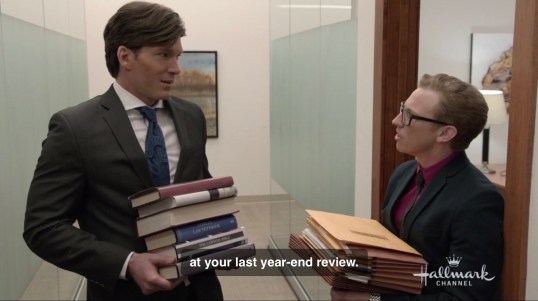
IMG_1603

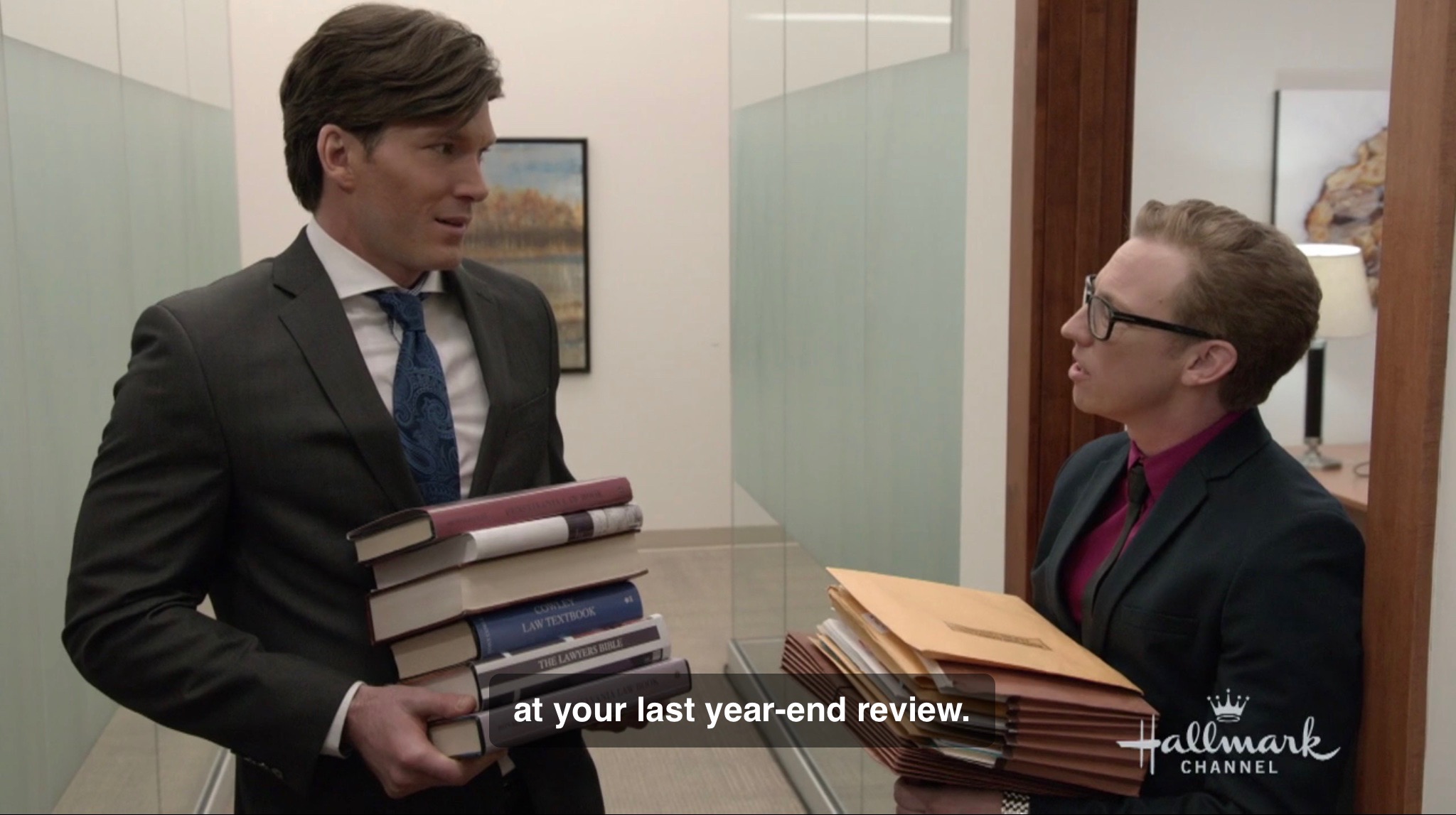
That’s our Cinderella on the left named Rob Carelli (Christopher Russell). He works at a law firm run by a guy and his two sons. In other words, the father is the stepmother and they’re the stepsisters. The guy on the right is one of the stepsisters.
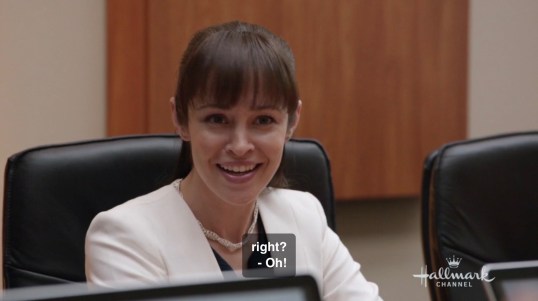
IMG_1643

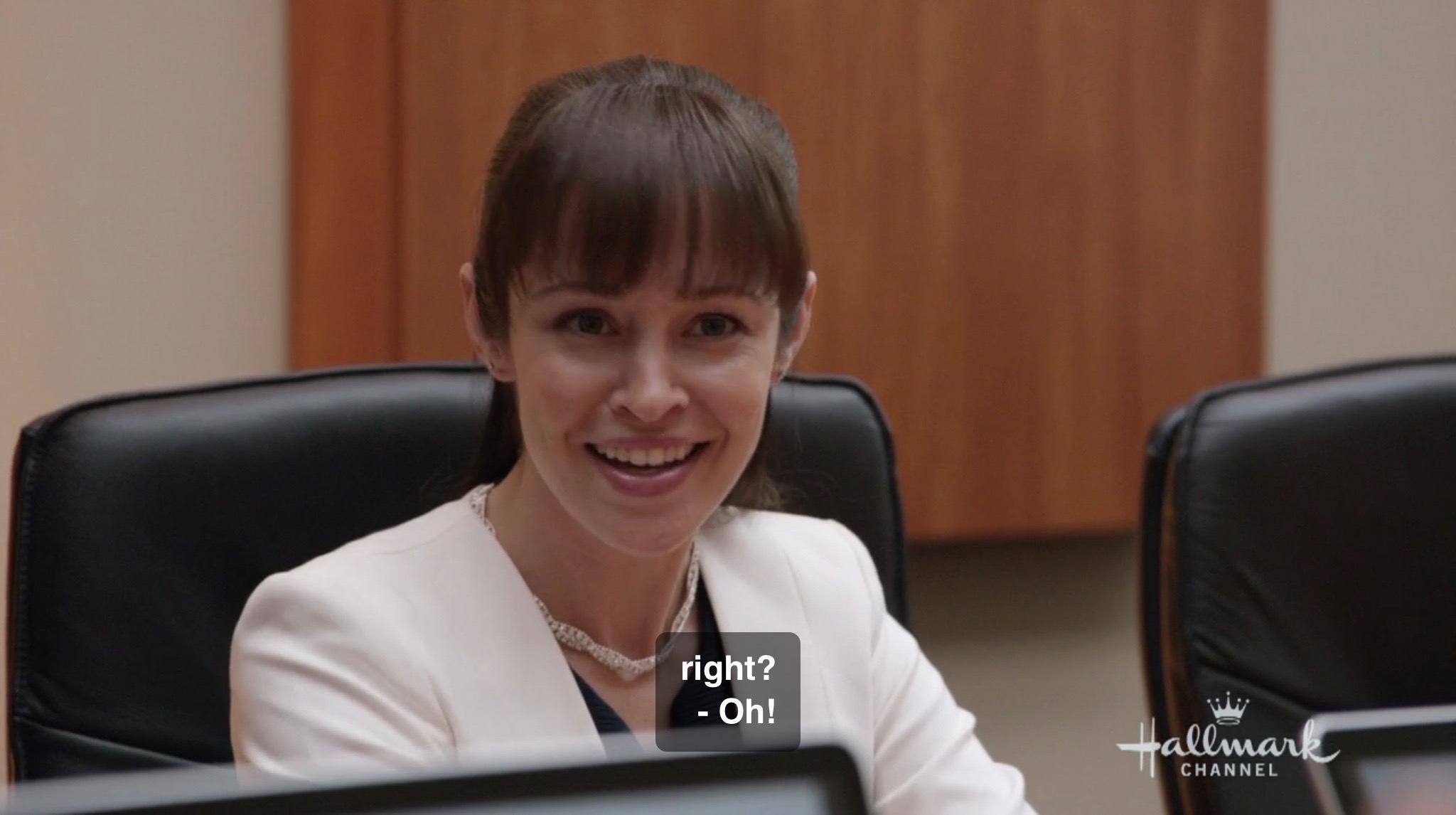
That’s our prince named Elyse Samford (Autumn Reeser). She has recently been given control of a candy company by her father. There’s a trademark infringement issue and the law firm representing her company is the one that Carelli works at.
IMG_1693

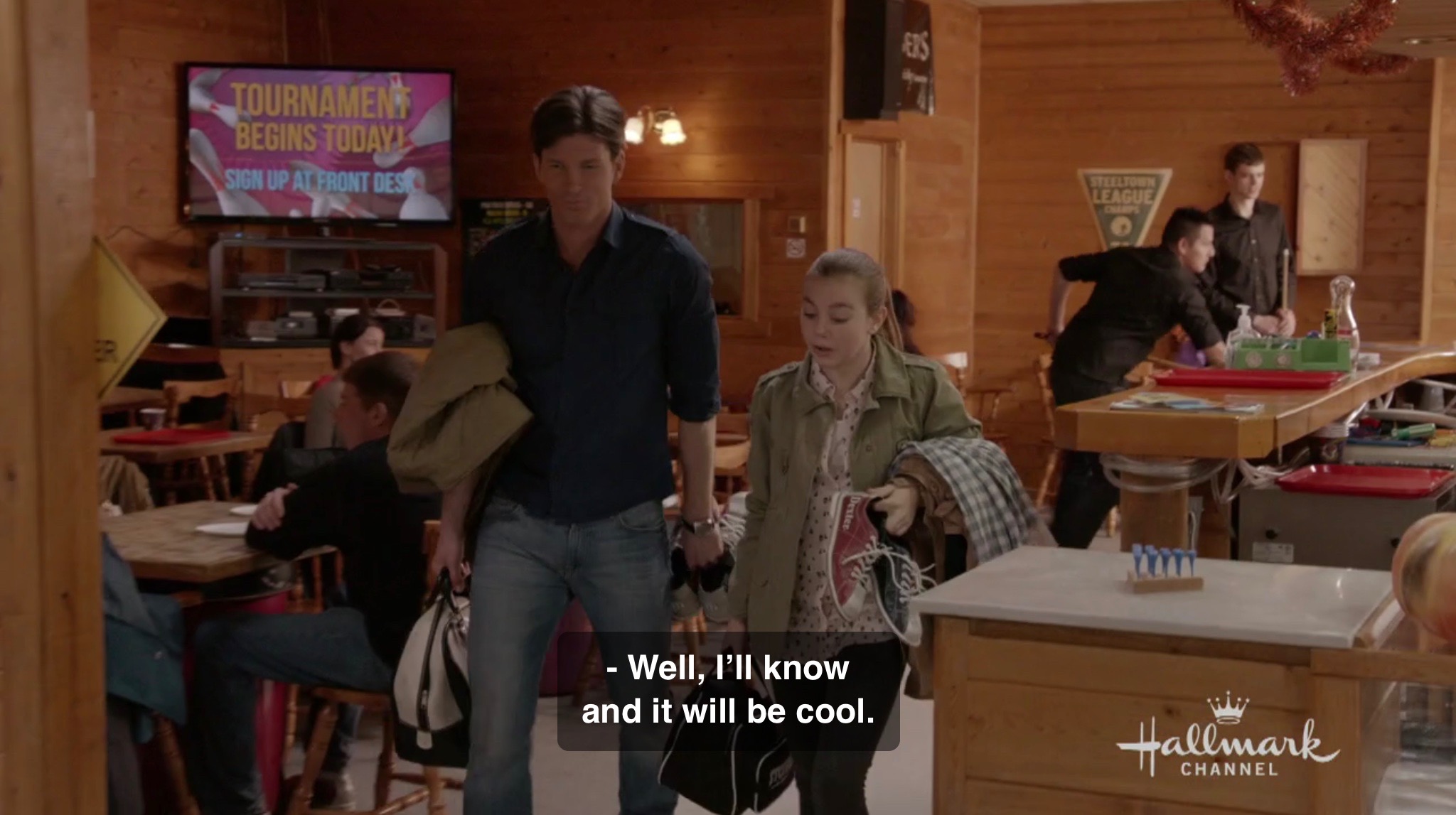
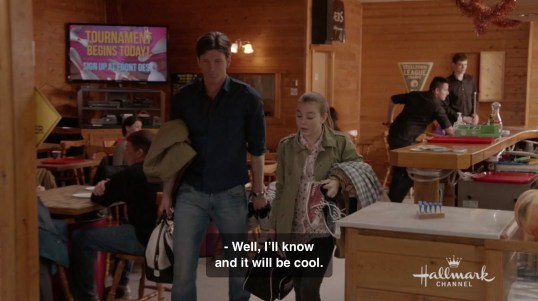
Yes, there is a young girl who is attached at the hip to Carelli, but in a refreshing turn she isn’t a daughter from a former marriage. Carelli is simply a cool uncle who likes to go bowling with his niece named Ruby (Helen Colliander).

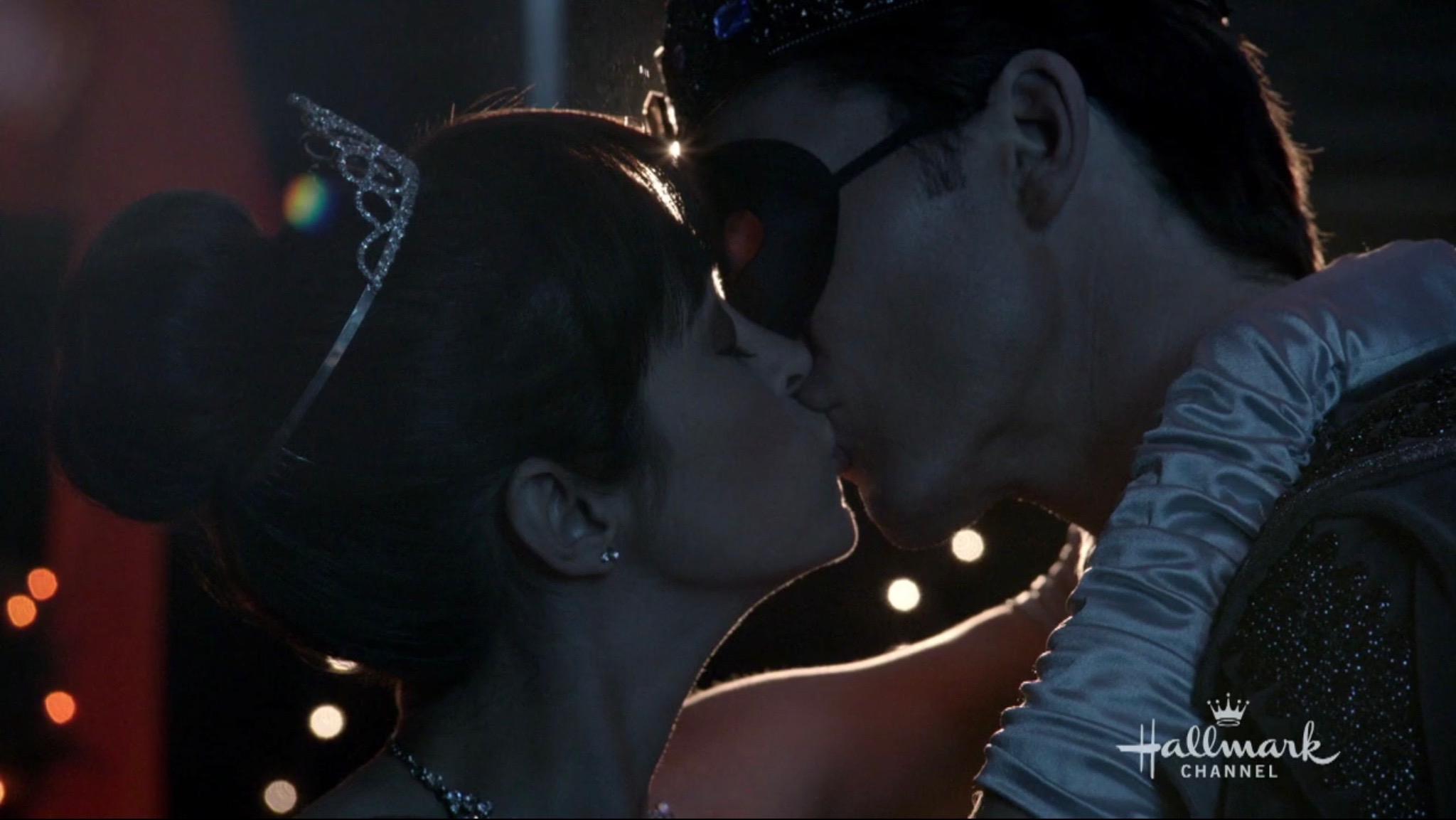
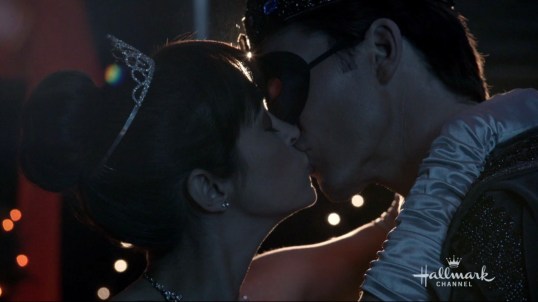
Samford is going to hold a Halloween ball and she invites everyone at the law firm to attend. Of course some work gets dropped on Cinderella and he has to sneak out to attend the party while masked. Cinderella goes dressed as a prince since she is going dressed as a prom queen apparently.

IMG_1704 (1)

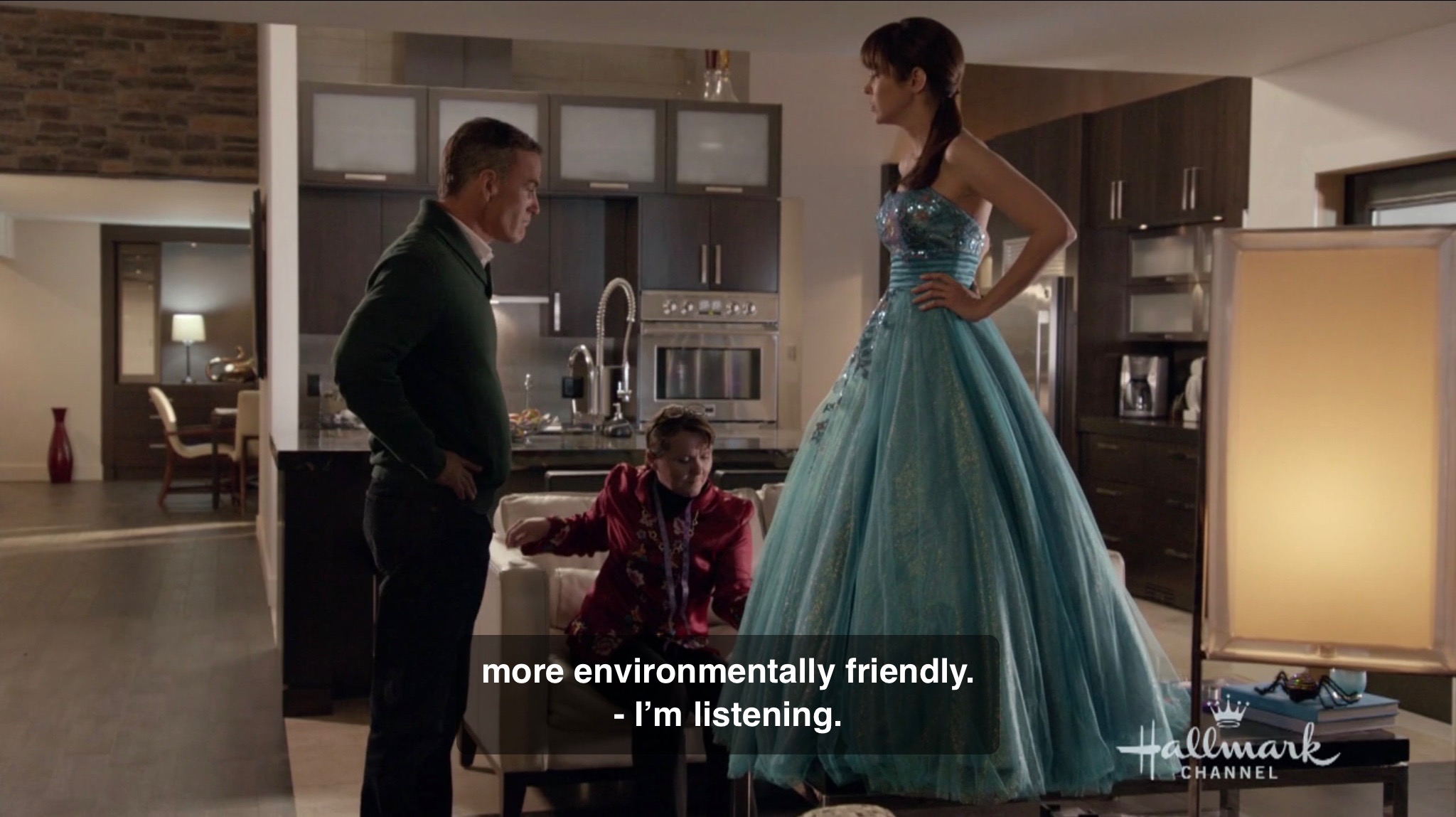
Oh, and they make sure you know his prince costume is custom made because his sister insists on making it and we see her measure him several times. Yet, that will not be the way Cinderella is identified at the end. I actually prefer the way they figure out it was him, but then why making sure we know this thing is custom made?
IMG_1788

This happens, but he has to get back to the firm before midnight or he’ll be caught as having snuck out. Since she doesn’t know who Cinderella is, one of the stepsisters takes credit, but he acts like a douchebag when they go out so she has her doubts.
IMG_1945

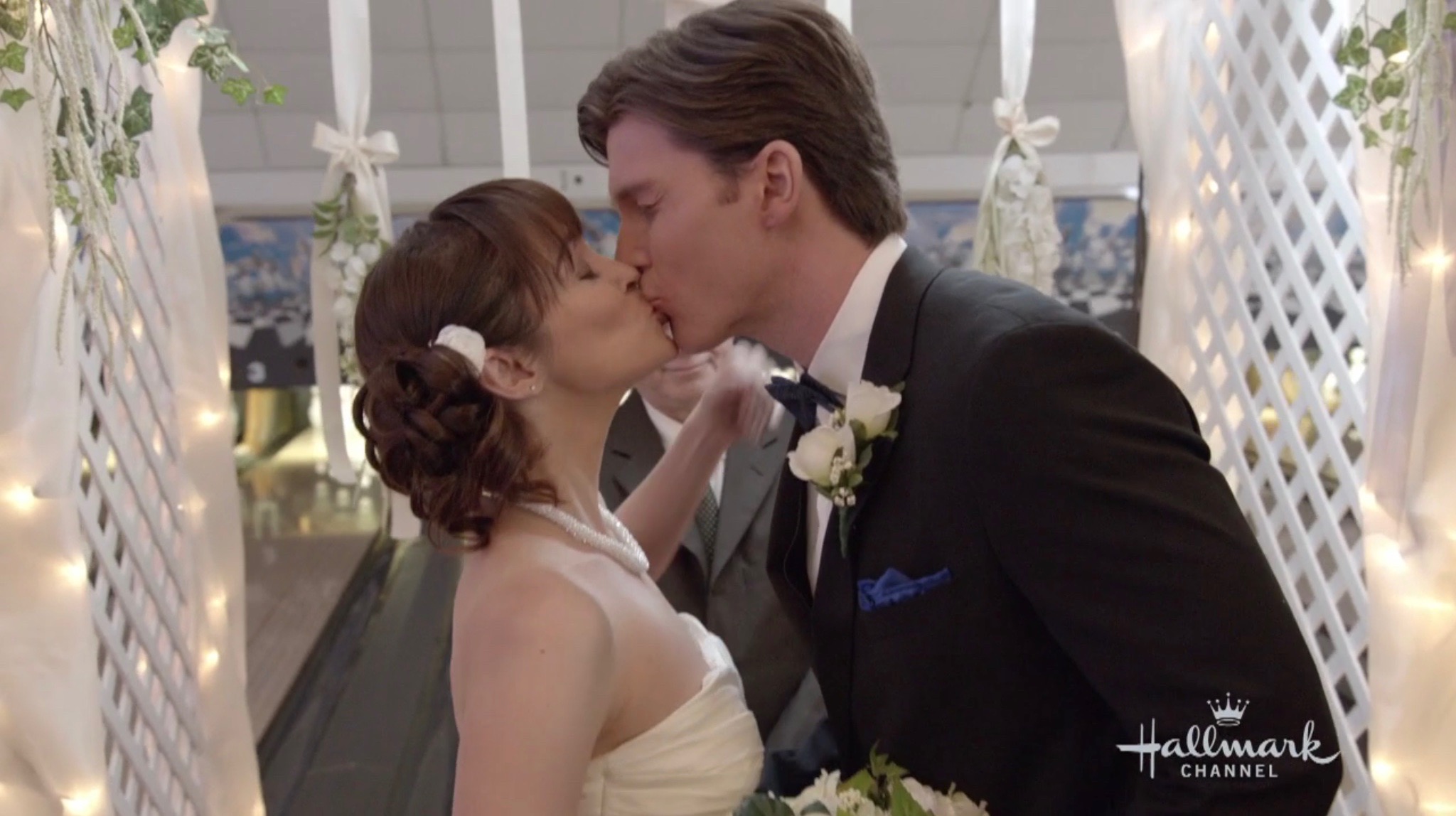
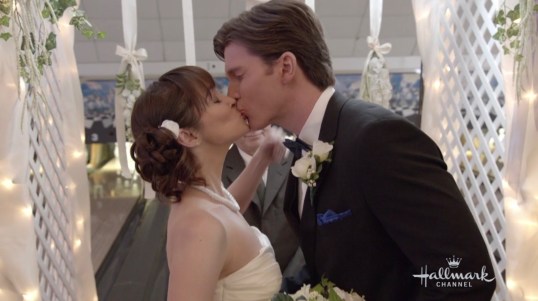
Ultimately, she figures out who the person was dressed as a prince and Cinderella marries his prince in a bowling alley and in bowling shoes since she also likes to bowl.

Thought it was a little confusing that I kept using he for she and visa versa? That was on purpose. That was to give you a little taste of the second part of this story, which is the domain registration story. I’m still confused about it, but I will try to lay it out for you. Maybe you can figure it out. Let’s run this back to the start of the film.

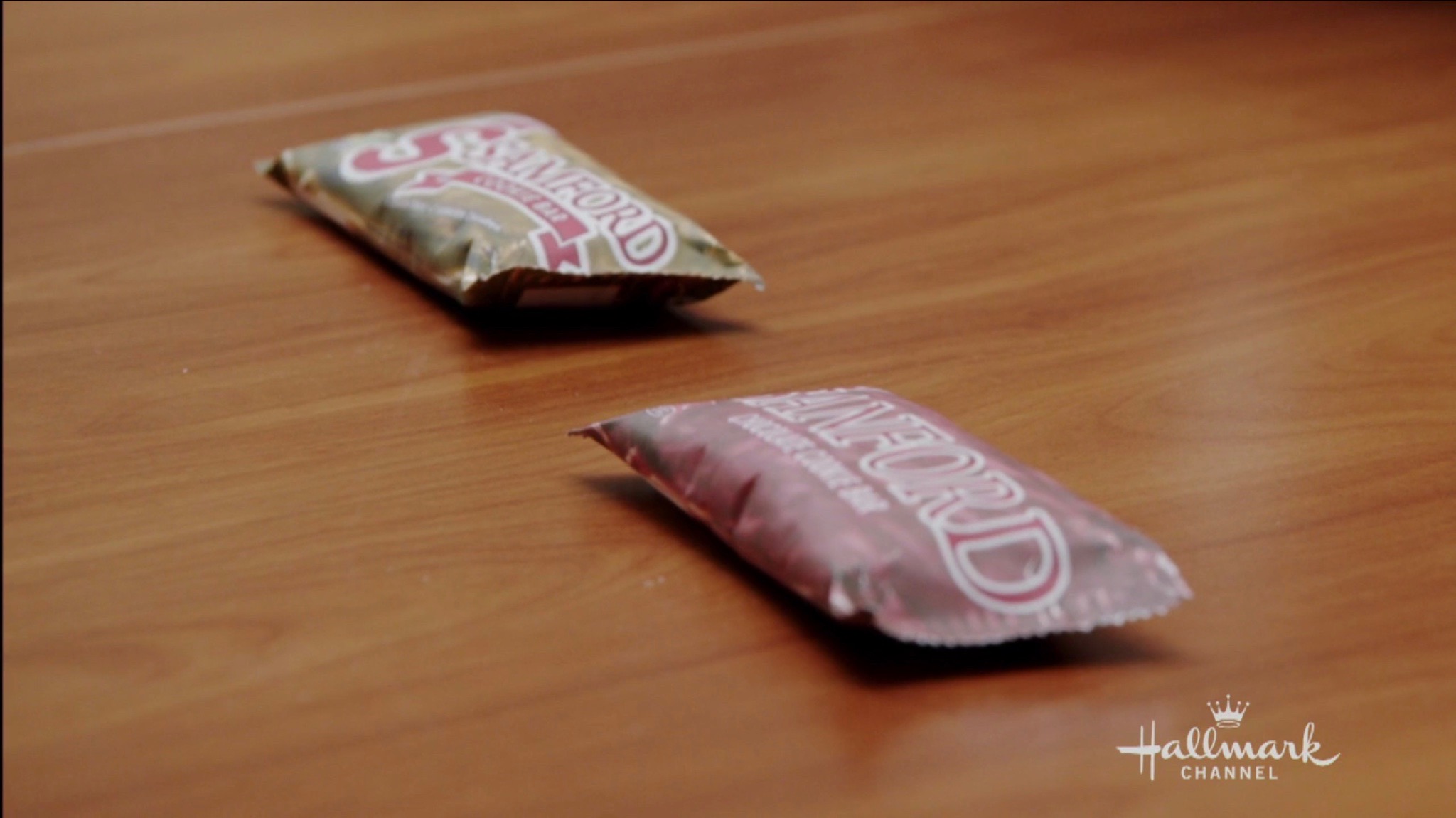
The reason she came to the firm that represents her company called Samford Candy is because of a trademark infringement. Another company has changed it’s name to Sanford Candy and is selling candy in a similar packaging.

IMG_1658

That part makes sense, but the rest doesn’t quite add up. Now Cinderella chimes in that Sanford Candy is cybersquatting. As far as I can tell cybersquatting is something companies made up and got put into law because they didn’t like that anyone can register any domain they want including your company’s name. It probably dates back at least as far as the bickering between MTV and Adam Curry over the domain name mtv.com. Anyways, that would mean that Sanford Candy has registered the domain name samfordcandy.com. At least you’d think that, but Cinderella says that no one has registered samfordcandy.com. If that’s true then Sanford Candy isn’t cybersquatting at all. At best, they are typosquatting as it’s called in the hopes that people will accidentally type sanfordcandy.com when they meant to type in samfordcandy.com. Except that can’t be true either as we will find out.

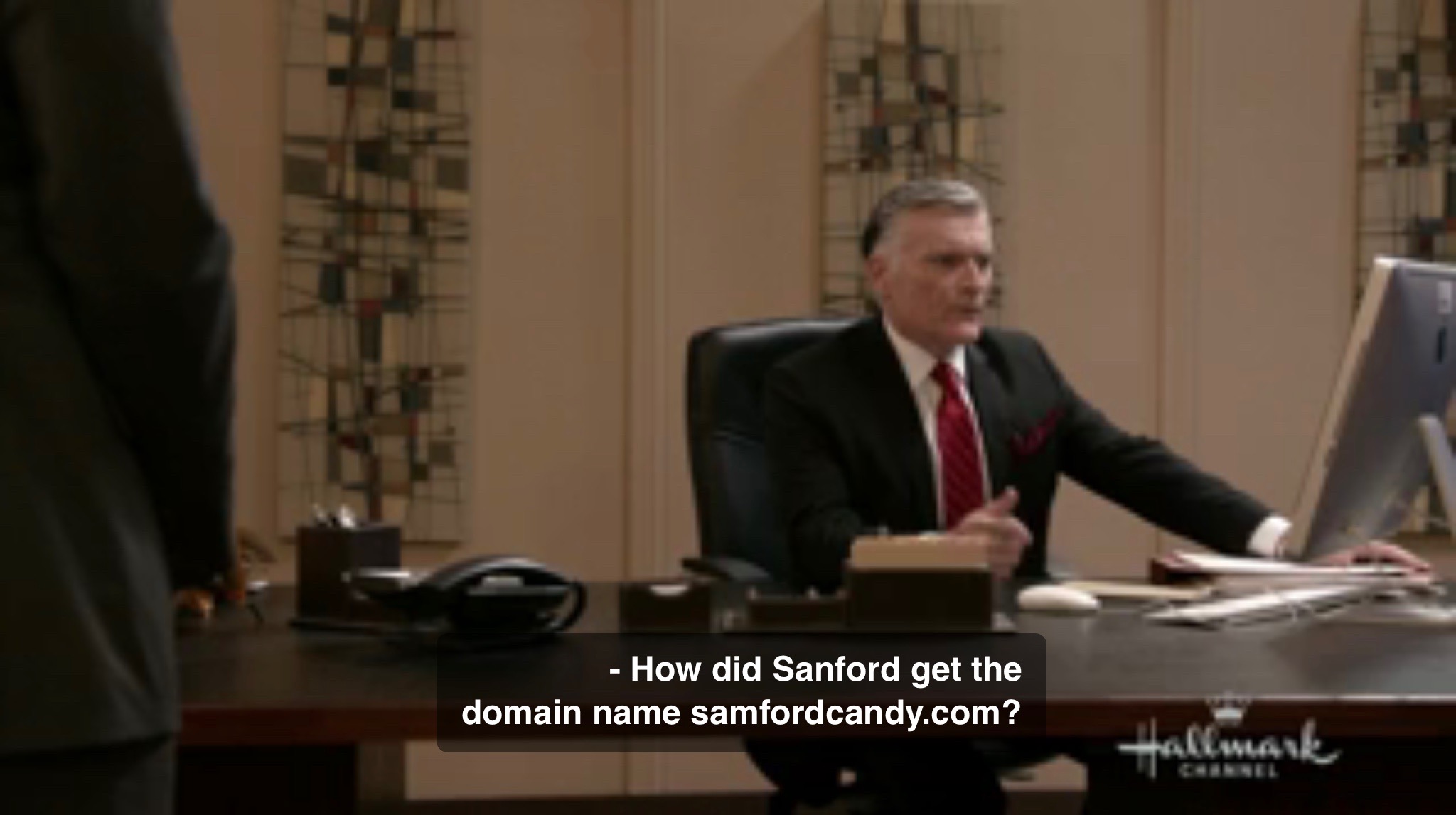
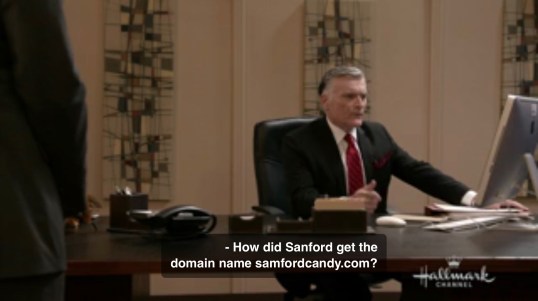
Later in the film the father yells at one of the sons for having registered sanfordcandy.com by accident. But it gets worse because during that scene the father says this to his son.
IMG_1912

That means Sanford Candy didn’t have either sanfordcandy.com or samfordcandy.com registered before and thus were not cybersquatting. However, this scene now tells us that Sanford Candy now has the domain name samfordcandy.com. At least you’d think that was the case, but then the next scene happens.
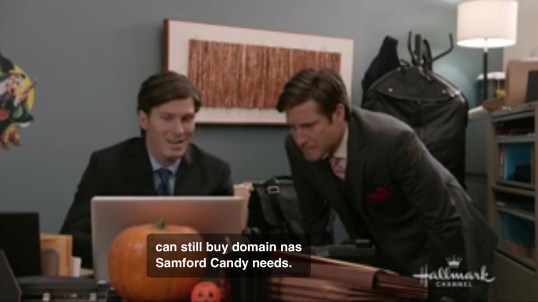
IMG_1924

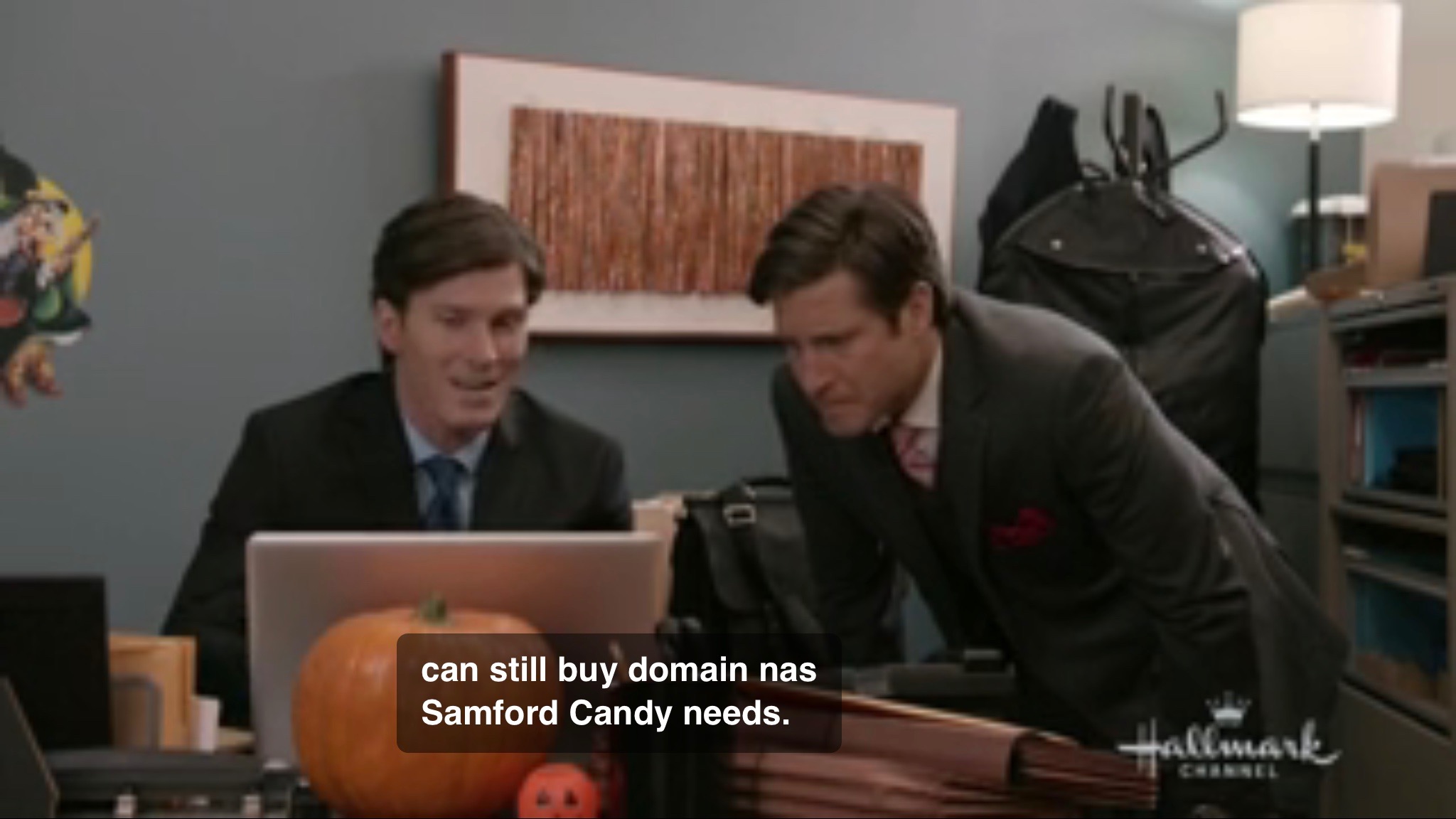
Cinderella explains to the son that the son registered sandfordcandy.com instead of samfordcandy.com. Fine, but then he says that Sanford Candy can still buy the domain Samford Candy needs. It’s a little unclear here whether he actually means that Sanford Candy can still buy the domain or he is explaining that by registering sanfordcandy.com, it means that it left it open for Sanford Candy to register samfordcandy.com. Either way, this apparently leaves Cinderella with the job of filing a motion to set aside, which is the movie’s reason to keep him from going to the ball.

Later on a deal from Sanford Candy comes in to buy Samford Candy. The father tries to encourage the Prince to buy it. She of course doesn’t want to do that. As Cinderella investigates, he finds out that the father is buying up stock in Samford Candy in order to make a killing if a buyout occurs. Okay, except the non-existent cybersquatting that was supposedly going on at the beginning of the movie is brought up again during the finale.
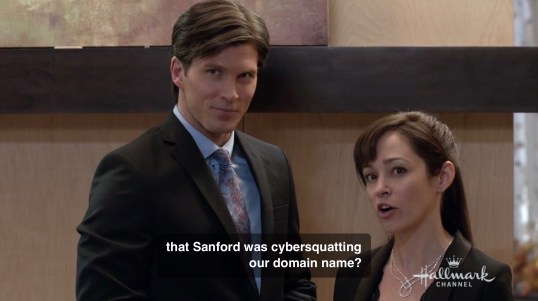
IMG_1937

She points out that she had to find out Sanford was cybersquatting from Cinderella. Okay, then that means the father knew about the cybersquatting? So why was he mad at his son for registering the wrong name? I mean other than the movie needed some excuse for Cinderella to have to sneak out to the ball. It also means that the movie really did mean that Sanford Candy had already registered samfordcandy.com at the beginning of the story.

None of this quite adds up for me. Luckily, there is an easy way to figure this all out. I did a whois lookup for the domain names sanfordcandy.com and samfordcandy.com and they were both registered by Deborah Marks, who is an executive producer of this movie. There, she’s the real villain of the film.

That whole domain name thing is unnecessary and confusing. It gets in the way of what is otherwise an okay gender swapped Cinderella.

Of course there are a few fun things to point out.
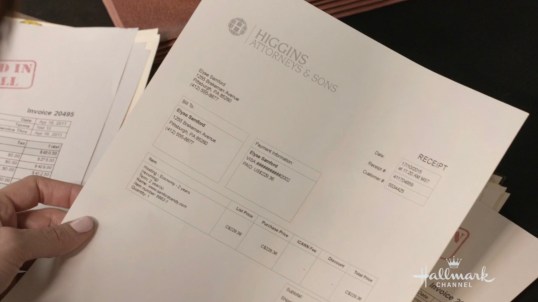
IMG_1901

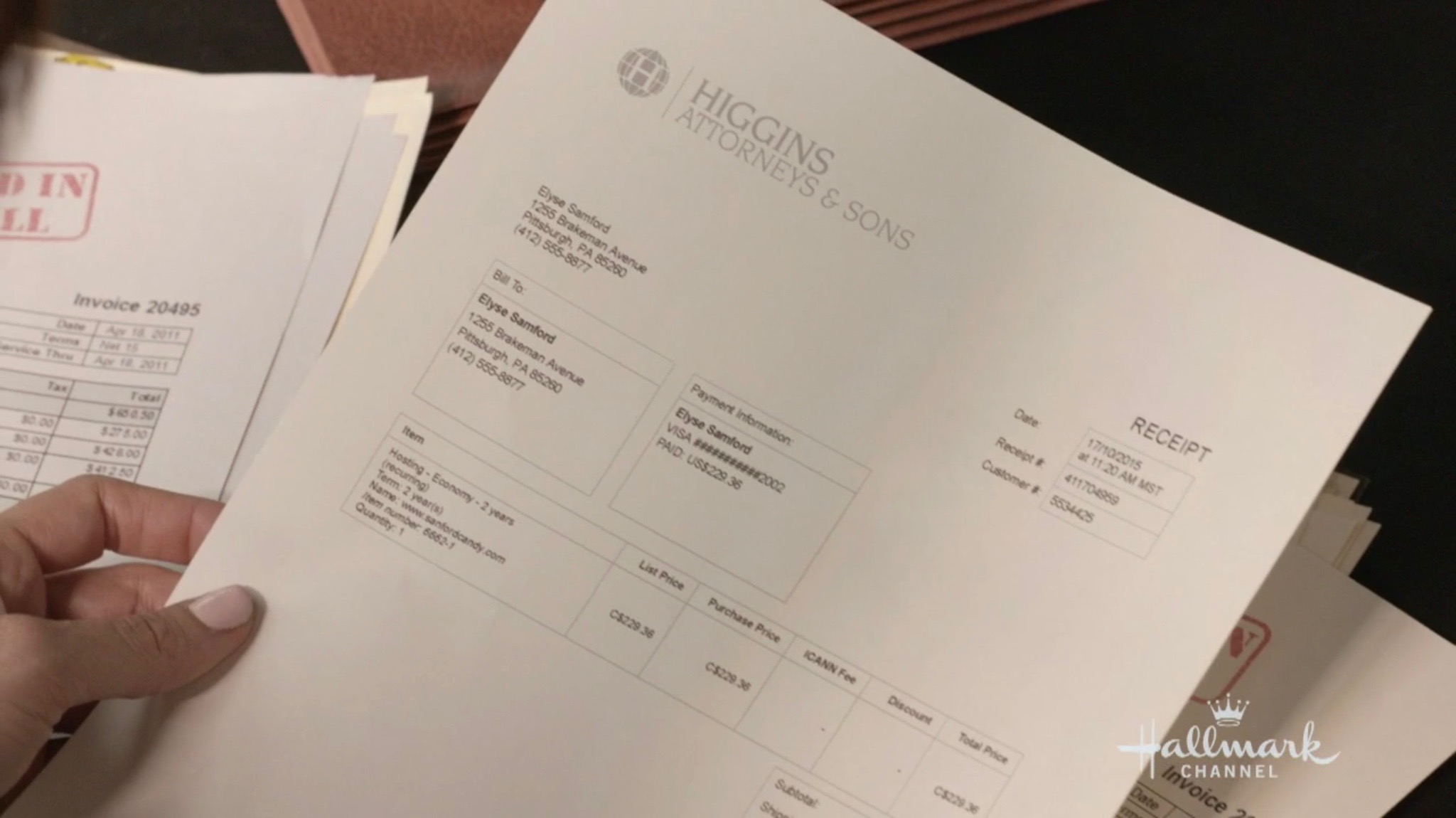
First, this movie came out in 2014, but her receipt is dated October 17th, 2015. Second, that’s a bill for hosting, not for registering a domain. Those two things are not the same thing. Finding this bill is also a reason why she believes Cinderella’s story about the father trying to get her company bought out. So again, why the scene with the son over registering the domain name sandordcandy.com? And if this was some secret, why was she billed for it by the law firm?

IMG_1828

When Cinderella tries breaking into the father’s computer, he tries three different passwords: Dottsandcrossis, EmmettandAndrew, and 150%. Except only the last password has the number of characters that correspond to the password typed in on the screen. The one above is what we are shown for Dottsandcrossis.
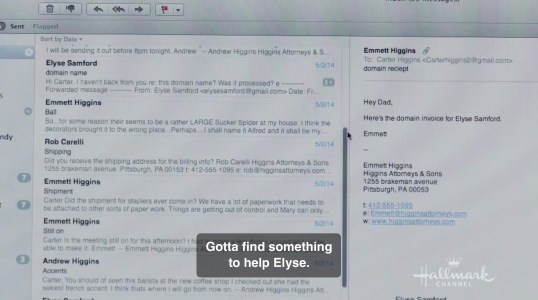
IMG_1833

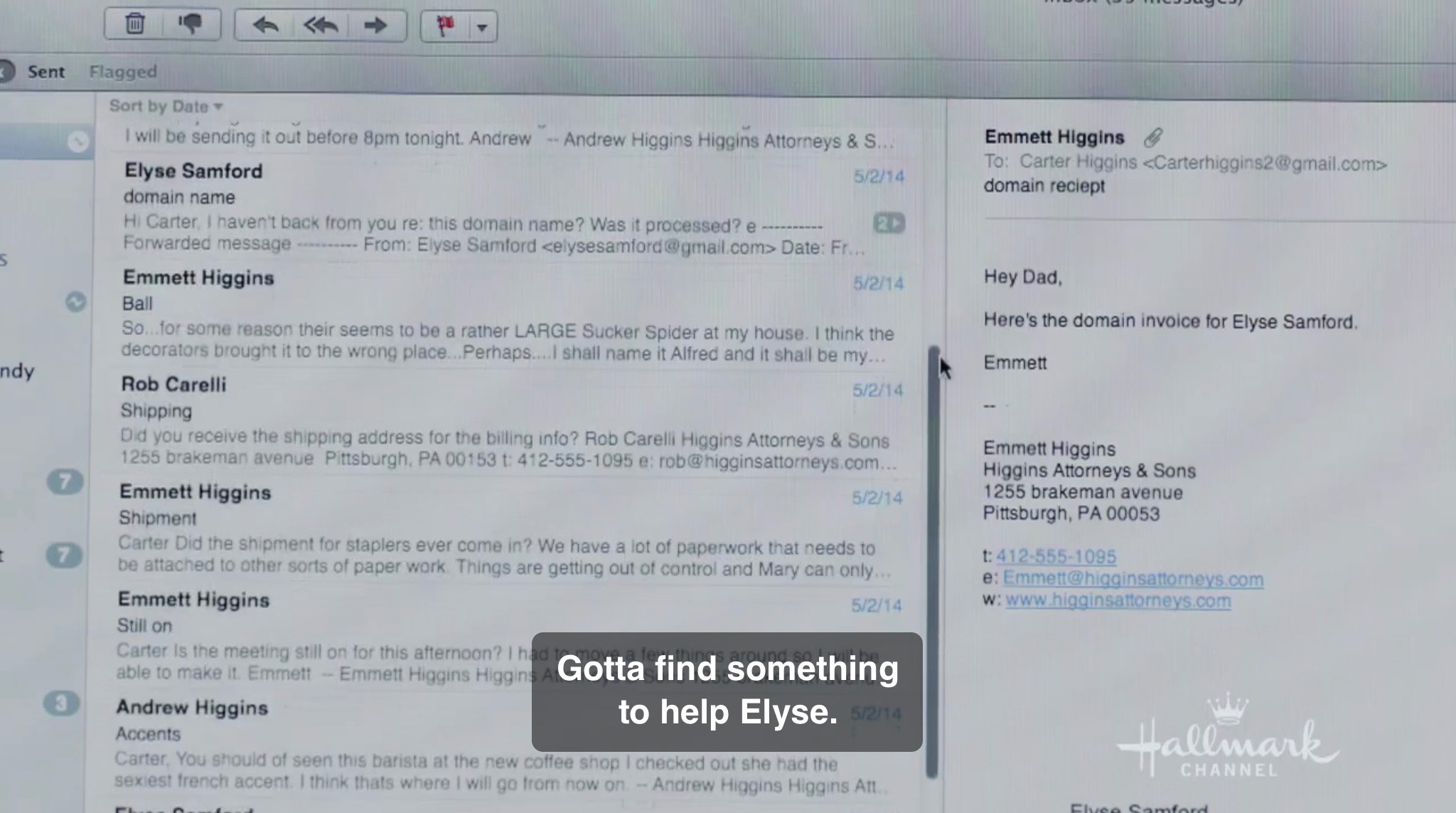
When Cinderella does get into the computer he launches the standard Mac mail program called Mail to look for anything with the name Sanford in it. Except he never does a search for it. He just quickly browses over several emails, then leaves. That said, I love that they actually tried to come up with emails that look real. Look at the one with the subject line “Ball” about a “LARGE Sucker Spider”. There is another email later on that has some joke about a brunette and a redhead trying to break out of jail.
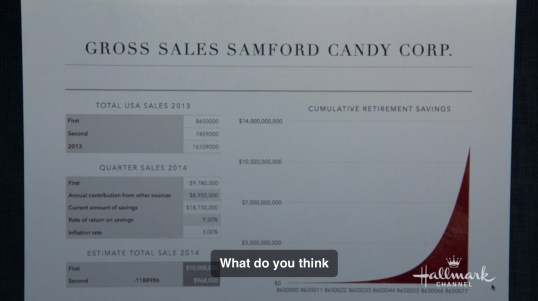
IMG_1726

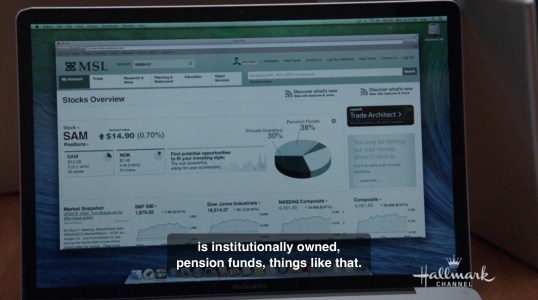
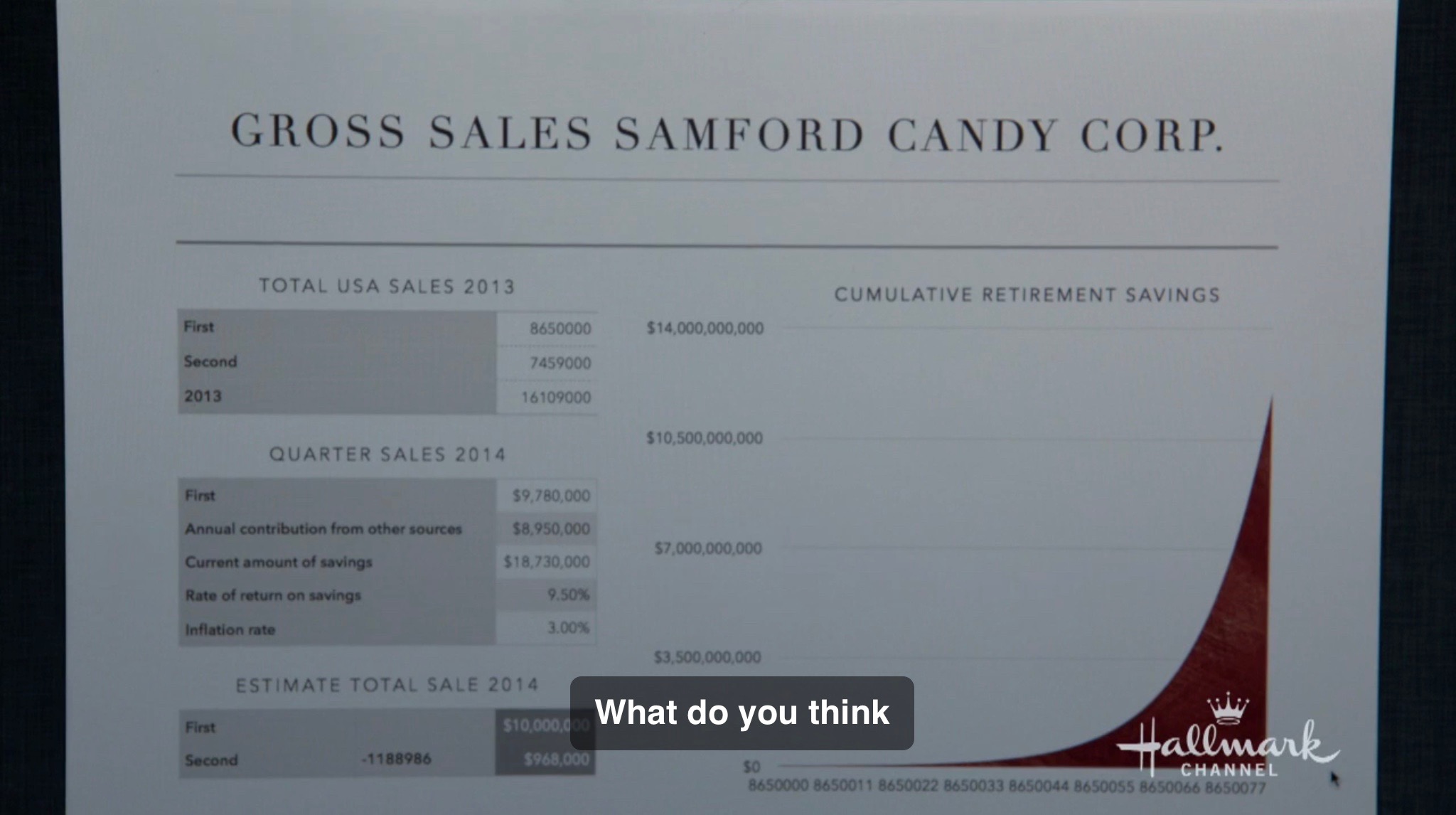
Does that chart make sense to you?

IMG_1841

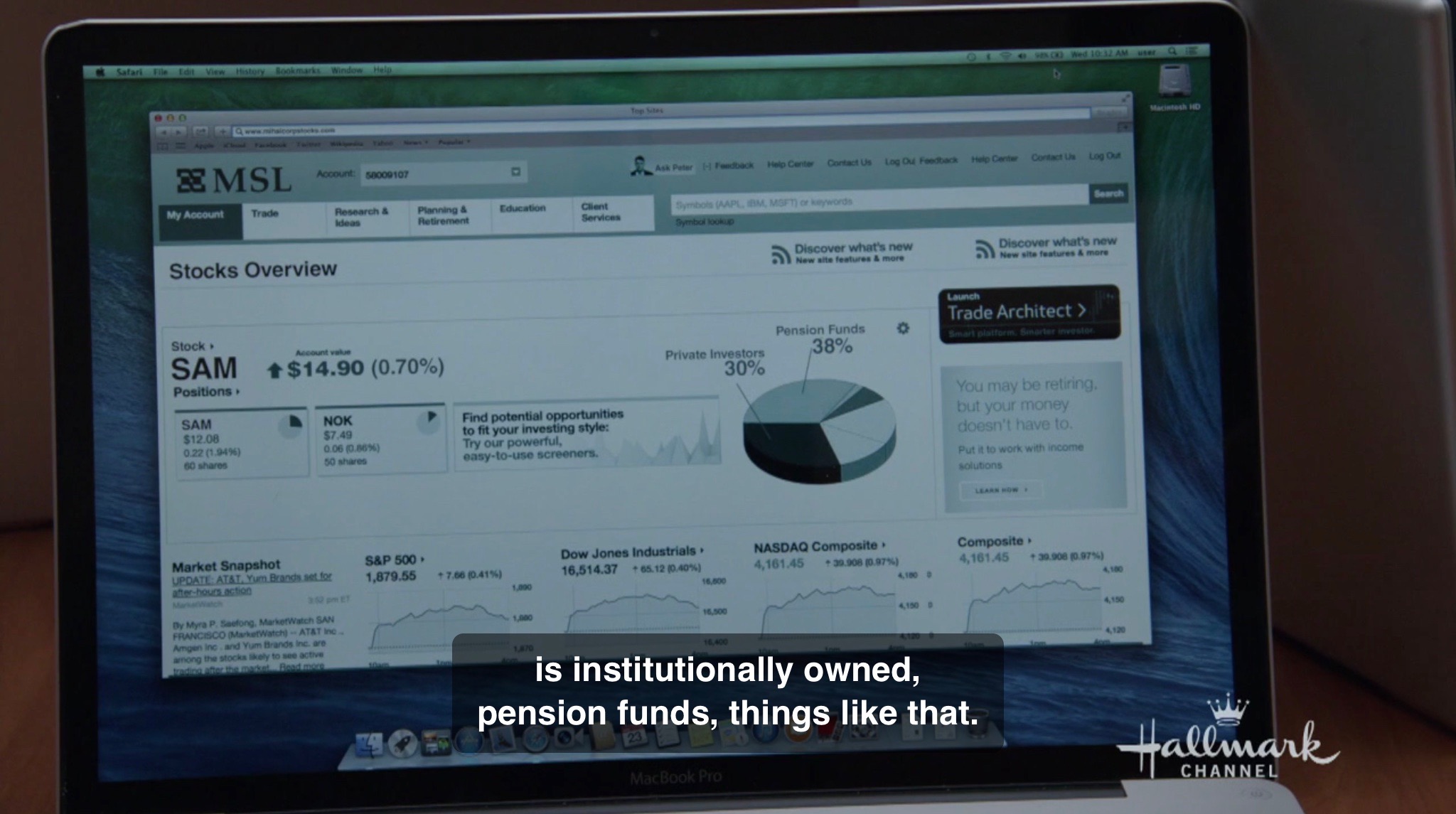
Kudos on this screen. Even if SAM is the stock symbol for Samuel Adams beer, and NOK is Nokia.
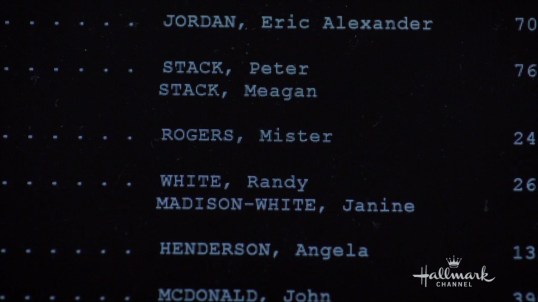
IMG_1848

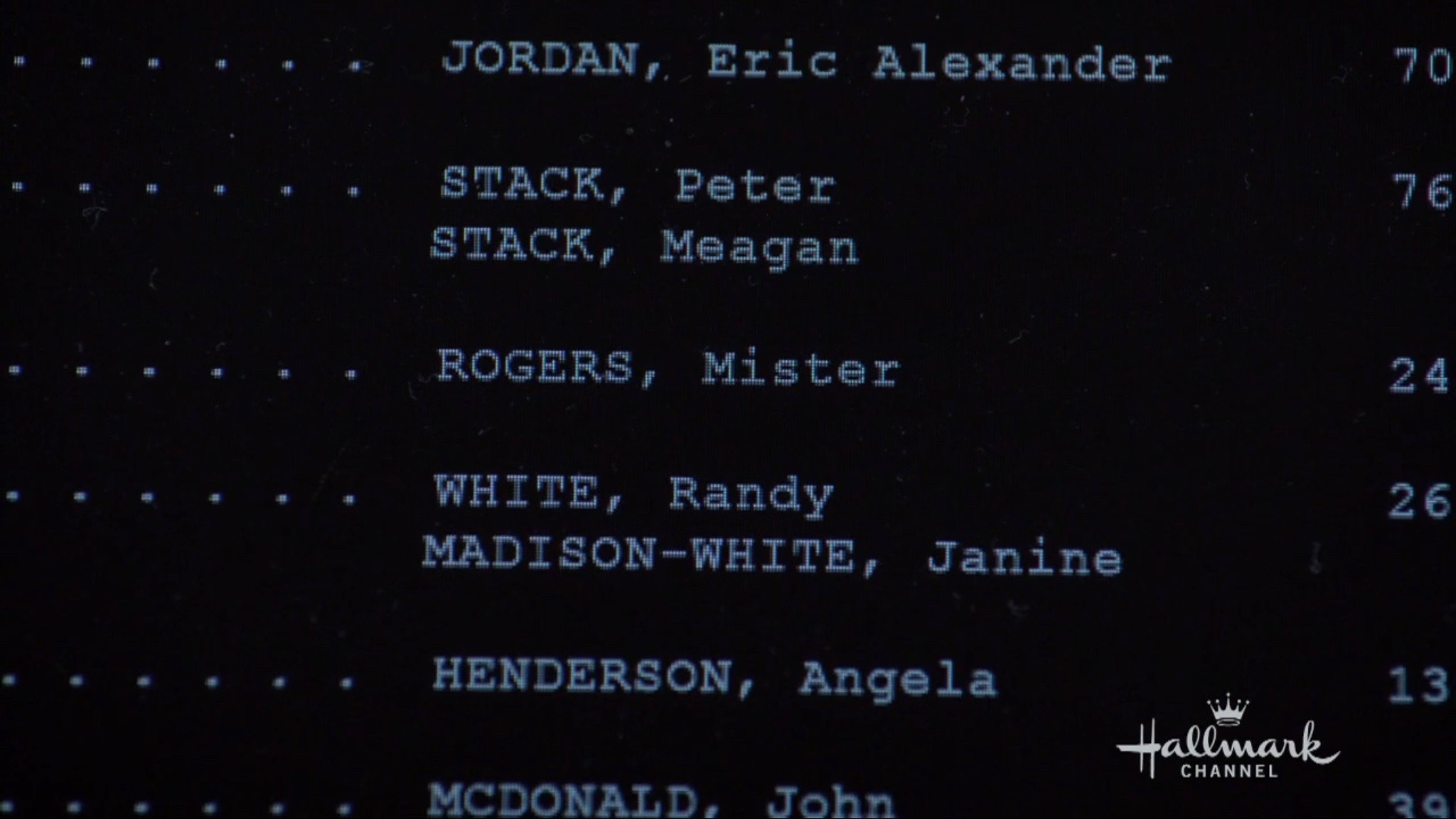
And finally, when they are trying to find out how that father is involved in the buyout, they look up individual investors. I’m sure Mister Rogers probably pooled money from everyone in the neighborhood to buy stock in the company. I actually love that they stuck that name in there.

All in all, if you can block out the domain registration thing and just focus on the Cinderella story, then you’ll be fine watching this.
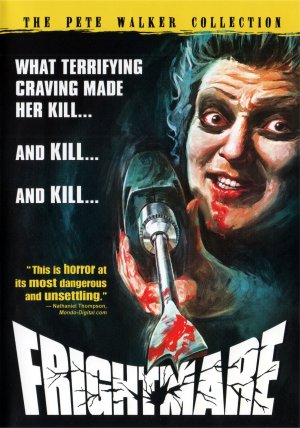
The TSL’s Daily Horror Grindhouse: Frightmare (dir by Pete Walker)


Frightmare_FilmPoster

Since I already reviewed one British film about cannibalism earlier today, I figured why not review another one?  Pete Walker’s film Frightmare was released in 1974, two years after the release of Death Line.  You have to wonder what was going on in British society in the early 70s that led to so many cannibal films.  When watched together, Frightmare and Death Line present a vision of a society that was devouring itself, both literally and figuratively.

Frightmare tells the story of Dorothy (Shelia Keith) and Edmund Yates (Rupert Davies).  Dorothy is a fortune teller who has something of a violent temper.  Edmund is her loving but abused husband.  However, Dorothy has more than just a temper.  She also has a taste for human flesh.  She’s just spent 15 years in prison, convicted of killing and eating a man.  However, she has now been “found sane,” (and that’s a term that is repeated, with increasing irony, throughout the entire film) and she has been released.  She’s even reading fortunes again!

Jackie (Deborah Fairfax) is Edmund’s daughter by his first marriage.  She’s devoted to her father and, at the same time, scared of her mother.  She doesn’t believe that her mother is truly sane, despite the fact that her psychiatrist boyfriend, the well-meaning but arrogant Graham (Paul Greenwood), continues to remind her that Dorothy has been “found sane.”  Jackie knows that Dorothy still wants to eat human flesh so, every weekend, she takes the train to Dorothy’s home and delivers meat.  Jackie tells Dorothy that it’s human flesh but, in reality, it’s just a placebo.  When Graham finds out what Jackie’s doing, he is outraged.  After all, Dorothy has been found sane!

Jackie, however, has other things to worry about.  Her younger half-sister, the rebellious Debbie (Kim Butcher), is living with her.  Along with dating an obnoxious biker, Debbie also resents the fact that Jackie is obviously Edmund’s favorite.  And, as quickly becomes clear, Debbie is as much of a sociopath as her mother…

Speaking of which, Dorothy may have been found sane but it’s obvious that she’s not.  (Throughout the film, no matter how erratic Dorothy’s behavior becomes, Graham continually assures us that she has been found sane.)  It also become obvious that Jackie’s placebos are not doing the trick.  Dorothy is once again murdering the random people who come to get their fortunes told.  And Edmund is helping her cover up the crimes, all the while pathetically telling anyone who will listen, “They said she was sane….they said she was sane…”

Frightmare is one of those films that you really do have to see in order to understand just how effective it is.  It’s an undoubtedly pulpy story and there’s not a subtle moment to be found in the entire film but it doesn’t matter.  Frightmare is properly named because it is pure nightmare fuel.  This is a film that work both as a family melodrama and a satire on the trust that people put into authority (the authorities said that Dorothy was sane so, everyone assumes, she must be) but ultimately, this is an intense and frightening little film.  That’s largely due to Sheila Keith’s ferocious performance.  She turns Dorothy into a force of cannibalistic nature.

Feel free to have a Death Line/Frightmare double feature.  Just don’t expect to have much of an appetite afterward…

Horror Film Review: Death Line (dir by Gary Sherman)


“Mind the doors!”

— The Man (Hugh Armstrong) in Death Line (1972)

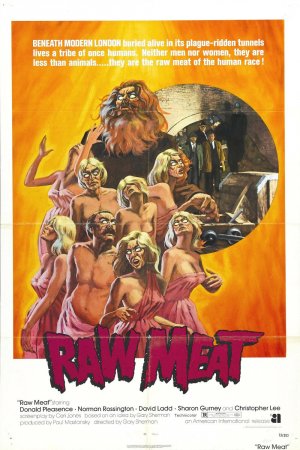
Before I get to far into reviewing the unjustly obscure British horror film, Death Line, I want you to take a look at the film poster below.

Deathlinerawmeat

This is the poster that was used when Death Line was released in the United States.  Now, I have to admit that I like this poster but that’s largely because I’m a lover of old grindhouse and exploitation films.  And this poster is a perfect example of the grindhouse aesthetic.  Of course, it’s not surprising that this poster is largely misleading.

First off, the title has been changed to Raw Meat.  That makes sense when you consider that the film is about a cannibal but it also creates the mistaken impression that this film is primarily about cannibalism.  It’s not.  Actually, Death Line is a film about class differences and government secrecy.  (Though it’s probably best to leave this as a topic for another post, I think it can be argued that almost every film made in the UK is, in some way, about class and secrecy.)

The bearded man is obviously meant to be a stand-in for Death Line‘s cannibal.  Known as the Man and played by Hugh Armstrong, he is the last descendant of a group of Victorian railway workers who were buried alive during the construction of the London underground.  The Man is the product of generations of cross-breeding.  And while the Man is definitely frightening at first, he ultimately emerges as the film’s only truly sympathetic figure.  He’s hardly the intimidating figure pictured above.  Instead, he’s a heart-breakingly pathetic figure who, having grown up in the shadows of the underground, is only capable of uttering three words: “Mind the doors.”  There’s a lengthy scene in which the Man howls in anguish after the death of his wife.  I don’t care if he was a cannibal, it still brought tears to my eyes.

The poster does offer up a glimpse of two men who appear to be searching an underground tunnel.  This image, at the very least, is accurate.  The two men are Inspector Calhoun (Donald Pleasence) and his partner, Detective Sergeant Rogers (Norman Rossington).  When the Man makes the mistake of attacking, murdering, and eating a member of a Parliament, Calhoun and Rogers are the ones who end up investigating the case.  What’s interesting is that neither Calhoun nor Rogers are presented as being sympathetic characters.  In fact, Calhoun is something as a fascist.  When Christopher Lee tells them to stop investigating the case, Calhoun is less upset over the government cover-up and more angered by the fact that he doesn’t like being told what to do.

There are two other people investigating the case, though neither one of them are present on the poster.  Alex Campbell (David Ladd) is an American college student and, though Alex starts out as sympathetic to the Man, that changes when the Man kidnaps his girlfriend (Sharon Gurney) and tries to make her into his new wife.  Alex serves as a stand-in for the self-righteous activists who, in most films, would be responsible for saving the day.  It’s telling of just how cynical a film Death Line is that Alex ultimately turns out to be even more ineffectual than Calhoun and Rogers.

Finally, the poster offers up a group of half-naked people.  I have no idea who these people are supposed to represent but I’m sure they helped to sell tickets!

As for Death Line, it’s an unjustly obscure film.  Whether you track it down under the original title or the Americanized title of Raw Meat, be sure to watch it.

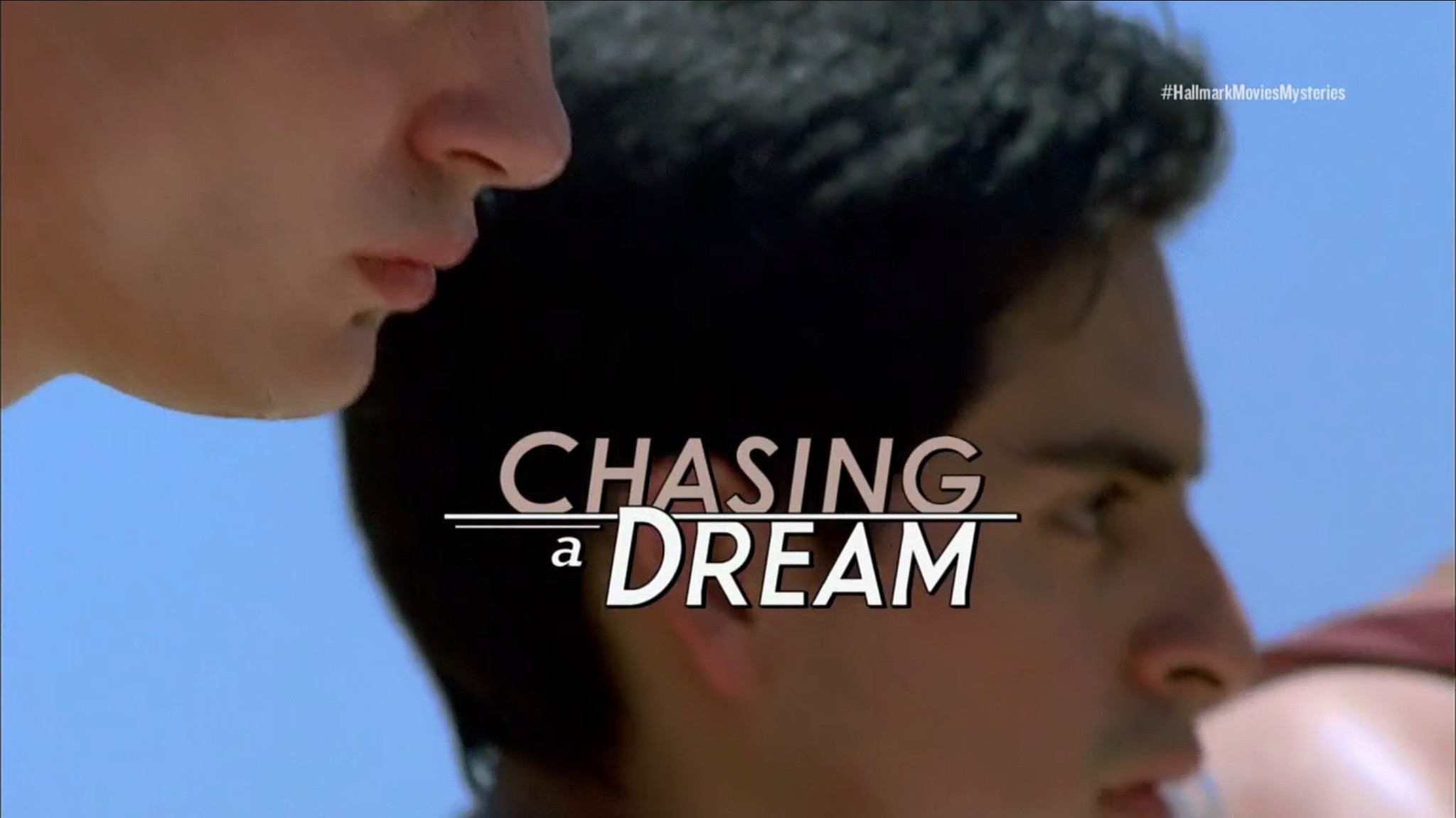
Hallmark Review: Chasing A Dream (2009, dir. David Burton Morris)


IMG_1468

You know, as much as I hated Freshman Father, I really like it when Hallmark actually tries to do something different. That’s the case with Chasing A Dream. This is going to be a short one because there is very little to this movie.

IMG_1482

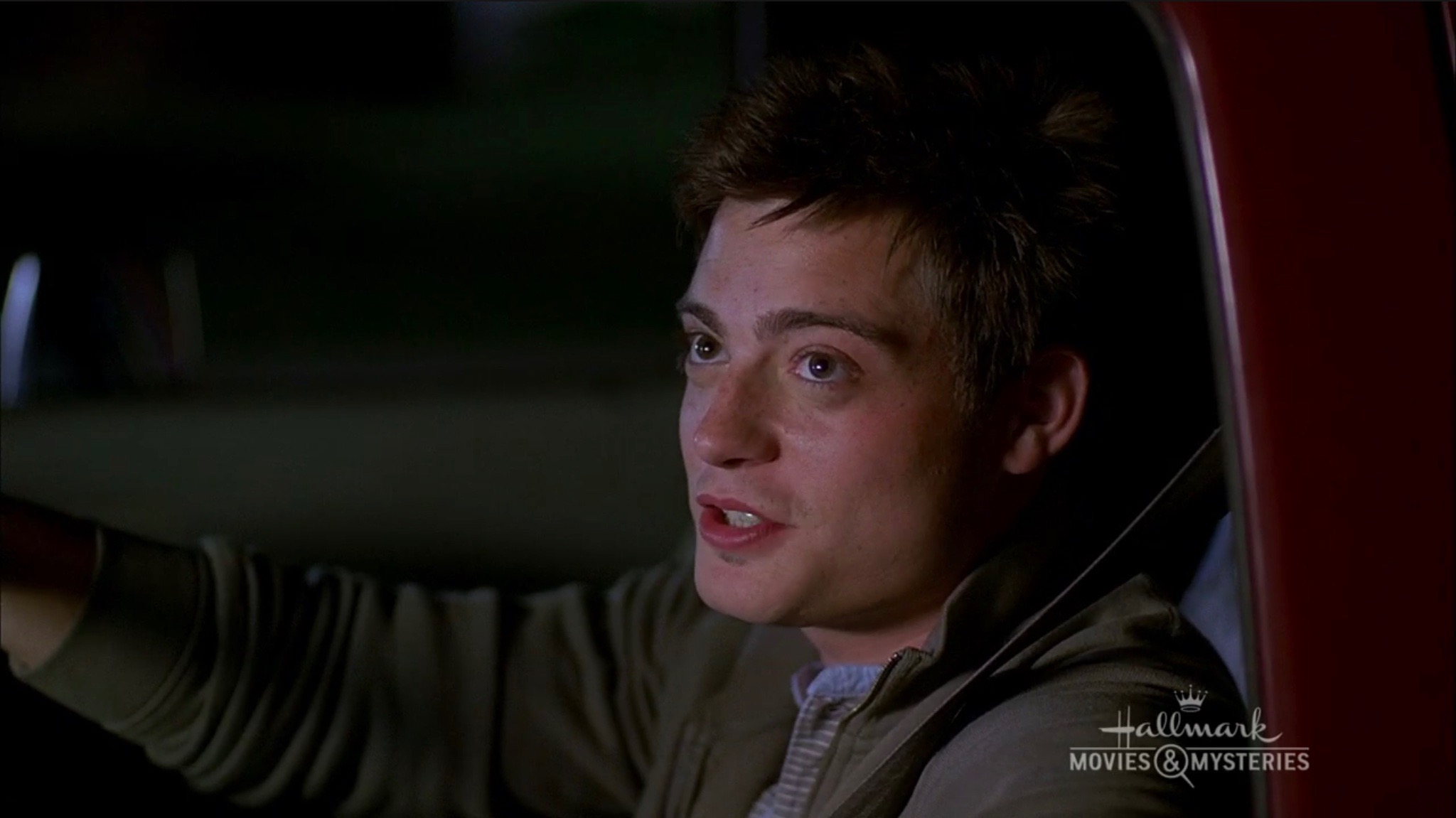
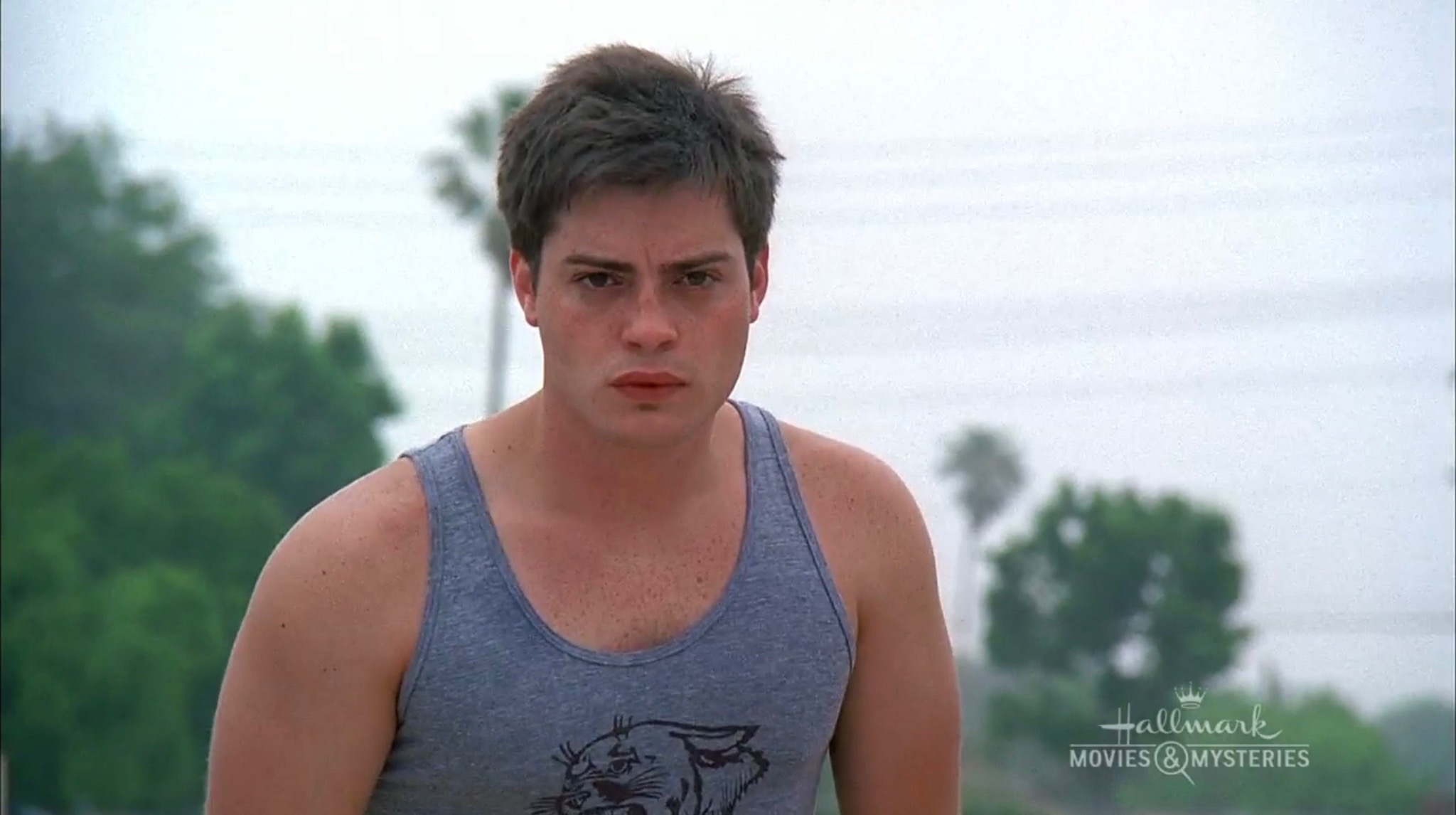
That’s our main character Cam Stiles (Andrew Lawrence). He is a high school football star. He and a runner friend of his are at a party. Cam wants to stay, the friend wants to go, and go he does. Of course something happens to him on the way home and he gets killed by a car.

IMG_1506

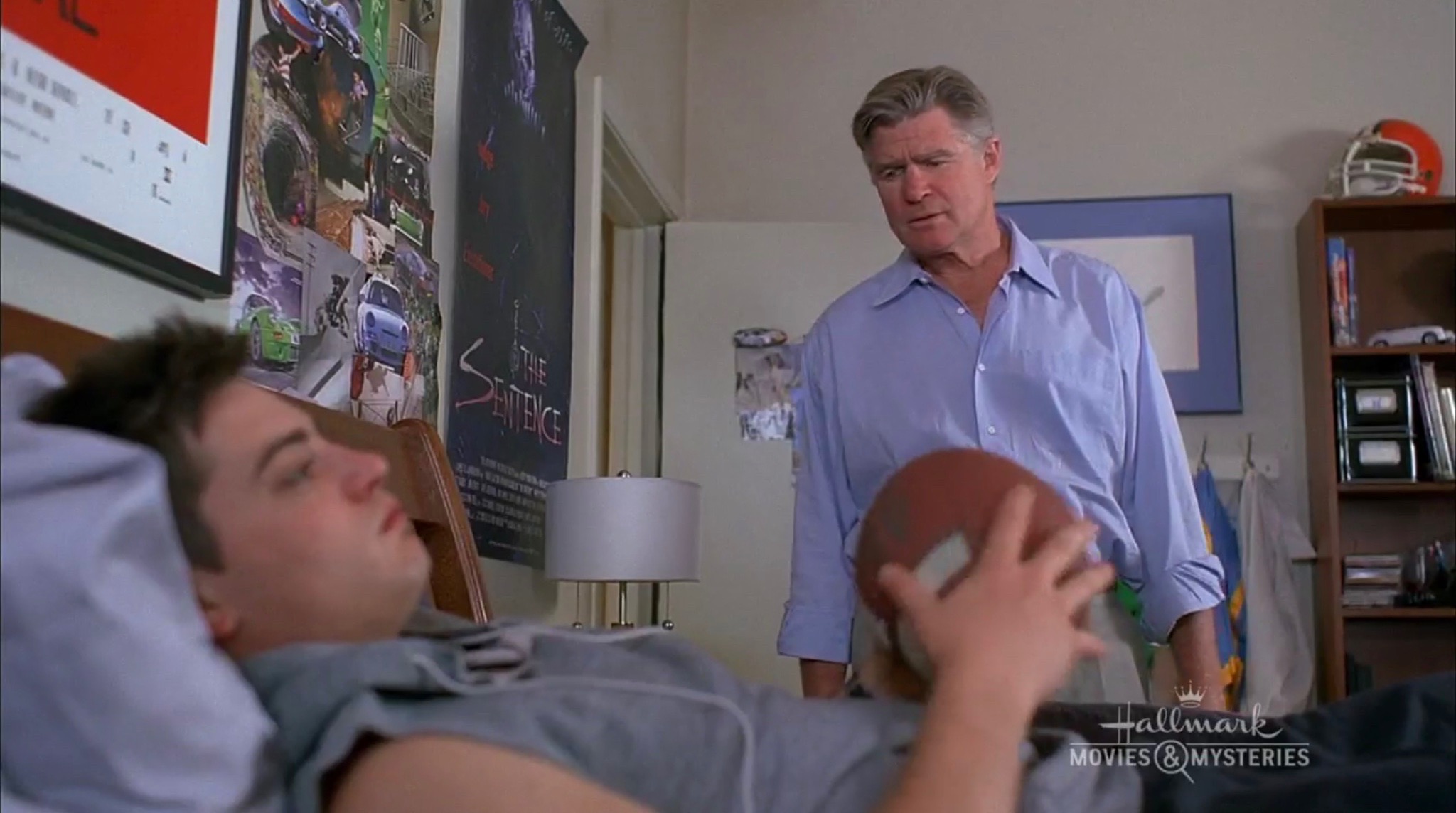
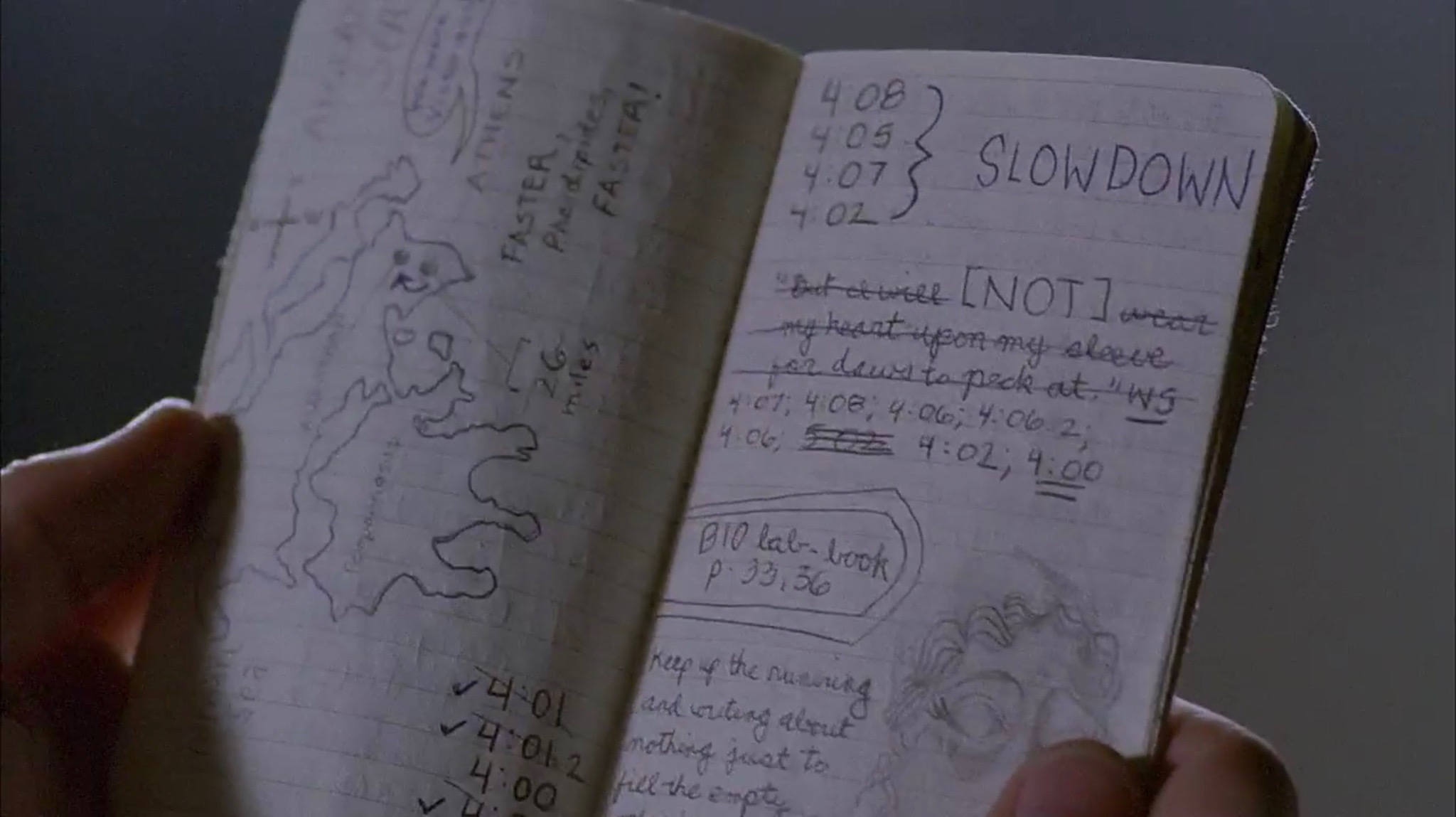
Cam takes it hard and his father played by Treat Williams isn’t exactly understanding. His father coaches the football team on which his son plays. It’s not that his friend was some nobody that hasn’t been properly memorialized or anything. It’s just that Cam is having trouble getting over it. That is, until he stumbles upon a little booklet his friend had. In it his friend was keeping track of mile times. His friend was trying to do a 4 minute mile.

IMG_1518

And that’s the rest of the movie. Cam decides that he certainly isn’t slow being an athlete and all. So he decides that for him, getting over the loss of his friend would be finishing what his friend started. That is it. Seriously, up to and including the last line of the movie, it is about Cam doing a four minute mile, then he’ll be okay.

Along the way he has to convince the track/cross country coach to let him in. He has to fight his father a bit because football was his way to college. And finally he has to actually do it, which includes his own Apollo Creed. HINT! HINT! HINT!

IMG_1580

I liked this one. It does have a couple of problems that are worth mentioning though. It’s one of those Hallmark movies where it feels like the script was longer, then certain scenes were cut out. A couple of times there’s a bit of a jump where it feels like there should have been something in between to smooth it out. Also, the dead friend appears as a ghost of sorts in a couple of scenes. It’s just an idealized version of his friend that Cam is seeing encouraging him on, but I think given that they followed through with the right ending, then they should have left those parts out.

Otherwise, I recommend this one.

Horror on the Lens: Dementia 13 (dir by Francis Ford Coppola)


(I originally shared this film back in 2011 — can you believe we’ve been doing this for that long? — but the YouTube vid was taken down.  So, I’m resharing it today!)

For today’s excursion into the world of public domain horror, I offer up the film debut of Francis Ford Coppola.  Before Coppola directed the Godfathers and Apocalypse Now, he directed a low-budget, black-and-white thriller that was called Dementia 13.  (Though, in a sign of things to come, producer Roger Corman and Coppola ended up disagreeing on the film’s final cut and Corman reportedly brought in director Jack Hill to film and, in some cases, re-film additional scenes.)

Regardless of whether the credit should go to Coppola, Corman, or Hill, Dementia 13 is a brutally effective little film that is full of moody photography and which clearly served as an influence on the slasher films that would follow it in the future.  Speaking of influence, Dementia 13 itself is obviously influenced by the Italian giallo films that, in 1963, were just now starting to make their way into the drive-ins and grindhouses of America.

In the cast, keep an eye out for Patrick Magee, who later appeared as Mr. Alexander in A Clockwork Orange as well as giving a memorable performance in Lucio Fulci’s The Black Cat.  Luana Anders, who plays the duplicitous wife in this film, showed up in just about every other exploitation film made in the 60s and yes, the scene where she’s swimming freaks me out to no end.

(One final note: I just love the title Dementia 13.  Seriously, is that a great one or what?)

The TSL’s Daily Horror Grindhouse: The House of the Devil (dir by Ti West)


When was the last time you actually saw a good movie on Chiller?  Seriously, it doesn’t happen that often and perhaps that’s why, when, a few years ago, I curled up on the couch and watched 2009′s The House of the Devil on Chiller, I wasn’t expecting much.  However, I was pleasantly surprised to discover that The House of the Devil is actually one of the most effective low-budget horror films that I’ve seen in a while.

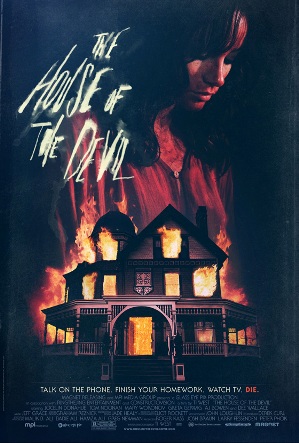
The plot of House of the Devil is pretty simple.  Samantha (a likable performance from Jocelin Donahue) is a college student who has just moved into her first apartment.  However, Samantha can’t really afford to pay the rent so she agrees to take a babysitting job for the mysterious Mr. Ullman (Tom Noonan, who is just so creepy in this film).  Ullman offers her one hundred dollars to come babysit for the night.  Samantha agrees and, with her skeptical friend Megan (Greta Gerwig, who is hilarious here), drives out to Ullman’s home.  It turns out that Ullman lives in an isolated house out in the country and that he actually doesn’t have any children.  Instead, he wants Samantha to babysit his aging mother while he goes into town so he can watch the lunar eclipse which just happens to be happening on that exact night!  Samantha is reluctant but agrees to stay when Ullman offers to pay her $400.00.

And can you guess where this story is headed?

This film isn’t titled House of the Devil for nothing.

The_House_of_the_Devil


As I said before, I wasn’t expecting much from The House Of The Devil.  I was honestly expecting it just to be a typical, low-budget Chiller horror film, good for nothing more then maybe a laugh or two and maybe a few memorably silly gore effects.  Having now seen the film, I’m very happy to say that I was incorrect.  The House of the Devil is a well-made, effectively creepy horror film and it’s one that other horror filmmakers could very much learn from.

Don’t get me wrong.  The plot of House of the Devil isn’t going to win any points for creativity.  Even if the film didn’t open with a wonderfully self-concious title card informing us that the movie is “based on a true story” of Satanic activity, it would be pretty easy to figure out that nothing good is going to happen once Samantha goes into the house.  But that actually works to the film’s advantage.  The House of the Devil feels like an old ghost story told at a sleepover.  You know where the story’s heading but you get scared nonetheless because, ultimately, it’s the type of story that plays on the fears that everyone has.

Also, in the style of the scary ghost story told by a storyteller with a flashlight pointed up at her chin, The House of the Devil understands that the best horrors are the ones produced by an overstimulated imagination.  With the exception of two or three scenes, this is not a gory film nor is it a film that sadistically lingers over scenes of torture and carnage.  Instead, director Ti West takes his time to set up both the story and the characters.  This is a film where the horror comes more from a carefully constructed atmopshere than any sort of easy shock effects.  As a result, this is a horror film that actually stays with you after you watch it.

The House of the Devil is a film that I’m very happy to recommend.

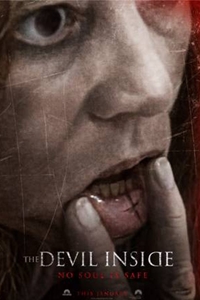
Horror Film Review: The Devil Inside (dir by William Brent Bell)


Dvinside

As a film reviewer, I usually try to introduce my readers to good films that they might otherwise miss.  However, sometimes, you see a film that’s so bad, bland, and/or boring that you simply have to speak up to prevent anyone else from wasting their time watching it.  And sometimes, you come across a film so bad that, even 3 years after it was first released, you still need to raise the alarm because this film represents everything that has recently cheapened horror as a genre.

The Devil Inside is one such film.

The Devil Inside is yet another horror film that’s disguised as a “found footage” documentary.  A camera crew follows Isabella Rossi (Fernanda Andrade) as she wanders around Rome and investigates the rite of exorcism.  It seems that Isabella’s mom, Maria, committed a triple homicide 20 years previously and Isabella thinks that Maria’s possessed by a demon.  Isabella recruits two priests to perform an exorcism on her mother and — well, the rest of the movie is pretty much a remake of every other horror film that’s been released over the past 20 years.  The only surprise comes at the end of the film when a title card appears, inviting the viewers to visit a web site about the Rossi murders so that they can learn more about the “ongoing investigation.”  If there was ever a point, during the film, when you actually believed that the story being told was true, that might be an effective ending.  However, since the whole films feels false, that title card just feels insulting.

The Devil Inside was one of the first movies to be released in 2012 and, 3 years later, it remains one of the worst ever made. The performances aren’t particularly memorable, the scares are nearly non-existent, and there’s not a thing to be seen in this film that one can’t see in a better horror film.  Whereas films like The Last Exorcism, Apollo 18, and the third Paranormal Activity film actually managed to find a new wrinkles to the whole “found footage” genre, The Devil Inside seems to be content to be mediocre, boring, and, worst of all, boring.  Perhaps that’s why when I think about The Devil Inside, my immediate response is, “No more!”

No more horror films disguised as documentaries.  No more artfully awkward scenes where characters say things like, “Is the camera on?” and “Are you getting this?”  Listen, aspiring horror filmmakers — the gimmick no longer works!  We know that you didn’t just happen to find this footage sitting in some warehouse somewhere.  Don’t end your film by telling us that we should visit some equally fake web site so that we can see more “proof” that what we’ve just seen is real.  Just stop it.  It was a good gimmick while it lasted but it’s no longer effective.  It’s time to discover some new tricks with which to fool your audience.

In short, it’s time for horror filmmakers to stop expecting us to be content with stuff like The Devil Inside.