Lisa Cleans Out Her DVR: Wimbledon (dir by Richard Loncraine)


(Lisa is currently in the process of cleaning out her DVR!  It is probably going to take her forever.  She recorded the 2004 romantic comedy, Wimbledon, off of Cinemax on February 15th.)

I wish I could play tennis.

Actually, I guess it would be more correct for me to say that I wish I could play tennis well.  I mean, I can hold the racket and I can run around the court and I can hit the ball and sometimes, it goes over the net.  I can do all the yelling and the grunting and the jumping.  I’m pretty good at slamming my racket down on the court whenever I miss a shot.  I can play the game but I just can’t win.  I’m way too easily distracted and that’s a shame because I’ve been told that I look cute in a tennis skirt.

It’s not for lack of trying either!  There’s a tennis court a few blocks away from my house and I’ve challenged both my sister and my BFF to several matches.  And, every time, they have totally kicked my ass.  In fact, now that I think about it, the only time I’ve ever won a set was because my opponent was feeling sorry for me and they had such confidence in their own abilities that they didn’t mind throwing a game or two.

(For the record, I’ve been told that, if not for my boobs getting in the way, I would have a pretty good golf swing.  But I don’t play golf so there you go…)

Anyway, I may not be able to play tennis but that doesn’t mean that I can’t enjoy a movie about people I can.  I really like Wimbledon.  I mean — yes, it’s a totally predictable sports movie.  You know, as soon as you see the opening credits, that Kirsten Dunst and Paul Bettany are going to fall in love.  They’re the prettiest people in the movie so, of course they’re meant to be together!  And, as soon as you see Sam Neill’s name, you know that he’s going to be playing the well-intentioned but clueless authority figure who tries to keep them apart.  When James McAvoy’s name appears, you yell, “He’ll be Paul Bettany’s best mate!”  (Actually, he plays Paul’s eccentric younger brother.)  And as soon as Jon Favreau’s name appears, you’re like, “Comic relief!”

Of course, since the movie is called Wimbledon, you know that the movie is going to be about tennis and you know that Paul Bettany and Kirsten Dunst are going to be competing at Wimbledon while falling in love.  You know that one of them will make it to the finals while the other sits in the stands and provides emotional support.  It’s just a question of which one.

As I said, it’s all totally predictable and yet, that’s actually a part of the film’s appeal.  With the plot being so obvious, you’re freed up to just appreciate the film as a vehicle of movie star charisma.  Paul Bettany and Kirsten Dunst are two of my favorite actors and I think they’re both criminally underrated.  In Wimbledon, Bettany is playing the older, veteran tennis player, the one who is playing at his final Wimbledon before retiring.  When he falls in love with Kirsten, it gives him a renewed sense of focus and, for the first time, he finds that he actually has a chance to win it all.  Kirsten, meanwhile, is the up-and-coming star.  Her father (Sam Neill) worries that Kirsten’s relationship with Paul will distract her and keep her from playing her best and it turns out that he’s absolutely right.

Even if you haven’t seen the film, you know everything that is going to happen but that’s okay.  Kirsten Dunst and Paul Bettany have got a really likable chemistry.  You want things to work out for them.  You want both of them to win championships and eventually get married and have a pretty family.  Bettany, in particular, proves that he can make even the most clichéd of lines sound fresh and spontaneous.  Add to that, both Paul and Kirsten look adorable in tennis white and that’s really all that most people ask for when it comes to a film like this.

Wimbledon is an enjoyable and predictable movie, one that won’t leave you feeling depressed or questioning the meaning of existence.  It may not be perfect but it’s certainly likable and sometimes, that’s all you need.

Lisa Cleans Out Her DVR: Scorpio (dir by Michael Winner)


(Lisa is currently in the process of cleaning out her DVR!  Having recorded over 150 movies since last January, she understands that this might be an impossible task but she’s going to try anyway!  She recorded the 1973 spy thriller, Scorpio, off of Retroplex way back on January 24th!)

On the surface, Jean Laurier (Alain Delon) would appear to be the perfect man.

He’s handsome.  He looks really good in a suit.  He’s wealthy.  He’s French.  And — get this — he loves cats!  He’s the type of guy who, when he discovers a stray cat in his hotel room, immediately starts to pet it and then gives it a saucer of warm milk.  He and his girlfriend (Gayle Hunnicutt) spend their spare time looking at cats and talking about how cute they are.  At one point, even though he’s just killed a man, Jean pauses when he sees a stray cat watching…

Oh, did I mention that Jean kills people for a living?  Well, he does but I’m sure they’re all bad guys.  Seriously, he’s just so charming (and he really, really loves cats) that you really can’t hold it against him that he’s an independent contract killer.  Add to that, his code name is Scorpio.

I have to admit that the film’s title — Scorpio — is the main reason that I chose to record this movie.  I’m a scorpio myself.  In fact, I’m such a scorpio that if I believed in astrology, I would point to my existence as proof that the stars actually do determine our fate.  Seriously, you don’t want to mess with us scorpios.  We’re scorpions.  We sting.

But anyway, back to the movie.

When Scorpio is busted on a trumped-up narcotics charge (or maybe it was a legitimate narcotics charge, it was kind of hard to keep track), the CIA gives him a choice.  He can either go to prison or he can do a job for them.  Apparently, the CIA believes that Scorpio’s friend and mentor, Cross (Burt Lancaster), is a double agent who has been selling information to the Russians.  They want Cross eliminated.

Scorpio takes the job but it’s not going to be easy.  Cross is a veteran spy.  He has connections all across the world and he’s a ruthless killer, the type who forces a man to swallow a cyanide pill and then says, “You’ve got 30 seconds to live.”  In fact, the only person that Cross seems to care about is his wife (Joanne Linville) but he still doesn’t hesitate to abandon her when he realizes that their house is being watched

Cross taught Scorpio everything that he knows but there’s one lesson that Scorpio is still learning and that is to trust no one.  Is Cross actually a spy or is he being set up?  And, if Cross is being set up, what’s to prevent the same thing from happening to Scorpio?

Scorpio is probably one of the most cynical films that I’ve ever seen.  If Scorpio was a political protest, it would be full of people carrying cardboard signs reading, “Nothing Matters” and “All Is Darkness.”  Remember that annoying as Hell scene in SPECTRE where James Bond got drunk and demanded to know who a rodent was working for?  Well, imagine the disillusionment of that scene stretched out for two hours.

Fortunately, no one in Scorpio is as whiny as Daniel Craig was in SPECTRE.  In many ways, Scorpio is a triumph of old-fashioned movie star charisma.  Burt Lancaster is perfectly cast as the world-weary Cross while Alain Delon makes for a compelling Scorpio.  Both of them are believable killers and the film becomes as much about the competition between Lancaster’s old school Hollywood style of acting and Delon’s more refined (and very French) style of cool as it is about the competition between Scorpio and Cross.

Scorpio‘s a good little spy thriller, more than worth keeping an eye out for.


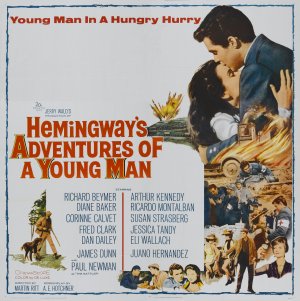
Lisa Cleans Out Her DVR: Hemingway’s Adventures Of A Young Man (dir by Martin Ritt)


(Lisa is currently in the process of cleaning out her DVR!  It’s going to take a while.  She recorded this 1962 literary adaptation off of FXM on January 30th!)

Hemingway’s Adventures Of A Young Man is one of those films that you just know was made specifically to win Oscars.  It’s a big prestige production, complete with a historical setting, an epic scope and big, all-star cast.  That most of those stars appear in relatively small roles was undoubtedly meant to evidence of the film’s importance.

“Look!” the film seems to shout at times, “This is such an important film that even Paul Newman was willing to stop by for a day’s work!”

The film is based on ten short stories by Ernest Hemingway and, loosely, A Farewell to Arms.  The stories all dealt with the early life of Nick Adams, who was a literary stand-in for Hemingway.  Since the Nick Adams stories were autobiographical (and, for that matter, so was A Farewell to Arms), the film can also be viewed as biopic.  Richard Beymer (who, a year earlier, had starred in West Side Story and who is currently playing Ben Horne on Twin Peaks) may be playing Nick Adams but the film leaves little doubt that he was actually meant to be playing Ernest Hemingway.

The film opens with Nick hunting with his father, Dr. Harold Adams (Arthur Kennedy).  He is present when his father travels to an Indian camp and helps to deliver a baby.  He respects his father but Nick wants to see the world and the film follows him as he explores America, working odd jobs and meeting colorful characters along the way.  Paul Newman shows up as a punch-drunk boxer and proceeds to overact to such an extent that he reminded me of Eric Roberts appearing in a Lifetime film.  Nick meets rich men, poor men, and everything in between.  He works as a journalist.  He works as a porter.  Eventually, when World War I breaks out, Nick enlists in the Italian army and the film turns into the 100th adaptation of A Farewell to Arms.

And really, I think it would have been an enjoyable film if it had been directed by someone like Otto Preminger, George Stevens, or maybe even Elia Kazan.  These are directors who would have embraced both the pulpy potential of the Nick Adams stories and the soapy melodrama of the war scenes.  A showman like Preminger would have had no fear of going totally and completely over the top and that’s the approach that this material needed.  Instead, Hemingway’s Adventures Of A Young Man was directed, in a painfully earnest style, by Martin Ritt.  Ritt tries to imitate Hemingway’s famously understated style with his understated direction but, cinematically, it’s just not very interesting.  Ritt portrays everything very seriously and very literally and, in the end, his direction is more than a little dull.

Sadly, the same can be said for Richard Beymer’s performance in the lead role.  Beymer comes across as being the nice guy who everyone says you should marry because he’ll be able to get a good and stable job and he’ll probably never go to jail.  Two months ago, when I watched and reviewed Twin Peaks, I really loved Beymer’s performance as Ben Horne.  He just seemed to be having so much fun being bad.  Unfortunately, in Hemingway’s Adventures Of A Young Man, he never seemed to be having any fun at all.  No wonder he temporarily put his film career on hold so that he could fully devote himself to working as a civil rights activist.

In the end, this is a movie that’s a lot more fun to look at than to actually watch.  Visually, the film is frequently quite pretty in an early 1960s prestige movie so sort of way.  And there are some good performances.  Eli Wallach, Ricardo Montalban, Susan Strasberg, Arthur Kennedy — there’s a whole host of performers doing memorable supporting work.  Unfortunately, even with all that in mind, this well-intentioned film largely falls flat.

TSUNAMBEE: Movie Preview, Review and Trailer (Director: Milko Davis)


tsunambee

“And out of the smoke locust came down upon the Earth and were given power like that of the scorpions. They were told to destroy the people that did not bear the mark of God. They had tails and stings like scorpions. Thy looked like horses prepared for battle with crowns of gold and wings that thundered like many chariots rushing into battle [SIC]. The people would suffer the agony for five months, and then in those days men will seek death, but death will elude them…….BUT DEATH WILL ELUDE THEM…” Revelations 9: 3-10

Now that I have set the stage for you, let’s get the technical stuff out of the way so we can get on to the movie itself.

Writer and Director: Milko Davis (Raiders of the Damned, Z/Rex)

Co-Director: Thomas Martwick (Mistress of Seduction)

Stars:

Ruselis Aumeen Perry (American Ninja Warrior) as Jay B

Stacey Pederson (Roses in December, Eat) as Sheriff Lindsey Feargo

Maria DeCoste as Chica/Sherica

Shale Le Page (We do monsters, The Attica) as Jessie

Production: Wild Eye Releasing (Jurassic Prey, Shark Exorcist

Preview: 

This is gonna sting a little.

After a catastrophe strikes Los Angeles, survivors face an even greater threat, thousands of giant killer bees, ushering in the end of the world!

Writer/Director Milko Davis’s ferociously fun ode to golden age creature makes its digital debut June 13!

Review:

At this point I can not guarantee there will not be spoilers: Read ahead at your on caution!

Weighing heavily on a biblical apocalyptic theme, Milko (director) leads us into a world of turmoil and catastrophe.  Starting in the Sambisa Forest of Nigeria leading all the way to post-modern Los Angeles and beyond.

For his first major movie, Milko has a way of challenging social, economic and diversity stereotypes that could well, in a way, define him as a director (and I mean that in a good way).

What did the killer bees bring to the movie? Honestly, not a lot. The CGI was bad, but not unexpected. The acting ways way over-done, but again not unexpected.

I really was surprised with Casandra’s role. Exceptional performance from Thea Saccoliti. She has the best line of the movie. [Jessie: “Did God say anything about me?”] [Casandra: “Nope, but my teddy bear will be ok!”]

If you are looking for a different kind of review:

This movie has ZomBees in it! Literally, I can’t make this up! ZomBees!

TSUNAMBEE 2

“The multidudes [SIC] who sleep in the dust of Earth will awake! Some to everlasting life, others to shame and disgrace.”

Tsunambee will BEE (Ok, forgive that one pun) available on VOD June 13th and for DVD later this summer.


If you want to watch the trailer for Tsunambee (and you do) It is right here!


A Movie A Day #155: Out of the Fog (1941, directed by Anatole Litvak)


When two aging fishermen (Thomas Mitchell and John Qualen) attempt to buy a new boat, they run into a problem with local mobster, Harold Goff (John Garfield).  As Goff explains, if they do not pay him $5.00 a week, something bad could happen to their boat.  When one of the fisherman’s daughter (Ida Lupino) falls in love with Goff, she makes the mistake of letting him know that her father is planning on giving her $190 so that she can take a trip to Cuba.  When Goff demands the money for himself, the fishermen attempt to go to the police, just to be told that there is nothing that the authorities can do.  Goff tricked them into signing an “insurance” contract that allows him to demand whatever he wants.  The two fishermen are forced to consider taking drastic measures on their own.  Out of the Fog is an effective, early film noir, distinguished mostly be John Garfield’s sinister performance as Harold Goff.
Out of the Fog is also memorable as an example of how Hollywood dealt with adapting work with political content during the production code era.  Out of the Fog was based on The Gentle People, a play by Irwin Shaw.  In the play, which was staged by The Group Theater in 1939, Harold Goff was obviously meant to be a symbol of both European fascism and American capitalism.  In the play, the two fisherman had Jewish names and were meant to symbolize those being persecuted by the Third Reich and its allies.  In the transition for stage to film, Jonah Goodman became Jonah Goodwin and he was played by the very talented but definitely not Jewish Thomas Mitchell.   The play ended with Harold triumphant and apparently unstoppable.  Under the production code, all criminals had to be punished, which meant the ending had to be changed.  Out of the Fog is an effective 1940s crime thriller but, without any political subtext, it lacks the play’s bight.

One final note: while Out of the Fog had a good cast, with up and comer John Garfield squaring against old vets Thomas Mitchell and John Qualen, the original Broadway play’s cast was also distinguished.  Along with contemporary film stars Sylvia Sidney and Franchot Tone, the play’s cast was a who’s who of actors and directors who would go on to be prominent in the 1950 and 60s: Lee J. Cobb, Sam Jaffe, Karl Malden, Martin Ritt, and Elia Kazan all had roles.


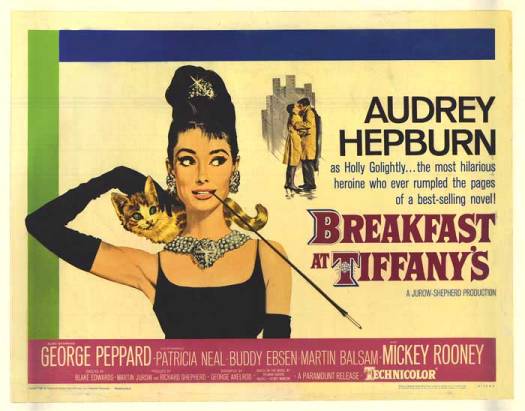
My Huckleberry Friend: BREAKFAST AT TIFFANY’S (Paramount 1961)


gary loggins's avatarcracked rear viewer

(“Breakfast at Tiffany’s” airs tonight, 6/12/17 at 8:00 EST on TCM as part of their month-long salute to Audrey Hepburn.)

“You mustn’t give your heart to a wild thing. The more you do, the stronger they get, until they’re strong enough to run into the woods or fly into a tree. And then to a higher tree and then to the sky” – Audrey Hepburn as Holly Golightly in BREAKFAST AT TIFFANY’S.

From it’s hauntingly romantic theme “Moon River” to it’s sophisticated screenplay by George Axelrod, BREAKFAST AT TIFFANY’S is a near-perfect movie. The bittersweet comedy-drama stars Audrey Hepburn in an Oscar nominated performance as Holly Golightly, a New York “party girl” who winds up falling for struggling writer George Peppard. That Hepburn didn’t get the Oscar (Sophia Loren took it home that year for TWO WOMEN) is one of the Academy’s greatest crimes. The film has a very personal connection with…

View original post 1,020 more words

A Movie A Day #154: The Day They Hanged Kid Curry (1971, directed by Barry Shear)


Welcome to the Old West.  Hannibal Heyes (Pete Duel) and Kid Curry (Ben Murphy) are two of the most wanted outlaws in the country, two cousins who may have robbed trains but who also never shot anyone.  After being promised a pardon if they can stay out of trouble for a year, Heyes and Curry have been living under the names Joshua Smith and Thaddeus Jones.

During a trip to San Francisco to visit his old friend, a con artist named Silky O’Sullivan (Walter Brennan), Heyes is told that Kid Curry is currently on trial in Colorado.  When Heyes goes to the trial, he discovers that the accused (Robert Morse) is an imposter and that the real Kid Curry is watching the trial from the back of the courtroom.  It turns out that the man of trial is just an attention seeker , someone who is so desperate for fame that he is willing to be hanged to get it.  At first, Curry thinks this is a great thing.  After the imposter hangs, everyone will believe that Curry is dead and they’ll stop searching for him.  Heyes, however, disagrees, especially after the imposter starts to implicated Heyes in crimes that he didn’t commit.

Obviously inspired by Butch Cassidy and the Sundance Kid, Alias Smith and Jones was one of the last of the classic TV westerns.  Though I originally assumed that it was the show’s pilot, The Day They Hanged Kid Curry was actually the first episode of the second season.  With commercials, it ran 90 minutes.  Because of its extended running time, The Day They Hanged Kid Curry was not included in Alias Smith and Jones‘s standard rerun package.  Instead, it was edited to remove the show’s usual opening credits and it was then sold as a motion picture, despite the fact that it is very obviously a television show.

As long as no one is expecting anything more than an extended television episode, The Day They Hanged Kid Curry is okay.  I have never been a big Alias Smith and Jones fan but this episode’s plotline, with Robert Morse confessing to crimes he didn’t commit just so he can have a taste of fame before he dies, feels prescient of today’s culture.  For classic western fans, the main reason to watch will be the chance to see a parade of familiar faces: Slim Pickens, Henry Jones, Paul Fix, and Vaughn Taylor all have roles.  Most important is familiar Western character actor and four-time Oscar winner, Walter Brennan, as Silky O’Sullivan.  This was one of Brennan’s final performance and the wily old veteran never loses his dignity, even when he’s pretending to be Kid Curry’s grandmother.

As for Alias Smith and Jones, it was a modest success until Pete Duel shot himself halfway through the second season.  Rather than retire the character of Hannibal Heyes, the show’s producers replaced Pete Duel with another actor, Roger Davis.  One day after Duel’s suicide, Davis being fitted for costumes.  This move was not popular with the show’s fanbase and Alias Smith and Jones was canceled a year later, though it lived on for years in reruns.

A Movie A Day #153: Blue Collar (1978, directed by Paul Schrader)


Three Detroit auto workers (played by Harvey Keitel, Yaphet Kotto, and Richard Pryor) are fed up.
It’s not just that management is constantly overworking them and trying to cheat them out of their money.  That’s what management does, after all.  What really upsets them is that their union is not doing anything to help.  While the head of the union is getting rich off of their dues and spending time at the White House, Keitel is struggling to pay for his daughter’s braces, Kotto is in debt to a loan shark, and Pryor is lying to the IRS about the number of children that he has.  (When a social worker shows up unexpectedly, Pryor’s wife recruits neighborhood children to pretend to be their’s.)  Kotto, Pryor, and Keitel plot to rob the union but instead, they just discover evidence of the union’s ties to the mob.  The union bosses will do anything to keep that information from being revealed, from trying to turn the friends against one another to committing murder.

Blue Collar was the directorial debut of screenwriter Paul Schrader.  Schrader has said that the three main cast members did not get along during the filming, with Richard Pryor apparently bringing a gun to the set and announcing that there was no way he was going to do more than three takes of any scene.  The tension between the lead actors is visible in the film, with all three of them giving edgy and angry performances.  That anger is appropriate because Blue Collar is one of the few films to try to honestly tackle what it’s like to be a member of the “working class” in America.  While management is presented as being a bunch of clowns, Blue Collar reserves its greatest fury for the corrupt union bosses who claim to represent the workers but who, instead, are just exploiting them.  The characters in Blue Collar are pissed off because they know that nobody’s got their back.  To both management and the union, the workers are worth less than the cars that they spend all day putting together and the money that can be subtracted from all their already meager pay checks.

Since it’s a Paul Schrader film from 1978, the action in Blue Collar does come to a halt, 40 minutes in, for a cocaine-fueled orgy that feels out of place.  While Keitel and especially Kotto give believable performances, Pryor sometimes seems to be struggling to keep up.  Still, flaws and all, Blue Collar has a raw and authentic feel to it, something that few other movies about the working class have been able to capture.  Perhaps because it never sentimentalizes its characters or their situation, Blue Collar was not a box office success but it has stood the test of time better than many of the other films that were released that same year.  Sadly overlooked, Blue Collar is a classic American movie.


Kicking Off A Trend: FIVE FINGERS OF DEATH (Warner Brothers 1972)


gary loggins's avatarcracked rear viewer

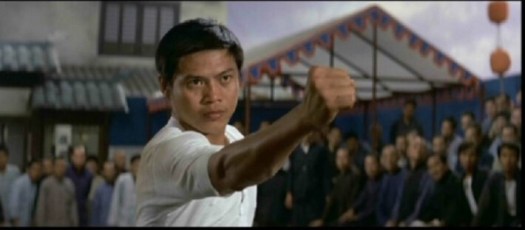
When FIVE FINGERS OF DEATH first hit the local multiplex back in the day, everybody in the neighborhood was kung-fu fighting, throwing chops and roundhouse kicks at each other, trying to be like star Lo Lieh. Bruce Lee’s movies hadn’t yet made it our way, but David Carradine’s KUNG FU was must-see TV for every adolescent boy (and some of the cooler girls). Pretty soon  chop-sockey action spread all over the city’s theaters, but it was FIVE FINGERS OF DEATH that reached New Bedford, MA first, and has always held a special place in my heart.

Hong Kong action star Lo Lieh plays Chao Chih-Hao, who’s sent to Shen Chin-Pei’s school by his mentor to train further and defeat Ming Dun-Shun’s “gangsters” in a martial arts tournament. Chih-Hao rescues damsel in distress Yen Chu Hung from some bad guys along the way, and though she comes on to him, his heart belongs to his mentor’s…

View original post 415 more words

A Movie A Day #152: Bad Company (1972, directed by Robert Benton)


Missouri during the Civil War.  All young men are being forcibly constricted into the Union army, leaving those who want to avoid service with only two options: they can either disguise themselves as a woman and hope that the soldiers are fooled or they can head out west.  Drew Dixon (Barry Brown) opts for the latter solution but his plans hit a snag when he’s robbed and pistol-whipped by Jake Rumsey (Jeff Bridges).  When Drew coincidentally meets Jake for a second time, he immediately attacks him.  Jake is so impressed that he insists that Drew join his gang of thieves.

Jake’s gang, which include two brothers (one of whom is played by John Savage) and a ten year-old boy, is hardly the wild bunch.  They spend most of their time robbing children and are, themselves, regularly robbed by other gangs, including the one run by Big Joe (David Huddleston).  Their attempt to rob a stagecoach goes hilariously wrong.  Less hilarious is what happens when they try to steal a pie from a window sill.

Bad Company was the directorial debut of Robert Benton and it has the same combination of comedy and fatalism that distinguished both his script for Bonnie and Clyde and several of the other revisionist westerns of the 1970s.  While the interplay between Drew and Jake may remind some of Butch Cassidy and the Sundance Kid, the film’s sudden bursts of violence feel like pure Peckinpah.  Fortunately, the combination of Robert Benton’s low-key direction and the excellent performances of Jeff Bridges and Barry Brown allows Bad Company to stand on its own.  Brown and Bridges make for an excellent team, with Bridges giving a charismatic, devil-may-care performance and the late Barry Brown holding his own as the more grounded Drew.  (Sadly, Brown, who appears to have had the talent to be a huge star, committed suicide six years after the release of Bad Company.)  This unjustly forgotten western is one of the best films of the 1970s.