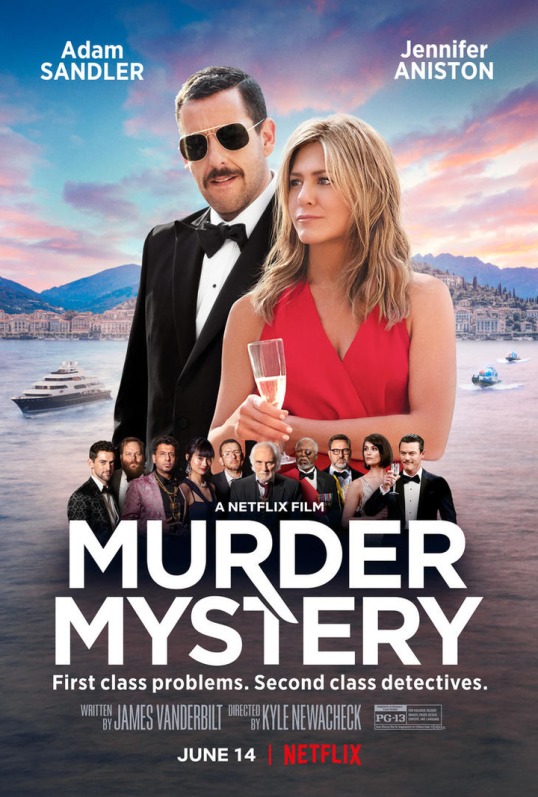
Film Review: Murder Mystery (dir by Kyle Newacheck)


There are actually two Adam Sandlers.

First, there’s the Adam Sandler that everyone knows.  This Adam Sandler is the comedian who has won multiple Razzie awards and who has produced and starred in some of the most critically derided comedies of all time.  This is the Adam Sandler who often seems to make movies specifically so he can either take a vacation or give some work to the less successful members of his entourage.  This is the Adam Sandler whose movies were cited as a tool of patriarchal oppression in the “cool girl” speech during Gone Girl.

And then there’s another Adam Sandler.  This Adam Sandler is a sad-eyed character actor who is probably one of modern cinema’s best portrayers of existential malaise.  This is the Adam Sandler who starred in movies like Punch-Drunk Love, Reign Over Me, Funny People, Spanglish, The Cobbler, Men, Women, and Children, and The Meyerowitz Stories.  Some of those films were very good and some of them, admittedly, were very bad but what they all had in common was that they featured Adam Sandler giving a surprisingly good dramatic performance.  In fact, if someone only saw Adam Sandler’s dramatic work (and not his work in films like Jack and Jill or Grown-Ups, to cite just two examples), they would be justified in assuming that Sandler was one of the most acclaimed actors around.  (One reason why we get so much more annoyed with Sandler’s bad comedies — as opposed to all the other equally bad comedies out there — is because we actually have evidence that Sandler’s capable of doing so much better.)

Unfortunately, almost all of Sandler’s dramatic films were box office disappointments.  Punch-Drunk Love is now widely viewed as being a classic but, when it was first released, it failed to even recoup its production budget at the box office.  Audiences consistently indicated they preferred silly Adam Sandler to dramatic Adam Sandler and so, Sandler continued to make silly theatrical films until even those started to bring in less money than they had before.

As of now, Sandler does most of his work for Netflix and the results have been mixed.  His performance in The Meyerowitz Stories was rightfully acclaimed while his comedies have been considerably less celebrated.  And then you have the just-released Murder Mystery, which seems to straddle the line between the two Sandlers.

On the one hand, Murder Mystery is just as silly and implausible as a typical Adam Sandler comedy.  Sandler plays a New York police officer named Nick Spitz.  Nick has failed his detective’s exam three times but that still hasn’t stopped him from telling his wife, Audrey (Jennifer Aniston), that he’s been promoted.  Nick’s living a lie and he deals with his guilt by taking Audrey on a long-promised trip to Europe.  On the flight over, Audrey meets the charming and wealthy Charles Cavendish (Luke Evans) who invites Audrey and Nick to a party on his family’s yacht.  The yacht is owned by billionaire Malcolm Quince (Terrence Stamp) and, when Malcolm’s murdered during the party, it’s up to fake Detective Nick to figure out who is responsible!

Was it the glamorous actress, Grace (Gemma Arterton)?  Or the handsome race car driver, Juan Carlos (Luis Gerardo Mendez)?  Or how about the genocidal warlord, Colonel Ulenga (John Kani)?  Of course, the local Interpol detective (Dany Boon) thinks that it was Nick and Audrey and he even threatens to reveal that Nick’s been lying about his job!  Can Nick and Audrey solve the murder and rekindle the romance of their stalled marriage?

As I said, it’s all pretty silly.  Most of the film’s humor comes from just how out-of-place Nck and Audrey are in the world of high society.  Audrey is excited because the murder mystery is just like the plot of one of the paperback novels that she likes to read.  Nick spends most of the movie trying to keep his wife from discovering the truth about his job.  While everyone else is scheming and plotting and trying to kill one another, Nick and Audrey are literally searching Wikipedia for information on all the suspects.  It’s dumb and occasionally amusing and it’s also rather innocent.  If your grandmother ever wants to watch a comedy with you, Murder Mystery would probably be the one to go with.  There’s nothing to offend grandma but, at the same time, the shots of Monaco and Italy are nice to look at and the film is occasionally amusing enough to hold your attention.

Interestingly, even though the film’s a silly comedy, Sandler gives one of his more grounded performances.  There’s no silly voices or sudden yelling or any of the typical Sandler shtick.  Instead, he’s rather subdued and it works for the film.  He and Jennifer Aniston (another performer who often seems to settle for material that’s beneath what she’s capable of) make for a likable and believable couple and they both play off each other well.

Murder Mystery is a likable, lightweight comedy.  It’s not necessarily something that you’re going to remember much about after you watch it, of course.  It’s not that type of film.  Instead, it’s a perfect Netflix film.  It’s entertaining but you can do other stuff while you’re watching it without having to worry about accidentally missing a brilliant moment of cinematic history.

As for Adam Sandler, he’s following this up with Uncut Gems, a crime drama from the Safdie Brothers.  The Safdie Brothers worked wonders with Robert Pattinson in 2017’s Good Time.  So, who knows?  This time next year, Adam Sandler could be the new Superman….
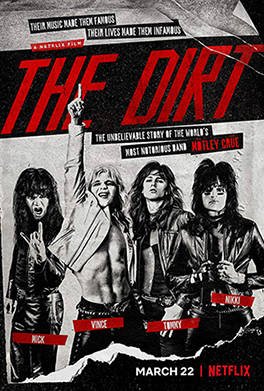
Better Drugs and Bigger Parties: The Dirt (2019, directed by Jeff Tremaine)


If you want to experience the sex, drugs, and rock and roll lifestyle, you could start a band, play some clubs, get signed to a record deal, go on tour, and eventually burn yourself out.  Of course, if that’s too much trouble or if you’re already older than 30, I guess you can just watch The Dirt on Netflix.
The Dirt is the latest band biopic.  This time the band is Mötley Crüe  and the film has all the usual VH1 Behind the Music style anecdotes.  Watch Nikki Sixx (Douglas Booth) nearly die of a heroin overdose!  Ponder how Tommy Lee (Chase “Machine Gun” Kelly) could have been stupid enough to cheat on Heather Locklear (Rebekah Graf)!  Listen as Mick Mars (Iwan Rhoen) refuses to tell how old he is!  Gasp as Vince Neil (Daniel Webber, giving the movie’s best performance) deals with tragedy after tragedy!  When you’re not watching Tommy Lee go down on a groupie or Nikki learning how to shoot dope, you can watch as Ozzy Osbourne (Tony Cavalero) snorts a line of ants and slurps up his own urine.  The movie is based on Mötley Crüe’s autobiography and the actors playing the members of the band take turns breaking the fourth wall and telling their story.  Nikki Sixx says, “We were a gang of fucking idiots!” and the movie seems to agree.  Nikki has always had a reputation for being the smartest member of Mötley Crüe.  Of course, when your main competition is Tommy Lee, that’s not too high of a bar to clear.

Especially when compared to other band biopics like Straight Outta Compton and Bohemian Rhapsody, The Dirt is shallow and overly episodic.  Nikki says that Mötley Crüe’s main concern was finding “better drugs and bigger parties,” and The Dirt is the same way.  It never digs too deep into the band’s music or the reasons why, for a period of time in the 80s, they were so popular.  The story is told by the members of the band so it often switches between being honest about the band’s history and making excuses for some of the members’s worst behavior, like when Tommy punches his first fiancee.  Fans of Mötley Crüe might enjoy seeing all of the stories about the band brought to life.  Meanwhile, those who didn’t care about Mötley Crüe before watching The Dirt will probably care even less after spending nearly two hours watching them act like self-destructive fools.  One thing that the movie gets undeniably correct: After all these years, Dr. Feelgood still rocks.


Film Review: Firehouse (1973, directed by Alex March)


Firefighter Shelly Forsythe (Richard Roundtree) has just been assigned to a new firehouse and, from the minute he shows up, it’s trouble.  Not only is he resented for taking the place of a popular (if now dead) firefighter but he’s also the first black to have ever been assigned to that firehouse.  Led by angry racist Skip Ryerson (Vince Edwards), the other firemen immediately distrust Forsythe and subject him to a grueling hazing.  However, Forsythe is determined to prove that he’s just as good as any white firefighter and refuses to be driven out.  While the firehouse simmers with racial tensions, a gang of arsonists is setting buildings on fire.

Firehouse does not have much of a plot but what little it does have, it deals with in a brisk 72 minutes.  Forsythe shows up for his first day.  Everyone hazes him.  Forsythe gets mad.  There’s a big fire.  And then the movie ends, without resolving much.  Ryerson is still a racist and Forsythe is still mad at almost everyone in the firehouse.  The characters are all paper thin and most of the fire fighting scenes are made up of grainy stock footage.  What does make the film interesting is the way that it handles the causal racism of almost every white character.  Ryerson, for instance, comes across as being an unrepentant racist but the film suggests that this is mostly due to him being too stubborn to change his ways and that Ryerson’s not that bad once you get to know him.  When Andrew Duggan’s fire chief instructs Forsythe not to take any of the constant racial remarks personally, Firehouse portrays it as if Duggan is giving good and reasonable advice.  The mentality was typical for 1973 but wouldn’t fly today.

One reason why Firehouse ends so abruptly is because it was a pilot for a television series.  At the time Firehouse aired, it had been only two years since Roundtree starred as John Shaft and NBC hoped that to recapture that magic on a weekly basis.  However, it would take another year before the Firehouse television series went into production and, by that time, Roundtree had left the project.  In fact, with the exception of Richard Jaeckel, no one who appeared in the pilot went on to appear in the short-lived TV series.

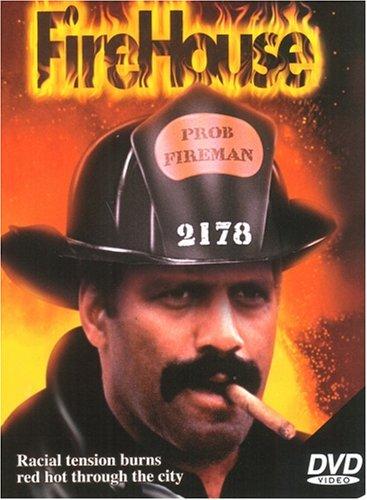
The DVD of Firehouse is infamous for featuring a picture of Fred Williamson on the cover, in which Williamson is smoking a cigar and wearing a fireman’s helmet.  Williamson does not appear anywhere in Firehouse and I can only imagine how many people have sat through Firehouse expecting to see a Fred Williamson blaxploitation film, just to discover that it was actually a Richard Roundtree television pilot.  Firehouse probably would have been better if it had starred Fred Williamson.  Roundtree’s good but sometimes, you just need The Hammer.

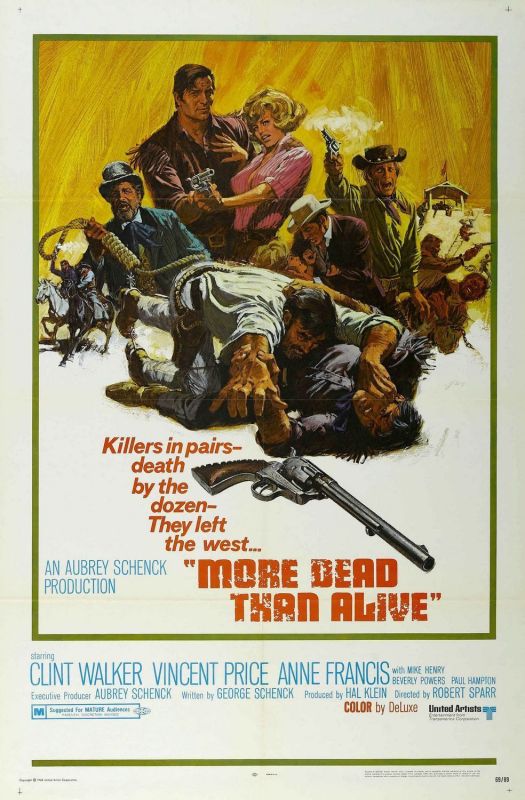
Off-Brand Spaghetti: MORE DEAD THAN ALIVE (United Artists 1969)


gary loggins's avatarcracked rear viewer

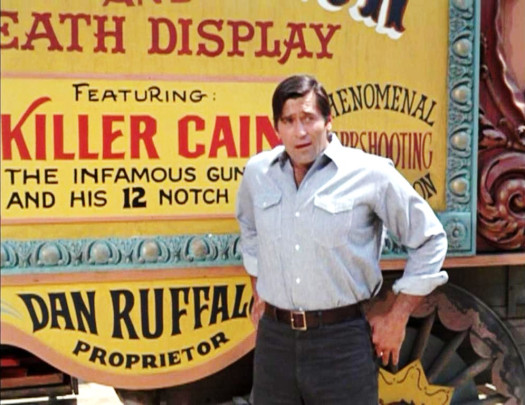
It’s hanging day at a remote Arizona prison outpost, and four men are scheduled to swing from the gallows. After they’re executed, the four pine boxes pop open, and outlaw Luke Santee and his gang commence firing, their six-guns blazing, as they try to free Luke’s baby brother. The escape attempt is an epic fail as ‘Killer’ Cain, a prisoner for 18 years now up for parole, stops the brother from leaving his cell and getting slaughtered, with Luke vowing revenge…

That opening scene, a violent, gory bloodbath, makes one think MORE DEAD THAN ALIVE is going to be a Sergio Leone-inspired American Spaghetti Western. It even stars a former TV Western hero named Clint – big Clint (CHEYENNE) Walker ! But the episodic nature of George Schenck’s script kills that idea, as the film doesn’t quite know what it wants to be. Spaghetti or Traditional Western? Character study, comedy…

View original post 323 more words

Film Review: Cocaine and Blue Eyes (1983, directed by E.W. Swackhamer)


When San Francisco-based private investigator Michael Brennen (O.J. Simpson) gives a ride to Joey Crawford (John Spencer) on Christmas Eve, he doesn’t know that it’s going to lead to the biggest case of his career.  When Joey asks Michael to help him track down his ex-girlfriend, Michael assumes that Joey would never be able to pay for his investigative services.  But one week later, Michael gets something in the mail from Joey.  Inside the envelope, there’s a picture of both Joey’s ex and a thousand dollar bill.  Ever after he discovers that Joey was mysteriously killed the night before, Michael decides to take on the case.  His investigation will take him not only to Joey’s ex but it will also lead to him uncovering a drug ring that involves one of San Francisco’s most prominent families.
Simpson not only starred in this made-for-TV movie but he also served as executive producer.  Watching the movie, it’s obvious that it was meant to serve as a pilot for a Michael Brennen TV series and it’s also just as obvious why that series never happened.  O.J. Simpson was not a terrible actor but, ironically for someone who set records as an NFL player, there was nothing tough about him.  Simpson may be playing a two-fisted, cash-strapped P.I. but, in every scene, he comes across like he can’t wait to hit the golf course.  Simpson’s pleasant demeanor may have served him well in other areas of his life but it didn’t help him with this role.  Whenever Simpson has to share a scene with John Spencer, Candy Clark, Cliff Gorman, or any of the other members of this film’s surprisingly talented supporting cast, Simpson’s bland screen presence and lack of gravitas becomes all the more apparent.

Of course, when seen today, the main problem with Cocaine and Blue Eyes is that it’s impossible to watch without thinking, “Hey, didn’t the star of this movie get away with killing his wife and an innocent bystander?”  Even the most innocuous  of lines take on a double meaning when they’re uttered by O.J. Simpson.  It doesn’t help that the movie opens with Michael visiting his estranged wife and their children on Christmas Eve and getting chased around the neighborhood by a guard dog.  When the movie was made, this scene was probably included so that O.J. could show off some of the moves that made him a star at UCLA and with the Bills.  Seen today, the scene takes on a whole different meaning.

Without O.J. Simpson, Cocaine and Blue Eyes could easily pass for being an extended episode of Magnum P.I., Simon and Simon, or any other detective show from the 80s.  With Simpson, it becomes a pop cultural relic.  I don’t think it’s ever been released on DVD but it is available on YouTube, where it can be viewed by O.J. Simpson completists everywhere.

Automotive Stardom: The California Kid (1974, directed by Richard T. Heffron)


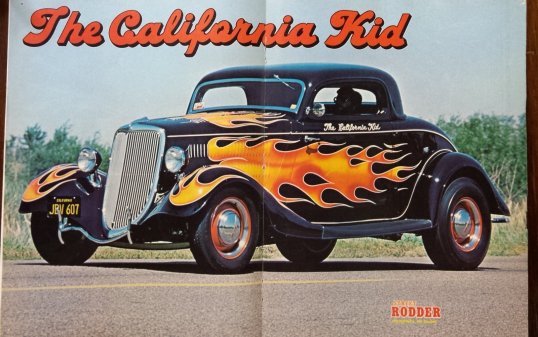
In 1973, a customized 1934 Ford three-window coup appeared on the cover of the November issue of Custom Rod.  The car had been created by legendary customizer Pete Chapouris and it was called The California Kid.  The cover caught the attention of television producer Howie Horowitz, who thought that maybe the car could become a star.

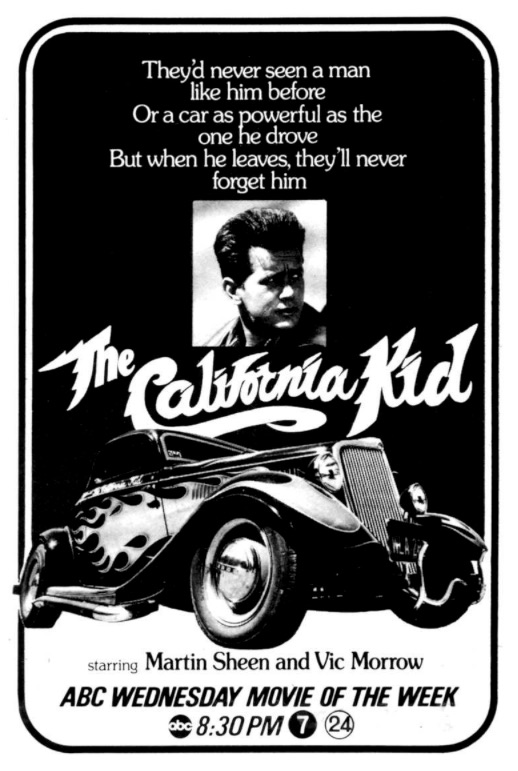
A year later, the car starred in it’s own made-for-TV movie.  Naturally, that movie was called The California Kid.

The California Kid takes place in 1958 in the small town of Clarksberg.  Clarksberg is known for being a town that does not tolerate speeders.  Sheriff Roy Childress (Vic Morrow) lost his wife and daughter to a speeder and, ever since, he’s become a fanatic about making sure that people respect the speed limits.  He’ll give a ticket to anyone who he sees going too fast.  He’ll even impound your car.  And if you don’t learn your lesson or if you try to outrun him, he’ll get behind your car, give it a push, and send both you and your vehicle plunging over the side of a mountain.

That’s what happens to Don McCord (Joe Estevez), a Marine who was just trying to get back to back to his base on time.  After Don and his car go over the side of a cliff, the official ruling is that it was an accident.  However, Don’s brother, Michael (Martin Sheen, real-life brother of Joe Estevez), doesn’t buy that.  Determined to prove that his brother was murdered, Micheal rolls into town, behind the wheel of the California Kid.

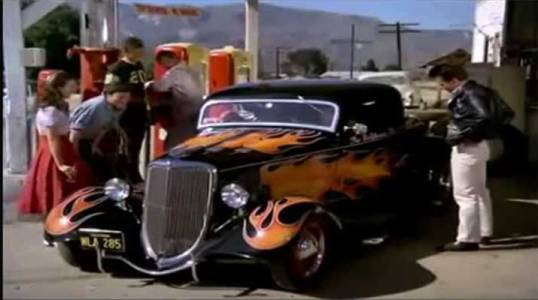
The California Kid is a typical 70s car chase movie.  There’s not much going on other than the sheriff chasing the Michael and the California Kid.  Martin Sheen coasts through the movie, doing the James Dean impersonation that he perfected in the previous year’s Badlands and Vic Morrow plays his thousandth sadistic authority figure.  The supporting cast is full of familiar names who don’t get to do much.  Michelle Phillips plays the waitress who falls in love with Martin Sheen.  (It’s always a waitress.)  Stuart Margolin is Morrow’s deputy and keep an eye out for Nick Nolte, playing a mechanic.  Interestingly, The California Kid was written by Richard Compton who, a year later, would direct Notle in his first starring role in the 1975 car chase film, Return to Macon County.  Of course, the real star of the movie is the car and the California Kid earns its star billing.  The movie might not be anything special but there’s no way you can watch it and not want to drive that car.

This is a made-for-TV movie so you won’t hear any profanity and the characters are all as simple can be.  However, there are enough shots of cars going over cliffs to keep chase enthusiasts entertained.

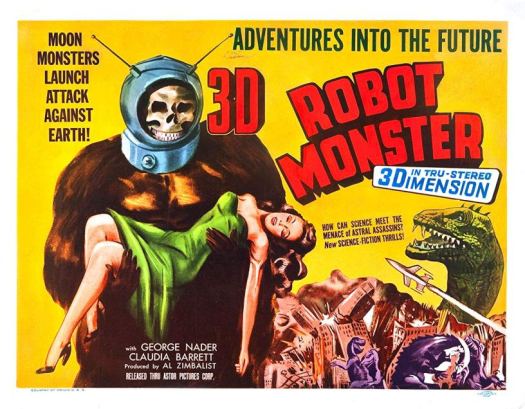
Ro-Man Holiday: ROBOT MONSTER (Astor Pictures 1953)


gary loggins's avatarcracked rear viewer

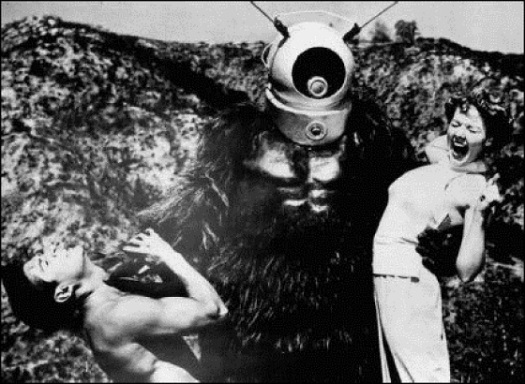
My friends at The Film Detective are hosting a Drive-In Monster Movie Party all this month, and asked me to join in on the fun! When I received the list of movies they’re showing, I jumped at the chance to watch and review ROBOT MONSTER, that infamous no-budget classic directed by Phil Tucker, featuring an alien called Ro-Man who looks like a gorilla wearing a diving helmet. And honestly, how can you not love that!!

ROBOT MONSTER consistently makes critics’ all-time worst movie lists, derided for its technical ineptitude, overwrought acting, absurd dialog, and flat-out senselessness. It’s all that, to be certain, but I look at things through a different (some would say “shattered”) lens. First, did I enjoy it? The answer: a resounding yes! The movie may not be on a par with CASABLANCA or THE SEARCHERS , but it didn’t bore me or make me want to shut…

View original post 372 more words

Film Review: Blood Red (1989, directed by Peter Masterson)


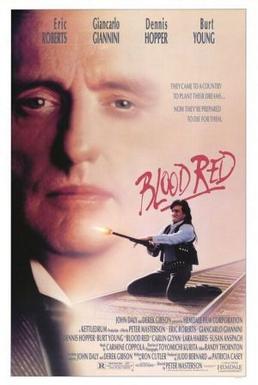
The time is the 1890s.  The place is California.  Sicilian immigrant Sebastian Collogero (Giancarlo Giannini) has just been sworn in as an American citizen and owns his own vineyard.  When Irish immigrant William Bradford Berrigan (Dennis Hopper) demands that Sebastian give up his land so Berrigan run a railroad through it, Sebastian refuses.  Berrigan hires a group of thugs led by Andrews (Burt Young) to make Sebastian see the error of his ways.  When Sebastian ends up dead, his wayward son, Marco (Eric Roberts), takes up arms and seeks revenge.
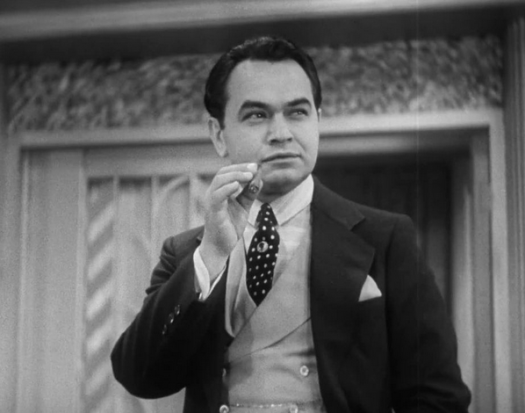
Have you ever wondered what would have happened if the famously self-indulgent directors Michael Cimino and Francis Ford Coppola teamed up to make a movie about the American Dream?  The end result would probably be something like Blood Red.  Like Cimino’s The Deer Hunter and Heaven’s Gate, Blood Red begins with a lengthy celebration (in this case, in honor of Sebastian’s naturalization ceremony) that doesn’t have much to do with the rest of the film but which is included just to make sure we know that what we’re about to see is more than just a mere genre piece.  Like many of Coppola’s films, Blood Red features a tight-knit family, flowing wine, and a score composed by Carmine Coppola.  The only difference between our hypothetical Cimino/Coppola collaboration and Blood Red is that the Cimino/Coppola film would probably be longer and more interesting than Blood Red.  Blood Red is only 80 minutes long and directed by Peter Masterson, who seems lost.  There’s a potentially interesting story here about two different immigrants fighting to determine the future of America but it gets lost in all of the shots of Eric Roberts flexing his muscles.

For an actor known for his demented energy, Eric Roberts is surprisingly dull as the lead but Blood Red is a film that even manages to make veteran scenery chewers like Dennis Hopper and Burt Young seem boring.  (Hopper’s bizarre attempt at an Irish brogue does occasionally liven things up.)  The cast is full of familiar faces like Michael Madsen, Aldo Ray, Marc Lawrence, and Elias Koteas but none of them get to do much.  Of course, the most familiar face of all belongs to Eric’s sister, Julia.  Julia Roberts made her film debut playing Marco’s sister, Maria.  (Because the film sat on the shelf for three years after production was completed, Blood Red wasn’t released until after Julia has subsequently appeared in Mystic Pizza and Satisfaction.)  She gets three lines and less than five minutes of screen time but she does get to briefly show off the smile that would later make her famous.  Today, of course, that smile is the only reason anyone remembers Blood Red.

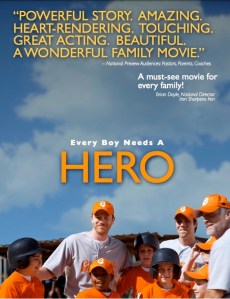
I Watched Hero


Joe Finn (Burgess Jenkins) used to the best Little League coach in the state.  That was until he decided to leave his family to seek fame and fortune in the Big Leagues.  After his wife dies of cancer, Joe returns home to discover that his teenage son, David (Justin Miles), wants nothing to do with him.  Determined to stick around and repair his relationship with David, Joe tries to return to coaching Little League but he discovers that things have changed since he left.  Runners aren’t allowed to take a lead off base.  Pitchers can only pitch for one inning at a time.  Practice can only last an hour a day.

That’s not real baseball!

Joe decides to start his own league, one where pitchers can pitch multiple innings, bases can be stolen, there’s no such thing as a tied game, and everyone practices daily for three hours.  To be a part of the league, the players not only have to get their fathers to agree to come to every game but also to practice with them at home.  It’s not going to be easy.  One player’s father is always busy with his job as the warden of the local prison.  Another player’s father is an inmate in that same prison.  But Joe is determined to teach his players and their fathers about both baseball and life.

Hero‘s a sweet movie and it made a good point about the importance of not only allowing kids to truly compete but also about teaching them the importance of both winning and losing with dignity and sportmanship.  It shows why baseball is important but why it’s also just as important to play a real game instead of a toned down version.  Burgess Jenkins, who used to play Billy Abbott on The Young and The Restless, is convincing as a coach and Justin Miles does a good job as his son.  My only problem with the film is that it spent so much time emphasizing that the fathers needed to come to their son’s games that I felt like it shortchanged all of the moms who have been there for their children whenever a father couldn’t or wouldn’t be.  Anyone who has ever been to a real little league game (or just a soccer match) knows that a mom can get just as into the game as a father.

People who complain about “participation trophies” will probably respond best to this film’s message but there’s also enough action of the field that people who just like baseball movies might enjoy it as well.

Pre Code Confidential #28: Edward G. Robinson in LITTLE CAESAR (Warner Brothers 1931)


gary loggins's avatarcracked rear viewer

Gangster movies were nothing new in 1931. Josef von Sternberg’s UNDERWORLD (1927), Lewis Milestone’s THE RACKET (1928), and Bryan Foy’s LIGHTS OF NEW YORK (1929) had all dealt with urban organized crime onscreen (and Foy’s drama was the first “all-talking picture” to hit cinemas). But when Edward G. Robinson rat-a-tatted his way through Mervyn LeRoy’s LITTLE CAESAR, the gangster genre had finally arrived – with a vengeance! This highly influential flick opened the floodgates for a variety of films about mobsters, killers, and other assorted no-goodniks, and made an unlikely star out of the pugnacious Eddie G.

The film concerns the rise and fall of Rico “Little Caesar” Bandello, a small-time hood from the sticks who, along with partner in crime Joe Massara, moves to the big city and blasts his way up the ranks to become a gang boss. The diminutive Robinson exudes star power as the psychotic sociopath…

View original post 472 more words