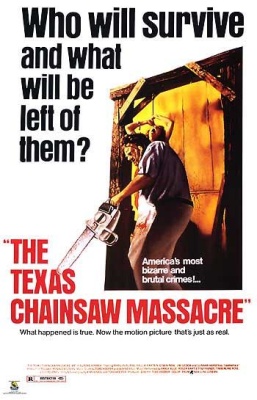
Today’s scene comes from the original The Texas Chainsaw Massacre, which is one of the greatest horror films ever made. Needless to say, since this is the final scene, it’s a huge spoiler if you somehow haven’t seen this movie.
Enjoy, dance, or laugh maniacally. I leave it up to you.
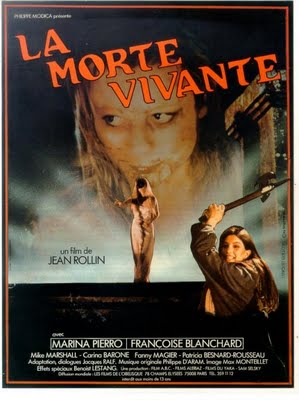
Jean Rollin’s 1982 masterpiece, The Living Dead Girl, is one that makes me cry every time.
This is one of Rollin’s non-vampire films but it still features the themes for which Rollin was famous. You’ve got a gothic castle. You’ve got the beautiful French countryside. You have two female friends, one of whom is haunted by her memories of the way things used to be and the other is horrified by what her present has become. It’s one of Rollin’s most heartfelt films and also one of his saddest.
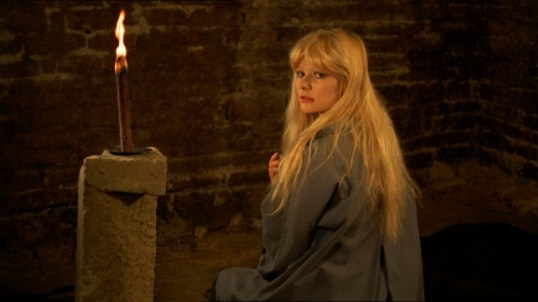
Helene (Mairna Pierro) sits in her office in Paris, thinking about her childhood friend, Catherine Valmont (Françoise Blanchard). Catherine died two years ago and, as far as Helene knows, is still in the coffin that sits in the crypt of her family’s estate. When her phone rings, Helene answers. At the other end, no one speaks. But Helene can hear the sound of a music box playing, a music box that once belonged to Catherine.
Yes, Catherine is once again alive. She was brought back to life by ….. well, it’s not really explained. It has something to do with some toxic chemicals that were accidentally spilled by two incompetent thieves who broke into the crypt. The chemicals returned Catherine to a sort of life, except now she’s a silent zombie who needs to feast on blood to survive. Though Catherine has hazy memories of her past, she’s not sure who she is and why she’s suddenly been brought back into the modern world. Catherine promptly kills the two thieves. She also proceeds to kill a real estate agent and her boyfriend. It’s not that Catherine wants to kill. Instead, it’s what she has to do in order to survive. She’s like a cat pouncing on a bird. It’s all instinct.
By the time Helene arrives at the castle, there’s already quite a mess that needs to be cleaned up. But it doesn’t matter to Helene that she’s got four dead bodies of which to dispose. Instead, she’s just happy that her friend has come back to life! Even though Catherine is miserable at the thought of being one of the living dead, Helene is happy that her friend has returned to her and is willing to do whatever has to be done to keep her alive. Helene even tries to offer Catherine a dead bird but Catherine shakes her head. She needs human blood. Fortunately, there is a village….
It’s a sad and deeply sentimental film. Ignore the bloodletting. Pay not attention to the toxic chemicals. Overlook the zombiefication. This is a film about friendship and the love that only best friends can share. Admittedly, Helene can be seen as being a selfish character. As much as Catherine wishes that she could return to the peace of death, Helene refuses to let her go. But, at the same time, who hasn’t had a friend who they would do anything for? If I came back as living dead girl, I might not enjoy having to drink blood but I’d love the friends who kept me supplied.
Rollin’s direction is heartfelt and, as was often the case with his best films, unapologetically mixes sentiment with gore. Mairna Pierro and Francoise Blanchard give two of the best performances that Rollin ever captured on film. Admittedly, there is a somewhat distracting subplot about two annoying American tourists but what would you expect from a director as wonderfully French as Jean Rollin?
From beginning to end, The Living Dead Girl is one of Rollin’s best and a personal favorite of mine.
You gotta watch out when it comes to those sensory deprivation tanks. They may look like fun and it might seem like a pleasant idea to spend a while floating in and out of a state of consciousness but those tanks will mess you up. Especially if you’ve got unresolved issues with your family and religion.
Also, if you’re going to go to Mexico to try a powerful hallucinogenic, make sure you’re not appearing in a Ken Russell film because again, those drugs will mess you up. It’s like you’ll close your eyes and, when you reopen them, you’ll be in an 80s music video or something.
Now, to be honest, Altered States came out in 1980 so it’s a bit unfair to complain that it looks like a music video from the 80s or, for that matter, the 90s. Instead, it’s more fair to say that a lot of the music videos from those two decades looked like Altered States. That shouldn’t be particularly surprising since this film was directed by Ken Russell and Russell was a director who specialized in combining music with wild imagery.
Altered States may have been directed by Ken Russell but it was written by Paddy Chayefsky. Chayefsky, of course, is best known for writing the script for Network. (He also wrote the script for the Oscar-winning film, Marty.) Chayefsky is one of those writers who is always cited as an inspiration by writers who are trying justify being heavy-handed. For instance, when Aaron Sorkin was criticized for both Studio 60 On The Sunset Strip and The Newsroom, his supporters started talking about how he was just carrying on the proud tradition of Paddy Chayefsky. In his autobiography, A British Picture, Ken Russell portrays Chayefsky as being a pompous control freak who refused to allow any changes to his dialogue-heavy script. Russell responded by directing his actors to speak the dialogue as quickly as possible, rendering much of it incoherent. In a few scenes, he even specifically had the actors eating so that their mouths would be full as they spoke. Chayefsky was not amused and eventually demanded to be credited under his real name, Sidney Aaron.
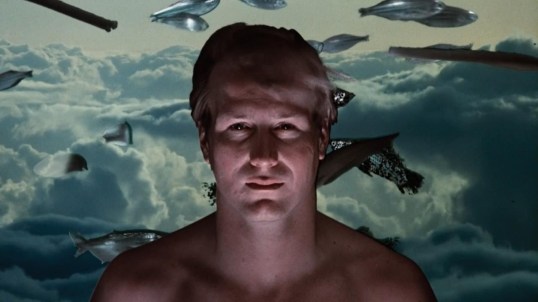
As for the film itself, it tells the story of Dr. Eddie Jessup (William Hurt, in his film debut), who is convinced that he can cure schizophrenia by exploring states of altered consciousness. As mentioned above, this leads to him floating in a tank and taking hallucinogenics in Mexico. Somehow, this leads to him turning briefly into a caveman and then into some sort of primordial energy creature. His wife (Blair Brown) is not happy that Eddie appears to be determined to reverse evolution and return to mankind’s original form. For that matter, Eddie’s bearded colleagues (Charles Haid and Bob Balaban) all think that he’s playing a dangerous game as well. Eddie’s daughter (Drew Barrymore, making her film debut) isn’t particularly concerned but that’s just because she’s like five and probably thinks it would be fun to have a primordial energy monster to play with. Anyway, it all becomes a question of whether or not all questions need to be answered and whether love can defeat science.
Anyway, this is a deeply silly movie but it’s also kind of compelling, mostly because the uneasy mix of Chayefsky’s pompous, serious-as-Hell script and Ken Russell’s aggressive and semi-satiric directorial style. Chayefsky obviously meant for the story to be taken very seriously whereas Russell takes it not seriously at all. Though Chayesfky and Russell ended up hating each other, Russell keeps the film from becoming the cinematic equivalent of Neil DeGrasse Tyson’s twitter account. Chayefsky’s greatest objection was that Russell directed the actors to not only speak quickly but to also speak over each other but this actually works to the film’s advantage. Eddie and his colleagues are young, arrogant, and determined to make their mark. Of course, they’re going to speak quickly. They’re excited and there’s no time to lose. The film’s best moments are the early ones, where it’s hard not to get swept up in Eddie’s enthusiasm. Of course, once Eddie turns into a caveman, it pretty much becomes impossible to take anything that follows seriously.
For all the talk about the origins of mankind and whether or not love can save the day, the main appeal of this film is to watch William Hurt totally freak out. Jessup’s hallucinations allow Russell to do what he did best and they’re the highlight of the film. Despite Chayefsky’s ambitions, you don’t watch this film for the science. You watch it for the seven-eyed ram and the scenes of Eddie walking into a mushroom cloud. Ken Russell was smart enough to know that audiences would take one look at William Hurt, with his WASP bearing, and totally want to see just how fucked up Eddie Jessup actually was. On that front, Russell totally delivers.
This film is a mess but at least it’s a Ken Russell mess.
Sure, inheriting an old New England farm might sound like a fun idea but what are you going to do if it turns out that the farm is haunted by the spirits of a coven of witches?
That’s the question that Hope Lange and Paul Burke have to find an answer for in this enjoyably spooky 1970 made-for-TV horror film! Lange and Burke both give good performances, generating a lot of sympathy for their unhappily married couple while director John McGreevey does a commendable job of creating and maintaining a nicely ominous atmosphere.
And, of course, John Carradine’s in it! It’s simply not a rural horror film from the 70s without John Carradine!
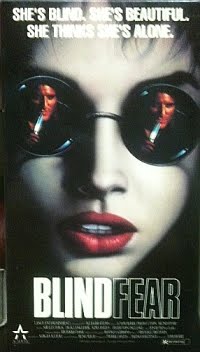
Three criminals, two men and a woman, go from robbing an armored car to invading a seemingly deserted New England inn. Led by psycho Ed (Kim Coates, of course), they kill the elderly caretaker (Jan Rubes) and then settle in to wait for the arrival of their contact. However, when a pizza is delivered, they notice that only half of the pizza has anchovies. “Not everyone likes anchovies!” Ed declares. That means that the pizza was ordered for two and there’s someone else in the Inn!
That other person is Erica (Shelley Hack), who was the inn’s switchboard operator. She’s now hiding in the inn, desperately trying to figure out how to avoid getting captured by Ed and the gang. Complicating things for Erica is that she’s blind. Complicating things for the criminals is that they’re no match for her other heightened senses. While the gang searched the inn, Erica kills the lights and sets some traps of her own.
The VHS box art for Blind Fear (which I don’t think has ever been released on DVD), says, “She thinks she’s alone,” which is actually the exact opposite of the film’s plot. (it also features Erica wearing tinted glasses, something that she doesn’t do in the actual film.) Erica never thinks that she’s alone and spend almost the entire film in hiding because she knows that she’s not alone. Ed and the criminals briefly think that they’re alone but then the pizza arrives and the anchovies give everything away. I guess “She thinks she’s alone” sounded better than “Shelley Hack spends 90 minutes in the dark.”
Imagine a remake of Wait Until Dark starring the least interesting star of Charlie’s Angels and you have a pretty good idea of what this efficient but forgettable Canadian thriller is like. As an actress, Shelley Hack never had much screen presence but she’s not really bad in this movie, in which she spends most of the runtime crawling around in the dark while never getting a single blonde curl out of place. Not surprisingly, the best performance in the film comes from Kim Coates, who has been playing psychos and lowlifes for almost longer than I’ve been alive. Nobody does it better than Kim Coates!
Well, Halloween’s fast approaching and that means that it’s time for people to start thinking about what they’re going to watch on the big night.
Now, of course, you can always watch the old favorites, like Halloween or Friday the 13th or Nightmare on Elm Street (or any of their numerous sequels, remakes, and reboots). In fact, if you’re expecting a lot of trick-or-treaters, I can understand why you might want to go with the old dependables as opposed to trying to focus on something that you haven’t seen before.
However, if you’re looking for a new film to watch on Halloween, here are 6 good horror films that, sadly, don’t seem to be as well-known as they deserve to be. If any of these movies are new to you, October 31st might be just the day for you to experience them!
This is a horror film that I recommend to everyone. It’s a slightly satirical story about college students being turned into homicidal murderers. Along with all of the blood and the expected jump scenes, Strange Behavior is also a quirky portrait of life in a small town. It’s the type of film where a collection of 1940s character actors (including the great Charles Lane) share the screen with 70s character actors like Michael Murphy and they all try to figure out how a seemingly dead scientist is programming the town’s children to be murderers. The dialogue is frequently witty, the soundtrack is amazing, and there’s even an impromptu dance scene that comes out of nowhere!
2. Messiah of Evil (1973)
This is another film that I frequently recommend to my horror-loving friends. This is perhaps the most surreal zombie/vampire film ever made. A woman comes to a town to visit her father and she soon discovers that everyone in the town is acting strangely. This one features plenty of hippie action, a surprisingly large amount of clips from a Sammy Davis, Jr. film, an albino who eats rats and talks about how much he loves “Wagner” (which he pronounces with a “W” instead of a “V”), and some of the strangest imagery that you’ll eve see in a low-budget horror film.
Shirley MacClaine is a spoiler socialite who discovers that her younger brother, Perry King, has been possessed by the spirit of a murderer. Though this film is often dismissed as being just another Exorcist clone, it actually came out before The Exorcist and, in many ways, it’s even more disturbing than the seminal shocker. The ending will give you nightmares.
George Romero takes on vampires and the end result is unlike any vampire film that you’ve seen. Martin thinks he’s a vampire. His grandfather thinks he’s a vampire. Is Martin really a vampire? In the end, the film suggests that it might not really matter. A disturbing and sad film that has unexpected moments of humor, Martin also features Romero himself in the role of a well-meaning priest.
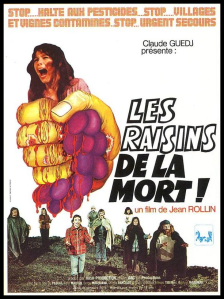
From the great Jean Rollin, it’s France’s first zombie film! In this one, people are being turned into zombies by contaminated wine. How many of your friends would become zombiefied as a result?
Finally, if you just have to watch a slasher this Halloween, why not check into the Mountaintop Motel? Evelyn will be more than happy to check you in and check you right back out.
In the 1951 film, Bride of the Gorilla, Raymond Burr plays a plantation manager who commits a murder. Unfortunately, for him, the murder is observed by a witch who promptly puts a curse of Burr. Now, every time the sun goes down, Burr transforms into a gorilla and goes wild in the jungle.
Basically, it’s kind of like The Wolf Man, just with a less sympathetic protagonist and a gorilla instead of a werewolf. Just in case we missed the similarities, Lon Chaney, Jr. plays the film’s nominal hero, a police commissioner who suspects that something weird might be happening with Burr. Apparently, the plan was originally for Chaney to play the gorilla and for Burr to play the policeman but, because Chaney was dealing with a serious alcohol problem at the time, the roles were reversed.
Also in the cast, playing the role of Dina, is Barbara Payton, the tragic actress who is best known for being at the center of a love triangle involving actors Tom Neal and Franchot Tone. In 195000, Neal attacked Tone and beat him so severely that Tone spent 18 hours in a coma. Tone was notably shaky onscreen for the rest of his film career while Neal spent a few years in prison. After the incident between Tone and Neal, Payton could only get roles in B-movies like this one. Tragically, she would pass away, in 1967, of heart and live failure. She was only 39 years old.
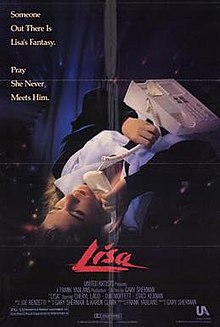
So, here’s the thing about Lisa, a horror-thriller from 1990 that shows up occasionally on This TV.
It’s got a great title.
Seriously, this film has got one of the greatest titles of all time. I would almost say that you really don’t even have to pay attention to the movie because the title itself is so perfect that the plot doesn’t even matter. The only thing that would make this title even better would be if they had added a “Marie” to the end of it but oh well. You can’t have everything.
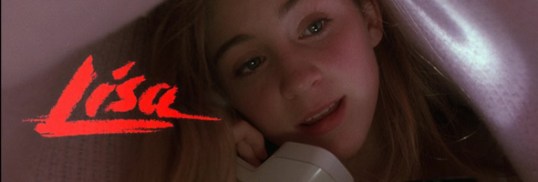
This is a movie about a girl named Lisa and, speaking as a girl named Lisa, I have to say that it’s incredibly true to life. Lisa (Staci Keanan) is a smart and amazingly talented 14 years old and not alllowed to date by her incredibly overprotective mother, Katherine (Cheyl Holland). So, instead of dating, Lisa spends her time stalking a serial killer. See, Katherine thought she was protecting her daughter but instead, she’s only inspired her to take an even greater risk. That’s why you need to let the Lisas in your life do what they want.
Admittedly, Lisa doesn’t know that Richard (D.W. Moffett) is a serial killer. She doesn’t even know that he owns a successful restaurant. All she knows is that he looks like a model and he drives a nice car and it’s fun to follow him around Venice Beach. When she jots down his license plate numbers, she hacks the DMV to get his name, address, and phone number. Soon, Lisa is calling him up and having flirtatious conversations with him.
It’s all good fun, except for the fact that Richard is also known as The Candelight Killer and he’s got a thing about calling people and leaving them messages right before he kills them. It’s all very ritualized. For instance, it’s very important that his victims be in the process of listening to his message when he kills them. To be honest, though, that sounds like he’s taking a lot of risks. I mean, what if someone came home and didn’t immediately check their messages? Would Richard just have to hide behind the drapes for hours until the did? Of course, Richard would be even more out of luck if this movie were made today because who has an answering machine anymore?
Anyway, Richard is obsessed with discovering who is stalking him and Katherine is obsessed with keeping Lisa out of danger and Lisa just wants to actually be allowed to full celebrate having the greatest name ever. Did you know, for instance, that Lisa may have started out as a shortened form of Elizabeth but that it became so popular on its own that it was one of the most popular names in both the United States and the United Kingdom for several decades? And, even though it’s no longer in the top ten as far as names are concerned, being named Lisa is still one of the greatest honors that can be bestowed upon anyone? Lisa means God’s Promise by the way. And….
What? Oh yeah, the movie.
Well, anyway, it all leads to pretty much what you’re expecting it to lead to. Plotwise, the movie may be predictable but the Staci Keanan, Cheryl Ladd, and D.W. Moffett all gives good performances and director Gary Sherman keeps the action moving at a steady pace. It’s dumb but entertaining, kinda like cinematic junk food. Plus, it has a great title. What more do you need?
Because her husband’s a dick who spends too much time working and not enough time taking the day off, Cassie (Mia Sara) grabs her five year-old daughter, Samantha (Kayla Buglewicz) and heads off for her sister’s house. When Cassie stops at a gas station to fill up the car, she’s spotted by seedy Roy Scudder (Burt Reynolds!). Roy puts down his cigar long enough to tamper with her car. When it breaks down a few miles down the role, Roy drives up and offers Cassie and Samantha a ride back to his place, where he can fix her car or where she can at least call for hep. Not realizing that she’s in a direct-to-video horror movie, Cassie accepts.
Big mistake! Roy’s wife, Georgina (Angie Dickinson!), has not been the same since the mysterious death of her son and Georgina and Roy’s other child, Jill (Candace Huston, daughter of the film’s director and granddaughter of John Huston), needs a playmate. Roy has decided that Samantha fits the bill. Cassie is locked in a room while Samantha is turned into Jill’s slave and Roy deals with the angry ghost of his abusive father (William Hickey!).
You have to feel bad for Burt Reynolds. He made this film at a time when his career was in decline. His TV show was no longer on the air. Boogie Nights was still two years away. The man had bills to pay. Can you blame Burt for accepting any role that came his way, especially if it meant a chance to co-star with Angie Dickinson and be directed by the son of John Huston? Reynolds was famous for hating even his good films so you can only imagine what he must have thought about The Maddening. Fortunately, since Burt was playing a total psycho in The Maddening, he could at least channel his feeling into the role. Throughout ever minute of The Maddening, Burt is totally and thoroughly unhinged and angry in the way that only the former number one star in America could be upon having to settle for a role in a direct-to-video horror film. He yells at his ghost father. He slits throats. He beats people into unconsciousness. He does everything that a normal movie psycho does but, when he does it, it’s even more memorable because he’s Burt Reynolds. Burt and Angie Dickinson playing the type of role that Bette Davis would have played for Robert Aldrich in the 60s are not just the main reasons to watch this movie. They’re the only reasons.
This was Burt’s only horror film and it’s too bad that it couldn’t have been a better one. But if it helped Burt keep the lights on during the lean years of the early 90s, good.
1971’s Requiem for A Vampire opens with a car chase.
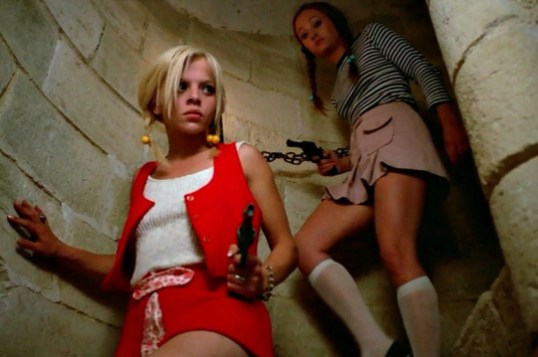
In one car, there’s a male driver and then there’s Michelle (Mirelle Dargent) and her girlfriend Marie (Marie-Pierre Castel). Who is pursing them? Who is shooting at them? Why are both of the girls wearing clown makeup? These are all good questions and they’re never clearly answered in the film. We shouldn’t be surprised about that, however. This is a Jean Rollin film, which means that the imagery is far more important than the storyline. In the end, the girls are wearing clown makeup because Rollin often worked clown imagery into his films. And they’re fleeing together because Rollin’s films often celebrated female friendship. As for why they’re being chased, if you listen carefully, you’ll hear some mention of a murder but it’s never made clear who was murdered or why or even by whom. It’s not important. This is a Jean Rollin film. You either get it or you don’t.
After the car crashes, the girls wash off their clown makeup, change clothes, and set the car on fire. They also set the driver on fire. They claim that the driver was killed in the car accident but the actor playing the driver visibly twitches while they pour the gasoline on him. Was that simply a mistake on the actor’s part or did Michelle and Marie essentially burn a man alive? Does it really matter? Michelle and Marie survived, that’s what’s important.
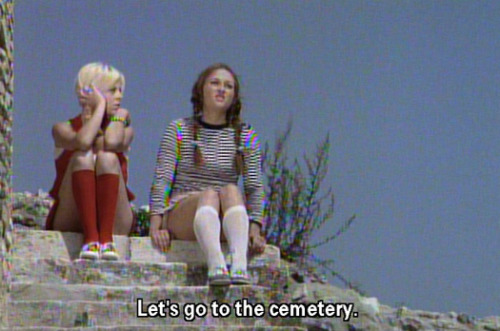
Marie and Michelle walk through the French countryside, stealing food and avoiding detection. As always, Rollin’s camera loves the the beauty of the countryside. They explore the forest. They go down to the cemetery. Michelle nearly gets buried alive. It’s a dangerous world out there.
Eventually, they stumble across a gothic castle and, as you might guess from the title and the fact that this is a Jean Rollin film, the castle is full of perverse vampires who take Marie and Michelle prisoner. It’s here that film reaches a level of peak Rollin as we’re confronted with scenes of dungeons, dark hallways, and vampires transforming into bats while (literally) going down on their victims. The castle is ruled over by a vampire woman who plays an organ and a male vampire who wants to use Marie and Michelle to continue his bloodline, specifically because neither has ever been with a man. Michelle is totally happy with the idea of living forever but Marie is a bit less enthused and starts looking around for a random male.
What’s interesting is that, for a vampire film, the vampires themselves are largely red herrings. For that matter, so is the car chase and the cemetery and almost everything else that Michelle and Marie have to deal with over the course of the film. Instead, the film is really about their relationship and whether or not it will survive all of the challenges that it faces. Marie and Michelle may both have differing views on whether or not to become a vampire but what’s the most important is that nothing be allowed to come between the bond that they share. This was a theme to which Rollin would often return. Dargent and Castel are both perfectly cast as Marie and Michelle, who reminded me of myself and my BFF. If I ever get into a car chase while wearing clown makeup, I would definitely want my best friend at my side. She makes stuff like that fun.
Especially during the film’s early scenes. Requiem for a Vampire plays out almost like a silent film. The dialogue is kept to a minimum and the emphasis is put on the imagery with Rollin emphasizing the beauty of the countryside and the stately menace of the imposing castle. The film is a visual poem, a celebration of friendship, and one of Rollin’s best.





 Through the Shattered Lens