Whatever else one may want to say about it, 1996’s Jingle All The Way is a cute film.
It’s necessary to point that out because Jingle All The Way has a terrible reputation and, if we’re going to be honest, it deserves a lot of the criticism that it has gotten over the years. In many ways, it epitomizes the way a Hollywood studio can take an interesting idea and then produce a film that seems to have no understanding of what made that idea so interesting in the first place. Arnold Schwarzenegger plays Howard Langston, an overworked mattress store manager who waits until Christmas Eve to try to buy his son a Turbo Man action figure. (In the film, they call it a “doll,” which is one of the film’s false moments.) The only problem is that the Turbo Man action figure is the most popular gift of the year and everyone is looking for one. What starts out at as a satire of commercialism ultimately becomes a celebration of the same thing as Howard ends up dressed up as Turbo Man and taking part in his town’s Christmas parade. The film becomes a comedy without any sharp edges.
That said, it’s a cute film. It’s not cute enough to really be good but it is cute enough that it won’t leave you filled with rage. Arnold Schwarzenegger is in True Lies mode here, playing a seemingly boring and suburban guy who is secretly a badass. (In True Lies, Schwarzenegger was secretly a spy who had killed man people, though all of them were bad. In Jingle All The Way, he’s just a parent who has waited too long to go Christmas shopping.) Schwarzenegger’s main strength as an action star — even beyond his physique — was that he always seemed to have a genuine sense of humor and he’s the best thing about Jingle All The Way. This film finds him acting opposite actual comedic actors like Jim Belushi and Phil Hartman and holding his own. (The film also features Sinbad as another dad trying to get the Turbo Man action figure but Sinbad comes across as being more of a stand-up comedian doing bits from his routine than an actual character.) The film’s set pieces grow increasingly bizarre and surreal as Howard searches for his Turbo Man and the film actually becomes less effective the stranger that it gets. A scene of Howard fighting a crowd in a toy store works far better than a later scene where Howard battles a bunch of men dressed as Santa Claus and his elves. (It doesn’t help that, after an intelligent and well-edited opening thirty minutes, the film seems to lose all concept of comedic timing.) But there’s a sincerity to Schwarzenegger’s performance that keeps you watching.
Of course, today, Jingle All The Way feels like a relic from a different age. All the kids want a Turbo Man and you’re so busy at work that the stores are closed by the time you get home? Fine. Hop on Amazon at three in the morning and order one. Christmas shopping is a lot easier nowadays.
I’m a sucker for a good romance. Every year during tax season, I like to stream romantic films while I prepare my clients’ tax returns late into the evening. They make me feel good and help my mood as I work the necessary 80 to 90 hours every week leading up to April 15th. My list of favorites includes movies like HITCH (2005) with Will Smith, NOTTING HILL (1999) with Julia Roberts and Hugh Grant, and YOU’VE GOT MAIL (1998) with Tom Hanks and Meg Ryan. I also really enjoy the period romance movies based on the novels of Jane Austen, films like Ang Lee’s SENSE AND SENSIBILITY (1995) and the five-hour mini-series version of PRIDE AND PREJUDICE (1995) starring Colin Firth and Jennifer Ehle. There’s a decent chance that if you walk into my office at the end of one of these films you might even catch me wiping a tear from my eye as the obstacles finally clear, and we’re left with two people in love embarking on their specific “happily-ever-after” together. One such movie, that I don’t hear mentioned very often, but that I personally love, is the 2000 romantic film RETURN TO ME.
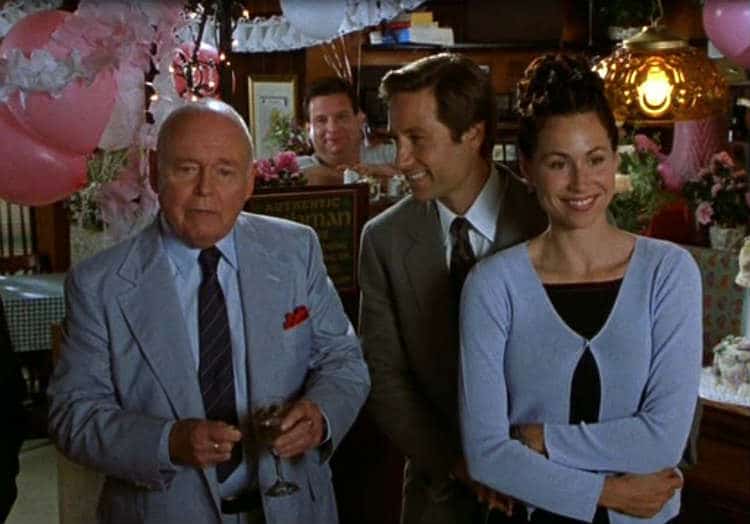
RETURN TO ME opens by introducing us to two families. First, we meet Bob Rueland (David Duchovny), a successful architect, and his wife Elizabeth (Joely Richardson), a kind-hearted zoologist, who are clearly very much in love. We follow the couple as they attend a fund-raising dinner that’s been organized to help expand the zoo’s gorilla habitat, a cause that’s very dear to Elizabeth’s heart, with Bob volunteering his own time and talents to design the new facility. The evening includes many sweet words and some quality slow dancing. Next, we meet Grace Briggs (Minnie Driver), who is very sick and in need of a heart transplant in the worst possible way. Her Catholic family and her friends, which includes her loving grandpa Marty O’Reilly (Carroll O’Connor) and her best friend Megan Dayton (Bonnie Hunt), are a wonderful support system, but without the new heart, she won’t be able to live much longer. On the same night that unspeakable tragedy strikes the Rueland’s on their way home from the fundraiser, Grace and her Grandpa’s prayers are answered when they get the call that a healthy heart is now available. A year later, Bob and Grace meet by chance at Marty’s business, O’Reilly’s Italian Restaurant. Bob has been a shell of the man he once was as he’s been unable to deal with his wife’s passing, while Grace has attempted to figure out life with her new heart. There’s just something about Grace though, so Bob asks her out and, after a series of sweet dates, it seems the two may be falling in love. But when Grace accidentally discovers that the heart that Bob is falling in love with was once beating inside the chest of his deceased wife Elizabeth, Grace doesn’t know how to tell him. Feeling guilty, as well as fearful of how Bob may respond to the shocking information, Grace decides she has no choice but to tell him. Will their blossoming love survive this unexpected and tragic revelation?
I love RETURN TO ME, and the main reason is that I love the characters, and especially the world that director Bonnie Hunt creates inside the film. The love story at the center is played well by Duchovny and Driver, but the greater love of family and friends is what sets this movie apart for me. In a way, Hunt creates a world that contains the kind of friends and family that we’d all love to have in real life. She does this by spending a lot of time with the entertaining supporting characters, showing them to be kind and decent people, the kind who make our lives valuable. As an example, O’Connor’s performance as the doting grandpa to Grace is wonderful, but we also get to see the interplay between Grace, Marty and their “family” at the restaurant, played by such great character actors as Robert Loggia, Eddie Jones, William Bronder and Marianne Muellerleile. Hunt herself is excellent in the role as Grace’s best friend Megan, but the time we spend with her blue-collar husband, played perfectly by James Belushi, and their kids are some of the best and funniest of the film. Based on the time and attention to these characters, as well as the time spent at “O’Reilly’s Italian Restaurant,” Hunt has created a scenario that feels like we’re watching real family and friends, in the best possible way. I never watch this film that I don’t want to go eat a big plate of spaghetti afterwards. The relationship between Bob and his best friend Charlie (David Alan Grier) isn’t quite as successful, but it has its moments as well.
RETURN TO ME is the kind of romantic film that we don’t get to see very often these days. A snarky, cynic would probably have a field day with this film, with its outrageous set-up, its old-fashioned values, and even older-fashioned characters. But that’s what I love about this film. As an example, this is the kind of movie where characters ask each other to pray, they do it, and the only purpose of it being shown is so we know how much these people care about each other. That feels very old-fashioned for 2025, but based on my own experiences in life, it’s something I can completely identify with.
Ultimately, RETURN TO ME is not a perfect film. Clocking in at almost 2 hours, there are definitely some scenes that could have been shortened or eliminated all-together. And it may seem like a criticism that I find the central love story of the film less appealing than the love shown by the main characters’ family and friends, but it’s really not. RETURN TO ME is a movie I return to every year because, at the end of the day, it’s an entertaining film that helps me appreciate the love of a family and the possibility that sometimes love is just meant to be.
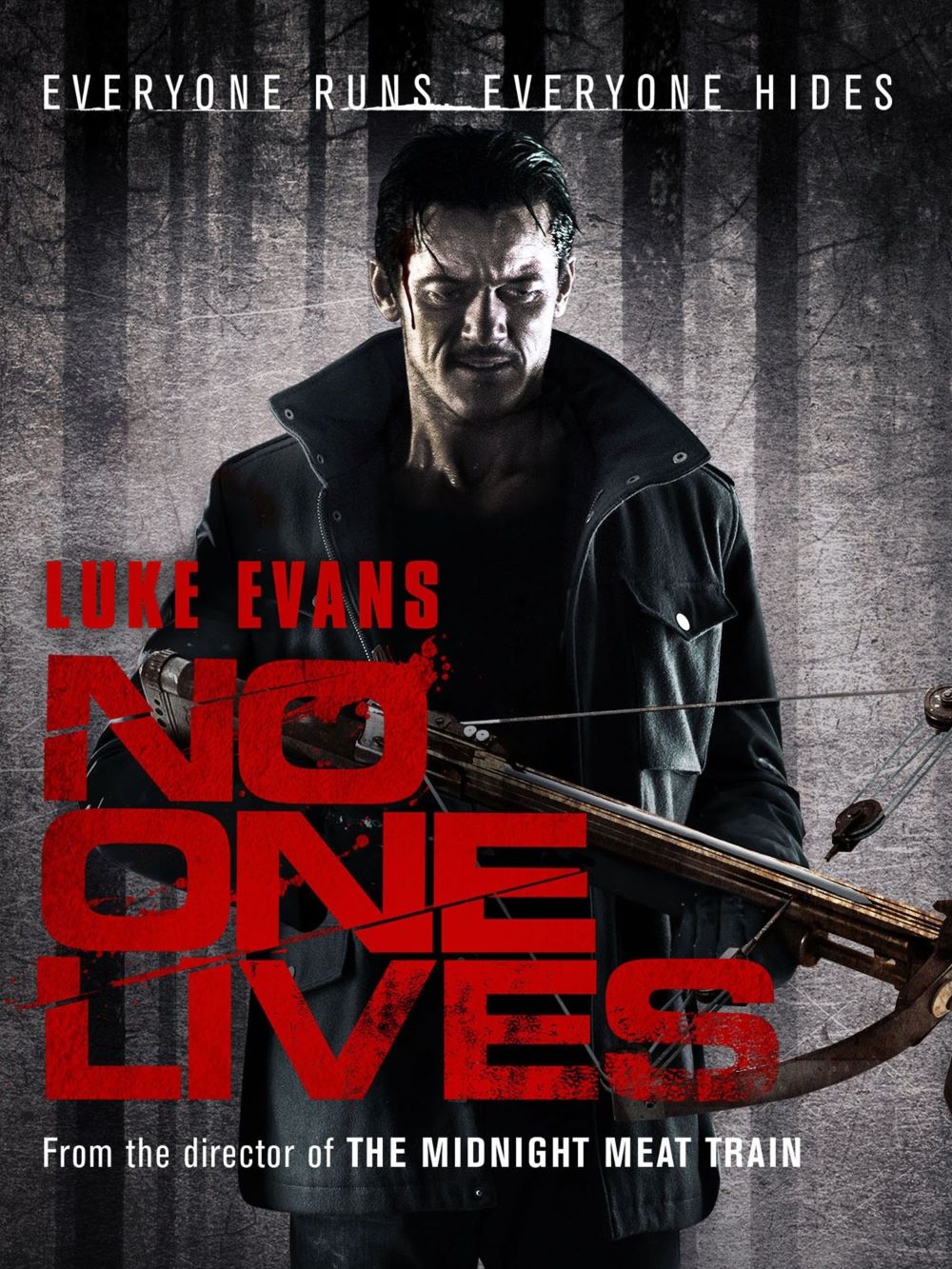
Ryuhei Kitamura’s 2012 horror film No One Lives is a gritty, brutal revenge slasher that doesn’t aim for subtlety or depth but delivers a fast-paced, high-gore thrill ride. The story follows a couple traveling cross-country who are kidnapped by a ruthless gang, only for the man to reveal himself as a deadly predator on a violent rampage. Luke Evans, playing the mysterious and merciless Driver, leads the film with a performance that blends cold calculation and terrifying violence, keeping viewers glued to the screen.
What makes No One Lives stand out is how it leans heavily into its grindhouse and exploitation roots, which proves both advantageous and limiting. The film fully embraces the hallmarks of grindhouse cinema—fast pacing, gritty visuals, excessive gore, and an amoral story stripped down to revenge-fueled violence. This raw, unapologetic approach results in an intense, no-holds-barred experience that will satisfy fans of exploitation and grindhouse styles. The practical effects are impressively executed, with creative and shocking kills that maintain impact without descending into the ridiculous. This dedication to grindhouse aesthetics gives the film a charged energy and a cult appeal, making it a pulpy, heart-pounding experience for viewers who appreciate that sleazy, nihilistic flavor.
However, the grindhouse influence also shapes the film’s limitations. The focus on spectacle and shock means character development and thematic depth take a back seat, making the story feel thin and the characters largely unrelatable except as violent archetypes. Dialogue at times drifts toward camp, and some acting choices can feel a bit amateurish, which may pull some viewers out of the otherwise tense atmosphere. The film’s relentless brutality and amoral tone also create a polarizing effect; it’s unapologetically harsh and violent, which fits the exploitation tradition, but it’s not for everyone. Those expecting traditional horror with complex narratives might find the experience shallow and exhausting.
Luke Evans’s Driver is a compelling anti-hero/monster hybrid, a character who dominates the film with his cold efficiency and unpredictable savagery. The other characters—mostly the gang members—serve as fodder for the film’s violent set pieces, with minimal background or sympathy. This suits the film’s grindhouse style, where depth is often sacrificed for thrills and shock value. The script cleverly keeps some mystery around Driver, maintaining suspense about his origins and intentions, which helps to sustain interest amid the unrelenting carnage.
The film’s grindhouse and exploitation roots also explain its tone and style: it revels in zaniness and excess, the gore is gratuitous but skillfully done, and the revenges feel morally ambiguous and raw. The film doesn’t try to justify or soften its violence; it embraces the lawlessness and nihilism typical of exploitation cinema. While this results in a tight, entertaining 86-minute rush of thrills, it also means the film lacks subtlety or emotional resonance. The style is both a badge of authenticity for genre fans and a barrier to wider appeal.
No One Lives offers a high-energy, blood-soaked horror experience that fully embraces its grindhouse and exploitation influences. It is crafted with a strong focus on unapologetic violence, tight pacing, and a captivating anti-hero in Luke Evans’s Driver. This stylized approach gives the film its raw, relentless intensity that fans of exploitation cinema will appreciate. However, this allegiance to grindhouse aesthetics also means the film prioritizes style and spectacle over emotional depth and narrative complexity. While the movie is an engaging and brutal thrill ride for those who enjoy extreme horror, its minimal character development and abrasive tone might feel one-dimensional or grating for viewers seeking more meaningful storytelling. Overall, it succeeds as a wild, gritty exploitation flick but doesn’t aim to be more than that, making it ideal for audiences who like their horror unrefined and full throttle.
“Don’t give up hope, you might just live.” — Bang Ui-kang
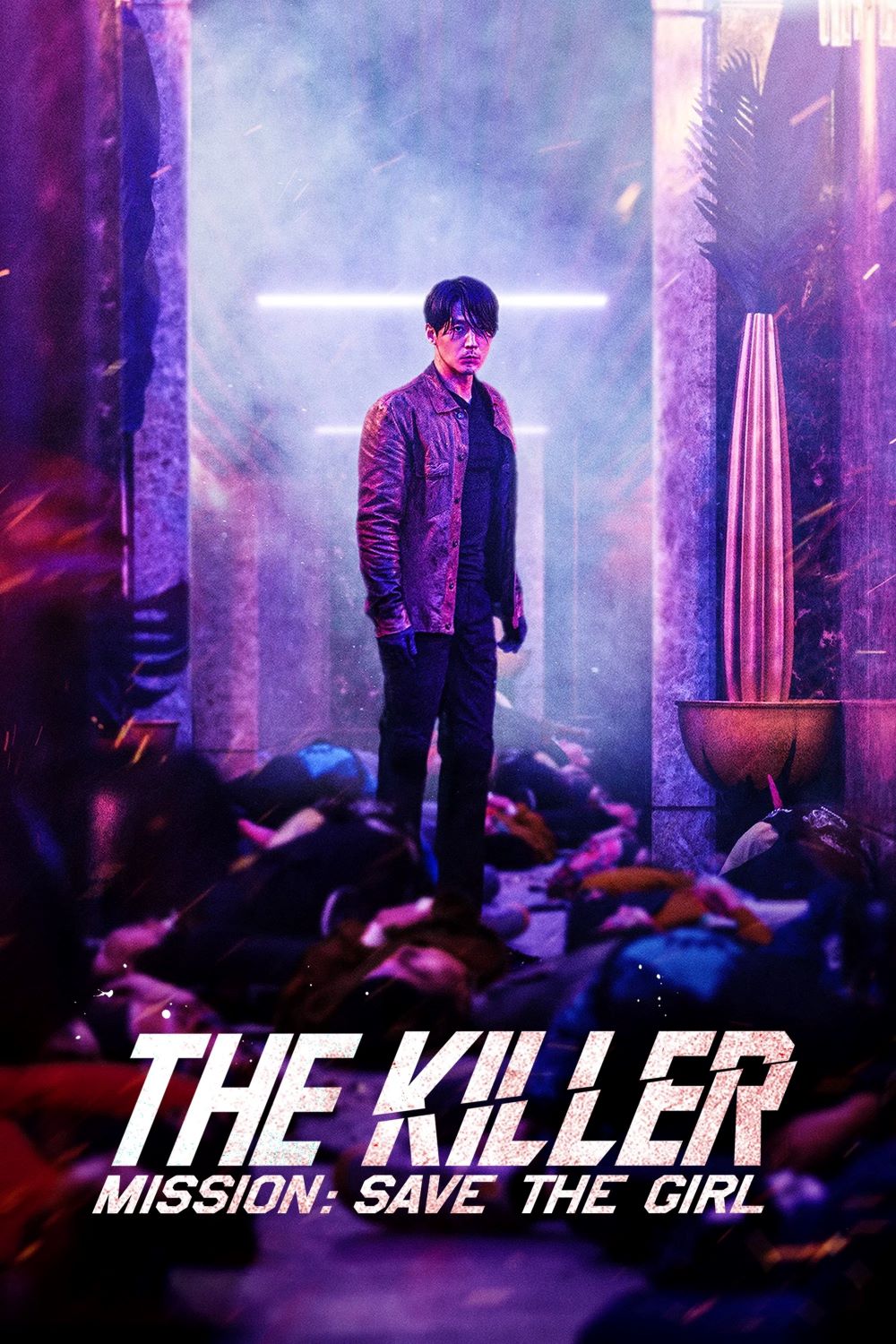
The Killer: A Girl Who Deserves to Die (often just called The Killer) fits into a rich tradition of assassin films sharing this evocative title, tracing back to John Woo’s groundbreaking 1989 Hong Kong action thriller starring Chow Yun-fat, and more recently David Fincher’s 2023 intense character-driven thriller. Beyond the shared name, it belongs to a broader cinematic lineage of cold, lethal assassins portrayed by actors from Alain Delon’s enigmatic Jef Costello in Le Samouraï to Keanu Reeves’s vengeful and stoic John Wick. Bang Ui-kang, the protagonist in this South Korean entry, seamlessly carries forward this archetype—a retired professional killer who reluctantly returns to violence to protect a vulnerable life. The film doesn’t seek to win awards for depth or originality but triumphs at delivering a sleek, steady-paced, and brutal action experience anchored by a compelling central performance.
The film centers on Bang Ui-kang, who has put his violent past behind him to live quietly with his wife. This calm is shattered when his wife asks him to look after her friend’s teenage daughter, Kim Yoon-ji, for a few days. What seems like a simple favor quickly devolves into a nightmare. Yoon-ji finds herself targeted by dangerous criminals wrapped up in human trafficking and corruption, forcing Ui-kang back into the lethal world he thought he’d escaped. The narrative thrives on this inciting incident, propelling Ui-kang into a relentless mission to dismantle the forces that threaten the girl’s life.
What distinguishes Ui-kang from many action heroes is his emotional distance. He isn’t the traumatized, remorseful warrior seeking redemption; rather, he embodies the archetype of the pragmatic, unflappable professional. Jang Hyuk infuses the character with a measured quietude and dry wit, portraying a man whose expertise breeds calm rather than panic. His lethal skills feel like a burden he carries with stoic resolve, not rage or passion. This lends the movie a subtle, darkly humorous undercurrent, with Ui-kang’s cool demeanor standing in stark contrast to the chaos he unleashes.
Yoon-ji’s role is more than mere plot device; she carries the weight of a troubled adolescence marked by neglect and poor choices, which the film touches on just enough to make her predicament feel real and urgent. The movie refrains from turning her into a helpless victim, instead showing glimpses of resilience amid vulnerability. Their relationship eschews overt sentimentality in favor of a tense, urgent bond—he becomes her protector without unnecessary fuss or forced emotionality.
As Ui-kang pursues Yoon-ji’s abductors and their enablers, the storyline peels back layers of criminal enterprise—from street gangs and bent cops to a hidden network of officials and powerful figures. The script offers a steady stream of revelations involving betrayal within Yoon-ji’s family and the depths to which corruption runs. While these twists avoid being groundbreaking, they provide logical motivation and escalation, ensuring the action maintains clear stakes and direction.
Action scenes dominate and define the film’s identity. The fight choreography highlights physicality and precision, with Ui-kang moving not like an invincible superhero but as a seasoned expert executing practiced moves. These scenes unfold in varied, immersive locations—tight stairwells, claustrophobic hallways, grimy nightclubs—where the environment acts as both obstacle and weapon. A standout feature is the recurring confrontation with Yuri, a Russian-trained rival who challenges Ui-kang’s supposed dominance, adding a tense physical rivalry that punctuates the battle-heavy plot.
Visually, the film embraces a neo-noir aesthetic suffused with nighttime blues, shadowy corners, and vibrant neon lights. This creates an atmospheric backdrop that is as stylish as it is gritty, flattering the intense action without sacrificing realism. By employing steady, comprehensible camerawork, the film allows each punch and gunshot to land with tangible weight, distancing itself from the dizzying quick cuts common in the genre’s less disciplined examples.
Though the film gestures towards serious social issues—including human trafficking and systemic abuse—the narrative treats these primarily as catalysts rather than subjects for deep analysis. They provide necessary fuel for the protagonist’s crusade but never overshadow the film’s core focus on kinetic violence and revenge. The story’s cathartic thrust comes from watching evil dismantled by a greater force of cold retribution, rather than through expositional drama or social commentary.
Pacing is a major strength of The Killer. Clocking in at just over 90 minutes, it maintains tight control over the story’s progression, cutting swiftly between thematic setup and relentless action. Dialogue scenes are purposeful and minimal, just enough to clarify character motivations and plot mechanics before jumping back into the physical confrontations. This economy of storytelling makes it perfect for viewers craving a focused, adrenaline-charged experience without unnecessary detours.
On an emotional level, the film deliberately keeps its distance. Ui-kang’s past is briefly hinted at through flashbacks that imply personal loss but refuses to linger or over-explain. Yoon-ji’s peril is treated seriously, yet without descending into melodrama or manipulation. The characters’ emotions serve the plot’s momentum rather than the other way around, fitting the movie’s identity as a streamlined, gritty action thriller.
The Killer is a compelling modern installment in the assassin thriller genre. Jang Hyuk’s performance as Bang Ui-kang brings gravitas and charisma to a familiar archetype, reinvigorating it with a Korean sensibility that feels both fresh and respectful of the genre’s roots. With its sleek visuals, precise choreography, and unrelenting pace, the film satisfies genre fans looking for a no-nonsense, stylish, and violent late-night thrill ride. It confirms that even in a crowded field of cinematic killers, there’s room for new entries that deliver the goods with skill and attitude.
Here to help you get in the holiday spirit, we’ve got a British film from 1999!
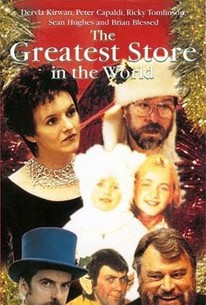
The Greatest Store In The World tells the story of a single mother and her two daughters. When the film begins, they’re living in a van but, after the van catches on fire, they upgrade things by moving into a luxurious London department store. Along with coming together as a family and celebrating the holidays, they also thwart an attempt to rob the store. It’s a good-natured little movie, one that reminds the viewer of how fun the world once was. It was filmed in Harrods, though the name itself is not actually uttered in the film. Fans of Doctor Who will want to keep an eye out for Peter Capaldi while fans of larger-than-life actors will be happy to see the great Brian Blessed.
(I should admit that, when I was little and my family was constantly moving from one state to another and I was always having to say goodbye to whatever new friends I had made, I used to fantasize about living in a big mall. Perhaps that’s one reason why this sweet-natured film brought a tear to my mismatched eyes.)
“I’m a politician. Which means that I am a cheat and a liar, and when I’m not kissing babies, I’m stealing their lollipops.” — Dr. Jeffrey Pelt, National Security Advisor
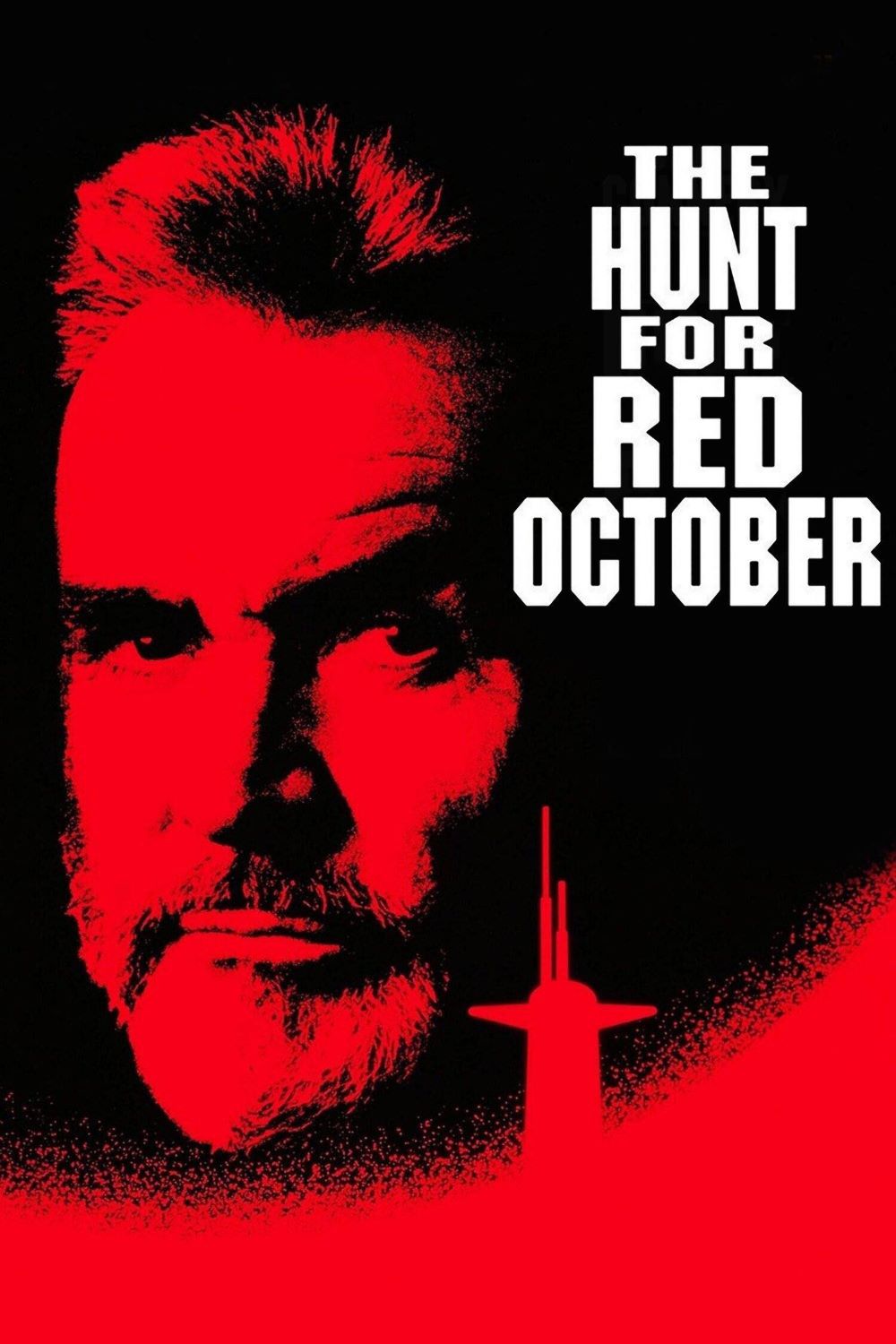
The Hunt for Red October glides into the tail end of Cold War cinema like a stealthy sub cutting through midnight swells, packing a smart mix of spy intrigue and nail-biting underwater showdowns that keep you locked in from the opening credits. Directed by John McTiernan, fresh from helming Die Hard, this 1990 adaptation of Tom Clancy’s doorstopper novel smartly distills pages of naval geekery into a taut, propulsive thriller where Soviet skipper Marko Ramius—Sean Connery in full brooding mode—pilots the formidable Red October, a behemoth sub with a hush-mode propulsion system that ghosts past detection like a shadow in fog.
McTiernan shines in wrangling the script from Clancy’s tech-heavy tome, slicing through the babble to propel the story with crisp momentum and unrelenting suspense, turning potential info-dumps into pulse-quickening beats that hook casual viewers and sub nerds alike. The premise grabs fast: Ramius’s bold maneuvers ignite a transatlantic frenzy, with U.S. and Soviet forces locked in a paranoid standoff over what looks like an imminent crisis. That ’80s-era distrust simmers perfectly here, crammed into a runtime that pulses with fresh urgency decades later, amplified by those dim-lit sub corridors in steely teal tones that squeeze the air right out of the room.
Alec Baldwin embodies Jack Ryan as the reluctant brainiac from CIA desks, sweaty and green around the gills yet armed with instincts that cut through official noise like a periscope through chop. Pulled from family downtime—teddy bear in tow—he injects everyday stakes into the global chessboard, proving heroes don’t need camo or cockiness, just smarts and stubbornness. Connery’s Ramius dominates as a haunted vet with a personal chip on his shoulder, steering a tight-knit officer corps including Sam Neill’s devoted second-in-command, their quiet bonds hinting at deeper loyalties amid the red menace.
Standouts fill the roster seamlessly: James Earl Jones lends gravitas as the steady Admiral Greer backing Ryan’s wild cards; Scott Glenn commands the American hunter sub with laconic steel; Jeffrey Jones brings quirky spark to the sonar savant whose audio tricks flip the script on silence. The dialogue crackles with shorthand lingo and understated jabs, forging a crew dynamic that’s as pressurized as the hull plates, pulling you into hushed command post vibes without a whiff of cheesiness.
McTiernan elevates the genre by leaning on wits over blasts—thrilling pursuits deliver without dominating, letting mind games and split-second calls drive the dread, all while streamlining Clancy’s minutiae into seamless propulsion. Gadgetry gleams without overwhelming: the sub’s whisper-quiet tech sparks clever cat-and-mouse in hazard-filled depths, ramping uncertainty to fever pitch. Pacing builds masterfully from war-room skepticism—Ryan battling brass skepticism—to heart-in-throat ocean dashes, every frame taut as a bowstring. Practical models and effects ground the peril in gritty tangibility, no digital gloss, evoking Ice Station Zebra‘s frosty traps but streamlined into a relentless machine that dodges the older film’s drag. It’s a clinic in balancing spectacle and smarts, where tension coils from isolation’s cruel math: one ping too many, and it’s lights out.
On the eyes and ears front, the movie plunges into submersed nightmare fuel—consoles pulsing crimson in battle stations, scopes piercing mist-shrouded waves, silo bays looming like sleeping leviathans. McTiernan tempers his action flair for thinker-thrills; Basil Poledouris’s great orchestral score surges with iconic power through the chases—those brooding horns, choral swells, and rhythmic pulses echoing engine throbs have etched into legend, pounding your chest like incoming cavitation and elevating every dive. Audio wizardry seals the immersion: hull groans, ping echoes, bubble roars craft a metallic tomb where errors echo eternally. Flaws peek through—early scenes drag with setup chatter, foes skew broad-stroked—but the core hunt erases them, surging to a sharp, satisfying close that nods to Ryan’s budding legend without overplaying the hand.
’90s tentpole lovers and thaw-era history fans find a benchmark here, as the film plays the long con of trust amid torpedoes, fusing bombast with nuance that reboots chase in vain. It bottles superpower jitters spot-on—frantic commands clashing with strike debates—yet softens adversaries via Connery’s world-weary depth and Neill’s subtle conviction. Endless rewatches uncover gems: crew hints dropped early, sonar hacks foreshadowing real tech leaps. Baldwin’s grounded Ryan—chopper-barfing, suit-clashing, chaos-navigating—earns triumphs the hard way, contrasting Das Boot‘s bleak grind with upbeat ingenuity that feels won, not waved. Poledouris’s motifs linger post-credits, a symphonic anchor boosting replay pulls.
Endurance stems from mastering sub-horror’s essence: solitude sharpening choices, where flubs invite apocalypse. Ramius embodies defector realism—war-weary idealist mirroring history’s turncoats—while Clancy’s specs (sub classes, velocities) anchor without anchoring down. McTiernan sidesteps flags; zero flag-waving, pure operator craft in dodges and climactic finesse that blends brains with boom. Quirks delight—the premier’s bluster, aides’ cool calculus—padding a 134-minute gem that exhales you surfacing, amped. Expands on score’s role too: “Hymn to Red October” choral rise mirrors Ramius’s quiet rebellion, threading emotional undercurrents through mechanical mayhem, a Poledouris hallmark outlasting the film.
Bottom line, The Hunt for Red October captivates via cerebral kick—shadow games in fluid physics, intellect over muscle, audacious plays punking empire folly. Sparks post-view chin-strokes on allegiances and risks. Connery’s gravelly “One ping only, Vasily” endures as gold; storm-watch it, trade sofa for sonar station—raw thrill spiked with savvy. Sub saga staple? This silent stalker nails every target.
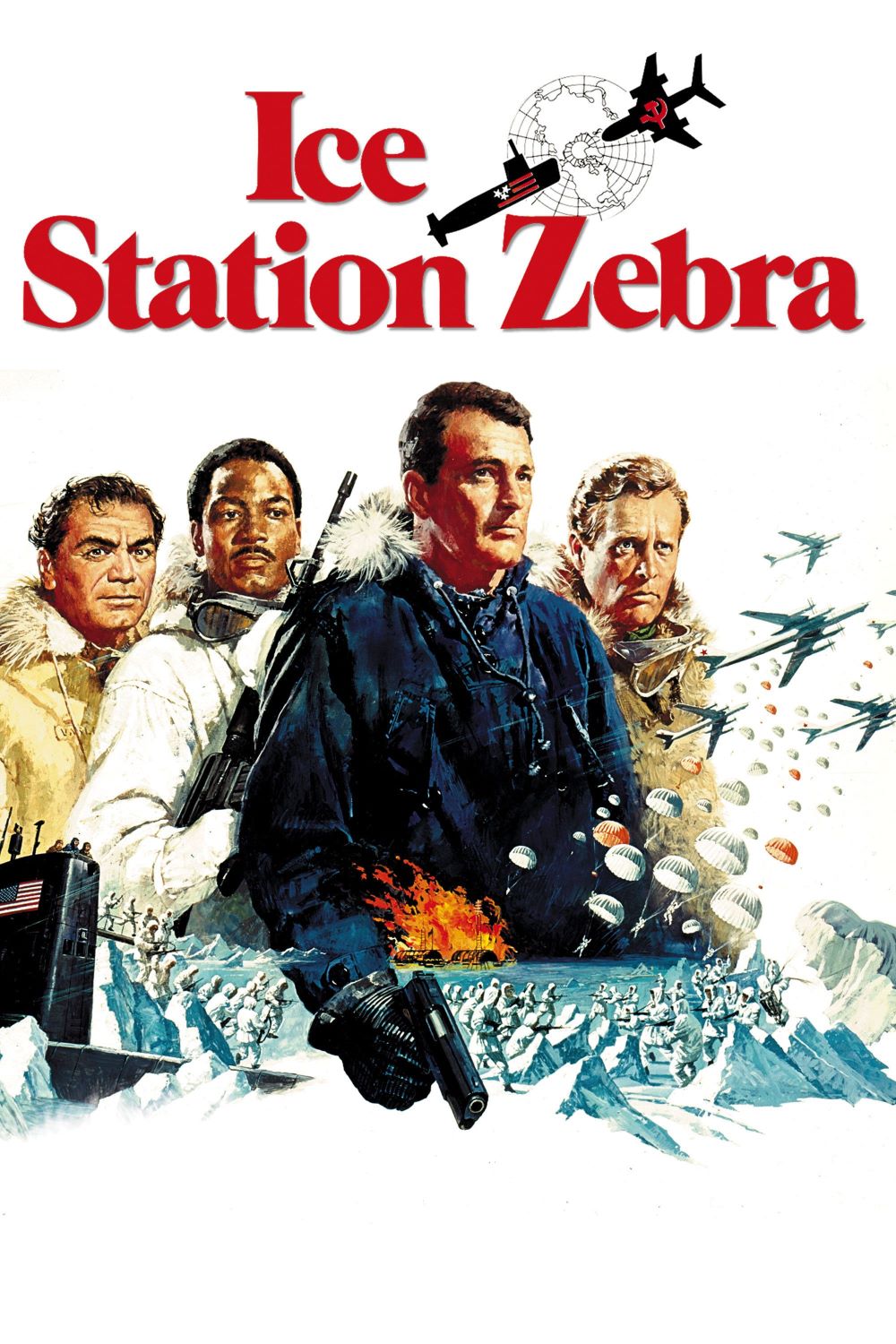
Ice Station Zebra, directed by John Sturges in 1968, slides into guilty pleasure territory like a submarine slipping under polar ice—full of big Cold War ambitions, shadowy spy games, and submarine peril that tease something epic, but so loaded with pacing hiccups, studio shortcuts, and earnest overreach that it ends up a lopsided, lovably messy ride. Sturges had already cemented his rep with crowd-roaring hits like The Magnificent Seven, where a ragtag posse of gunslingers delivered razor-sharp tension and quotable showdowns, or The Great Escape, a WWII breakout yarn crackling with clever schemes, sweaty escapes, and Steve McQueen’s motorcycle glory. Those films moved like a well-oiled engine, every scene stacking stakes and character beats into unforgettable momentum. By contrast, Ice Station Zebra feels like Sturges chasing that same high-wire ensemble vibe—a U.S. nuclear sub, the USS Tigerfish, barreling toward a trashed Arctic outpost—but bloating into a 148-minute sprawl that swaps tight plotting for endless red-lit corridor glares and withheld mission secrets. It’s not in the same league as his earlier triumphs, lacking their propulsive drive and lived-in grit, yet that very shortfall turns it into quirky comfort viewing for fans who dig flawed ’60s spectacle.
The setup hooks you quick: Commander James Ferraday, Rock Hudson’s square-jawed everyman at the helm, gets tapped for a hush-hush run to Ice Station Zebra after a satellite supposedly carrying spy photos crashes nearby. No full briefing for him, just orders to play it cool while three mystery passengers board—Mr. Jones, a buttoned-up British agent with evasive smirks; Boris Vaslov, Ernest Borgnine’s barrel-chested Russian turncoat oozing fake bonhomie; and Captain Anders, Jim Brown’s steely Marine barking orders over a squad of jarheads. As the Tigerfish dives under thickening ice floes, the sub’s innards come alive with flickering sonar pings, steam-hissing valves, and crewmen hunched over gauges in perpetual sweat. It’s claustrophobic gold at first, the hull creaking like it’s got a bad case of frostbite, echoing the trapped dread Sturges nailed in his POW camp classic but without the same spark of rebellion. Then sabotage strikes—a flooded missile bay, a wild plunge toward crush depth—and fingers start pointing. Who tampered with the ballast? Jones with his locked trunk of gadgets? Vaslov’s too-friendly vodka toasts? The Marines itching for a fight? The scene builds real sweat, divers suiting up in the nick of time, but Sturges lets the fallout drag, turning interrogation into a tea party of suspicions rather than the cutthroat blame game his best films thrived on.
These early stumbles set the tone for a film that’s promising yet perpetually off-kilter, far from the seamless revenge rhythm of The Magnificent Seven‘s dusty trails. Production fingerprints show everywhere: rumors swirl of Navy brass forcing script tweaks to glorify their boats, last-minute casting shifts from bigger names to Hudson, and a roadshow rollout with overture, intermission, and 70mm pomp that screams overambition. The Arctic plunge delivers tense highlights—the sub ramming upward through ice chunks like a whale breaching, sparks flying from shorted panels, crew barking damage reports—but lulls follow with tech jargon dumps and characters circling motives without committing to conflict. Hudson anchors it all with unflappable poise, barking commands like a TV dad in a crisis, but he lacks McQueen’s sly charisma or Yul Brynner’s brooding fire. Borgnine hams it up as Vaslov, his accent flipping from gravelly growl to vaudeville schtick during mess-hall ribbing, while McGoohan brings the sharpest edge as Jones, his dry barbs hinting at deeper layers. Brown’s Anders gets muscle but little nuance, leading a Marine crew that feels like stock tough guys waiting for their cue.
Pushing topside, the flaws bloom into full charm. The ice cap arrival unfolds in sweeping widescreen vistas—endless white expanses, howling gales whipping snow devils—but close-quarters betray the soundstage: actors plodding through “blizzards” in lightweight jackets, no puffing breath in the deep freeze, sets that wobble if you squint. It’s the kind of earnest cheesiness that sinks modern blockbusters but endears this relic, especially when the station siege erupts. Soviets drop from the sky in parachutes like deadly snowflakes, scouring the charred ruins for a buried film capsule packed with NATO missile coords. Americans fan out in white camo, trading potshots amid smoke grenades and collapsing tunnels, loyalties cracking as Vaslov’s true colors flash. Ferraday’s cool bluff seals a three-way stalemate, denying everyone the prize in a nod to mutually assured secrets. Michel Legrand’s score surges here, horns blaring over the chaos like a war drum, giving Sturges’ action chops a late workout. Yet even this payoff sprawls, talky standoffs eating screen time where his peak films would’ve sprinted to the finish.
What seals Ice Station Zebra‘s guilty pleasure status is embracing its dated quirks as features, not bugs—hammy all-male bravado, Cold War jitters turned quaint, plot gaps you could park a destroyer in. Sturges conjures submerged panic and frosty fireworks that nod to his glory days, the sub’s practical effects holding up better than some CGI today, but without the narrative steel of The Great Escape‘s tunnel triumphs or The Magnificent Seven‘s mythic standoffs, it coasts on atmosphere over precision. Clocking 148 minutes, it tests patience with filler like extended sail sequences and coy reveals, yet rewards surrender: grin at Borgnine’s bear hugs masking menace, chuckle at the Navy polish glossing gritty potential, savor the sheer balls of staging Arctic Armageddon on a backlot. Howard Hughes reportedly looped it endlessly in his casino screening rooms, and you get why—it’s hypnotic in its wonkiness, a time capsule of late-’60s Hollywood flexing before New Wave grit crashed the party.
Pop this on a stormy night with cocoa and zero expectations, and Ice Station Zebra shines as cozy flawed fun. Sturges’ touch keeps the chills coming amid the clunkers, delivering submarine squeezes, betrayals under the aurora, and a finale with enough brinkmanship bang to forgive the bloat. It’s no peer to his earlier masterpieces, more a quirky footnote, but that’s the hook: imperfect promise wrapped in icy spectacle, begging a rewatch to spot every goofy grace note. For ’60s thriller buffs, submarine nuts, or anyone needing a break from slick reboots, it’s a frosty, flawed feast worth the dive.
To the East, there’s a cemetery that sits near a bus stop. It’s surrounded by a fence and, judging from the gravestones that I’ve seen, it was last used in 1917. It was a private cemetery, one that functioned as the final resting place for the members of one of the families who founded my hometown. To the west, there’s a park that is home to another private cemetery. It’s also surrounded by a fence. That fence wasn’t always there but it went up a few years ago because people were vandalizing the tomb stones and breaking the statues that had stood there for over a hundred years. How sick to do you have to be vandalize a graveyard?
Occasionally, when I’m near either one of the two cemeteries, I’ll take some time to look at the names on the headstones. The names are of people who I will never know. I’ll never know what they were like to live with or to eat dinner with. I’ll never know what hobbies occupied their time. I’ll never know what books they read. I’ll never know who they were. But I will always know that someone cared enough to erect a tombstone to let the world that person had once been alive. I will always know that, at some point, they were alive and they were a part of society.
I thought about those two cemeteries as I watched Train Dreams. Based on the award-winning novella by Denis Johnson, Train Dreams stars Joel Edgerton as Robert Grainier. At the start of the film, the narrator (Will Patton) tells us that Grainier lived for 80 years and he spent most of his life in Idaho. He never saw the ocean. He was an orphan who never learned who his parents were, when he was born, or how he came to be placed on a train in the late 19th century. The film follows Grainier as he goes from dropping out of school to working as a logger to marrying Gladys (Felicity Jones). He builds a cabin for Gladys to live in while he’s away looking for work. He and Gladys have a daughter named Kate.
Growing up at a time when the frontier had only recently been tamed and when death was considered to be acceptable risk for the men cutting down trees and laying down railroad tracks, Robert sees his share of disturbing things. As a child, he comes across as a mountain man who is slowly dying. Working for the railroad, he watches as one of his co-workers is casually tossed off a bridge. Later, the elderly and kind-hearted Arn Peebles (William H. Macy) is mortally injured in a random accident. When loggers die, their boots are hammered into a tree. Years, later those same trees are cut down and the boots are forgotten. And yet, for all the danger in Robert’s life, there are the moments that make it all worth it. Robert always returns home to his cabin and to the embrace of Gladys and the sight of his daughter growing up. He always returns to his family until he can’t anymore. As he ages, Robert isolates himself from civilization and becomes semi-legendary in the nearby town. But, as always, legends are eventually forgotten.
Visually, it’s a hauntingly beautiful film. The scenery is stunning, even while Robert and his fellow loggers are busy changing it by chopping down trees. But there’s always a hint of danger hiding behind the beauty. A forest fire brings an eerie, orange tint to the sky but it also destroys many lives and dreams. Joel Edgerton gives a strong performance as Robert, proving once again that he’s one of the few actors who can star in a period piece without looking out-of-place. Edgerton’s performance gives the film the humanity needed to keep it from becoming purely a film about visuals. As Robert, Edgerton rarely yells or shows much emotion at all. But his eyes tell us everything that we need to know.
With its stunning visuals, its narration, and its emphasis on nature, Train Dreams owes an obvious debt to Terence Malick. That said, it’s not quite as thematically deep as Malick’s best films. Whereas Malick would have been concerned about Robert’s place in both the universe and the afterlife, Train Dreams is more content to focus on Robert’s 80 years in Idaho (and occasionally Spokane). Whereas Malick often seems to be daring his audience to walk out, Train Dreams is very much about keeping you watching as Robert grows old. That’s not necessarily a criticism, of course. It’s just an acknowledgment that Train Dreams is the rarest of all creatures, an arthouse film that’s also a crowd pleaser. It doesn’t alienate its audience but it does so at the cost of the risks that make Malick’s later films so fascinating, if occasionally frustrating. That said, Train Dreams does stick with you. I’ll be thinking about the final 20 minutes for quite some time.
Train Dreams tells the story of a man — one of many — who may have been forgotten by history but who mattered during his 80 years on this Earth. In the end, Robert Grainier serves as a stand-in for all the people who lived their lives as American rapidly changed from being a frontier to being a superpower. The world may forget him but the viewer never will.
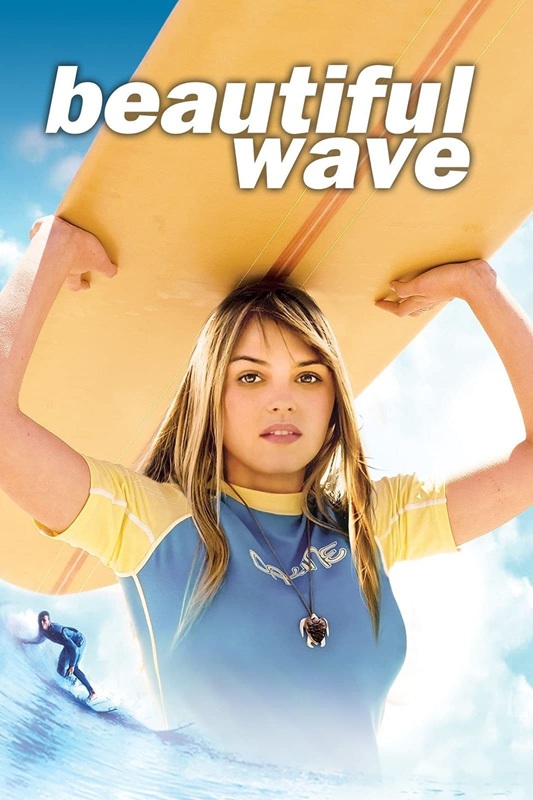
After her father dies in an accident, teenage Nicole (Aimee Teargarden) is sent to Santa Cruz for the summer by her mother. In Santa Cruz, Nicole meets her grandmother, Sue (Patricia Richardson), for the first time. At first, Nicole is bitter and angry and doesn’t want a thing to do with Santa Cruz or its culture of surfing. That changes when she learns about her grandfather, Max (Lance Henriksen). Max was a legendary surfer who went to Vietnam and never returned. When Nicole comes across Max’s old map of surfing spots, she and her friend Kayla (Alicia Ziegler) go on a journey that leads to Nicole not only appreciating surfing but also discovering the truth about her grandfather.
Beautiful Wave is pretty predictable and, at first, Nicole is so sullen that she can sometimes be difficult to take even if she does have a good reason for not being in a cheerful mood. I liked the idea of Nicole and Kayla going on a journey together but I didn’t like that they brought two knucklehead surfers with them. What could have been a celebration of sisterhood instead became a film about two women having to deal with two idiots.
Beautiful Wave still won me over, with its gorgeous beach footage and its story of paying respect to the past and discovering your own roots. Even with the two idiot surfers getting in the way, I appreciated the way the film showed the bond between Nicole and Kayla. The ending was heartwarming, even if it did raise more questions than it answered. There are some movies that you have to be in the right mood for and I guess my mood was the right one for Beautiful Wave.
Since we had a few hours to kill before the Cowboys game started, Lisa and I decided to watch a movie. I wanted a love story. She wanted something with dancing. We settled on Sidelined 2.
Sidelined 2 picks up where the first Sidelined ended. Drayton (Noah Beck) is the starting quarterback at USC, even though he’s only a freshman and he’s really scrawny for a football player. (All of the football players in this movie looked too scrawny to be playing for a top-ranked program.) Dallas (Siena Agudong) is studying dance at Cal Arts and trying to figure out how to pay for her semester after she learns her scholarship won’t cover everything.
They’re in love but they still struggle because they’re going to different schools and they both have to figure out how to balance their relationship with all of their other responsibilities. Drayton tears his ACL and becomes bitter. Dallas gets a job at a coffeehouse and her boss has really messy bangs and keeps singing songs on his guitar. Dallas and Drayton realizes that there are other possibilities out there. Will their relationship last?
I thought the first Sidelined was cute for what it was. The second one was pretty boring and whatever charm the two leads had in the first film disappeared during the sequel. Drayton’s not much of a boyfriend, even before he ruins his knee. Dallas says she’s never even been to Dallas, which is weird. If I was named after a city, I would visit. It’s a Wattpad movie and all of the dialogue sounds like it was written by an AI that had been programmed to try to sound young by dropping random slang. Drayton asks Dallas if she’s “hangry.” Lisa made me go back three times to make sure he actually said that.
James Van Der Beek comes back for five minutes. He used to be the teenager with a dream. Now, he’s playing the father of a teenager with a dream. Feel old, yet?

 Through the Shattered Lens