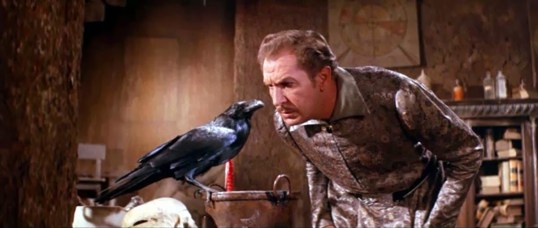
Halloween’s coming to an end. Actually, here in America, it’s come to an end everywhere except on the west coast. What better way to bring our annual Horrorthon to a close than spending a few minutes with Vincent Price and the Raven?
Unfortunately, I don’t know exactly when this was filmed. But no matter! It’s Vincent Price reading Edgar Allen Poe!
“In this Walk, it’s not about winning. It’s about refusing to be forgotten while the world watches us fade away.” — Peter McVries
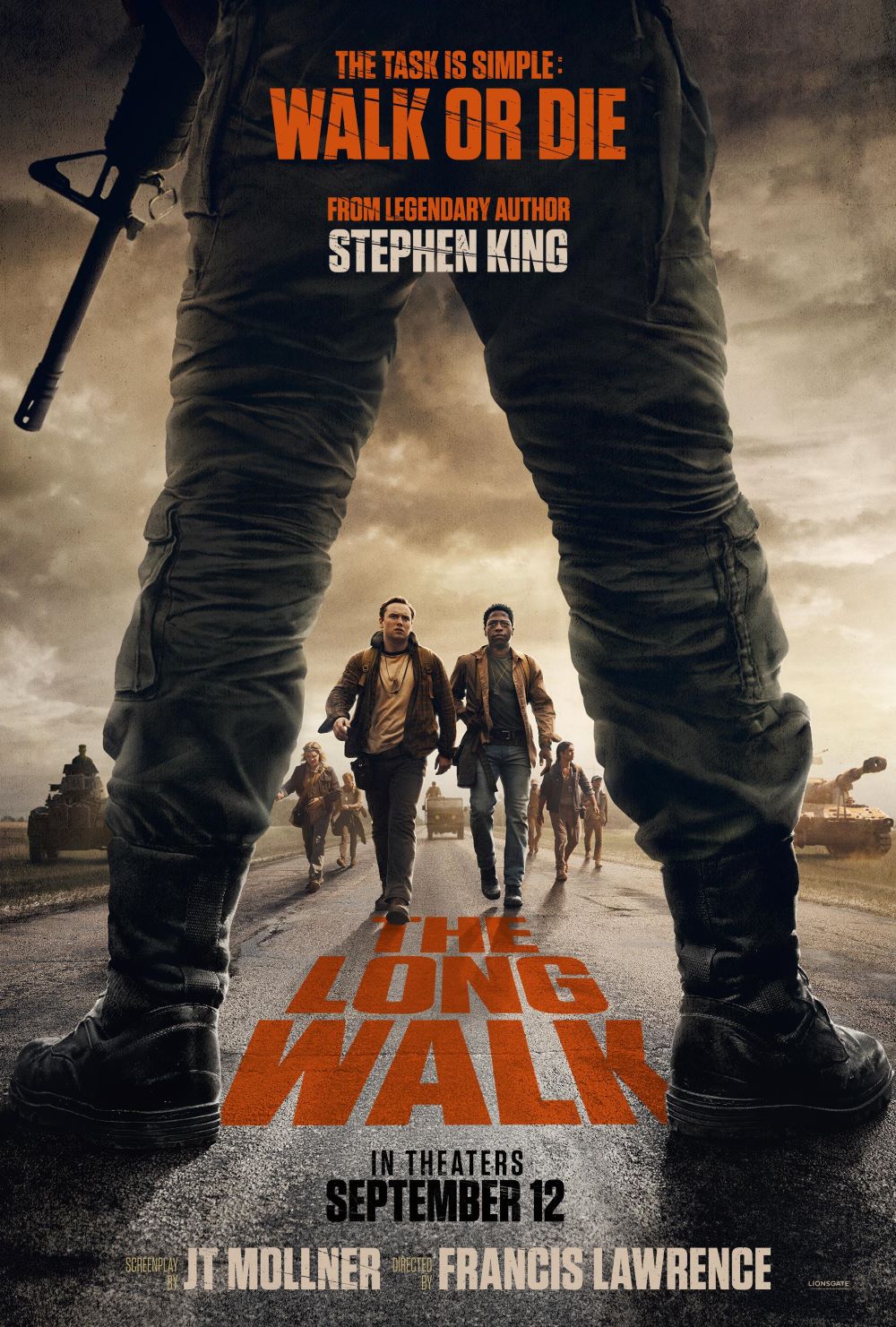
Francis Lawrence’s The Long Walk (2025) delivers a relentlessly brutal and unyielding vision of dystopian horror that explores survival, authoritarian control, and the devastating loss of innocence. The film immerses viewers in a grim spectacle: fifty teenage boys forced to participate in an annual, televised event known as the Long Walk. To survive, each participant must maintain a constant pace, never falling below a minimum speed, or else face immediate execution.
At the heart of this bleak narrative is Raymond Garraty, played with earnest vulnerability by Cooper Hoffman. Garraty’s backstory, marked by the tragic execution of his father for political dissent, sets a somber tone from the outset. As the Walk drags on, Garraty forges fragile bonds with fellow contestants, particularly Peter McVries (David Jonsson), whose camaraderie and quiet resilience inject moments of hope and humanity into the harrowing journey. These relationships become the emotional core, grounding the film’s relentless physical and psychological torment in deeply human experiences.
The setting enhances this oppressive atmosphere. The time and place remain deliberately ambiguous, with evident signs that the United States has recently suffered a second Civil War. The aftermath is a landscape ruled by a harsh, authoritarian military regime overseeing a nation economically and politically in decline. Though visual cues evoke a retro, 1970s aesthetic—reflected in military hardware and daily life—the film resists pinning itself to an exact year. This timelessness amplifies its allegorical power, emphasizing ongoing societal collapse and authoritarianism without tying the story to one era specifically. The dystopian backdrop is populated by broken communities and a pervasive sense of hopelessness that mirrors the characters’ internal struggles.
Visually, The Long Walk employs stark, gritty cinematography that traps viewers in the monotonous expanse of endless roads and bleak environments. Lawrence’s direction is unflinching and unrelenting, echoing the merciless march to death and the broader commentary on institutionalized brutality. The atmospheric score complements this oppressive tone, underscoring the emotional and physical exhaustion pacing the narrative.
Performances elevate the film’s emotional stakes significantly. Hoffman’s portrayal of Garraty captures the youth’s evolving vulnerability and determination, while Jonsson’s McVries adds a poignant emotional depth with his steady, hopeful presence. Supporting actors such as Garrett Wareing’s enigmatic Billy Stebbins and Charlie Plummer’s self-destructive Barkovitch bring vital complexity and urgency. Stebbins remains a figure whose allegiance is ambiguous, adding layered mystery to the group dynamics. Judy Greer’s limited screentime as Ginny Garraty, Ray’s mother, stands out powerfully despite its brevity. Each of her appearances is heartbreaking, bringing a wrenching emotional weight to the film. Her panicked, anguished attempts to hold onto her son before he embarks on the deadly Walk amplify the human cost of the dystopian spectacle, leaving a lasting impression of maternal agony amid the surrounding brutality.
Mark Hamill’s role as The Major is a significant supporting presence, embodying the authoritarian face of the regime. The Major oversees the brutal enforcement of the Walk’s rules, commanding lethal squads who execute those who falter. Hamill brings a grim and chilling force to the character, whose cold charisma and unwavering commitment to the ruthless system make him a menacing figure. Despite relatively limited screen time compared to the young participants, The Major’s presence looms large over the story, symbolizing the chilling machinery of power and control that governs the dystopian world.
Yet, the film is stark in its depiction of violence. The executions and suffering are raw and often grotesquely explicit, serving as a damning critique of authoritarian cruelty and the voyeuristic nature of state violence televised as entertainment. This unfiltered brutality can, however, become numbing and exhausting as it piles on relentlessly, occasionally undercutting emotional resonance. The narrative embraces nihilism fully, underscoring the dehumanization and futility within the dystopian world it portrays.
The film’s overall pacing and structure reflect this bleakness but at times suffer from monotony. The heavy focus on walking and survival mechanics leads to a lack of narrative variation, testing the audience’s endurance much like the characters’. There is likewise a noticeable stretch of physical realism—the contestants endure near-impossible physical feats without adequate signs of weariness or injury, which can strain believability.
Character development is another area where the film falters slightly. While Garraty and McVries are well-drawn and immunize emotional investment, other characters tend toward archetypical roles—bullies, outsiders, or generic competitors—diminishing the impact of many deaths or interactions. Similarly, the repetitiveness of the setting and cinematography, relying mostly on basic shots following the walkers, misses opportunities for more creative visual storytelling that might heighten tension or spotlight key emotional beats.
The film’s conclusion, stark and abrupt, offers no real catharsis or closure, reinforcing the overarching theme of unyielding despair. While this resonates with the film’s nihilistic motif, it may alienate those seeking narrative resolution or hope. The visceral shock and bleak tone permeate to the end, leaving the viewer with a lasting impression of relentless suffering and sacrifice.
This demanding yet visually striking and emotionally intense film challenges viewers with its unrelenting bleakness and brutal thematic content. It critiques societal violence, media spectacle, and authoritarianism through starkly powerful performances and an oppressive, immersive atmosphere. Though it excels in evoking emotional rawness in key moments and maintaining thematic consistency, it struggles with pacing, character depth beyond the leads, and occasional narrative monotony. Its ambiguous setting in a post-second Civil War America ruled by a declining authoritarian regime adds a timeless, allegorical layer to its exploration of human endurance and societal collapse.
Ultimately, this film is best suited for viewers prepared for an uncompromising, intense vision of dystopia. It stands as a compelling, if bleak, meditation on youth, survival, and the human spirit under extreme duress, showcasing Francis Lawrence’s aptitude for crafting thought-provoking, provocative horror.
With Halloween approaching, the Shattered Lens presents to you a recording of the 2015 West End production of The Rocky Horror Show, featuring Richard O’Brien, Emma Bunton, Stephen Fry, Anthony Head, Ben Forster, Haley Flaherty, and David Bedella.
The film is so popular that I think some people tend to overlook Rocky Horror‘s theatrical origins. Personally, I prefer this energetic stage version to the film.
Happy Halloween! I see A LOT of terrible movies for your pleasure. It’s a really weird relationship we have. However, I am glad to do it because there are some gems, not from AI because that’s pretty much the worst. “The Mountains of Madness” AI short wasn’t terrible, but maybe I have trouble seeing it now because I have been so mentally hurt….for you. I have seen so many ham-fisted AI slops this month that you’d think that I worked in a deli! Unlike the usual dreck I watch for you, this short is a treasure and I am almost thinking I won’t review any other shorts because I want to end on a high note or maybe I’ll go all in and end on a very low note.
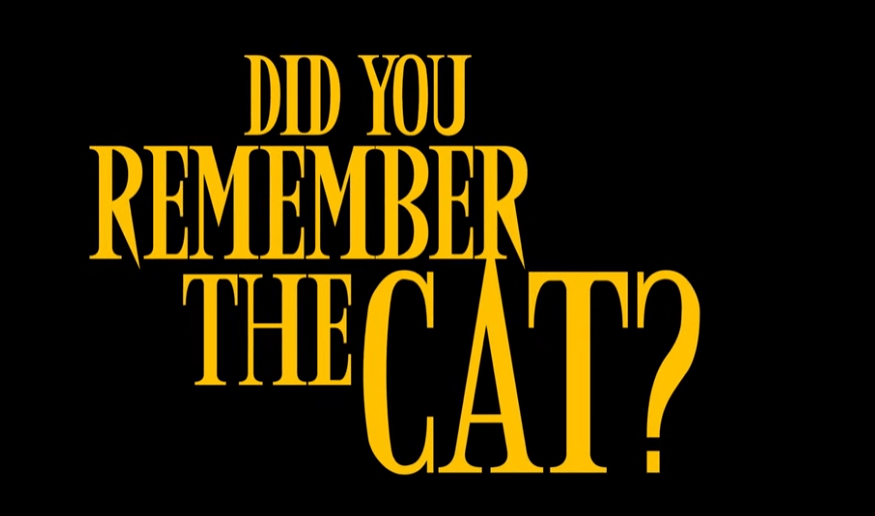
A couple escaped their home where a demon they summoned called “The Choir” has killed all of their friends. One problem: they forgot the cat- Mr Whiskers; so, they have to re-enter the house of horrors to save their pet. There is a recurring song the couple wrote to get the cat to play: “Littlest Man” … it’s cute. As they struggle to rescue their cat, we learn that they are an unhappy couple.
The unhappy duo must fight “The Choir” demon to get the cat. The demon’s only weakness is loud noises and being stabbed. The couple’s relationship is like The Choir demon because they have endless awkward silences, which has destroyed their relationship. The cat was used by the couple to avoid their awkward silences; in fact, the cat was the only glue in their relationship.
By fighting the demon and rescuing their cat, they healed their relationship… a little. I still think that they will break up, but it is ok because the cat is safe and I got to review something good! It’s weird to be able to look a film up on IMDB again because AI films are excluded as far as I am able to ascertain. I recommend this short and I really do believe that you will like it! Enjoy the rest of Halloween!
It feels strange to actually watch The Rocky Horror Picture Show without an audience.
I say this because the film is actually far better known for its fans than anything else. First released in 1975 to middling reviews and, at first, anemic box office returns, The Rocky Horror Picture Show went on to become the first great cult film. It’s literally been playing in theaters for 25 years, which has to be some sort of record. When one sees Rocky Horror Picture Show in a theater, one does not merely sit back and watch in a state of suspended animation. Instead, most of the audience becomes a part of the show. They yell, they dance, and many of them return night-after-night. I have been to two midnight showings of the Rocky Horror Picture Show and I have to admit that it was actually pretty intimidating both times. The people in the audience — the veterans who knew every line and knew exactly what to do — were, more or less, friendly. I’ve read some online horror stories about people who felt like they weren’t welcome the first time they attended a showing. I had the opposite experience. No one was rude, no one glared. It was definitely a cliquey group but I felt as if they had earned the right to be in their clique. No one seemed to be bothered by the fact that I was mostly there just to observe. (I should also mention that neither showing that I attended demanded that the first-time watchers stand up or go to the front of the theater or anything like that. Apparently, there’s quite a few people online who got upset over being singled-out as “virgins” and never got over it.) But it was intimidating in much the same way as meeting a friend of a friend is intimidating or exploring a new town is intimidating. I was surrounded by people who had a deep connection with each other, one that had been forged by sharing the same experience for years. It was a communal experience that was actually touching to see, even if I never stopped feeling like an outsider.
It’s interesting to compare the midnight showings of The Rocky Horror Picture Show to the midnight showings of The Room. I attended several midnight showings of The Room and I have to admit that I eventually soured on them as it became clear that many people were showing up to taunt the film as opposed to enjoying it for the odd, communal experience that it was. The last few The Room showings that I attended were filled with a hostility that left me feeling a bit uncomfortable. Whereas The Room’s cult has often felt a bit mean-spirited (as if everyone had gathered together to laugh at Tommy Wiseau for thinking he could make a movie), The Rocky Horror Picture Show‘s cult is based on a genuine love for the film.
As for the film itself, I watched it last month without an audience and I judged it solely as a film. The pacing is a bit off and, without the group experience, it’s a lot easier to notice that the film’s storyline doesn’t make a bit of sense, though that was undoubtedly deliberate on the part of the filmmakers. That said, Tim Curry’s performance still gives the film a jolt of energy, recapturing your attention and holding it until the film comes to a close. (The genius of Curry’s performance as that, as flamboyant as it is, he still plays Dr. Frank-n-Furter as being an actual characters with feelings and emotions. He doesn’t just coast on attitude. One need only compare him to Laverne Cox in the 2016 TV production to see how strong Curry’s performance is.) Susan Sarandon brings some depth to her performance as Janet and, if Barry Bostwick is a little on the dull side of Brad …. well, the heroes who appeared in the film that Rocky Horror sends up were rarely that exciting. I enjoyed the snarky humor of Richard O’Brien’s performance and the energy that Meat Loaf brought to the production. Charles Gray, in the role of the Criminologist, really doesn’t get enough credit for holding the film’s disparate parts together.
In the end, when viewed as a film as opposed to a communal experience, The Rocky Horror Picture Show is undoubtedly flawed but it’s still energetic enough to work. The love for the old sic-fi films comes through and Tim Curry’s uninhibited performance works with or without an audience. The Rocky Horror Picture Show is a film that brings people together and I hope it continues to do so.
Johnny was perfectly happy being dead until some obnoxious college friends decided to take a camping trip and came across a locket hanging off of a fire tower. The locket was what kept Johnny’s soul at rest. When one of the group decided to take the locket so that he could give it to his girlfriend, Johnny came back to life.
Already haunted by the tragic memories of his life and how a bunch of bullies murdered him by tricking him into falling off of the tower, Johnny is determined to retrieve the locket. Slowly and methodically, he walks through the wilderness, killing everyone that he encounters as he searches for the one thing that will….
Well, it’s a slasher movie! You know how these things go!
Released in 2024 and directed by Chris Nash, In A Violent Nature‘s plot may be typical slasher stuff but the way the story is told makes the film unique. Nash tells the story almost totally from the point of view of the undead Johnny. The camera follows Johnny as he makes his way through the woods and what we learn about him and his motivations largely comes from the snippets of conversations that we hear from people in the distance. Johnny’s victims largely appear in the distance, having typical slasher film conversations but we only hear them in passing, like fragments from a half-remembered dream or movie. We’re learning with Johnny.
As such, this is the rare slasher movie that requires that one actually pay attention to what is being said. It’s also a rare slasher movie that requires a good deal of patience on the part of the viewers. Johnny moves slowly and so does the movie. Though the kills are certainly bloody and there are plenty of genuinely frightening moments, the film is ultimately more about the sight of hulking, single-minded Johnny walking through the woods and through fields of brilliantly green grass than anything else. If Terence Malick made a slasher movie, it would look a lot like In A Violent Nature. Would Terence Malick have included the yoga kill? Perhaps. I think he would have included a voice-over though about nature, though. (Speaking of the yoga kill, it’s notable that this non-traditional slasher movie features one of the bloodiest killings of the genre, as if the director wanted to make sure that we understood he didn’t consider his film to be too good for the genre. I appreciated that.)
A film like this is great if you’re a fan of both Malick and horror, as I am. If you prefer your slasher films to be a bit less self-consciously esoteric in their approach, you might wonder what all of the hype was about. In A Violent Nature is one of those films that the viewer will either love or the viewer will give up on after several minutes of watching Johnny staring out at the lake. It’s an experimental film and, like all experimental films, it’s not for everyone. That said, if you have the patience for it, it’s an engrossing and off-beat slasher flick.
For the record, you can count me amongst those who thinks that Ben got everyone killed. We root for Ben because he’s the more likable character but, in the end, Harry was right and Ben ended up becoming a cold-blooded murderer. These are the type of things that make Night of the Living Dead the scariest zombie film ever made. The living are just as terrifying as the dead.
I should also note that, for all the criticism the character gets, Barbara has one of the most totally realistic reactions that I’ve ever seen in a horror movie. She’s in shock and denial. I would probably have the same reaction.
And now, here is the greatest zombie film ever made!
Happy Halloween! This is the end to an awesome horrorthon! I will have some more posts today. I will try to find at least one good thing to review for Halloween. It’s not easy and will likely NOT be done by AI because they’re terrible.
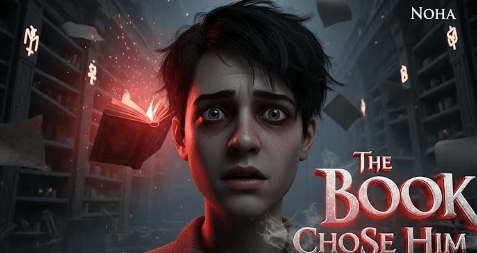
The Book Chose Him answers the question: What if Harry Potter sucked and was ninety seconds long?
The film opens with a realistic teenager in a library and magical glowing book starts to open in front of him. I suppose this is the whole “choosing him thing.” Why though? Why stick around to look at a radioactive book? Then, the main character becomes a cartoon, but race swaps from Indian teenager to a eight year old white kid. Why couldn’t he have been Indian the time? It’s confusing and unnecessary.
The protagonist is walking around a fancy library library with glowing candles that are an obvious fire hazard and he switches nationalities 6 more times from white to Indian and back again. It’s super weird. Was there another kid in the library? The protagonist goes to another world where gravity is just not “in” anymore. This is just horrible in every way. This creator should go to the sharks! This is the worst. Don’t even bother.
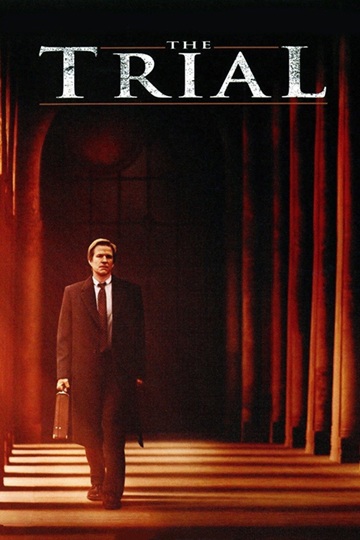
Mac is a Southern lawyer, even though it’s been a while since he practiced. After his wife and children were killed in a car accident, Mac decided to retire from practicing law but he never surrendered his license. A judge (Rance Howard) reaches out to him, asking him to serve as a public defender for Pete Thomason (Randy Wayne), a young man who has been accused of murdering his girlfriend. The evidence is stacked against Pete and there are plenty of wealthy people who, for various reasons, want Pete to quickly be convicted. Mac takes the case because he can tell that Pete is being railroaded. When he discovers that Pete will possibly be facing the death penalty if he’s convicted, the case becomes very personal for Mac.
The prosecuting attorney (Bob Gunton) has managed to find a doctor (Brett Rice) who is willing to testify that Pete is a sociopath. (The doctor has a reputation for finding just about anyone on trial to be a sociopath.) Mac finds a doctor of his own, Dr. Anne Wilkes (Clare Carey), his testifies that Pete is nowhere near being a sociopath. The problem is that Pete has no memory of what happened the night of the murder. Mac may believe that Pete is innocent but can he convince the jury when the evidence all seems to suggest otherwise?
Like The List, The Trial was based on a novel by Robert Whitlow and it was directed by Gary Wheeler. I was pretty hard on The List in last night’s review but I actually rather enjoyed The Trial, which was a solid and well-made legal thriller. (The film’s status as a faith-based film largely comes from a scene in which Mac quotes the Book of Provers in regards to how, during a trial, it’s easy to believe the first person who speaks but it’s equally important to listen to how the accused replies.) I enjoyed the twists and turns of the plot and the film’s ending worked well. Though the film had a a made-for-television feel to it (despite having been a theatrical release), it still held and rewarded my interest.
It helped that the cast was well-selected and everyone gave good performances. Matthew Modine, in particular, gave a strong performance as Mac, playing him not as being a saint but instead as being someone who was just determined to give his client the defense he deserved and to ultimately do the right thing. Robert Forster played Mac’s brother-in-law and lead investigator and he brought his own brand of world-weary determination to the part. Nobody plays a smug prosecutor as well as Bob Gunton, though it should be noted that the character himself never became a caricature. Rance Howard was the ideal judge, tough but fair. Randy Wayne was sympathetic as the confused Pete. The cast really brought the film’s world to life.
I always enjoy a good legal thriller and The Trial was certainly that.
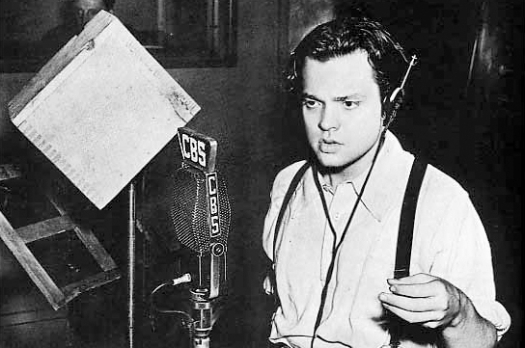
Filmed in 1957 for a television program called Westinghouse Studio One, The Night America Trembled is a dramatization of the night that Orson Welles terrified America with his radio adaptation of War of The Worlds.
For legal reasons, Orson Welles is not portrayed nor is his name mentioned. Instead, the focus is mostly on the people listening to the broadcast and getting the wrong idea. That may sound like a comedy but The Night America Trembled takes itself fairly seriously. Even pompous old Edward R. Murrow shows up to narrate the film, in between taking drags off a cigarette.
Clocking in at a brisk 60 minutes, The Night America Trembled is an interesting recreation of that October 30th. Among the people panicking: a group of people in a bar who, before hearing the broadcast, were debating whether or not Hitler was as crazy as people said he was, a babysitter who goes absolutely crazy with fear, and a group of poker-playing college students. If, like me, you’re a frequent viewer of TCM, you may recognize some of the faces in the large cast: Ed Asner, James Coburn, John Astin, Warren Oates, and Warren Beatty all make early appearances.
It’s an interesting little historical document and you can watch it below!

 Through the Shattered Lens