Hi there and welcome to October! This is our favorite time of the year here at the Shattered Lens because October is our annual horrorthon! For the past several years (seriously, we’ve been doing this for a while), we have celebrated every October by reviewing and showing some of our favorite horror movies, shows, books, and music. That’s a tradition that I’m looking forward to helping to continue this year.
This year, we’re getting things started with a movie that has been called “the first American horror film.” In 1914, D.W. Griffith released The Avenging Conscience, a melodrama that was based on Edgar Allan Poe’s The Tell-Tale Heart and Annabel Lee. In this film, The Nephew (Henry B. Walthall) falls in love with the Sweetheart (Blanche Sweet). However, the Uncle (Spottiswoode Aiken) is opposed to the relationship, mostly because the Sweetheart is a “common” woman. Despite having been raised by the Uncle, the Nephew snaps and murders him. The Nephew then finds himself tortured not just by his own guilt and fear but also by vivid hallucinations. This is a film that invites us to come for the murder and stay for the reminder that “Thou Shalt Not Kill.”
Like a lot of the films of the silent era, it will require a bit of patience on the part of modern viewers. It takes a while to get going but the surreal imagery and Henry B. Walthall’s increasingly unhinged performance make it worth sticking with. If nothing else, the film’s historical significance makes it one worthy to be seen by all serious horror fans.
What’s an Insomnia File? You know how some times you just can’t get any sleep and, at about three in the morning, you’ll find yourself watching whatever you can find on cable or streaming? This feature is all about those insomnia-inspired discoveries!
If you were having trouble getting to sleep last night, you could have logged onto Tubi and watched James Nguyen’s Replica.
Filmed in 2005 but not released until 2018, Replica tells the story of Joe Thomas (James David Braddock), a computer chip salesman who has been in a bit of a funk ever since he received a new kidney. His sales are down. His pet bird is mocking him by chirping loudly. His morning drive is boring. (We know this because, for some reason, the film shows us almost every mundane moment of that commute.) He’s in danger of losing his job but then, while hanging out at the Golden Gate Bridge, he happens to spot Dr. Evelyn Tyler (Lana Dykstra) jogging by. Evelyn is the same doctor who performed Joe’s kidney transplant! Joe strikes up a conversation with her and soon, they’re dating!
(In this movie, dating means eating at a San Francisco theme restaurant, riding a carousel, and running along the beach before heading back home so that Evelyn can model a bikini for a slack-jawed Joe.)
Life is perfect! Joe’s in love and he’s even managed to sell a gigantic amount of computer chips to Evelyn’s boss, Dr. G (Rick Camp)! But then Evelyn is killed as the result of a very slow car collision. Joe is in mourning. Detective Le (David Nguyen) keeps popping up and suggesting that the car accident that took Evelyn’s life may not have been an accident at all. (“We found semen in the body,” Detective Le earnestly says while speaking to Evelyn’s boyfriend.) But then, one day, Joe happens to spot a woman who looks just like Evelyn, except for the fact that she has dark hair and tramp stamp that identifies her as not being Evelyn. Quicker than you can say Vertigo, Joe is trying to get his new girlfriend to wear a blonde wig and dress just like Evelyn!
Director James Nguyen is best known for directing the Birdemic films. Replica was actually filmed long before Birdemic but it shows that, even early in his career, Nguyen had his own definite aesthetic. Everything that made Birdemic so memorable — the terrible sound quality, the pointless shots of people driving, the nonstop references to Hitchcock, the falling-in-love montages that suggest that Nguyen has never actually been on a date, and the suggestion that we’re supposed to take this film seriously — is present in Replica. If Birdemic claimed to actually be about the dangers of harming the environment, Replica claims to be a film about the ethics of cloning. While Birdemic featured the characters going out to see An Inconvenient Truth, Replica opens with Joe watching Christopher Reeve advocate for stem cell research. Reeve is listed in the film’s credits, even though it’s obvious that Nguyen just taped an appearance that he made on a talk show. Tippi Hedren and Kim Novak are also credited, even though both are only featured in archival footage that shows up on Joe’s television.
In typical Nguyen fashion, any attempt to say anything serious about cloning is negated by the fact that the film’s villain has invented something that he insists on calling “a clone-a-tron.” (That said, the actor playing Dr. G overacts to such an extent that it’s hard not to appreciate his effort to bring a little life to the movie.) The film comes out against cloning, despite the fact that Joe pretty much owes what little happiness he has to it. All in all, it’s a pretty stupid movie but it’s also short so there’s something to be said for that. In the end, for better or worse, this is a film that could have only been made by James Nguyen. If you got a good laugh out of Birdemic, prepare for more of the same with Replica.
“Oh, come on,” I said last week, “this is a perfectly fine film.”
I was saying that because I was watching the 1987 film, Karate Warriors, with a group of friends. They felt that it was a largely pointless film that didn’t really have much of a plot. I felt that it was an interesting piece of history, seeing as how it was an Italian rip-off of The Karate Kid that was made by several associates of Lucio Fulci. And while Fulci himself wasn’t involved with the film, the scene where the lead character, young Anthony Scott (Kim Rossi Stuart), is savagely beaten up with the bad guys is so unnecessarily bloody that it feels like an homage to Fulci if nothing else. The scene, which makes this rip-off of The Karate Kid too graphic for the film’s target audience, really does epitomize everything that made the Italian exploitation industry so memorable.
Teenager Anthony Scott is in the Philippines so he can visit his father (Jared Martin, who starred in Fulci’s Warriors of the Year 2072), a journalist who is apparently in semi-hiding because of a series of articles that he wrote that exposed government corruption. (Don’t worry too much about the father’s backstory because it doesn’t really play any sort of role in the film.) Anthony runs afoul of the local teenage crime lord, Quino (Enrico Torralba). Quino is not only running a protection racket but he’s also the local karate champion. When Anthony stands up to Quino, he gets beaten up and Anthony’s girlfriend, Maria (Janelle Barretto), nearly loses her home when Quino’s gang sets it on fire. The half-dead Anthony is discovered by Master Kimura (Ken Watanabe — no, not that Ken Watanabe). Master Kimura takes Anthony into the forest and teaches him the “Stroke of the Dragon.” One montage later, Anthony is ready to enter the local karate tournament and take on Quino. For some reason, it never occurs to Anthony to let his father know that he’s now living with Master Kimura so, while Anthony is training, his father and his mother (Janet Agren, who co-starred in Fulci’s City of the Living Dead) are desperately searching for him in Manila.
Karate Warrior is only 84 minutes long and, for reasons that are not quite clear, Anthony’s training and the final tournament are all crammed into the film’s final 20 minutes. Before that, the film is a travelogue of Anthony wandering around Manila, getting conned by nearly everyone that he meets, and trying to flirt with Maria. So yes, the film is a bit plotless but I found the film’s meandering spirit to be a bit charming. It’s rare to see a film that’s so honest about only having 20 minutes worth of plot. The English language version also has the extra treat of some really bad dubbing. At one point, it sounds as if a totally different actor took over dubbing Anthony. The cheerful of ineptness of it all was rather likable.
The film was directed by Fabrizio De Angelis, who produced Fulci’s Beyondtrilogy. My friends may have disliked it but the film was a big enough of a success in Italy that it led to 6 sequels. I can’t wait to watch every one of them!
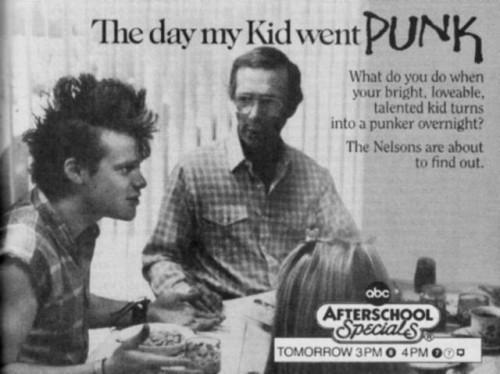
First produced in 1987, the short film The Day My Kid Went Punk tells the story of Terry Warner (Jay Underwood), a clean-cut teenager and aspiring violinist who lands a summer job working as a daycare counselor at a luxury hotel.
Feeling that he’s been neglected in favor of his high achieving older brother and his younger sister, Terry acts like a typical middle child and decides to change his image right after leaving home for his job. (It worked for Jan Brady!) He decides to become a punk. (Jan Brady never went that far.) Could this have something to do with his mother (Christine Belford) being the nation’s leading expert on the “Punk Syndrome,” that is terrifying parents everywhere? Or could it just be because Terry knows that he’ll never be as cool as his father (Bernie Kopell), who might claim to be named Tom Warner but who is obviously just Adam Bricker living in the suburbs? Every time Tom looks at his “punk” son, you can just see him dreading the thought of word of this getting back to Captain Stubing.
(Incidentally, the family in film is clearly named Warner but, in all of the advertisements that I’ve seen for this special, including the one at the top of the post, they’re identified as being the Nelson family.)
Needless to say, Terry Warner is, in no way, a convincing punk and judging from the film’s dialogue and plot, it would appear that the film doesn’t really know the difference between punk, goth, and heavy metal. Everyone at the hotel is a bit taken aback by Terry’s appearance but he proves himself to be a good worker and the kids absolutely love riding horses with him. I guess the message is that you shouldn’t judge someone based solely on how he looks. That’s a good message except that it’s ultimately undercut by Terry himself and his decision abandon his punk look as soon as it inconveniences him at school. So, I guess the message is that teens should dress the way they want unless it keeps them from winning first chair in the school band and parents shouldn’t worry because teenagers are so shallow that they’ll abandon anything after a month or two. The film suggests that Punk is less of a syndrome and more of a fad that whiny middle children go through during the summer.
(Myself, I’m not a middle child. I’m the youngest of four and I’ve never felt particularly ignored, even if there were times when it seemed like being left alone would be a nice change of pace. That said, I definitely went through some phases while I was growing up. During my junior and senior years of high school, I always made sure that I was wearing at least one black garment and I wrote emo poetry under the name Pandora DeSaad.)
Anyway, Halloween’s approaching and this very (and I do mean very) campy short film feels like a good way to welcome a month that encourages everyone, young and old, to think about putting on costumes. Here is The Day My Kid Went Punk!
The 1975 drive-in film, Trucker’s Woman, opens with the tragic (and rather horrifying) death of Jim Kelly, a trucker who meets his demise when the breaks on his truck fail. We watch as Jim is tossed back and forth inside the cab of his truck and, in fact, the film’s opening credits play out over freeze frames of Jim’s gruesome end. Jim was a beloved member of the trucking community and his funeral is about as well-attended as a funeral taking place in a low-budget film can be. Everyone is going to be miss Jim but fortunately, his son Mike (Michael Hawkins) is going to carry on the family business!
As Mike explains to his father’s permanently soused friend, Ben Turner (Doodles Weaver), he’s giving up a lot to take over for his father. Mike is dropping out of college and sacrificing his dream of becoming a philosophy professor. Of course, Mike appears to be nearly 50 so, if he still hasn’t gotten that degree, it’s probably for the best that he went ahead of gave up on that dream. From what little we saw of Jim, he appeared to be 50 as well so you have to kind of wonder if Mike is actually his son. My theory is that Mike was just a drifter who happened to see a funeral occurring off the side of the road and decided to cash in.
Anyway, Mike is soon driving a truck and discovering that his boss, Fontaine (Jack Canon), is a bit of a jerk who favors certain truckers more than others. Mike also meets Fontaine’s daughter, Karen (Mary Cannon), at a roadside bar and ends up following her back to her motel, pounding on her door until she gets out of the shower and answers it while wearing a towel, and then announcing that he’s going to be accepting her offer to spend the night with her….
So, you can probably already guess what the main problem with this film is. At best, Mike is a jerk. At worst, he’s an alcoholic misogynist who breaks into a woman’s motel room, demands sex, and is then offended when she leaves the next morning without telling him where she’s going. The film tries to portray Mike as being a strong, independent man who works hard and refuses to be ordered around. However, he comes across less like Burt Reynolds in Smokey and the Bandit or Kris Kristofferson in Convoyand more like one of those truckers who eventually gets caught with a dead body in the back of his cab. Everything about Mike just screams homicidal drifter. Not even the title character from Henry: Portrait of a Serial Killerwould have accepted a ride from this guy.
Anyway, Mike and Ben attempt to discover who sabotaged the brakes on old Jim Kelly’s rig and since only a mechanic could have done it, suspicion immediately falls on Diesel Joe (Larry Drake) because he’s the only mechanic in the film! And who paid Diesel Joe to sabotage the brakes? Well, there’s only person in the film who has any money so it looks like it’s time for Ben to rally the other truckers and Mike to toss a bunch of people into Fontaine’s pool.
Trucker’s Woman does not work as a thriller or a mystery or a comedy. It does work as a time capsule of the 70s. Seriously, look at all of those wood-paneled rooms! Look at all of those plaid jackets! Seriously, there’s enough plaid in this film it could have just as easily been called Forever Plaid. Filmed on the highways of South Carolina, Trucker’s Woman is a film the epitomizes an era but there’s plenty of other films that do the exact same thing and don’t feature an alcoholic misogynist as the lead character. (Seriously, Rubber Duck would have tossed Mike Kelly out of a moving truck.)
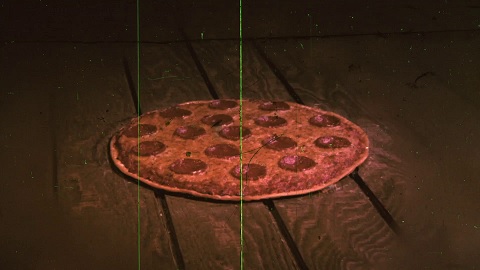
Finally, Trucker’s Woman is infamous in some circles for featuring a random shot of a pepperoni pizza sitting on a wooden deck. It’s a shot that pops up out of nowhere and has nothing to do with the rest of the film. It’s thought that the shot was included as an experiment in subliminal advertising and I will admit that my sister and I did order a pizza after this film ended.
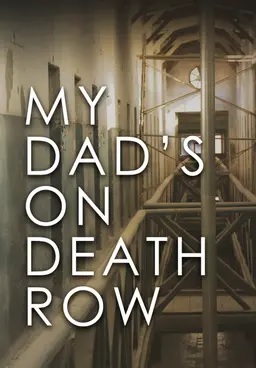
A British documentary from 2016, My Dad’s On Death Row tells the story of two men who sat on Texas’s death row.
John Battaglia was a handsome man with a charming smile who, despite having a violent criminal record, had established himself as a respected accountant who had friends who lived in Highland Park (the richest part of Dallas) and who lived in a hip apartment in Deep Ellum. In 1999, his wife filed for divorce and Battaglia was given probation after pleading guilty to a misdemeanor charge of spousal abuse. When he continued to call his ex-wife in violation of a restraining order, she threatened to inform his probation office. Battaglia reacted by taking his two youngest daughters to his apartment, calling his ex-wife, and then forcing her to listen as he murdered them. After killing his daughters, Battaglia went to a nearby tattoo parlor and got two roses tattooed on his bicep. The cops who saw the crime scene described it as the most horrific thing that they had ever seen. Battaglia was arrested and convicted of the crime. When Battaglia was sentenced to death, he turned to his ex-wife in the courtroom and told her to “Burn in Hell.”
Coy Wayne Westbrook murdered five people, including his ex-wife, at a party in Channelview, Texas. Westbrook said that, after his ex-wife and the other party guests made fun of him and his attempts to reconcile with her, Westbrook went out to his truck, grabbed a rifle, and opened fire when he returned. Despite Westbrook’s claim that he didn’t originally mean to kill anyone and the defense’s claim that Westbrook’s low IQ made his incapable of understanding his actions, a jury still sentenced him to death.
Both Coy Westbrook and John Battaglia are dead now, executed by the state of Texas. My Dad’s OnDeath Row documents their final days and features interviews with them, the surviving members of their families, and people who both support and oppose the death penalty. While this British-made documentary is critical of the death penalty, it never makes the mistake of idealizing or excusing either Coy Westbrook or John Battaglia. As someone who is personally opposed to the death penalty, nothing annoys me more than the counter-productive tendency of certain anti-capital punishment activists to insist that everyone on Death Row was either wrongly convicted or is a saint in disguise. This documentary leaves no doubt that both Westbrook and Battaglia were guilty of the crimes for which they were convicted. When John Battaglia smirks while he discusses abusing his wife and murdering his children, even the most liberal of viewers will want to reach through the screen and wring his neck.
The film focuses on two daughters. Westbrook’s daughter fought to save her father’s life. Battaglia’s surviving daughter supported his execution. Both of them carry the psychological scars of their father’s crimes. In its nonjudgmental way, the documentary examines what it’s like to be the child of a parent who has committed the worst crime imaginable. Even more than being about how people die in prison, it’s about how those left behind struggle to continue their lives. It’s a moving and thought-provoking documentary and it can currently be viewed on Tubi.
“Sex isn’t the only thing I care about. It’s just that I’ve always imagined myself falling in love with someone …. who’s alive. I know that may sound strange to you, but it’s just the way I was brought up.”
Sometimes, it just takes one line to transform a mere bad movie into a masterpiece of weirdness and that’s certainly what happens in 2003’s Julie and Jack when Jack Livingston (Justin Kunkle) attempts to explain why he’s having trouble with the idea of committing to Julie Romanov (Jenn Gotzon). Jack is a computer chip salesman who has been unlucky in love until he joins CupidMatchmaker.Com and meets Julie Romanov. He quickly falls in love with Julie, despite the fact that she refuses to tell him anything about her past and he never meets her in person. Instead, they spend their time walking around a virtual reality recreation of San Francisco.
Why is Julie so sensitive? Well, Julie is not exactly alive. When she was among the living, she was a brilliant computer programmer but, when she found out she was dying of a brain tumor, she managed to transfer her mind into the Internet. Her body may be dead but her mind and her personality live on, haunting dating websites. When Jack discovers the truth about his new girlfriend, he has to decide if he can be in love with someone with whom he can never have sex.
(It never seems to occur to either Jack or Julie that there also might be issues involved with someone having a relationship in which one person who is no longer among the living and will never age while her partner gets older and closer to his own death.)
It’s pretty dumb but it’s also so earnest and stupidly sincere that it’s kind of hard not to like it. Julie and Jack was the directorial debut of James Nguyen, who went on achieve a certain cinematic infamy with the Birdemic films. Just as the Birdemic films seemed to sincerely believe that they had something important to say about environmentalism, Julie and Jack has similar delusions of grandeur, with the main difference being that the message of Julie and Jack is a bit more heartfelt than Birdemic’s Al Gore-inspired preachiness.
The film has all of the things that we normally associate with James Nguyen’s work. The pointless driving scenes, the meandering travelogue shots of San Francisco, the scenes were everyone in a boardroom applauds, they’re all here with Nguyen’s other trademark obsessions. Because it’s not a Nguyen film without a reference to Hitchcock, Tippi Hedren has a cameo appearance as Julie’s mother and, of course, Nguyen includes a scene in which she talks about how much she loves birds. Do you think Hedren ever got tired of directors telling her to react to birds? I mean, she did make other films. Of course, other than Marnie and Roar, I can’t really think of any of them right now….
Anyway, Julie and Jack is silly and dumb and visually, it looks like a community college student film. At the same time, it’s so sincere and so cheerfully clueless about its inability to be the thought-provoking and mind-bending love story that it wants to be that I can’t help but like it a little. It’s a film that tries very, very hard and it’s difficult not to appreciate, on at least some level, the effort.
The new American Ninja, Sean Davidson (David Bradley), travels to a remote island nation and gets captured while investigating a corrupt British ninja named Colonel Mulgrew (James Booth), who is trying to help an evil sheikh (Ron Smerczac) purchase a suitcase nuke. With Sean and his associates being held hostage in an old British fort, the original American Ninja, Joe Armstrong (Michael Dudikoff), is called in to rescue Sean and thwart the terrorist’s plot. Joe has retired from the Ninja game and is now work as a member of the Peace Corps but he’s persuaded to battle evil one last time. In typical Cannon Films fashion, he has an army of rebels backing him up as he attacks Mulgrew’s compound.
The fourth American Ninja film teams up Michael Dudikoff with the David Bradley, who took over the American Ninja franchise with the third film. The idea was probably to use the presence of Dudikoff to give Bradley the credibility that he lacked in his previous American Ninja outing but the film actually sabotages David Bradley further by having Bradley spend nearly the entire film tied up while Dudikoff gets to fight the bad guys. Dudikoff and Bradley barely even interact in the film, with Bradley mostly being present for the slowly-paced opening while Dudikoff shows up for the more exciting, fight-filled finale. It’s almost as if the film was set up as an elaborate prank to make Sean look even less worthy as a replacement as Joe. While it’s true that Sean does get to fight Mulgrew at the end of the movie, Joe gets to fights the Super Ninja (Kely McClung). Fighting a Super Ninja is always going to be more impressive than fighting a British guy.
American Ninja 4 is a Cannon film but it was definitely not made during Cannon’s heyday and it is never as memorable as any of the previous American Ninja films. The poster features Dudikoff and Bradley both ready to battle, much like those old issues of Marvel Team-Up that would feature both Spider-Man and the Human Torch working together to battle Doctor Doom, Doctor Octopus, or any of the other evil comic book doctors. (Marvel had a lot of them.) Bringing the two American Ninjas together would seem to promise double the action but instead, it’s just an underwhelming team-up. Cannon would have been better served by adapting the issue of Marvel Team-Up where Spider-Man and John Belushi battled the Silver Samurai. That was an exciting story!
In 2021, I finally saw the infamous film, The Bonfire of the Vanities.
I saw it when it premiered on TCM. Now, I have to say that there were quite a few TCM fans who were not happy about The Bonfire of the Vanities showing up on TCM, feeling that the film had no place on a station that was supposed to be devoted to classic films. While it’s true that TCM has shown “bad” films before, they were usually films that, at the very least, had a cult reputation. And it is also true that TCM has frequently shown films that originally failed with audiences or critics or both. However, those films had almost all been subsequently rediscovered by new audiences and often reevaluated by new critics. The Bonfire of the Vanities is not a cult film. It’s not a film about which one can claim that it’s “so bad that it’s good.” As for the film being reevaluated, I’ll just say that there is no one more willing than me to embrace a film that was rejected by mainstream critics. But, as I watched The Bonfire of the Vanities, I saw that everything negative that I had previously read about the film was true.
Released in 1990 and based on a novel by Tom Wolfe, Bonfire of the Vanities stars Tom Hanks as Sherman McCoy, a superficial Wall Street trader who has the perfect penthouse and a painfully thin, status-obsessed wife (Kim Cattrall). Sherman also has a greedy mistress named Maria (Melanie Griffith). It’s while driving with Maria that Sherman takes a wrong turn and ends up in the South Bronx. When Sherman gets out of the car to move a tire that’s in the middle of the street, two black teenagers approach him. Maria panics and, after Sherman jumps back in the car, she runs over one of the teens. Maria talks Sherman into not calling the police. The police, however, figure out that Sherman’s car was the one who ran over the teen. Sherman is arrested and finds himself being prosecuted by a power-hungry district attorney (F. Murray Abraham). The trial becomes the center of all of New York City’s racial and economic strife, with Sherman becoming “the great white defendant,” upon whom blame for all of New York’s problems can be placed. Bruce Willis plays an alcoholic journalist who was British in the novel. Morgan Freeman plays the judge, who was Jewish in the novel. As well, in the novel, the judge was very much a New York character, profanely keeping order in the court and spitting at a criminal who spit at him first. In the movie, the judge delivers a speech ordering everyone to “be decent to each other” like their mothers taught them to be.
Having read Wolfe’s very novel before watching the film, I knew that there was no way that the adaptation would be able to remain a 100% faithful to Wolfe’s lacerating satire. Because the main character of Wolfe’s book was New York City, he was free to make almost all of the human characters as unlikable as possible. In the book, Peter Fallow is a perpetually soused opportunist who doesn’t worry about who he hurts with his inflammatory articles. Sherman McCoy is a haughty and out-of-touch WASP who never loses his elitist attitude. In the film, Bruce Willis smirks in his wiseguy manner and mocks the other reporters for being so eager to destroy Sherman. Hanks, meanwhile, attempts to play Sherman as an everyman who just happens to live in a luxury penthouse and spend his days on Wall Street. Hanks is so miscast and so clueless as how to play a character like this that Sherman actually comes across as if he’s suffering from some sort of brain damage. He feels less like a stockbroker and more like Forrest Gump without the Southern accent. There’s a scene, written specifically for the film, in which Fallow and Sherman ride the subway together and it literally feels like a parody of one of those sentimental buddy films where a cynic ends up having to take a road trip with someone who has been left innocent and naïve as result of spending the first half of their life locked in basement or a bomb shelter. It’s one thing to present Sherman as being wealthy and uncomfortable among those who are poor. It’s another thing to leave us wondering how he’s ever been able to successfully cross a street in New York City without getting run over by an angry cab driver.
Because the film can’t duplicate Wolfe’s unique prose, it instead resorts to mixing cartoonish comedy and overwrought melodrama. It doesn’t add up too much. At one point, Sherman ends a dinner party by firing a rifle in his apartment but, after it happens, the incident is never mentioned again. I mean, surely someone else in the apartment would have called the cops about someone firing a rifle in the building. Someone in the press would undoubtedly want to write a story about Sherman McCoy, the center of the city’s trial of the century, firing a rifle in his own apartment. If the novel ended with Sherman resigned to the fact that his legal problems are never going to end, the film ends with Sherman getting revenge on everyone who has persecuted him and he does so with a smirk that does not at all feel earned. After two hours of being an idiot, Sherman suddenly outthinks everyone else. Why? Because the film needed the happy ending that the book refused to offer up.
Of course, the film’s biggest sin is that it’s just boring. It’s a dull film, full of good actors who don’t really seem to care about the dialogue that they are reciting. Director Brian De Palma tries to give the film a certain visual flair, resorting to his usual collection of odd camera angles and split screens, none of which feel at all necessary to the story. In the end, De Palma is not at all the right director for the material. Perhaps Sidney Lumet could have done something with it, though he would have still had to deal with the less than impressive script. De Palma’s over-the-top, set piece-obsessed sensibilities just add to the film’s cartoonish feel.
The film flopped at the box office. De Palma’s career never recovered. Tom Hanks’s career as a leading man was momentarily derailed. Bruce Willis would have to wait a few more years to establish himself as a serious actor. Even the normally magnanimous Morgan Freeman has openly talked about how much he hated being involved with The Bonfire of the Vanities. That said, the film lives on because De Palma allowed journalist Julie Salomon to hang out on the set and the book she wrote about the production, The Devil’s Candy, is a classic of Hollywood non-fiction. (TCM adapted the book into a podcast, which is how The Bonfire of the Vanities came to be featured on the station.) Thanks to Salomon’s book, The Bonfire of the Vanities has gone to become the epitome of a certain type of flop, the literary adaptation that is fatally compromised by executives who don’t read.
Welcome to Retro Television Reviews, a feature where we review some of our favorite and least favorite shows of the past! On Sundays, I will be reviewing the made-for-television movies that used to be a primetime mainstay. Today’s film is 1986’s The George McKenna Story! It can be viewed on Netflix, under the title Hard Lessons!
George Washington High School is a school that has defeated many well-meaning principals. The hallways are full of drugs and gang members. A good deal of the student body never shows up for class. Fights are frequent. The police are a common sight. The majority of the teachers are men like Ben Proctor (Richard Masur), burned-out and content to hide in the teacher’s lounge.
New Orleans-raised George McKenna (Denzel Washington) is the latest principal and, from the minute that he shows up at the school, he seems a bit more confident than the other principals that the school has had. He barely flinches when a raw egg hits his suit. When he hears a fight occurring, he doesn’t hesitate to head down the hall to investigate. McKenna is determined to make George Washington High into a worthwhile institution and that means inspiring both the students and the teachers.
When it comes to films about dedicated educators trying to reform a troubled school, most films tend to take one of two approaches. One approach, the well-intentioned but not always realistic liberal approach, features the teacher or the principal who demands respect but who also treats the good students and teachers with equal respect and who turns around the school through the power of benevolence. The other approach is the one where the principal or teacher grows frustrated and turns into an armed vigilante who forces the students to shut up and learn. Think of The Principal or The Substitute or Class of 1984. The first approach is the one that most teachers claim that they try to follow but I imagine that, for most of them, there’s an element in wish-fulfillment to be found in watching the second approach. In the real world, of course, neither approach is as automatically successful as it is in the movies.
The George McKenna Story was made for television and it’s based on a true story so, not surprisingly, it follows the first approach. Denzel Washington plays McKenna as someone who could probably handle himself in a fight if he ever got into one but, for the most part, the film portrays McKenna as succeeding by treating his students with more empathy and respect that they’ve gotten from anyone else in their lives. Though cranky old Ben Proctor thinks that McKenna’s methods are foolish and that he’s asking the teachers to do too much, McKenna starts to turn the school around. One student, whose father was threatening to make him drop out, ends up getting nearly straight A’s and reciting Shakespeare. Unfortunately, not everyone can be rescued. One student is arrested for murder and taken away by the cops but McKenna is still willing to be there for that student. McKenna doesn’t give up on his students and, unlike that music teacher in The Class of 1984, he doesn’t allow them to fall through a skylight either.
The George McKenna Story is a predictable film. It’s easy to guess which student will be saved by McKenna’s approach and which student will end up getting stabbed in a gang fight and which student will end up in prison. That said, the film definitely benefits from Denzel Washington in the lead role. Washington exudes confidence from the minute that he appears on screen and you’re left with little doubt that if anyone could reform a school simply through good intentions, it would definitely be Denzel Washington.