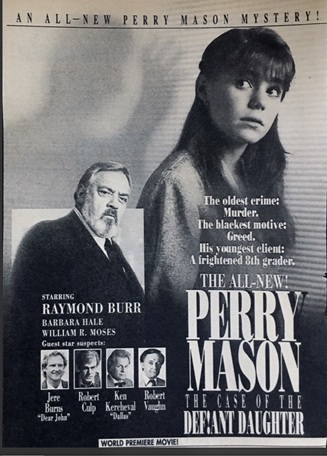
Perry Mason (Raymond Burr) and Ken Malansky (William R. Moses) are in Las Vegas for a boxing match but you know how it is when you’re the world’s most famous defense attorney. Perry can’t even go to Nevada without getting drawn into a court case. This time, David Benson (John Posey) is accused of shooting a blackmailer named Richard Stuart (Robert Culp). David’s teenage daughter, Melanie (Jenny Lewis), convinces Perry to take the case. She also tries to investigate on her own. It turns out that Richard Stuart was blackmailing several people. The suspects include Robert Vaughn, Jere Burns, Ken Kercheval, and Kevin Tighe.
I went back and forth on this entry. The best thing about this movie were the other suspects, who were all flamboyant Las Vegas characters. However, Melanie was sometimes annoying, even though it was understandable that she would be upset about her father being accused of murder. But I do think it was interesting to see how Perry related to Melanie. There’s a really sad subtext to the movie because Perry’s entire life is about his work. His friends are other attorneys. He doesn’t seem to have a family. While defending David, Perry became a surrogate father for Melanie but, at the end of the movie, Perry was once again alone.
In the end, The Case of the Desperate Daughter won me over. It was entertaining to see Perry in a different setting and dealing with characters who were more memorable than the usual cast of suspects. Even Perry Mason needed an occasional change of scenery.
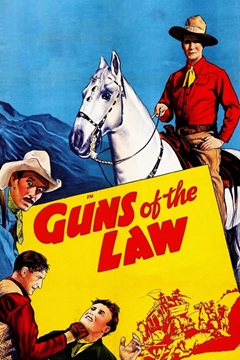
Three Texas Rangers — Tex Wyatt (Dave O’Brien), Jim Steele (James Newill), and Panhandle Perkins (Guy Wilkerson) — ride into a small town. They each arrive separately and they all sing while sitting on their horses. They’re in town to help out Jed Wilkins, who was Panhandle’s superior officer during the Civil War. Jed is having a nervous breakdown because a crooked surveyor (Jack Ingram) and shifty lawyer (Charles King) are trying to cheat him out of his land. Jed thinks that he’s serving in the war again so Panhandle has to wear his old Confederate uniform to keep Jed from losing it any further.
The Texas Rangers starred in a series of B-westerns. This one is mostly amiable, though I think modern viewers will probably have a more difficult time with the Confederate uniform than viewers did in 1944. Having watched enough of these movies, I’ve lost track of the number of crooked lawyers that Charles King played over the years. He was one of the great B-movie villains, that’s for sure.
I don’t really know what to make of the singing cowboy genre. Why are they singing while riding through the wilderness and trying not to get shot? Do all of the Texas Rangers sing or is it just these three? This movie raises so many questions. What’s odd is that the songs in this movie are actually really catchy. I can still remember the tunes, if not all of the lyrics. Don’t break the law, the Rangers sang as they rode out of town at the end of the movie. Don’t break the law.
I was a bit shocked to realize that I hadn’t reviewed Escape from New York for this site. Leonard’s reviewed it.Jeff’s reviewed it. I’ve reviewed quite a few Italian films that were inspired by Escape from New York. Last year, I devoted an entire day to how much I love Kurt Russell. I’ve shared John Carpenter’s theme music, more than once. I’ve reacted to Mamdani’s election by telling my friends that it’s time to escape from New York. I’ve lost track of the number of times that I’ve told Leonard that it is “Time to leave the Bronx,” even though he doesn’t live in the Bronx. (What do I know? I live in Texas.) But I’ve never actually reviewed Escape From New York.
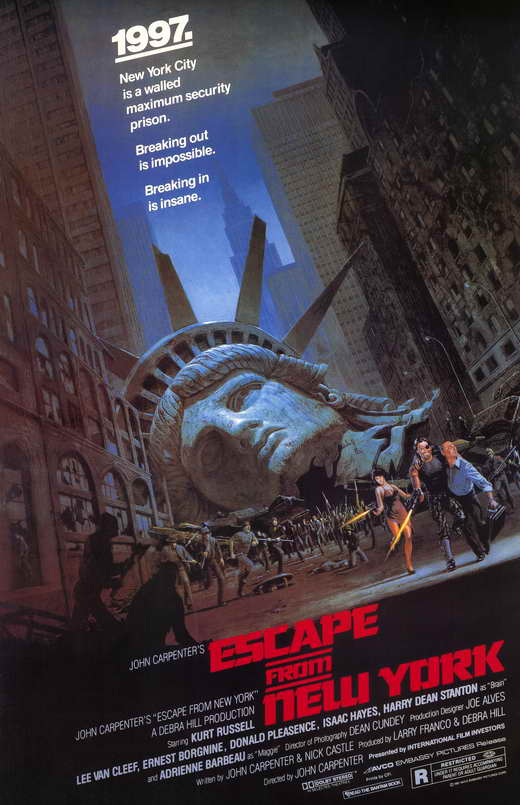
I love Escape from New York but I have to say that the film itself can’t live up the brilliant poster art. The first time I watched Escape from New York, I was really disappointed that the Statue of Liberty’s head never appeared in the middle of a street in Manhattan. If the film were made today, one imagines that the filmmakers would be able to do all sorts of things with the Statue of Liberty. But Escape from New York was made in 1981, in the days before rampant CGI. Escape from New York was made at a time when directors had to be somewhat clever and that definitely works to the film’s advantage. The lack of big time special effects meant that Carpenter had to emphasize character and atmosphere. Escape From New York might not feature the Statue of Liberty’s head but it does feature an amazing cast and a host of unforgettable characters. When you manage to get Kurt Russell, Ernest Borgnine, Donald Pleasence, Harry Dean Stanton, Adrienne Barbeau, Lee Van Cleef, and Isaac Hayes all in the same film, there’s no way it isn’t going to be memorable.
We all know the plot. Kurt Russell plays career criminal Snake Plissken. (Everyone thought Snake was dead.) When the President (Donald Pleasence) finds himself trapped on the prison island of Manhattan, Snake is the man who is sent to rescue him. The fate of the world depends on rescuing the President. If the President isn’t rescued, it could lead to nuclear war. Snake doesn’t really care about the fate of the world. He does care about the fate of himself, however. He’s been injected with a poison that will kill him unless he receives the antidote in 24 hours.
(The doctor who gives Snake the poison is named Dr. Cronenberg. Meanwhile, Frank Doubleday appears as a thug named Romero. Lee Van Cleef’s police commissioner is named Hauk, as in Howard Hawks. Tom Atkins plays Captain Rehme, as in producer Bob Rehme. The film may be about the collapse and possible end of the world but John Carpenter’s having fun. And, of course, so are we.)
The President has been captured by the Duke of New York (Isaac Hayes). It doesn’t take Snake long to track down the Duke. But rescuing the President and making it back to safety turns out to be far more difficult and violent than anyone was anticipating. Snake gets some help, from characters like Cabbie (Ernest Borgnine), Brain (Harry Dean Stanton), and Maggie (Adrienne Barbeau). Of course, that help is largely due to everyone’s self-interest. The recurring theme is that no one really cares that much about whether or not the President or even Snake lives or dies. Maggie loves Brain but, otherwise, there’s not much individual loyalty to be found in this film. Instead, everyone just cares about getting the Hell out of New York. In the end, even the President turns out to be a bit of a jerk.
(I do have to say that I absolutely love Donald Pleasence’s performance in Escape from New York. The “You’re the Duke! You’re the Duke! A Number One!” scene? That was Pleasence at his most brilliant.)
It’s a wonderfully acted and directed film, one that is often darkly humorous. (While Kurt Russell delivers his lines with a endearing self-awareness, Carpenter has a lot of fun imagining the type of criminal society that would emerge on an isolated Manhattan.) It’s also a film that understands the power of New York City. Depending on who you ask, New York either represents the worst or the best of America. That’s true today and, watching Escape from New York, it’s easy to guess that was probably true in 1981 as well. There’s a power to the “New York” name and it’s why this film wouldn’t have worked if it had been called Escape From Houston or Escape From Spokane. (One reason why Escape From LA failed was because the cartoonishness of Los Angeles couldn’t compete with the grit of New York.) We all know the saying — “New York, New York: If you can make it there, you can make it anywhere.” This film reminds us that it’s also true that if you can escape from there, you can escape from anywhere. Escape from New York brilliantly captures the way that most of the rest of country view New York but, by limiting the action to Manhattan, it also presents a story that can be enjoyed by people in Brooklyn, the Bronx, Queens, and Staten Island. I imagine the film is especially popular on Staten Island.
Escape From New York is a brilliant work of the pulp imagination. It’s a film that will probably outlive the city.
Legend has it that, when John Carpenter originally offered the role of Dr. Sam Loomis to Donald Pleasence, Pleasence was reluctant to accept it. To Pleasence, Halloweensounded like it would just be another forgettable horror film.
However, when Donald mentioned to his daughter, actress Angela Pleasence, that he had been offered a role in a film by a young director named John Carpenter, Angela immediately told him to accept. She assured him that it would turn out to be a great film. When Donald asked her why she was so sure about this, Angela replied that she had seen Assault on Precinct 13 at the Cannes Film Festival.
1976’s Assault on Precinct 13 was John Carpenter’s second feature film. (The first was Dark Star,which started out as a student film and, even after being extended to feature length, still ended up feeling very much like a student film.) The film takes place in Los Angeles, at an isolated police precinct house that is scheduled to be abandonedd. When the father (Martin Lawson) of a girl (Kim Richards) who was murdered earlier in the day seeks refuge at the precinct, a Che Guevara-influenced street gang launches a relentless late night attack on the building. (Frank Doubleday, who later played Romero in Escape From New York, appears as a member of the gang.) Lt. Ethan Bishop (Austin Stoker) is forced to work with criminal Napoleon Wilson (Darwin Joston) to defeat the gang.
Assault on Precinct 13 (1976, dir by John Carpenter. DP: Douglas Knapp)
John Carpenter later said that Assault of Precinct 13 was his attempt to make a Howard Hawks-style western and, despite taking place in the modern era, it is very much a western. Ethan Bishop is the strong and moral lawman who refuses to allow the untamed land around him to change who he is and what he believes. Napoleon Wilson is the outlaw who finds redemption. In most westerns, the attackers would represent the last gasp of the lawless frontier fighting against encroaching civilization. In the case of Assault on Precinct 13, the opposite is true. The attackers represent the collapse of society and the people in the precinct find themselves fighting not only for their lives but also the ideals of modern civilization. With their relentless drive to attack, the members of the street gang resemble the zombies from George Romero’s Night of the Living Dead. They’re so nihilistic and destructive that even a hardened criminal like Napoleon Wilson knows that they have to be stopped. The film’s ultimate message seems to be that, even if Bishop and Wilson and Leigh (Laurie Zimmer) survive the night, the assault on Precinct 13 will never truly end. In a way, we’re all trapped in that abandoned precinct house.
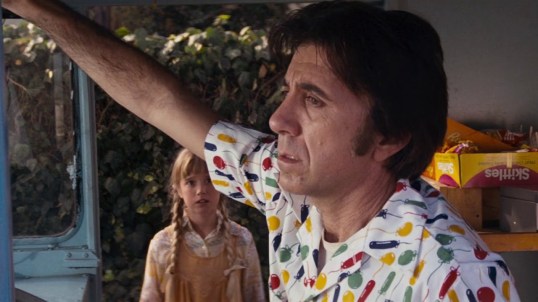
Wow, that sounds pretty grim! And really, it is a grim film. This, after all, is the film in which little Kim Richards is graphically shot in the chest while trying to buy ice cream. (From the start, Carpenter understood the importance of shocking the audience.) That said, there are unexpected moments of dark humor to be found in the film. (Even Kim Richards’s indignation over being given the wrong flavor ice cream is rather humorous, up until she asks for a replacement and gets shot as a result.) Both Bishop and Wilson make for compelling heroes. As Angela Pleasence realized when she saw the movie at Cannes, John Carpenter was and is a natural-born storyteller. Assault on Precinct 13 is a film that wastes no time in getting started and is relentless in both its suspense and its action.
Assault on Precinct 13 has been overshadowed by Carpenter’s subsequent successes but it’s still one of Carpenter’s best films. Without Assault on Precinct 13, we would never have gotten Donald Pleasence as Dr. Sam Loomis. That alone is reason enough to celebrate the film.
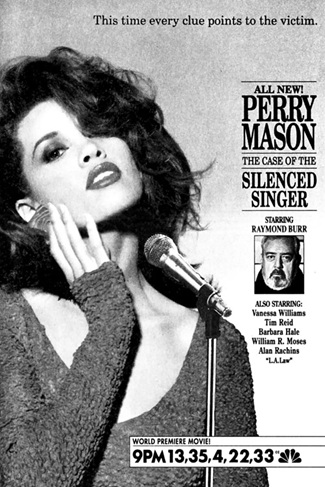
When singer Terri Knight (Vanessa Williams) is shot and murdered, her husband and manager, Jack (Tim Reid), is arrested. It’s a good thing that Jack’s professor in law school was Perry Mason (Raymond Burr)! Perry and Ken Malansky (William R. Moses) take the case and investigate to see who silenced the singer. (Does Perry know anyone who hasn’t been accused of murder? Someone even tried to fame Della!)
This Perry Mason movie was slightly different than those that came before it. It was full of flashbacks, showing how Terri became a star and went from being nice and innocent to being a diva. Every time that Perry or Ken would interrogate someone, it would lead to scene of Vanessa Williams wearing a wig and playing Terri at a different time in her life and career. There was also a lot singing and the movie actually seemed to be more focused on the music and showing Terri’s rise to fame than it did on solving the actual mystery. It was was if Perry Mason got dropped into the middle of a production of Dreamgirls. It didn’t really work for me because Terri wasn’t an interesting enough character to carry the flashbacks but it was still interesting to see a Perry Mason movie trying to do something different.
The most memorable thing about this movie was Angela Bassett, playing a fellow singer and a former friend of Terri’s. She even told off Perry Mason at one point! It was early in her career but it was easy to see that, from the start, Angela Bassett was obviously going to be a star.
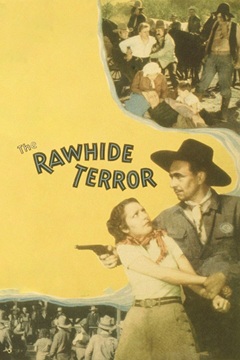
There are some Poverty Row westerns that even I can’t defend.
A group of bandits, disguised as Indians, attack a pioneer family. The father and the mother are killed but their twin boys survive. One wanders into the wilderness while the other stays with the remains of his family and waits for help. Years later, the town of Red Dog is thriving, with the former bandits as its leading citizens. Someone has been gunning down the former bandits. The townspeople demand that Sheriff Luke (Edmund Cobb) do something about the man that they’ve nicknamed the Rawhide Killer. First, however, Luke has to deal with Jim Briggs (William Barrymore), who has been abusing his son (Tommy Bupp). It also turns out that Jim Briggs is the Rawhide Killer and he’s looking for vengeance against those who killed his parents. Jim’s brother also lives in the town. Guess who!
The Rawhide Terror gets off to a good start with the bandit attack but it falls apart soon afterwards. I don’t know if it was just because I was watching a bad print but the sound quality was terrible and the lack of an original score really highlighted just how boring it is to watch men silently ride their horses from one side of the screen to the other. This movie was only 47 minutes long and half of it was made up of shots of people riding horses. Add some really bad acting and you’ve got a western that was bad even by the standards of a 1934 second feature.
Two men are credited with directing the film, though the production was actually supervised by Victor Adamson, the father of the notorious schlock filmmaker, Al Adamson.
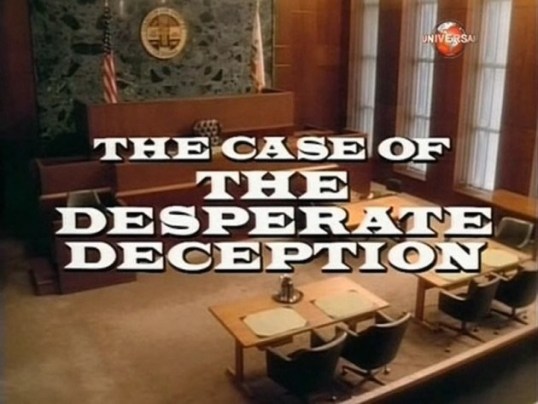
Marine Captain David Berman (Tim Ryan, who looked a lot like Bruce Willis) gets a transfer to Paris so that he can track down Dieter Krugman, a Nazi war criminal who killed his grandparents and crippled his mother (Teresa Wright). He is told that Krugman is now living under the name of Felix Altmann. David confronts Altmann at a health spa but, when someone else shoots Altmann, David is framed for the crime. Luckily, Perry Mason (Raymond Burr) is an old friend of the family’s. He and Ken Malansky (William R. Moses) hop on the first plane to Paris and Perry starts to read up on the Uniform Code of Military Justice so that he can defend David. Della (Barbara Hale) stays behind in Denver but Perry calls her a few times.
This was a good entry in the Perry Mason film series. The mystery was intriguing and the acting — from Ian Bannen, Ian McShane, Terry O’Quinn, Yvette Mimieux, and Paul Freeman — was excellent all around. Especially good was Teresa Wright as David’s mother. Some of her scenes were chilling and she gets a great moment at the end of the movie. Raymond Burr is as good as always but, for the first time, William R. Moses really feels like he belongs in the movie. This is the first time that I’ve seen Ken without wishing he was Paul.
It’s too bad Della had to stay back in America. I bet she would have enjoyed seeing Paris with Perry.
In the early 1900s, the town of Rainbow Valley is trying to complete a road that will connect it to another town. Outlaw Rogers (LeRoy Mason) doesn’t want that road finished because he wants to buy up all the land around Rainbow Valley. He brings in a hired gun named Galt (Jay Wilsey) to intimidate the townspeople. When a traveler named John Martin (John Wayne) saves mail carrier George Hale (George “Gabby” Hayes) from the outlaws, the townspeople ask Martin to serve as their marshal and to help finish the road. Martin agrees but it turns out that he and Galt have a history.
This was one of the B-westerns that John Wayne made before Stagecoach made him a major star. Wayne gives a confident performance as John Martin. It’s about as close to a traditional John Wayne performance as you are likely to find in his early films. It’s a good and short western, with enough gunfire and tough talk to appeal to fans of the genre.
The most interesting thing about this film is that it takes place at the turn of the century, when the old west was being replaced by the modern world. Everyone in town is amazed that George Hale drives a car. John says that it’s the first car that he’s ever actually seen. Of course, this is a western and all the important work is done on horseback. The best part of the movie is when George realizes that he and Miss Eleanor (Lucille Brown) can’t drive to warn John about an ambush because the car is out of gas and there’s not a filling station to be found. Eleanor can’t ride a horse so he does the next best thing. He has the horses pull his Model T like a wagon!
Four years after this movie came out, John Wayne starred as The Ringo Kid in Stagecoach. In Rainbow Valley, he showed that he was already a star.
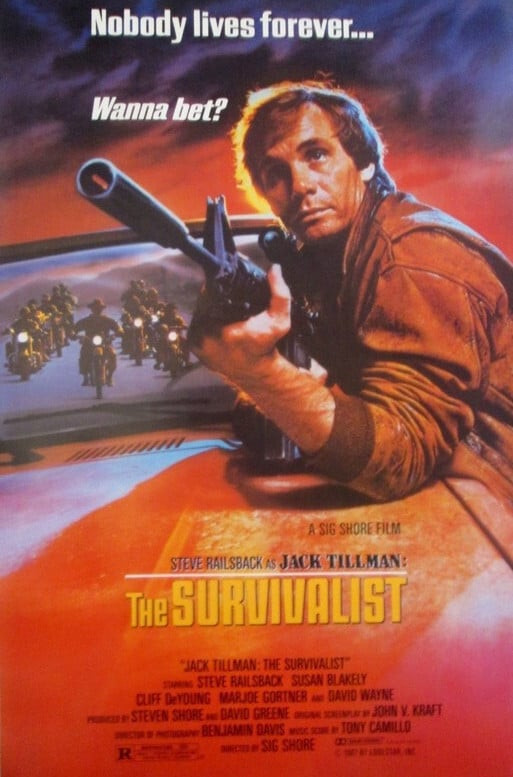
1987’s The Survivalist opens with a mushroom cloud forming over a frozen landscape.
In America, a nervous-looking newscaster announces that someone has set off a nuclear bomb in Siberia. The bomb was apparently a “suitcase bomb” and it was probably set off by a group of terrorists who figured bombing one of the most desolate and sparsely-populated places on Earth would make their point. However, the Russians are convinced that America was behind the bomb. Nuclear war is eminent.
People go into a panic. Civil disorder breaks out. Even a small town in South Texas finds itself in the grip of societal collapse. Fortunately, independent builder Jack Tilman (Steve Railsback) has spent his life preparing for this moment. He has hundreds of guns and explosives and he’s prepared to take his family into the desert while civilization collapses. When a desperate neighbor comes back Jack’s house and asks for a gun, Jack gives him a shotgun and then reacts with shocks when his friend reveals that he’s never fired a gun before. Considering that they live in South Texas, I’m surprised too.
(Seriously, how do they scare off the coyotes?)
Jack leaves his home to get some gasoline for their trip. While he’s out, he’s harassed by the motorcycle riding Lt. Youngman (Marjoe Gortner). Youngman is with the National Guard and, apparently, the National Guard has turned into a motorcycle gang. Youngman is declaring martial law and setting himself up as a warlord. With his perpetual smirk and his feathered hair, Lt. Youngman epitomizes the arrogance of authority. Jack has no use for him. Jack also has no use for anyone who wants to keep him from getting his money out of the bank. Jack has access to a bulldozer, after all.
Unfortunately, while Jack is arguing with Youngman and smashing into the bank, a group of hippies are breaking into his house and killing his family. A half-crazed Jack kidnaps two of his friends — Dr. Vincent Ryan (Cliff DeYoung) and his wife, Linda (Susan Blakely) — and he takes them into the desert with him. When Vincent demands to know why they’ve been kidnapped, Jack says that he’s trying to protect them. Linda gets it. Unfortunately, Vincent doesn’t.
Last night, I was searching for some Marjoe Gortner films to review. I came across The Survivalist on Letterboxed and I also came across some amazingly vitriolic reviews, largely from Leftists who accused the film of being a paranoid right-wing fantasy. I read those reviews and I thought to myself, “It stars Steve Railsback and Marjoe Gortner and it annoys the commies? I have to watch this!” I was able to track the film down on YouTube and I proceeded to spend 90 minutes watching civilization collapse.
Is it a good film? It depends on how you define good. It’s a low-budget, unashamedly trashy film that was clearly meant to appeal to people with a very definite worldview, one that the filmmakers may not have shared. (Most films are made solely to make money and any message that is selected is selected out of the hope that it will be profitable.) The government is corrupt. Most of the citizens have become complacent and aren’t prepared to handle any sort of crisis. When civilization collapses, only men like Jack Tilman and Lt. Youngman will thrive because they’re willing to be ruthless. To try to rationalize the situation, as Dr. Ryan does, is an often fatal mistake. In short, The Survivalist is a very paranoid film. That said, its story and its worldview really isn’t all that different from One Battle After Another.
I enjoyed The Survivalist, precisely because it is such a shameless film. This is the type of movie where the National Guard rides motorcycles and blow up random buildings for fun. It’s the type of film where one gunshot can cause a car to explode. It’s the type of film where actors like Cliff DeYoung and Susan Blakeley attempt to find some sort of deeper meaning in their awkward dialogue while Steve Railsback does his Clint Eastwood impersonation. Best of all, it’s got Marjoe Gortner going totally over-the-top as a smug authority figure. It’s a fun movie, a trashier version of Red Dawn.
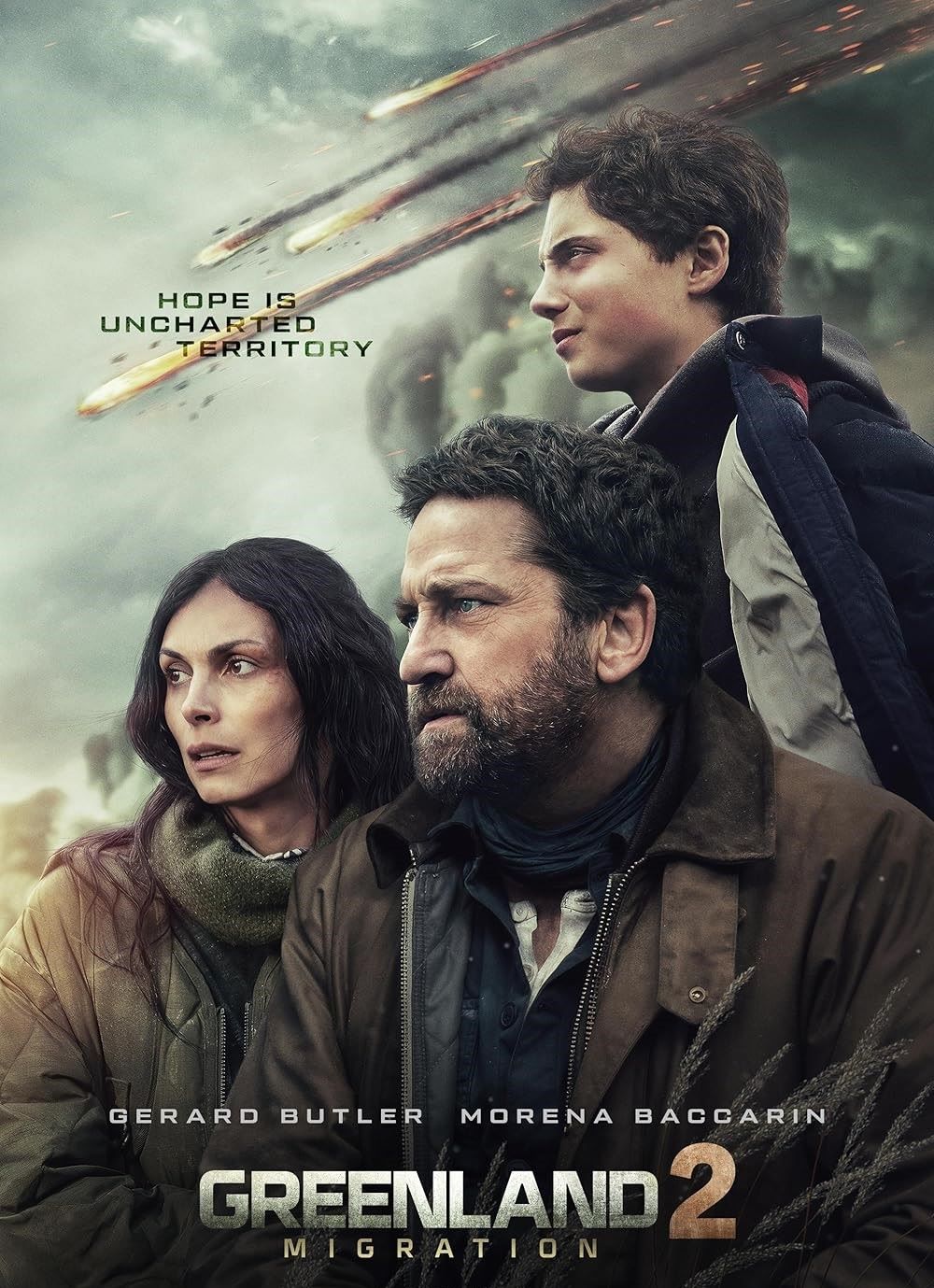
Greenland 2: Migration is a sequel that mostly leans into “if it ain’t broke, don’t fix it,” for better and for worse. It delivers sturdy spectacle, a committed Gerard Butler, and a tense family-through-hell journey, but it also rehashes a lot of the first film’s beats and pushes the plausibility envelope more often this time around. If you were on board with Greenland as a grounded, human-scale disaster movie, this one feels like the more bombastic, road-movie expansion pack rather than a full evolution.
Set about five years after the comet strike that wiped out most of civilization, Greenland 2: Migration finds the Garrity family still holed up in the Greenland bunker complex, part of a fragile community waiting for the surface to become livable again. John (Gerard Butler) now works as a scout/engineer, Allison (Morena Baccarin) has stepped into more of a leadership role within the bunker, and their son Nathan is older, restless, and itching to prove himself outside the relative safety of underground life. When escalating quakes, electromagnetic storms, and general planetary chaos literally collapse the bunker around them, the film quickly turns into a survival trek across a devastated Europe toward the Clarke impact crater in southern France, rumored to be the one spot on Earth that has actually healed.
As a premise, the film works; it gives the story a clear A-to-B structure and justifies the shift from the contained panic of the first movie to a post-apocalyptic road odyssey. The script keeps the stakes straightforward: reach the crater region or die trying, while dodging unpredictable weather events, territorial military forces, and desperate survivors who are just as dangerous as the environment. There is something appealingly old‑school about how it plays as a throwback survival picture—less interested in intricate worldbuilding and more in reaction, improvisation, and narrow escapes.
The downside is that you can feel the film constantly echoing Greenland’s structure: another long, peril-filled journey, another series of escalating close calls, another parade of briefly sketched side characters who exist to either help or threaten the Garritys for a single sequence. The first film had novelty on its side and a sharper sense of dread as the comet approached; here, the formula is familiar enough that you can often tell who will live, who will die, and roughly when another set piece is about to kick off. That predictability doesn’t kill the tension outright, but it does flatten the emotional peaks, especially if you walked in hoping for a genuinely new angle on this world.
Gerard Butler remains the anchor, and this is squarely in his comfort zone. He plays John as perpetually exhausted yet stubbornly practical, the kind of guy who will grumble his way through heroism, and there’s an easy, weathered charm to that. Morena Baccarin gets a bit more agency this time, with Allison often driving decisions instead of just reacting to them, though the movie still stops short of really turning her into a co-lead with equal interiority. Roman Griffin Davis steps in as the older Nathan, and he brings a nervous, teenage energy that fits the “kid who grew up in a bunker and wants to see the world” vibe, even if the character’s arc hits pretty familiar notes about bravery and responsibility.
The script does flirt with heavier themes: the psychological toll of surviving the end of the world, the guilt of those who made it into the bunkers versus those left outside, and the question of what “home” even means when the planet itself has effectively turned against you. There are moments—like the chaotic clashes around remaining bunkers or the wary interactions with other survivor groups—that suggest a more morally murky, Children of Men‑style story lurking underneath. But the movie rarely lingers on these ideas; it tends to touch them, nod, and then hurry back to the next escape sequence or visual spectacle.
Visually, though, Greenland 2: Migration is where the sequel justifies its existence. Director Ric Roman Waugh and the crew make great use of European locations and Icelandic landscapes to sell a world that has been carved up by tectonic violence and choked with ash, but is slowly, unevenly rebuilding. The dried-out English Channel, the ravaged coastlines, and the eerie, storm‑lit skies give the film a distinct apocalyptic texture that feels different enough from the North American focus of the first movie. While some of the physics and survival odds strain credibility—especially as the Garritys walk away from setpiece after setpiece—there’s no denying the spectacle is engaging on a big screen.
The pacing is generally brisk; at around an hour and a half, the film doesn’t overstay its welcome, and it’s usually onto the next problem before you have time to overthink the last one. That said, the middle stretch starts to feel a little modular, like a video game where each region is an encounter: Liverpool bunker standoff, English Channel crossing, roadside bandits, insurgent ambush, and so on. Each of these sequences is competently staged, but because the emotional throughline is fairly simple—protect the family, get to the crater—the movie risks becoming a string of obstacle courses rather than a journey that deepens the characters in meaningful ways.
Where the film does land emotionally is in its treatment of sacrifice and the long-term cost of survival. John’s cumulative radiation exposure, picked up over years of scouting the hazardous surface, is a smart, quietly tragic detail, and the way the story gradually brings that to the forefront gives the third act a genuine sense of finality. The losses along the way, including allies who join the trek and do not make it, often feel a bit telegraphed, but they at least reinforce the idea that survival in this world comes with a steep bill that keeps coming due. The film’s ending, at the Clarke crater, delivers a cautiously hopeful image without completely sugarcoating what it took to get there, and that balance of bleakness and optimism fits the series well.
On the more mechanical side, the editing and sound design do a lot of heavy lifting. The cross‑cutting in the disaster scenes keeps geography mostly clear, and the low, grinding rumble of shifting earth and sudden storms adds tension even when the visuals are mostly people running or driving. The score is functional rather than memorable, but it meshes with the film’s focus on constant forward momentum instead of big thematic musical statements. It’s the kind of craft that doesn’t call attention to itself, which suits a movie that wants to feel like a direct, unpretentious survival yarn.
In terms of how it stacks up to the original, Greenland 2: Migration is solid but clearly a step less distinctive. The first film surprised people by grounding its spectacle in everyday logistics—pharmacy runs, traffic jams, family arguments—and by keeping the camera mostly at human scale during an extinction‑level event. The sequel, by comparison, nudges closer to standard disaster‑franchise territory: bigger vistas, more action, and a stronger sense of franchise‑building, but less of that “this could be you and your neighbors” feeling that made Greenland stand out. Depending on what you want from a sequel, that may be a selling point or a letdown.
Overall, Greenland 2: Migration is a competent, occasionally affecting continuation that doesn’t embarrass the original but also doesn’t redefine it. If all you’re looking for is another round of grounded‑ish apocalypse survival with Gerard Butler grimly shepherding his family through increasingly wild scenarios, this delivers exactly that, with a few striking images and some sincere emotional beats along the way. If you were hoping for a more daring thematic leap or a significantly different narrative shape, this will probably feel like a polished retread with a new coat of ash and ice. Either way, it’s an easy recommendation for fans of the first film and a decent mid‑winter disaster flick for anyone in the mood to watch people crawl through the end of the world one more time.

 Through the Shattered Lens