It’s Love, Part 4


Happy Valentine’s Day!

Today is the day that we all celebrate a wonderful thing called love!

Valentine’s Day is not easy for everyone.

As we all know from Mr. Shakespeare, the course of true love never did run smooth.

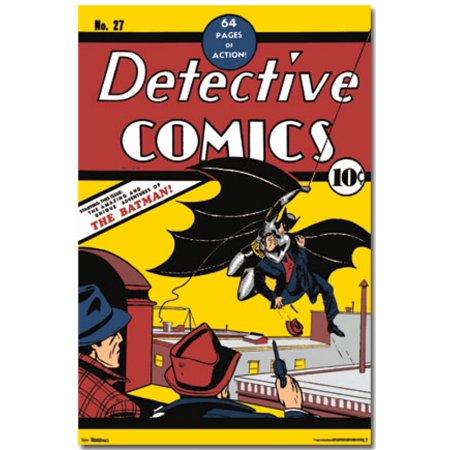
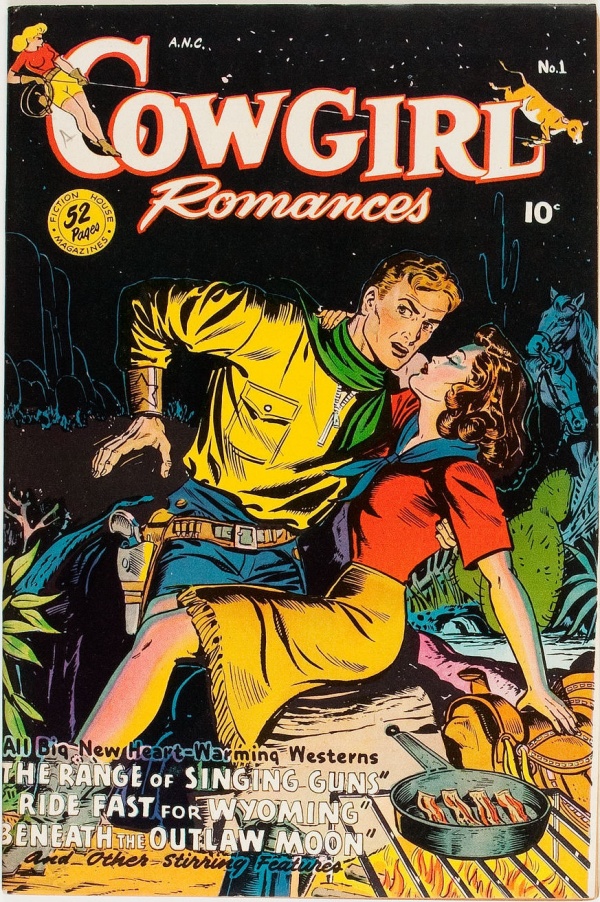
Are you feeling hopeless this Valentine’s Day?  Maybe these vintage romantic comic book covers will help!

Don’t worry.  Love always wins.

Happy Valentine’s Day!

Winchester Before Winchester: Swamp Thing Vol. 2 #45 “Ghost Dance” (February 1986, written by Alan Moore)


The Winchester Mystery House

The Winchester Mystery House stands in San Jose, California.  The home of Sarah Winchester, construction began on the house in 1883 and continued nonstop until Sarah’s death in 1922.  The result was a gigantic and maze-like mansion that was built without any master building plan.

Because Sarah was the widow of the treasurer of the Winchester Repeating Arm Company, it was rumored that her mansion was haunted with the ghosts of all the people who had been killed by a Winchester rifle and that, because new ghosts were always arriving, Sarah had no choice but to keep adding extras rooms to the house.  Those legends served as the inspiration behind the new horror film, Winchester.

However, Winchester is not the first time that the supposedly haunted mansion appeared in popular culture.  In the 45th issue of Swamp Thing, Alan Moore took readers on a trip to the Winchester Mystery House.

Swamp Thing #45 was a part of the American Gothic storyline.  For 13 issues, John Constantine led Swamp Thing across America so that he could witness and sometimes battle modern versions of classic monsters.  In the larger DC mythology, the events in American Gothic were due to the first Crisis on Infinite Earths.  (While the rest of the DC Universe was worrying about whether they would live on Earth-1 or Earth-2, a South American cult was planning on using the crisis as their opportunity to take over the supernatural dimension.)  In reality, American Gothic was an excuse for Swamp Thing’s writer, Alan Moore, to indulge his interest in both the occult and contemporary affairs.  The Winchester Mystery House and its connection to gun violence was a natural subject for Moore to take on.

Entitled “Ghost Dance,” the story begins with two couples, David and Linda and Rod and Judy, arriving at the long abandoned Cambridge House.  While David fills everyone in on the history of the mansion and the legends about the ghosts, Rod openly flirts with Linda and makes jokes about The Shining.  Though the name may have been changed, the Cambridge House is drawn to look exactly like the Winchester House.

It does not take long for the four of them to get separated and lost inside the mansion.  Rod starts to make love to a nude woman who he thinks is Judy until her wig falls off and he discovers that she is actually the ghost of Franny Mitchell, who was shot in the head by a scorned lover.  Rod flees and, after opening a door that would have led to a room that was never actually built, he falls to his death.  Judy dies when a herd of bison, all killed by a Cambridge Repeater Rifle, burst out of a closet and trample over her.  After seeing two long-dead gunfighters reenacting their final gun battle, Linda faints while surrounded by the blind-folded spirits of people who were executed by shooting squads.  As for David, he goes mad as he watches the spirits of everything ever killed by a rifle march through the house.  It’s all the ghostly rabbits that finally cause him to snap.

Towards the end of the issue, Swamp Thing finally does show up, long enough to save both David and Linda and to send the spirits back into the chimneys of the Cambridge House.  After Swamp Thing leaves with John Constantine, Linda finally regains consciousness and tells David that she wishes he had died instead of Rod.

Sometime later, David visits a gun shop and buys a Cambridge Repeater of his own.  Feeling less alone now that he has a gun in his hands, David says he is going back home to see Linda and it is inferred that at least one more ghost will soon be moving into the Cambridge House.

Though controversial when it was first released, “Ghost Dance” is one of the high points of Moore’s run on Swamp Thing.  At the time, several readers felt that the issue was too blatantly anti-gun and there were the usual complaints about the story’s violence and sexual content.  Moore was one of the pioneers of the idea that comic books, even ones that featured “super heroes” (or swamp things), could deal with real issues and mature themes and that’s what he did with this story.  Whether you agreed with his opinions or not, the unapologetic approach that Moore took in Swamp Thing was always far more interesting than the safe, middle-of-the-road approach taken by most of the other mainstream comics of the era.

Swamp Thing Vol. 2 #45 (February, 1986)

  • Writer: Alan Moore
  • Letterer: John Costanza
  • Inker: Alfredo Alcala
  • Penciler: Stan Woch
  • Colorist: Tatjana Wood
  • Cover: Steve Bissette and John Totleben
  • Editor: Karen Berger

Halloween Havoc! Extra: The Mind-Warping World of EC Comics!


gary loggins's avatarcracked rear viewer

William M. Gaines’ graphic and gruesome line of horror, crime, and science fiction comics helped turn America’s youth into mouth-foaming, homicidal Juvenile Delinquents until they met with a horror of another kind – Dr. Fredric Wertham and the U.S. Congress! These beasts effectively destroyed EC through censorship and propaganda, ending one of graphic arts’ most creative eras. But EC still lives in the hearts and minds of horror fans everywhere, so here’s gallery of ten spine-chilling covers from the Golden Age of EC Comics! Spa Fon!

View original post

Happy 100th Birthday, Jack Kirby!


gary loggins's avatarcracked rear viewer

Today marks the centennial anniversary of the undisputed King of Comics, ‘Jolly’ Jack Kirby! This creative genius was responsible for some of the best known (and loved) characters of the 20th Century, and his influence is still felt to this day. Rather than using my meager words, here’s a gallery of comic cover art featuring the amazing talent of Jack ‘King’ Kirby!

Happy birthday, King!

View original post

Confessions of a TV Addict #3: The Marvel Super Heroes Have Arrived!


gary loggins's avatarcracked rear viewer

Captain America and his costumed cohorts made their television debuts way before the Marvel Cinematic Universe began dominating box offices around the world. THE MARVEL SUPER HEROES debuted in 1966, at the height of the BATMAN camp craze, with Cap, Iron Man, Thor, Hulk, and The Sub-Mariner the rotating stars of this limited animation series. And I do mean limited – Grantray-Lawrence Animation literally made copies of the comic book artwork of Jack ‘King’ Kirby, ‘Sturdy’ Steve Ditko, and other Bullpen artists, transferred them to film and basically just animated the character’s mouths and an occasional swinging fist!

The cartoons (and I use that term loosely) were syndicated to local stations, who filled holes in their time slots with the mighty Marvel heroes. Some stations ran them as stand-alone series, while others used the segments as part of local kid’s shows. Up here in New England, we watched on WNAC-TV (Channel 7 at…

View original post 191 more words

Book Review: CAPTAIN AMERICA AND THE FALCON: MADBOMB (Marvel 2004)


gary loggins's avatarcracked rear viewer

madbomb1

Evil elitists are plotting to transmit mind-controlling madness, turning America’s citizenry into docile sheep to do their bidding! No, I’m not talking about today’s election (though I could be!), it’s the plotline of CAPTAIN AMERICAN AND THE FALCON: MADBOMB, Jack Kirby’s 1975 seven part epic collected in this 2004 graphic novel release. The King was making his return to Marvel after five years working for rival DC, and took over the reigns of his baby Cap’s monthly book as writer/artist/editor.

kill-derby

Kirby was never a great writer, but he shines in this tale of an attempted hostile takeover of America by a group of elitists using the Madbomb to control the populace and rule the good ol’ USA. Cap and the Falcon are enlisted by no less than Secretary of State Henry Kissinger to thwart the fiendish plot. King Kirby’s artwork is stunning, embellished by inkers Frank Giacoia and D. Bruce Berry. Kirby gives us…

View original post 69 more words

“THE GUILTY WILL BE PUNISHED!”: The Punisher (1989, directed by Mark Goldblatt)


The-Punisher“What the fuck do you call 125 murders in 5 years?”

“Work in progress.”

With that line, Dolph Lundgren claimed the role of Frank Castle as his own.

Who is Frank Castle?  A former cop, he was mistakenly believed to be dead after mobsters killed his wife and children.  He has spent five years waging a one man war on the Mafia.  When not killing the criminal element, he spends his time naked in the sewers and having conversations with God.

“Come on God,” he says, “answer me. For years I’m asking why, why are the innocent dead and the guilty alive? Where is justice? Where is punishment? Or have you already answered, have you already said to the world here is justice, here is punishment, here, in me.”

Everyone knows him as the Punisher.  Only his former partner, Detective Berkowtiz (Lou Gossett, Jr.) suspects that the Punisher is actually Frank Castle.

Frank has been so effective in his one-man war on crime that the Mafia is now permanently weakened.  Plotting to take over city’s underworld, the Yakuza arrives in New York City.  Their leader, Lady Tanaka (Kim Miyori), kidnaps the son of Gianni Franco (Jereon Krabbe) and threatens to kill him unless Franco turns his operation over to her.  The Punisher and Franco team up to rescue Franco’s son and to destroy the Yakuza.  Even as the two works together, the Punisher makes sure that Franco knows that he will be punished for being a criminal.

“There’s a limit to revenge, you know,” Franco says.

“I guess I haven’t reached mine yet,” The Punisher answers.

With the current popularity of the Marvel Cinematic Universe, it is easy to forget that, in the 80s and 90s, almost all Marvel movies were straight-to-video affairs like this one, made with budgets so low that they could not even afford a Stan Lee cameo.  The Punisher was one of the few halfway entertaining ones.  It may not be a great movie but when compared to the 1990 version of Captain America or the Roger Corman-produced Fantastic Four, The Punisher looks like a masterpiece.  When this movie was first released, The Punisher was one of the most popular of Marvel’s characters, starring in three separate titles.  While the movie embraces the Punisher’s violent methods and reactionary worldview, it also make some unnecessary chances to the character, not only tweaking his origin story by making Frank a former cop (instead of a grieving father whose family fell victim to random mob violence) but also doing away with The Punisher’s iconic skull shirt.

Marvel's Punisher

Marvel’s Punisher

Dolph Lundgren's Punisher

Dolph Lundgren’s Punisher

Can a punisher without a skull still be The Punisher?

Surprisingly, he can.  Dolph Lundgren is not only physically right for the role but he is also believable as a psychologically damaged vigilante.  This Punisher could teach Deadpool a thing or two.  After the Punisher kills one gangster in front of the man’s terrified son, he tells him, “Stay a good boy and grow up to be a good man.  Because if you don’t, I’ll be waiting.”  When the boy aims his father’s gun at him, the Punisher places his forehead against the barrel and says, “Do it.”  When you consider that The Punisher was originally introduced, in the pages of The Amazing Spider-Man, as someone who would shoot jaywalkers because they had broken the law, you can see that Lundgren’s performance really gets to the twisted soul of the character.

Even without the skull, Lundgren’s Punisher is still far superior to the versions played by Tomas Jane and Ray Stevenson.  When Jon Bernthal plays the role in the second season of Daredevil (and officially brings the character into the MCU), he will hopefully have learned some lessons from watching Dolph Lundgren.

Punisher