“Whatever in creation exists without my knowledge exists without my consent.” — Judge Holden
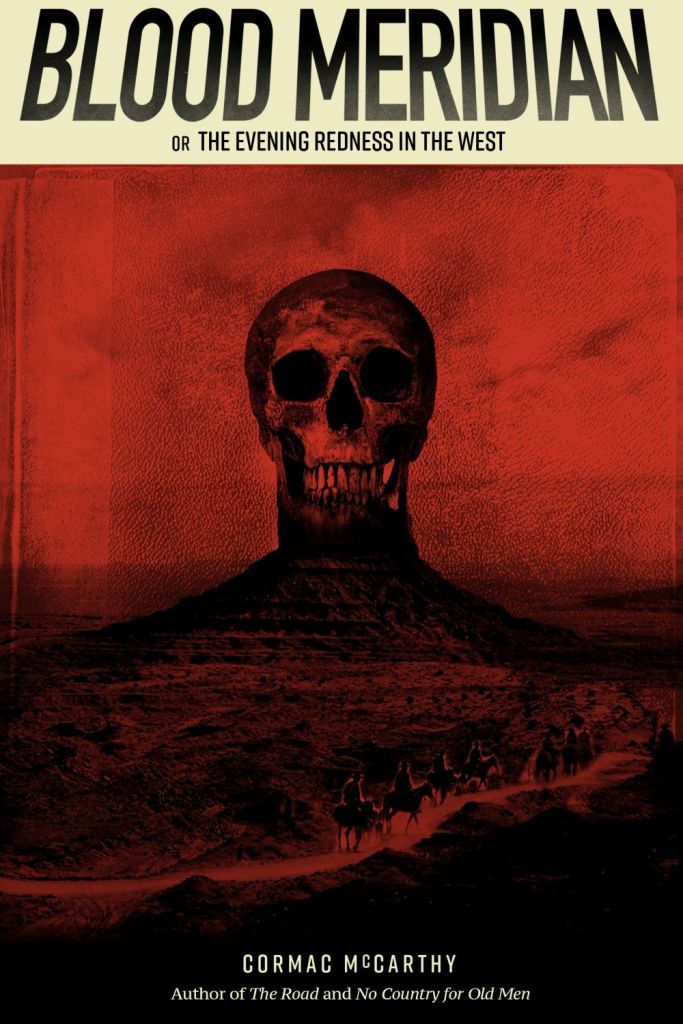
Blood Meridian initially appears to be a story set in the violent American West, but beneath the surface, it presents a profound exploration of evil—a world where history and cosmic darkness merge in a landscape drenched with blood and despair.
Cormac McCarthy’s novel defies easy classification. It follows the Kid, a teenage drifter who joins the ruthless Glanton gang of scalp hunters during the lawless 19th-century borderlands. Yet this story is not about heroism or conquest; rather, it reveals a brutal, merciless world governed by cruelty and cosmic malevolence.
No traditional heroes emerge here. Every character either inflicts horror or suffers it, trapped in an endless cycle of violence. The Kid moves passively through this brutal landscape, lacking the conviction or agency typical of Western protagonists. This moral ambiguity immerses readers in a narrative saturated by horror at every turn.
Violence permeates the novel—not merely through vivid depictions of scalping and massacres but as a fundamental force governing existence itself. Violence shapes life’s fragile and transient nature. Spilled blood binds the characters and marks a universe where death and cruelty endure indefinitely. The visceral portrayal underscores violence as a relentless ritual as pervasive and elemental as the landscape itself.
At the violent core stands Judge Holden—monstrous and compelling. His towering, hairless, albino form immediately signals his unnaturalness: massive, lacking body hair, and displaying a blank, eerily calm expression that can swiftly shift into chilling ferocity. This physical otherness aligns him with mythic terrors that transcend humanity.
Holden’s vast intellect spans languages, science, and philosophy, making him appear nearly godlike. Yet his worldview exalts war and violence as the universe’s ultimate realities. He declares, “war is god,” and insists everything exists only under his knowledge and consent. He casts violence as the ultimate power and true order, positioning himself both as agent and embodiment of these forces.
He bears striking resemblance to the archons of Gnostic thought—malevolent cosmic rulers who imprison humanity in suffering and ignorance. Holden’s bald, pale form and inscrutable nature make him a living symbol of the universe’s cold indifference to human pain and violence. He embodies cosmic cruelty and indifferent fate, physically manifesting the harsh, uncaring forces shaping mankind’s brutal destiny.
Holden shrouds the narrative with cosmic dread. His mysterious origins, command over knowledge and power, and seeming invincibility elevate him beyond mere man. He becomes an embodiment of eternal evil and incomprehensible cosmic forces that dominate the novel’s bleak universe.
The desert landscape intensifies this cosmic horror. It is not mere backdrop but a symbol of a universe indifferent to life and moral distinctions. Traditional binaries of good and evil dissolve into endless cycles of destruction. Mercy and justice vanish, replaced by an uncaring void that swallows hope and meaning. The environment thus anchors the story’s existential dread.
The Kid’s journey reveals the story’s psychological core—his slow destruction of innocence. Initially barely aware of right and wrong, he sinks deeper into the Gang’s savagery. The line between victim and perpetrator blurs until innocence disappears. This loss exposes a deeper horror: the self’s annihilation through human cruelty.
McCarthy’s prose reflects this mythic and cosmic scale. His dense, biblical cadence challenges readers but deepens the story’s epic tone. Sparse punctuation and sweeping descriptions evoke a vast, harsh world that feels inevitable and overwhelming. This rigorous style immerses readers in a mood of doom and fatalism, amplifying the narrative’s grim vision.
Philosophically, Blood Meridian meditates on timeless cosmic evil. Holden transcends mere antagonist status to become a metaphysical force of destruction, both ancient and eternal. The novel’s final scenes suggest this cosmic power will forever govern human suffering and violence.
The novel echoes ancient philosophies that portray evil as pervasive and intrinsic. Violence weaves into existence’s fabric, turning the universe into a dark battleground where malevolent forces prevail unchecked. The text confronts complex themes of fate, power, and the buried truths beneath history’s surface.
Seen holistically, Blood Meridian transcends its Western roots to emerge as a raw chronicle of violence, evil, and cosmic dread. It offers no solace or redemption—only exposure to a primal darkness where humanity’s basest impulses attain mythic significance.
This potent combination of brutal historical insight, existential horror, and mythic storytelling delivers an intense, unforgettable literary journey. The novel stands as both a frontier saga and profound philosophical inquiry into evil itself—forcing confrontation with humanity’s deepest darkness and the indifferent vastness of the cosmos.
By articulating these themes through complex narrative, striking symbolism, and demanding prose, McCarthy not only reconstructs the American West but also presents a timeless meditation on human nature and the universe—a work that challenges readers intellectually and viscerally in equal measure.
“In desire and dread, horror reveals fragile moral boundaries.”
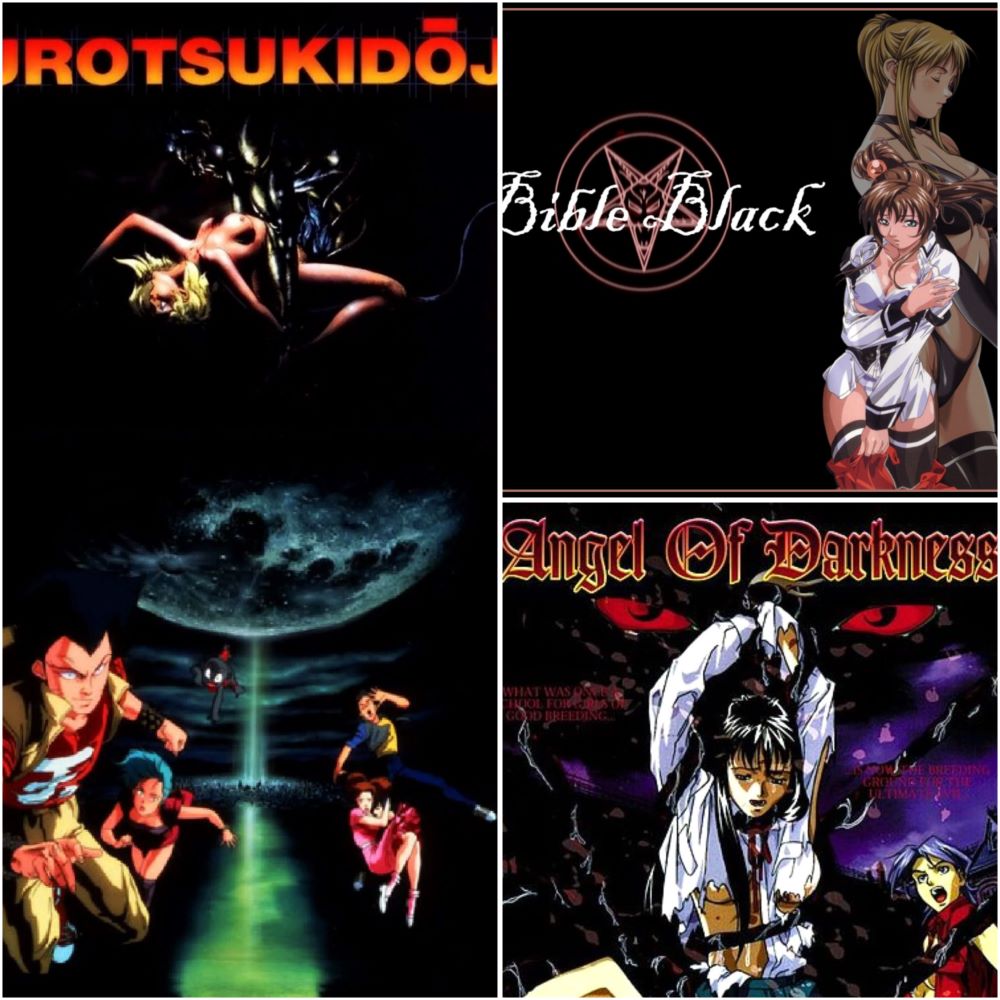
Hentai, as a genre of adult anime and manga, often explores sexuality in ways that push boundaries and traverse taboo territory. Within hentai, the subgenre of horror hentai stands apart for its unsettling blend of explicit sexual content and graphic violence, creating a distinctly disturbing atmosphere that extends beyond simple eroticism. Iconic titles such as Urotsukidoji, Angel of Darkness, and Bible Black exemplify the dark eroticism where sexuality is woven tightly with terror, gore, and supernatural dread, evoking both fascination and horror in audiences.
These works represent a period in hentai anime history when the medium evolved beyond mere explicit content into a form that combined high-quality animation with rich, complex narratives. Early pioneers like Urotsukidoji brought innovative animation techniques and layered storytelling, blending apocalyptic mythology with intense eroticism and horror. Similarly, Angel of Darkness explored psychological and existential themes within a darkly atmospheric boarding school setting, while Bible Black infused occult horror with morally complex character dynamics and ritualistic narratives. This golden era reflected a moment when hentai was capable of delivering mature, multi-dimensional stories alongside its adult themes.
However, as the hentai industry expanded and commercial pressures intensified, there was a growing shift toward quick production and profit-driven projects. Many recent works have sacrificed the intricate narrative structures and animation quality for formulaic, episodic content designed for rapid consumption. The loss of this narrative depth has diminished horror hentai’s ability to engage audiences emotionally and intellectually, making classic works all the more significant for their artistic ambition.
This analysis explores the crucial role sex and violence play in crafting horror hentai’s unique atmosphere by examining Urotsukidoji, Angel of Darkness, and Bible Black, while also reflecting on the medium’s evolution and the cultural contexts that shape these narratives.
The Fusion of Horror and Eroticism in Hentai
Horror hentai is distinctive because it merges two primal human experiences: desire and fear. Unlike conventional pornography or horror, it uses sex and violence symbiotically, each intensifying the impact of the other. The explicit sexual acts are far from mere titillation; they embody power dynamics, bodily autonomy violations, and often supernatural corruption. Violence is not a separate or accidental feature either, but deliberately intertwined—it amplifies the grotesque, shock, and transgressive qualities of the sexual content. This fusion creates an atmosphere charged with tension, vulnerability, domination, and degradation, engendering a complex emotional response that unsettles while captivating.
In horror hentai, sex often becomes a vehicle of horror itself—ritualistic, invasive, or monstrous. It evokes the taboo and the unnatural, shattering normative boundaries of consent, intimacy, and bodily sanctity. Violence, similarly, departs from mere physical harm and becomes symbolic of decay, corruption, and the invasion of the self. Together, they manifest the darkest aspects of human and supernatural experience, igniting dread and repulsion alongside erotic fascination. This duality is fundamental for horror hentai’s distinctive atmosphere.
Urotsukidoji: Apocalyptic Horror and Demonic Carnality
Urotsukidoji: Legend of the Overfiend (1987) stands as a landmark in horror hentai, merging apocalyptic mythology with hyper-sexualized violence. The story unites three overlapping worlds—the human realm (Ningenkai), the Demon World (Makai), and the Man-Beast World (Jūjinkai)—through the prophecy of the Chōjin or Overfiend, a godlike being destined to either unify or annihilate these realms. This cosmic setting is filled with grotesque demons, primal lust, and brutal power struggles, establishing a surreal and nihilistic horror atmosphere.
The plot focuses on Amano Jyaku, a sly and chaotic half-demon dispatched to Earth to find and protect the true Overfiend inhabiting the human teenager Tatsuo Nagumo. Nagumo’s ordinary college life—marked by voyeuristic tendencies and a turbulent romance with cheerleader Akemi Ito—collides violently with the supernatural. Akemi herself becomes a victim of monstrous sexual assaults by demons disguised as authority figures. Scenes of graphic rape and tentacle-based body horror fuse sexual transgression with violence, confronting moral boundaries and generating visceral horror.
Jyaku’s relationships with otherworldly beings, including his nymphomaniac sister Megumi and others, amplify the series’ themes of lust, corruption, and spiritual warfare. One poignant subplot involves Niki’s tragic transformation: under demonic influence, he self-mutilates for power, embodying the horror of humanity’s capitulation to hedonism and violence. Set against a decaying Osaka cityscape plagued by monstrous invasions and apocalyptic destruction, Urotsukidoji contrasts the banal and the terrible, heightening unease. The visual style’s vivid, brutal imagery escalates the horror, making sexual violence and grotesque bodily distortions emblematic of cosmic decay. The result is an immersive experience where apocalyptic dread, demonic carnality, and primal lust collide, producing a uniquely disturbing horror narrative rooted in both the supernatural and the deeply personal.
Angel of Darkness: Psychological and Existential Horror in a Girls’ Academy
Angel of Darkness (1994) crafts a deeply unsettling atmosphere of horror through its bleak, rain-soaked setting at Siren Academy, a secluded all-girls boarding school cloaked in mystery and shadow. The oppressive environment—with its dark hallways, forbidding chapel, and hidden underground basements—functions as a claustrophobic prison that accentuates the vulnerability and isolation of the characters. The pervasive stormy weather amplifies the tension, underscoring the darkness both physical and psychological that permeates the story.
The narrative centers on Atsuko Yoshikawa and Sayaka Matsumoto, two students whose secret love is fraught with danger, especially given the presence of Atsuko’s possessive older sister Yuko, a teacher tainted by jealousy and entangled in the sinister forces at the school. The introduction of Professor Goda, a young science teacher who becomes possessed by an ancient sex demon called the “Inju,” marks the descent into horror. This supernatural entity is unleashed after Goda breaks a mysterious stone seal beneath a large tree during a thunderstorm, allowing the Inju to inhabit his body and begin a reign of terror.
The school’s underground chapel becomes a horrifying locus of sexual assault and torture, as Goda and the cruel school director exploit the students to feed the Inju, who grows stronger by consuming the girls’ bodily fluids. This fusion of physical violation with demonic possession conveys a potent, symbolic horror of exploitation and corruption, intertwining the personal violation of the girls’ bodies with a cosmic, supernatural threat. Supporting this is the enigmatic figure Rom, a dark fairy-like presence whose role is ambiguous but undeniably ominous, adding a mythic and surreal layer to the nightmare that envelops the academy. The girls’ visible despair and alienation throughout the series reveal the pervasive psychological weight of the evil they endure, highlighting themes of loss, trauma, and shattered identity.
Plotlines featuring ritualistic sexual domination, possession, and brutal abuse map onto broader psychological and existential terrors. The story’s climax reveals the Inju’s plan to use Yuko’s body to birth a demonic female offspring, raising the stakes by entwining personal, familial betrayal with apocalyptic horror. Atsuko and Sayaka’s efforts to confront and halt this dark destiny are fraught with desperation and helplessness, deepening the emotional impact.
The explicit sexual violence depicted in Angel of Darkness is graphic and provocative, but it is employed narratively to symbolize the fracturing of selfhood and the encroachment of darkness into private, sacred spaces. Elements of Japanese folklore and supernatural horror—including tentacled demons, curses, and possession—infuse the work with a cultural resonance that heightens the uncanny and grotesque. Ultimately, Angel of Darkness balances supernatural horror with psychological realism, situating its explicit depictions of sex and violence within a tragic narrative of trauma, loss, and entrapment. Its atmospheric power lies in weaving bodily violation and possession into a story of existential despair, transforming the boarding school into a haunted prison where horror permeates every intimate moment.
Bible Black: Occult Horror within a School of Dark Desire
Bible Black (2001) blends occult horror with extreme sexuality inside a seemingly typical Japanese high school, subverting the safe, familiar setting with dark rituals and supernatural threats. Central is the titular grimoire, a forbidden tome enabling demonic spells and rituals that require sexual acts as conduits for power. The narrative follows Minako Suzuki, an initially naive student drawn into occult mysteries, alongside Reika Kitami, a manipulative sorceress wielding the Bible Black’s powers for deadly ends, and teacher Taki Minase, who becomes a possessed enforcer of dark magic. The school’s hidden chambers and secretive cults wrap the story in an atmosphere thick with dread and betrayal.
Sex scenes are inextricably linked to violence and domination, involving possession, forced rituals, and psychological torment. Victims are frequently coerced or overtaken by dark forces, reducing their bodies to battlegrounds where pleasure, pain, control, and horror merge. The series’ graphic depiction of rape and torture underscores themes of lost agency and creeping corruption. Juxtaposing everyday student life with nightly occult depravity creates a dissonance that intensifies the horror. Vivid animation accentuates shadows, magical transfigurations, and brutal acts, building a suffocating mood where normalcy is a fragile mask.
Bible Black ultimately explores the destructive fusion of forbidden knowledge, obsession, and corrupted desire. Its horror emerges from depicting the unraveling of morality and identity under the influence of occult lust and violence.
Ethical Themes: A Comparison of Moral Ambiguity and Taboo
While Urotsukidoji, Angel of Darkness, and Bible Black all employ sex and violence to generate a horror atmosphere, they explore distinct ethical themes that reflect varied understandings of morality, power, consent, and human nature. Urotsukidoji is steeped in cultural-specific moral ambiguity rather than clear distinctions of good and evil. Drawing from a mythic apocalyptic framework, the arrival of the Chōjin (Overfiend) symbolizes both destruction and potential transformation. The series portrays sexuality as a primordial, transformative force—sometimes destructive but essential within a cosmic order beyond human moral judgment. Characters like Amano Jyaku embody chaotic morality, acting as both protector and trickster, blurring the boundaries between right and wrong within spiritual and existential contexts. This moral ambiguity challenges Western sensibilities by embedding taboo sexual violence within a larger allegory of cosmic chaos and renewal.
In contrast, Angel of Darkness shifts the focus toward trauma, violation, and existential despair, emphasizing the intimate human impact of sexual violence and supernatural possession. The horror arises from the devastating effects of such abuses on identity, relationships, and hope within the closed sanctuary of Siren Academy. The series presents bodily and psychological violation as corrosive forces that undermine selfhood, while portraying love and loyalty as fragile bulwarks against overwhelming darkness. Unlike the cosmic ambiguity of Urotsukidoji or the power corruption in Bible Black, Angel of Darkness offers a tragic meditation on suffering and resilience, critiquing institutional predation and exploring the reverberations of trauma.
Bible Black explicitly foregrounds ethical concerns centered on corruption, consent, and the abuse of power. Sexual violence and occult rituals function as tools of manipulation, leading to spiritual degradation and loss of agency. The narrative depicts many sexual acts as violations—forced possession, ritual rape, and psychological torment—highlighting the consequences of unchecked desire and the destruction wrought by forbidden knowledge. The setting of a high school amplifies this tension by juxtaposing youthful innocence with predation and manipulation, resulting in a cautionary tale about power’s capacity to unravel morality and identity.
Together, these works form a spectrum of ethical inquiry: Urotsukidoji invites contemplation on transcultural notions of morality and cosmic destiny, Angel of Darkness humanizes horror through intimate trauma and victimhood, and Bible Black warns against abuses of power and corruption. Though all depict explicit sexual violence and horror, their ethical expressions diverge—ranging from mythic transcendence through taboo (Urotsukidoji), to reflection on suffering and care (Angel of Darkness), to condemnation of manipulation (Bible Black). This layered ethical complexity enriches their horror atmospheres, compelling audiences not only to recoil but to engage with profound questions of consent, power, and human fragility.
Japanese Cultural and Social Influence on Horror Hentai
The chilling atmospheres and provocative content of Urotsukidoji, Angel of Darkness, and Bible Black are deeply informed by specific cultural and social norms in Japan, shaping how sex, violence, and horror intertwine in ways distinct from Western media. These works reflect a nexus of traditional Japanese folklore, post-war societal anxieties, and cultural attitudes toward sexuality, taboo, and the supernatural.
Japanese horror broadly draws from centuries-old spiritual beliefs and folklore, including entities like yōkai (supernatural creatures), yūrei (vengeful spirits), and obake (shape-shifters), which frequently embody unresolved trauma, injustice, or societal imbalance. This foundation informs horror hentai’s supernatural elements, with demons, possession, and curses recurring as metaphors for spiritual and psychological disruption. For instance, Angel of Darkness’s “Inju” sex demon and its possession ritual can be linked to traditional concepts of spirit invasion accompanied by trauma and retribution, core to many classical Japanese ghost stories.
The pervasive theme of violated purity and corrupted innocence found in all three titles reflects the emphasis on purity and social conformity in Japanese culture, where public discussions of sexuality are often repressed or heavily mediated. Hentai’s graphic sexual content, juxtaposed with grotesque violence and supernatural horror, can be seen as transgressive responses to this repression—externalizing hidden desires, fears, and social taboos. This tension is especially apparent in Bible Black, set in a high school, where innocence and social order clash violently with occult corruption and sexual depravity.
Another culturally distinctive element is the motif of youthful or childlike characters, despite legal adult status, which taps into complex Japanese perspectives on age, purity, and desire. The repeated depiction of tentacle erotica—an iconic and controversial trope originating in Japan—exemplifies how fantastical, non-human sexual violence is used to bypass censorship and symbolize penetrating societal taboos about sexuality and violation. The grotesque yet metaphorical tentacle scenes in Urotsukidoji highlight this distinctly Japanese form of combining horror, eroticism, and fantasy.
Moreover, Japanese post-war history and rapid modernization have infused the country’s horror traditions with themes of trauma, alienation, and distrust of technological or institutional authority. This background resonates in Angel of Darkness’s claustrophobic boarding school setting and corrupt institutional figures, highlighting societal fears of oppression and loss of individual agency. The tension between tradition and modernity, evident in Japan’s urban decay and cultural transformation, animates these horror hentai narratives with an underlying socio-historical anxiety.
A profound and complex cultural layer within these works is the appropriation and reinterpretation of Christian symbolism and ritual. In Japanese cultural context, Christian imagery—such as crosses, holy water, church architecture, and priestly robes—does not uniformly convey purely sacred or redemptive meanings as in Western Christianity. Instead, these symbols often carry a dual or ambiguous function. They serve simultaneously as signs of sacredness and purity and as markers of the demonic, the profane, and corruption within horror hentai narratives. This ambiguous use stems from Japan’s history with Christianity as an imported religion, which has been both admired as exotic and subject to persecution and suppression historically.
In the Japanese cultural imagination, Christian ritual and symbolism are often detached from their doctrinal meanings and recontextualized within native concepts of purity, impurity, and spiritual balance. This cultural reinterpretation infuses Christian iconography with an ambivalent power, making crosses and holy rites potential sites of both spiritual protection and demonic infiltration or desecration. For example, holy water may be used not only to bless but also to exacerbate supernatural crises; the church as a place may become the theater of unholy rituals. This dual use reflects Japan’s syncretism, where imported religious forms are made to interact with Shinto and Buddhist perspectives on spirituality and the sacred.
Such transformations of Christian symbols amplify the horror in hentai by turning what Western audiences associate with sanctity into eerie, unstable signifiers of spiritual conflict and moral reversal. The profane and sacred intertwine, reinforcing the sense of a world where boundaries between good and evil are porous and contested. This dynamic enriches the narratives of Bible Black and Angel of Darkness especially, where Christian motifs become layered signifiers with both protective and threatening resonance.
The influence of traditional Japanese theater styles like Noh and Kabuki also permeates the visual and narrative language of horror. These theatrical traditions emphasize psychological tension, stillness, and emotional trauma rather than explicit violence alone, encouraging viewers to engage with horror on a subtle, psychological level even amidst graphic content. The use of masks, symbolic costumes, and stylized movement has parallels in the exaggerated yet symbolic visual depictions in hentai horror.
In sum, these culturally specific influences enrich Urotsukidoji, Angel of Darkness, and Bible Black with layers of meaning uncommon in Western horror erotica. Far from mere shock or titillation, their sex and violence echo complex dialogues about spiritual imbalance, social repression, trauma, and the liminal spaces where the human and supernatural converge in Japanese cultural imagination. This cultural embedding is essential to understanding their unique and enduring impact within and beyond Japan.
The Atmospheric Power of Sex and Violence in Horror Hentai
Sex and violence in horror hentai are not simple add-ons but foundational elements that shape tone, narrative, and viewer engagement. The combination evokes a raw emotional cocktail of repulsion, fascination, dread, and arousal. This complex emotional interplay deepens immersion and heightens tension, crucial for horror’s psychological impact.
Sexualized violence challenges taboos, breaking social and psychological boundaries that normally regulate discomfort and arousal. It renders characters highly vulnerable, evoking empathy alongside horror. This vulnerability is instrumental in constructing an oppressive and unsettling atmosphere where horror feels potent and immediate.
The graphic and often surreal visual style of horror hentai amplifies these effects. Distorted bodies, exaggerated features, and unflinching depictions of sex and gore confront viewers with the monstrous and uncanny. This fusion of eroticism and grotesquery crafts a uniquely immersive horror atmosphere that is as shocking as it is intense.
Final Reflections
In Urotsukidoji, Angel of Darkness, and Bible Black, sex and violence do not merely coexist but coalesce to generate a distinctive atmosphere of horror in hentai. Through apocalyptic carnality, occult seduction, and psychological trauma, these elements engender an immersive experience that disturbs and compels. The entwinement of sex and violence transcends shock to become a vehicle for exploring power, corruption, vulnerability, and taboo. This dark eroticism forms the backbone of horror hentai’s unique capacity to evoke fear and fascination, crafting narratives where horror is felt in the deepest, most primal human urges.
The synthesis of sex and violence in these works creates a space where horror and desire collide, challenging viewer boundaries and offering a potent psychological impact unmatched by other media forms. Horror hentai, with its extreme and transgressive approach, reveals the intrinsic horror in human sexuality and violence, transforming these primal forces into tools of terror and storytelling mastery.
CHUNZ’s “Here Comes Trouble” AMV is definitely worth checking out. It brings together a range of clips from well-known series like Corpse Party, Shiki, and Tokyo Ghoul, blending them skillfully with a haunting soundtrack that really sets the mood. The editing is tight and deliberate, syncing scenes with the music to create a suspenseful, eerie atmosphere that draws you in. It feels less like just a montage and more like a crafted experience that captures the unsettling spirit of these shows in just a few minutes.
What makes this AMV stand out is how it balances energy with a dark, atmospheric tone. ItzMona knows how to keep things engaging without losing the creepy vibe, which makes for a satisfying watch whether you’re a longtime fan of horror anime or just looking for a quick dose of spine-chilling visuals. It’s a great example of how AMVs can be an art form in their own right, blending visuals and sound to tell a mood-driven story. If you want a neat way to revisit some iconic horror anime moments or just want something atmospheric and well-edited to watch, this AMV is an excellent pick.
Song: Here Comes Trouble by Neoni
Anime: Aldnoah Zero, Cowboy Bebop, Canaan, Megalo Box, W’Z, Elfen Lied, Tokyo Ghoul, Mirai Nikki, Tengen Toppa Gurren Lagann, Another, Jujutsu Kaisen, The Promised Neverland, Gleipnir, Corpse Princess, Ga-Rei-Zero, Koutetsujou no Kabaneri, Overlord, Darling In The FranXX, Blood C, Kekkai sensen, Tales of Zestiria the X, Youjo Senki, Tate no Yuusha no Nariagari, Kimetsu No Yaiba, Fire Force, Your Lie In April, Hunterxhunter, One piece, Gintama, One punch man, Ao no Exorcist, Taboo Tattoo, Fullmetal Alchemist, Monogatari, Shinmai Maou no Testament, Mahou Shoujo Madoka Magica, Highschool Of The Dead, Akame Ga Kill, Dororo, Hellsing, Owari no Seraph, Parasite, Black Rock Shooter, Magi, Kill la kill, No Game No Life, Noragami
shokushu zeme: “tentacle attack” erotica that explores taboo themes using tentacle-based sexual fantasy as a narrative and visual motifto circumvent Japanese censorship laws.
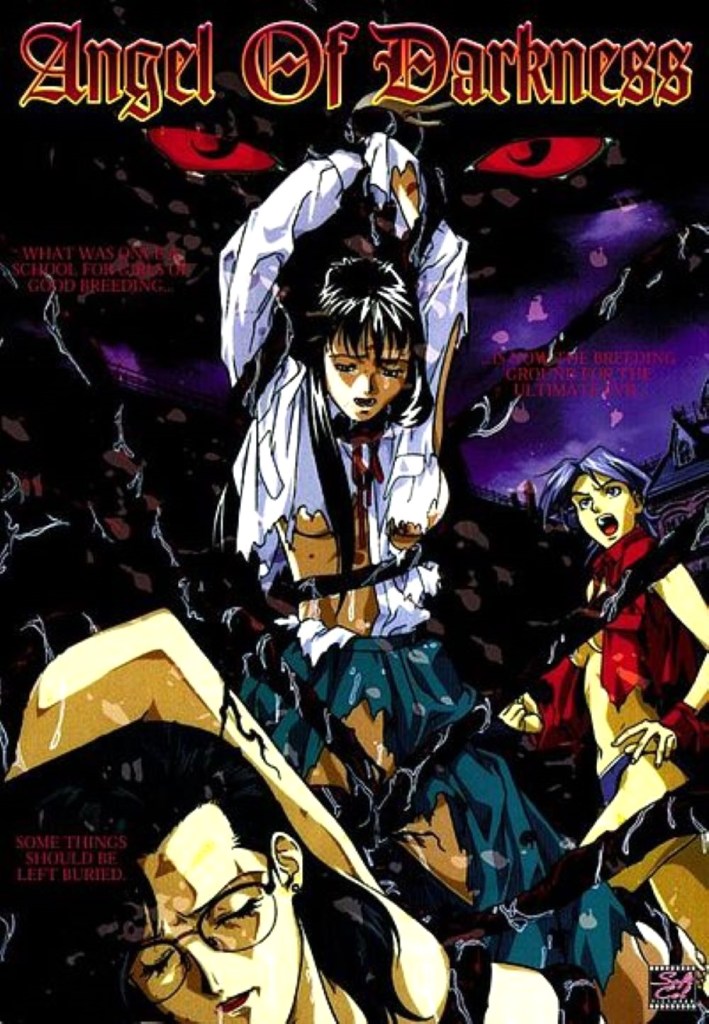
Angel of Darkness (Injū Kyōshi) holds a notorious place in the lineage of erotic horror anime, bridging the transgressive extremities of Chōjin Densetsu Urotsukidōji and the occult eroticism that would later define Bible Black. This four-episode OVA series from 1994 encapsulates the tentacle horror subgenre with uncompromising explicitness, wrapping its unsettling imagery in a narrative set within the seemingly innocent confines of a girls’ boarding school. The series exemplifies a distinctive moment in adult anime history, when grotesque sexuality and supernatural horror merged to explore themes of control, corruption, and forbidden knowledge.
Like Urotsukidōji, Angel of Darkness does not shy away from cataclysmic violence or graphic sexual transgression. However, rather than sprawling cosmic battles and apocalyptic carnage, it opts for a claustrophobic setting where the boundaries between predation and education collapse. The boarding school, an archetype of sheltered innocence, becomes a crucible for spiritual decay where evil—in the form of demonic possession and twisted rituals—lurks beneath routine façades. This subversion of a sacred educational environment highlights the series’ investment in moral and sexual transgression as intertwined forces.
The plot centers on Professor Goda, whose discovery of a strange stone beneath a campus tree unleashes an ancient, tentacled spirit that begins a viral corruption throughout the school. His transformation into a monstrous sex demon initiates an escalating cycle of ritual abuse and possession among the students and faculty. Against this backdrop, the developing relationship between Sayaka and Atsuko—the relatively innocent lovers trying to find connection amid chaos—provides a tragic human center to the nightmarish events unfolding. The series’ focus on lesbian romance adds emotional depth while diverging from typical harem or fetishistic formulas, instead using sexuality as both refuge and vulnerability under the shadow of demonic influence.
The narrative frequently returns to graphic scenes of domination, bondage, and forced extraction of bodily fluids, imagery that serves symbolic purposes as much as titillation. The recurring S&M rituals, scenes of rape by tentacles, and the desecration of once-hallowed spaces—such as the chapel turned site of torment—communicate a profound collapse of innocence and spirituality. This fusion of sex, violence, and the supernatural positions Angel of Darkness not as mere pornography, but as a stark allegory for power, control, and the corruption of purity.
Visually, the series operates within the constraints of mid-1990s adult OVA budgets, but its simplistic, shadow-heavy animation effectively evokes a mood closer to gothic horror than glossy erotica. The color palette is muted, alternating between the sterile luminescence of the school’s daytime routine and the ominous shadows of ritual scenes. This dichotomy underscores the narrative’s tension between surface normality and subterranean evil. Though the character designs lack the polish of contemporary works like Bible Black, with rougher lines and stilted motion, these limitations amplify the uncanny atmosphere, making the viewer uneasy in a way polished animation rarely achieves.
Sexual content dominates explicitly and persistently, refusing to separate eroticism from horror. This integration exemplifies Angel of Darkness’ commitment to challenging viewer boundaries and expectations. The tentacle horror motifs—ubiquitous in the genre but here rendered with disturbing severity—represent not just physical assault but a symbolic invasion of autonomy and identity by dark forces. The series’ interest in bodily horror situates it firmly within the tradition of Japanese erotic horror, yet its blend of sexuality with a narrative of supernatural possession elevates it beyond titillation toward a meditation on corruption and loss of self.
The series’ narrative and visual style contributed significantly to the evolution of adult anime as a genre willing to explore complex themes within erotic content. It is a clear spiritual predecessor to later occult-erotic works such as Bible Black, which would refine this formula with denser storytelling and atmospheric lighting but owe much to Angel of Darkness’ bold fusion of sex and the supernatural. The taboo-challenging spirit of the series also helped popularize tentacle pornography as a distinctive fetish category internationally, with Angel of Darkness frequently cited as a touchstone in underground anime communities.
Critically, Angel of Darkness remains polarizing. Its extreme explicitness and depiction of violent, non-consensual acts alienate many viewers while fascinating others with its raw thematic ambition. While it is impossible to discuss the anime without acknowledging its deeply problematic content, dismissing it purely as objectionable obscenity overlooks its place as a cultural artifact that pushes the limits of storytelling in adult animation. Indeed, the series critiques institutional complicity and the violation of trust—from teacher to student, from sacred institution to corrupted shrine—embedding its sexual horror within a larger allegory for power abuse.
Despite—or perhaps because of—its intense imagery, Angel of Darkness has maintained a lasting cult status for nearly three decades. Its influence reaches beyond hentai audiences, with many anime historians and scholars referencing it as a foundational work in the erotic horror niche. Its legacy is one of transgression not just for shock, but as a deliberate aesthetic and narrative strategy that challenges the viewer’s comfort zones and probes darker aspects of desire and domination.
Ultimately, Angel of Darkness is a complex and disturbing work that defies simple categorization. It is a horror anime that uses explicit sexuality and supernatural menace to explore themes of corruption, power, and forbidden love. As a historical piece, it represents both the creative ambition and the social taboos of 1990s adult Japanese animation, offering a grim yet compelling experience for those prepared to confront its darkness.
“Even in a blue world filled with sorrow, the heart continues to seek love, light, and meaning beyond the darkness.”
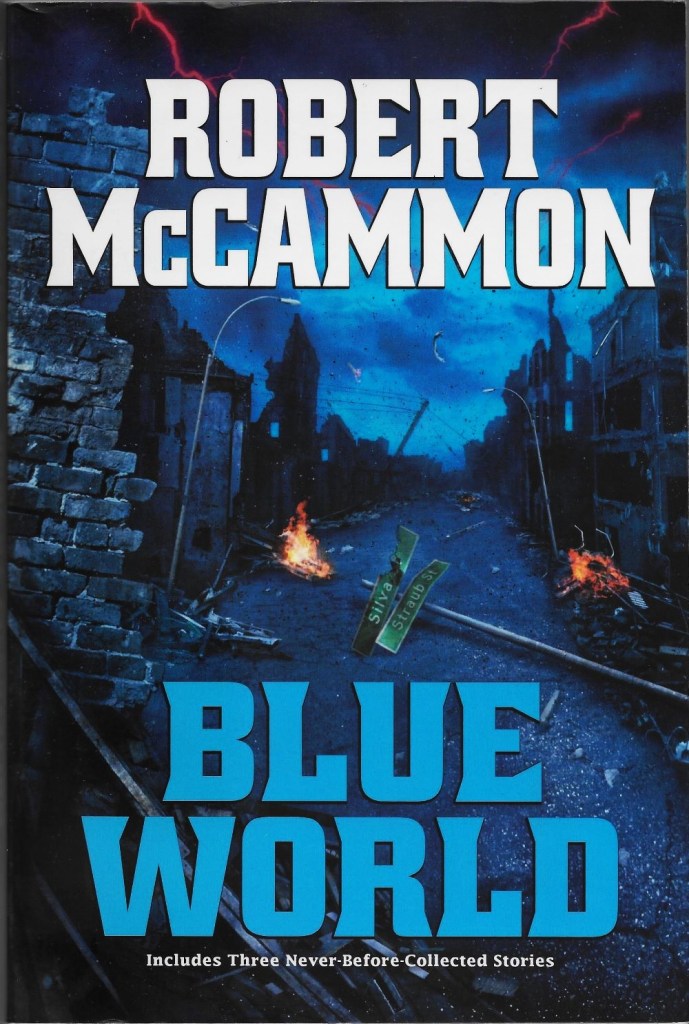
Robert R. McCammon’s Blue World is a captivating collection of short stories that showcases his mastery of horror, while also exploring themes that go beyond the usual genre boundaries. Originally published in 1990 and recently reissued by Subterranean Press, this collection serves as a natural companion to Stephen King’s Night Shift. Both authors start with classic horror ideas but make them their own through distinctive voices. For readers who enjoy stories that combine suspense and psychological depth with moments of quiet reflection, Blue World is a deeply rewarding read.
The collection features a wide range of stories that feel connected by McCammon’s strong sense of character and place. In many tales, ordinary settings—such as small towns and suburban streets—become stages for hidden dangers. For example, “He’ll Come Knocking at Your Door” starts off with a familiar neighborhood atmosphere that slowly reveals an undercurrent of menace. McCammon’s ability to turn the everyday into a place of suspense taps into a universal fear: that the safe and known can quickly become threatening.
Themes of change, survival, and the strain on the human mind surface in stories like “Strange Candy” and “I Scream Man!” His characters often face challenges that test not just their bodies, but their minds and morals. McCammon skillfully combines moments of fast-paced action with quieter, thoughtful passages, which make the terror hit deeper because we connect with the characters on an emotional level.
“Night Calls the Green Falcon” stands out for its creative blend of horror and nostalgia. It tells the story of a down-on-his-luck actor caught in the pursuit of a serial killer, echoing the style of old adventure serials with cliffhanger scenes. This story reveals McCammon’s talent for mixing different genres in fresh ways without losing emotional depth.
The most distinct story in the collection is the title novella, “Blue World.” Unlike the other stories, it steps away from supernatural horror and focuses on a very human and emotional tale. It follows a priest who falls in love with a porn star, and both become targets of an obsessed fan. McCammon uses this story to explore themes of love, faith, and redemption, diving into moral and emotional complexities rather than scares or ghosts.
This change in tone creates a thoughtful space within the collection, inviting readers to reflect on themes that contrast with the fear and darkness in other tales. While most stories rely on supernatural or psychological horror, “Blue World” confronts the dangers and redemption found in real human relationships, showing a different but equally compelling side of McCammon’s storytelling.
McCammon’s writing throughout is vivid and sensory, pulling readers into each story’s environment. Whether describing the sweaty tension of summer in “Yellowjacket Summer” or the bleak landscapes of “Something Passed By,” the settings are tangible and emotionally charged. This helps both the horror and the personal stories feel authentic and immediate.
Across the collection, McCammon’s characters stand out because they are fully realized people rather than simple victims or villains. They grapple with their fears and flaws in ways that feel realistic and relatable. Their struggles add psychological weight to the stories, making themes of loss, survival, and redemption more powerful.
Ultimately, Blue World is more than just a collection of horror stories—it is a showcase of Robert McCammon’s storytelling skill and emotional range. Much like King’s Night Shift, it offers a variety of stories from suspenseful shocks to deep, character-focused explorations. The inclusion of the novella “Blue World,” which steps outside the typical horror mold, adds richness to the collection and highlights McCammon’s ability to write compelling stories about human resilience and complexity.
For readers who enjoy a mix of supernatural thrills, strong characters, and thoughtful moments, Blue World provides a memorable journey through fear and hope, darkness and light. It stands as a significant work in modern horror literature and beyond, inviting readers to feel deeply as well as be scared. This collection proves that the craft of horror can encompass more than just fright—it can tell stories about the very heart of human experience.
“It’s not a monster. It’s just a doggy.” — Donna Trenton
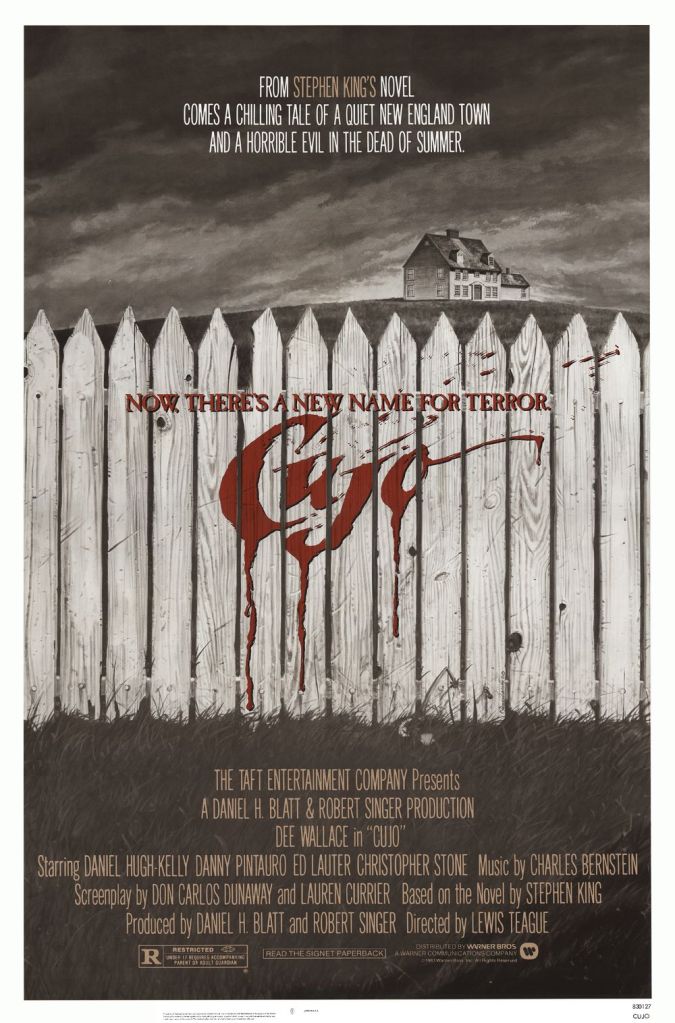
In the early 1980s, Stephen King’s novels sparked a cinematic gold rush, producing adaptations that ranged widely in style and quality. Among these, John Carpenter’s Christine and David Cronenberg’s The Dead Zone hold special status for their stylish direction and psychological depth. Lewis Teague’s Cujo, released the same year, occupies a different but notable niche. While it lacks the thematic complexity and artistic flair of those films, it outshines much of the era’s horror output, especially during a time when the genre was dominated by slasher films and gory set pieces designed as cheap thrills.
The early 1980s horror market was flooded with low-budget slashers characterized by relentless body counts, masked killers, and formulaic plots. These films leaned heavily on explicit violence and teenage premarital sex, combining graphic killings with salacious content to hook viewers seeking quick, visceral thrills. This formula dominated the home video boom, prioritizing shock value over narrative or character development. Against this backdrop, Cujo took a more deliberate and grounded approach, offering a taut thriller focused on psychological and physical survival rather than gratuitous gore.
Cujo begins with a seemingly mundane family drama. Donna Trenton (Dee Wallace) is struggling with her crumbling marriage, and her son Tad (Danny Pintauro) battles childhood fears. Their ordinary world quickly tilts into horror when Cujo, a lovable St. Bernard owned by local mechanic Joe Camber, contracts rabies and becomes a vicious predator. The film eschews supernatural elements for biological realism, making the terror brutally tangible.
Teague’s direction is restrained but effective. He builds tension through atmosphere and character rather than cheap scares. Dee Wallace delivers a deeply emotional performance, portraying Donna’s terror, resilience, and fierce maternal instinct with authenticity. Pintauro’s natural vulnerability bolsters the emotional weight, grounding the film in relatable human experience.
Cinematographer Jan de Bont’s claustrophobic framing, point-of-view shots from both dog and victims, and the oppressive imagery of the sweltering, stranded car amplify the suffocating dread. The restrained editing and thoughtfully designed soundscape further heighten suspense without resorting to excess.
While the film’s early pacing leans heavily on domestic drama, some subplots—Donna’s affair and marital discord—feel underdeveloped, losing potential narrative resonance. A few moments push the bounds of plausibility, especially Cujo’s extreme aggression, and familiar horror tropes surface near the climax. Additionally, the film’s ending diverges from King’s grimmer novel, opting for a resolution that some find cathartic, others less satisfying but still emotionally charged.
Compared to Carpenter’s Christine and Cronenberg’s The Dead Zone—which embraced symbolic, psychological, and stylistic complexities—Cujo focuses on survival horror rooted in reality. This grounded approach was relatively unusual for the time and gave it a distinctive identity amid the slew of copycat slashers. Where many early 80s titles peddled blood, teenage promiscuity, and spectacle for quick payoffs, Cujo offered slow-burning dread, emotional depth, and an unrelenting focus on human vulnerability.
This ambition helped Cujo stand apart, making it a stronger, more thoughtful film than most of its low-budget contemporaries. It may not match the artistic heights or thematic sophistication of its King-adapted peers, but it carved out a unique place by delivering a visceral, character-driven thriller that leveraged fear’s everyday, primal roots rather than supernatural fantasy or teenage rebellion.
Ultimately, Cujo excels as an intense, claustrophobic horror film powered by standout performances and atmospheric tension. Its power derives from a terrifyingly plausible premise and an empathetic portrayal of survival against merciless odds. It is a gripping reminder that horror need not be lavish or supernatural to be effective—sometimes, the most terrifying monsters are those lurking close to home.
For fans of 1980s King adaptations and horror outside the slasher mainstream, Cujo remains a compelling watch. Its imperfections, including slower pacing and some narrative shortcuts, are overshadowed by its psychological realism and emotional impact. Cujo is a rare early 80s horror film where the primal terror of a loved pet turned threat, family fractured by fear, and nature’s cruel indifference combine to create a haunting, enduring cinematic experience.
“Some fears are not of ghosts or demons but of loss, regret, and the quiet mistakes that haunt us long after the night has ended.”
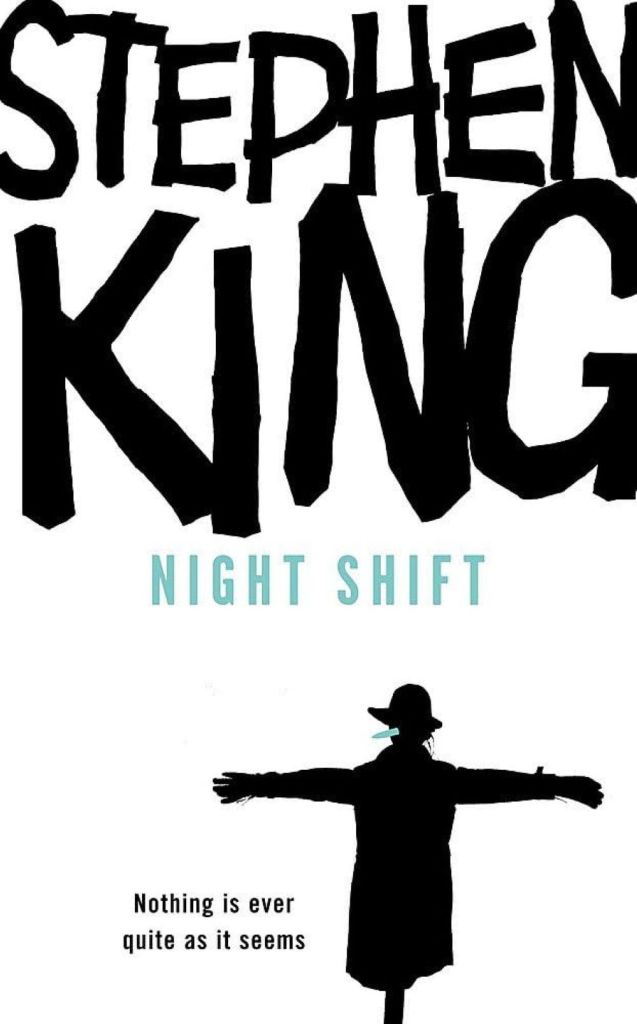
Stephen King’s Night Shift is a fascinating look at the beginnings of one of the most prolific horror writers of our time. Many of these 20 stories first appeared in men’s magazines like Cavalier, Penthouse, and Gallery, where King started building his reputation from the ground up. This collection offers a wide range of horror—from supernatural thrills to deeply emotional tales—crafted with a realism that makes the scares hit harder. The book naturally moves from more traditional horror into stories that shine a light on human fears and regrets.
Although the collection opens with “Jerusalem’s Lot,” a story about haunted history, one of the more striking horror tales is “The Mangler.” It tells of a demon-possessed industrial laundry machine that becomes a deadly force. King’s detailed storytelling turns familiar machinery into something terrifying, driving the suspense from beginning to end.
“Sometimes They Come Back” takes a more emotional route. It centers on a man who is haunted by the death of his brother, with ghostly bullies from his past making a frightening return. This story blends the supernatural with raw grief, showing that some wounds never fully heal.
“The Last Rung on the Ladder” provides a quiet but powerful punch. It reflects on childhood, family, and the pain that comes with lost chances. This tale stands out by demonstrating King’s skill in generating a deep sense of dread through emotional weight rather than monsters.
In “One for the Road,” the tension ratchets up with a story set during a harsh snowstorm near a vampire-infested Maine town. The narrative grips you with its chilling atmosphere, isolation, and fight for survival. Notably, this story acts as a postscript to King’s novel Salem’s Lot, offering an eerie glimpse into what happens long after the main events, expanding that dark world in a satisfying way.
“Strawberry Spring” unspools slowly like creeping fog. Set on a college campus haunted by a serial killer, the story uses an unreliable narrator and a murky atmosphere to create a sense of growing paranoia and confusion.
Finally, “I Know What You Need” explores obsession cloaked in supernatural mystery. A college student experiences an unsettling friendship that appears to improve his life, but underlying this is a dark manipulation. King carefully builds this eerie tale with layers of tension and reveals the dangerous side of desire.
What makes these tales work so well together is King’s ability to vary tone and pace while grounding the stories with believable characters and locations. The rapid heartbeat of “The Mangler” contrasts with the quiet heartbreak of “The Last Rung on the Ladder.” The claustrophobic fear in “One for the Road” stands alongside the fog-thickened dread of “Strawberry Spring,” and the slow-burning menace in “I Know What You Need” rounds out the mood spectrum.
More than just scary stories, Night Shift taps into fears we all recognize: loss, guilt, loneliness, and obsession. King layers excitement with emotional truths, creating stories that stick with you. These fears aren’t just the stuff of monsters—they’re very real and human.
The order of the stories themselves feels intentional—starting with classic supernatural spins like “Jerusalem’s Lot,” and moving toward more internal, emotional terrors in stories like “Sometimes They Come Back” and “The Last Rung on the Ladder.” Some stories also ground horror in real-life struggles, like dangerous, grueling jobs in “Graveyard Shift” and “The Mangler,” where the horror is as much about the setting as the supernatural.
A lot of these stories have found their way to the screen, but while the films are entertaining, most take only loose inspiration from the originals and often don’t capture the full power of the tales. This disconnect doesn’t lessen the strength or impact of King’s writing, which remains impressive and affecting.
Ultimately, Night Shift is a journey through many forms of fear—from sharp shocks to slow-building unease—and its stories feel personal and alive. Whether it’s an industrial machine come to life, ghostly revenge, or a vampire town trapped in eternal winter, King’s tales connect with readers on multiple levels.
If you want horror that thrills but also hits close to home, Night Shift is a brilliant starting place. These stories show early signs of why King remains a master: he discovers monsters not just in the shadows, but woven into the fabric of everyday life. Sometimes, those are the ones that scare us the most.
“Bless me, Father, for I have sinned. I had the power… and I tried to prevent what I saw.” — Johnny Smith
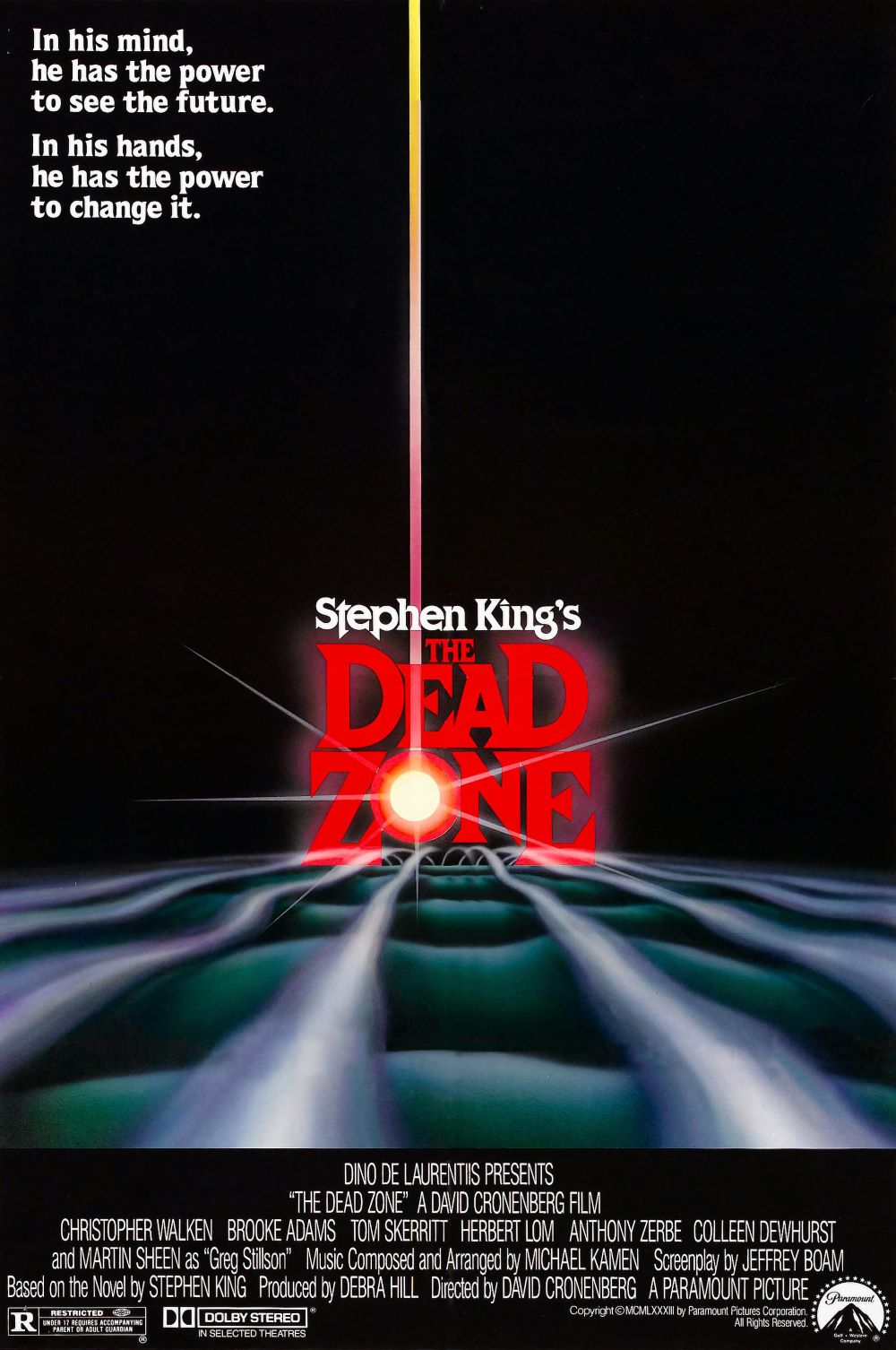
In 1983, David Cronenberg adapted Stephen King’s The Dead Zone with a distinctive emphasis on mood, morality, and psychological depth rather than traditional horror spectacle. The film follows Johnny Smith (Christopher Walken), a small-town schoolteacher whose life transforms irrevocably after a traumatic car accident leaves him in a five-year coma. Upon awakening, Johnny discovers he possesses psychic abilities that allow him to see the past and future by touch. Rather than a gift, this power becomes a heavy burden, isolating him and forcing him into wrenching moral choices.
Cronenberg’s direction is meticulous and deliberately restrained. The film’s muted color palette and stark winter landscapes visually echo Johnny’s emotional isolation and the fragility of human existence. His careful, often gliding camera movements create a mounting sense of quiet dread, while minimalistic sound design underscores moments of revelation with haunting subtlety. This subdued style elevates the film’s psychological impact, transforming it into a thoughtful and melancholy meditation on the cost of harrowing knowledge.
Significantly, The Dead Zone marks a departure from Cronenberg’s signature body horror. Instead of the grotesque physical transformations and visceral mutations that characterize much of his other work, here Cronenberg turns inward. The real horror lies in the malleability of the mind and the elusive nature of perception—how reality, memory, and the future are unstable constructs that can shift and fracture under psychic strain. This thematic focus on the impermanence and distortion of mental reality touches on some of Cronenberg’s deepest artistic fascinations.
The restrained treatment of body horror in The Dead Zone previews the director’s later, more psychologically driven films such as A History of Violence, Eastern Promises, and A Dangerous Method, where character studies and narrative depth take precedence over startling visuals. In this early pivot, Cronenberg demonstrates that his mastery lies not only in visual spectacle but in probing the profound emotional and moral dilemmas faced by his characters. The vision-focused horror here is cerebral and grounded, rooting supernatural phenomena in human frailty and ethical complexity.
Christopher Walken’s nuanced portrayal is the emotional heart of the film. He captures Johnny’s vulnerability, weariness, and profound solitude, portraying a man burdened by a cursed knowledge that isolates him from the world. Martin Sheen plays Greg Stillson, the ambitious and morally bankrupt politician whose rise Johnny must foretell and who embodies the film’s central threat. The supporting cast, including Brooke Adams as Johnny’s lost love Sarah and Tom Skerritt as Sheriff Bannerman, delivers compelling and authentic performances that humanize the film’s intimate, small-town environment.
Several changes from King’s novel sharpen the film’s thematic focus. The novel’s sprawling plot, including a serial killer subplot and a brain tumor storyline symbolizing Johnny’s mortality, is pared down or omitted. Despite this trimming, the serial killer element retained in the film remains chilling and effective. It highlights the darker repercussions of Johnny’s psychic gift and injects a tangible sense of dread, reinforcing the psychological weight Johnny carries. This subplot grounds the supernatural within a disturbing reality, illustrating the violent and tragic circumstances Johnny must grapple with as part of his burden.
The concept of the “dead zone” itself shifts in meaning. Originally, the term referred to parts of Johnny’s brain damaged by the accident, blocking certain visions. Cronenberg reinterprets it as a metaphor for the unknown and unknowable parts of the future—the gaps in psychic clarity that allow for free will and change. This subtle shift reshapes the narrative toward a more ambiguous, hopeful meditation on destiny and human agency.
Compared to King’s novel, Cronenberg’s Johnny is more grounded and isolated. The novel frames Johnny’s struggle within a broader spiritual and fatalistic context, highlighted by the looming presence of a brain tumor and a nuanced exploration of hope versus resignation. The film, by contrast, focuses on the emotional and moral fatigue induced by Johnny’s psychic gift, emphasizing his loneliness and reluctant responsibility rather than supernatural destiny.
Walken’s restrained, haunting performance strips away mythic grandeur to reveal a deeply human character. The film’s narrowed narrative tightens focus on Johnny’s internal anguish and his difficult ethical choices, making his plight intimate and richly relatable.
On a thematic level, The Dead Zone contemplates fate, free will, and sacrifice. Johnny’s psychic abilities act as a draining, almost chthonic force, transforming him into a reluctant prophet who is tasked with intervening in grim futures at great personal cost. The film’s bleak winter setting visually reflects Johnny’s alienation, while its deliberate pacing highlights the exhaustion and heartbreak that comes with such knowledge.
Ultimately, Cronenberg’s The Dead Zone goes beyond supernatural thriller conventions. It is a profound meditation on empathy, sacrifice, and the human condition—where the greatest horrors are internal, and the cost of knowledge is both psychic and emotional. Johnny Smith emerges as a tragic, flawed figure wrestling with unbearable burdens.
Cronenberg’s direction and the impeccable performances make The Dead Zone a standout in King adaptations. The film’s enduring impact lies in its rich thematic texture, its moral ambiguity, and its unflinching exploration of human frailty, all conveyed through a director shifting skillfully from physical body horror to psychological and existential terror. The film remains as haunting and resonant now as it was upon release, a testament to the synergy of Cronenberg and King’s extraordinary talents.
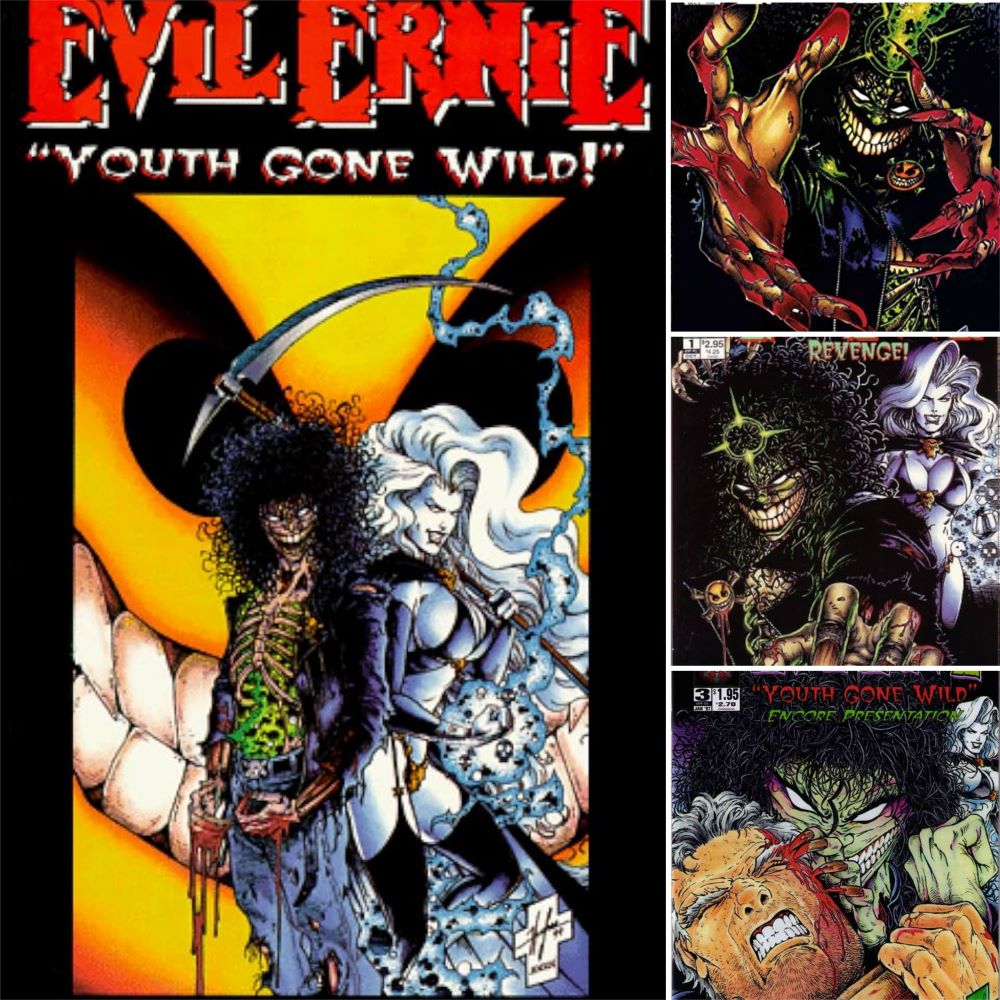
Evil Ernie’s legacy began with two key comic series that deeply shaped his character and cemented his place in horror comic history. Firstly, the original Evil Ernie mini-series, published in 1991 by Eternity Comics, introduced readers to Ernest Fairchild—a tortured, telepathic boy whose severe abuse and trauma spiraled into the transformation that birthed Evil Ernie. This five-issue series laid the foundation for the character’s dark mythology, blending psychological horror with supernatural violence and heavy metal influences. Here, Ernie’s pact with Lady Death and the introduction of his iconic “Smiley” button set the tone for his psychotically violent crusade against humanity, portraying him as a vengeful, undead antihero fueled by rage and heartbreak.
Following the original run, the Chaos! Comics imprint expanded on Ernie’s mythos with significant titles like Evil Ernie: Resurrection and Youth Gone Wild. These series pushed the narrative further into apocalyptic territory, showcasing Ernie’s increasing power, his undead army, and the world-spanning consequences of his rampage. Resurrection delved into Ernie’s return from death with amplified powers, setting the stage for his global campaign of destruction. Youth Gone Wild, evokes the rebellious spirit captured both visually and thematically, tying Ernie’s anger and chaos to a larger cultural moment reflective of 1990s heavy metal and punk ethos.
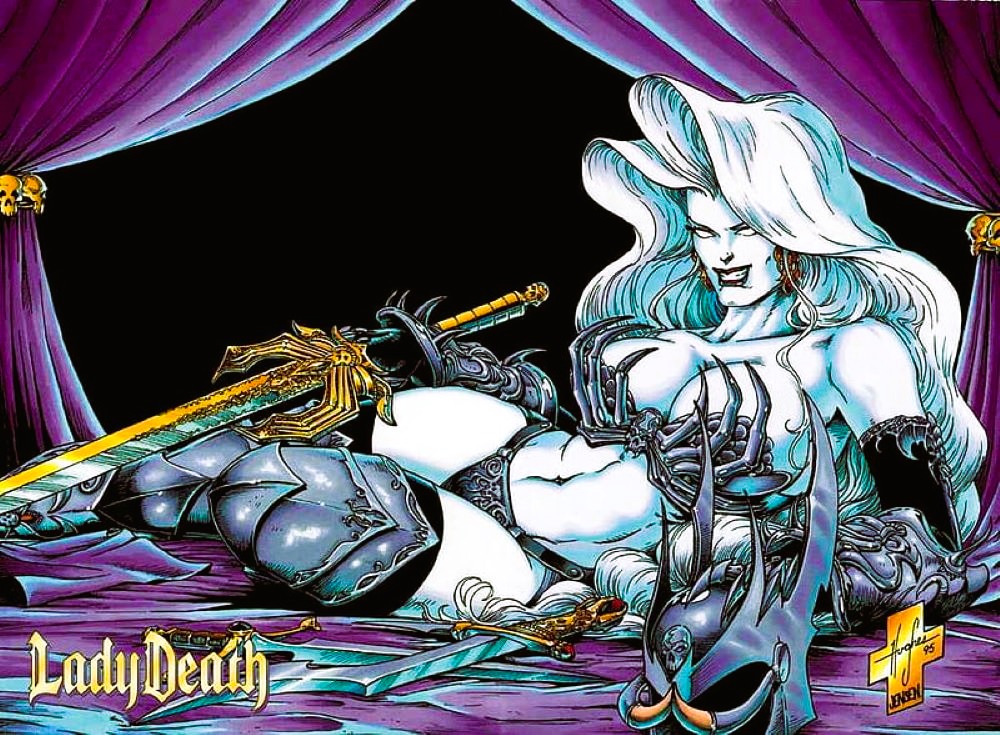
Crucially, the role of Lady Death in these series cannot be overstated. Initially a spectral figure who offers Ernie the love and acceptance he craves in exchange for his violent pledge, Lady Death evolved into the defining character of the Chaos! Comics universe. Her complex origins as the mortal Hope, betrayed and transformed into the queen of Hell, give the stories emotional depth and mythic resonance. Her “bad girl” gothic aesthetic and tragic backstory resonated powerfully with fans, propelling her to overshadow even Ernie himself in popularity and cultural impact.
Evil Ernie’s narrative and character design were heavily influenced by the prevailing heavy metal and splatter punk subcultures of the time. His wild hair, leather attire, and violent, nihilistic persona echoed the sonic aggression and rebellious imagery of bands like Slayer and Overkill, who also explored themes of alienation, death, and wrath. This cultural synergy imbued the comics with an authenticity that attracted a dedicated fanbase attuned to these genres. The explicit violence and body horror scenes showcased the splatter punk influence, pushing boundaries in graphic storytelling to depict raw, unapologetic gore that underscored Ernie’s tragic antiheroism.
The Evil Ernie series was more than just a comic about zombies and destruction; it was a cultural artifact infused with the angst, aggression, and rebellion of ‘90s youth subcultures. It forged a new path in horror comics by blending psychological trauma, supernatural terror, and social outcast narratives while crafting a mythos that was both cosmic and personal. The enduring popularity of Ernie, alongside characters like Lady Death and Purgatori, validated Brian Pulido’s vision and solidified a franchise that remains influential in horror and dark fantasy comics.
In summary, the original Evil Ernie mini-series set the brutal, tragic tone that defines the character, while subsequent series like Resurrection and Youth Gone Wild expanded his mythic scope, fueled by a unique fusion of horror, metal, and punk. Lady Death’s rise within these narratives added emotional complexity and gothic grandeur that enriched the universe Pulido created, creating a layered, compelling world that still captivates cult fans today. Together, these series and characters have left an indelible mark on horror comics, affirming the powerful cultural interplay between music, graphic storytelling, and dark fantasy.
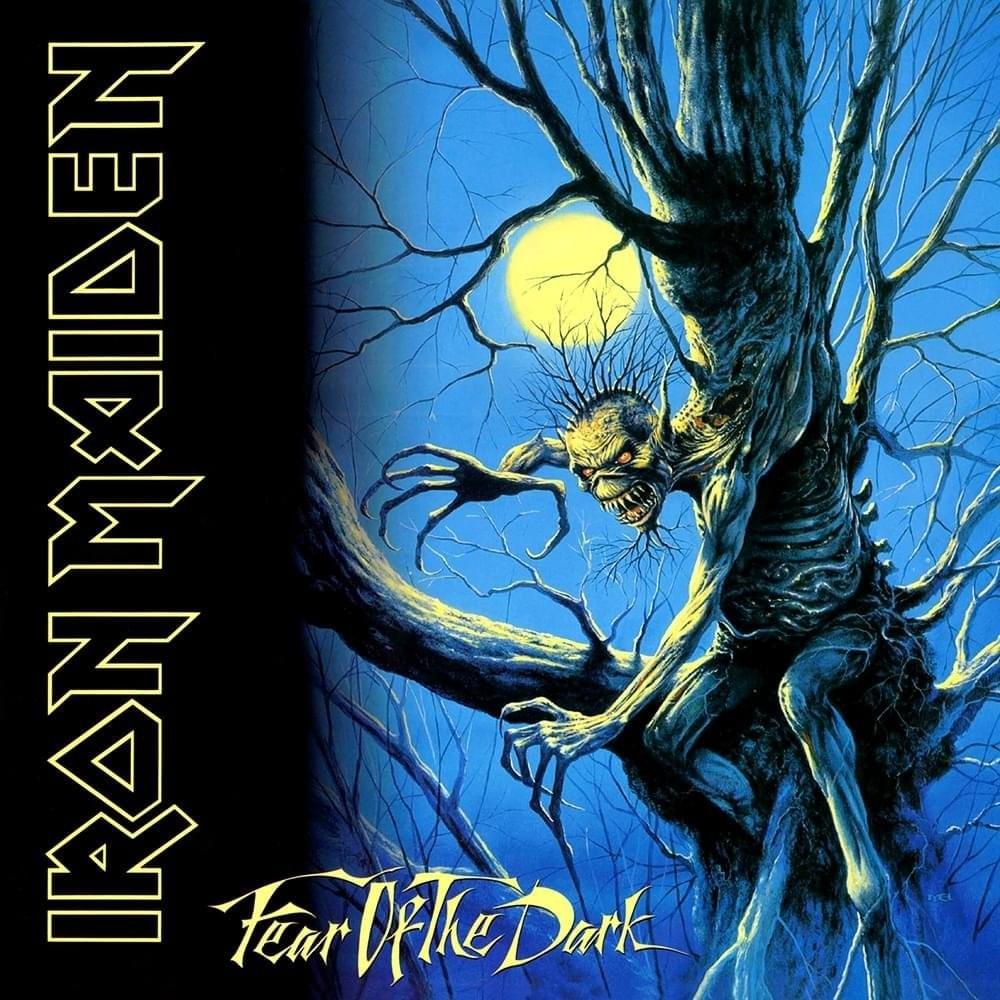
If you’re new to Iron Maiden and want to experience a melodic metal song that doubles as a horror anthem, “Fear of the Dark” is a must-listen. Written and composed by Steve Harris, Iron Maiden’s bassist and primary songwriter, the song vividly captures that feeling of walking alone at night with the uneasy sensation that something might be lurking just out of sight. It’s a powerful exploration of a common fear—the discomfort and paranoia that darkness brings—which makes it feel like a spooky bedtime story set to powerful music.
What really makes this song stand out is how the music and Bruce Dickinson’s dramatic vocals work together to build tension and then release it. The guitars start slow and eerie, setting a creepy atmosphere, then shift into faster, catchy melodies that ramp up the excitement and nervous energy. Dickinson’s voice is full of drama and really sells that feeling of fear mixed with urgency. It’s not just heavy music; it’s storytelling with heart and melody.
Plus, the lyrics reference classic horror themes like watching scary movies and ancient folklore, which makes the song feel timeless and accessible. It’s a perfect gateway into how metal bands can blend melody with horror themes, making it approachable even if you’re not usually into heavy music. Overall, “Fear of the Dark” showcases Iron Maiden’s skill at creating music that is not only thrilling but also emotionally gripping and narratively rich.
Fear of the Dark
I am a man who walks alone And when I’m walking a dark road At night or strolling through the park When the light begins to change I sometimes feel a little strange A little anxious when it’s dark
Fear of the dark, fear of the dark I have a constant fear that something’s always near Fear of the dark, fear of the dark I have a phobia that someone’s always there
Have you run your fingers down the wall And have you felt your neck skin crawl When you’re searching for the light? Sometimes when you’re scared to take a look At the corner of the room You’ve sensed that something’s watching you
Fear of the dark, fear of the dark I have a constant fear that something’s always near Fear of the dark, fear of the dark I have a phobia that someone’s always there
Have you ever been alone at night Thought you heard footsteps behind And turned around, and no one’s there? And as you quicken up your pace You find it hard to look again Because you’re sure there’s someone there
Fear of the dark, fear of the dark I have a constant fear that something’s always near Fear of the dark, fear of the dark I have a phobia that someone’s always there
Watching horror films the night before Debating witches and folklore The unknown troubles on your mind Maybe your mind is playing tricks You sense, and suddenly eyes fix On dancing shadows from behind
Fear of the dark, fear of the dark I have a constant fear that something’s always near Fear of the dark, fear of the dark I have a phobia that someone’s always there
When I’m walking a dark road I am a man who walks alone
 Through the Shattered Lens