Quickie Review: Running Scared (dir. by Wayne Kramer)


Director Wayne Kramer’s follow-up to his directorial debut (The Cooler) shows that he has a flair for drama and suspense that borders the line between reality and surrealism. Running Scared has such a gritty, washed out look right from the get-go that one starts to think it’s a film lifted right out of the 70’s. But that is only part of what Kramer does in creating a look and feel for Running Scared. Kramer actually uses every kind of trick in a director’s book to give his film such an over-the-top sense that the audience really doesn’t know what to expect just around the next dark corner.

Running Scared‘s first ten minutes sets up what the rest of the next two hours are going to be like. Kramer direct’s this ten minutes like a man possessed. The direction and editing is frantic and frenetic. Some have said that it’s all been done before by Tarantino, Woo and a dozen other action-stylists out of Hong Kong, but I disagree. Kramer’s style owes alot more to the grandfather of excessive film violence and that’s Sam Peckinpah. I’m not comparing Running Scared to Peckinpah’s seminal classic The Wild Bunch, but the pace and look of the chaotic shoot-out in the tiny apartment to start the film brings to mind the opening and closing shoot-outs of Peckinpah’s film.

Kramer knows he’s not making a social statement or even an intellectually relevant film. What he does know is that he wants to tell a fairy tale of one man’s hectic day and all the craziness he has to go through during that day. And this is what Running Scared really has turned out to be. A fairy tale set in an modern, dank, urban landscape where our hero (though anti-hero is more like it) and the two kids in his life must travel a surreal place filled with mack-daddy pimps, hooker with a heart of gold, corrupt cops and even a pair of child pedophiles who also turn out to be husband and wife. Running Scared is a like Grimms fairy tale as seen and told in a modern setting.

The cast of actors Kramer has assembled all do a good job in populating this violent, profane modern fairy tale. I’d be the last to think that Paul Walker was an actor who had any talent, but his performance in this film has given me pause to think that maybe its not him, but the projects he’s been doing that’s given him a bad reputation as an actor (which continues to this day as he continues to put himself in bad projects). Gone is the California surfer dude persona he seems to saddle himself with in most of his roles. He actually inhabits the low-level mobster soldier he plays as Joey Gazelle. This film may not be his breakout performance but it will open up some eyes. The boy’s got some skill he’s never been able to show before. The other actor who makes a standout performance is one Cameron Bright who plays Oleg. The neighbor kid whose theft of a mob gun Joey is suppose to make disappear turns Joey’s life upside down. Cameron’s almost like Pinocchio in that its through him that we see all the crazy characters he runs across. It’s a testament to Kramer’s direction that he’s able to get such good performances from Walker, Bright and the rest of the cast in a film that’s as confusing, complicated and surreal as this film turned out to be.

Running Scared was a wonderful surprise of a film for 2006. It’s an unabashed fun, thrilling urban fairy tale that goes for broke in everything it does. Wayne Kramer’s direction shows that his very good work in filming The Cooler wasn’t a fluke and one-time deal. He’s no Tarantino and surely not in the same league as Sam Peckinpah whose films this one owes alot to in style and feel, but he’s slowly making a name for himself as one who can do good work. Oh, Paul Walker does a good job in it as well.

The Dark Lord of the Sith is also a Televangelist


After seeing this video highlighted on G4TV’s Attack of the Show a couple days ago I just had to go to Youtube and favorite the video.

What else is there to say other than I knew televangelists were actually Dark Lords of the Sith in sheep’s clothing. My favorite part is close to the end where the hapless congregation just filed into his lightsaber strikes one after the other like they wanted to die.

Source: YouTube

Anime You Should Be Watching: Bible Black (Baiburu Burakku)


eroge: is a portmanteau of erotic game. It is a Japanese video or computer game that featured erotic content (usually pornographic in nature) and used anime-style artwork in a visual novel format.

Hentai as a genre first reached wide recognition through the notorious Chōjin Densetsu Urotsukidōji, a 1980s OVA that fused graphic sexual imagery with apocalyptic horror and violent fantasy. That work established many of the conventions that would define adult anime for decades—its blend of mythology, grotesque excess, and surreal eroticism pushing the boundaries of animation’s narrative potential. Bible Black represents a later evolution of that tradition, taking the transgressive energy of Urotsukidōji and refining it through a more contained setting, structured storytelling, and psychological tension. Where its predecessor reveled in grandiose chaos, Bible Black turned inward, exploring horror through ritual, secrecy, and moral decay within familiar, everyday environments.

Originally developed as an eroge visual novel, Bible Black featured the artwork of its creator, Shoujo Sei. The game’s popularity within Japan’s adult gaming market grew rapidly, fueled by its striking blend of erotic storytelling, occult imagery, and a sinister undercurrent that set it apart from typical romantic visual novels of its time. Its success inevitably drew the attention of Milky Studio, an animation company already known for adapting adult-oriented games into OVAs. Within a few years, Milky Studio produced the first Bible Black anime series—a six-episode OVA that closely followed the storylines and choices from the original game.

The anime adaptation centers on a high school caught in a web of witchcraft and forbidden rituals. While the premise may sound familiar to fans of the supernatural or occult genres, Bible Black distinguished itself by merging sexual and mystical elements in a way that felt both deliberate and unsettling. The first OVA mirrors the game’s basic storyline, introducing viewers to a world where innocent facades collapse under the weight of temptation and corruption. Later sequels and prequels expanded on this mythology, delving into the origins of the dark book that drives the narrative and introducing new characters entangled in its influence. In doing so, the series built a continuity resembling a twisted mythos—an interconnected body of stories that deepened its immoral mystique.

To describe Bible Black merely as “popular” within its niche would be an understatement. Its reputation extends far beyond its target audience, circulated through anime forums, recommendation threads, and cultural commentary as a kind of benchmark for erotic horror. It is the title almost universally cited when discussing adult-oriented anime, whether out of reverence for its artistic boldness or infamy for its transgressive imagery. For many viewers—particularly Western audiences in the early 2000s—it represented their first exposure to Japanese erotic animation beyond parody or rumor, granting it a strange, almost legendary status within the genre’s history.

What separates Bible Black from lesser works is the precision with which it fuses its erotic and occult motifs. The narrative’s backbone—the pursuit and misuse of a magical grimoire—offers an allegory for unchecked desire and the cost of power. Rituals blend seamlessly with acts of seduction, and the visual motifs of pentagrams, candles, and bloodstained rites serve as metaphors for obsession and spiritual decay. This combination gives the anime an intensity uncharacteristic of typical adult fare, as every encounter is charged not only with physical desire but also with moral and supernatural consequence. Rather than treat sexuality as isolated spectacle, the series enfolds it within its darkly coherent world, ensuring that sin and pleasure remain inseparable.

The “harem” narrative structure, common to many eroge and visual novels, is used here with a more perverse edge. The typical male protagonist surrounded by female admirers becomes a focal point not of romantic fulfillment, but of temptation and corruption. In Bible Black, that dynamic is steeped in manipulation and control—sex as both a weapon and a spiritual act. This inversion of a familiar trope contributes to the series’ enduring fascination, as it refuses to comfort the viewer with the conventions of fantasy romance. Instead, it constructs an atmosphere of moral ambiguity and psychological pressure, leaving few characters untainted.

The setting amplifies the discomfort. By situating its story within the environment of a high school—a space symbolically associated with innocence and growth—Bible Black subverts expectations. The classrooms and corridors that should represent order and safety become arenas for forbidden rites and hidden depravity. This juxtaposition between the mundane and the macabre intensifies the sense of violation that defines the series. It’s not only a story of erotic ambition but of how institutional and moral structures collapse when confronted by unchecked desire and occult power.

Visually, the anime reflects its early-2000s production values with surprising sophistication. Milky Studio preserved the visual style of Shoujo Sei’s original artwork—marked by angular features, bold contrasts, and expressive eyes—while enriching the material with atmospheric lighting and strong sense of color. The palette alternates between the sterile brightness of school life and the dim, saturated tones of ritualistic scenes, crafting a visual rhythm that heightens tension between two worlds. Despite the limited resources typical of an OVA, the series achieved a memorable aesthetic identity, merging the glossy surfaces of contemporary anime with the raw suggestiveness of eroge art.

As Bible Black expanded into sequels like Bible Black: New Testament and various side stories, its universe deepened both narratively and tonally. The newer installments explored different perspectives and timeframes, revealing the long shadow of the original events. This serial approach—rare for hentai productions—allowed the franchise to form a loose continuity, almost like a dark fantasy saga built around erotic and esoteric principles. The cumulative effect was that Bible Black ceased to be a one-off novelty and became a defining thread in the history of animated erotic horror.

Its cultural impact extends further still. Bible Black served as one of the first major adult anime titles to gain substantial attention outside Japan during the rise of online fan communities. Through fan distribution and unofficial translations, it became many Western viewers’ first encounter with themes such as futanari—depictions involving gender transformation or dual sexual anatomy—which had previously remained obscure outside Japan. The OVA thus became not only a product of its domestic industry but also a cultural export that introduced global audiences to the specialized lexicon and aesthetics of Japanese hentai.

Critically, Bible Black remains an object of contention. Its explicitness renders it indefensible to some, yet others recognize within it a degree of thematic intent that surpasses mere sexual provocation. It approaches the occult not with romantic mysticism, but as an allegory for moral erosion and human vulnerability. Erotic acts in the series often parallel spiritual corruption, suggesting that the boundary between pleasure and damnation is perilously thin. The result is an anime that provokes both physical and intellectual reactions—equally discomforting in its carnality and symbolism.

Even after more than two decades, Bible Black maintains relevance and recognition. Later works have tried to replicate its formula—mixing fetishes with supernatural dread—but few possess its coherence or audacity. Its imagery, tone, and structure continue to influence adult creators seeking to merge explicit content with narrative ambition. Moreover, the series exemplifies a moment in anime history when the medium’s adult side dared to pursue storytelling complexity rather than rely solely on erotic novelty.

Viewed today, Bible Black endures as both time capsule and touchstone. It captures an era when the boundaries between mainstream anime and adult experimentation briefly blurred, and when eroge culture translated successfully to animation with both narrative depth and artistic conviction. Whether judged as an expression of taboo horror, a stylistic artifact of its generation, or a benchmark for the fusion of sex and the supernatural, Bible Black stands as one of the most distinctive and controversial works in anime’s underground lineage. Its lasting infamy, like its allure, lies in its refusal to separate desire from darkness—a union as seductive as it is terrifying.

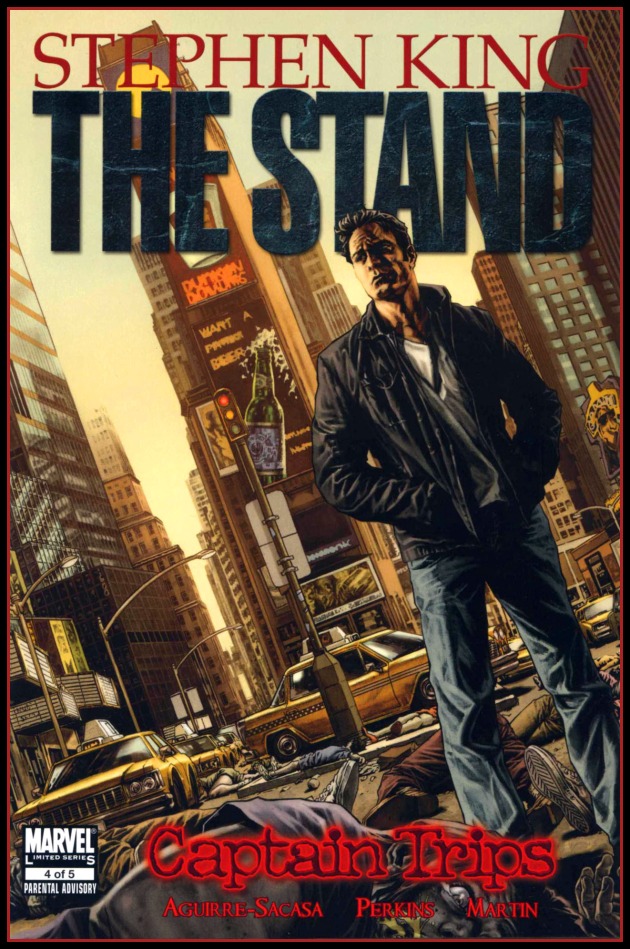
Stephen King’s The Stand to Trip Up Onto the Big-Screen


Stephen King properties sure has been heating up around Hollywood of late. For the past month or so we’ve had almost weekly news about Ron Howard’s plans for King’s massive book series, The Dark Tower. Today news that the role of Roland Deschain, the Gunslinger, has been offered to Spanish-actor Javier Bardem shows that the planned film adaptation of The Dark Tower is moving forward.

Now, according to The Hollywood Reporter blog Heat Vision, Warner Brothers and CBS Films are planning to co-produce the film adaptation of another Stephen King property and one many of his fans consider as their favorite. I consider myself one of those fans and I’m actually quite excited that these two studios are looking to adapt the epic, apocalyptic novel The Stand.

The novel already was adapted into a mini-series by Mick Garris in 1994, but that adaptation didn’t satisfy the book’s fans as its producers were hoping for. This planned film adaptation looks to give The Stand a grand stage to be shown to its old and new fans. While trying to adapt a novel that is over 1200 pages long might seem daunting the same was said about trying to adapt a novel that was three times it’s length and that one succeeded beyond anyone’s expectations. If Peter Jackson can take The Lord of the Rings and create an epic masterpiece out of such a dense piece of literature I think King’s The Stand should make just as good a transition.

Here’s to hoping that this particular apocalyptic project gets on the fast track and doesn’t get bogged down in development hell the way another apocalypse-themed film project has found itself in: Max Brook’s zombie epic novel, World War Z.

Source: The Hollywood Reporter

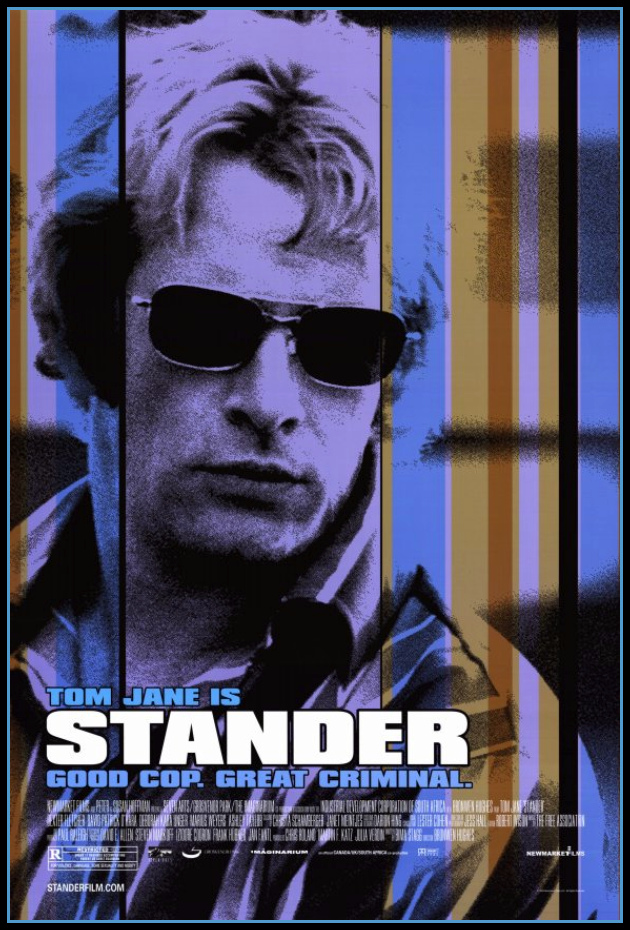
Quickie Review: Stander (dir. by Bronwen Hughes)


Stander was a very good film about the real-life exploits of Andre Stander, Lee McCall and Allan Heyl who were known collectively as The Stander Gang. The Stander Gang was well-known for their daring and reckless bank robberies in their homeland of South Africa. The film stars Thomas Jane (The Punisher, The Mist) as the title character with Dexter Fletcher (Band of Brothers and Lock, Stock and Two Smoking Barrels) and David Patrick O’Hara (Braveheart, Doomsday) rounding out the rest of the Stander Gang.

The film starts off introducing Andre Stander as a highly decorated member of the South African Police Force in the late 1970’s and the beginning of the anti-apartheid movement. It shows Andre Stander’s growing disgust and disenchantment in his government’s racist apartheid policies and his own role in enforcing it. After a violent and brutal break-up of an anti-apartheid protest gathering where Stander kills a protestor, the film begins to move into meat of the story. Stander’s disenchantment with the government causes him to commit bank robberis in audacious fashion as a way to rebel and defy the very state he has sworn to protect and serve.

The scenes where Stander commits these bank robberies were shot well and showed just how daring Andre Stander really was in his exploits. There’s even a sequence where he returns to the scene of his most recent crime to investigate the robbery. A robbery he just committed just hours before during his lunchtime. These scenes and the later ones when he’s joined by two other bank robbers shows Tom Jane at his finest. I think many would be hard-pressed not to think Jane’s performance as a South African, accent and all, wasn’t authentic. His charisma ruled throughout the film and was mostly evident through the many bank robbing sequences. He truly gave Andre Stander the air of a Robin Hood character who, despite his criminal acts, became a sort of folk antihero.

The second half of the film details the exploits of Stander after his incarceration for his bank robberies while a captain of the South African Police Force. It’s here that we meet the rest of Stander’s Gang as he recruits fellow inmate and outlaws Lee McCall and Allan Heyl. Even the way Stander engineers his escape from the work-prison he has been sent to shows his daring in thumbing his nose at the state and the police he used to be a part of. Dexter Fletcher was very good as the twitchy and less stable Lee McCall whose nerves begin to fray the bolder and bolder the gangs bank robberies become. David Patrick O’Hara was also good as the very professional bank robber Allan Heyl. Heyl didn’t have the charisma that Stander had, but he was the rock which kept the robberies from spiraling out of their control. It was great to see O’Hara in another strong role. Some might recognize him as the scene-stealing Stephen, the Irish rebel who joins William Wallace’s fight against the English during Mel Gibson’s Braveheart.

The rest of the film was pretty much one bank robbery after the other with the Stander Gang always one step ahead of the police task force put together to capture them. In a twist of fate, the task force was headed by Stander’s former friend in the police force Cor Van Deverter whose intimate knowledge of Stander’s tactics and thought-processes helps in slowly closing the noose around the gang. There’s abit of a repetition in the robberies and the getaways, but they serve an important purpose of slowly building up the Stander Gang’s folk hero status amongst the population. It also showed the effect it had on some of the members of the gang. As popular and infamous the gang had become they were still outlaws who knew that sooner or later their luck would run out and they’d either be put back into prison or killed outright. For some it was the latter and for others the former.

Throughout the film, one could sense that some of the motivations behind Andre Stander’s actions as a bank robber was to assuage his guilt over the sanctioned acts of brutality he had to perform to protect the apartheid government of his nation. The film and the story being told was almost a full-length film of Stander’s attempt to make up for his past transgressions. And what better way to do this than use the system of the state against itself. He himself points out that a white man could get away with anything when most of the policemen in the city were called away to deal with an emergency regarding the black majority population. Stander realizes this to be true and his second career as a bank robber was born. The film only hints at him being a very good policeman, but the majority of the film shows just how much better he was as a criminal.

The film was expertly directed by Bronwen Hughes and as said earlier had strong performances from all the main leads in the film. The story rarely slowed down to the point that the story lost its direction. Every scene always led to the next part of the story being told until the very bitter end. Stander was a very good film anchored by a fine performance from Thomas Jane. The film showed a brief glimpse into South Africa’s apartheid past and how one individual’s decision to defy the state led to a brief, but daring life of a modern-day Robin Hood.

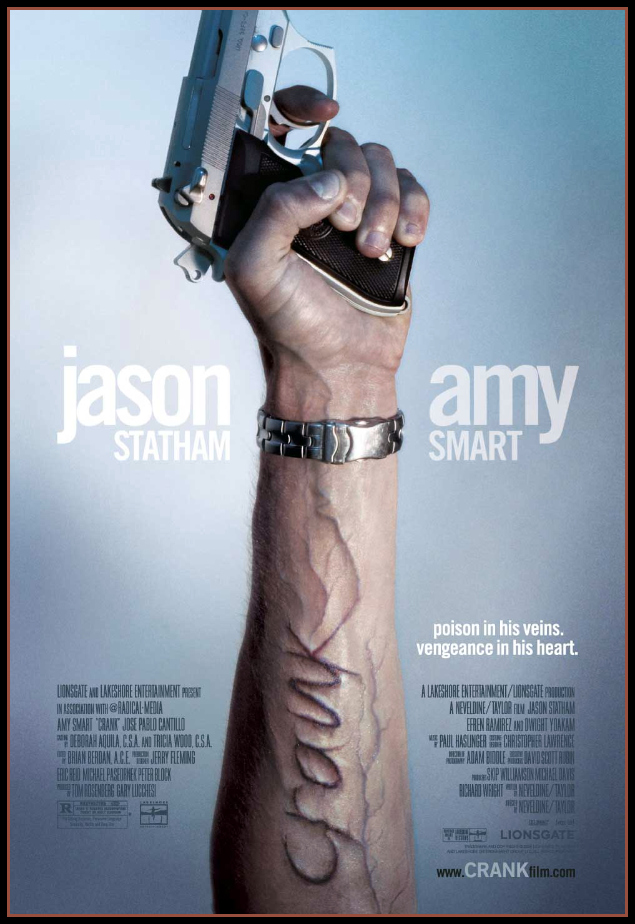
Review: Crank (dir. by Neveldine/Taylor)


Through the Shattered Lens has been quite eclectic when it comes to reviewing films, music and all forms of entertainment. While we’re not averse to the more high-brow and artistic fare what will come across to most visitors of the site is how love for grindhouse and exploitation films are quite strong in this place. Grindhouse and exploitation of the 60’s, 70’s and 80’s usually fill the bill but once in a while a certain film of aq more recent time frame will make the cut. One such film is the over-the-top, ultraviolent and extremely funny film Crank from Mark Neveldine and Brian Taylor, or as they like to call themselves, Neveldine/Taylor.

One thing I must point out is how this movie has confirmed Jason Statham in my eyes as the current action-star of the last couple years. A favorite of Brit action-auteur director Guy Ritchie, Statham has gradually built himself a decent list of action-movies that take good advantage of Statham’s old-school sense of machismo and smirking confidence reminiscent of the such past macho actors like Lee Marvin, Charles Bronson and Steve McQueen just to name a few. Statham is thick in body, but none too muscular and his wry, British sardonic personality mixes well with his many different action-movie personas. In Crank he pretty much steals and holds the ludicrous and unique different plot from spiralling out into camp and MST3K territory. Even though Statham would never be considered an acting giant, his performance as the hitman Chev Chelios racing against time to avenge his inevitable death was very well done. Crank starts with a bang and doesn’t let up. Like the actions and behavior of its main character, this film seems to be racing towards the end and not caring to slow down and give the audience a chance to take a breather. He literally willed this film to be nothing but crazily entertaining.

Many have called the idea for Crank as another derivative of the mid-90’s action film Speed. I’d be the first to say that they’re really not off the mark by much. Instead of a bus wired to explode if it dips below a predetermined speed, Crank puts the same premise and uses a human body instead. The human in question is one Chev Chelios whose botching of a contract hit lands him in a bit of hot water with the underworld bosses who hired him to do the job. Ambushed and knocked unconscious, Chelios soon wakes up to realize that something is definitely wrong with him. A bit of villain grandstanding from the employer he disappointed, Chelios quickly finds out that he has been injected with an exotic cocktail of chemicals called the Beijing Cocktail (definitely sounds like something made-up for a grindhouse flick) which would kill him by inhibiting his body’s ability to produce adrenaline. He learns from a colleague that he will need to keep his adrenaline pumping constantly to remain among the living and must do so by any means necessary. Whether he accomplishes this through extreme physical activities, drugs, and energy drinks Chelios must do them all in order to buy himself enough time to tie up lose ends in his life and to find the employers who have killed him. That is pretty much the story of Crank in a nutshell.

Crank doesn’t take much of the film’s early minutes to explain some backstory on Chelios other than him being a professional hitman. Instead writer-directors Neveldine/Taylor use the entire running time of the movie to gradually give glimpses into what kind of a person Chev Chelios is. With their use of handheld digital cameras and kinetic-style editing and camera shots, Neveldine/Taylor takes the premise of Crank and lets the audience ride along not just as passive viewers but almost like active participants. The “in the now” look of the film with some shots angled so that they’re almost in first-person or over the shoulder views doesn’t look as gimmicky as it sounds. One film released the same year that compares to Crank in terms of unique filmmaking for an action film it would be Running Scared that was released earlier this year. Both take the action flick conventions and dare to rise above it either through a dark fairytale style that was Running Scared or the manic, darkly amoral humor that gives Crank such an exhilirating sense of pacing.

The one thing that people will remember most about this movie is the many action sequences that happen throughout the film. With their decision to use handheld digital cameras, action sequences in Crank take on an almost hyperkinetic look to them. Again this film shares some similarities with Running Scared with how its action sequences were shot with such inventive use of angles and framing not to mention in-your-face violence. Crank has less of the surreal quality of Running Scared and more of a live newscast. In fact, at times I felt as if I was watching a news crew vainly chasing after Statham’s character as he paints the Los Angeles with non-stop adrenaline-pumping violence and activities. Whether its him getting into an outnumbered free-for-all brawl with a certain inner-city gang or having a very impromptu, unexpected and thoroughly indecent display of public affection with dozens in witness, the film’s amoral and sense of active nihilism makes this film a most politically-incorrect one. There’s a scene involving a taxi driver that was wrong on so many levels yet it invoked some of the biggest laughs and reactions from myself and the audience around me when I first saw it in the theaters.

The violence comes hard and fast and unlike Statham’s past couple of Transporter flicks, there’s nary a martial art choreographed fight scene to be seen. No, Chelios is an action film character who attacks and fights with sudden directness and brutality with as little movements required as possible. Chelios doesn’t need kung fu or karate moves to take out an opponent when a a well-placed kick, punch, elbow, etc…is all that’s needed to put a man down. Crank’s action sequences also had no CGI used (something I learned prior to seeing the film) with Statham doing most of his stunts. This wouldn’t be too much of a big deal until one factors in the fact that one of the action pieces takes place in a helicopter flying a thousand or so feet above the street of LA. Statham must have quite a steely pair if there’s truth behind him doing that helicopter fight with no greenscreen CG trickery or wire-fu assistance used.

Outside of Statham the rest of the cast took to their roles with a relish and had fun with them. And as with every action-flicks the hero will need a foil to motivate him. Statham’s Chelios has his opposite number in Verona played with thuggish calculation by Jose Pablo Castillo. Then there’s Doc Dwight Yoakam as Doc Miles. Chelios’ acquaintance whose knowledge of all things chemical borders on the absurd but in Crank makes it work. But the other performer who stood out outside of Jason Statham has to be Amy Smart as Chelios’ ditzy but well-meaning girlfriend, Eve. She plays this character to the hilt and seem to be having a ball while doing so. Her outdoor scene of PDA with Statham and a follow-up scene during a car chase shows me that Ms. Smart was pretty game about going all the way with how to portray her character.

I won’t mention too many more details on what actually happens in the film since I think its best to see it for oneself. Words can’t really describe the sheer insanity and fun mayhem this movie puts up on the big-screen. The story may not be too original and it’s lead may not be the best actor out there, but what Statham lacks in acting proficiency he more than makes up for sheer charisma and old-school machismo that’s way too rare in action-flick actors nowadays. Crank is more than your run-of-the-mill action movie. The creativity shown by writer-directors Neveldine/Taylor gives Crank a unique look and their attempts to try new techniques succeeds more than it fails. But in the end this film lives and dies on the shoulders of Jason Statham who I must say is the action-hero of this new generation of actors.

So, better grab hold tight of something or someone, because this film is one hell of a ride and you’re not getting off until the very end whether you like it or not.

Song of the Day: Am I Evil? (by Diamond Head)


Since I have been in a metal state of mind since finding out that The Big 4 of thrash metal would be appearing together on-stage this coming April 23 at Indio, CA I just had to pick a metal song for the latest “Song of the Day”. The song picked was an easy choice. It was Diamond Head’s classic metal track, “Am I Evil?”, from their 1980 debut album Lightning to the Nations.

Taking inspiration from the openings of both Black Sabbath’s “Symphony of the Universe” and Gustav Holst’s “Mars, the bringer of war”, the beginning of Diamond Head’s “Am I Evil?” has become one of the most recognizable and beloved of all metal songs. Right from the start the song just oozes an aura of heavy evil and the lyrics of a young boy who witnesses his mother’s witch-burning and his quest to avenge that death just adds to the doom and gloom of the song.

Diamond Head was part of the New Wave of British Heavy Metal (NWBHM for short) bands which bridged the Atlantic from the mid-to-late 70’s all the way into the early part of the 80’s. While they were not as successful as other groups who came out of the NWBHM scene like Judas Priest, Iron Maiden and Def Leppard they were a huge influence on another growing subgenre of metal that was about to give birth in the U.S.

I speak of the rise of thrash metal and how it’s four horsemen (Metallica, Anthrax, Slayer and Megadeth) would look to Diamond Head as one of the NWBHM bands which influenced their sound with all four looking at Diamond Head’s “Am I Evil?” as one of those songs which taught them what heavy metal really meant.

It’s no surprise that during the concert tour season of 2010 these four giants of thrash metal would tour together and do seven shows with the show in Sofia, Bulgaria ending with three of the four bands sharing the stage to cover this Diamond Head classic.

Whether played by Diamond Head, Metallica or the Big 4 just listening to “Am I Evil?” definitely makes one feel like their soul just got darker and their heart colder. Just the way heavy metal should affect anyone and be glad that it does.

Am I Evil?

My mother was a witch, she was burned alive
Thankless little bitch, for the tears I cried
Take her down now, don’t wanna see her face
Blistered and burnt, can’t hide my disgrace

27 every one was nice, gotta see them,
Make them pay the price
See their bodies out on the ice, take my time

Am I evil, yes I am
Am I evil, I am man

As I watched my Mother die, I lost my head
Revenge now I sought, to break with my bread
Takin’ no chances, you come with me
I’ll split you to the bone
Help set you free.

27 every one was nice, gotta see them,
Make them pay the price
See their bodies out on the ice, take my time

Am I evil, yes I am
Am I evil, I am man

On with the action now, I’ll strip your pride
I’ll spread your blood around, I’ll see you ride
Your face is scarred with steel, wounds deep and neat
Like a double dozen before you, smell so sweet.

27 every one was nice, gotta see them,
Make them pay the price
See their bodies out on the ice, take my time

Am I evil, yes I am
Am I evil, I am man

I’ll make my residence, I’ll watch your fire
You can come with me, sweet desire
My face is long forgotten, my face not my own
Sweet and timely whore, take me home

The Big 4 to Thrash Indio, CA For A Day


First news that 70,000 tons of metal wasn’t a scam and thus automatically becoming the greatest cruise ever to put out to see. Now, news of The Big 4 doing a show in the US a week after the Coachella Music Festival in Indio, California.

Who are The Big 4 and why do I sound excited about this news. Well, The Big 4 are the four greatest thrash metal bands and one could say four of the greatest metal bands to ever grace the land of heavy metal. The Big 4 show will include the bands Anthrax, Megadeth and Slayer with the biggest of the four in Metallica looming over everyone. Yes, these four bands will be performing together for the first and only time on U.S. soil. They had done a similar tour over in Europe last year and each show were sold out and were a headbanging success.

While I won’t be able to make the show (already committed to attending Anime Boston which will occur the same weekend) I’m sure there’s enough people who read this site who live in California and wish to partake on this very metal of an event.

Tickets will go on sale on January 28, 2011 so metal fans who want to attend better get to buying them tickets and raise the horns!

*I’m sure necromoonyeti wishes he could attend this show as well as 70,000 tons of metal.

*Also, the fact that the Coachella Music Festival seems to be lacking in the metal department makes that 3-day event an #epicfail

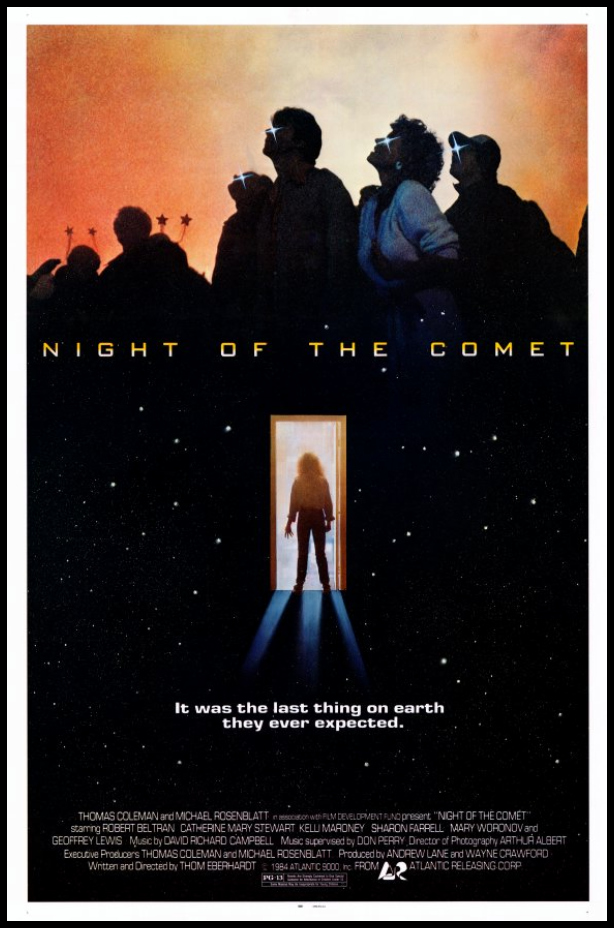
Quickie Review: Night of the Comet (dir. by Thom Eberhardt)


Night of the Comet took advantage of the return of Halley’s Comet hype which ran through nation and pretty much most of the world throughout most of 1984 and into 1985. Hollywood being the opportunist industry that it was (and still is) were quick to produce and release a movie about the return of Halley’s Comet over the planet as soon as possible. The 1980’s was a good decade for the low to mid-budgeted horror and sci-fi movies which had a quick death at the box-office but which gained success and cult status in the many displays racks of the tens of thousands of video rental places. 1984’s Night of the Comet was one of these films and it typifies the cheesiness that was 1980’s scifi horror.

The film opens up with everyone partying the arrival of Halley’s Comet which could be seen in the night sky every 75-76 years. This time around the planet will pass through the comet’s tail which has only happened once and that was 65 million years in the past. People are out on the streets as night falls celebrating the Comet’s arrival and we meet two of the main characters in the film in the form of Regina (80’s genre icon Catherine Mary Stewart) and Samantha (Kelli Maroney). Two sisters who truly epitomizes the mall and valley culture of 1980’s Southern California, Regina and Samantha are not enjoying the night of the comet as Regina ends up working the night shift at the local theater she works at and Samantha is stuck at home with her stepmother and all the partygoers attending her stepmom’s party. In the span of a few sequences both Regina and Samantha end up locking themselves up somewhere quiet and safe to get away from the party going on around them.

While they stew in their own little, steel-lined hideaways the comet makes its pass over the planet with everyone who can see looking up to take a peek of the returning comet. What happens next sets up the rest of the movie. The comet seem to have turned anyone not protected behind heavy steel structures into red dust and those only half-protected end up turning into zombie-like creatures. Luckily for the two sisters they were inside such heavy steel structures when the comet did its pass over and were well-protected. The rest of the movie deals with Regina and Samantha dealing with the possibility that they may be the last people on the planet (though this soon get shotdown with the arrival of Commander Chakotay of Star Trek Voyager…I mean Robert Beltran) and trying to keep themselves from being eaten by the zombie survivors and being tested upon by shady, secret government scientists.

Night of the Comet won’t win any awards even from horror and science-fiction groups, but it will entertain to a point. For those who grew up during the 80’s the movie will bring back fond, if painful memories of just how cheesy that decade was in terms of pop culture. Catherine Mary Stewart as Regina would be seen in more cheesy horror flicks of the era. In fact, she pretty much became the PG-13 version of 80’s Scream Queen Linnea Quigley. Where Ms. Quigley wasn’t against gratuitious nudity and sex in the movies she was in, Ms. Stewart was very chaste and very girl next door in her roles.

Would I recommend this movie to people? Yes, I would but buying the dvd might be more for the hardcore horror and scifi completist since one can easily see Night of the Comet on regular and cable TV. In the end, the movie is a fun romp back through time to a weird and different era. The movie is not great, but it’s not bad either.

Top 25 Films of 2010


I’ve been slacking off about getting this particular list down and posted, but with film news being quite slow outside of Oscar-related items I thought it was time to get my lazy ass to get this done. Some of the titles I’ll mention are favorite films of 2010 for me while others only made it onto the list not because I liked or even enjoyed them, but they were just well-executed and made.

A couple of the titles I’ve listed also made their premiere’s in their home country earlier than 2010, but it wasn’t until this past year that they were shown here in the U.S. thus it qualifies as a 2010 for me. For those who have seen the very final title on my list should know that this is one title that I definitely didn’t find entertaining at all, but found it to be as daring and as subversive as another film made decades before it which received similar negative reactions from many: Pier Paolo Pasolini’s Salo.

  1. Black Swan
  2. True Grit
  3. Inception
  4. Restrepo
  5. Winter’s Bone
  6. The Fighter
  7. The King’s Speech
  8. Kick-Ass
  9. The Last Exorcism
  10. Animal Kingdom
  11. Un prophète
  12. Lebanon
  13. Let Me In
  14. Despicable Me
  15. The Social Network
  16. Scott Pilgrim vs. The World
  17. Toy Story 3
  18. Waiting for Superman
  19. How To Train Your Dragon
  20. The Town
  21. Mesrine
  22. Mother
  23. Carlos
  24. Blue Valentine
  25. A Serbian Film