Horror Film Review: Challenge the Devil (dir by Giuseppe Vegezzi)


Oh, where to start with the 1963 Italian film?

A criminal named Carlo lands in Italy and soon finds himself being pursued a group of gangsters.  An extended shoot-out leads to Carlo being serious wounded.  Carlo stumbles into a church, where he is met by a monk who used to be an friend of his.  Carlo explains that he has been blackmailing a Beirut crime lord and now the crime lord’s men are after him.  Unfortunately, Carlo gave all the evidence to an exotic dancer and now he needs the evidence back but, obviously, he can’t show his face in the streets.  The monk goes to a nightclub and, after watching several different cabaret acts that have nothing to do with the rest of the film, he finally gets a chance to talk to the dancer.  The dancer is also an old friend of his but hasn’t seen him since he became a monk and she demands to know what led to this development in his life.  The monk tells her the story of his past, in return for her giving him the evidence.

In the distant past, the monk was a part of a motorcycle gang led by wannabe gangster Gian (Mario Polletin) and a failed poet, Gugo (Giorgio Ardisson).  One day, Gian, Gugo, the future monk, and their respective girlfriends decided to break into an apparently deserted castle, where they decided to have a wild party.  Of course, to them, a wild party meant playing the bongos and drinking wine.  However, it turned out that the castle wasn’t totally deserted.  There was an old man (Christopher Lee) living in the castle and the old man explained that the love of his life had died years before and that her body was somewhere in the castle.  If Gugo and the gang found her body and brought her to the old man so that he could give her a decent burial before his own death, the old man would give them the castle.  The greedy and drunken gang agreed but they soon discovered that the castle was full of secrets and the old man was not quite who he claimed….

Challenge The Devil is a thoroughly disjointed film, one with a plot that is almost impossible to follow.  Some of that is because of the film’s troubled production history.  Originally, the film was titled Katarsis and it was simply about the gang coming across the castle and meeting Christopher Lee.  However, after the film was shot, the production company went out of business and the film’s new owner decided to re-edit the film and tack on the scenes involving Carlo, the dancer, and the monk.  None of the new scenes fit with the style of the old scenes and, indeed, all of the nonsense with Carlo and the dancer means that the film’s main story doesn’t even get started until after about 20 minutes of filler.  Of course, it should be noted that even the original version of the film doesn’t look like it was that good.  This was director Giuseppe Vegezzi’s only feature film and he shows very little natural ability when it comes to framing shots or creating atmosphere.

But what about Christopher Lee, you may be asking.  He’s fine.  I mean, Christopher Lee is imposing and his physical presence is so strong that he even makes an impression in a bad film.  But Lee only gets a few minutes of screen time.  For his part, Lee said that this was one of the film that he did for the money and he never actually saw the finished product.  I don’t blame him.  This one is for Lee completists only.

4 Shots From 4 Films: Special Charles Band Edition


4 Shots From 4 Films is just what it says it is, 4 shots from 4 of our favorite films. As opposed to the reviews and recaps that we usually post, 4 Shots From 4 Films is all about letting the visuals do the talking.

This October, I am going to be using our 4 Shots From 4 Films feature to pay tribute to some of my favorite horror directors, in alphabetical order!  That’s right, we’re going from Argento to Zombie in one month!

Today’s director is Charles Band, the legendary founder of Full Moon Pictures!

4 Shots From 4 Charles Band Films

Meridian: Kiss of the Beast (1990, dir by Charles Band, DP: Marc Ahlberg)

The Creeps (1997, dir by Charles Band, DP: Adolfo Bartoli)

Puppet Master: The Legacy (2003, dir by Charles Band, DP: Marc Ahlberg)

Evil Bong 888: Infinity High (2022, dir by Charles Band, DP: Alex Nicolaou)

Horror Film Review: Waxwork II: Lost In Time (dir by Anthony Hickox)


1992’s Waxwork II opens with the finale of the first Waxwork.  The cursed waxwork is burning to the ground, taking out the monsters within, along with Sir Wilfred (Patrick Macnee) and Wilfred’s army of do-gooders.  Only Mark (Zach Galligan) and Sarah (now played by Monika Schnarre) are able to escape.  Fleeing the burning building, they manage to catch a cab.  Sarah wonders what they’re going to do now.  Mark replies that they’re going to go back to school and pretend that none of this ever happened.

Good luck with that!  It turns out that one other thing did escape from the waxwork.  A disembodied hand follows Sarah home and murders her abusive stepfather.  Sarah manages to drop the hand down the garbage disposal, destroying it but also destroying the only proof she had that she didn’t kill her stepfather.  Sarah is put on trial for murder and the jury does not appear to be impressed with her “It was a supernatural creature” defense.

What she and Mark need is proof that the waxwork was full of monsters.  Fortunately, a trip to Sir Wilfred’s house reveals not only a recording of Sir Wilfred explaining how there’s an alternative universe known as the Kartagra but also a compass that can be used to find portals into the Kartagra.  Mark and Sarah enter the Kartagra, searching for proof of Sarah’s innocence.

Mark and Sarah go from one universe to another, meeting iconic horror characters along the way.  Just as with the exhibits in the first film, each universe features it own set monsters and its own distinctive style.  For instance, Mark finds himself suddenly cast in the role of Henry Clerval, best friend of Baron Frankenstein (Martin Kemp) and the lover of the Baron’s wife, Elizabeth (who is actually Sarah).  Of course, the Baron has more to worry about than his wife cheating with his best friend.  There’s also the angry monster living in the basement and the angry villagers that are due to start pounding on the front doors of the mansion.

Later, Mark finds himself in a black-and-white recreation of The Haunting of Hill House, working with a researcher (Bruce Campbell) and two psychics to investigate reports of a ghost at an old house.  Mark must bring peace to the ghost while avoiding all of the slapstick complications that one might expect when Bruce Campbell shows up as a paranormal researcher.  While Mark is dealing with that, Sarah is floating in space, trying to protect the crew of her dingy spaceship from an acid spewing alien.

You get the idea.  Waxwork II is essentially an affectionate collection of homages to other, better-known horror films and it must be said that Waxwork II does an excellent job of recreating each film, from the crisp black-and-white of haunted house scene to the grittiness of the Alien sequences to the over-the-top swordplay of a trip to a medieval world.  There’s even a trip to the mall from Dawn of the Dead!  Wisely, Waxwork II doesn’t take itself particularly seriously, with many scenes developing into outright comedy.  Zach Galligan gives an enjoyable and nicely modulated comedic performance, even holding his own with Bruce Campbell.

At 104 minutes, Waxwork II runs a bit too long for its own good but it ends on a sweet note that nicely wraps up the entire saga.  It’s a film that works as both a continuation of Waxwork and as an entertaining film on its own.

Horror Film Review: Invisible Agent (dir by Edwin L. Marin)


In 1942, the world was at war and everyone, whether a soldier or a civilian, was expected to do their part for the war effort.  That included the best and the brightest of Hollywood.  Stars like Jimmy Stewart, Clark Gable, and Henry Fonda enlisted in army.  Others sold war bonds and narrated patriotic news reels.  Even the Universal monsters did their part for the war effort, with the Invisible Man becoming the Invisible Agent in the 1942 film of the same name.

Invisible Agent opens in 1940, with Frank Griffin, Jr. (Jon Hall), the grandson of the original Invisible Man, being confronted by a Nazi (Sir Cedric Hardwicke) and a Japanese spymaster (Peter Lorre) at his print shop in Manhattan.  They want his grandfather’s invisibility formula.  At first, they offer to pay him for it.  Then, when Frank refuses, they threaten to chop off his fingers.  Frank manages to escape with both his fingers and the formula.  As Frank later tells the Americans, he’s not willing to give the formula to anyone because he knows how dangerous it can be if not used properly.  As far as Frank is concerned, the formula must never be used again.  Frank does say that he might change his mind under extraordinary circumstances.

The film cuts to a series of headlines announcing that the Japanese have bombed Pearl Harbor.  The circumstances are now extraordinary and Frank agrees that it is time to use the formula for the war effort.  But he agrees to do so on the condition that only he be allowed to take the formula.  Frank becomes the Invisible Agent, taking the formula and then parachuting into Nazi Germany.  Unseen, Frank searches for information about Nazi spies in the U.S. and the details of Germany’s plan to bomb New York.  Along the way, he meets Maria Sorenson (Ilona Massey), a wealthy German woman who is lusted after by the members of the German high command but who is actually working for the Resistance.  Frank also finds himself, once again, coming across the two men who previously threatened him in New York.

Here are the positive things about this film.  Invisible Agent has an intriguing premise.  The Nazis are such monsters that even the once fearsome Universal monsters are joining the effort to take them down.  The film also features two intelligent performances from Cedric Hardwicke and Peter Lorre, both of whom bring some unexpected shadings to their villainous roles.  The opening scene in Manhattan plays out like an intense film noir and, once the action moves to Germany, director Edwin L. Marin keeps things moving at a steady pace.

Unfortunately, Invisible Agent has one huge problem that it cannot overcome.  Jon Hall gives a remarkably charmless performance in the title role, flatly delivering his lines and showing very little in the way of personality.  When you’re not seen for the majority of the film, it’s important to have a voice that’s full of personality.  That’s one reason why the previous Invisible Man films benefitted from the casting of actors like Claude Rains and Vincent Prince.  Jon Hall, on the other hand, just comes across as being dull.  He gives a boring performance, whether visible or not and, as a result, Invisible Agent falls flat in a way that the previous Invisible films did not.  There’s no real stakes in his turning invisible because there really wasn’t much to him to begin with.

Still, I thank the Invisible Agent for his service.

Previous Universal Horror Reviews:

  1. Dracula (1931)
  2. Dracula (Spanish Language Version) (1931)
  3. Frankenstein (1931)
  4. Island of Lost Souls (1932)
  5. The Mummy (1932)
  6. The Invisible Man (1933)
  7. The Bride of Frankenstein (1935)
  8. Dracula’s Daughter (1936)
  9. Son of Frankenstein (1939)
  10. The Invisible Man Returns (1940)
  11. The Wolf Man (1941)
  12. Ghost of Frankenstein (1942)
  13. Frankenstein Meets The Wolf Man (1943)
  14. Son of Dracula (1943)
  15. House of Frankenstein (1944)
  16. House of Dracula (1945) 
  17. Creature From The Black Lagoon (1954)

Horror on the Lens: Svengali (dir by Archie Mayo)


In this atmospheric film from 1931, sinister singing teacher Svengali (John Barrymore) used hypnotism to not only turn Trilby O’Ferrall (Marian Marsh) into the most popular singer in Europe but he also takes control of her mind.  Trilby’s former boyfriend, Billie (Bramwell Fletcher) attempts to break Svengali’s hold over her, with results that are …. well, you’ll have to watch the movie.

And really, you should watch the movie!  There are moments of dream-like beauty to be found in Svengali, with my favorite being an extended sequence in which the camera seems to float above the streets of Paris.  John Barrymore gives one of his best performance as Svengali, playing the role with a mix of menace and sly humor.  The film keeps you guessing as to how much of Trilby’s actions are of her own free will and how many of them are due to Svengali’s influence.

(Interestingly enough, Barrymore’s Svengali is a dead ringer for the infamous Rasputin.)

With its dark humor and its “arty” style, Svengali struggled with audiences but it has since been recognized as one of the best of the early psychological thrillers.

Enjoy!

October Positivity: Under Arrest (dir by William Field)


Welcome to the past …. kind of.

I say “kind of” because, even though the 1983 film Under Arrest takes place in the 20s, 30s, and 40, it’s obvious that the production didn’t have the budget necessary to really splurge on getting all the period details correct.  All of the characters wear slightly old timey clothing but they’ve all got haircuts that come from straight from the 70s and 80s.  One or two vintage cars make an appearance but otherwise, Under Arrest takes place in a world where the characters tend to a lot of walking.  To be honest, if not for the film’s narration, the viewer could easily assume that the film was supposed to be taking place in 1974.

It starts out as something of a gangster film.  We’re told that Phil Thatcher (played by Paul Martin) was one of California’s most notorious criminals.  Having watched the film, I can only guess that California had an extremely elastic definition of “notorious.”  Phil does commit some crimes.  He steals a lot of things.  He carries a gun with him, though he does mention that he’s never used it.  That said, he’s hardly John Dillinger or Clyde Barrow or Pretty Boy Floyd.  He does manage to escape from a few reform schools but, for the most part, he’s a passive participant in these escapes.  Everyone else does all the work and Phil just kind of goes along for the ride.  For the most part, Phil is a well-mannered thief who had a bad habit of trusting the wrong people.

At one point, Phil mentions that jail felt more like home than his actual home did.  It’s hard not to blame him for feeling that way because every prison in the film is surprisingly clean and pleasant.  Phil does meet one cruel loan shark, a man called Patrino (Richard Moll).  And Phil is forced to break rocks in the sun, though he also gets to hang out with all of his friends while doing so.  Halfway through the film, Phil has a moral reawakening when he reads a bible that was sent to him by his mother.  This leads to Phil abandoning all of his plans to escape from prison and instead, he writes letters to everyone that he’s stolen from and promises to repay them.  Phil says that he’s prepared to finish out his sentence and accept his punishment but has he really changed or has he just realized that the prison is the nicest place in California?

When he’s released on parole, the newly religious Phil is told that he has to find a job or he’ll be sent back to Folsom.  Good luck with that!  Actually, the film brings up an important point about why it’s so hard for some people to stay out of prison.  Making employment a condition of parole and/or probation may sound like a good idea but it’s extremely difficult for someone who has a record to find a job.  That was true in Phil’s day and it’s still true today.  Will Phil be able to find a job or will he be sent back to prison?

Under Arrest is based on a true story.  The real Phil Thatcher not only found a job but also started a prison ministry.  It’s not a bad story but the film itself suffers from low production values and amateurish acting.  As so often happens with films like this, good intentions could not make up for poor execution.  Still, the film does make an important point.  What’s the point of a society locking people up if it’s going to just abandon them once they’re released?

Late Night Retro Television Reviews: Gun 1.1 “The Shot”


Welcome to Late Night Retro Television Reviews, a feature where we review some of our favorite and least favorite shows of the past!  On Tuesdays, I will be reviewing Gun, an anthology series that ran on ABC for six week in 1997.  The entire show is currently streaming on Tubi!

Produced by filmmaker Robert Altman, Gun was an anthology series that followed one gun from person-to-person.  Each week would feature a new cast and a new story.  The show itself didn’t catch on but, because of Altman’s prestige, is still managed to attract some prominent and interesting guest stars during it’s 6-episode run.

The first episode, for instance, brings the gun together with Daniel Stern, Ed Begley, Jr., and model Kathy Ireland.

Episode 1.1 “The Shot”

(Dir by James Foley, originally aired on April 12th, 1997)

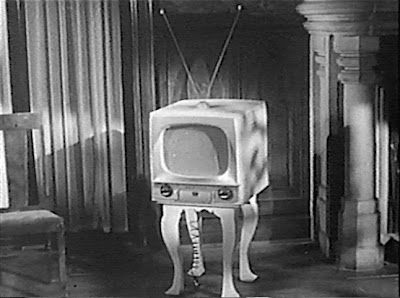
The first episode of Gun opens with an unnamed dumbass purchasing a pearl-handed, .45 semi-automatic pistol.  When he takes it home, his kids are impressed but his wife threatens to kick him out if he ever fires the gun in the house.  Next thing you know, the dumbass is pretending to be Robert De Niro in Taxi Driver and pointing the gun at the television.  The final shoot-out from The Good, The Bad, and The Ugly leads to the TV getting shot.  The dumbass returns the gun.  Later, that night, someone breaks into the gun store and steals the gun.

Who stole it?  It turns out that it was just a guy who spends his time holding up convenience stores.  Unfortunately, his next attempt at a convenience store robbery does not go well, largely due to one aggravated customer.  Harvey Hochfelder (Daniel Stern) is already in an agitated state before the robbery even begins.  He just wants to leave Los Angeles for Virginia but, before he can leave, he had to stop off at the slowest convenience store in L.A.  Harvey loses it as soon as he realizes that the robbery is going to mean his escape to Virginia is going to be even further delayed.  When Harvey’s wife (Kathy Baker) enters the store, the robber is startled into first shooting at Harvey and then dropping the gun.  The robber runs outside and tries to steal Harvey’s car, with Harvey’s son and dog in the back seat.  Harvey grabs the gun and chases the robber down.  The robber crashes the car and Harvey holds him at gun point until the police arrive.

Harvey becomes a celebrity.  He even appears on the cover Newsweek, with the simple headline, “American Hero.”  Hollywood wants to make a made-for-TV movie about what happened in the convenience store, with Harvey playing himself and Kathy Ireland playing his wife.

Unfortunately, the friends of the robber are not happy that Harvey “fingered our homie” (yes, that’s actual dialogue) and they decide that they want to get revenge on Harvey.  When they force his car off the road and then pull guns of their own on him, Harvey diffuses the situation by offering them roles the movie.  Everyone wants to be a star!

Finally, the day of filming has arrived.  Under the guidance of the film’s director (Ed Begley, Jr.), Harvey prepares to climb into bed with a lingerie-clad Kathy Ireland….

Suddenly, Harvey is back in the convenience store, getting shot multiple times by the robber and expiring as a security camera records his final moments.  His entire time as a Hollywood star was just a dying fantasy which, honestly, was kind of obvious just by how cartoonish all of the Hollywood scenes were.

Well, as far as first episodes are concerned this was really, really …. bad.  Anthology shows are always a bit hit-and-miss and this episode was definitely almost all miss and no hit.  As good a character actor as he may be, Daniel Stern overacts to such an extent in this episode that it’s difficult to really have much sympathy for Harvey and the episode’s final twist largely fell flat.

The first episode of Gun is an almost entire …. dare I say it? …. misfire.

AMV Of The Day: Haunted House (Various)


It’s October 3rd and that means it’s time for our first horror-filled AMV of the month!  Enjoy!

Song: Neoni — Haunted House

Animes: 0:11 Death Parade 0:16 Angels of Death 0:21 Demon Slayer 0:24 Attack on Titan 0:32 Tokyo Ghoul 0:43 Akame ga Kill! 0:48 Parasyte 0:55 Kakegurui 1:05 High School of The Dead 1:13 Fire Force 1:20 The Future Diary 1:36 Vinland Saga 1:49 Chainsaw Man 2:02 Jujutsu Kaisen 2:06 The Ancient Magus Bride 2:23 Deadman Wonderland

Creator: BAN AMVS (as always, please subscribe to this creator’s channel)

Past AMVs of the Day

Horror on TV: The Hitchhiker 4.4 “Why Are You Here?” (dir by Chris Thomson)


Tonight’s episode of The Hitchhiker is an early example of found footage horror.

Jerry Rulack (played by the star of Midnight Express, Brad Davis, in one of his final performances) is a smarmy TV host who, along with his camera crew, goes from nightclub to nightclub and asks the clubgoers, “Why are you here?”  Eventually, Jerry runs into a rich girl named Donette (Helen Hunt), who turns the question around and leaves Jerry to wonder why he’s there.  Donette and her friends are rich, decadent, and ultimately dangerous.  Eventually, Jerry discovers that there is a price to pay for asking too many stupid questions.  Brad Davis does an adequate Geraldo Rivera impersonation while Helen Hunt seems to be having fun playing someone who literally cares about nothing.  As the Hitchhiker, Page Fletcher is wonderfully judgmental while introducing Jerry and later while considering his fate.

This episode originally aired on March 10th, 1987.

October Hacks: Don’t Go In The Woods …. Alone (dir by James Byran)


Don’t watch this movie …. alone.

Or with a group.

Don’t do it!

Seriously, this is probably going to be the worst and most rushed review that I’ve ever written because I spent 80 minutes watching this film and I really don’t want to spend another 80 writing about it.  First released in 1981, Don’t Go In The Woods …. Alone is the story of a maniac (Tom Drury) who looks like some sort of crazed Barbarian cosplayer and who spends his time hunting people in the Rocky Mountains.  He’ll kill just about anyone that he comes across and he’ll laugh while he does it.  We don’t even find out much about why he’s killing but he certainly seems to enjoy it.  Ten minutes into the film, he’s already killed a woman running in a creek and a bird watcher wearing a bow-tie.

The Rockies are full of campers.  The Maniac takes out a painter.  The Maniac takes out a honeymooning couple who thought it would be a good idea to stop their van in the middle of the woods.  He follows a group of campers.  Craig (James Haydn) is an experienced camper and he gets to utter the film’s title.  His girlfriend (Angie Brown) likes to play surprisingly mean-spirited pranks.  Of course, Craig’s idea of a good time is trap his girlfriend in a sleeping bag and hang her from a tree until she cries uncle.

And then there’s Peter (Jack McClelland), who is not an experienced camper.  Peter is about as close as this film has to a hero but he’s a remarkably unlikable hero.  He spends way too much time screaming and whining and crying.  Peter’s girlfriend is Ingrid (Mary Gail Artz) and she’s the type of girlfriend who screams, “Peter!” while Peter tries to hide from the maniac.

It’s an oddly paced film.  The film really ends around the 50 minute mark but there’s about 30 minutes of filler afterwards which pads out of the film’s running time.  The final third of the film is basically footage of the sheriff and his idiot deputies wandering around the Rockies and talking about how they haven’t been able to find anything.  How have they not been able to find anything?  The Maniac makes absolutely no effort to hide his existence.

It’s poorly acted and terribly written and the cinematography is so dark and grainy that it’s sometimes hard to see what’s happening on the screen.  That said, the film features a lot of blood and I imagine that’s why it has something of a cult following.  This is one of those slasher films where it’s obvious that the majority of the budget went to purchasing fake blood and entrails.  Limbs are cut off.  Blood splatters all across the countryside.  The Maniac is truly savage when he attacks and, if the film itself wasn’t so inept, he would be a truly terrifying character.

Don’t Go In The Woods …. Alone was amongst the film that were banned in the UK for being too violent.  I’ve never understood why the censors felt it would be a good idea to refer to these films as being on the “video nasty list.”  Who wouldn’t want to watch a movie called a video nasty?  In the end, the attempts to ban this film are probably the main reason why the film is still remembered today.  It’s certainly not for the film’s quality.