
Welcome back to Twin Peaks!
Our latest episode begins with a closeup of Rusty Tomasky’s (Ted Raimi) face as the members of the Twin Peaks police force struggle to get the giant paper mache chess piece out of the gazebo. While this goes on, one of Rusty’s friends talks to Andy (Harry Goaz), Cooper (Kyle MacLachlan) and Harry (Michael Ontkean). Rusty was in a band and was supposed to play a gig at Snake River. On the way there, a tire went out on the van and a man emerged from the woods, wanting to know if Rusty wanted some “brew.” Rusty’s friend starts to cry, which makes Andy cry.
Cooper says that Windom has taken another pawn but he did not tell them his next move. “Windom Earle is playing off the board.”
The next morning, at the sheriff’s station, Lucy (Kimmy Robertson) asks Andy what he knows about saving the planet. Andy says that styrofoam never dies and people need to stop tossing their beer cans into Pearl Lake. Lucy says that tomorrow will be D-Day, “Dad day.” She will be choosing her baby’s father, either Andy Brennan or Dick Tremayne. She will also be entering the Miss Twin Peaks contest because she and the baby could use the money.
At the Great Northern, Doctor Hayward (Warren Frost) is giving Ben (Richard Beymer) a physical examination. Hayward tells Ben that he believes that Ben is trying to do the right thing but that he needs to stay away from Eileen. Ben says he has no choice. He has to do what his heart commands him to do. Wheeler (Billy Zane) steps into the office. He says that he has been looking for Audrey. Ben says that Audrey should be back any minute but Wheeler does not have a minute. His business partner has been murdered in Brazil.
In the attic of the Hayward house, Donna (Lara Flynn Boyle) looks over her birth certificate and sees that the identity of her father has been left blank. She finds a scrapbook, full of pictures of her parents with Ben.

Audrey (Sherilyn Fenn) returns to the Great Northern, where Deputy Hawk (Michael Horse) is waiting for her. Hawks tells he that Cooper needs to see her at the station, immediately.
In his office, Ben is still talking to Wheeler. Ben is more concerned about Stop Ghostwood than Wheeler’s dead business partner. Wheeler says that he has no choice but to go. Not realizing that Audrey’s back, Wheeler gives Ben a note and asks him to deliver it to her. Wheeler leaves the office.
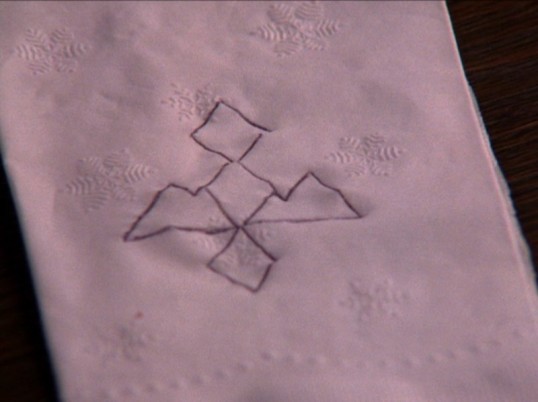
At the sheriff’s station, Major Briggs (Don S. Davis) has obtained all of the Project Blue Book files dealing with Windom Earle. Briggs plays a video tape of Earle ranting about the Black Lodge. Cooper says that Earle did not come to Twin Peaks to get revenge on him. Instead, he came to Twin Peaks to find the Black Lodge. Now, they just have to figure out how the Black Lodge is connected to the drawing found in the cave.
Little do they know that, through the microphone hidden in the bonsai tree, Windom Earle (Kenneth Welsh) is listening to their conversation. Earle tells Leo (Eric Da Re) that the time has come to invite Major Briggs to a Project Blue Book reunion.
At the diner, an old woman who we have never been seen before is eating cheery pie when her hand starts to shake so uncontrollably that she has to grab it with her other hand to stop it.

In a booth, Shelly (Madchen Amick) reads her Miss Twin Peaks speech on how to protect the environment to Bobby (Dana Ashbrook). Bobby says that he has been thinking about his relationship with Shelly. Bobby says that he knows he has not been a great boyfriend but, when he saw Shelly kissing Gordon Cole, something in his brain snapped and he realized how much he loved Shelly. They share a passionate kiss that is interrupted by a phone call from Cooper.
At the Roadhouse, preparations are being made for the Miss Twin Peaks Contest. Mayor Milford (John Boylan) tells Lana (Robyn Lively) that the other two judges are going to be Norma Jennings and Richard Tremayne. The Mayor says that all they have to do to win is get Lana alone in a room with Richard. He tells her to wear “a dress slit all the way to Seattle.” The Mayor then starts to cry, wishing that they could just elope. Lana says that she will only marry him if she wins Miss Twin Peaks.
At the station, Cooper tells Audrey, Shelly, and Donna that all three of them are in danger. He orders them to check in with the sheriff at least twice a day and to never go anywhere alone.
At the cabin, Windom is talking about blood-drinking priests while Leo cleans up. Leo sees a picture of Shelly’s face glued to a playing card. Windom says that if Shelly wins Miss Twin Peaks, she will die. He says that Leo can help if he wants. “No!” Leo says before trying to attack Windom with the zapper, which does not work because, even though Leo has managed to grabbed the zapper, he is still the one wearing the electric collar. Leo ends up zapping himself.
Audrey returns to the Great Northern, walking through the lobby and barely missing Wheeler, who is checking out. Audrey goes to Ben’s office, when Ben welcomes her back and then tells her that the Stop Ghostwood Campaign needs a spokesperson. Ben wants her to enter Miss Twin Peaks. Audrey wants to know where Wheeler is. Ben finally tells her that Wheeler had to leave for the Brazilian rain forest and tries to give the letter to Audrey. Audrey leaves, hoping to catch Wheeler at the airport.
At the sheriff’s station, Cooper, Harry, and Andy are examining the cave drawing. Cooper says that the symbols suggest a time but a time for what? Cooper admits that he is having a hard time focusing because he can not stop thinking about Annie. Suddenly, Cooper’s hand starts to shake until he grabs it with his other hand.

Major Briggs is walking through the woods when he is approached by Windom Earle and Leo, who are wearing a horse costume. “Hello, Wilbur!” Earle says before shooting the Major with a tranquilizer dart.
At the airport, Wheeler is getting in his private plane. He stops to take one final look for Audrey.
At the diner, Cooper orders a slice of cheery pie and uses a quote from St. Augustine to encourage Annie (Heather Graham) to enter the Miss Twin Peaks contest. Cooper confesses that he spends most of his time thinking about Annie. Annie says she spends all of her time thinking about Cooper. Cooper asks Annie to go dancing with him and leans in to kiss her. Dishes all of the counter and syrup ominously drips on the floor.
At the airport, Pete (Jack Nance) drives Audrey across the airstrip, letting her off in front of Wheeler’s plane. Audrey runs in front of the taxiing airplane, yelling for Wheeler to stop. Luckily, Wheeler does stop before running her over.

“I’m a virgin!” Audrey says, “I want you to make love to me.”
“Here and now?” Wheeler asks.
“It’s your jet.”
Realizing that Audrey has a point, Wheeler leads her into his plane, while Pete watches from his truck. Pete has tears in his eyes. Suddenly, his hand starts to shake uncontrollably.
At the cabin, Earle interrogates the bound Briggs, shooting arrows at him whenever Briggs says that he is not at liberty to divulge any information. Earle gets annoyed and gives the major a shot of truth serum. Earle asks Briggs what his greatest fear is.
“The possibility that love is not enough,” Briggs says.
(I would have said salmonella but that’s just me.)
Under the influence of the serum, Briggs says that the signs in the cave mean that “there is a time, if Jupiter and Saturn meet, they will receive you.”
At the Martell house, Catherine (Piper Laurie) is showing Eckhardt’s lunar box to Andrew (Dan O’Herlihy). Andrew pushes the buttons the box and it pops open, revealing another box. Andrew smashes that box, revealing yet another box inside.
At the Roadhouse, Annie and Cooper are dancing. Looking at the decorations for the Miss Twin Peaks pageant, Annie tells Cooper that she has decided to enter. Annie says that being Miss Twin Peaks would be like being in a fairy tale. “And you’re the queen,” Cooper says.
Suddenly, time freezes for everyone but Cooper. The lights go down. The Giant (Carel Struycken) appears on the stage, shaking his head “NO.” Cooper looks confused though it should be obvious to him that the Giant is saying, “No, do not enter the contest!”

At the airport, Wheeler’s plane finally takes off. Pete gets out of his truck and is approached by a newly mature Audrey who says that she finally met the man of his dreams and now he is on his way to Brazil. Audrey cries that Wheeler offered to take her fishing but he never did. Pete says he has some tackle in the truck. Pete tells her that the best cure for a broken heart is trout’s leap at midnight.
At the cabin, Leo is shaking and the Major is screaming. Earle is singing about mummy wheat. Earle has figured out that the drawing is actually a map to the Black Lodge.
At the dance, the Giant finally disappears. As Cooper kisses Annie. Mayor Milford tries to get a microphone to work. “Something’s not right,” he says, “there’s something wrong here.”
In the woods, Killer BOB (Frank Silva) emerges from a portal while the red curtains are reflected in a nearby puddle.

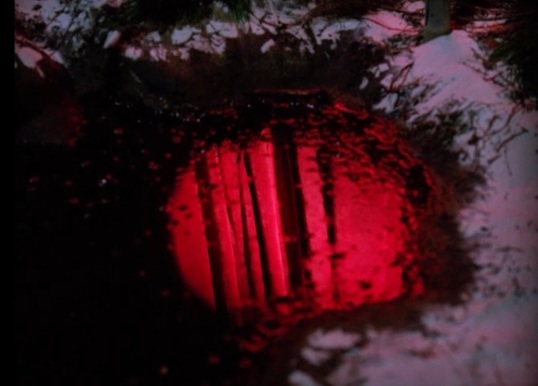
With only two episodes left, this was a pretty good episode. All of the disparate plotlines of the latter half of the second season are finally coming together and the appearance of both the Giant and BOB at the end promises that the finale will be a return to the Twin Peaks of old.
Leonard is doing tomorrow’s episode and then Lisa is doing the finale so this is my last recap. I have really enjoyed rewatching Twin Peaks and sharing my thoughts about the show with all of you. Thank you for reading!
Previous Entries in The TSL’s Look At Twin Peaks:
- Twin Peaks: In the Beginning by Jedadiah Leland
- TV Review: Twin Peaks 1.1 — The Pilot (dir by David Lynch) by Lisa Marie Bowman
- TV Review: Twin Peaks 1.2 — Traces To Nowhere (directed by Duwayne Dunham) by Jedadiah Leland
- TV Review: Twin Peaks 1.3 — Zen, or the Skill To Catch A Killer (dir by David Lynch) by Lisa Marie Bowman
- TV Review: Twin Peaks 1.4 “Rest in Pain” (dir by Tina Rathbone) by Leonard Wilson
- TV Review: Twin Peaks 1.5 “The One-Armed Man” (directed by Tim Hunter) by Jedadiah Leland
- TV Review: Twin Peaks 1.6 “Cooper’s Dreams” (directed by Lesli Linka Glatter) by Lisa Marie Bowman
- TV Review: Twin Peaks 1.7 “Realization Time” (directed by Caleb Deschanel) by Lisa Marie Bowman
- TV Review: Twin Peaks 1.8 “The Last Evening” (directed by Mark Frost) by Leonard Wilson
- TV Review: Twin Peaks 2.1 “May the Giant Be With You” (dir by David Lynch) by Leonard Wilson
- TV Review: Twin Peaks 2.2 “Coma” (directed by David Lynch) by Jedadiah Leland
- TV Review: Twin Peaks 2.3 “The Man Behind The Glass” (directed by Lesli Linka Glatter) by Jedadiah Leland
- TV Review: Twin Peaks 2.4 “Laura’s Secret Diary” (dir by Todd Holland) by Lisa Marie Bowman
- TV Review: Twin Peaks 2.5 “The Orchid’s Curse” (dir by Graeme Clifford) by Lisa Marie Bowman
- TV Review: Twin Peaks 2.6 “Demons” (dir by Lesli Linka Glatter) by Leonard Wilson
- TV Review: Twin Peaks 2.7 “Lonely Souls” (directed by David Lynch) by Jedadiah Leland
- TV Review: Twin Peaks 2.8 “Drive With A Dead Girl” (dir by Caleb Deschanel) by Lisa Marie Bowman
- TV Review: Twin Peaks 2.9 “Arbitrary Law” (dir by Tim Hunter) by Lisa Marie Bowman
- TV Review: Twin Peaks 2.10 “Dispute Between Brothers” (directed by Tina Rathbone) by Jedadiah Leland
- TV Review: Twin Peaks 2.11 “Masked Ball” (directed by Duwayne Dunham) by Leonard Wilson
- TV Review: Twin Peaks 2.12 “The Black Widow” (directed by Caleb Deschanel) by Leonard Wilson
- TV Review: Twin Peaks 2.13 “Checkmate” (directed by Todd Holland) by Jedadiah Leland
- TV Review: Twin Peaks 2.14 “Double Play” (directed by Uli Edel) by Jedadiah Leland
- TV Review: Twin Peaks 2.15 “Slaves and Masters” (directed by Diane Keaton) by Lisa Marie Bowman
- TV Review: Twin Peaks 2.16 “The Condemned Woman” (directed by Lesli Linka Glatter) by Leonard Wilson
- TV Review: Twin Peaks 2.17 “Wounds and Scars” (directed by James Foley) by Lisa Marie Bowman
- TV Review: Twin Peaks 2.18 “On The Wings of Love” (directed by Duwayne Dunham) by Jedadiah Leland
- TV Review: Twin Peaks 2.19 “Variations on Relations” (directed by Jonathan Sanger) by Lisa Marie Bowman
 When game designer Milton Parker (Vincent Price) dies, all of his greedy relatives and his servants gather for the reading of his will. Parker’s lawyer, Benstein (Robert Morley), explains that Parker is leaving behind a $200 million dollar estate to whoever can win an elaborate scavenger hunt. Dividing into five teams, the beneficiaries head out to track down as many items as they can by five o’clock that evening. Among the items that they have to find: a toilet, a cash register, an ostrich, a microscope, and an obese person. Hardy har har.
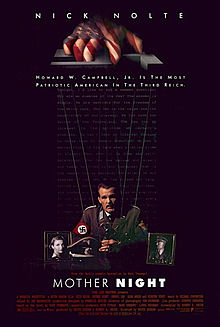 Four years after she played the mysterious (and dead) Laura Palmer in Twin Peaks, Sheryl Lee starred as another mysterious (and possibly dead) woman in Mother Night.
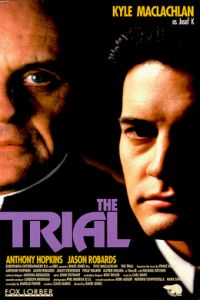 One morning, in turn of the century Prague, Josef K. (Kyle MacLachlan) wakes up to discover that two detectives are in his room. They tell him that he is under arrest but they do not tell him the charges. Josef remains free to go about his everyday life but he must report to the court whenever the court deems to see him. No matter where Josef turns or who he talks to, he cannot get any answers concerning what he has been charged with. Even his disinterested attorney (Jason Robards) can not give him a straight answer on why he is being prosecuted. No matter how much Josef protests that he is innocent of whatever has been accused of, his fate has already been decided.
 Sweet and repressed Amy (Madchen Amick) is a college student who has too much on her plate. She has to take care of her greedy grandmother (Natalie Schaefer, of Gilligan’s Island fame). She has to read a book for her study partner (Corey Parker). She has to sew a dress for her older sister, Gloria (Daisy Hall). She has to find props for the school play. It is her search for props that leads to her buying an old chest at an estate sale. Inside the chest is a red cloak. Amy turns the red cloak into a dress but what she does not know is that the red cloak was previously won by Aztec priests while they conducted human sacrifices. As Professor Buchanan (Anthony Perkins) later explains, anyone who wears the dress will be driven to do evil.
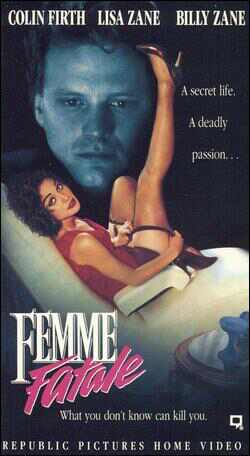 Joseph Price (Colin Firth) was once a painter but now he is the world’s least likely park ranger. One day, he meets the beautiful and mysterious Cynthia (Lisa Zane). Within days, Joe and Cynthia are married but one morning, Joe wakes up to discover that Cynthia is gone and she has only left behind a brief note. Searching for his wife, Joe goes to Los Angeles and discovers how little he knew about Cynthia. Joe’s search eventually leads him into the world of porn, drugs, S&M, and performance art.


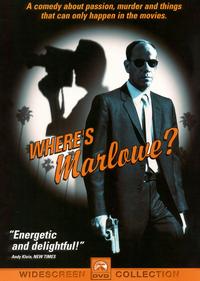 Two documentarians (Mos Def and John Livingston) decided to make a film about two real-life private detectives, Joe Boone (Miguel Ferrer) and Kevin Murphy (John Slattery). At first, Boone is skeptical of the two filmmakers. He watched their last documentary, a three-hour epic about New York’s water supply, and was disappointed by the lack of sex. However, as the two filmmakers follow him around, he warms up to them and they discover that the tough and sarcastic Boone is actually a soft-hearted idealist who can barely pay the bills. When Boone discovers that Murphy is sleeping with the wife of one of their clients, their partnership dissolves. It looks like Boone is going to have to shut down his agency, unless the two filmmakers can help him solve his latest case.
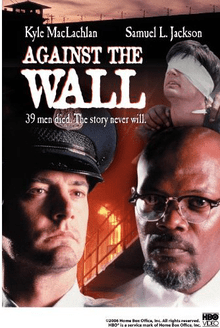 The year is 1971 and Malcolm Smith (Kyle MacLachlan) has just started working as a prison guard at Attica Correctional Facility. Even though his father (Harry Dean Stanton) was a prison guard, Malcolm does not fit in with the other guards at Attica. Malcolm is younger than them and is disgusted by the inhumane treatment of the prisoners. If not for his wife (Anne Heche) and the child that they are expecting, Malcolm would just quit but he needs the money. He fears that he is going to eventually turn into just another sadistic guard.
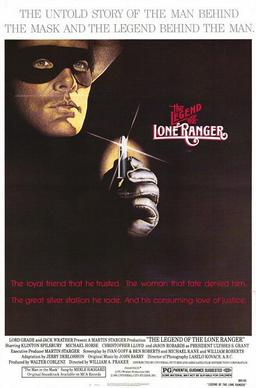 Long before he found fame playing Deputy Hawk on Twin Peaks, Michael Horse made his film debut in one of the most notorious box office flops of all time, The Legend of the Lone Ranger.
  Through the Shattered Lens