 Emperor of the North Pole is the story of depression-era hobos and one man who is determined to kill them.
The year is 1933 and Shack (Ernest Borgnine) is one of the toughest conductors around. At a time when destitute and desperate men are riding the rails in search of work and food, Shack has declared that no one will ride his train for free. When Shack is first introduced, the sadistic conductor is seen shoving a hobo off of his train and onto the tracks. Shack smiles with satisfaction when the man is chopped in half under the train’s wheels.
A-No.1 (Lee Marvin) is a legend, the unofficial king of the hobos. A grizzled veteran, A-No. 1 has been riding the rails for most of his life. (The title comes from the hobo saying that great hobos, like A-No. 1, are like the Emperor of the North Pole, the ruler of a vast wasteland). A-No. 1 is determined to do what no hobo has ever done, successfully hitch a ride on Shack’s train. He even tags a water tower, announcing to everyone that he intends to take Shack’s train all the way to Portland.
If A-No. 1 did not have enough to worry about with Shack determined to get him, he is also being tailed by Cigaret (Keith Carradine), a young and cocky hobo who is determined to become as big a legend as A-No. 1. Cigaret and A. No. 1 may work together but they never trust each other.
Like many of Robert Aldrich’s later films, Emperor of the North Pole is too long and the rambling narrative often promises more than it can deliver. Like almost all movies that were released at the time, Emperor of North Pole attempts to turn its story into a contemporary allegory, with Shack standing in for the establishment, A-No. 1 representing the liberal anti-establishment, and, most problematically, Cigaret serving as a symbol for the callow counter culture, eager to take credit for A-No. 1’s accomplishments but not willing to put in any hard work himself.

As an allegory, Emperor of the North Pole is too heavy-handed but, as a gritty adventure film, it works wonderfully. Lee Marvin is perfectly cast as the wise, no-nonsense A-No. 1. This was the sixth film in which Marvin and Borgnine co-starred and the two old pros both go at each other with gusto. Carradine does the best he can with an underwritten part but this is Borgnine and Marvin’s film all the way. Marvin’s trademark underacting meshes perfectly with Borgnine’s trademark overacting, with the movie making perfect use of both men’s distinctive screen personas. As staged by Aldrich, the final fight between Shack and A-No. 1 is a classic.
Even at a time when almost every anti-establishment film of the early 70s is being rediscovered, Emperor of the North Pole remains unjustly obscure. When it was first released, it struggled at the box office. Unsure of how to sell a movie about hobos and worrying that audiences were staying away because they thought it might be a Christmas film, 20th Century Fox pulled the movie from circulation and then rereleased it under a slightly altered name: Emperor of the North. As far as titles go, Emperor of the North makes even less sense than Emperor of the North Pole. Even with the title change, Emperor of the North Pole flopped at the box office but, fortunately for him, Aldrich was already working on what would become his biggest hit: The Longest Yard.
Keep an eye out for Lance Henriksen, in one of his earliest roles. Supposedly, he plays a railroad worker. If you spot him, let me know because I have watched Emperor of the North Pole three times and I still can’t find him.

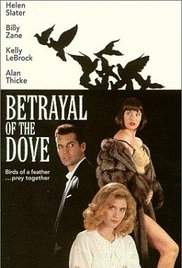 Stop me if you’ve heard this one before.


 Gary Farrell (Buster Crabbe) is a widowed truck driver who wants his son to have a better life than his old man. Good luck pulling that off on a salary of $45 a week. Gary enters a boxing tournament, just hoping to win enough money to pay for his son to go to military school. But, under the tutelage of veteran trainer Pop Turner (Milton Kibbee), Gary becomes a real contender. He also becomes a first class heel, turning his back on his old, honest lifestyle and getting involved with fast-living socialite, Rita London (Julie Gibson). Can Gary’s friends and newspaper reporter Linda Martin (Arline Judge) get Gary to see the error of his ways?
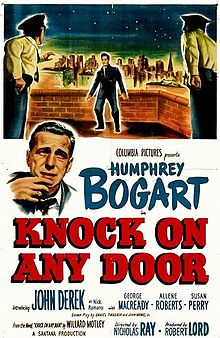 Knock On Any Door opens with the murder of a policeman in New York City. Nick Romano (John Derek) is arrested for the crime. Nick is a troubled young man who has grown up in the slums and is fond of saying that his goal is to “Live fast, die young, and leave a good-looking corpse.” Now on trial for his very life, Nick reaches out to lawyer Andrew Morton (Humphrey Bogart), who once unsuccessfully defended Nick’s father in a similar criminal trial. At first, Morton wants nothing to do with Nick but he changes his mind, partially out of guilt over Nick’s father and partially because Morton himself came from the same slums that produced Nick. Even as the district attorney (George Macready) goes for blood, Morton argues that Nick isn’t a menace but instead a victim of a society that left him with little choice but to become a criminal.
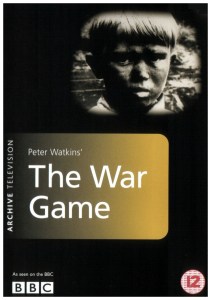 “Do you know what Strontium-90 is and what it does?”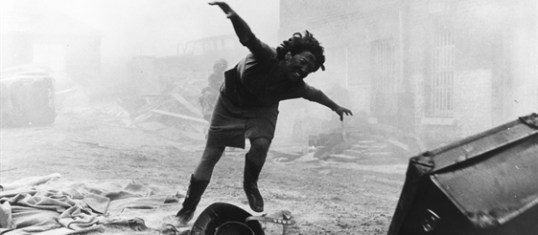
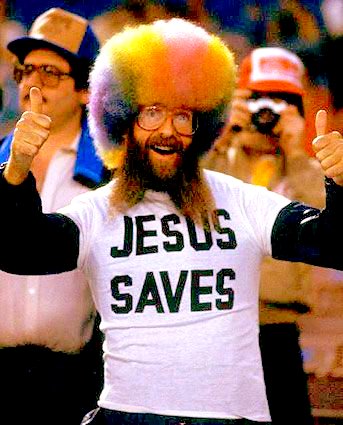 Who was Rollen Stewart?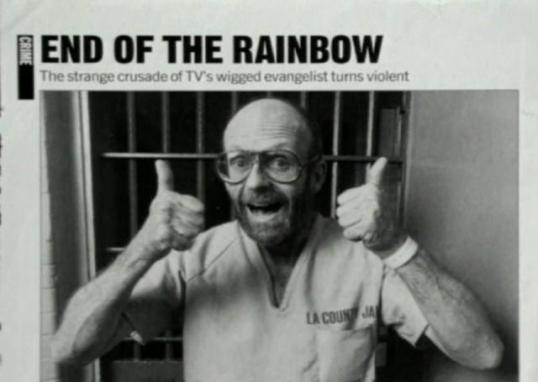


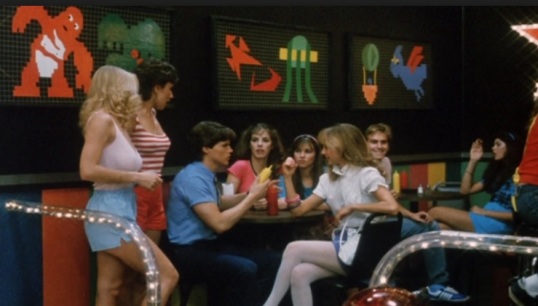
 Songwriter Michael Raine (Bret Micheals) moved to Nashville from Philadelphia, searching for a new life. Instead, he ended up convicted of murder and sentenced to death. Michael says that he is innocent but the police have a video tape of him smothering his girlfriend with a pillow. Michael says it was just a sex game. He was in the bathroom, testing out his karate moves, when someone else broke into the house and smothered the victim for real.
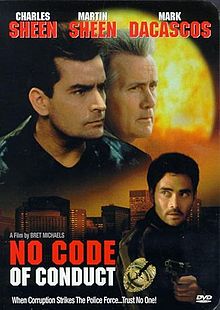 From the strange period of time in which Charlie Sheen wanted people to call him Charles, comes this generic action movie.
 Through the Shattered Lens