“I was twelve going on thirteen the first time I saw a dead human being.”
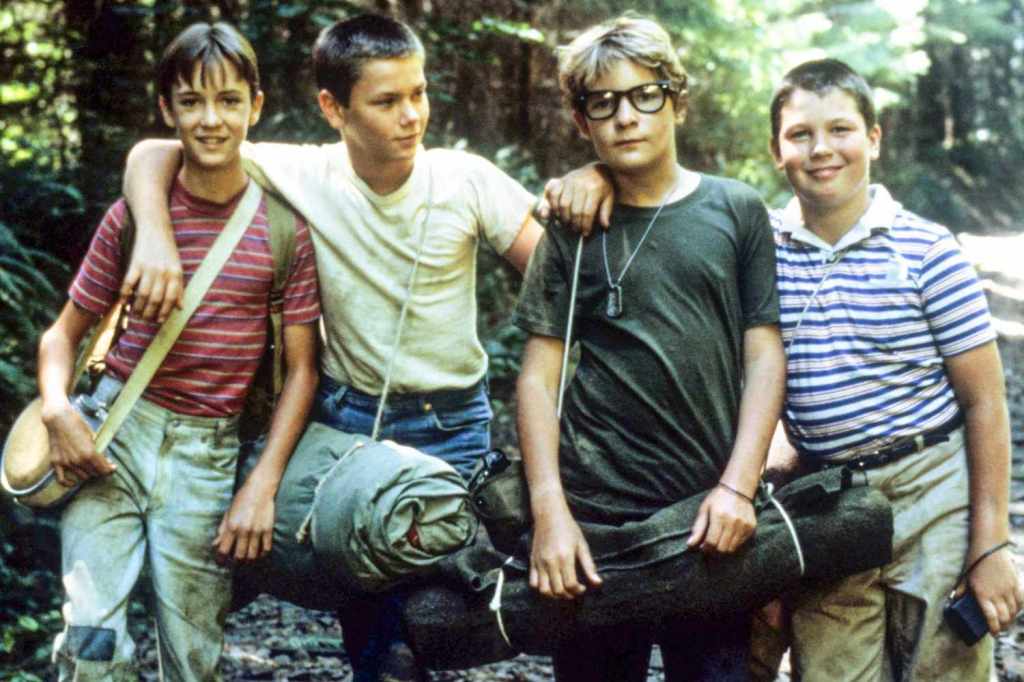
These are the first words spoken in director Rob Reiner’s classic coming of age film, STAND BY ME, which received its widespread theatrical release in the United States on August 22nd, 1986. Actor Richard Dreyfuss spoke words that gave an exact description of my own age in the summer of 1986 when the film was released, and I certainly felt a connection to the characters in Reiner’s film. I watched STAND BY ME many times as a teenager, and with a humble and hurting heart, I decided to watch it again last night. On its surface, it’s a pretty simple story…
After accidentally learning of the location of the body of a local boy who’s been missing for several days, four boys (played by Wil Wheaton, River Phoenix, Corey Feldman, and Jerry O’Connell) set off on a weekend adventure to find the body in hopes of becoming local heroes. Along the way, they dodge trains, get sucked on by leeches, tell gross-out stories around a campfire, tackle traumatic personal issues, and eventually stand up to a group of older bullies (led by Kiefer Sutherland)! When the weekend is over, they move on with their own lives, lives that are never quite the same again.
The main reason I have a real personal connection to STAND BY ME is the fact that I recognize myself and some of my friends in its young characters. I grew up in a very small rural community in Arkansas called Toad Suck. It wasn’t even a town; it was more of just a spot in the road where a few homes built up near a dam and bridge on the Arkansas River. Often when I’d spend the night with my best friend, we’d go walking down the railroad track that ran through our community, carrying our BB guns and hanging out on the railroad bridges where we could take aim at rocks, sticks, turtles, and, at times, the dreaded water mocassin! Like the boys in the movie, we’d always have to be on the lookout for the oncoming trains. As a very naïve and sheltered kid of the mid-80’s who was raised in a strict religious household, I tended to be somewhat judgmental. STAND BY ME forced me to think deeper thoughts and try to find a more mature empathy for those kids I hung out with and saw at school every day. While none of the characters in the film are an exact replica of me or my friends, we knew of people who were probably experiencing abuse, who were looked down upon as “less than,” and who were neglected by their parents. And I think we have all experienced times when we felt insecure, lacked confidence, or were afraid and didn’t have the maturity to handle it in a positive manner. I felt compassion for these characters, which in turn helped me feel more understanding towards those around me in my real life! As a filmmaker in complete control of his craft, Rob Reiner made a movie that even affected someone like me, and I’ve never forgotten those feelings.
My feeling of kinship with the actors who played in STAND BY ME didn’t end when the movie ended either. Wil Wheaton, River Phoenix, Corey Feldman and Jerry O’Connell were all very close to my age when they filmed the movie, and I’ve followed each of their careers fairly closely my entire life. My two favorites were River Phoenix and Corey Feldman. It was painful to me when River Phoenix died in 1993 at just 23 years of age. I remember all the issues Corey Feldman had with drug addiction. I’m so glad that he’s been able to overcome that addiction and achieve sobriety for multiple decades. I’m not a Star Trek completist, but I always got a kick out of seeing Wil Wheaton on THE BIG BANG THEORY. And then Jerry O’Connell definitely lost his baby fat and has gone on to a solid acting career! The common thread, of course, is the fact that Reiner got great performances from each of these young actors in STAND BY ME. Combine those performances with the quality of the film and the time in my own life when the film came out, and you can start to get the idea of why the film has a position of reverence in my life. You can also see why I have such respect for Rob Reiner as a filmmaker.
Overall, STAND BY ME is simply one of my favorite films of all time. It has some of the most memorable on-screen moments of my childhood. The pie eating barf-o-rama and the crotch leeches are scenes that are burned into my psyche. Along with the great cast of boys, Kiefer Sutherland gives one of his solid, bully performances in an 80’s film. Sutherland would go on later in his career and play one of my all-time favorite TV characters, Jack Bauer, in 24. More important than all of that, though, is the fact that the coming-of-age film STAND BY ME helped 12-13 year-old me grow up a little bit myself by making me feel something. I guess the greatest compliment you can give any director is to tell them that their film made you think about things more important than yourself and made a difference in your own life. Today, I pay you that great compliment and say Rest in Peace, Mr. Reiner!
The San Diego Film Critics Society has announced its picks for the best of 2025. The winners are listed in bold.
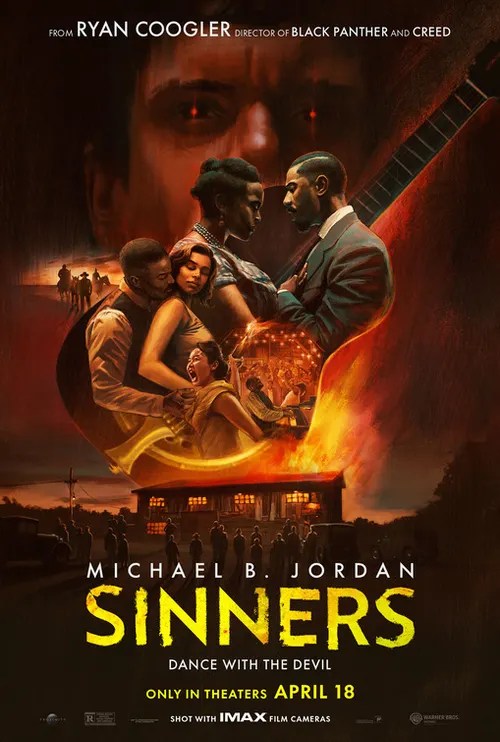
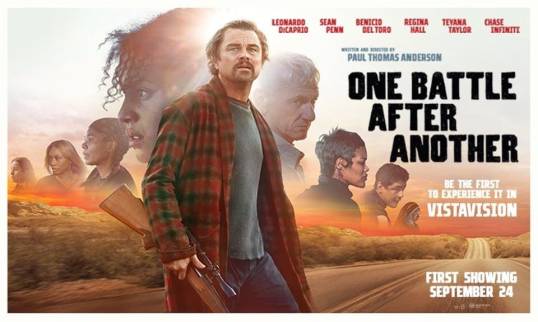
Best Picture HAMNET IT WAS JUST AN ACCIDENT MARTY SUPREME ONE BATTLE AFTER ANOTHER (RUNNER-UP) SINNERS (WINNER)
Best Director Paul Thomas Anderson, ONE BATTLE AFTER ANOTHER Ryan Coogler, SINNERS (WINNER) Yorgos Lanthimos, BUGONIA (RUNNER-UP) Jafar Panahi, IT WAS JUST AN ACCIDENT Chloe Zhao, HAMNET
Best Actor Timothée Chalamet, MARTY SUPREME Leonardo DiCaprio, ONE BATTLE AFTER ANOTHER Joel Edgerton, TRAIN DREAMS (RUNNER-UP) Michael B. Jordan, SINNERS (WINNER) Wagner Moura, THE SECRET AGENT
Best Actress Jessie Buckley, HAMNET (WINNER TIE) Rose Byrne, IF I HAD LEGS I’D KICK YOU (WINNER TIE) Renate Reinsve, SENTIMENTAL VALUE Emma Stone, BUGONIA Eva Victor, SORRY, BABY
Best Supporting Actor Benicio del Toro, ONE BATTLE AFTER ANOTHER Jacob Elordi, FRANKENSTEIN Sean Penn, ONE BATTLE AFTER ANOTHER (RUNNER-UP) Stellan Skarsgård, SENTIMENTAL VALUE (WINNER) Jeffrey Wright, HIGHEST 2 LOWEST
Best Supporting Actress Odessa A’zion, MARTY SUPREME Nina Hoss, HEDDA (RUNNER-UP) Amy Madigan, WEAPONS (WINNER) Wunmi Mosaku, SINNERS Teyana Taylor, ONE BATTLE AFTER ANOTHER
Best Comedic Performance Will Arnett, IS THIS THING ON? Molly Gordon, OH, HI! (RUNNER-UP) Liam Neeson, THE NAKED GUN Da’Vine Joy Randolph, ETERNITY (WINNER) Tim Robinson, FRIENDSHIP
Best Youth Performance (For a performer under the age of 18) Cary Christopher, WEAPONS (WINNER) Shannon Mahina Gorman, RENTAL FAMILY Jacobi Jupe, HAMNET (RUNNER-UP) Alfie Williams, 28 YEARS LATER Nina Ye, LEFT-HANDED GIRL
Best Original Screenplay Ryan Coogler, SINNERS Zack Cregger, WEAPONS David Koepp, BLACK BAG (RUNNER-UP) Jafar Panahi, IT WAS JUST AN ACCIDENT (WINNER) Joachim Trier & Eskil Vogt, SENTIMENTAL VALUE
Best Adapted Screenplay Paul Thomas Anderson, ONE BATTLE AFTER ANOTHER (RUNNER-UP) Clint Bentley & Greg Kwedar, TRAIN DREAMS JT Mollner, THE LONG WALK Maggie O’Farrell & Chloe Zhao, HAMNET Will Tracy, BUGONIA (WINNER)
Best First Feature (Director) Drew Hancock, COMPANION Scarlett Johansson, ELEANOR THE GREAT Ben Leonberg, GOOD BOY Kristen Stewart, THE CHRONOLOGY OF WATER (RUNNER-UP) Eva Victor, SORRY, BABY (WINNER)
Best Documentary BECOMING LED ZEPPELIN BILLY JOEL: AND SO IT GOES (RUNNER-UP) JOHN CANDY: I LIKE ME ORWELL: 2 + 2 = 5 (WINNER) PREDATORS
Best Animated Film ELIO KPOP DEMON HUNTERS (WINNER) LITTLE AMÉLIE OR THE CHARACTER OF RAIN (RUNNER-UP) PREDATOR: KILLER OF KILLERS ZOOTOPIA 2
Best Foreign Language Film IT WAS JUST AN ACCIDENT (WINNER) LEFT-HANDED GIRL THE SECRET AGENT SENTIMENTAL VALUE(RUNNER-UP)
SIRAT
Best Editing Ronald Bronstein & Josh Safdie, MARTY SUPREME (WINNER) Barry Alexander Brown & Allyson C. Johnson, HIGHEST 2 LOWEST Affonso Goncalves & Chloe Zhao, HAMNET Andy Jurgensen, ONE BATTLE AFTER ANOTHER (RUNNER-UP) Stephen Mirione & Patrick J. Smith, F1: THE MOVIE
Best Cinematography Autumn Durald Arkapaw, SINNERS Michael Bauman, ONE BATTLE AFTER ANOTHER (RUNNER-UP) Dan Laustsen, FRANKENSTEIN Adolpho Veloso, TRAIN DREAMS (WINNER) Lukasz Zal, HAMNET
Best Production Design Hannah Bleachler & Monique Champagne, SINNERS (RUNNER-UP TIE) Cara Brower & Stella Fox, HEDDA Fiona Crombie & Alice Felton, HAMNET Tamara Deverell & Shane Vieau, FRANKENSTEIN (WINNER) Kasra Farahani & Jille Azis, THE FANTASTIC FOUR: FIRST STEPS (RUNNER-UP TIE)
Best Visual Effects AVATAR: FIRE AND ASH (WINNER) THE FANTASTIC FOUR: FIRST STEPS (RUNNER-UP TIE) FRANKENSTEIN (RUNNER-UP TIE) MISSION: IMPOSSIBLE – THE FINAL RECKONING SUPERMAN
Best Costume Design Alexandra Byrne, THE FANTASTIC FOUR: FIRST STEPS Ruth E. Carter, SINNERS (RUNNER-UP TIE) Kate Hawley, FRANKENSTEIN (RUNNER-UP TIE) Paul Tazewell, WICKED: FOR GOOD (WINNER) Malgosia Turzanska, HAMNET
Best Sound Design AVATAR: FIRE AND ASH F1: THE MOVIE (RUNNER-UP) FRANKENSTEIN SINNERS WARFARE (WINNER)
Best Use of Music HEDDA (RUNNER-UP) KPOP DEMON HUNTERS MARTY SUPREME SINNERS (WINNER) SIRAT
Best Stunt Choreography BALLERINA: FROM THE WORLD OF JOHN WICK MISSION: IMPOSSIBLE – THE FINAL RECKONING (WINNER) ONE BATTLE AFTER ANOTHER SINNERS (RUNNER-UP) SUPERMAN
Best Ensemble BLACK BAG (WINNER) JAY KELLY THE LONG WALK SINNERS (RUNNER-UP) WEAPONS
Breakthrough Performance
Chase Infiniti: ONE BATTLE AFTER ANOTHER
Special Award for Body of Work
Josh O’Connor: WAKE UP, DEAD MAN, THE MASTERMIND, THE HISTORY SOUND, REBUILDING
Here are the picks of the Seattle Film Critics Society for the best of 2025! The winners are listed in bold.
BEST PICTURE
Bugonia – Yorgos Lanthimos
Hamnet – Chloé Zhao
It Was Just an Accident – Jafar Panahi
Marty Supreme – Josh Safdie One Battle After Another – Paul Thomas Anderson
Sentimental Value – Joachim Trier
Sinners – Ryan Coogler
Sorry, Baby – Eva Victor
Train Dreams – Clint Bentley
Weapons – Zach Cregger
BEST DIRECTOR
Hamnet – Chloé Zhao
Marty Supreme – Josh Safdie One Battle After Another – Paul Thomas Anderson
Sinners – Ryan Coogler
Train Dreams – Clint Bentley
BEST ACTOR IN A LEADING ROLE
Timothée Chalamet – Marty Supreme Leonardo DiCaprio – One Battle After Another
Joel Edgerton – Train Dreams
Ethan Hawke – Blue Moon
Michael B. Jordan – Sinners
BEST ACTRESS IN A LEADING ROLE Jessie Buckley – Hamnet
Rose Byrne – If I Had Legs I’d Kick You
Amanda Seyfried – The Testament of Ann Lee
Emma Stone – Bugonia
Eva Victor – Sorry, Baby
BEST ACTOR IN A SUPPORTING ROLE
Benicio del Toro – One Battle After Another
Jacob Elordi – Frankenstein
David Jonsson – The Long Walk
William H. Macy – Train Dreams Sean Penn – One Battle After Another
BEST ACTRESS IN A SUPPORTING ROLE
Ariana Grande – Wicked: For Good
Inga Ibsdotter Lilleaas – Sentimental Value
Amy Madigan – Weapons Wunmi Mosaku – Sinners
Teyana Taylor – One Battle After Another
BEST ENSEMBLE CAST
Eephus – Carson Lund
Marty Supreme – Jennifer Venditti One Battle After Another – Cassandra Kulukundis
Sinners – Francine Maisler
Wake Up Dead Man: A Knives Out Story – Bret Howe, Mary Vernieu
BEST YOUTH PERFORMANCE
Cary Christopher – Weapons
Shannon Gorman – Rental Family Jacobi Jupe – Hamnet
Jasper Thompson – The Mastermind
Alfie Williams – 28 Years Later
BEST SCREENPLAY
Marty Supreme – Ronald Bronstein, Josh Safdie One Battle After Another – Paul Thomas Anderson
Sinners – Ryan Coogler
Sorry, Baby – Eva Victor
Train Dreams – Clint Bentley, Greg Kwedar
BEST ANIMATED FILM
Arco – Ugo Bienvenu
The Colors Within – Naoko Yamada KPop Demon Hunters – Maggie Kang, Chris Appelhans
Little Amélie or the Character of Rain – Maïlys Vallade, Liane-Cho Han
Zootopia 2 – Jared Bush, Byron Howard
BEST DOCUMENTARY FILM
The Alabama Solution – Andrew Jarecki, Charlotte Kaufman
Come See Me in the Good Light – Ryan White
Pavements – Alex Ross Perry
The Perfect Neighbor – Geeta Gandbhir WTO/99 – Ian Bell
BEST INTERNATIONAL FILM It Was Just an Accident – Jafar Panahi
No Other Choice – Park Chan-wook
The Secret Agent – Kleber Mendonça Filho
Sentimental Value – Joachim Trier
The Ugly Stepsister – Emilie Blichfeldt
BEST PACIFIC NORTHWEST FEATURE FILM
Not One Drop of Blood – Jackson Devereux, Lachlan Hinton
To Kill a Wolf – Kelsey Taylor Train Dreams – Clint Bentley
Twinless – James Sweeney
Wolf Land (Director’s Cut) – Sarah Hoffman
WTO/99 – Ian Bell
BEST PACIFIC NORTHWEST SHORT FILM
Charlotte, 1994 – Brian Pittala
A Fateful Weekend – Tony Doupe
Shelly’s Leg – Wes Hurley Songs of Black Folk – Justin Emeka, Haley Watson
Style: A Seattle Basketball Story – Bryan Tucker
BEST CINEMATOGRAPHY
Frankenstein – Dan Laustsen
Hamnet – Łukasz Żal
One Battle After Another – Michael Bauman Sinners – Autumn Durald Arkapaw
Train Dreams – Adolpho Veloso
BEST COSTUME DESIGN Frankenstein – Kate Hawley
The Phoenician Scheme – Milena Canonero
Sinners – Ruth E. Carter
Train Dreams – Malgosia Turzanska
Wicked: For Good – Paul Tazewell
BEST FILM EDITING
F1 The Movie – Stephen Mirrione, Patrick J. Smith
Marty Supreme – Ronald Bronstein, Josh Safdie One Battle After Another – Andy Jurgensen
Reflection in a Dead Diamond – Bernard Beets
Sinners – Michael P. Shawver
BEST ORIGINAL SCORE
F1 The Movie – Hans Zimmer
Frankenstein – Alexandre Desplat One Battle After Another – Jonny Greenwood
Sinners – Ludwig Göransson
Tron: Ares – Nine Inch Nails
BEST PRODUCTION DESIGN
Fantastic Four: First Steps – Kasra Farahani (Production Design); Jille Azis (Set Decoration) Frankenstein – Tamara Deverell (Production Design); Shane Vieau (Set Decoration)
The Phoenician Scheme – Adam Stockhausen (Production Design); Anna Pinnock (Set Decoration)
Resurrection – Liu Qiang, Tu Nan
Sinners – Hannah Beachler (Production Design); Monique Champagne (Set Decoration)
BEST ACTION CHOREOGRAPHY
Avatar: Fire and Ash – Garrett Warren, Steve Brown, Stuart Thorp
From the World of John Wick: Ballerina – Stephen Dunlevy, Jackson Spindell Mission: Impossible – The Final Reckoning – Wade Eastwood
Predator: Badlands – Jacob Tomuri
Sinners – Andy Gill
BEST VISUAL EFFECTS Avatar: Fire and Ash – Joe Letteri, Richard Baneham, Eric Saindon, Daniel Barrett
F1 The Movie – Ryan Tudhope, Nicolas Chevallier, Robert Harrington
Frankenstein – Dennis Berardi, Ayo Burgess, Ivan Busquets, José Granell
Predator: Badlands – Olivier Dumont, Alec Gillis, Sheldon Stopsack, Karl Rapley
Sinners – Michael Ralla, Espen Nordahl, Guido Wolter, Donnie Dean
VILLAIN OF THE YEAR Aunt Gladys – Weapons (as portrayed by Amy Madigan)
Col. Steven J. Lockjaw – One Battle After Another (as portrayed by Sean Penn)
Laura – Bring Her Back (as portrayed by Sally Hawkins)
Lex Luthor – Superman (as portrayed by Nicholas Hoult)
Remmick – Sinners (as portrayed by Jack O’Connell)
The New York Film Critics Online have announced their picks for the best of 2015. The winners are listed in bold.
PICTURE
Hamnet If I Had Legs I’d Kick You It Was Just an Accident Marty Supreme No Other Choice Nuremberg One Battle After Another (WINNER) Sentimental Value Sinners (RUNNER-UP) Train Dreams
DIRECTOR Paul Thomas Anderson – One Battle After Another (RUNNER-UP) Park Chan-wook – No Other Choice Ryan Coogler – Sinners (WINNER) Mona Fastvold – The Testament of Ann Lee Olivier Laxe – Sirāt Jafar Panahi – It Was Just an Accident Lynne Ramsey – Die, My Love Josh Safdie – Marty Supreme Joachim Trier – Sentimental Value Chloe Zhao – Hamnet
SCREENPLAY
Bugonia Hamnet If I Had Legs I’d Kick You It Was Just an Accident (WINNER) Marty Supreme One Battle After Another Sentimental Value (RUNNER-UP) Sinners Sorry, Baby Train Dreams Twinless
ACTOR Timothee Chalamet – Marty Supreme (RUNNER-UP) Leonardo DiCaprio – One Battle After Another Sope Dirisu – My Father’s Shadow Joel Edgerton – Train Dreams Ethan Hawke – Blue Moon (WINNER) Lee Byung Hun – No Other Choice Dylan O’Brien – Twinless Michael B. Jordan – Sinners Wagner Moura – The Secret Agent Jesse Plemons – Bugonia
ACTRESS Rose Byrne – If I Had Legs I’d Kick You (RUNNER-UP) Jessie Buckley – Hamnet (WINNER) Kathleen Chalfant – Familiar Touch Kate Hudson – Song Sung Blue Jennifer Lawrence – Die, My Love Renate Reinsve – Sentimental Value Amanda Seyfried – The Testament of Ann Lee Emma Stone – Bugonia Sydney Sweeney – Christy Tessa Thompson – Hedda
SUPPORTING ACTOR
Michael Cera – The Phoenician Scheme Benicio Del Toro – One Battle After Another Jacob Elordi – Frankenstein (WINNER) Noah Jupe – Hamnet Delroy Lindo – Sinners Pierre Lottin – When Fall is Coming Paul Mescal – Hamnet Sean Penn – One Battle After Another Adam Sandler – Jay Kelly Alexander Skarsgard – Pillion Stellan Skarsgard – Sentimental Value (RUNNER-UP)
SUPPORTING ACTRESS
Odessa A’zion – Marty Supreme Glenn Close – Wake Up Dead Man Elle Fanning – Sentimental Value Ariana Grande – Wicked: For Good Regina Hall – One Battle After Another Inga Ibsdotter Lilleaas – Sentimental Value (WINNER) Amy Madigan – Weapons (RUNNER-UP) Wunmi Mosaku – Sinners Da’Vine Joy Randolph – Eternity Teyana Taylor – One Battle After Another
ENSEMBLE CAST
Avatar: Fire and Ash Hamnet It Was Just an Accident Marty Supreme No Other Choice One Battle After Another (RUNNER-UP) Sentimental Value Sinners (WINNER) The Testament of Ann Lee Wake Up Dead Man
USE OF MUSIC
Hamnet KPop Demon Hunters Marty Supreme One Battle After Another Sinners (WINNER) Sirāt (RUNNER-UP) Song Sung Blue Springsteen: Deliver Me From Nowhere The Testament of Ann Lee Wicked: For Good
CINEMATOGRAPHY
Avatar: Fire and Ash Frankenstein Hamnet No Other Choice One Battle After Another Sinners (WINNER) Sirāt Train Dreams (RUNNER-UP) The Testament of Ann Lee 28 Years Later Wicked: For Good
DEBUT DIRECTOR
Akinola Davies Jr. – My Father’s Shadow Harris Dickerson – Urchin Sarah Friedland – Familiar Touch Scarlett Johansson – Eleanor the Great Harry Lighton – Pillion Carson Lund – Eephus Charlie Polinger – The Plague (RUNNER-UP) Kristen Stewart – The Chronology of Water Constance Tsang – Blue Sun Palace Eva Victor – Sorry, Baby (WINNER)
BREAKTHROUGH PERFORMER
Odessa A’zion Everett Blunck Miles Caton (RUNNER-UP) Chase Infiniti (WINNER) Jacob Jupe Inga Ibsdotter Lilleaas Kayo Martin Abou Sangare Eva Victor
ANIMATION
A Magnificent Life Arco (WINNER) Elio KPop Demon Hunters Little Amelie or the Character of Rain (RUNNER-UP TIE) 100 Meters Predator: Killer of Killers Scarlet Zootopia 2 (RUNNER-UP TIE)
INTERNATIONAL FEATURE It Was Just an Accident (WINNER) Left-Handed Girl No Other Choice Resurrection The Secret Agent Sentimental Value (RUNNER-UP) Sirāt Sound of Falling The Voice of Hind Rajib We Will Not Be Moved
DOCUMENTARY
Afternoons of Solitude BLKNWS: Terms & Conditions (WINNER) Come See Me in the Good Light Cover-Up My Undesirable Friends: Part 1 — Last Air in Moscow Pee-wee as Himself Put Your Soul in Your Hand and Walk The Perfect Neighbor (RUNNER-UP) The Alabama Solution 2000 Meters to Andriivka
It’s another day of Awards Season and, this year, that seems to mean that it’s time for another One Battle After Another victory. Here the picks of The Southeastern Film Critics Association.
TOP 10 FILMS OF 2025 1. One Battle After Another
2. Sinners
3. Marty Supreme
4. It Was Just an Accident
5. Sentimental Value
6. Hamnet
7. Train Dreams
8. Weapons
9. Frankenstein
10. The Secret Agent
BEST ACTOR Winner: Michael B. Jordan – Sinners Runner-Up: Ethan Hawke – Blue Moon
BEST ACTRESS Winner: Jessie Buckley – Hamnet Runner-Up: Rose Byrne – If I Had Legs I’d Kick You
BEST SUPPORTING ACTOR Winner: Benicio del Toro – One Battle After Another Runner-Up: Sean Penn – One Battle After Another
BEST SUPPORTING ACTRESS Winner: Amy Madigan – Weapons Runner-Up: Teyana Taylor – One Battle After Another
BEST ENSEMBLE Winner: Sinners Runner-Up: One Battle After Another
BEST DIRECTOR Winner: Ryan Coogler – Sinners Runner-Up: Paul Thomas Anderson – One Battle After Another
BEST ORIGINAL SCREENPLAY Winner: Ryan Coogler – Sinners Runner-Up: Joachim Trier & Eskil Vogt – Sentimental Value
BEST ADAPTED SCREENPLAY Winner: Paul Thomas Anderson – One Battle After Another Runner-Up: Clint Bentley & Greg Kwedar – Train Dreams
BEST DOCUMENTARY Winner: The Perfect Neighbor Runner-Up: Predators
BEST ANIMATED FILM Winner: KPop Demon Hunters Runner-Up: Zootopia 2
BEST FOREIGN LANGUAGE FILM Winner: It Was Just an Accident Runner-Up: Sentimental Value
BEST CINEMATOGRAPHY Winner: Autumn Durald Arkapaw – Sinners Runner-Up: Michael Bauman – One Battle After Another
BEST SCORE Winner: Ludwig Göransson – Sinners Runner-Up: Jonny Greenwood – One Battle After Another
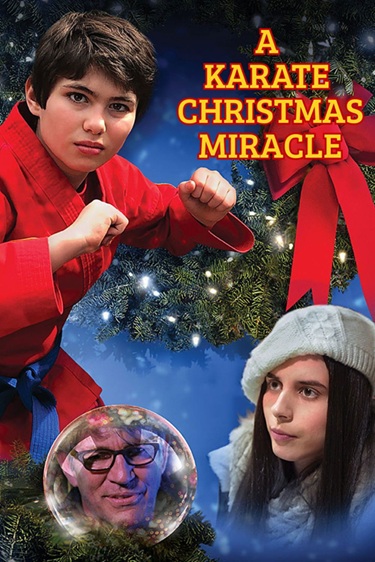
In 2019’s A Karate Christmas Miracle, young Jesse Genesis (Mario Del Vecchio) believes that if he can become a black belt in four days, his father — who has been missing for a year — will return home. Jesse’s mother, Abby (Mila Milosevic) tries to get Jesse to understand that his father was abducted and probably murdered by a killer clown. Eventually, trying to understand what happened to her husband, Abby teams up with Elizabeth (Julie McCullough), a quirky law professor who is also psychic.
This is a strange film. Eric Roberts and Martin Kove are listed as co-starring in the film but actually, all of their footage appears to have been lifted from 2015’s Joker’s Poltergeist, a film that stylistically and thematically has next to nothing in common with A Karate Christmas Miracle. Scenes of Jesse practicing karate and trying to work his way up to black belt in just six days are mixed with scenes of Eric Roberts threatening to kill people and Martin Kove rambling about he wants to leave a movie theater to his daughter. The scenes just don’t mix but they do show that if Eric Roberts and Martin Kove aren’t available to do your bad movie, you can just lift scenes of them from an even worse movie.
Sitting through A Karate Christmas Miracle is a bit of a struggle. It’s only 81 minutes long but every scene still goes on for too long and the dialogue is full of overly quirky moments that probably sounded great in the writer’s head but which play out very awkwardly on film. This movie really made me appreciate films that are actually edited in a professional manner. We tend to take good editing for granted. This movie reminds us not to.
Now, to be honest, the story did have some potential. A child is so desperate for his father to return that he sets an impossible goal for himself. Seriously, in the right hands, this could have been a real tearjerker. But everything about A Karate Christmas Miracle just feels off. The film works itself towards an heartfelt ending that it really hasn’t earned.
Perhaps the best thing that can be said about this film is that it’s still better than Joker’s Poltergeist.
Previous Eric Roberts Films That We Have Reviewed:
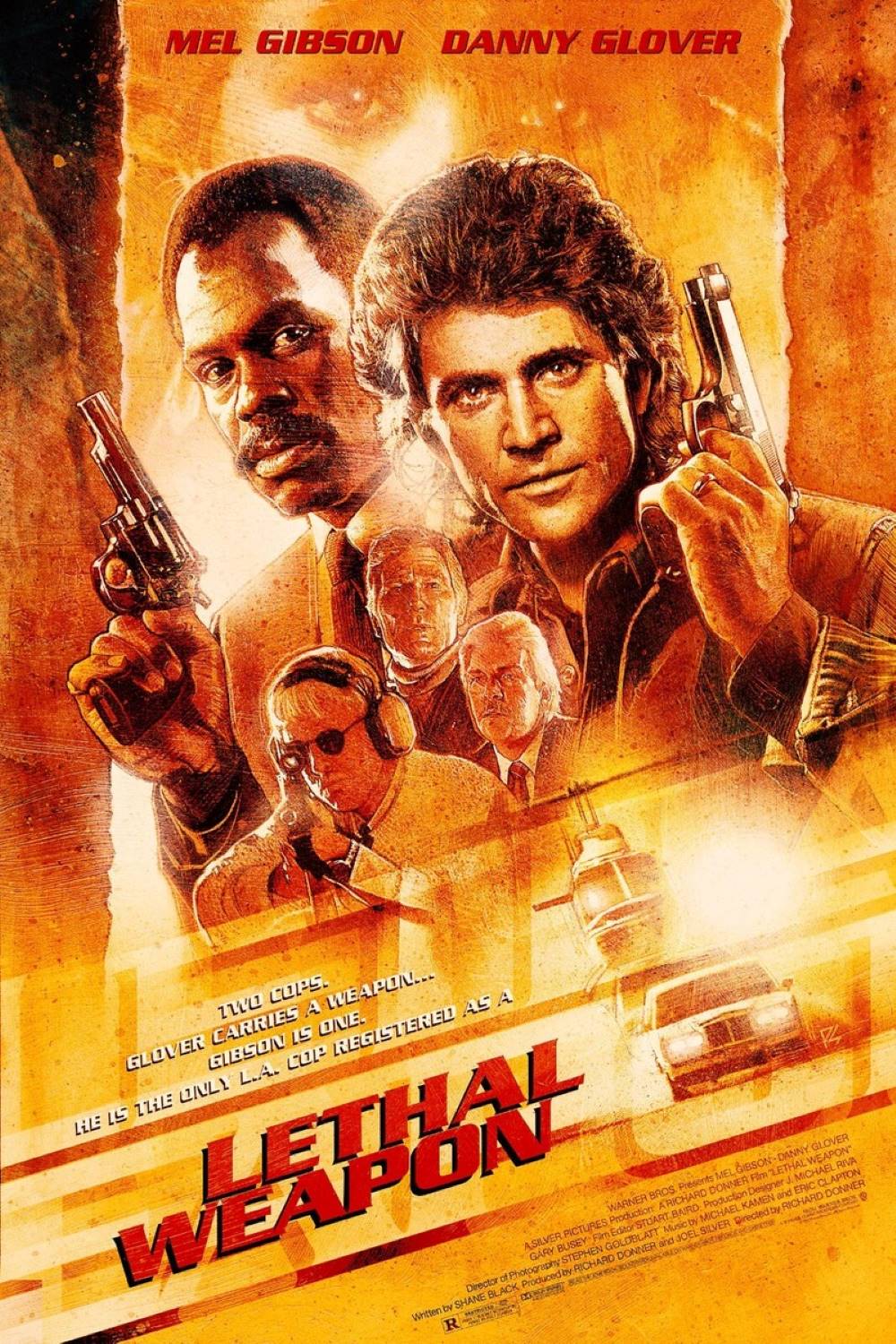
Lethal Weapon is one of those action movies that looks like pure genre formula on paper but somehow plays like lightning in a bottle on screen. From the opening moments, it feels like a film that knows exactly what kind of ride it wants to deliver and leans into that mission with confidence, attitude, and just enough heart to make the bullets and explosions actually matter.
The premise itself is as straightforward as they come, and that simplicity is part of the charm. Martin Riggs is the textbook “cop on the edge,” a former special forces sniper whose life has completely fallen apart after the death of his wife. He’s volatile, depressed, and teetering on the edge of suicidal, which gives everything he does an extra layer of danger. On the other side of the pairing is Roger Murtaugh, a seasoned detective staring down his 50th birthday, trying to balance a long career in homicide with the quiet, constant pull of his family at home. When these two are thrown together and assigned to a case involving drugs, dead bodies, and shady ex-military criminals, the story plays out across familiar beats: suspicious deaths, escalating confrontations, close calls, and a trail that leads them deeper into a dangerous operation. The crime plot is pulpy and direct rather than twisty, but the film uses it as a sturdy framework rather than the main point of interest, keeping the investigation moving while the characters come into focus. Much of that sharp setup and snappy progression comes from Shane Black’s script, which crackles with knowing genre savvy, pitch-perfect banter, and a keen eye for how personal pain fuels action-hero antics.
What really makes Lethal Weapon feel alive is how much time it spends letting Riggs and Murtaugh exist as people before they fully morph into the “classic duo” that pop culture remembers. The film doesn’t rush past the small stuff. Riggs is introduced living in a rundown trailer on the beach with his scruffy dog for company, drinking and stumbling through life with the casual recklessness of someone who genuinely doesn’t care if he sees tomorrow. Those early moments of him alone, flirting with self-destruction, give his later heroics a sense of tragic context: he’s not just fearless, he’s half-convinced he has nothing left to lose. Murtaugh’s introduction is a complete contrast: a crowded home, kids, a loving wife, and the kind of loud, chaotic domestic life that’s full of relatable irritation and warmth. Seeing him grumble through birthday milestones or awkwardly handle family situations does more for his character than any speech about his years on the force could. These slices of everyday life build a strong emotional foundation so that when the bullets start flying, there’s something at stake beyond catching bad guys. Black’s writing shines here, weaving those intimate details into the thriller beats without ever feeling forced or preachy.
The chemistry between Mel Gibson and Danny Glover is the film’s true secret weapon. Gibson plays Riggs as an unpredictable live wire, able to flip from goofy physical comedy to chilling seriousness in an instant. He sells the idea that this is a man barely keeping it together, yet still razor-sharp when it comes to the job. There’s a constant sense that his jokes and antics are a flimsy barrier over something very raw. Glover, by contrast, keeps Murtaugh grounded and human; his performance is packed with little sighs, muttered reactions, and weary facial expressions that speak volumes. He comes across as a guy who has seen too much, loves his family, and genuinely wants to do the right thing, but is exhausted by how hard that is in practice. Their initial friction hits the expected “mismatched partners” beats: Murtaugh thinks Riggs is unstable and dangerous, while Riggs treats Murtaugh like a fussy old man who doesn’t get it. Yet as they move through stakeouts, interrogations, and gunfights, their banter evolves from pure irritation into an easy rhythm filled with barbs, mutual respect, and eventually real affection. Shane Black’s dialogue is the glue for all of it—witty, profane, and laced with just enough vulnerability to make the laughs land harder and the tension feel real.
Richard Donner’s direction is a huge part of why all of this clicks as well as it does. He has a knack for blending big, commercial genre instincts with an eye for character detail, and Lethal Weapon is a textbook example of that balance. He stages action scenes with clear geography and rhythm, so even when things get loud and chaotic, you always know where you are and what everyone is trying to do. At the same time, he’s just as interested in the quiet beats: a pause on Riggs’ face after a joke lands flat, Murtaugh’s body language when he walks into his noisy home after a brutal day, the way a conversation in a car can shift from banter to confession in a couple of lines. Donner keeps the film moving at a brisk pace, but he knows when to let a shot linger or a silence hang long enough to tell you what the characters can’t quite say out loud. His tonal control—jumping from dark to funny to tense without completely losing the thread—is a big reason the movie doesn’t collapse under its own genre juggling, and it pairs beautifully with Black’s script that sets up those shifts so precisely.
Tonally, Lethal Weapon walks a tricky line, and that’s a big part of its identity. On one hand, this is a story with genuinely dark undercurrents. Riggs’ suicidal impulses are not a throwaway character quirk; the film gives time to scenes where he nearly acts on them and struggles in a very raw way with his grief and loneliness. The case they’re working breaks open into territory involving drugs, exploitation, and violence that’s sometimes nasty rather than cleanly heroic. On the other hand, the film is full of humor, ranging from quick one-liners to broad physical bits. The Murtaugh household provides a lot of that levity: awkward conversations with his kids, Riggs stumbling through family dynamics, and the contrast between domestic calm and the chaos of the streets. The movie often jumps from heavy emotional beats to comedic ones and back again, and while the transitions can be abrupt, that mixture is part of what keeps it from feeling like just another grim cop story. The laughter doesn’t erase the darker material, but it does give the movie a sense of momentum and charm that keeps it entertaining instead of oppressive. Black’s screenplay nails this push-pull, using humor as both release valve and revelation.
As an action film, Lethal Weapon delivers a steady run of sequences that are energetic, clear, and tactile. The action is built around physical stunts, dangerous-looking falls, and gunfights that feel chaotic without becoming incoherent. One memorable sequence has Riggs dealing with a jumper on a rooftop in a way that instantly tells you everything about his mentality and willingness to risk himself. Another set piece in a more open, exposed environment lets the film escalate tension step by step before violence finally erupts. Through it all, Donner keeps a strong sense of spatial clarity; you can track where the characters are, what they’re trying to do, and how each decision raises the stakes. The fights feel scrappy and painful rather than overly slick, and that slightly rough quality actually works in the movie’s favor, making each impact land harder. Riggs, especially, moves like a human weapon, hurling himself into situations with a recklessness that ties directly into his psychological state, all fueled by Black’s clever plotting that makes those risks feel personal.
Underneath the gunfire and explosions, there’s a surprisingly sturdy emotional core tying everything together. Riggs’ grief isn’t just window dressing; it’s the lens through which his every decision makes sense. The movie doesn’t lecture you about what he’s feeling, but it shows it—through quiet moments alone, through the anger that erupts at all the wrong times, and through the way he throws his body into danger almost as if daring the world to take him out. Murtaugh’s arc is more subtle but still strongly drawn. He’s at an age where he has to confront the reality that he can’t keep pace with younger, more reckless colleagues forever, and yet his sense of duty keeps pulling him into situations where his family might lose him. Throughout their investigation, Murtaugh’s protective instincts—toward his loved ones, toward Riggs, and toward innocent people caught in the crossfire—become as important as his skills as a detective.
The relationship that develops between Riggs and Murtaugh is the heart of the film and the main reason it sticks in the memory. At first, Murtaugh just wants to survive partnering with a man he genuinely believes might be unhinged, while Riggs seems to treat their pairing as just another chaotic twist in a life already off the rails. As they trade confessions, back each other up in tight spots, and slowly understand what the other is carrying, their bond shifts into something like brotherhood. Murtaugh becomes a kind of anchor for Riggs, offering not just backup in a fight but also a place at the table, both literally and figuratively. Riggs, in turn, forces Murtaugh out of his comfort zone, reminding him that he still has plenty of courage and fire left in him. The film doesn’t turn their connection into a sentimental soapbox, but it lets small moments—a shared laugh after a narrow escape, a quiet conversation after the chaos—do the emotional lifting, with Black’s words giving those scenes their understated power.
If there’s a clear weak spot, it’s that the villains are fairly thinly drawn, operating more as looming threats than fully realized characters. They are dangerous and organized, capable of serious brutality and clearly involved in serious criminal operations, but the movie doesn’t spend much time exploring their motivations or inner lives. They’re the kind of antagonists designed to be obstacles: formidable enough to make the heroes’ victories feel earned, but not so complex that they distract from the central duo. For a character-driven action film, that trade-off mostly works. When Lethal Weapon is firing on all cylinders, the tension doesn’t come from wondering what the bad guys will do next so much as from seeing how Riggs and Murtaugh will handle whatever gets thrown at them and what that reveals about who they are.
Structurally, the film keeps a tight pace, always nudging the story forward even when it pauses for character beats. Expository scenes rarely feel like dry info dumps; they’re often laced with jokes, personal jabs, or subtle shifts in how the two leads relate to each other. The downtime moments—a quiet drink, a shared meal, a conversation in a car between partners who would rather pretend they’re fine—are as important as the louder ones. By the time the case ramps up to its most intense passages, there’s been enough time with these characters to care less about the mechanics of the plot and more about whether these two damaged, stubborn men can come out the other side with something to hold onto.
What ultimately makes Lethal Weapon work so well is that it doesn’t settle for being just a checklist of genre requirements. Yes, it has gunfights, dark humor, car chases, and tough-guy posturing. But wrapped around all of that is a story about grief, aging, loyalty, and how unlikely partnerships can change the trajectory of a person’s life. Donner’s steady hand behind the camera, Shane Black’s razor-sharp script, and the powerhouse performances turn what could have been a forgettable cop thriller into something much more memorable. For anyone who enjoys action movies that care as much about the people pulling the triggers as the bullets they fire, Lethal Weapon stands out as a defining entry in the buddy-cop mold, powered by the messy, heartfelt dynamic at its center and the sure-footed craftsmanship that brings it all together.
The 2017 film, A Very Merry Toy Store, asks the age-old question: “Could any couple possibly be more adorable than Melissa Joan Hart and Mario Lopez?”
Melissa Joan Hart (Sabrina!) and Mario Lopez (Slater!) play rival toy store owners. (Their fathers once owned one big toy store but that didn’t work out.) Hart’s idealistic toy store is struggling. Lopez’s more commercial toy store is thriving. But they’re going to have to set aside their differences (and accept that they’re totally in love) because a big chain store is coming to town!
It’s a cute movie, one that works because the leads are so likable. (Brian Dennehy and Beth Broderick are both well-cast in supporting roles.) What can I say? I like this movie! Maybe I just always wanted to own a toy store.
(If I had a toy store, I would so a “Buy a Toy, Get A Free Book” promotion.)
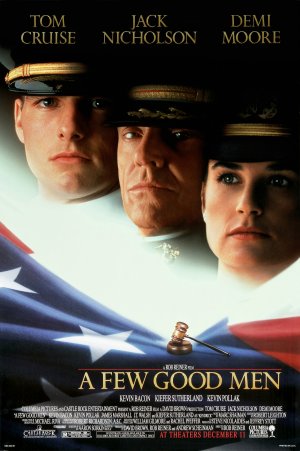
For today’s scene that I love, I decided to pick from the only Rob Reiner-directed film to be nominated for Best Picture of the Year, 1992’s A Few Good Men.
This scene features great work from two legitimate film stars, Tom Cruise and Jack Nicholson. It’s also the type of potentially stagey scene that would have proved problematic for a lot of other directors. Rob Reiner, however, handled it perfectly.

 Through the Shattered Lens