Late Night Retro Television Review: Check It Out! 3.5 “Not For Commercial Use”


Welcome to Late Night Retro Television Reviews, a feature where we review some of our favorite and least favorite shows of the past!  On Saturdays, I will be reviewing the Canadian sitcom, Check it Out, which ran in syndication from 1985 to 1988.  The entire show is currently streaming on Tubi!

This week, the news comes to Cobb’s!

Episode 3.5 “Not For Commercial Use”

(Dir by Alan Erlich, originally aired on October 18th, 1987)

The local news station is coming down to Cobb’s to do a story on how things have changed at the store now that the company is under new management.

Really?

Is it just a super slow news day or something?  The insinuation is that it’s actually going to be a 30-minute news special, all about an obscure grocery store in the suburbs of Ontario.  (In this episode, Check It Out! finally admits that the show is taking place in Canada.)  I mean, even if it is a slow news day, I just can’t imagine that a thirty-minute story about Cobb’s would be a huge ratings grabber.

Howard is excited about the idea of being on television.  He calls his Aunt Lil and promises to tug on his ear so that she’ll know that he’s thinking of her.  Howard imagines himself as a TV star.  There’s Howard hosting a talk show!  There’s Howard as a tough detective.  It’s all kind of silly but, in its way, kind of cute.  Howard is a lot more likable this season than he was during the previous two seasons.  And Don Adams, who can sometimes seem a bit indifferent when it comes to playing Howard, actually gave a lively performance in this episode.

TC Collingwood (Elizabeth Hanna), who I guess is supposed to be the liaison between the store and the corporate offices, does not want Howard to appear on TV.  She feels that Howard is a bit too …. I guess “dorky” would be the right term to use here.  She thinks that Howard is going to embarrass the store with his bad jokes and his Bogart impersonation.  TC would rather focus on employees like Leslie, who now wears a chef’s hat and who has apparently transferred from working as a cashier to working in the deli.

(One thing that I’ve noticed is that, during season 3, the show finally hired enough extras to make the store seem like a real place.  There are now employees and shoppers all over the place.  Marlene is no longer the only cashier and Leslie appears to have a good crew working with him at the deli)

As for Howard, he does manage to get on television.  He simply cannot be stopped!  He wanders in front of the camera.  He tells bad jokes.  He does even worse impersonations.  TC ends up locking him in a meat locker but it turns out that the CEO of the company really enjoyed Howard and his antics.  Good for Howard, I guess.

This episode continued this season’s pattern of being far better than the two that came before it.  For once, every member of the cast was allowed a chance to shine.  This episode was worth watching for Viker’s attempt to tell a knock knock joke alone.  Check It Out! was a deeply silly show but at least in the third season it’s finally got consistently funny.

Lisa Marie’s Week In Television: 1/19/25 — 1/25/25


Here are just a few (admittedly, very few) thoughts on what I watched this week!

Abbott Elementary (Wednesday Night, ABC)

Unlike the characters in Abbott Elementary, I’m not a fan of the American Labor Movement but I still enjoyed this week’s episode about a bus strike.  The remote learning stuff was definitely the highlight of the episodes.

Dark (Netflix)

Case and I are continuing to watch this German show on Netflix.  It’s a very intriguing saga of time travel and murder.

Hell’s Kitchen (Thursday Night, Fox)

Without Brandon in the competition, who cares?  It seems kind of obvious that Egypt’s going to win.

Kitchen Nightmares (Tuesday Night, Fox)

Chef Ramsay saved another restaurant in New Orleans.  That’s good and all but I still wouldn’t want to eat anywhere that’s been featured on Kitchen Nightmares.  Once a mess, always a mess.  At least, that’s the way that I view things as far as food preparation is concerned.

The Oscar Nominations (Thursday Morning, Hulu)

The nominations didn’t do much for me this year.  Honestly, I have to wonder how long it’s going to be until ABC dumps the Oscars and the ceremony is reduced to just streaming on Hulu.  It’s going to happen sooner or later.

The Presidential Inauguration (Monday, C-Span)

I’m thankful for C-Span.  I was able to watch the whole thing without any commentary for either side.

I also watched and reviewed:

  1. Check It Out
  2. CHiPs
  3. Fantasy Island
  4. Friday the 13th: The Series
  5. Highway to Heaven
  6. The Love Boat
  7. Malibu CA
  8. Miami Vice
  9. Monsters
  10. Pacific Blue
  11. St. Elsewhere
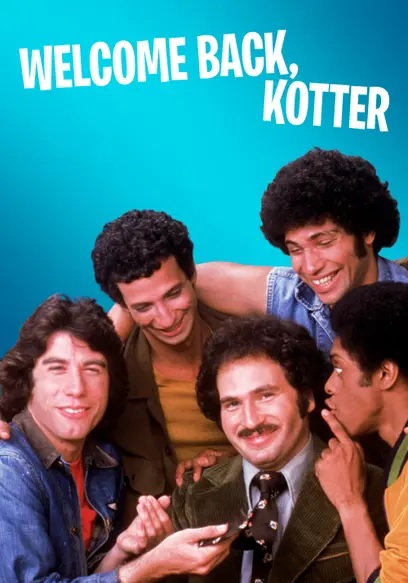
  12. Welcome Back Kotter

Ghosts of Sundance Past: In The Company Of Men (dir by Neil LaBute)


The Sundance Film Festival is currently underway in Utah.  For the next few days, I’ll be taking a look at some of the films that have previously won awards at Sundance.

1997’s In The Company of Men is a film about two guys playing a series of very viscous jokes.

Howard (Matt Malloy) and Chad (Aaron Eckhart) are two mid-level executives who have been sent to work at a branch office for six weeks.  While Chad is talkative and aggressive, Howard is much more meek and often seems to be in awe of the far more confident Chad.  What the two men have in common is a lot of resentment and bitterness towards women.  Chad suggests that they should both date a woman at the same time and fool her into falling for both of them.  Then, they’ll both dump her at the same time.  Chad has even picked out a victim, Christine (Stacy Edwards), a deaf and introverted co-worker.

That Chad would come up with such a cruel scheme really isn’t a surprise.  From the first minute that we see Chad, we think we can tell what type of person he is.  Because this is a movie, we hold on to hope that Chad will somehow reveal that he’s not as bad as he seems but, in the end, the whole point of the film is that Chad is not only as bad as we initially think he is but he’s actually even worse.  Howard, on the other hand, comes across like a rather mild-mannered guy, the stereotypical nerdy mid-level manager who no one ever notices.  Howard could never come up with a scheme like this on his own but, once Chad suggests it, Howard agrees.  Howard is a natural follower.  He looks at Chad and he sees who he wants to be.  Chad looks at Howard and sees someone who he can easily manipulate.

Chad and Howard set their plan in motion and yes, it is difficult to watch as they both pretend to be falling in love with the sensitive Christine while making cruel fun of her behind her back.  Again, we know that at least one of the men is going to have second thoughts and try to back out of the plan.  We know this because we’re watching a movie.  We spend most of the movie hoping that Chad is going to be the one to find his conscience because Aaron Eckhart is the more charismatic of the two men and Chad is the one with whom Christine seems to be truly falling in love.  Instead, it’s Howard who falls in love with Christine while Chad remains as sociopathic as ever.  By the end of the film, Chad reveals just how manipulative he truly is and Howard discovers that Christine was not the only victim of Chad’s joke.

In The Company Of Men is not an easy film to watch.  The comments that Chad and Howard make are shockingly cruel, though one gets the feeling that they’re probably an accurate reflection of what men like Chad and Howard sound like when they’re in private.  Director Neil LaBute doesn’t make any effort to soften or excuse their misogyny.  It’s a testament to the talents of Eckhart, Malloy, and Edwards that we stick with the film.  In the end, In The Company Of Men is an unsettling portrait of misogyny and toxic masculinity, one that is made all the more disturbing by Aaron Eckhart’s charismatic performance as a truly despicable person.  The film uses Eckhart’s middle-American good looks to subversive effect and, even when he’s playing such a hateful character, there’s something undeniably fascinating about him.  You watch his performance of Chad and you’re almost desperate to find some sort of good inside of him.  It’s not there, though.  That’s what is truly frightening about In The Company Of Men.

As the 1997 Sundance Film Festival, In The Company Of Men won the Filmmaker’s Trophy.

Lisa Marie Reviews An Oscar Nominee: Reds (dir by Warren Beatty)


In the 1981 film Reds, Warren Beatty plays Jack Reed, the radical journalist who, at the turn of the century, wrote one of the first non-fiction books about Russia’s communist revolution and then went on to work as a propagandist for the communists before becoming disillusioned with the new Russian government and then promptly dying at the age of 32.

Diane Keaton plays Louise Bryant, the feminist writer who became Reed’s lover and eventually his wife.  Louise found fame as one of the first female war correspondents but then she also found infamy when she was called before a Congressional committee and accused of being a subversive.

Jack Nicholson plays Eugene O’Neill, the playwright who was a friend of both Reed and Bryant’s and who had a brief affair with Bryant while Reed was off covering labor strikes and the 1916 Democratic Convention.

Lastly, Maureen Stapleton plays Emma Goldman, the anarchist leader who was kicked out of the country after one of her stupid little dumbass followers assassinated President McKinley.  (Seriously, don’t get me started on that little jerk Leon Czolgosz.)

Together …. well, I was going to say that they solve crimes but that joke is perhaps a bit too flippant for a review of RedsReds is a big serious film about the left-wing activists at the turn of the century, one in which the characters move from one labor riot to another and generally live the life of wealthy bohemians.  Reed spends the film promoting communism, just to be terribly disillusioned when the communists actually come to power in Russia.  For a history nerd like me, the film is interesting.  For those who are not quite as obsessed with history, the film is extremely long and the scenes of Reed and Bryant’s domestic dramas often feel a bit predictable, especially when they’re taking place against such a large international tableaux.  At its best, the film is almost a Rorschach test for how the viewer feels about political and labor activists.  Do you look at Jack Reed and Louise Bryant and see two inspiring warriors for the cause or do you see two wealthy people playing at being revolutionaries?

Reds was a film that Warren Beatty spent close to 20 years trying to make, despite the fact that the heads of the Hollywood studios all told him that audiences would never show up for an epic film about a bunch of wealthy communists.  (The heads of the studio turned out to be correct, as the film was critically acclaimed but hardly a success at the box office.)  It was only after the success of the 1978, Beatty-directed best picture nominee Heaven Can Wait that Beatty was finally able to get financing for his dream project.  He ended up directing, producing, and writing the film himself and he cast his friend Jack Nicholson as O’Neill and his then-romantic partner Diane Keaton as Louise Bryant.  (Gene Hackman, Beatty’s Bonnie and Clyde co-star, shows up briefly as one of Reed’s editors.)  One left-wing generation’s tribute to an early left-wing generation, Reds is fully a Warren Beatty production and, for his efforts, Beatty was honored with the Oscar for Best Director.  That said, the Reds lost the award for Best Picture to another historical epic, Chariots of Fire.  Chariots of Fire featured no communists and did quite well at the box office.

The film is good but a bit uneven, especially towards the end when we suddenly get scenes of Louise Bryant trudging through Finland as she attempts to make it to Russia to be reunited with Reed.  The film actually works best when it features interviews with people who were actual contemporaries of Reed and Bryant and who share their own memoires of the time.  In fact, the interviews work almost too well.  The “witnesses,” as the film refers to them, paint such a vivid picture of the Reed, Bryant, and turn of the century America that Beatty’s attempt to cinematically recreate history often can’t compete.  One can’t help but feel that Beatty perhaps should have just made a documentary instead of a narrative film.

(Interestingly enough, many of the witnesses were people who were sympathetic to Reed’s politics in at the start of the century but then moved much more to the right as the years passed.  Reed’s friend and college roommate, Hamilton Fish, went on to become a prominent Republican congressman and a prominent critics of FDR.)

That said, Jack Nicholson gives a fantastic performance as Eugene O’Neill, adding some much needed cynicism to the film’s portrayal of Reed and Bryant’s idealism.  Keaton and Beatty sometime both seem to be struggling to escape their own well-worn personas as Bryant and Reed but Beatty does really sell Reed’s eventually disillusionment with Russia and the scene where he finally tells off his Russian handler made me want to cheer.  Fans of great character acting will want to keep an eye out for everyone from Paul Sorvino to William Daniels to Edward Herrmann to M. Emmet Walsh and IanWolfe, all popping up in small roles.

Reds is not a perfect film but, as a lover of history, I enjoyed it.


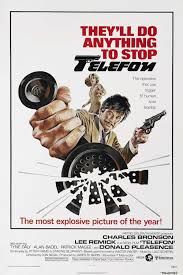
Scenes that Bradley loves – triggering human time bombs in TELEFON!


Well before THE NAKED GUN was triggering Reggie Jackson, director Don Siegel and Charles Bronson were triggering human time bombs in TELEFON (1977). Quentin Tarantino even borrowed from this film when he chose the Robert Frost poem for Stuntman Mike’s (Kurt Russell) lap dance from Arlene (Vanessa Furlito). It’s not as sexy, but it’s still a good time as Bronson tries to prevent World War III. Enjoy!

The Challenge (1982, directed by John Frankenheimer)


Rick Murphy (Scott Glenn) is a punch-drunk boxer who is hired to return an ancient sword to Japan so that it can be returned to its rightful owner, the honorable Toru (Toshiro Mifune).  Once in Japan, Rick becomes involved in a battle between Toru and his corrupt brother, Hideo (Atsuo Nakamura).  Hideo demands that Rick work as an undercover spy in Toru’s martial arts school or be beheaded.  Rick decides to keep his head and be a spy but he soon finds himself truly wanting to learn the ways of the Bushido.

A martial arts film is the last place most people would expect to find Scott Glenn and considering how miscast Glenn is, that’s understandable.  Scott Glenn feels very out-of-place as both a boxer and a modern-day samurai.  Scott Glenn is a very good actor but the role of Rick Murphy called for someone who could mix comedy with drama and be convincingly desperate.  That’s not Scott Glenn.  Who would have been better in the role?  Tom Berenger was already acting in 1982.  Or maybe even someone like Jan-Michael Vincent.  Vincent was a B-actor but, deep down, The Challenge is a B-movie.

The good thing is that the action often does make up for Glenn’s miscasting.  John Frankenheimer struggled with making the human drama compelling but he knew how to film a good fight.  John Sayles’s script is pulpy without ever being disrespectful to Japanese culture and, as always, Mifune looks like he could battle and defeat the entire world if he wanted to.

One final note: Steven Seagal worked behind-the-scenes on the film but we won’t hold that against it.

Retro Television Review: Welcome Back Kotter 4.15 “Barbarino’s Baby”


Welcome to Retro Television Reviews, a feature where we review some of our favorite and least favorite shows of the past!  On Saturdays, I will be reviewing Welcome Back Kotter, which ran on ABC  from 1975 to 1979.  The entire show can be purchased on Prime.

This week, a longtime Sweathog makes his final appearance.

Episode 4.15 “Barbarino’s Baby”

(Dir by Norman Abbott, originally aired on February 3rd, 1979)

This episode was John Travolta’s final appearance as Vinnie Barbarino.  That means no more visits to his ugly apartment, no more confusion as to whether or not Barbarino is actually still enrolled in high school, and no more of John Travolta trying his best to give a good performance while the rest of the cast sleep walk through their roles.  Seriously, you have to admire that Travolta was still trying to give a good performance even under the weird circumstances of the fourth season.  The studio audience was going to cheer no matter what Travolta did.  Travolta could have just shrugged off the entire show and character.  I’m sure the temptation to do so was there.  Instead, he did his best.

His final episode really isn’t worth the effort, though,  Barbarino wants to get promoted from scrubbing the floors of the hospital to working in the emergency room.  The head nurse says that there’s no way someone as dumb as Barbarino could be trusted in the ER.  Barbarino asks Mr. Woodman to write a letter.  Julie takes it upon herself to call the hospital and put in a good word for him.  As for Gabe …. he’s not in this episode.  Gabe does nothing!

Maybe Barbarino would get promoted if his idiot friends weren’t always hanging out at the hospital.  Seriously, does that group have nothing better to do than hang out in the world’s ugliest medical facility?  Couldn’t they go hang out on Christopher Street with Horshack or something?  Remember when the Sweathogs were an actual gang who committed crimes?  Epstein was once voted most likely to kill someone.  Freddie used to get accused of stealing every other week.  Beau showed up and they all got wimpy.

Anyway, Barbarino and the Sweathogs get on an elevator with a pregnant woman.  The elevator  stops between floors.  The woman goes into labor.  Time for Barbarino and the Sweathogs to deliver a baby …. *sigh*.  Seriously, there is nothing more stress-inducing than the idea of a bunch of 30 year-old high school students delivering a baby.  The important thing is that the head nurse is able to talk Barbarino through the delivery and Barbarino gets his promotion!  Barbarino is going to the ER!  That’s good news for Horshack because there’s no way he’s not going to end up getting his stomach pumped in the ER eventually.

And that’s John Travolta’s final episode of Welcome Back, Kotter.  It’s a bit of a let down, considering how important the character of Vinnie Barbarino was to the success of the show.  Imagine if The Office finale only allowed Michael Scott to appear for two minutes and only gave him one line of dialogue?  THAT WOULD BE INSANE!

I can only wonder what the rest of this show is going to be like without Kotter and Barbarino.  My fear is that it’s going to involve a lot of Horshack,  We’ll find out.  There’s only a few episodes left!

Song of the Day: Things To Come, performed by the UNT One O’Clock Lab Band


The courtyard at UNT’s Bruce Hall, the former home of this writer!

Since today is Tobe Hooper’s birthday and I’ve already shared a scene from The Texas Chainsaw Massacre, it seems appropriate that today’s song of the day should come from Texas as well!

Here is the University of North Texas’s One O’Clock Lab band performing Dizzy Gillespie’s Things To Come!

Film Review: The Straight Story (by David Lynch)


Released in 1999, The Straight Story is one of the greatest films ever made about America.

Alvin Straight (Richard Farnsworth) is an elderly veteran of World War II.  He lives in Iowa, a kind but rather taciturn man who doesn’t have time for doctors and would rather live on his own terms.  That said, when his daughter (Sissy Spacek) finally does manage to drag Alvin to a doctor, he’s told to stop smoking and to start using a walker to get around.  Alvin refuses, though he does start using two canes.  Alvin is an old man.  He’s lived a long time and, in his opinion, he knows best about what he needs to do.

For instance, when Alvin hears that his long-estranged brother Lyle (Harry Dean Stanton), has had a stroke, Alvin decides that he need to go Wisconsin to see him.  The only problem is that Alvin can barely see and he can’t walk and there’s no way anyone is going to give him a car or even a driver’s license.  His solution is to ride a lawnmower from Iowa to Wisconsin.

It’s based on a true story and if The Straight Story sounds like a film that will make you cry, it is.  Richard Farnsworth was terminally ill when he was offered the role of Alvin and he accepted because he admired Alvin’s determination to live life his own way.  As portrayed in the film, Alvin is not one to easily betray his emotions.  He grew up as a part of that stoic generation.  He saw his share of violence and death while he was serving during World War II and one gets the feeling that his attitude has always been that, if he could survive that, he can survive anything.  (The closest Alvin gets to becoming openly emotional is when he meets another veteran in a bar and it becomes obvious that the two of them share a bond that, as people who seen and survived war, only they can really understand.)  Farnsworth so completely becomes Alvin Straight that it’s easy to forger that he was a veteran actor who had a long career before starring in The Straight Story.  Alvin may not show much emotion but Farnsworth communicates so much with just the weariness in his eyes and his slow but determined gait that we feel like we know everything about him.

The film follows Alvin on his way to Wisconsin.  Along the way, he meets various people and, for the most part, they’re all good folks.  Even the runaway hitchhiker (Anastasia Webb) turns out to be a kind soul.  When Alvin momentarily loses control of his lawn mower, a group of stranger run out to help him.  They don’t know who he is or why he was riding his lawnmower down the street.  All that matter is that, at that moment, he’s a person who needs help.  The Straight Story celebrates both the beauty and the people of America.  It’s one of the most sincere and life-affirming films ever made, one that contains not a trace of cynicism and which is all the better for it.  And while many people might be shocked to discover that this film was directed by David Lynch, the truth of the matter is that a strong love for America and Americana runs through all of Lynch’s films.  Lynch was an artist who believed that people could surprise you with their kindness and that’s certainly the case with The Straight Story.

The Straight Story was the only one of David Lynch’s films to receive a G-rating.  It was also the only film that Lynch made for Disney.  It’s interesting to look at Lynch’s filmography and see this heartfelt and deeply touching film sitting between Lost Highway and Mulholland Drive.  But The Straight Story really does feature David Lynch at his best.  It also reveals him as a filmmaker who could do something unexpected without compromising his signature vision.  There’s a lot of beautiful, Lynchian images in The Straight Story.  But there’s also a lot of heart.

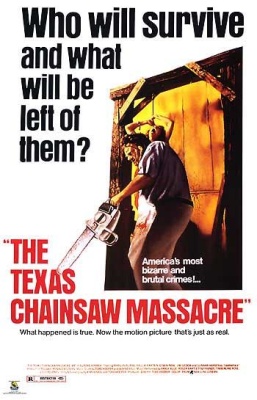
Scenes That I Love: The Opening Of The Texas Chainsaw Massacre


Since today is Tobe Hooper’s birthday, it seems fitting that today’s scene of the day should come from his best-known film.  The opening of 1974’s The Texas Chainsaw Massacre is genuinely unsettling, from the opening narration to the scene of the body being dug up to the news reports of grave robbery.  Even the opening credits feel ominous!

The narration was, of course, provided by a young John Larroquette, who has since said that he was “paid in marijuana” for what would become his first feature film credit.