Film Review: Honk For Jesus. Save Your Soul. (dir by Adamma Ebo)


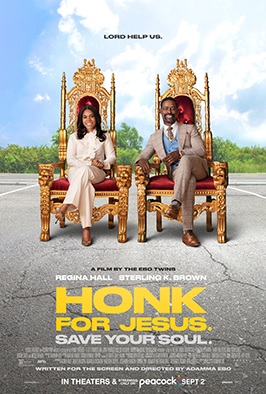
In Honk for Jesus Save Your Soul, Sterling K. Brown plays Lee-Curtis Childs, a once-popular and powerful preacher who is looking to make a comeback after his career and his church were both hit by a scandal.

Regina Hall plays Trinitie Childs, Lee-Curtis’s wife and the “first lady” of Wander The Great Paths Church.  She is just as determined as Lee-Curtis to make a comeback.

Together, they solve crimes!

Actually, they don’t.  They really don’t do much of anything, beyond trying and usually failing to talk people into returning to their church.  In archival footage, we see Lee-Curtis preaching the prosperity gospel and claiming that his faith in God is the reason why he not only has expensive clothes and a big house but that it is also the reason why he deserves them.  We see footage of Lee-Curtis in the past, condemning homosexuality from the pulpit but, in the present, Lee-Curtis seems to hit on almost every man that he meets.  Lee-Curtis is quick to smile and to speak of how he’s made his mistakes but he’s been forgiven by God.  At the same  time, he also always seems to be just one minute away from having a complete meltdown.

Trinitie spends her time trying to keep that meltdown from occurring.  She is someone who knows how to play the loving wife.  A meeting her mother establishes that being a loving wife is what Trinitie was raised to do.  It’s only in private that Trinitie reveals how difficult it is to be married to Lee-Curtis.  She wants the respect that comes from being married to a powerful man, enough so that she’ll even humiliate herself by standing on a street corner while holding a sign that requests for drivers to honk if they love Jesus.  When others attack her over her husband’s infidelities, she smiles and argues with them until she eventually reaches a point where she can smile no longer.

Regina Hall and Sterling K. Brown both give excellent performances, with Hall doing an especially good job of capturing Trinitie’s conflicting emotions over being the wife of Lee-Curtis Childs.  As played by Hall, Trinitie is someone who knows that she deserves better but who has also become addicted to the lifestyle that comes from being the first lady of a megachurch.  As such, she’ll do anything to help Lee-Curtis regain his former popularity.  While Lee-Curtis practices vapid sermons and wallows in self-pity, Trinitie is the one who is left to talk to the people that Lee-Curtis victimized.  Brown has the magnetism necessary to be credible as a man who could convince others that he was without sin.  Hall has the determination necessary to be credible as the power behind the pulpit.

Unfortunately, as good as both Hall and Brown are, the rest of the film is a complete mess.  It starts out as a mockumentary but then it includes scenes that are clearly not meant to have been filmed by the documentary film crew.  Unfortunately, there’s rarely any indication whether we’re watching a mockumentary scene or a “behind the scenes” scene and it’s left to the audience to sort out which is which.  Ultimately, the film’s main flaw is one that is shared by many films that have attempted to satirize the excesses of organized religion.  Honk for Jesus Save Your Soul doesn’t really bring anything new to the table.  At this point, is anyone shocked to discover that some pastors are corrupt?  Is anyone shocked to discover that religious people can also be hypocrites?  None of the criticism is quite as groundbreaking or shocking as the film seems to think that it is.  The movie feels like the equivalent of the atheist who thinks that he’s the first person to make the “But if God created everything, who created God?” argument.  When it comes to making an argument one way or another about organized religion, Honk for Jesus is as shallow and predictable as the God’s Not Dead franchise.  This wouldn’t matter, of course, if the film’s satire had any bite or was, at the very least, consistently humorous.  Unfortunately, this is pretty much a one joke movie.  It is, admittedly, funny the first time that Hall switches from yelling to smiling when she realizes that she’s on camera.  But, at one hour and 40 minutes, a satire needs more than one good joke.

The film is partially redeemed by Hall and Brown but ultimately, there’s little here that hasn’t been done better before.
Scenes That I Love: The Conclusion of The Passenger


Today’s scene that I love comes from 1975’s The Passenger, a film directed by Michelangelo Antonioni.  Antonioni was born 110 years ago today, in what was then the “Kingdom of Italy.”

In The Passenger, Jack Nicholson plays a journalist who, because he’s bored with his life, impulsively assumes the identity of a deceased American businessman.  What he discovers is that the businessman was an arms dealer and that the people that the arms dealer were doing business with still expect to get their weapons.  Despite the fact that he knows that it might cost him his life, Nicholson is still drawn to see just how far he can take his new existence.

The film’s enigmatic final scene, in which Nicholson goes to a hotel to wait as both the people who double-crossed and his wife search for him, is Antonioni at his best.

4 Shots From 4 Films: Special Nicolas Winding Refn Edition


4 (or more) Shots From 4 (or more) Films is just what it says it is, 4 (or more) shots from 4 (or more) of our favorite films. As opposed to the reviews and recaps that we usually post, 4 (or more) Shots From 4 (or more) Films lets the visuals do the talking.

Today, the Shattered Lens wishes a happy 52nd birthday to Danish director Nicholas Winding Refn!  Drive was one of the first films to really be celebrated on this site, receiving reviews from several contributors.  Personally, I preferred The Neon Demon.

In honor of of the man and his work, it’s time for….

4 Shots from 4 Nicolas Winding Refn Films

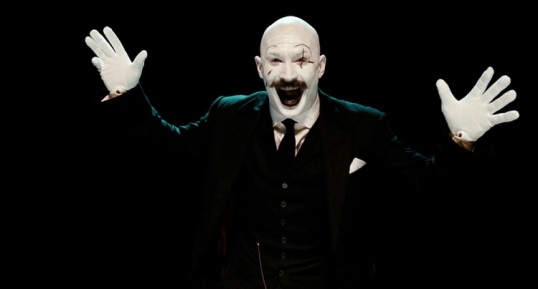
Bronson (2008, dir by Nicolas Winding Refn, DP: Larry Smith)

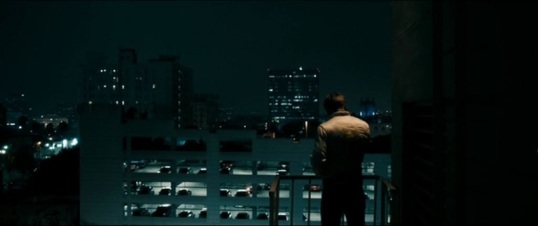
Drive (2011, dir by Nicolas Winding Refn, DP: Newton Thomas Sigel)

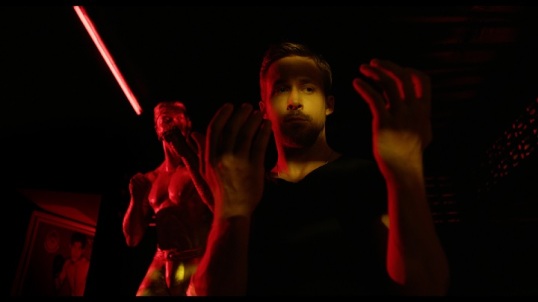
Only God Forgives (2013,dir by Nicolas Winding Refn, DP: Larry Smith)

The Neon Demon (2016, dir by Nicolas Winding Refn, DP: Natasha Braier)

Music Video of the Day: Vincent Price by Deep Purple (2013, directed by Joern Heitman)


A young couple goes to the a dungeon and soon, they find that they’ve become black-and-white and they can no longer hear.  They’ve become a part of a silent movie, starring someone who looks much like Vincent Price.  Of course, the real-life Price didn’t appear in any silent movies but, overall, this is still an effective music video.

The director, Joren Heitmann, has several music videos to his name.  He directed multiple videos for Rammstein and Sarah Connor.  In fact, one of the videos that he did for Sarah Connor was for a song called Vincent.

Deep Purple was first formed in 1968.  As with most bands that have been around for that long, several members have come and gone over the years but the important thing is that the band is still going today.

I’ve been told that this video is a good example of what the site hopes to accomplish this October.

Enjoy!

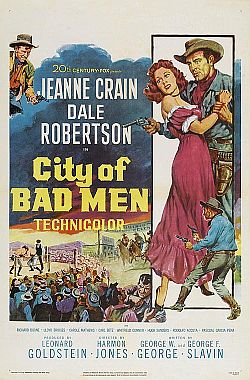
City of Bad Men (1953, directed by Harmon Jones)


In the year 1897, an outlaw gang led by brothers Brett (Dale Robertson) and Gar (Lloyd Bridges) ride into the frontier town of Carson City, Nevada.  Brett and Gar remember Carson City as being a sleepy town where not much happens but, when they arrive, they discover that a carnival-like atmosphere has broken out in the streets.  A heavyweight fight between “Gentleman Jim” Corbett and Bob Fitzsimmons is scheduled to take place in Carson City and the once sleepy little town has become the center of the old west.

Sheriff Bill Gifford (Hugh Sanders) already knows that he’s going to have his hands full with all of the people coming to town for the fight so he’s not happy to see that Brett and Gar have returned.  When the notorious outlaw Johnny Ringo (Richard Boone) also shows up for the fight, Gifford realizes that he’s going to have to do something unheard of.  He deputizes the three outlaws, assigning them to keep the peace.

Even as deputies, the outlaws scheme to steal the money that’s raised by the fight.  However, Brett is actually more interested in getting back together with his former girlfriend, Linda (Jeanne Crain).  When Gar and Ringo realize that Brett might be backing away from the plan, it leads to a climatic showdown in Carson City.

This B-western tells a semi-true story.  Corbett and Fitzsimmons did fight a match in Carson City in 1897.  The fight lasted for over 90 minutes and ended with an upset victory for Fitzsimmons.  It was the first boxing match to be filmed and it was later released into cinemas as The Corbett-Fitzsimmons Fight.  It was the first film to last over an hour and it is considered to be the first feature film.  It’s also considered to be the first pay-per-view event because the film of the fight made the boxers more money than the fight itself.  The rest of the film is pure fiction.  (The infamous outlaw Johnny Ringo had been dead for five years by the time of the Corbett/Fitzsimmons fight.)  But even if there wasn’t an attempt to rob the Corbett/Fitzsimmons Fight, the use of the actual fight and the publicity surrounding it serves to remind the audience that the modern world is coming to the frontier.

For most, the main appeal of this film will be to see Dale Robertson, Richard Boone, and Lloyd Bridges acting opposite each other.  All three are well known to western fans.  Boone would later star in Have Gun Will Travel while Robertson appeared in Tales of Wells Fargo, Iron Horse, and Death Valley Days.  Lloyd Bridges previously played the resentful deputy in High Noon.  The three of them are in top form in City of Bad Men, with Bridges especially making an impression as the less honest of the two outlaw brothers.  The three of them play outlaws who know that the era of the lawless west is coming to an end and all three of them have to decide whether they want to go straight or if they want to go out with a bang (some more literally than others).  With the fast-paced script and a dedicated cast, City of Bad Men is a film that will be appreciated by anyone who likes a good western tale.

Retro Television Review: The Love Boat 1.4 “Message for Maureen / Gotcha / Acapulco Connection”


Welcome to Retro Television Reviews, a feature where we review some of our favorite and least favorite shows of the past!  On Wednesdays, I will be reviewing the original Love Boat, which aired on ABC from 1977 to 1986!  The series can be streamed on Paramount Plus!

Welcome aboard, it’s love!

Episode 1.4 “Message for Maureen / Gotcha / Acapulco Connection”

(Directed by Stuart Margolin, Richard Kinon, and Peter Baldwin, originally aired on October 15th, 1977)

Oh no!  It’s a stowaway!  I guess any television show that took place on a cruise ship would have to feature at least one storyline featuring a stowaway.  It’s a bit disconcerting that The Love Boat couldn’t make it for more than four episodes before using the most obvious plotline but then again, the show ended up running for 9 seasons and a movie.  So, apparently, audiences didn’t mind and I have a feeling that there will probably be many more stowaway stories to come.

The stowaway in this episode is April Lopez (played by Charo).  Apparently, April became a recurring character, one who appeared in almost every season.  In this, her first appearance, she sneaks onto the boat in Acapulco.  The captain is not happy when she’s discovered hiding in a laundry hamper but everyone else is charmed by just how loud and talkative she is.  Because there’s no available rooms, April is housed with Doc Bricker until she can be dropped off at the next port.  Of course, Doc falls in love because Doc fell in love with everyone who came into his exam room.  Seriously, Doc was an HR nightmare waiting to happen.

Of course, April is not the only exhausting person to be on the ship.  There’s also Cyril Wolfe (Milton Berle), a nonstop practical joker whose wife (Audra Lindley) is getting sick of dealing with him and really, who can blame her?  Cyril greets a total stranger with a joy buzzer.  He carries around a fake, detachable hand so that he can freak people out.  Cyril can’t even give it a rest during their vacation!  Pretty soon, not only his wife but the crew are pretty sick of him.  (Most of the people watching the show will be sick of him, too.)  Do they conspire to toss Cyril overboard?  They could probably get away with it, seeing as how all of the ship’s nominal authority figures are busy dealing with a stowaway who loves to sing.  Somehow, Cyril survives his trip and he and his wife end up more in love than ever.

Finally, Maureen Mitchell (Brenda Benet) is a former tennis player who is now in a wheelchair.  All she wants is a few days of vacation before she meets with a surgeon who might be able to help her walk again.  Unfortunately, she discovers that an arrogant sportswriter named John (Bill Bixby) is also on the cruise!  At first, she wants nothing to do with him but when John injures his knee and has to use a wheelchair for the rest of the cruise, the two of them fall in love….

Hold on.  You know what just occurred to me?  Last week’s episode featured Robert Reed and Loretta Swit as two people who don’t like each other but just happen to end up on the same cruise.  This episode featured Brenda Benet and Bill Bixby as two people who don’t like each other but just happen to end up on the same cruise …. how long did The Love Boat writers last before they said, “Okay, we’re out of stories.  Let’s start repeating ourselves?”

Anyway, this episode was a mixed bag.  Charo and Milton Berle were not particularly subtle performers and their storylines felt as if they were designed to invite them to indulge in their worst impulses as performers.  But Bill Bixby and Brenda Benet had a lot of chemistry as John and Maureen and their story actually worked as a result.  (Bixby and Benet were married at the time they appeared in this episode.)  Plus, the ship looked lovely.  So did the ocean.  That’s what really matters.

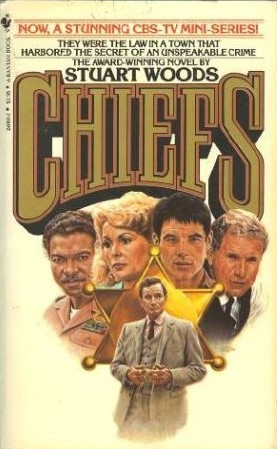
Book Review: Chiefs by Stuart Woods


First published in 1981, Chiefs follows the town of Delano, Georgia over the course of five decades.

Delano starts out as a small, rural town, one that sit uneasily on the dividing line between the old and the new South.  Under the leadership of forward-thinking civic leaders like Hugh Holmes, the town starts to grow.  And, like any growing town, it needs a chief of police to maintain the peace.  In 1919, a simple but honest farmer named Will Henry Lee is selected as the town’s first chief of police.  Not selected is the wealthy Foxy Funderburke.  That’s probably for the best because Will Lee is determined to do a good job and fairly treat all of the town’s citizens, regardless of their race or their economic class.  Foxy, meanwhile, is a serial killer who has been killing young men and dumping their bodies all over the county.

Chiefs tells the story of three men who serve as Chief of Police while Delano grows and Foxy continues to murder anyone that he can get his hands on.  Will Henry Lee is followed by Sonny Butts, a war hero who soon turns out to be a corrupt and racist psychopath.  Sonny is eventually followed by Tucker Watts.  As the town’s first black police chief, Tucker has to deal with both racism and Foxy Funderburke’s murders.  However, Tucker himself has a secret of his own, one that links him back to the very first chief of police.

Chiefs is kind of all over the place.  Not only does the novel follow the growth of Delano and the decades-long investigation into all of Foxy Funderburke’s murders but it also finds time for appearances from Franklin D. Roosevelt and a subplot about Billy Lee, Will Henry Lee’s son, running for governor of Georgia and potentially replacing LBJ as Kennedy’s running mate in 1964.  (The President, of course, explains that he’ll make his decision after returning from Dallas.)  At times, it gets to be a bit too much.  The mystery of the Delano murders too often gets pushed aside for the far less interesting political stuff.  Chiefs was Stuart Woods’s first novel and he makes the common first-timers mistake of trying to cram too much into his story.

The book is at its best when it just sticks to Delano.  Foxy Funderburke is not just a murderer but also a symbol of the times when there law was only arbitrarily enforced in the former Confederacy and wealthy, white landowners could pretty much do whatever they wanted without having to worry about the consequences.  Foxy represents the old ways and each chief, even the evil Sonny Butts, represents just a little bit of progress towards the new way.  Though his prose is rarely memorable, Stuart Woods was a good storyteller and Foxy Funderburke is a memorable villain.  (And, to be honest, Foxy Funderburke is a brilliant name.)  Even if their characterizations aren’t particularly deep (Will Lee is honest, Sonny is narcissistic, Tucker is determined to prove himself), the three men who oppose him are all worthy adversaries and it’s interesting see how, over several decades, the three of them each finds a different piece of the puzzle until Foxy’s true nature is finally exposed.  Will Henry Lee may not have known Sonny Butts and Sonny certainly would never have even spoken to Tucker Watts but, in a way, the three of them work together to solve the town’s greatest mystery.

In the end, the book appealed to the side of me that loves a mystery and it also appealed to my dedicated history nerd side.  Chiefs is flawed but compelling.

The Covers of La Paree


1935, by Earle Bergey

La Paree was published from 1930 to 1938.  Each issue featured stories about living and loving in the City of Lights, Paris!  Today, it’s mostly just remembered for its covers.

Here’s a sampling of the covers of La Paree:

1930, by Worth Carnahan

1932, by Raymond Albert Burley

1933, by Earle Bergey

1934, by Earle Bergey

1935, by Earle Bergey

1936, by Earle Bergey

1936, by Peter Driben

1937, by Peter Driben

1937, by Peter Driben

1937, by Peter Driben

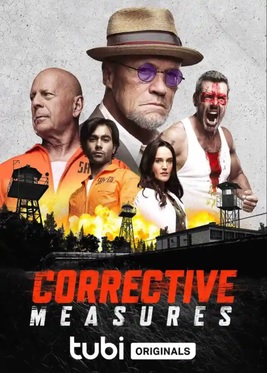
Film Review: Corrective Measures (dir by Sean O’Reilly)


Welcome to the future!

War is raging.  Food is scarce.  At the start of the film, a newscaster officially says farewell to Australia as it’s swallowed by the ocean.  Due to some sort of vaguely defined cosmic event, certain citizens have developed super powers.  Normally, you might think that would be a good thing.  Maybe someone can use their super strength to save Australia.  Instead, it’s led to a rise in supervillains.  People with names like The Conductor and the Lobe are terrorizing the world.  Fortunately (or not), a prison has been designed to hold all of these super villains.

Running that prison is Overseer Devlin (Michael Rooker).  Devlin is quick to correct anyone who calls him a warden.  That said, Devlin runs his prison with a firm and sometimes cruel hand.  All of the inmates are forced to wear a leg brace that neutralizes their powers.  They’re at Devlin’s mercy and Devlin knows it.  A sentence to San Tiburon prison is a life sentence, regardless of what the courts may say.  No one gets parole unless Devlin wants them too and Devlin’s not in the business of giving people freedom.

Corrective Measures follows four inmates in particular.  Diego Diaz (Brennan Meija) is an empath, a super power that will be of little help in a prison where empathy is seen as a weakness.  Gordon Tweedy (Tom Cavanagh) is also known as the Conductor because he can control electricity.  Payback (Dan Payne) is a self-styled vigilante who killed evildoers on the outside and who looks forward to killing more on the inside.  Finally, there’s the Lobe (Bruce Willis), who is the most feared supervillain of all.  The Lobe can control minds, but only if his leg brace is removed.  While the Warden prepares for his retirement and considers who among his staff he should name as a his replacement, the inmates simply try to survive from one day to the next.

Corrective Measures is an episodic film, with the focus continually shifting from one character to another.  When the film begins, Payback seems like he’s going to be the main character but then the focus shifts to Diego and The Conductor.  Towards the end of the film, the focus switches once again and it becomes about The Lobe and his schemes.  The one theme running through the entire film is the struggle to maintain one’s freedom and dignity in even the most difficult of circumstances.  Yes, Corrective Measures might be a low-budget super hero film and yes, it was based on a graphic novel but it’s also a mediation on what it means to be free in a society that persecutes anyone who is perceived as failing to conform.  That theme elevates the film, making it more than just a B-movie.  If Sam Fuller directed a comic book movie, it would probably look something like Corrective Measures.

The actors also do wonders with the material, with Michael Rooker giving an entertainingly evil performance as Warden Devlin and Tom Cavanagh turning The Conductor into a surprisingly poignant character.  That said, I imagine most people will be watching this film because it was one of the final films that Bruce Willis worked on before announcing his retirement from acting.  It is true that Willis does spend the majority of this film in his cell.  It’s rare that he’s ever actually seen in a shot with any of the other actors, leading me to suspect that Willis probably shot all of his scenes in a day or two.  Despite that, Willis is well-cast as The Lobe and there’s even a few scenes where he seems like the Willis of old, smirking at his opponents and dismissing them with a well-timed insult.  While it’s obvious that Willis was not in the best shape when he shot his scenes, Corrective Measures still feels like a better closing act than something like American Siege.

Corrective Measures is a far better film than I think anyone would have expected it to be.  It’s a celebration of freedom that understands why it’s worth celebrating.