Porky’s II: The Next Day (1983, directed by Bob Clark)


The teens of Angel Beach, Florida are back!  They’re still trying to get laid, they’re still playing pranks on each other, and, this time, they’re …. FIGHTING THE KLAN!?

Porky’s II continues with the first Porky’s mix of raunchiness and social commentary.  While Pee Wee (Dan Monahan) tries to get back at his friends for spending the whole previous movie making fun of the size of his dick, the other members of the large ensemble cast thwart an attempt by the Klan to keep them from putting on a Shakespearean showcase.  The Klan is upset that a Seminole has been cast as Romeo so they burn a cross and do everything they can to sabotage the production.  Also trying to keep the show from going on is the hypocritical Rev. Bubba Flavel (Bill Wiley) and Mrs. Balbricker (Nancy Parsons), who both consider Shakespeare’s plays to be obscene.  When Wendy (Kaki Hunter) discovers that one of the county commissioners has been lying about supporting the play, she humiliates him in public by pretending to vomit in a fountain and accusing him of impregnating her.  It’s slightly funnier than it sounds but just slightly.

The first Porky’s took a stand against anti-Semitism while the second Porky’s takes a stand against censorship and the Klan.  That’s actually pretty cool when you consider that both of these films are usually just thought of as being dumb sex comedies.  Just like the first film, Porky’s II may be raunchy but it has a conscience.  That was due to director Bob Clark, who obviously meant for the Porky’s films to be about more than just T&A.

Unfortunately, Porky’s II is never as funny as the first Porky’s.  Too many of the jokes are recycled from the first film and the cast’s habit of laughing at their own “humorous” lines is even more grating the second time around.  Even the film’s most famous scene, where Wendy humiliates the duplicitous commissioner, goes on for too long and doesn’t have as much of a payoff as it should.  The best scenes in the film are the scenes that were lifted from Hamlet, Romero & Juliet, and A Midsummer Night’s Dream.  You wouldn’t expect the ensemble of Porky’s to feature that many Shakespearean actors but apparently it did.  Fans of A Christmas Story, which was also directed by Clark and which came out the same year as Porky’s II, will especially want to pay attention to the MacBeth sword fight scene just because the famous holiday leg lamp makes an appearance.

Porky’s II is nowhere near as good or memorable as the first Porky’s but its heart is in the right place.  While not as big of a success as the first Porky’s, it still did well enough to lead to Porky’s III, which I’ll review tomorrow.

The Adventures of Steve Harragan and His Eye Patch


Who was Steve Harragan?  He was a hardboiled private investigator who was the main character of a handful of paperback detective novels that were all published in 1952 and 1953.  Though his adventures were not much different from those of any other P.I. of the pulp era, Steve Harragan has a cult following for two reasons.

First off, the author of Harragan’s adventures was also named Steve Harragan.  Did the author Steve Harragan name the character after himself or was “Steve Harragan” just a pseudonym for another author or perhaps several authors?  No one knows for sure, though all of Harragan’s novel were written in the first person.

Secondly, Steve Harragan the Detective only has one eye.  In almost every cover, he’s featured wearing an eye patch.

Here are a few of the Steve Harragan covers.  As always, the artist has been identified when known:

Author Unknown

Author Unknown

Author Unknown

by Bernard Safran

by Walter Popp

Author unknown. I’m not sure which one of these men is meant to be Harragan but you’ll notice that the eyepatch got left out of this cover.

30 More Days of Noir: The Killer Is Loose (dir by Budd Boetticher)


Film noir comes to the suburbs!

The Killer is Loose opens with the robbery of a savings and loan.  At first, it seems like meek bank teller Leon Poole (Wendell Corey) behaved heroically and kept the robbery from being far worse than it could have been.  How meek is Leon Poole?  He’s so meek that his nickname has always been Foggy.  People have always made fun of him because of his glasses and his bad eyesight.  Everyone assumes that Poole is just one of those quiet people who is destined to spend his entire life in obscurity.

However, the police soon discover that Leon Poole is not the hero that everyone thinks that he is.  Instead, he was involved in the robbery!  When Detective Sam Wagner (Joseph Cotten) leads a group of cops over to Poole’s house to arrest the bank teller, Poole’s wife is accidentally shot and killed.  At the subsequent trial, Poole swears that he’ll get vengeance.  And then he’s promptly sent off to prison.

Jump forward three years.  Leon Poole is still in prison.  He’s still deceptively meek.  He still wears glasses.  Everyone still assumes that he’s harmless.  Of course, that’s what Poole wants them to believe.  He’s still obsessed with getting his vengeance.  Meanwhile, Detective Wagner and his wife, Lila (Rhonda Fleming), are living in the suburbs and have a somewhat strained marriage.  Lila wants Wagner to find a less dangerous and less stressful job.  Wagner wants to keep busting crooks.

When Poole see a chance to escape from prison, he does so.  That’s not really a shock because even the quietest of people are probably going to take advantage of the chance to escape from prison.  What is a shock is that Poole ruthlessly murders a guard while making his escape.  He then kills a truck driver and steal the vehicle.  He then tracks down his old army sergeant and guns him down while the man’s wife watches.  Always watch out for the quiet ones, as they say.

Now, Poole has just one more target.  He wants to finish his revenge by killing Lila Wagner.

The Killer is Loose is a tough and, considering the time that it was made, brutal film noir.  (Seriously, the scene where Poole kills his former sergeant really took me by surprise.)  While both Rhonda Fleming and Joseph Cotten give good performances in their roles, it’s Wendell Corey who really steals the film.  Corey plays Poole not as an outright villain but instead as a man who has been driven mad by years and years of taunts.  After spend his entire life being told that he was a loser, Poole finally decided to do something for himself and, as a result, his wife ended up getting killed by the police.  Now that Poole’s managed to escape from prison, he’s willing to do anything just as long as he can get his final revenge.  Corey plays Poole with a smoldering resentment and the performance feels very real.  (If the film were made today, it’s easy to imagine that Poole would be an anonymous twitter troll, going through life with a smile on his face while unleashing his anger online.)  It brings a very real spark and feeling of danger to a film that would otherwise just be a standard crime film.

The Killer Is Loose also makes good use of its suburban setting, suggesting that both Fleming and Cotten have allowed themselves to get complacent with their life away from the obvious dangers of the big city.  You can buy a new house, the film seems to be saying, but you can’t escape the past.

Music Video of the Day: Since U Been Gone by Kelly Clarkson (2005, dir. by Alex de Rackoff)


Nostalgia is a powerful drug and it’s the main reason why Since U Been Gone is today’s music video of the day.  Whe I hear this song, I’m immediately zapped back to 2005 and I remember how Lisa and I got on everyone’s nerves by singing it at the top of our lungs every day during the holiday break.

I also remember really liking this video when I first saw it but now I realize that it actually doesn’t go with the song’s message.  The song is about how much happier Kelly is after getting out of a toxic relationship but in the video, Kelly’s destroying her ex’s new girlfriend’s apartment and acting like she’s got a fatal attraction going on.  She should have at least trashed her ex’s place and left the new girlfriend out of it.  This is still a good video, though, because we all have someone in our part whose apartment we would like to trash.

Enjoy!


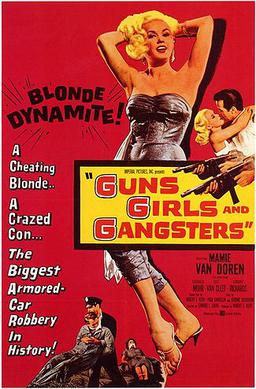
30 More Days of Noir #3: Guns, Girls, and Gangsters (dir by Edward L. Cahn)


Guns, Girls, and Gangsters!  The title of this 1958 film pretty much sums it all up.

Now, technically, I guess you could debate whether or not the criminals in this film really qualify as gangsters.  When I hear the term “gangster,” I tend to think of the big Mafia chieftains, like Al Capone and the Kennedys.  Maybe it’s because I’ve seen The Godfather too many times but I always associate gangsters with wealth, big mansions, elaborate weddings, and aging crooners who need someone to chop off a horse’s head in order to get a role in From Here To Eternity.  However, the gangsters in this film are all basically small-time criminals.  One of them does own a nightclub but it’s not a very impressive nightclub.  If anything, they’re wannabe gangsters.  However, Guns, Girls, and Wannabes just doesn’t have the same ring to it.

Chuck Wheeler (Gerald Mohr) has a plan.  He wants to rob an armored car.  It’s a Vegas armored car, so of course it’s going to be full of money and since Michael Corleone killed Moe Greene three years before, there shouldn’t be too many repercussions from hijacking it.  (Sorry, I’m still thinking about The Godfather.)  To enlist the aid of a nightclub owner, he enlists the aid of a singer named Vi (Mamie Van Doren).  Vi just happens to be the wife of Chuck’s former prison cellmate, Mike (Lee Van Cleef).  Vi has been demanding a divorce for a while but Mike won’t grant it because he’s insanely jealous.  He probably wouldn’t be happy to find out that Chuck and Vi are now a couple but, fortunately, he’s locked up.

Except, of course, Mike escapes from prison around the same time that Chuck and the gang manage to hijack that armored car.  As you can guess, this leads to mayhem and havoc.  That’s where the guns of the title come into play….

Guns, Girls, and Gangsters is an entertaining little B-noir.  It’s only 70 minutes long so the film doesn’t waste any time getting to the action.  (There’s also a narrator who serves to fill in any plot holes and to keep the audience entertained with his rather self-important delivery.)  Gerald Mohr is a bit on the dull side as Chuck but you better believe that Lee Van Cleef is 100% menacing and oddly charismatic as the as the always angry Mike.  Van Cleef brings a charge of very real danger to the film.  (Perhaps he’s the gangster that the title was referring to, though I would still think of him as being more of an outlaw than a gangster.)  And, of course, you’ve got Mamie Van Doren, playing yet another tough dame in dangerous circumstances.  Van Doren gets to perform two musical numbers in Guns, Girls, and Gangsters and they both have a low-rent Vegas charm to them.  Watching this film, it occurred to me that Van Doren may not have been a great actress but she had the perfect attitude for films like this.  She played characters who did what they had to to do survive and who made no apologies for it and it’s impossible not to be on her side when she’s having to deal with creeps like Chuck or sociopaths like Mike.

Guns, Girls, and Gangsters is an entertaining B-noir.  There’s enough tough talk, cynical scheming, and deadly double crosses to keep noir fans happy.

Porky’s (1981, directed by Bob Clark)


Porky’s.

On the one hand, it’s a crude, juvenile, and raunchy sex comedy where a bunch of teenagers in 1960s Florida think that it’s a hoot and not at all problematic to spy on the girls shower and to hire a black man to scare all of their (white) friends.

On the other hand, it’s a heartfelt plea for tolerance where Tim (Cyril O’Reilly) finally stands up to his abusive father (Wayne Maunder) and makes friends with Brian Schwartz (Scott Colomby), who is apparently the only Jewish person living in Angel Beach, Florida.

What’s strange about Porky’s is that everyone knows it for being the template for almost every bad high school film that followed, with tons of nudity, jokes about sex, and characters with names like Pee Wee, Miss Honeywell, Cherry Forever, and Porky.  But, when you sit down and watch the movie, you discover that, for all the raunchiness, it actually devotes even more time to Brian Schwartz dealing with the local bigots than it does to any of the things that it’s known for.  Everyone remembers the shower scene but it’s obvious the film’s heart is with Brian and his attempts to make the world a better place.  Porky’s is a sex comedy with a conscience.

Porky’s is an episodic film about a group of teenage boys trying to get laid and also trying to get revenge on the owner of the local brothel.  There’s a lot of characters but I’d dare anyone to tell me the difference between Billy, Tommy, and Mickey.  I went through the entire movie thinking that Billy was Mickey until I turned on the subtitles and discovered who was who.  Porky’s has a reputation for being a terrible movie but it’s actually a pretty accurate depiction of the way that most men like to imagine how their high school years went.  It captures the atmosphere of good-spirited teenage hijinks if not the reality.

One of the interesting things about Porky’s is that Bob Clark went from directing this to directing A Christmas Story.  The innocence of A Christmas Story might seem like it has nothing in common with raunchiness of Porky’s but, actually, they’re both nostalgic films that are set in an idealized past.  (If you still think A Christmas Story has nothing in common with Porky’s, just remember that Ralphie didn’t actually say “fudge.”)  Of course, A Christmas Story struggled at the box office and only became a hit when it was released on video while Porky’s is still the most successful Canadian film to ever be released in the U.S.  Sex sells.  As cool as it was to see Brian Schwartz stand up for himself, I doubt the people who made Porky’s a monster hit were buying their tickets because they had heard the film struck a blow against anti-Semitism.  They were going because they knew there was a shower scene.

Porky’s deserves its reputation for being a not-so great movie but I would be lying if I said that I didn’t laugh more than once while watching it.  (Of course, I still didn’t laugh as much as the characters in the films laughed.  I’ve never seen a cast that was as apparently amused with themselves as the cast of Porky’s.)  There’s a lot of bad moments but it’s hard not to crack a smile when Miss Honeywell demonstrates why she’s known as Lassie or when one of the coaches suggests that wanted posters can be hung around the school to help catch the shower voyeur.  Plus, everyone learns an important lesson about tolerance and how to destroy a brothel.  As bad as it is, it’s hard to really dislike Porky’s.

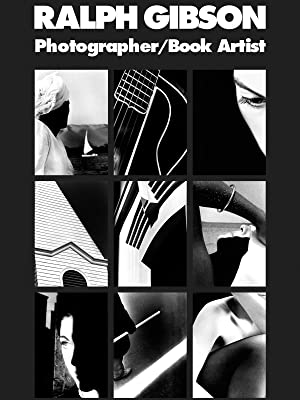
Ralph Gibson: Photographer/Book Artist (2002, dir. by Paula Herdia)


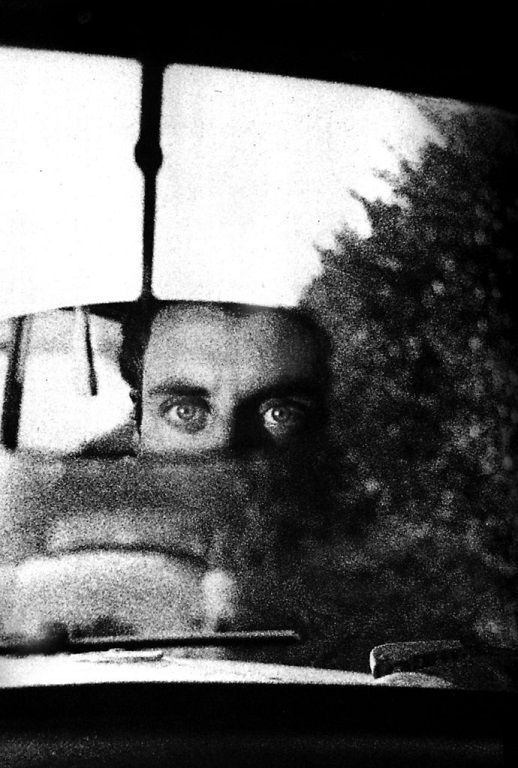
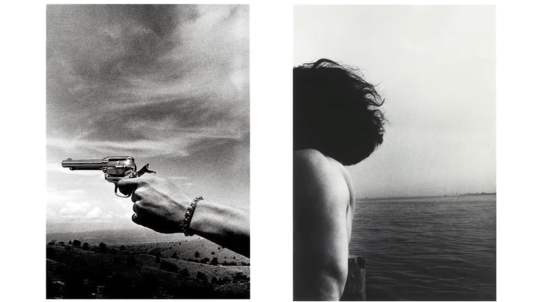
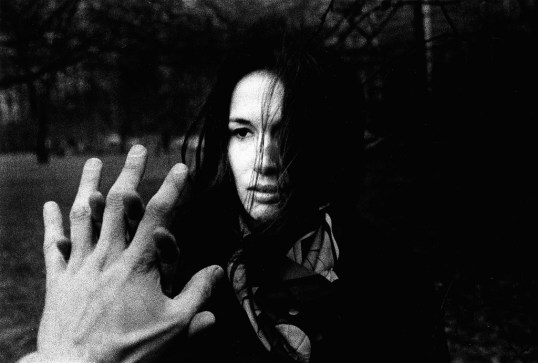
Photographer Ralph Gibson is one of the most important photographers of the last century and, in this documentary, he discusses both his life and his work.  An independent iconoclast, Gibson went from serving in the Navy to working as an assistant to Dorothea Lange to eventually publishing his own very influential books of photographs.  Gibson’s work is fascinating, sensuous, and frequently surreal and helped to change the public perception about whether or not photography can also be art.

Here’s just a few examples of Gibson’s work:

In the documentary Ralph Gibson: Photographer/Book Artist, Gibson tells his own story of how he became both a photographer and a publisher.  It’s interesting to listen to him as he explains how he first came to realize that how a picture is placed on a page (especially when compared to the placement of the picture on the facing page) can make as much of an artistic statement as the pictures themselves.  The documentary also features interviews with several of Gibson’s contemporaries and also with critics who attempt to analyze what makes Gibson’s work so effective.

The only problem with this documentary is that it’s too short.  It’s only 30 minutes long so sometimes, like when Gibson is talking about his childhood and his time in the Navy, it feels rushed.  The best thing about the documentary though is that it features many of Gibson’s photographs and also Gibson himself.  Listening to Gibson talk will make you want to pick up a real camera and start capturing the world around you.

This documentary is on Prime and if you’re an artist looking for inspiration, I recommend it.

The Battered Bastards of Baseball (2014, dir. by Chapman Way and Maclain Way)


If you’re like me and you’re already missing baseball, I recommend watching a documentary called The Battered Bastards of Baseball.

In 1972, Portland, Oregon lost their minor league baseball team when the Portland Beavers abandoned the city in order to become the Spokane Indians.  At the same time, actor Bing Russell, a former minor leaguer and the father of Kurt Russell, had grown tired of Hollywood and was looking to get back into baseball.  Relocating to Portland, Russell announced that he was going to start his own independent minor league team, the Portland Mavericks.

At first, no one took the Mavericks seriously.  Because they weren’t affiliated with a major league team, the Mavericks roster was largely made up of misfits and rulebreakers, many of whom had been released from other organizations and who had been blacklisted from the major leagues.  On average, most of the Mavericks players were older than the average major leaguer.  Many of them were players who were looking for one last shot at glory and Bing refused to cut any of them because he felt that that they deserved that chance.  When the skeptical media asked Bing what the Mavericks were going to offer that other baseball teams couldn’t, he replied, “Fun.”

And he delivered.  From 1973 to 1977, the Mavericks played exciting baseball, won divisional and league titles, and, most importantly, they put on a good show.  Playing mostly for the love of the game (because Russell never had much money to spend on salaries), the Mavericks reminded people of what baseball was all about.  They pulled off amazing plays on the field while their off-field antics were legendary.  The Mavericks played baseball the way that people wanted to see baseball played, with one manager living every fan’s dream by punching an umpire.

The Battered Bastards of Baseball tells the story of the Mavericks and Bing Russell.  It features archival footage of the Mavericks at play, along with interviews with people like Kurt Russell, who briefly played for the Mavericks and then served as one of their vice presidents.   The documentary pays tribute to the players who never gave up, the fans who eventually welcomed them to a new town, and most of all to the vision and determination of Bing Russell.  Even while Bing was bringing the fun back to baseball, he was also breaking down other barriers by hiring professional baseball’s first female general manager, as well as the first Asian American general manager.

Most importantly, though, The Battered Bastards of Baseball reminds us of why people love baseball in the first place.  It celebrates the game, the players, and most of all the fans.  It’s a documentary that will just leave you in a good mood.  That’s something we all could use!

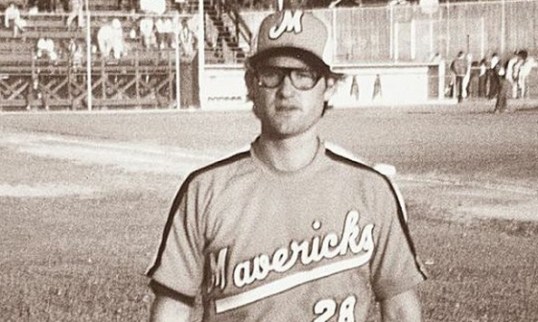
Kurt Russell as a Maverick

Charlie’s Angels (2019, dir. by Elizabeth Banks)


In the latest version of Charlie’s Angels, the Angels have become an elite force of international super spies and there are now hundreds of Angels instead of just three.  There’s also more than one Bosley as this movie establishes that Bosley is actually a codename that’s given to Charlie’s lieutenants.  Djimon Hounsou is a Bosley and Patrick Stewart is a Bosely and Elizabeth Banks is a Bosley.

Two Angels, Sabina (Kristen Stewart) and Jane (Ella Balinska), are assigned to protect a corporate whistleblower named Elena (Naomi Scott) because Elena has discovered that Callisto, a renewable energy device, can also be used to trigger fatal seizures in selected targets.  When an assassin attempts to take out Elena, he kills one of the Bosleys and Elena becomes an Angel.  What I don’t get is why the assassin would try to shoot Elena in public when he could have just used the Callisto device to give her a seizure.

I wanted to like Charlie’s Angels because “Girl power!” but I got bored pretty quickly.  All of the action scenes were done better in the last Mission Impossible and most of the jokes fell flat.  Too much of the humor was built around someone saying something awkward and then everyone else standing around with a confused look on their face.  For a movie that’s supposedly about celebrating girl power, I noticed that the Angels made a lot of stupid mistakes.  It also bothered me that we were expected to laugh when an innocent security guard was killed by the Callisto but it was supposed to be a big emotional moment when one of the Bosleys died.  It’s also supposed to be a big emotional moment when Jane thanks Sabina for teaching her that it’s okay to work with other people but since Jane never seemed like she had a problem working with other people, I wasn’t sure what she was talking about or why I should care.

Elena learns how to stick up for herself, Jane learns how to trust other people, and Sabina doesn’t learn anything but at least Kristen Stewart finally gets to smile.  None of them can hold a candle to Drew Barrymore, Cameron Diaz, and Lucy Liu in the first Charlie’s Angels movie, which was both fun and empowering.  This new version just can’t compete.