In America, Scorpions are best-known for Rock You Like A Hurricane. Big City Nights comes from the same album, Love At First String. In fact, it was the last single released from that album and the video is made up of footage that was shot while the band was touring in support of Love At First Sting. Though the song was never as big a hit as Rock You Like A Hurricane, the video was probably responsible for a lot of teenagers deciding to start a band in 1985. The main message of this video seems to be that if you want to get laid, even when you’re middle-aged and your hair is starting to thin, then you need to start a band. Of course, that was the message of most music videos of the period.
I’ve been up at Lake Texoma and on a mini-vacation this entire week. I haven’t turned on a television or checked the news since last Sunday and it’s been wonderful. I’ve spent this week meditating, writing, sunbathing out on the deck, and listening to Lee Horsley read Larry McMurtry’s epic novel, Lonesome Dove. And while I’m definitely frustrated by the fact that I can’t tan worth a damn, I’m otherwise feeling very relaxed and very much at peace. I’m ready to face the second half of this year.
It’s funny. When I came up here, I brought my portable DVD player. I brought several DVDs. I think I was assuming that I would spend the whole time watching movies and writing about them. But once I got up here, I realized that I really, really needed to get some rest. Like some real, actual rest. I needed to stop worrying about things and stop pushing myself and just enjoy nature and basically, take care of myself. So, that’s what I did. As a result, I didn’t watch a lot of movies this week. But I now feel so centered that I know I’m going to be able to make up for it next week. I think that sometimes, we forget how important it is to just rest and get centered with the universe. I feel like I can breathe again and that’s a wonderful feeling.
ANYWAY — here’s what little I did watch, read, and listen to.
Films I Watched:
The Amazing Colossal Man (1957)
Athlete A (2020)
Eurovision Song Contest: The Story of Fire Saga (2020)
Return of the Killer Tomatoes (1988)
Television Shows I Watched:
The Office
Unsolved Mysteries
Warrior Nun
Books I Read:
Lonesome Dove (1985) by Larry McMurtry (Technically, I didn’t read it as much as I listened to it on Audible. It’s a great book, though.)
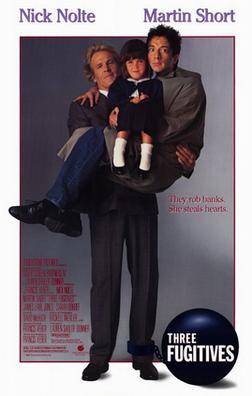
Daniel Lucas (Nick Nolte) is having a bad day. He’s just gotten out on parole after spending 5 years in prison for armed robbery. No sooner has Lucas left the prison than he’s met by Detective Dugan (James Earl) and his partner, Inspector Tenner (Alan Ruck). Dugan says that he knows that Lucas is going to return to his life of crime and that, when he does, Dugan will be there to arrest him.
Determined to go straight, Lucas heads to the nearest bank. Maybe he thinks that going to a bank and not robbing it will convince everyone that he’s no longer a criminal. Unfortunately, the bank does end up getting robbed, not by Lucas but by Ned Perry (Martin Short). Ned’s not much of a bank robber. In fact, he’s never committed a crime in his life. But he desperately needs the money so he can afford a special school for his young daughter, Meg (Sarah Doroff), who hasn’t spoken since her mother died. When the bank robbery doesn’t go as planned and Lucas ends up accidentally getting shot, Lucas and Ned end up going on the run together with Dugan and Tenner in pursuit.
When I was a kid, Three Fugitives was a movie that seemed like it was on television nearly every day. Of course, it was popular on HBO but it also used to regularly show up on the local stations, with all of Nick Nolte’s profanity awkwardly edited out. Looking back, I can see why Three Fugitives was so popular with television programmers who needed something fill a two-hour time slot. It’s got enough broad slapstick and just enough violence to keep the kids happy while also being so sentimental and inoffensive that parents wouldn’t complain about what their children were watching.
That Three Fugitives was such a ubiquitous presence on television is really the only memorable thing about it. On paper, the idea of pairing Nick Nolte with Martin Short sounds like it should generate a lot of laughs and they are funny in the initial bank hold-up but after that, neither seems to be acting in the same movie. Nolte is too serious for the comedic scenes and Short is too cartoonish for the serious scenes and their partnership is never credible. Nick Nolte was the king of the mismatched buddy comedy in the 80s but Three Fugitives is no 48 Hours.
Today’s music video features a linguistic lesson from Huey Lewis.
Perhaps realizing that a generation was being raised to think that “bad” was the proper way to describe something as being cool, Huey uses this song to remind his fans that sometimes, bad just means that something’s bad. Sometimes, your cousin plays the guitar and it sounds like chainsaw. Sometimes, there’s a strange pair of shows under the bed. Sometimes, bad is bad.
To make their point, the band performs the song while walking around the Potrero Hill neighborhood of San Francisco. What better way was there to do that? It’s not every day that you see Huey Lewis and the News walking behind a garbage truck.
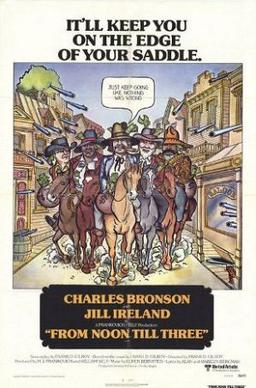
Graham Dorsey (played by Charles Bronson) is an outlaw in the Old West who is eager to get out of his gang’s plan to robb a bank in a small town. He’s been having nightmares in which he and his entire gang are wiped out by the townspeople. However, the other members of the gang insist on trying to rob the bank. Because Graham needs a new horse, they stop off at a ranch owned by the widowed Amanda Starbuck (Jill Ireland). Both because he doesn’t want to die and also because he wants to spend time with the beautiful Amanda, Graham lies to the gang and tells them that Amanda doesn’t have a horse. The gang leaves Graham behind, saying that they’ll return for him in a few hours. The gang, of course, ends up getting captured by the townspeople while Graham and Amanda make love three times over the next three hours.
When Graham learns that the other members of the gang have been arrested, he’s content to just allow them to hang so that he can spend the rest of his life with Amanda. However, Amanda insists that Graham go into town and rescue his fellow outlaws. Graham agrees, even though he’s planning on actually just laying low for a few hours until the others have been executed. Through a series of events that are far too complicated to even try to recount here, Graham ends up switching clothes with a traveling dentist. When a posse guns down the dentist, Amanda believes that Graham has been killed. Meanwhile, Graham is arrested for practicing dentistry without a license and is put in prison for a year.
While Graham is away, Amanda writes an idealized account of the three hours that she spent with Graham. A play is produced. Songs are written. Tourists flock to Amanda’s ranch. Amanda becomes a celebrity and even she begins to believe that, instead of being a cowardly and uncouth outlaw, Graham was actually a tall, handsome, and cultured gentleman. When Graham finally gets out of jail, he heads for the ranch. Graham thinks that Amanda will be happy to learn that he’s alive and to see him but instead, there’s another surprise waiting for him.
Speaking of surprises, who would have though that one of Charles Bronson’s best films would be a romantic comedy? Bronson pokes fun at his own image in From Noon Till Three, playing a laid back outlaw who would rather catch a few extra hours of sleep than spend his time robbing people and seeking vengeance. The film’s entire third act, in which Amanda is reminded that the real-life Graham is far different from her idealized memory, feels like a commentary on Bronson’s entire film career. Just as Graham isn’t a typical romantic hero, Charles Bronson was never a typical movie star but, like Graham, he never gave up his dream. This is one of Bronson’s most likable and appealing performances. From Noon Till Three also features one of Jill Ireland’s best performances. She was, of course, Bronson’s wife at the time and their chemistry in this film goes a lot towards making the film’s complex story credible. Ireland’s best moments come at the end of the film, when she reveals how far she’ll go to maintain the myth of what happened between noon and three.
“When the legend becomes fact, print the legend,” the newspaper editor said at the end of The Man Who Shot Liberty Valance and that also describes the main theme of From Noon Till Three, a clever romance that will be appreciated by even by those who would normally watch a Charles Bronson film.
We all know the famous line from The Godfather. “I’m going to make him an offer he can’t refuse.” Of course, everyone also knows that “It’s not personal. It’s strictly business.” There’s another line that’s almost as famous: “One lawyer with his briefcase can steal more than a hundred men with guns.” That line comes from Mario Puzo’s novel. It’s never actually used in the film though it’s certainly present as a theme.
The idea of organized crime essentially being a huge corporation is hardly a new one. In fact, it’s become a bit of a cliche. Nearly every gangster film ever made has featured at least one scene where someone specifically compares their illegal activities to the day-to-day business of politicians and CEOs. However, just because it’s a familiar analogy, that doesn’t make it any less important. It’s hard not to think of organized crime as being big business when you consider that, in the 30s and the 40s, the mafia’s assassination squad was actually known as Murder, Inc.
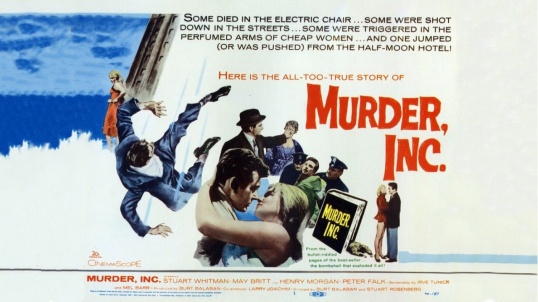
Murder, Inc. was formed in Brooklyn, in the 30s. It was founded and initially led by a man named Lepke Buchalter. Lepke was a gangster but, because he was Jewish, he couldn’t actually become a made man. However, he used that to his advantage when he created Murder, Inc. The organization was largely made up of non-Italians who couldn’t actually become official members of the Mob. The major mafia families would hire Murder, Inc. to carry out hits because they knew that, since none of the members were made men, they wouldn’t be able to implicate any of the families if they were caught by the police.
It was a good idea and Lepke and his band of killers made a lot of money. Of course, eventually, the police did catch on. A member of the organization by the name Abe Reles was eventually arrested and agreed to be a rat. Lepke went to the electric chair. Reles ended up falling out of a window. Did he jump or was he thrown? It depends on who you ask.
19 years after Reles plunged from that window and 16 years after Lepke was executed, their story was told in the 1960 film, Murder, Inc. Lepke was played by David J. Stewart while Reles was played by Peter Falk. The film is told in a documentary style, complete with a narrator who delivers his lines in a rat-a-tat-tat style. We follow Reles as he goes to work with Lepke and as he harasses a singer (Stuart Whitman) and his wife (May Britt), forcing them help him carry out a murder and then allowing them to live in a luxury apartment on the condition that they also let Lepke hide out there. (It’s probably not a surprise that a professional killer wouldn’t turn out to be the best houseguest.) Eventually, a crusading DA (Henry Morgan) and an honest cop (Simon Oakland) take it upon themselves to take down Murder, Inc.
To be honest, there’s not a whole lot that’s surprising about this film but it’s still an entertaining B-movie. The black-and-white cinematography and the on-location filming give the film an authentically gritty feel. The action moves quickly and there’s enough tough talk and violent deaths to keep most gangster aficionados happy. The best thing about the film is, without a doubt, Peter Falk’s portrayal of Abe Reles. Falk is magnetically evil in the role, playing Reles as a man without a soul. Even when Reles finally cooperates with the police, the film leaves no doubt that he’s only doing it to try to save himself. Falk plays Reles like a tough guy who secretly knows that his days are numbered but who has convinced himself that, as long as he keeps sneering and threatening people, the rest of the world will never figure out that he’s been doomed all the time. The more people he kills, the higher Reles moves up in the corporation and the more he tries to take on the look of a respectable member of society. But, no mater how hard he tries, Reles always remains just another violent thug. Falk was deservedly Oscar-nominated for his performance in this film, though he ultimately lost the award to Spartacus‘s Peter Ustinov.
Murder, Inc. may be a low-budget, B-movie but it’s also a classic of gangster cinema. It’s an offer you can’t refuse.
4 Shots From 4 Films is just what it says it is, 4 shots from 4 of our favorite films. As opposed to the reviews and recaps that we usually post, 4 Shots From 4 Films lets the visuals do the talking!
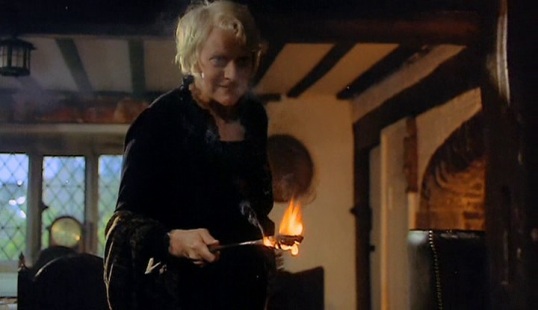
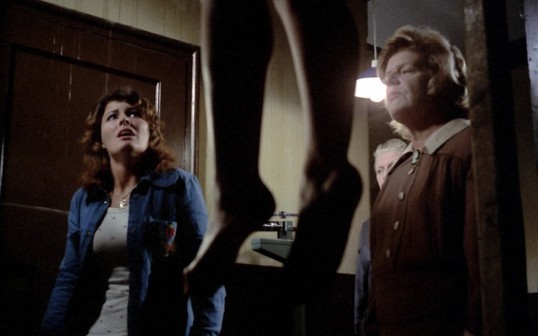
Today, along with celebrating Independence Day, we are also celebrating the birthday of the great British director, Pete Walker! Walker is 81 years old today and, if he’s not exactly a household name …. well, he definitely should be. In fact, if there’s any director from the 70s and the early 80s who is deserves to rediscovered and reappraised, it’s Pete Walker! He made exploitation films with wit and genuine suspense. Frightmare is one of the scariest movies that I’ve ever seen.
In honor of Pete Walker’s birthday, here are….
4 Shots From 4 Films
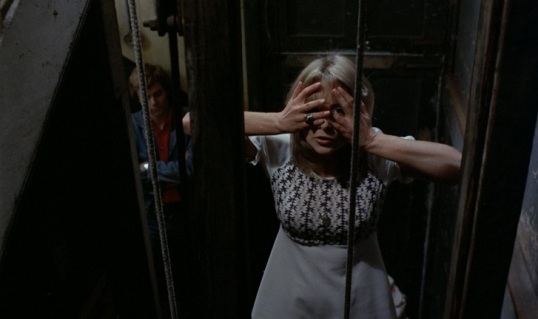
Die Screaming, Marianne (1971, dir by Pete Walker)
The Flesh and Blood Show (1972, dir by Pete Walker)
These are just a few photographs that I’ve taken over the years. If I had to pick just a few pictures to represent America, these are the pictures that I would choose. Happy Independence Day, everyone!
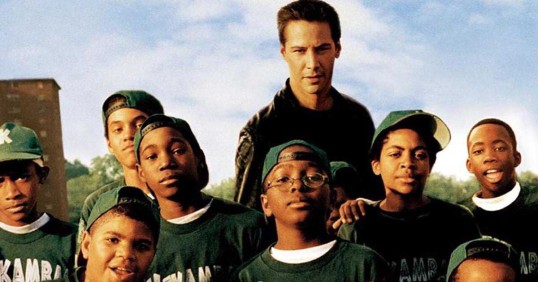
Conor O’Neill (Keanu Reeves) is a gambler who is going to be killed by his bookies unless he can pay off a $6,000 debt. When he finds out that he can make $500 a week just for coaching a little league team in the Chicago projects, he takes the job. He’s not planning on caring about the team but, of course, he does. He doesn’t expect to fall in love but when he meets his team’s 5th grade teacher (Diane Lane), he does. No one expects him to get his team to the championship but he does. When tragedy strikes one of his players, Conor and the team have to decide whether to keep playing or to give up.
Hardball is a movie that I wanted to like because Keanu Reeves is in it and the movie tells a good, heart-warming story. Hardball is really predictable, though, and the movie is so focused on Conor that you never really get to know most of the players on team or what winning the championship would mean to them. I wanted to know about the members of the team, all of whom were poor, black, and living in the most dangerous neighborhood in Chicago. (When Conor drops one of them off from practice, he’s told to duck whenever he walks by a window, just in case someone outside is shooting a gun.) There is one really powerful scene that drives home the reality of the danger that the kids on the team live with on a daily basis but other than that, the movie is almost all about the white coach and his problems. The team should be the heart of the movie but instead, Hardball focuses everything on Conor and whether or not he’s going to stick with coaching the team even when things get difficult. Even Conor says he’s done, everyone knows he’s not going anywhere.
The other thing that bothered me about Hardball is that, for a baseball movie, there wasn’t enough baseball. Conor didn’t spend any time discussing strategy with his players or doing any other coaching beyond telling his players not to trash talk each other and to always do their best. I understand that little league is not the same as major league baseball but I still would have liked to have seen more scenes of Conor actually being a coach and his players actually learning how to play the game.
Hardball‘s not all bad. It’s got a good heart and it’s got Keanu Reeves. I just wish it had more baseball.




 Through the Shattered Lens