An Offer You Can’t Refuse #14: Contraband (dir by Lucio Fulci)


The 1980 film, Contraband, tells a story of the Neapolitan underworld.

Luca Ajello (Fabio Testi) and his older brother, Mickey, have a pretty nice operation going.  They pilot boats up and down the coast of Italy, smuggling cigarettes and booze into Naples.  It’s given both of them a pretty good life.  They own a racehorse.  Luca’s got a big house with a beautiful wife (Ivana Monti) and a precocious son.  The police are too incompetent to stop them and their disco-loving boss, Perlante (Saverio Marconi), keeps them safe from any interference from the other mob bosses working in Naples.

But then, one night, two men disguised as policeman pull Luca and Mickey over while they’re driving down an isolated road.  The fake cops proceed to fire what seems to be over a hundred bullets into Mickey.  Luca, having ducked down in his seat, is not spotted by the assassins.  Determined to find out who murdered his brother and why, Luca immediately suspects a rival mobster named Scherino but Scherino insists that Mickey’s murder was actually ordered by a mysterious French drug lord known as Il Marsigliese (Marcel Bozzuffi, who also played a French drug smuggler in The French Connection).  The French are trying to take over the rackets in Naples and a sudden surge in violence, one which sees nearly every mob boss in Naples murdered on the same day, suggests that Scherino is telling the truth.

Contraband is a brutal Italian crime film, one that is notable for being one of director Lucio Fulci’s final non-horror films.  (Contraband was released after Zombi 2 but before City of the Living Dead.)  Though the film might not feature any zombies or any talk of “the Beyond,” it’s still unmistakably a Fulci film and some of the film’s brutal violence remains shocking even when seen today.  The scene where a duplicitous drug smuggler gets her face melted with a blow torch is nightmarish and it’s followed by a scene where a rival gangster graphically gets the back of his head blown out.  (Fulci lingers on the hole in the man’s head, giving us an out-of-focus shot of the people standing behind him.)  A later gunfight leads to one gangster dying with a gaping hole in his throat while another has his face shot away, despite the fact that he’s already dead.  It’s graphic but it’s also appropriate for the story being told.  This is a movie about violent men and, as Fulci himself often pointed out whenever he was challenged about the graphic gore in his films, violence is not pretty.  Contraband is not a film that’s going to leave anyone wanting to become a gangster.

The plot is not always easy to follow but, as is typical with a good Fulci film, the striking visuals make up for any narrative incoherence.  Fulci’s camera rarely stops moving, creating a sense of unease and pervasive paranoia.  Much like the characters in the film, we find ourselves looking in every corner and shadow for a potential threat.  A meeting with an informant at a mist-shrouded sulfur pit ends with assassin literally emerging from the mist and stabbing the informant from behind.  A later gun battle on a narrow street seems to feature gunmen literally appearing out of thin air.  Fabio Testi is ruggedly sympathetic as Luca while Saverio Marconi does a great job as the decadent Perlante.  Meanwhile, Marcel Bozzuffi is legitimately frightening in his few scenes as the evil French gangster.  He’s a great villain, smug and willing to kill anyone.  You don’t have to support organized crime to support the idea of running the French out of Naples.

Contraband is a minor crime classic and proof that there was more to Fulci than just zombies and serial killers.  Today would have been Lucio Fulci’s 93rd birthday and it’s also a good day to track down Contraband, an offer that you can’t refuse.

Previous Offers You Can’t (or Can) Refuse:

  1. The Public Enemy
  2. Scarface
  3. The Purple Gang
  4. The Gang That Could’t Shoot Straight
  5. The Happening
  6. King of the Roaring Twenties: The Story of Arnold Rothstein 
  7. The Roaring Twenties
  8. Force of Evil
  9. Rob the Mob
  10. Gambling House
  11. Race Street
  12. Racket Girls
  13. Hoffa

6 Shots From 6 Films: Special Lucio Fulci Edition!


6 Shots From 6 Films is just what it says it is, 4 shots from 4 of our favorite films. As opposed to the reviews and recaps that we usually post, 6 Shots From 6 Films lets the visuals do the talking!

93 years ago today, in Rome, Lucio Fulci was born!

Today is a very special day for fans of Italian horror.  It’s also a special day for those of us here at the Shattered Lens.  Anyone who has been reading this site for a while knows that we’re big Fulci fans at the TSL.  So, in honor of the anniversary of his birth, here are….

6 Shots From 6 Films

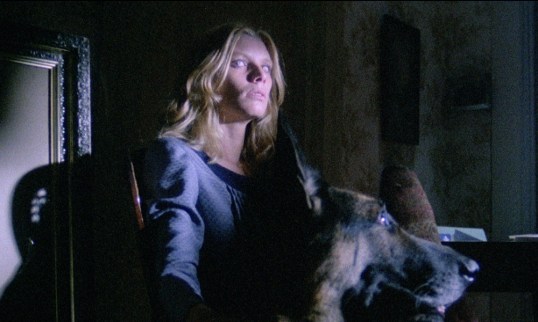
Lizard in a Woman’s Skin (1971, dir by Lucio Fulci)

Zombi 2 (1979, dir by Lucio Fulci)

The Beyond (1981, dir by Lucio Fulci)

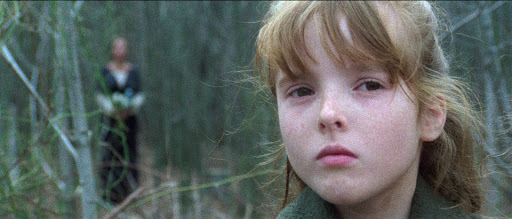
The House By The Cemetery (1982, dir by Lucio Fulci)

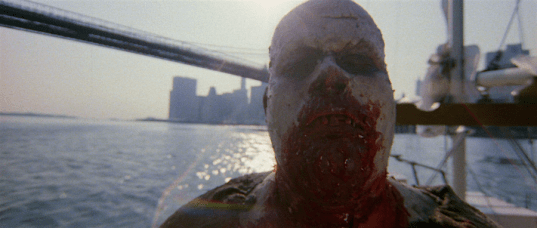
The New York Ripper (1982, dir by Lucio Fulci)

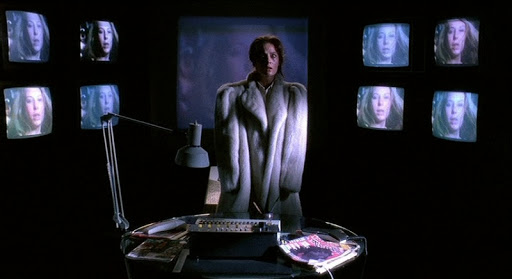
Murder Rock (1984, dir by Lucio Fulci)

The Sexy Covers of Charles Copeland


by Charles Copeland

I first profiled Charles Copeland back in 2015.  Unfortunately, there wasn’t much information available about him.  Considering that he was apparently a very prolific cover artist and that many of his covers are considered to be pulp classics, it’s sad and surprising that there’s not much biographical information about him online.  Copeland’s covers frequently featured women who may have been sexy and frequently undressed but who were also strong and clearly in charge of every situation in which they found themselves.

Five years later and there’s still not much infomation out there in Copeland but I have found some more of his work.  So, here’s even more from Charles Copeland!

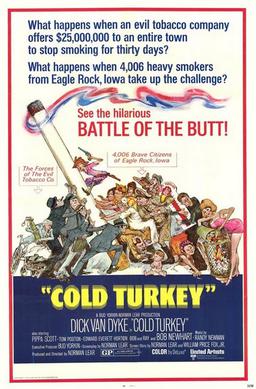
Film Review: Cold Turkey (dir by Norman Lear)


The 1971 satire, Cold Turkey, is the film that boldly explores just how much into the ground one joke can driven.

It’s a film that imagines what would happen if a big tobacco company decided to try to improve its image by giving people an incentive to quit smoking.  In the real world, of course, they ended up funding Truth.org and coming up with anti-smoking commercials that were so lame that they would make viewers want to go out and buy a pack of cigarettes just to spite the self-righteous people lecturing them during the commercial breaks.  In the film, however, Marwen Wren (Bob Newhart) comes up with the idea of offering to pay 25 million dollars to any community that can completely stop smoking for 30 days.

Wren figures that no large group of people will be able to just give up smoking for a month.  Not in 1971!  However, Wren didn’t count on the single-minded determination of the Rev. Clayton Hughes (Dick Van Dyke).  Hughes is the stern and self-righteous minister of Eagle Rock Community Church in Eagle Rock, Iowa.  He knows that Eagle Rock could really use that money so he sets off on a crusade to convince all 4,006 of the citizens of Eagle Rock to take the pledge to quit smoking.

As I said at the start of this review, Cold Turkey is pretty much a one-joke film.  The joke is that everyone in the movie — from the tobacco company execs to the citizens of Eagle Rock to Rev. Hughes — is an asshole.  They start the film as a bunch of assholes and, once they try to quit smoking, they become even bigger assholes.  Soon, everyone in town is irritable and angry.  The only people happy are the people who never smoked in the first place, largely because they’ve been set up as a sort of paramilitary border patrol.  Even though his anti-smoking crusade lands him on the cover of Time, Rev. Hughes is also upset because he started smoking right before it was time to quit smoking.  He deals with his withdraw pains through sex and frequent glowering.

Wren is concerned that the town of Eagle Rock might actually go for a full 30 days without smoking so he attempts to smuggle a bunch of cigarettes into the town and then runs around with a gigantic lighter that looks like a gun.  It’s a storyline that doesn’t really go anywhere but then again, you could say that about almost all of the subplots in Cold Turkey.  There’s a lot of characters and there’s a lot of frantic overacting but it doesn’t really add up too much.  Storylines begin and are then quickly abandoned.  Characters are introduced but then never do anything.  For a while, It seems like the film is at least going to examine the Rev. Hughes’s totalitarian impulses but no.  Those impulses are clearly there but they’re not really explored.

If I seem somewhat annoyed by this film, it’s because it really did have a lot of potential.  This could have been a very sharp and timeless satire but instead, it gets bogged down in its own frantic storytelling and the film’s comedy becomes progressively more and more cartoonish.  By the end of the movie, the President shows up in town and so does the military and it all tries to achieve some Dr. Strangelove-style lunacy but the film doesn’t seem to know what it really wants to say.  It seems to be setting itself up for some sort of grandly cynical conclusion but instead, it just sort of ends.  One gets the feeling that, at the last minute, the filmmakers decided that they couldn’t risk alienating their audience by taking the story to its natural conclusion.

Admittedly, while watching the film, I did find myself comparing Hughes and his bullying mob to the same people who are currently snapping at anyone who suggests that maybe the Coronavirus lockdowns were a bit excessive.  It’s easy to think of some modern politicians and media figures who probably would have had a great time in Eagle Rock, ordering people around and shaming anyone who wants a cigarette.  But otherwise, Cold Turkey was just too cartoonish and one-note to really work.

Great Moments In Comic Book History: Conan The Barbarian Visits Times Square


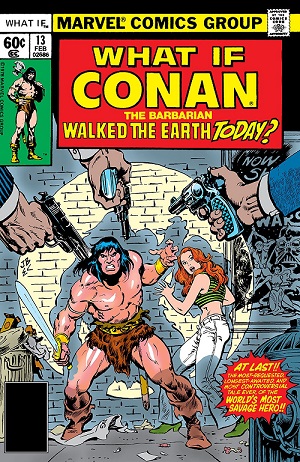
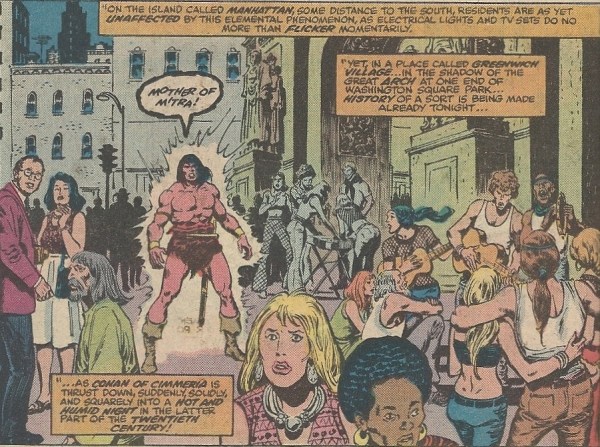
Without a doubt one of the greatest Conan stories ever told, What If Conan the Barbarian Walked the Earth Today? opens in the Hyborian Age with everyone’s favorite barbarian getting tossed into a well by an evil sorcerer.  It turns out that the well has the power to send people through time and, before you know it, Conan the Barbarian finds himself transported to 1977 New York!

If you know anything about Conan (especially the version of Conan who appeared in Marvel Comics), you probably have all sorts of expectations about how Conan would handle being in New York in 1977 and the great thing about this issue of What If? is that fulfills every one of them.  Conan neither speaks nor understands the language, he’s wearing a loincloth, carrying a sword, and he’s in the most crime-ridden spot in America.  Being Conan, he does what he does best.  He kills muggers, makes love to a taxi driver, and eventually gets sent back to his time via a lucky strike of lightning.

Here are a few things that make this one of Conan’s greatest adventures:

First, the story incorporates the real-life New York City Blackout of 1977.  In fact, it’s even suggested that it was the temporal energy surge of Conan’s arrival in 1977 that led to the blackout in the first place.  The 1977 blackout, which occurred while New York was suffering from a heat wave and tensions were already high due to the Son of Sam murders, led to widespread rioting.  And to think, it was all Conan’s fault!

Another cool thing about Conan’s trip to 1977 is that most New Yorkers just assume that he’s another Times Square weirdo, with one person actually making the mistake of grabbing Conan’s sword and declaring himself to be Darth Vader!  The people who see Conan mention that he looks like Sylvester Stallone and, I kid you not, Arnold Schwarzenegger!  Keep in mind, this story was published several years before the future governor of California was selected to play Conan the Barbarian in the film of the same name.

Finally, this story is different from other issues of What If? in that it definitely happened.  A typical What If? story would imagine what would have happened if a super hero had lost their latest battle.  (Usually, everyone would die and the universe would end.  What If? was dark.)  What If? #13, though, is just a Conan story.  He goes to the future and then he goes back to the past.  No one’s history is changed.  As far as I’m concerned, What If #13 tells a story that, in terms of the Marvel canon, really happened.  Conan really did cause the Blackout of 1977 and Peter Parker and Mary Jane Watson really did see him in Times Square.

For all of these reasons, Conan the Barbarian’s trip to 1977 truly was a great moment in comic book history!

What If? (Vol. 1 #13, February 1979)

“What If Conan the Barbarian Walked the Earth Today?”

  • Writer — Roy Thomas
  • Penciler — John Buscema
  • Inker– Ernie Chan
  • Colourist — Glynis Wein
  • Letterer — Joe Rosen
  • Cover Artist — John Buscema, Ernie Chan

Previous Great Moments In Comic Book History:

  1. Winchester Before Winchester: Swamp Thing Vol. 2 #45 “Ghost Dance” 
  2. The Avengers Appear on David Letterman
  3. Crisis on Campus
  4. “Even in Death”
  5. The Debut of Man-Wolf in Amazing Spider-Man
  6. Spider-Man Meets The Monster Maker

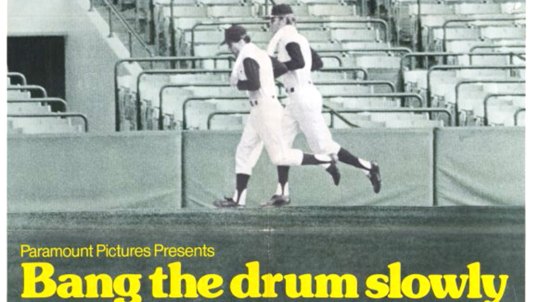
Bang The Drum Slowly (1973, dir. by John Hancock)


The last time I wrote a film review for this site, it was because I was missing baseball.

Guess what?

I still miss baseball!  Luckily, I’ve still got plenty of baseball films to keep me busy until the MLB gets its act together and starts up again.  I hope we’ll get baseball this year but if we don’t, at least I can watch a movie like Bang The Drum Slowly.

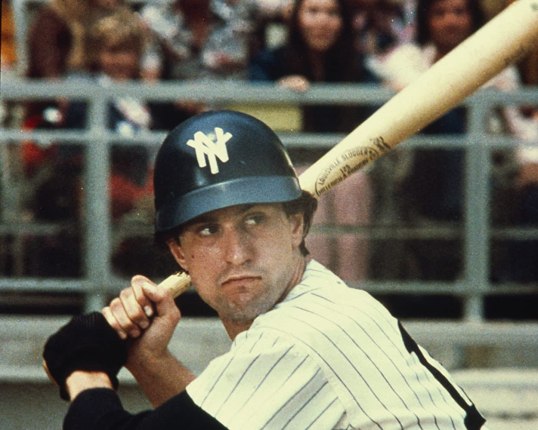
Bang The Drum Slowly is the ultimate baseball movie.  It’s about a pitcher named Henry Wiggin (Michael Moriarty) who plays for the New York Mammoths and who has a side job selling insurance and writing books.  When it’s time to renegotiate his contract, Henry says that he’ll re-sign with the team if the team agrees to not release or trade one of their catchers, Bruce Pearson (a really young Robert de Niro).  Henry says that he and Bruce are a package deal.  No one can understand why Henry cares because Bruce isn’t an outstanding player and everyone thinks that he’s slow but Henry finally gets the team’s general manager, Dutch (Vincent Gardenia), to agree to his terms.  What only Henry knows is that Bruce is terminally ill and that he will be lucky to survive the entire season.

Though the Mammoth eventually make a run for the World Series and there’s a lot of great baseball footage, Bang the Drum Slowly is more about friendship than it is about winning or losing.  Henry is willing to sacrifice everything to make sure that Bruce enjoys his final days and Bruce finally gets to play on a wining team.  Because Bruce is so young and he appears to be so healthy for most of the film, it’s really devastating when he suddenly does get ill and he’s finally has to come to terms with his mortality.  I cried a lot while I was watching Bang The Drum Slowly.  You will too.

The other players eventually rally around Bruce and they become a stronger teams as a result.  That’s one of the things that I love about baseball.  One player, no matter how good, can’t win a game on his own.  Instead, the entire team has to work together.  Not everyone can go out and try to hit a home run.  That’s not the way you win at baseball.  Instead, you win by doing what you have to do to bring your teammates home.  Bang The Drum Slowly celebrates friendship and loyalty and it perfectly captures the spirit of the game.

We may not be able to watch baseball right now.  But at least we can watch movies like Bang The Drum Slowly.

The Trigger Effect (1996, directed by David Koepp)


Annie (Elisabeth Shue) and Matthew (Kyle MacLachlan) are a married couple with an infant daughter and a macho best friend named Joe (Dermot Mulroney).  When a suddenly blackout throws the city into chaos, Matthew and Annie can only watch as the world seems to go mad all around them.  Matthew quickly goes from being mild and straight-laced to stealing medicine from the local pharmacy and purchasing a shotgun with Joe.  When a potential burglar is killed by one of their neighbors, Annie, Matthew, and Joe decides that it’s time to get out of town and head up to Annie’s parents’ house.  Things do not go as planned as one of the three ends up seriously wounded and the members of the group have to decide how far they’ll go to survive.

The Trigger Effect has an interesting premise and raises some relevant questions about how far people will go to protect themselves in a crisis.  Unfortunately, the execution is almost totally botched.  Shue, MacLahclan, and Mulroney are all good actors but none of their characters are that interesting and an attempt to insert some sexual tension between Annie and Joe just feels like a cheap cliche.  Since the movie doesn’t make it clear who these three were before the blackout, it’s hard to be effected by what they do after the lights go out.

Michael Rooker has a cameo at the start of the film’s third act.  It involves him yelling and, because it’s a big dramatic moment, you won’t want to laugh but it’s hard not to because his rant just goes on for so long.  In that one moment, whatever reality has been created by the film goes straight out the window.  It all leads to a predictable ending that feels like it was taken from the Giant Book of Hollywood Cliches.  That’s a good book if you can find a copy.

This was David Koepp’s directorial debut and it has the weaknesses that you would expect to find in a first film.  Koepp’s second film, Stir of Echoes, would be a marked improvement.

Here Are More Covers From Hard Case Crime!


Hard Case Crime publishes novels about crime.  Some of them are reprints of classics from pulp era.  Others are new works by authors paying homage to hard-boiled detective and crime stories of the 50s and 60s.  The retro covers also pay homage to the pulp era.  Some of the best cover artists around — from Robert McGinnis to Glenn Orbik to Chuck Pyle and many others — have done covers for Hard Case Crime and I absolutely love them.  There are many people who buy these books strictly for the covers.  I’m one of them.

I’ve shared several Hard Case Crime covers on this site.  Here are a few of the more recent covers to come out of Hard Case Crime:

by Paul Mann

by Paul Mann

by Laurel Blechman

by Mark Eastbrook

by Mark Eastbrook

by Mark Eastbrook

by Mark Eastbrook

by Mark Eastbrook