
Artist Unknown
Artist Unknown
Stressed out is a pretty good description of how I’m feeling right now so let’s just go with it…

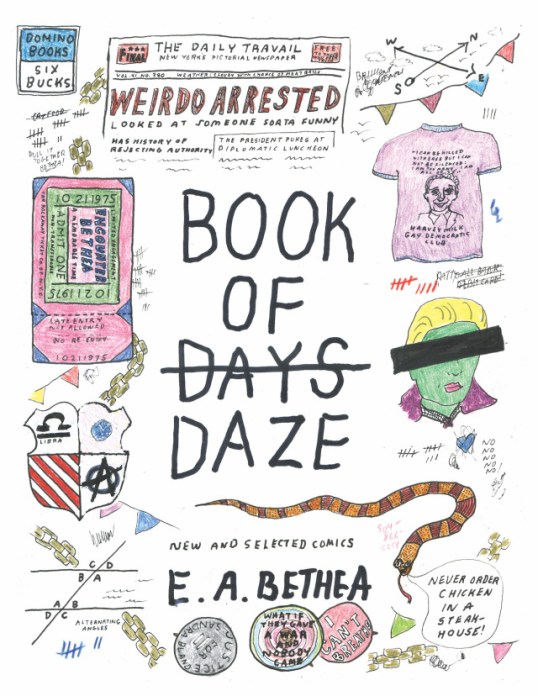
Cartoonist E.A. Bethea has been doing what she does in the way that only she can do it for a couple of decades now, and her late-2017 Domino Books collection, Book Of Daze, is a publication that reflects the aesthetic values and ethos of the strips contained within it, to wit : it feels like a found object —specifically, one you might come across in a dusty corner of an abandoned house, or on the table of a waterfront dive bar, complete with dried beer bottle “rings” caked into the cover. How it got there, who was reading it — these are questions no one can answer. Rather like the nature of life itself.
Bethea’s drawing style is minimalist to the point of looking and feeling rushed, with key figures (up to and including the protagonists of most strips) frequently omitted from view in favor of presenting things from…
View original post 597 more words
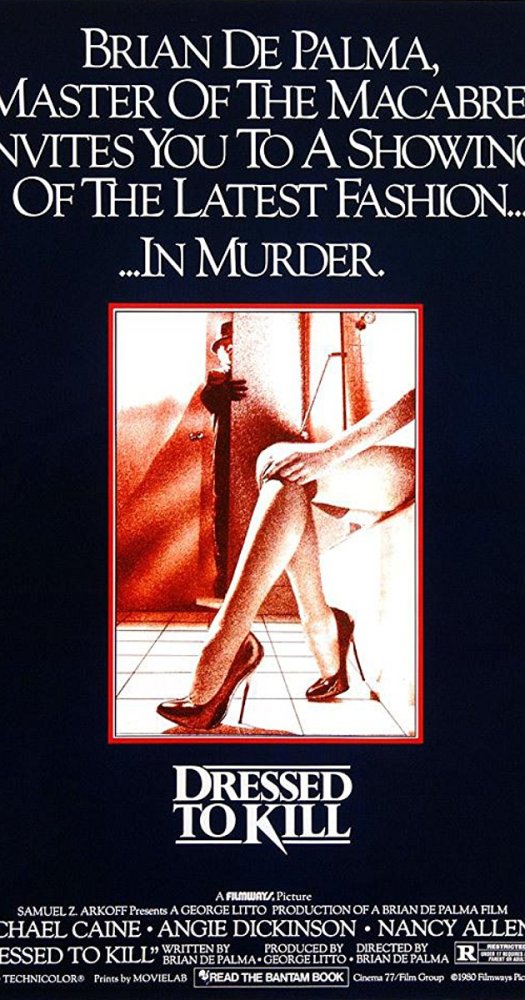
Brian De Palma was a big deal back in the 70’s and 80’s, and his films like CARRIE, SCARFACE, and THE UNTOUCHABLES are still discussed. Yet works such as SISTERS, PHANTOM OF THE PARADISE, OBSESSION, BLOW OUT, and BODY DOUBLE seem unjustly neglected today, and some critics deride him for his over the top sex and violence. DRESSED TO KILL finds De Palma in full Hitchcock mode, an homage to PSYCHO that The Master of Suspense himself cited as more like a “fromage”, but one I find still entertaining.
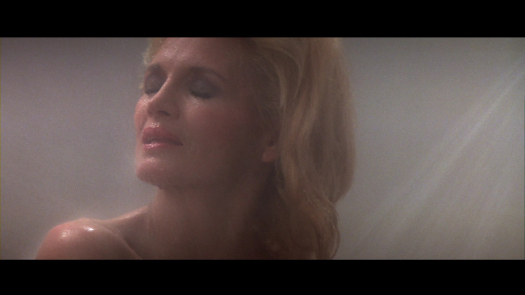
The film begins with a sizzling hot shower scene with Angie Dickinson as Kate Miller, remarried mother of science nerd Peter (Keith Gordon, CHRISTINE ). Kate has problems in her marriage and with her own mom, not to mention being a nymphomaniac! She’s seeing psychiatrist Dr. Robert Elliott (Michael Caine ), but seemingly getting nowhere. We follow her to New York’s…
View original post 597 more words

Artist Unknown
I don’t have much to say about this video other than this is what a good time looks like.
Enjoy!
 The year is 1998 and America is flat broke. Paper currency is now worthless and, to the joy of Ron Paul supporters everywhere, all transactions are done in gold. After the country ran out of oil, people started using skateboards and bicycles for transportation and many turned their cars into homes. While the citizenry spends their time consuming a steady diet of sitcoms and reality television, the government tries to figure out how to pay back the loan that it took from Sam Birdwater (Chief Dan George), a Native American who made billions after buying Nike. Birdwater wants his money back and he is prepared to foreclose on the entire country.
Newly elected President Chet Roosevelt (John Ritter) is not helping. A combination of Jack Tripper and Jerry Brown (who was gearing up to challenge Jimmy Carter in the Democratic primaries when Americathon was first released), Chet Roosevelt is a spaced-out former governor of California who speaks in 70s self-help slogans and who is more interested in getting laid than leading the country. Roosevelt governs out of The Western White House, a condo in California. When an ad exec named Eric McMerkin (Peter Reigert) suggests a month-long telethon to raise the money to pay off the loan, Roosevelt leaps at the chance.
Hosted by Harvey Korman, the telethon (which is called, naturally, the Americathon) features a wide variety of acts. There’s a ventriloquist. Jay Leno boxes his grandmother. Meat Loaf destroys a car. Even Elvis Costello and Eddie Money make brief appearances. While Chet falls in love with one of the performers, his chief-of-staff (Fred Willard) plots, with the leaders of a new Middle Eastern superstate, to sabotage the telethon.
Based on a play by the Firesign Theater, Americathon has a big, talented cast that is let down by Neal Israel’s uncertain direction and a script that is only rarely funny. The idea of America hosting a tacky telethon to pay its debts sounds like a good SNL skit (especially if Bill Murray played the host) but the premise is too thin for a feature film. Like Airplane! or The Naked Gun films, Americathon is a movie that tosses every joke it can against the wall to see what will stick. If the jokes are good, like in Airplane!, that formula can lead to a comedy classic. If the jokes are bad, not even John Ritter, Harvey Korman, and Fred Willard can make them funny.
Today, if Americathon is remembered, it’s because it supposedly predicted several future events. Americathon does take place in a future where China is an economic superpower, Nike is a huge conglomerate, and reality game shows are very popular. But, even with those correct predictions, Americathon is a such a film of its time that it was probably dated from the minute that it was released. Just the sight of John Ritter in a condo permanently marks Americathon as a film of and about the ’70s.
George Carlin does score a few laughs as the narrator and Elvis Costello performs both Crawlin’ To The USA and (I Don’t Want To Go To) Chelsea. Eagle-eyed viewers might want to keep an eye out for the tragic Playboy playmate, Dorothy Stratten, who has a brief non-speaking role. Otherwise, Americathon is as hopeless as the country it’s trying to save.
Ever since the 1980s, Carol M. Highsmith has been exploring America and taking photographs of what she finds. Starting in 2009, Highsmith has been donating her life’s work of more than 100,000 images to the Library of Congress. Highsmith’s photographs emphasizes the corners and parts of America that are in danger of disappearing in the face of progress and development. By donating them royalty-free, Highsmith has provided people everywhere with the chance to see parts of America that they might not otherwise have the chance to experience. As a photographer, she’s been a huge influence on my own work.
I first wrote about Carol Highsmith and her work in 2012. This year, for the 4th of July, I’m going to share more of Highsmith’s American photography. The first 10 pictures below were taken in Texas. The rest were taken elsewhere.


Oregon

Arizona

Missouri

Wyoming

Wyoming
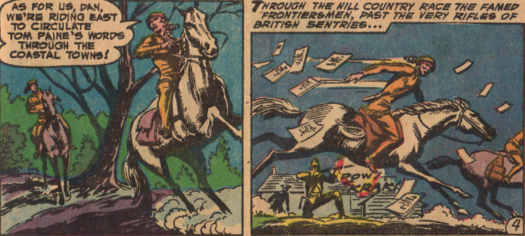
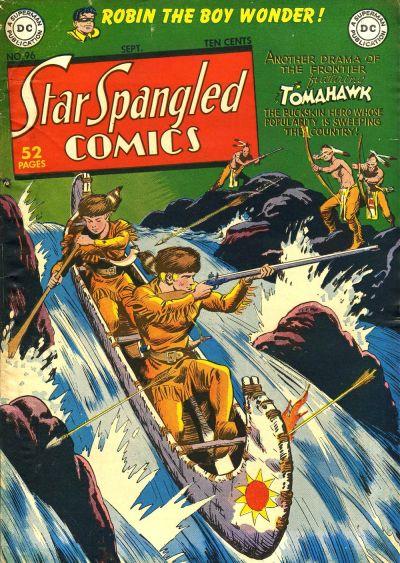
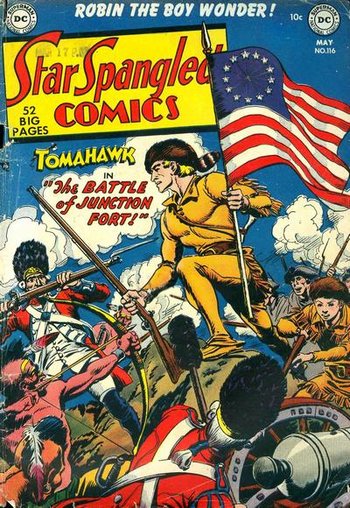
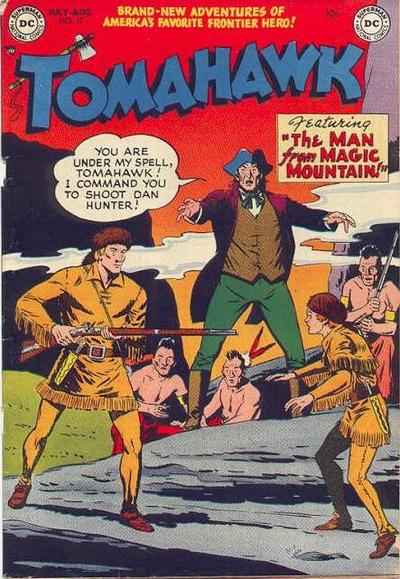
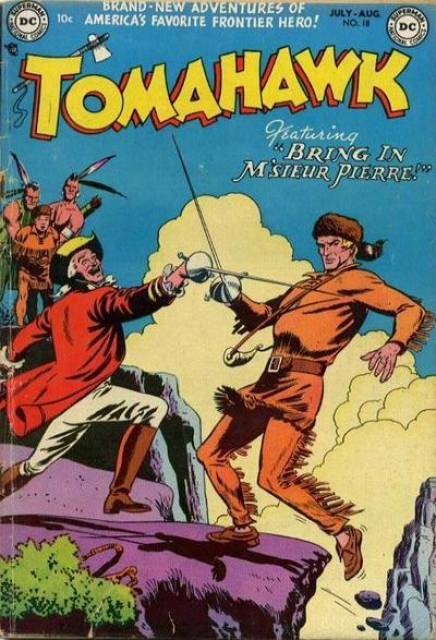
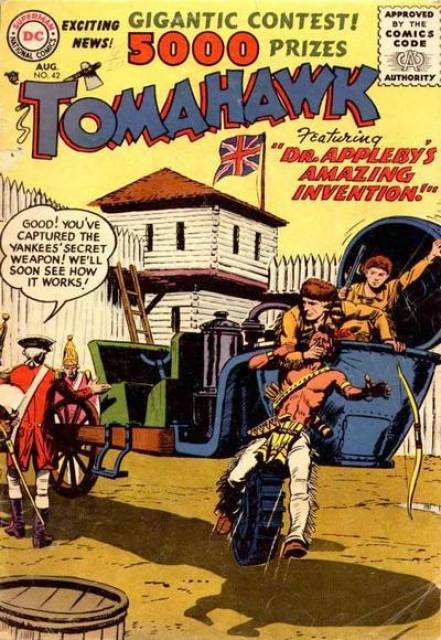
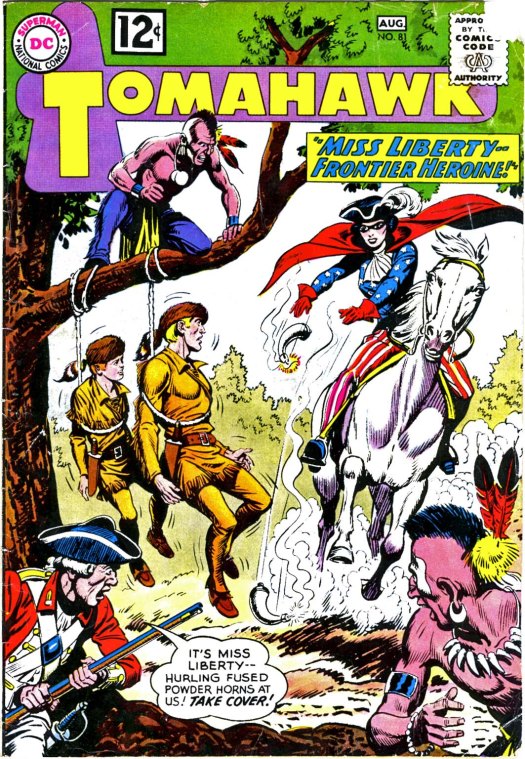
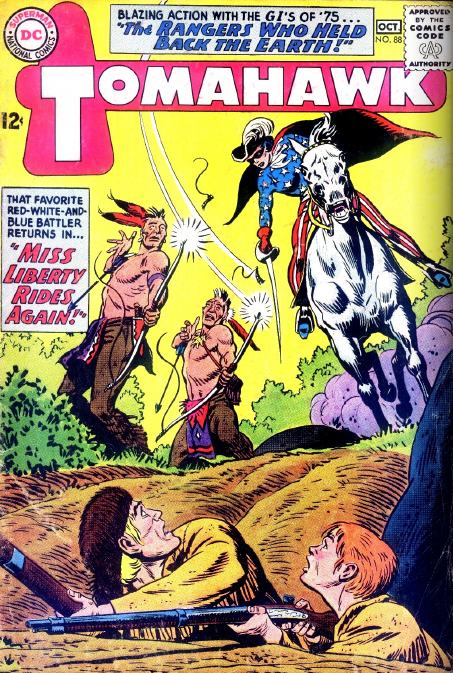
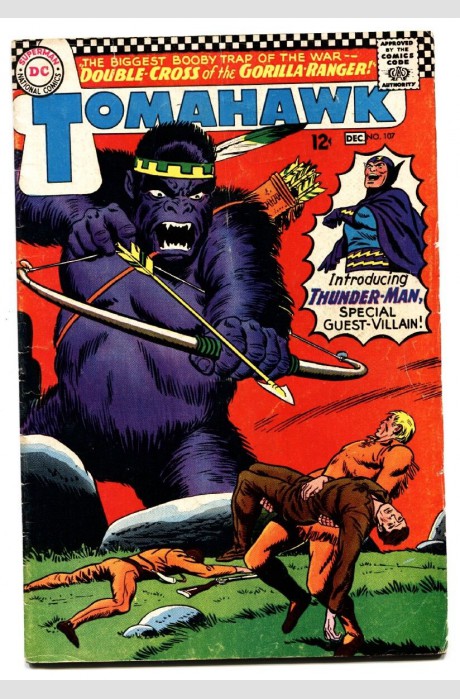
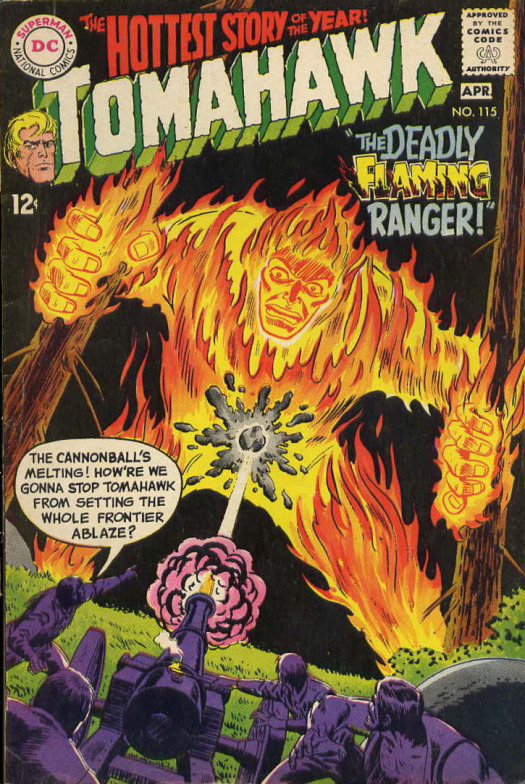
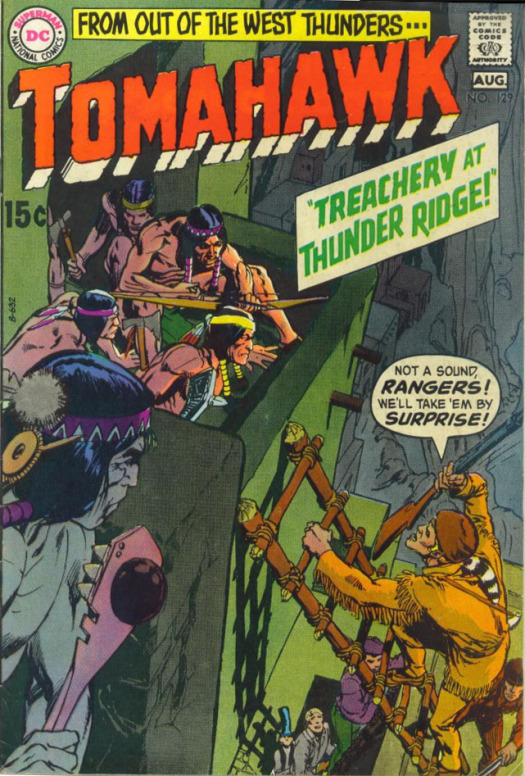
There weren’t very many comic-book heroes (super or otherwise) whose adventures took place during the Revolutionary War era. In fact, I can only think of one – DC’s Tomahawk, who made his four-color debut in Star-Spangled Comics #69 back in 1947. Tomahawk fought not only the British, but Indian co-conspirators in the pages of Star-Spangled and World’s Finest, getting his own book in 1950, which had a 140 issue run until folding in 1972.
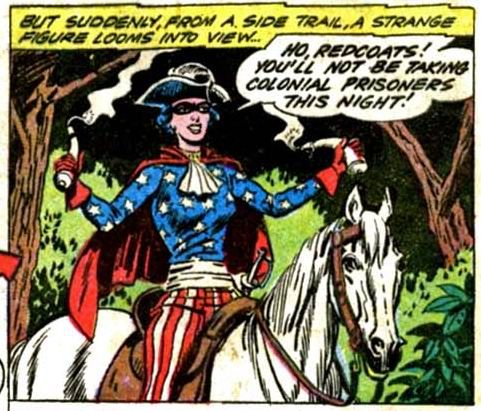
Writer Ed France Herron and artist Fred Ray produced the bulk of Tomahawk’s tales, and being a comic book there were some sci-fi elements added during the 50’s, and campy super villains in the 60’s. Tomahawk even introduced America’s first superheroine Miss Liberty, a frontier nurse by day who fought alongside Tomahawk in 22 issues. In honor of the July 4th holiday, here’s a gallery of covers chronicling the thrilling stories of Tomahawk:
In 1973, John Wayne released America, Why I Love Her, an album of speeches about why the Duke loved America. In honor of Independence Day, here’s the title track:
Happy birthday, America!

 Through the Shattered Lens