Music Video of the Day: Do It Again by Wall Of Voodoo (1987, dir. ???)


Wow! I have no idea what the story behind this video is, but for some reason, four years after Stan Ridgway left Wall Of Voodoo, they covered The Beach Boys’ song Do It Again, and Brian Wilson is in the video. The only information I can find is in the YouTube comment sections on postings of this video. One says that Wilson and Wall Of Voodoo had a good time putting this together despite the content and where Wilson was at this time in his life. Another says that the group was probably forced by their record company to do something pop friendly, yet dark, in order to survive as a group. Other comments are just about the quality of the song or taking jabs at Eugene Landy–played by Paul Giamatti in the film Love & Mercy (2014).

Sit back and take in the weird. This is like a post-apocalyptic look at the vision of California The Beach Boys created while also being prophetic about their own group breaking up the next year.

30 Days Of Surrealism:

  1. Street Of Dreams by Rainbow (1983, dir. Storm Thorgerson)
  2. Rock ‘n’ Roll Children by Dio (1985, dir. Daniel Kleinman)
  3. The Thin Wall by Ultravox (1981, dir. Russell Mulcahy)
  4. Take Me Away by Blue Öyster Cult (1983, dir. Richard Casey)
  5. Here She Comes by Bonnie Tyler (1984, dir. ???)

This Week’s “Peaks” : Part Five


Ryan C. (fourcolorapocalypse)'s avatarTrash Film Guru

This, I think, is the point at which I’ve decided I’m well and truly hooked — although, in fairness, all signs were pointing in that direction already.

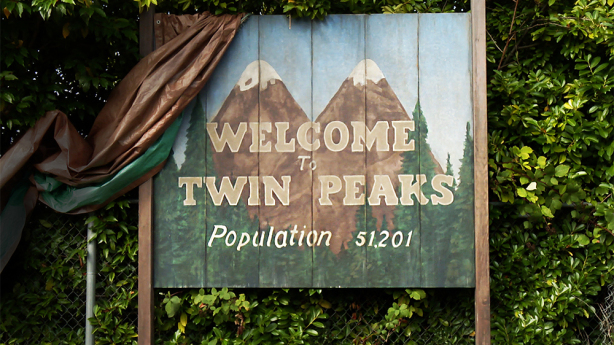
Part (not episode, remember?) five of David Lynch and Mark Frost’s 2017 iteration of Twin Peaks — you may add or omit “The Return” as you see fit —features none of the arresting surreal visual poetry we were treated to last week, the “high weirdness” of parts 1-4 is dialed back considerably (although still present and accounted for), and some rather prosaic explanations are offered to a handful of the mysteries that we’ve been served up (the mutilated body in Buckhorn, South Dakota is that of the “real” Dougie, Russ Tamblyn’s Dr. Jacoby was painting those shovels gold to hustle off to the gullible viewers  — among them Wendy Robie’s Nadine Hurley and David Patrick Kelly’s Jerry Horne — of his…

View original post 842 more words

18 Initial Thoughts About Twin Peaks: The Return Part 5 (dir by David Lynch)


As always, a full recap will be posted either later tonight or tomorrow at the latest.  However, before I rewatch Part 5 of Twin Peaks, here are some initial thoughts.

1. Las Vegas, with all of its glitz and complicated history, really is the perfect David Lynch town.  I’d pay good money to see David Lynch remake Martin Scorsese’s Casino.

2. That old scene of Doppelganger Cooper and Killer BOB laughing it up is still pretty unsettling.

3. If anything, as played by Robert Forster, Frank Truman appears to be even more laconic than his brother, Harry.

4. Tonight, as I was watching Naomi Watts knot his tie, I noticed that Kyle MacLachlan has very sad eyes.  That actually made me feel kinda sad, just because Kyle seems to be such a nice person.  MacLachlan’s performance, especially as Dougie/Cooper, continues to be nothing short of amazing.  There was something so incredibly poignant about the sight of him wandering around in that huge green jacket.

5. Dougie works in insurance.  I had him pegged as working in real estate but insurance seems to work just as well.

6. The casino pit boss getting beaten up while the three women in the pink dresses watched in apparent boredom was perhaps the most Lynchian moment of the show so far.  Lynch has always combined the most savage violence with the most blasé reactions.

7. Dougie’s car finally blows up and the drug addict mom next door is passed out through the whole thing.

8.  No, Jade!  Don’t trust the postal service to deliver that key!  They can’t even get my Amazon orders here on time…

9. Peggy Lipton has apparently only aged seven years since the previous season of Twin Peaks aired back in 1991.

10. It’s been 25 years and Shelley is still working as a waitress?

11. Amanda Seyfried is the prefect choice to play Madchen Amick’s daughter.

12. Twin Peaks is apparently the cocaine capitol of the American northwest.  Actually, one thing that rarely seems to be pointed out is that David Lynch appears to be one of the most anti-drug filmmakers ever.  Every Lynch character who has ever tried or sold drugs has come to a bad end.

13. Of course, Dr. Jacoby would have a podcast.  And, of course, Nadine would be a fan.

14. “Dig yourself out of the shit!”

15. I want to hang out at the roadhouse.  All the best bands play there.  Tonight’s band was Trouble.

16. “The cow jumped over the moon.”  Agck!  Doppelganger Cooper is so creepy!

17. That was Don Murray playing Dougie/Cooper’s boss.  He was also appeared opposite Marilyn Monroe in Bus Stop, played Senator Brigham Anderson in Otto Preminger’s Advise and Consent, played a killer cop in the ahead-of-its time Deadly Hero, and appeared as Governor Breck in the best of the original Planet of the Apes films, Conquest of the Planet of the Apes.

18. For audiences who found tonight’s episode to be too weird and confusing, there’s absolutely nothing confusing about I’m Dying Up Here, the show that immediately followed.  In fact, it’s so easy to follow that it’s kind of annoying.

Twin Peaks on TSL:

  1. Twin Peaks: In the Beginning by Jedadiah Leland
  2. TV Review: Twin Peaks 1.1 — The Pilot (dir by David Lynch) by Lisa Marie Bowman
  3. TV Review: Twin Peaks 1.2 — Traces To Nowhere (directed by Duwayne Dunham) by Jedadiah Leland
  4. TV Review: Twin Peaks 1.3 — Zen, or the Skill To Catch A Killer (dir by David Lynch) by Lisa Marie Bowman
  5. TV Review: Twin Peaks 1.4 “Rest in Pain” (dir by Tina Rathbone) by Leonard Wilson
  6. TV Review: Twin Peaks 1.5 “The One-Armed Man” (directed by Tim Hunter) by Jedadiah Leland
  7. TV Review: Twin Peaks 1.6 “Cooper’s Dreams” (directed by Lesli Linka Glatter) by Lisa Marie Bowman
  8. TV Review: Twin Peaks 1.7 “Realization Time” (directed by Caleb Deschanel) by Lisa Marie Bowman
  9. TV Review: Twin Peaks 1.8 “The Last Evening” (directed by Mark Frost) by Leonard Wilson
  10. TV Review: Twin Peaks 2.1 “May the Giant Be With You” (dir by David Lynch) by Leonard Wilson
  11. TV Review: Twin Peaks 2.2 “Coma” (directed by David Lynch) by Jedadiah Leland
  12. TV Review: Twin Peaks 2.3 “The Man Behind The Glass” (directed by Lesli Linka Glatter) by Jedadiah Leland
  13. TV Review: Twin Peaks 2.4 “Laura’s Secret Diary” (dir by Todd Holland) by Lisa Marie Bowman
  14. TV Review: Twin Peaks 2.5 “The Orchid’s Curse” (dir by Graeme Clifford) by Lisa Marie Bowman
  15. TV Review: Twin Peaks 2.6 “Demons” (dir by Lesli Linka Glatter) by Leonard Wilson
  16. TV Review: Twin Peaks 2.7 “Lonely Souls” (directed by David Lynch) by Jedadiah Leland
  17. TV Review: Twin Peaks 2.8 “Drive With A Dead Girl” (dir by Caleb Deschanel) by Lisa Marie Bowman
  18. TV Review: Twin Peaks 2.9 “Arbitrary Law” (dir by Tim Hunter) by Lisa Marie Bowman
  19. TV Review: Twin Peaks 2.10 “Dispute Between Brothers” (directed by Tina Rathbone) by Jedadiah Leland
  20. TV Review: Twin Peaks 2.11 “Masked Ball” (directed by Duwayne Dunham) by Leonard Wilson
  21. TV Review: Twin Peaks 2.12 “The Black Widow” (directed by Caleb Deschanel) by Leonard Wilson
  22. TV Review: Twin Peaks 2.13 “Checkmate” (directed by Todd Holland) by Jedadiah Leland
  23. TV Review: Twin Peaks 2.14 “Double Play” (directed by Uli Edel) by Jedadiah Leland
  24. TV Review: Twin Peaks 2.15 “Slaves and Masters” (directed by Diane Keaton) by Lisa Marie Bowman
  25. TV Review: Twin Peaks 2.16 “The Condemned Woman” (directed by Lesli Linka Glatter) by Leonard Wilson
  26. TV Review: Twin Peaks 2.17 “Wounds and Scars” (directed by James Foley) by Lisa Marie Bowman
  27. TV Review: Twin Peaks 2.18 “On The Wings of Love” (directed by Duwayne Dunham) by Jedadiah Leland
  28. TV Review: Twin Peaks 2.19 “Variations on Relations” (directed by Jonathan Sanger) by Lisa Marie Bowman
  29. TV Review: Twin Peaks 2.20 “The Path to the Black Lodge” (directed by Stephen Gyllenhaal) by Lisa Marie Bowman
  30. TV Review: Twin Peaks 2.21 “Miss Twin Peaks” (directed by Tim Hunter) by Leonard Wilson
  31. TV Review: Twin Peaks 22.2 “Beyond Life and Death” (directed by David Lynch) by Lisa Marie Bowman
  32. Film Review: Twin Peaks: Fire Walk With Me (dir by David Lynch) by Lisa Marie Bowman
  33. Here’s The Latest Teaser for Showtime’s Twin Peaks by Lisa Marie Bowman
  34. Here’s The Newest Teaser for Showtime’s Twin Peaks by Lisa Marie Bowman
  35. 12 Initial Thoughts About Twin Peaks: The Return Parts One and Two by Lisa Marie Bowman
  36. This Week’s Peaks: Parts One and Two by Ryan C. (trashfilm guru)
  37. TV Review: Twin Peaks: The Return Parts One and Two (dir by David Lynch) by Lisa Marie Bowman
  38. 4 Shots From 4 Films: Special Twin Peaks Edition by Lisa Marie Bowman
  39. This Week’s Peaks: Parts Three and Four by Ryan C. (trashfilm guru)
  40. 14 Initial Thoughts About Twin Peaks: The Return Part Three by Lisa Marie Bowman (dir by David Lynch)
  41. 10 Initial Thoughts About Twin Peaks: The Return Part Four by Lisa Marie Bowman (dir by David Lynch)
  42. TV Review: Twin Peaks: The Return Parts Three and Four (dir by David Lynch) by Lisa Marie Bowman 

What Lisa Watched Last Night #166: Daughter For Sale (dir by Farhad Mann)


Last night, I turned on Lifetime and I watched Daughter for Sale!

Why Was I Watching It?

Well, the main reason was because the film was on Lifetime and I always enjoy live tweeting Lifetime films.  There’s a strong community of Lifetime live tweeters.  We all appreciate Canadian location shooting and unapologetic melodrama.

Add to that, Daughter For Sale is a great title.  When you see that a movie is called Daughter for Sale, you really have no choice but to watch.

What Was It About?

Annalise O’Neil (Emily Rose) is a newly appointed judge.  We know this because 50% of her dialogue consists of her telling people, “I’m a judge.”  She also lives in a house that is almost totally made of glass.  Seriously, it’s all windows and there’s no privacy.

Anyway, when the movie starts, she’s celebrating being a judge by throwing a party at her glass house.  When she tells her teenage daughter, Carly (Emily Tennant), to put on a pink dress and come downstairs to the party, Carly responds by cutting the dress into pieces and then sneaking out of the house.  Somehow, nobody notices her running away, despite the fact that the house is almost all window.

Anyway, Carly wanders around Vancouver for a while and then ends up getting kidnapped by a human trafficking ring that is operated by a pretend do-gooder named John Gallant (Antonio Cupo).  Working with a whiny, leather jacket-wearing detective named Derek (Chris Kalhoon), Annalise searches for her missing daughter.  (Her search basically consists of approaching random people and saying, “I’m a judge.”)  Will Annalise and Whiny Detective Man be able to find Carly before she’s sold to the highest bidder?

What Worked?

Particularly for a Lifetime film, Daughter For Sale looked really good.  The shadowy cinematography created the perfect sense of menace.  The warehouse that Carly was kept in was pure nightmare fuel.  We tend to take production design for granted but the people responsible for the look of Daughter for Sale outdid themselves.

Emily Tennant did a pretty good job as Carly. (Remarkably, despite spending about a month in a dirty old warehouse, Carly’s hair and makeup remained perfect throughout the entire movie.)  Antonio Cupo was properly sleazy as the bad guy.  I enjoyed the way the film contrasted Gallant’s public image with the monstrous reality of who he truly was.

What Did Not Work?

“I’m a judge.”  Yes, we know, Analise!  You don’t have to mention it every two minutes!  You being a judge certainly isn’t going to get your daughter out of that warehouse…

This was one of those films where everyone continually switched from being super competent to being super stupid, depending on what was necessary for the scene.  Analise, in particular, was always either a genius or the most naive jurist in history.  Meanwhile, John Gallant was able to run a halfway house, a charity, and an international sex trafficking ring but he wasn’t smart enough to hide the incriminating evidence in his office.  If you’re going to send a thug to beat up a judge, it might be smart to not allow yourself to then be seen, in public, hanging out with the exact same thug.  Or, at least, that’s the way it would seem to me.

“Oh my God!  Just like me!” Moments

“I’m a judge!”

No, actually, I’m not.  But if I was, I would probably remind everyone every chance I got as well.

Lessons Learned

She’s a judge!

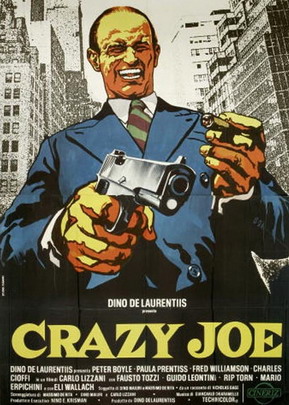
A Movie A Day #147: Crazy Joe (1974, directed by Carlo Lizzani)


Crazy Joe (Peter Boyle) is a gangster with a chip on his shoulder and a self-taught intellectual who can (misquote) Sartre and Camus with the best of them.  Sick of being taken for granted, Joe and his brother, Richie (Rip Torn), attempt to challenge the Mafia establishment.  The mob sets Joe up and gets him sent to prison.  While doing time, Joe befriends a Harlem gangster named Willy (Fred Williamson).  Refusing to associate with the other Italian prisoners, Joe allies himself with the black inmates and even helps to start a riot over the prison’s inhumane conditions.  When he is released, Joe hits the streets of New York with a vengeance, now backed up by Willy and his criminal organization.

Crazy Joe is based on the life of Joey Gallo, who was briefly a New York celebrity, hobnobbing with actors like Jerry Orbach and writers like Norman Mailer before he was gunned down at Umberto’s Clam Shop in Little Italy.  Though the names were changed to protect the guilty, Eli Wallach plays Vito Genovese, Charles Cioffi plays Joe Columbo, and Luther Adler is Joe Profaci.  Fred Williamson’s character is based on the infamous Nicky Barnes.

Crazy Joe is a good and violent mix of the gangster, prison, and blaxploitation genres.  Despite wearing an unfortunate toupee, Peter Boyle is great at putting the crazy in Crazy Joe and Fred Williamson ups the coolness factor of any movie he appears in.  Keep an eye out for Henry Winkler, giving a very un-Fonzie performance as Joe’s right-hand man.

Music Video of the Day: Here She Comes by Bonnie Tyler (1984, dir. ???)


Sure, there’s a better known video by Bonnie Tyler where Rambo’s head explodes, but I’ll get to that at some point. This Bonnie Tyler video has both zombie soldiers & a white Bonnie chasing after a black Bonnie while a UFO floats overhead.

Let’s look at the summary on Wikipedia:

The video is set in London. Tyler, dressed in a black leather dress, walks down a cobbled road lined with statues of soldiers. She occasionally looks up to see a duplicate of herself, dressed in a white dress, standing at the top of a fire escape, shrouded in shadow. The statues come to life and follow Tyler down the road. Behind them follows a black car, driven by the duplicate of Tyler. She runs away from them as she notices the statues following her, and locks herself inside a garage. The car then breaks through the doors of the garage and attempts to run Tyler over. She escapes through another door and finds herself on a street, looking up to see a spaceship in the sky. The spaceship descends, and a car appears, which Tyler enters and drives away. The duplicate chases after Tyler in her own car. Tyler drives into another building, and as the spaceship flies above the building, the duplicate drives inside as the entrance explodes. The spaceship then flies away as the animated statues look on.

When you describe it like that, it just sounds stupid. Plus, where is the mention of the UFO exploding at the end?

The only piece of information I could find isn’t about the video. It’s that the song was used in the 1984 release of Metropolis. That would explain the white and black Bonnies. One is meant to be Maria, and the other is meant to be the robot version of Maria. Where the zombies, or “animated statues”, come in to play, I don’t know. I also don’t get the inclusion of a UFO.

I wish I had more. The only other thing I have is something that really belongs with Total Eclipse Of The Heart, so I’ll save it till then. If you go to her section on mvdbase, you’ll find that the majority of her videos have no director listed. Coincidentally, Meat Loaf is the only other very well-known artist that I’ve come across whose music videos are as undocumented as Bonnie Tyler’s. The difference is that they seem to at least have her videos in there.

Enjoy!

30 Days Of Surrealism:

  1. Street Of Dreams by Rainbow (1983, dir. Storm Thorgerson)
  2. Rock ‘n’ Roll Children by Dio (1985, dir. Daniel Kleinman)
  3. The Thin Wall by Ultravox (1981, dir. Russell Mulcahy)
  4. Take Me Away by Blue Öyster Cult (1983, dir. Richard Casey)

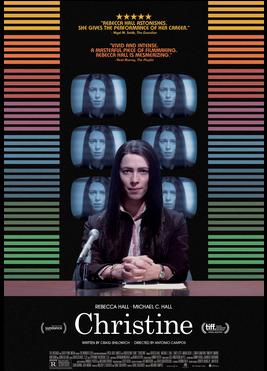
The Things You Find on Netflix: Christine (dir by Antonio Campos)


I really regret that I didn’t get a chance to see Christine when it played here last year.  I wanted to but the movie was only in theaters for a week and then it vanished.

I guess I shouldn’t be too surprised that Christine didn’t become a blockbuster.  I imagine that most potential viewers were turned off by the fact that 1) it wasn’t a remake of the movie about the killer car and 2) it was based on the true story of a reporter who, in 1974, committed suicide on live television.  I imagine that, to many people, the film sounded like it would be indescribably sad.  It certainly sounded that way to me.  That’s why, when the movie opened at the Dallas Angelika, I said, “I’ll see it next week.”  Of course, by the time “next week” rolled around, the movie was gone.

And that’s a shame.  I just watched Christine on Netflix and I discovered that it was one of the best films of 2016.  Yes, it is a sad film but it’s also a frequently fascinating one.  The movie may tell the story of a tragedy but it’s anchored and enlivened by a brilliant performance from Rebecca Hall.  People who love movies, of course, already know that Rebecca Hall is a brilliant actress but, unfortunately, she rarely gets the roles in the films that she deserves.  As of this writing, her most financially successful film was probably The Town and, in that film, she was pretty much wasted in a nothing role.  She is perfectly cast in Christine, perhaps as perfectly cast as any performer could ever hope to be.

Rebecca Hall plays Christine Chubbuck, a reporter who was based in Sarasota, Florida.  In 1974, she started a newscast by announcing, “”In keeping with Channel 40’s policy of bringing you the latest in ‘blood and guts’, and in living color, you are going to see another first—attempted suicide.”  She then drew a gun from a shopping bag that was sitting behind the anchor desk.  As thousands watched, she shot herself in the back of the head.

Along with the gun, the shopping bag had contained the homemade puppets that Christine used whenever she volunteered at the local children’s hospital.  On the anchor desk, among her papers, was a news report that she had written the previous night, announcing that “Local news personality Christine Chubbuck” had shot herself on live television and had been taken to the hospital in critical condition.  Christine, who was reportedly frustrated both personally and professionally, was briefly the number one story in the nation.

One of the more interesting things about the suicide of Christine Chubbuck is that it happened in 1974, long before YouTube, Facebook Live, or Twitter.  Chubbuck’s suicide was only aired once and the footage has subsequently vanished.  If Christine Chubbuck, or anyone else, committed suicide on television today, it would immediately be all over the internet.  We would end up seeing, at the very least, clips of it on an almost daily basis.  Sadly, we would see it so much that we would probably become desensitized to it.  Since Christine Chubbuck’s death was recorded but remains unseen, both she and her suicide have achieved an almost mythical quality.  One can look at the details of Christine Chubbuck’s death and see almost anything that they want.

Christine follows the last few months of Chubbuck’s life.  As played by Rebecca Hall, Christine is confident enough that she can imagine interviewing Richard Nixon but insecure enough to obsess over whether she was nodding too much while the imaginary President gave his imaginary answer.  She lives with her mother (J. Smith-Cameron), a self-described hippie who keeps making references to a breakdown that Christine had in Boston.  When she complains about the pressure that she’s under to sensationalize the news, her boss dismisses her with “You’re a feminist!”  (He says it like an accusation.)  When she gives in and purchases a police scanner so that she can find the stories that the boss is demanding, she ends up spending most of her night listening to two cops brag about “how far” they got with their girlfriends the night before. When she goes to the doctor to complain about chronic stomach pain, she’s told that she has to have an ovary removed and she’ll probably never be able to conceive.  When she thinks that she finally has a date with the man who she’s been crushing on, she is instead dragged to an empty-headed encounter group.  Her group partner has a slick answer for every problem that Christine has until Christine says that she’s thirty and she’s still a virgin.

“Oh,” her partner replies, flummoxed.

In the film, Christine struggles with both depression and, in my opinion, bipolar disorder as well.  Unfortunately, for her mental well-being, she’s a woman in 1974.  The only thing that the world has to offer her are vapid self-affirmation (“I’m okay, you’re okay!  I’m okay, you’re okay!” one co-worker chants at a particularly dramatic moment) and sexist bosses who dismiss what is clearly a manic episode as either “being moody” or “being difficult.”  Speaking as someone who is very sensitive as to how mental health issues are portrayed onscreen, all I can say is that Christine gets it right.

I’m probably making this film sound like the most depressing movie ever made and it’s definitely not a happy film.  I had tears in my eyes by the end of it.  At the same time, it’s also a compulsively watchable character study.  Rebecca Hall gives such a good and brave performance as Christine that you can’t look away, even when you feel like you should.  Rebecca Hall is also ably supported by Michael C. Hall, Tracy Letts, Morgan Spector, Timothy Simons, and Maria Dizzia, who all play her sometimes sympathetic, sometimes annoyed co-workers.

Now, I do think that I should warn anyone from thinking that Christine is a 100% accurate look at Christine Chubbuck’s life and death.  The film left me so moved that I actually did some research and I came across this article from the Washington Post — Christine Chubbuck: 29, Good-Looking, Educated, A Television Personality. Dead. Live and in Color.  After reading the profile, it was easy to see that the film did take some dramatic license.  However, it was also easy to see that Christine gets the essence of the story right.

If, like me, you missed Christine in the theaters, you can now see it on Netflix.  And you should!

A Movie A Day #146: The Dogs of War (1981, directed by John Irvin)


Jamie Shannon (Christopher Walken) is a professional mercenary who is hired, by a British businessman, to overthrow the government of Zangaro.  Though Zangaro is currently ruled by a ruthless dictator, Shannon’s employers want to replace him with someone even worse, all so they can get their hands on the country’s platinum mines.  After Shannon is captured and tortured by the government, he wants nothing else to do with Zangaro.  Instead, he wants to return to New York and propose to his ex-wife (JoBeth Williams).  But, when she turns down his proposal, Shannon and his mercenary army return to Zangaro.
Before winning an Oscar for The Deer Hunter and becoming one of our most popular character actors, Christopher Walken was a finalist for the role of Han Solo in Star Wars.  If not for George Lucas’s decision to hire Harrison Ford to read lines for the actors at the auditions, Christopher Walken’s career could have developed far differently.  The Dogs of War, which was Walken’s first big film after the high of The Deer Hunter and the low of Heaven’s Gate, features Walken playing a character who has much in common with George Lucas’s original conception of Han Solo, an amoral mercenary who will work for anyone who pays him.  Walken is almost too good as Jamie, playing the part as being so aloof and ruthless that it is sometimes hard to feel any sympathy for him at all.  If he had taken that approach to playing Han Solo, audiences would have really been shocked when Han returned to attack the Death Star.  They would probably be worried that he had returned because the Empire offered him a thousand credits to kill Luke.

The Dogs of War has an intriguing premise but it’s a very slow movie that gets caught up in all the minutia that goes into staging a coup.  It’s exciting when Walken and his mercenaries finally attack the dictator’s compound but it takes forever to get there.  The book, by Frederick Forsyth, is a well-written page turner but the film adaptation largely falls flat.

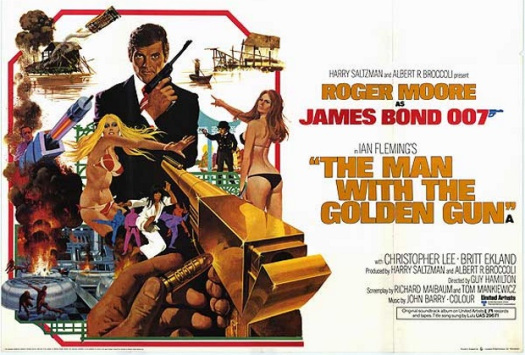
Remembering Roger Moore: THE MAN WITH THE GOLDEN GUN (United Artists 1974)


gary loggins's avatarcracked rear viewer

I didn’t realize Sir Roger Moore was 89 years old when I first heard he’d passed away on May 23. But as Mick Jagger once sang, time waits for no one, and Moore’s passing is another sad reminder of our own mortality. It seemed like Roger had been around forever though, from his TV stardom as Simon Templar in THE SAINT (1962-69) though his seven appearances as James Bond, Agent 007.

There’s always been a rift  between fans of original film Bond Sean Connery and fans of Moore’s interpretation. The Connery camp maintains Moore’s Bond movies rely too much on comedy, turning the superspy into a parody of himself. Many point to his second, THE MAN WITH THE GOLDEN GUN, as an example, but I disagree. I think the film strikes a good balance between humor and suspense, with Roger on-target as 007, and the great Christopher Lee (who’d guest starred in Moore’s syndicated…

View original post 482 more words