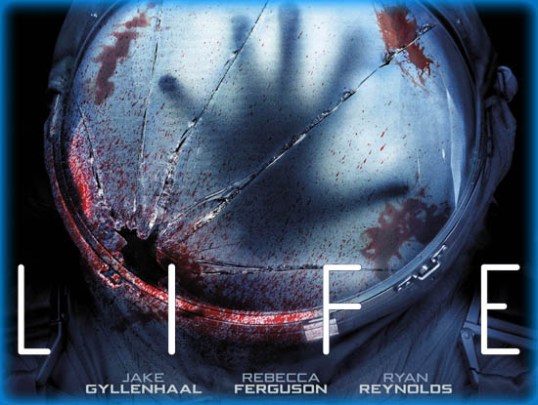
Playing Catch-Up With The Films of 2017: Life (dir by Daniel Espinosa)


I don’t care what Neil deGrasse Tyson says.  Space is dangerous.

Just judging by what I’ve seen in the movies, it might be a good idea for humanity to stay earthbound.  Seriously, it seems like every time a group of astronauts and scientists spend an extended period of time off of our planet, bad shit happens.  They either end up leaving behind someone on Mars or sometimes they crash land on a planet inhabited by vampires.  Occasionally, they end up with evil creatures bursting out of their chest and, if they’re not careful, they might even end up accidentally traveling all the way to Hell and back.

For that matter, it might be a good idea to also stop listening to Bill Nye.  I’ve seen enough movies to know better than to trust science.  Did you know that every time a revived corpse has gone on a killing spree, a scientist has been to blame?  In the movies, science always says it’s going to make the world a better place but ultimately, it just seems to make things worse.

Consider Life, for instance.

This science fiction film, which came out earlier this year and didn’t stick around in theaters for very long, opens with the crew of the International Space Station taking questions from a group of school children on Earth.  Everyone is really excited because a probe has been picked up evidence that there was once extraterrestrial life on Mars.  Starting from one cell, the scientists have managed to clone an alien organism.  (Or something like that.  Wisely, the movie doesn’t waste too much time on how all of this actually works.)  The school kids name the organism Calvin.

Isn’t that cute?

But here’s the thing.  Life is a science fiction/horror movie hybrid and, as a result, we already know that it was a mistake to bring that alien to life.  We know that almost everyone in that space station is going to die a terrible death.  It doesn’t matter that the scientists are played by people like Jake Gyllenhaal, Ryan Reynolds, and Rebecca Ferguson  We know what is going to happen because we’ve all seen at least one movie in the Alien franchise.  We know what’s going to happen and, when things start to fall apart, the entire audience nods and says, “I told you so.”

That’s not to say that Life doesn’t work.   Life may be predictable but that’s actually a part of the film’s charm.  This is the type of film that you need to watch with a group of your loudest and snarkiest friends.  (I watched it with my sisters during the 4th of July weekend.  We all love Jake.  We all love Ryan.  Things got a bit out of hand.)  You don’t watch Life because you’re looking for an upbeat portrait of space exploration.  You watch Life so that you can yell, “No, don’t bring Calvin to life!  No, you idiot!  Don’t go into space!  Don’t lock yourself in the lab!  HAVEN’T ANY OF YOU SCIENTISTS EVER SEEN A HORROR MOVIE BEFORE!?”

(Indeed, one of the unexpected pleasures of Life was seeing that even brilliant people will do stupid things when confronted by the unknown.)

That said, Life occasionally caught me off guard.  It’s not that I was shocked to see the members of the cast being picked off one by one by Calvin.  Instead, I was shocked by the film’s relentlessly dark and bleak vision.  For a film called Life, it’s ultimately all about death.  Just because a character is being played by a big star, that doesn’t mean they won’t end up with Calvin entering their body and graphically devouring them from the inside out.  Calvin was a truly frightening creation and director Daniel Espinosa does a good job of capturing the claustrophobia and clutter of the space station.  Even if they didn’t exactly break any new ground, Espinosa and screenwriters Rhett Reese and Paul Wernick deserve a lot of credit for pursuing the film to its dark conclusion.  In space, they seem to suggest, there is no hope.

In conclusion, the main lesson of Life seems to be this: outer space is a terrible place and the worst thing that humanity can do is leave the planet.  Science is going to be the death of us.  Neil deGrasse Tyson has a lot to answer for.
A Movie A Day #185: Emperor of the North Pole (1973, directed by Robert Aldrich)


Emperor of the North Pole is the story of depression-era hobos and one man who is determined to kill them.

The year is 1933 and Shack (Ernest Borgnine) is one of the toughest conductors around.  At a time when destitute and desperate men are riding the rails in search of work and food, Shack has declared that no one will ride his train for free.  When Shack is first introduced, the sadistic conductor is seen shoving a hobo off of his train and onto the tracks.  Shack smiles with satisfaction when the man is chopped in half under the train’s wheels.

A-No.1 (Lee Marvin) is a legend, the unofficial king of the hobos.  A grizzled veteran, A-No. 1 has been riding the rails for most of his life.  (The title comes from the hobo saying that great hobos, like A-No. 1, are like the Emperor of the North Pole, the ruler of a vast wasteland).  A-No. 1 is determined to do what no hobo has ever done, successfully hitch a ride on Shack’s train.  He even tags a water tower, announcing to everyone that he intends to take Shack’s train all the way to Portland.

If A-No. 1 did not have enough to worry about with Shack determined to get him, he is also being tailed by Cigaret (Keith Carradine), a young and cocky hobo who is determined to become as big a legend as A-No. 1.  Cigaret and A. No. 1 may work together but they never trust each other.

Like many of Robert Aldrich’s later films, Emperor of the North Pole is too long and the rambling narrative often promises more than it can deliver.  Like almost all movies that were released at the time, Emperor of North Pole attempts to turn its story into a contemporary allegory, with Shack standing in for the establishment, A-No. 1 representing the liberal anti-establishment, and, most problematically, Cigaret serving as a symbol for the callow counter culture, eager to take credit for A-No. 1’s accomplishments but not willing to put in any hard work himself.

As an allegory, Emperor of the North Pole is too heavy-handed but, as a gritty adventure film, it works wonderfully.  Lee Marvin is perfectly cast as the wise, no-nonsense A-No. 1.  This was the sixth film in which Marvin and Borgnine co-starred and the two old pros both go at each other with gusto.  Carradine does the best he can with an underwritten part but this is Borgnine and Marvin’s film all the way.  Marvin’s trademark underacting meshes perfectly with Borgnine’s trademark overacting, with the movie making perfect use of both men’s distinctive screen personas.  As staged by Aldrich, the final fight between Shack and A-No. 1 is a classic.

Even at a time when almost every anti-establishment film of the early 70s is being rediscovered, Emperor of the North Pole remains unjustly obscure.  When it was first released, it struggled at the box office.  Unsure of how to sell a movie about hobos and worrying that audiences were staying away because they thought it might be a Christmas film, 20th Century Fox pulled the movie from circulation and then rereleased it under a slightly altered name: Emperor of the North.  As far as titles go, Emperor of the North makes even less sense than Emperor of the North Pole.  Even with the title change, Emperor of the North Pole flopped at the box office but, fortunately for him, Aldrich was already working on what would become his biggest hit: The Longest Yard.

Keep an eye out for Lance Henriksen, in one of his earliest roles.  Supposedly, he plays a railroad worker.  If you spot him, let me know because I have watched Emperor of the North Pole three times and I still can’t find him.


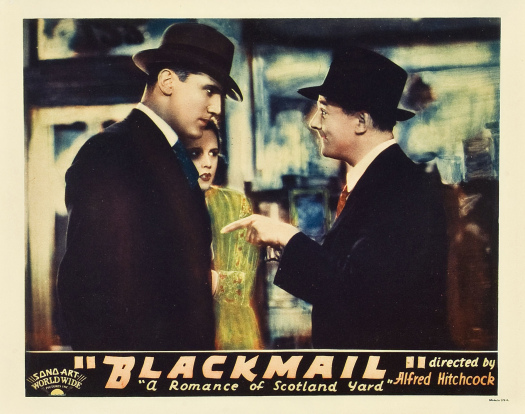
Early Hitchcock: BLACKMAIL (1929) and MURDER! (1930)


gary loggins's avatarcracked rear viewer

TCM is running Alfred Hitchcock  movies all month long under the umbrella of “50 Years of Hitchcock” and, in conjunction with Ball State University, conducting a six-week course on The Master of Suspense’s life and works. Since I’m participating, I figured it would be a good excuse for me to write some blog posts on Hitchcock’s films, sort of killing two birds with one stone. Today I’d like to discuss two of his early talking films, both produced at British International Pictures. Let’s start with Hitchcock’s first “talkie”, 1929’s BLACKMAIL.

BLACKMAIL was originally scheduled to be a silent film with some sound sequences, but Hitchcock clandestinely shot the whole thing with sound. Producer John Maxwell liked what he saw and released it in both silent and sound versions. BLACKMAIL is considered the first British talkie, though some of its scenes are silent with music only, and Hitchcock, ever the innovator, was there…

View original post 694 more words

Music Video of the Day: In Another Life by EMIN (2013, dir. ???)


In another life, I wouldn’t have to spotlight this music video. But I might as well since it has made it all the way to the mass media. Plus, Jimmy Kimmel already beat me to a video that not only fits, but also ties in with the new Planet Of The Apes movie.

Land Of Confusion by Genesis (1986)

Land Of Confusion by Genesis (1986)

I’m sure you’ve all read or seen talk about EMIN’s involvement in the current controversy, the Miss Universe pageant, and Trump, Jr. However, the New York Times articles I read fail to talk about the music video itself. That’s disappointing. I guess that’s why I need to write this post.

EMIN is a Russian artist who was born in Azerbaijan as Emin Agalarov. He moved to Moscow as a kid, went to high school in New Jersey, and graduated from Marymount Manhattan College–according to Wikipedia. He said in an interview with The Irish Times back in 2015 that he went to college in Jersey–close enough. He says in that same interview that he started off singing at open-mic nights in bars. He would translate Elvis Presley songs into Russian so that he could sing them at home. Kinda like the kid in the Taiwanese film A Brighter Summer Day (1991) whose sister would translate Elvis songs for him.

After graduating with a Business degree, he went back to Russia and in 2005 started taking vocal lessons from a well-known Azerbaijani singer named Muslim Magomayev. Magomayev was famous enough that a few years before he died, he was given the Order Of Honour by Putin. Because of course that kind of connection would be there. After that, Wikipedia simply states facts about the success of his albums.

While he says otherwise, music does appear to be a hobby that he happens to take seriously. He works in the family business, because again, of course he does. According to that same interview with The Irish Times, he used to have an eBay store back in college where he sold Russian memorabilia. He also opened his own shoe store because of the success of the eBay store.

At least as of the date of The Irish Times interview, he identifies as Muslim. However, the most interesting part of the interview is as follows:

[Q:] Musically, you’d be on the Michael Bublé/ Enrique Iglesias end of the spectrum. Who were your heroes growing up?
[A:] My heroes were Elvis, Elvis and Elvis! One of my favourite Elvis songs is My Boy, and now that you’ve told me it was written by an Irishman [Phil Coulter] I love it even more.

With that background out of the way, let’s look at the video.

The video starts off in a boardroom where EMIN is being shown pictures of Miss Universe contestants because business connections. According to Wikipedia, Miss USA (2013)–Erin Brady–said that her and other contestants were not paid for their appearance in this video. Yet, if you go to the New York Times article it says that they weren’t paid for their appearance in EMIN’s video for Amor. But that same article also says that Trump made an appearance in that video. He doesn’t. I’m not sure what to make of that. I think the article has the two videos confused since Amor just has 2012 Miss Universe winner Olivia Culpo in it. Or the article was trying to say they were shot at the same time. That’s my best guess.

We see that it’s one of his co-workers who is showing him these photos.

EMIN isn’t interested…

but it is making this guy sweat.

EMIN falls asleep and wakes up back home.

For whatever reason, the video jump cuts to his head tilted to our left. He gets some coffee and spots a pretty woman in his kitchen.

Surprised, EMIN spills coffee on himself. Since he can’t go about his day with a metaphor, he goes and changes. Then he proceeds to leap on his couch…

and do a handstand like everyone does in the morning.

EMIN goes to brush his teeth when another woman appears.

He goes around and sings a bit before settling down at the piano where Miss Russia appears next to him.

She disappears too, which leaves EMIN confused. Luckily Miss USA straightens him out by hitting him in the head with a pillow.

This appears to turn him on when he realizes it was her.

Then EMIN realizes there are people behind him. That would be Miss Puerto Rico, Miss Poland, and Miss Switzerland. That means America attacked him, and behind him are people representative of a US territory acquired in the Spanish-American War, a country taken by Hitler during WWII, and one that is traditionally associated with remaining neutral in conflicts–particularly WWII.

They disappear on him as well, so he goes to look under the bed? Do women normally hide under there in his dreams?

After sitting in a chair, he is suddenly walking down some steps with Miss Spain, Miss Philippines, Miss Ukraine, Miss Turkey, and Miss Japan. We have a Russian singer walking in front of a country that once colonized the one behind it, that is followed by one that was part of the Soviet Union. Behind Miss Ukraine, we have Miss Japan representing a country who took the Philippines. To the side of Miss Ukraine, we have Miss Turkey. Interesting combination.

Now EMIN goes into his pool room and sees Miss Philippines and Miss Puerto Rico hanging out together. Makes sense, a former territory of the US with a current territory of the US.

We also see Miss Spain talking with Miss Switzerland. Two countries that were largely neutral during WWII.

Miss Turkey is walking on the other side of the pool while…

Miss Ukraine is poolside. Turkey having been one of the first countries to recognize Ukraine’s independence from the USSR. They still do as recently as January of this year as it pertains to Russia.

That’s when the co-worker from earlier jumps into the pool since she has the opposite body-type from the rest of the ladies.

EMIN wakes up and Donald Trump makes his cameo appearance to of course fire EMIN for showing up late and falling asleep at work.

That’s not bad. I still prefer claymation Trump firing Donner.

Rudolph The Red-Nosed Reindeer by Regis Philbin (2006)

There you go! That’s the video that is currently in the news. It’s not a particularly good song. It wouldn’t be a noteworthy video beyond the inclusion of Trump but for the seemingly intentional choices of which ladies to use depending on the countries they represent, and their relations over the years.

A Movie A Day #184: A Letter From Death Row (1998, directed by Bret Michaels)


Songwriter Michael Raine (Bret Micheals) moved to Nashville from Philadelphia, searching for a new life.  Instead, he ended up convicted of murder and sentenced to death.  Michael says that he is innocent but the police have a video tape of him smothering his girlfriend with a pillow.  Michael says it was just a sex game.  He was in the bathroom, testing out his karate moves, when someone else broke into the house and smothered the victim for real.

In prison, Michael is interviewed by Jessica Foster (Lorelei Shellist), who says that she is working on a book that has nothing to do with her other job as chief adviser and mistress to the governor of Tennessee (Swan Burrus).  Meanwhile, another prisoner on death row, a former priest named, I’m not joking, Lucifer Powers (Drew Boes), claims that he has been framed by the governor and only Michael can help him get justice.

A Letter From Death Row not only starred Poison frontman Bret Michales but it was directed, produced, written, and scored by him as well.  If it sounds like a vanity project, it is.  It was also apparently a passion project.  Michaels had something important to say, though I doubt anyone could guess what it was from watching this movie.  Making a movie as incoherent as A Letter From Death Row requires real commitment.  Just check out the scene where the sadistic prison guards make Michael remove his false teeth before allowing him to speak to Jessica.  A less committed director would have cut this scene, just because it was unnecessary and did not add anything to the movie.  Not our Bret.  He knew it was important to show the world that he could act like a man with no teeth.

Like Michaels’s other film, No Code For Conduct, both Martin and Charlie (or Charles, as he insisted on being called at time) Sheen are giving co-star billing in A Letter From Death Row.  However, Martin is only on screen for 90 second and Charlie’s role as a police officer is literally a case of blink and you’ll miss him.  The rest of the cast was made up of local Tennessee actor and it shows in their frequently stiff performances.  Radio talk show host Phil Valentine is especially bad as Raine’s defense attorney.

I would not call A Letter From Death Row a good film but, even if it is for all the wrong reasons, it is still more interesting and watchable than No Code For Conduct.  As opposed to the blandly serviceable work that he did on No Code For Conduct, Bret Michaels embraced his pretentious inner film school grad for A Letter From Death Row.  Dutch angles, extreme closeups, black and white flashbacks (or are they flashforwards?), oversaturated color, and random slow motion are all used to tell this incredibly pointless story.  Michaels not only divides the movie into chapters (complete with titles like “The Famous Final Scene”) but also includes scenes of himself writing and reading the movie’s script.  Bret directs the Hell out of this movie and, if nothing else, the contrast between his ambition and the actual results makes the movie as watchable as the typical train wreck.

Though maybe not for the reasons intended, A Letter From Death Row ain’t nothin’ but a good time.

Music Video of the Day: Computer Games by Mi-Sex (1979, dir. ???)


https://www.youtube.com/watch?v=HiOi-KSiGM0

I wasn’t kidding yesterday. Here is the music video where a band breaks into a data center to sing about games. To be more specific, they break into the then Control Data Corporation’s North Sydney center. Once inside, we see the games Speed Freak, Basketball, and Star Fire, along with code, a printout of the Mona Lisa, lots of paper, and tape storage.

I don’t think I’ve played any of the games. Although, while Star Fire looks familiar, I think I am confusing it for the Star Wars vector graphics game that a college near me had in its arcade when I did computer camp there one summer in the early 90s.

The band, Mi-Sex, is from New Zealand, and according to Wikipedia, started up just a year prior to this song. Aside from a history of the band, all I can find out about this song and video is that the song was a last-minute addition to the album, and what I already wrote above about the video.

There is one thing to mention about the band since it happened recently. On May 17th of this year, their guitarist and songwriter Kevin Stanton passed away.

If you want to take a trip back in time to late-70s computers and computer games, then this is the music video for you. It certainly makes me nostalgic. I also can’t get the song out of my head. It’s so catchy.

Enjoy!

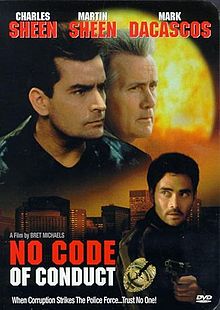
A Movie A Day #183: No Code of Conduct (1998, directed by David Lee…sorry, Bret Michaels)


From the strange period of time in which Charlie Sheen wanted people to call him Charles, comes this generic action movie.
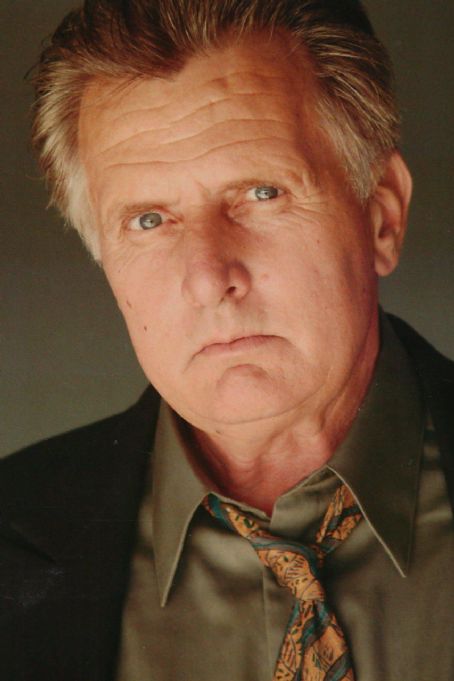
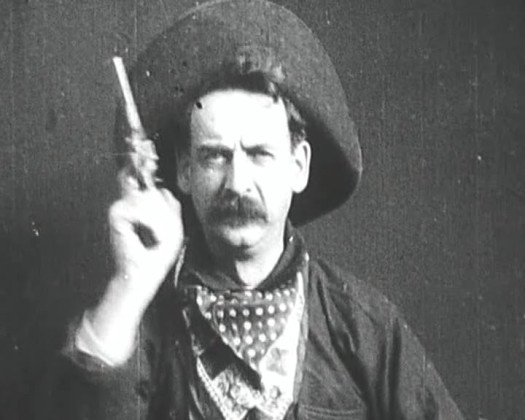
Detective Jake Peterson (Charles Sheen) is a loser.  Even though his father (Martin Sheen) is the chief of police, Jake is so bad at his job that he has been assigned to work in the evidence locker.  His wife (Meredith Salenger) is always yelling at him for being a neglectful father.  The only person who likes Jake is his partner (Mark Dascasos, who is wasted) and partner’s never live for long in cop movies.  When Jake discovers that evil businessman Julian Disanto (Ron Masak) is plotting to smuggle Mexican heroin into Arizona, he has a chance for redemption but it will not be easy because Disanto is not only working with a corrupt DEA agent (Paul Gleason, of course) but he also has a band of psychotic henchmen.

This predictable and not very exciting action film is interesting for two reasons.  First of all, it was directed by the poor man’s David Lee Roth, Bret Michaels.  At the time, the future star of Rock of Love and Celebrity Apprentice winner was best known for being the lead singer of the most boring hair metal band of the 80s, Poison.  It is always interesting when someone who found fame as something other than a filmmaker tries his hand at directing.  Sometimes, the results can be surprisingly good and sometimes, the result is No Code For Conduct.  Michaels and Sheen (who co-wrote the script) may have been trying to pull off an homage to the action films of their youth but No Code For Conduct has more in common with the work of Uwe Boll than the work of William Friedkin.

The other interesting thing about No Code for Conduct is that, even though “Charles” and Martin are top-billed, it is actually a four Sheen/Estevez movie.  Renee Estevez briefly appears as a cop while Martin’s brother, Joe Estevez, is in charge of the police motor pool.  If No Code For Conduct is an act-off between the members of the Sheen/Estevez clan, Joe emerges as the clear winner.  Charlie does his wide-eyed intense thing.  Martin goes through the movie with a “the shit I do for my son” air of resignation.  Renee is not around long enough to make an impression.  But Joe?

Joe Estevez is the man!

Joe Estevez, the only Estevez that matters

Cleaning Out the DVR Pt 13: ALL-STAR WESTERN ROUNDUP!


gary loggins's avatarcracked rear viewer

Major League Baseball’s All-Star Game is tomorrow night, and in honor of that All-American pastime I’ve corralled an All-Star lineup of (mostly) All-American Westerns filled of blazing six-guns, galloping horses, barroom brawls, sexy saloon gals, and wide-open spaces. Hot damn, that DVR sure enough gets filled up mighty fast! Saddle up and enjoy these capsule looks at one of my favorite genres, the Western:

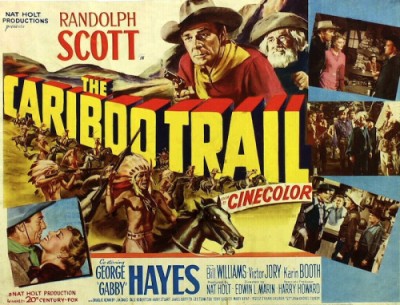
THE CARIBOO TRAIL (20th Century-Fox, 1950; D: Edwin L. Marin) – Randolph Scott   rides tall in the saddle driving his cattle to Vancouver gold rush country in this exciting oater filled with stampedes, Indian attacks, bad hombres, shoot outs, and fisticuffs. There’s a pretty saloon keeper (Karin Booth), a mean town boss (Victor Jory), and Scott’s bitter ex-pardner (Bill Williams), who had to have his arm amputated along the trail. Scenic Colorado stands in for Canada’s Great Northwest, shot in gorgeous Cinecolor by DP Fred Jackman Jr. Look for young…

View original post 944 more words