Back to School Part II #35: One Eight Seven (dir by Kevin Reynolds)


one_eight_seven_ver1

I’m writing this review from memory so you’re going to have to bear with me.  187 is one of those films that seems to show up on late night cable constantly, which is how I saw it.  I probably should rewatch it for this review but … no.  I don’t want to have to sit through it again.

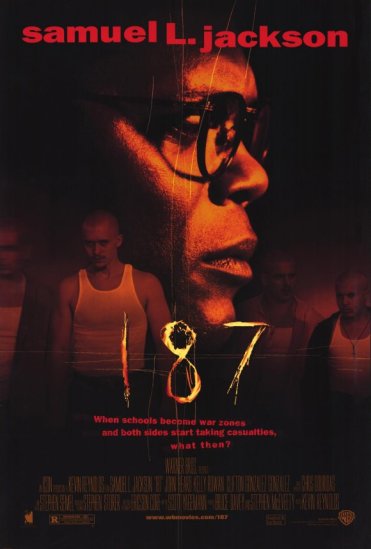
See, here’s the thing with 187.  It’s a film where Samuel L. Jackson plays a high school science teacher and, just by definition, that should make it the greatest film ever and yet it isn’t.

Originally, Jackson’s working in New York but then he ends up failing one of his students (played by Method Man).  Method Man ends up giving Jackson a textbook on which he has written 187 on every single page.  Jackson immediately realizes that 187 is the name of the movie that he’s in.  “Always good to meet a fan,” he thinks but then suddenly, it dawns on him that 187 is also police code for homicide!  Jackson asks the school administration for help.  They ignore him (probably because everyone knows that Samuel L. Jackson is too much of a badass to be scared by some numbers in a textbook) and he ends up getting stabbed several times in the back.

Agck!

We jump forward 15 months.  Jackson has recovered from nearly being killed and he’s still determined to teach.  He wants to make a difference!  But he’s decided that New York kids are too homicidal so he transfers to a school in Los Angeles.  Surprise!  It turns out that students in Los Angeles are just as dangerous as the ones in New York.  During his first day as a substitute teacher, Jackson is writing his name on a chalk board.  Someone throws a crumpled ball of paper at him.  Jackson flinches as it hits his back.

FLASHBACK TIME!

Now, here’s the thing: the idea of Samuel L. Jackson teaching in an inner city high school and taking on a bunch of gang members sounds totally kickass.  And you spend this entire two-hour movie waiting for Samuel L. Jackson to have one of those wonderful Samuel L. Jackson moments when he fixes someone with that powerful glare and suddenly speaks in the voice of angry and vengeful God.  You keep waiting but, with the exception of a few moments, it never seems to happen.

I mean, don’t get me wrong.  I wasn’t expecting Jackson to say, “I’m sick of these motherfucking gangstas in this motherfucking classroom!”  It would have been great if he had said that but, after a few minutes of watching the movie, I realized that he probably wouldn’t.  187 is obviously meant to be a serious movie about America’s educational crisis.  Watching it, you get the feeling that 187‘s director, Kevin “I know Kevin Costner” Reynolds, woke up every morning and said, “I am making the most important film ever today!”

But whatever good intentions that the filmmakers may have had, it’s no excuse for totally wasting Samuel L. Jackson.  When you’ve got a powerful actor like Samuel L. Jackson, why do you waste him in such a thinly written role?  When you finally do allow him to do something big and Samuel L. Jackson-like, why do you waste so much dramatic potential by having him do almost all of it off-screen?  Jackson finally does get a great Samuel L. Jackson moment towards the end of the film but that’s just because there’s a big plot twist that doesn’t make any sense.  The end of 187 reminds the viewer that an ironic ending has to be earned.  It just can’t be slapped onto the film.

I mean, I don’t want to toss out any spoilers because, for all I know, 187 is going to be on Cinemax tonight.  If you’re up at 3 in the morning, you might end up watching it and God knows, I don’t want to be accused of giving away the ending.   But let me ask you this — if you’ve finally captured someone who you’ve spent an entire two-hour film trying to kill, would you then suddenly decide to play a game of Russian roulette?

Anyway, 187 should be avoided because it totally wastes Samuel L. Jackson and that’s kind of unforgivable.
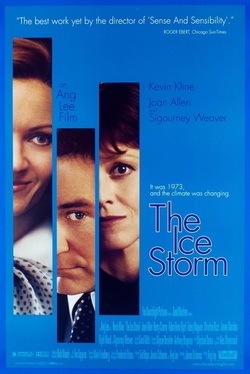
Back to School Part II #34: The Ice Storm (dir by Ang Lee)


the-ice-storm

The 1997 film The Ice Storm is kind of a schizophrenic film, which makes sense since it’s set in 1973 and, just from what I’ve seen in the movies, it appears that the early 70s were kind of a schizophrenic time.

It’s a film that deals with two sets of people who all live in an upper class Connecticut community.  One part of the film deals with parents who are freaking out about suddenly being adults.  The other part of the film deals with the children, most of whom seem destined to make the same mistakes as their parents.  It’s a film that is occasionally bracingly realistic and relatable, one that reminds us that being directionless in the 70s isn’t necessarily that different from being directionless in 2016.  At other times, the film feels a bit too studied for its own good.  This is one of those films that features a Tobey Maguire voice-over and, as good an actor as Maguire has always been, he’s always at his worse when reciting a pseudo-profound voice over.  And then there are other times when the film feels a bit too cartoonish for its own good.  Elijah Wood’s a stoner.  Sigourney Weaver walks around with a bullwhip.  David Krumholtz shows up as a character named Francis Davenport.

Fortunately, the film is directed by Ang Lee and Ang Lee is probably one of the few filmmakers who can overcome tonal inconsistency.  Lee is so good with actors and is such a good storyteller that even his lesser films are usually worth watching.  The Ice Storm would just be another silly sin-in-the-suburbs film if it had been made by any director other than Ang Lee.

The main adult in the film is Ben Hood (Kevin Kline).  Ben is married to Elena (Joan Allen) but he’s having an affair with his neighbor, Janey (Sigourney Weaver).  Elena may be upset when she finds out about the affair but she’s still willing to accompany her husband to a key party.  A key party was a 70s ritual in which husbands would throw their car keys into a big punch bowl and then the wives would randomly pick a key and have sex with the owner.  Basically, anytime a TV show or a movie takes place in the suburbs during the 70s, there has to be at least one key party.

And The Ice Storm‘s key party is kind of fun to watch.  Kevin Kline and Joan Allen both give really good performances and Ben is such a loser that it’s fun to watch him freak out when Janey gets a key other than this own.  Elena, meanwhile, ends up going off with Janey’s husband (Jamey Sheridan, pretty much looking the same in this 1997 film as he did in Spotlight and Sully) and they share a really good scene together, one that reveals that none of the film’s adults are really as mature or liberated as they claim to be.

While the adults attempt to play, their children attempt to find some sort of meaning to their empty existence.  Ben and Elena’s daughter, Wendy (Christina Ricci), wears a Richard Nixon mask and enjoys sexually teasing her classmates, especially Janey’s youngest son, Sandy (Adam Hann-Byrd).  Ben and Elena’s oldest son, Paul (Tobey Maguire) is in New York, hoping to lose his virginity to Libbits (Katie Holmes) despite the fact that Libbets is far more interested in his boarding school roommate, Francis Davenport (David Krumholtz).  Paul also compares his family to the Fantastic Four so, assuming Paul survived both the 70s and 80s, he’s probably still living in Connecticut and telling everyone who disappointed he was with last year’s film.

And, of course, there’s Mickey (Elijah Wood).  Mickey is Janey’s oldest son and he’s permanently spaced out.  When the ice storm of the title occurs, Mickey is the one who decides to wander around outside and appreciate the beauty of nature’s remorseless wrath.

Needless to say, the ice storm is also a really obvious metaphor for the way all of these very unhappy (but very prosperous) characters tend to view and treat each other.  Despite all the attempts to pretend otherwise, everyone has a frozen soul.  Nobody’s capable of maintaining any sort of real emotional connection.  Of course, someone dies and everyone’s forced to take a look at the sad reality of their lives and the film ends with a sudden and spontaneous display of actual human emotion.  It’s one of those ideas that probably works better as a literary conceit than a cinematic one.

That said, The Ice Storm is flawed but very watchable.  I enjoyed it, even if it did occasionally seem to be trying way too hard.  It’s well-acted and, if nothing else, I enjoyed getting to see all of the amazingly tacky clothes and the interiors of all those big houses.  These people love their wide lapels and their shag carpeting.  The Ice Storm is not Ang Lee’s best but it’s still good enough.

Music Video of the Day: Short Skirt/Long Jacket by Cake (2001, dir. John McCrea)


Sometimes I wind up on a music video that there really isn’t much to say about. This is one of them.

It’s a very simple idea. Just round up a bunch of different people to see how the react to the song. Of course, that’s a little oversimplifying things. The title of the song itself is a contradiction. You’ll notice that several times they put two different opinions of the song side-by-side that are opposites of each other. The best example is at the end when the German tourist gives some pointers, but generally likes the song. Then it cuts to the lady who thinks Cake is going to be a one-hit wonder. You’ll notice that kind of juxtaposition throughout the video.

According to Wikipedia, it was felt that the music video wouldn’t hold up over multiple viewings. That’s why they went and shot one in New York, Mexico, and Toronto. I could only find the New York and Canadian ones, which I have included below.

Both the original and New York ones were directed by John McCrea, who is the lead singer of the band. He directed a few other ones for his band.

The Mexican one was directed by Alejandro Romero who apparently used a fake name called los Hermanos Ponderosa that is also used by director Gustavo Hernandez. Jo Ann Thrailkill produced that version of the music video. She has produced about 130 music videos. Wikipedia also adds that it was edited by Alejandro Davalos Cantu.

Enjoy!

Back to School Part II #33: No One Would Tell (dir by Noel Nosseck)


no_one_would_tell

Do you remember when Chris Brown performed The Man In The Mirror at the 2010 BET Awards?  It was during a tribute to Michael Jackson and Brown broke down crying while singing the song.  Afterwards, he accepted an award and he said, “I let you all down before, but I won’t do it again.  I promise you.”

This, of course, was about a year after Brown had pled guilty to physically abusing Rihanna.  I remember being on twitter during Brown’s performance and seeing literally thousands of tweets from people talking about how brave Chris Brown was and how amazing his performance had been.  Chris Brown was looking at the man in the mirror and asking him to change his ways.  Chris Brown was promising not to let anyone else down by nearly killing any future girlfriends.  A lot of people on twitter claimed this was amazing.  I thought it was disgusting and I tweeted out my opinion.  I really didn’t give a fuck if Chris Brown was asking the man in the mirror to change his ways.  The man in the mirror was (and is) an abusive asshole.  The man in the mirror beats women.  The man in the mirror is not capable of changing his ways.  “FUCK THE MAN IN THE MIRROR!” I tweeted.

And, oh my God, the reaction my little twitter rant inspired.  What was especially disturbing was that the majority of people who tweeted me in Brown’s defense were other women.  Yes, they all agreed, Chris Brown had beat Rihanna but he admitted what he had done, he was asking the man in the mirror to change his ways, and hey, Rihanna probably deserved it.

My favorite excuse — and this was used by quite a few of Brown’s defenders — was this: “Only God can judge Chris Brown.”  Well, you know what?  I asked God and he says Chris Brown’s an abusive asshole.

I’m tempted to say that it amazes me that Chris Brown still has fans but actually, it doesn’t.  Sadly, when it comes to a celebrity, people are willing to make excuses for almost anything.  If you ask most people, they’ll say that they’re against domestic abuse and they think abusers should suffer the worst punishment imaginable.  But when the abuser is someone who they know (or, in the case of a celebrity like Chris Brown, someone who they feel they know), the excuses start.  The equivocations are heard.  The blame is assigned to everyone but the abuser.  We start hearing bullshit about how people make mistakes and only God can judge.

In short, people are willing to talk but when it matters, they rarely act.

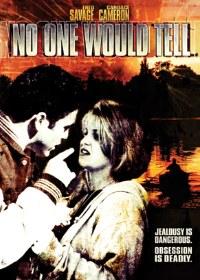
That’s also the theme of a powerful and sad movie called No One Would Tell.  No One Would Tell was originally made for television in 1996 and it still shows up fairly regularly on Lifetime.  Though the names and certain details have been changed, it’s based on a true story.  In fact, the film feels like it’s based on several true stories.  The plot of No One Would Tell is one that has occurred and continues to occur on far too regular of a basis.

Stacy Collins (played by Candace Cameron, before she added the Bure to her name) is a 16 year-old high school student.  She’s quiet, shy, and insecure.  When she first starts to date a popular jock named Bobby Tennison (Fred Savage), it seems like a dream come true.  But soon, Bobby starts to show another side.  He’s controlling and possessive.  He grabs her wrist hard enough to leave bruises.  He shoves her into a wall when they have an argument.  When she wears a skirt that he thinks is too short, he grabs her in the school hallway and demands that she change immediately.  When she isn’t home to answer his calls, he assumes that she most be cheating on him.  And, when she finally breaks up with him, he kills her.

What’s infuriating is that, throughout the film, Bobby’s abuse is witnessed by all of his and Stacy’s friends.  Everyone sees him push her.  Everyone sees the bruises.  Everyone knows that Bobby is unstable and that Stacy is afraid of him.  And yet, nobody says a word.  Nobody does a thing.  Instead, they just make excuses for Bobby’s behavior.  Some of them even blame Stacy.  No one is willing to get involved and it eventually costs Stacy her life.

For a TV movie from the mid-90s, No One Would Tell holds up surprisingly well.  Admittedly, Fred Savage overacts in the role of Bobby (and maybe it would have been better if the role had been played by Eric Balfour, who appears as Bobby’s best friend) but Candace Cameron does a perfect job as the tragic Stacy, capturing both her insecurity and her vulnerability.  Some of the film’s best moments are the ones shares by Cameron and Michelle Phillips.  In those scenes, we see how Stacy learned how to make excuses for Bobby’s behavior from watching the way that her mother made excuses for the men who similarly abused her.  No One Would Tell is a powerful film, one that offers an unflinching look at abuse and one that dares to demand that its audience take a stand.

No One Would Tell is a film that should be watched by anyone who thinks that the man in the mirror can change his ways.

“Glitterbomb” Is Explosive — Time Will Tell If It’s Glittery


Ryan C. (fourcolorapocalypse)'s avatarTrash Film Guru

5421875-01a

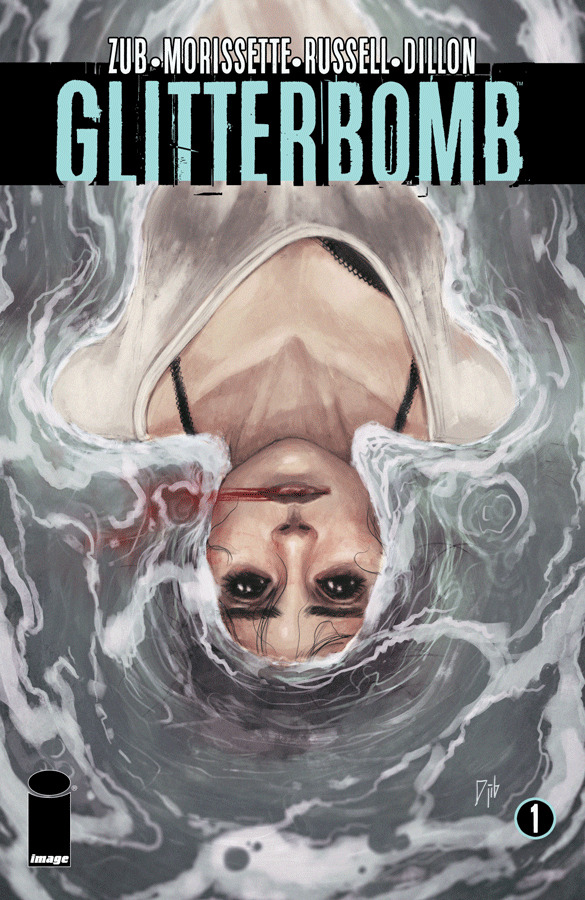
Truth be told, I almost passed on this one when I saw it on the new release shelves last week. Image Comics first issues are a dime a dozen these days, as anyone can tell you, and while I’m marginally familiar with the work of writer Jim Zub, artist Djibril Morissette Pham is a name that’s entirely new to me. It was the pull quote from former Vertigo head honcho Karen Berger on the back cover of Glitterbomb #1 that convinced me to give it a whirl — after all, if it’s good enough for Ms. Berger, it should be good enough for me, right? Well, I’m glad I took her advice, because this book is considerably more than “good enough.”

Hollywood is always a target ripe for commentary of the seething and hard-hitting variety, vacuous wasteland of the talentless and over-privileged that it is, and Zub’s aim here appears…

View original post 540 more words

A Cat’s Perspective On The Fifty Shades Darker Teaser


OLYMPUS DIGITAL CAMERA

Meh!  Humans are weird!  Not only do they have trailers for movies but they also have teasers for trailers!  They need to be more like me — sleep, eat, and learn to love the ennui!

Humans are also weird because they read books like The Fifty Shades trilogy and spend all their time talking about how bad they are.  The flame-haired one even threw her copy of Fifty Shades of Grey across the living room once and totally woke me up!  (Don’t worry, I was able to get back to sleep … eventually.)  But then after hating the book, they get all excited about the movie and then they get all upset when the movie turns out to suck too!  I ate a spider once and it tasted terrible so you know what?  I stopped eating spiders.  If I was a human, I guess I would think, “Spiders are yucky!  Let’s go eat a few while watching a movie about them!”  Meh!

There’s a new Fifty Shades movie coming out and it’s called Fifty Shades Darker! It’s based on another book that the flame-haired one threw across the living room but she’s still planning on seeing it!  It’s such a big deal that instead of just releasing a trailer, the humans are releasing a teaser and then a trailer!  If they make another Fifty Shades movie, maybe they can release a teaser for the teaser of the trailer!

Someday, maybe they’ll stop making movies all together and they’ll just make teasers for trailers of pretend movies.  People will watch the teaser and say, “This is going to be a great trailer!”  I hope that happens because if there’s no more movies that means even less to distract from feeding the kitty!

Here’s the teaser for Fifty Shades Darker!  The trailer’s coming out tomorrow and the flame-haired one will probably share it because the kitty is planning on sleeping through Wednesday.  Meh!

Artist Profile: John McDermott (1919–1977)


Born in Pueblo, Colorado, John McDermott was a self-taught illustrator who started his career at Walt Disney Studios, where he was an effects animator on Pinocchio and Fantasia.  In 1942, McDermott enlisted in the U.S. Marines and served as a combat artist.  He later described World War II as being his art education.  After the war, he worked as a freelance illustrator and his work appeared on the covers of several pulp magazines and novels.  Under the name J.P. Ryan, he also worked as a writer.  His experiences at Disney inspired his 1971 novel, The Rat Factory.

The first two illustrations below are examples of the work he did while in the Marines.  The rest are from his career in the pulps:

0-buddy0123blackmail-incboyage-to-the-deepcome-back-for-moredeadlockdeath-of-a-citizenmy-dead-wifethe-body-snatchers

In Case You Missed It…


gary loggins's avatarcracked rear viewer

toni-basil

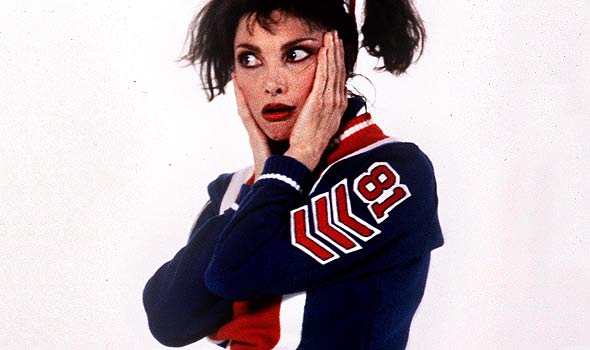
Remember Toni Basil? She had a mega-hit record back in the 80’s with the infectious pop song “Mickey”. The multi-talented Miss Basil’s been around forever, known for her choreography on TV’s SHINDIG, the films THE TAMI SHOW and The Monkees’ HEAD (where she shared the spotlight with Davy Jones). She choreographed two David Bowie tours (Diamond Dogs and Glass Spider), directed videos with Talking Heads’ David Byrne (“Once in a Lifetime”), and has appeared as an actress in VILLAGE OF THE GIANTS, PAJAMA PARTY, EASY RIDER, and FIVE EASY PIECES, among others.

Recently the 72 year old, who co-founded the street dance group The Lockers way back in 1971, strutted her stuff at a Los Angeles dance workshop, and the crowd of young kids went nuts! The video has gone viral and in case you missed it, I’d like to share it with you now:

Yeah! You’ve still got the…

View original post 23 more words

Music Video of the Day: Silent All These Years by Tori Amos (1991, dir. Cindy Palmano)


Funny enough–I am pretty much at a loss for words to talk about this music video even though I’ve been a big fan of Tori Amos for more than decade and a half at least. You have the child that emerges from behind the piano to connect her childhood to her adulthood, which represents the years of silence. Then we see the child run past her adult-self that is in a box–whether by choice or not. It doesn’t matter. There are other similar framings of Tori that emphasize height and face. You also have the inclusion of the old-lady outfit and breast implants. They are all pressures and conformity that she is walking away from with this song, the album, and literally by getting out of the box in the music video. It’s clever to have her stop lip-syncing at the part of the song where you would do that if you were going to do it anywhere. Then it ends with an uncomfortably long shot of Tori’s face where she looks like she is going to tear-up. There are some other things going on such as the innocent child popping in and chasing her during the video at the right times lyric-wise. You could do more analysis of this music video if you wanted to.

Considering this was Tori’s debut solo album, you would think this would be the first song on that album, but it isn’t. It’s the third one after Crucify and Girl. It all builds to the last song on the album about when she was raped, which is sung a capppella. The music videos seem to have started with this song, then were followed by Winter before getting to Crucify.

It’s a powerful music video, but it’s also a little misleading. I can’t recall the program where I saw it. It was probably a Behind The Music type thing. Regardless, I remember Tori saying that they started off trying to sell her like she was the new Carole King. The girl and the piano thing, which is exactly how she is shown in this music video at the beginning.

It’s funny to think of that in retrospect seeing as I remember being introduced to Tori Amos via the video for Spark. You know, the one where she is bound, blindfolded, and left with rats in the woods. I remember when I fell in love with her music. It was with her album of covers called Strange Little Girls. That’s the one where she took Eminem’s ’97 Bonnie and Clyde and made it particularly disturbing.

All in all, the music video is well-made, and a decent introduction to Tori Amos. You have to start somewhere, and the song is there even if I don’t think the video quite captures the musician you are getting. Plus, take a look at Madonna’s video for her early song Burning Up. You’d swear they thought they were selling a solo female Duran Duran.

Cindy Palmano directed five music videos for Tori Amos. From what I can tell, she hasn’t done anything else in the area of film since that time. Wikipedia says she was a photographer at the time. She’s obviously still around since you can find stuff about her with a simple Google search.

George Tiffin worked as the cinematographer on the music video. He directed a couple of music videos for Morissey. He seems to have done some other work as well in film. He is related to the Fiennes family.