A Quickie Horror Review: Snowbeast (dir. by Herb Wallerstein)


Since I previously reviewed two classic horror films from Mario Bava, it now seems like the perfect time to watch a film from Herb Wallerstein, called Snowbeast.  Well, no, not really.  In fact, to be honest, Snowbeast seems to exist on a totally different planet from either Black Sabbath or Planet of the Vampires.  The two latter films are classics of cinema that should be seen by everyone, regardless of the season.  Snowbeast, on the other hand, is the epitome of the perfect movie to turn on for background noise.  Snowbeast is fun, unthreatening, likable, and ultimately rather forgettable.  But sometimes, especially when it comes to finding something safe but appropriate to watch during the Halloween season, that is exactly what’s needed.

Snowbeast was originally made in 1977 and wow, does it show.  According to Wikipedia (see, I do to research my claims occasionally), Snowbeast was originally a made-for-tv movie and it has retained a “cult following.”  Well, I don’t know if I quite see the film’s cult appeal though it’s certainly better than any 82-minute tv show has any right to be.  The film has also entered into the public domain, which, of course, means that it’s been released in a few thousand different Mill Creek box sets.  Last time I counted, I actually had four different box sets that featured Snowbeast.  So, if nothing else, I’ll always have Snowbeast.

(Incidentally, the version I watched came from the 50 Chilling Classics box set.  This is the same box set that featured Cathy’s Curse, The Alpha Incident, The Demons of Ludlow, and my beloved Drive-In Massacre.)

Snowbeast takes place at a ski resort.  An unseen monster is killing tourists.  The sheriff (Clint Walker) thinks the monster is a yeti.  Nobody believes him and the owner of the ski resort — Sylvia Sidney, who once starred in films directed by Josef Von Sternberg — is more interested in making money off of vacationers than in protecting the public safety.  Now, if this happened today, I’d imagine there would be an OccupySnowBeast demonstration or something.  However, since this film was made in the 70s, this instead just leads to Walker and Bo Svenson going off into the mountains to track down and kill the snowbeast.

Now, the plot of Snowbeast may sound a little familiar and that’s because it’s basically the exact same plot as Jaws except the water has been replaced with snow-capped mountains and the shark is now a Yeti.  But otherwise, it’s pretty much the exact same story, right down to the greedy businesspeople going, “Shut down the mountain!?  That’ll be bad for tourism!” and the film’s 3 heroes all giving each other knowing looks when the wrong bear is killed and paraded in front of the cheering townspeople.  (That said, I have to say that if you love spotting overreacting extras in crowd scenes, this is the film for you.)

So, Snowbeast doesn’t win any points for originality but I’m willing to cut it some slack.  Even though it’s a bit before my time, I’ll bet that Snowbeast wasn’t the only low-budget B-movie to rip off Jaws in the 70s and you don’t really watch a movie called Snowbeast for the plot anyway.  You watch a movie called Snowbeast because you’re looking for something silly that won’t require too much thought.  And that’s a perfect description of Snowbeast.  It’s a film that’s done well enough that you won’t hate yourself for watching but, at the same time, is so predictable that you can do about a hundred other things while it’s playing without running the risk of missing anything important.  It is literally a movie that you can start watching at any point after it’s started. 

Ironically enough, Snowbeast is actually more effective because it was made for television.  Yes, you don’t get the gore, sex, or profanity that you would typically expect from one of these films but it also means that you don’t get to see the killer Yeti except for one very brief shot.  Otherwise, the Snowbeast of the title is represented by point-of-view shots of the monster about to attack some unsuspecting skier.  As I’ve mentioned in other horror reviews, our imaginations will always come up with something scarier than even the most effective of special effects and Snowbeast‘s low budget origins force us to use our imagination more than the typical monster film would.  As well, the snowy setting is beautiful to look at and if you’re a fan of watching people ski (and ski and ski and ski) this is the film for you.  Seriously.
Review: Thantifaxath – Thantifaxath EP


Thantifaxath are a new black metal band out of Toronto. They released their debut ep this year in cassette format on Dark Descent Records, and I think you will like it.


10,000 Years of Failure / Violently Expanding Nothing

The amount of diversity they’ve managed to cram into a five and a half minute long song (excluding the introduction here merged) is pretty amazing. The track, and most of the ep really, isn’t so much moody as thematic. It’s got a sort of sci-fi horror vibe throughout, apparent right from the bass riff introduction, and the ample mingling of melody in between epic black metal explosions almost gives the song a plot line. Even the choice of album cover, Nicéphore Niépce’s La cour du domaine du Gras (supposedly the first photograph ever taken), resembles something of an extra-terrestrial sighting. If the track title is any indication, this was likely their intent, and they pull it off well. Outer space and black metal are an uncommon mix, and one usually attempted through an emphasis on slow-moving, vast atmospherics. Violently Expanding Nothing (the youtube label “Violently Expanding Emptiness” is wrong; I’m taking the track title from the actual packaging) is, in contrast, gritty and abrasive, and all the more effective because of it.


Freedom is Depression

Thantifaxath definitely lay down their best card first, but the album’s other two tracks (both under five minutes long) carry much of the same appeal. Freedom is Depression, peculiar title aside, continues to give me that sort of b-side horror flick vibe, especially with its low production atmospheric guitars. The main riff following the introduction calls to mind recent Enslaved, and that might be the only clear comparison I can make of this album to anything else in particular. It’s among the most unique black metal I’ve heard in a while, and it makes excellent use of relatively low production value to create an eery, unearthly vibe.

Keep an eye out for these guys. They’re brand new, and I suspect their best is yet to come.

What Horror Lisa Watched Last Night: The Curse of Degrassi


Last night, I watched the classic Degrassi 2008 Halloween special, The Curse of Degrassi.

Why Was I Watching It?

Last night, I was suffering from conflicting emotions.  I was depressed and angry over the fact that I’m probably going to have to go spend a few thousand dollars on a new laptop.  However, I was also all happy and hyper because, after spending a week far away in Houston, Jeff’s back!  So, I was like “Yay!” and “Boo hoo hoo” all at the same time and Jeff finally suggested that maybe it would help me get my mind off the boo hoo part if I watched something silly and stupid.  And, as usual, he was right!  Though, in its defense, Degrassi may often times be kinda silly but it’s rarely stupid.  Except when it is.  Anyway, The Curse of Degrassi is available for free viewing off of Uverse OnDemand, which is how I watched it last night.

What’s It About?

Okay, so like many years ago, there was this very special, two-part episode of Degrassi: The Next Generation in which bullied, picked-on Rick Murray (played by an excellent actor named Ephraim Ellis, and by the way, that’s Jeff’s last name too but they’re not related and believe me, I asked) was competing in some sort of high school quiz-like game show and he ended up getting a bunch of yellow paint and chicken feathers poured on him by school bully Spinner (Shane Kippel).  So, naturally, Rick went home, got a gun, and came back up to school and started shooting people until he himself eventually ended up getting shot and killed.  

Now, four years to the day after Rick’s death, a group of Degrassi students are all up at the school at night, getting things ready for the upcoming Harvest dance.  Group ringleader Holly J. Sinclair ends up getting possessed by Rick’s vengeful spirit and proceeds to kill off the entire cast.  And no, this is not a dream or one of those non-canon fantasy episodes.  Which is cool because, quite frankly, Holly J. annoys me…

What Worked?

To be honest, the entire 22 minute episode workedFor a Canadian teen show, this was actually pretty scary and had some fairly effective (in their own fun way) special effects.  Plus, as much as I complain about the character she plays., actress Charlotte Arnold does a pretty good job playing psychotic, possessed Holly J.  Plus, even among all the mayhem and death, the episode gets across a well-meant and sincere anti-bullying message and if you don’t get a little bit emotional when Rick says, “I’m dead, aren’t I?,” then you have no soul.  That’s right — you’re a freaking zombie.

(Though, at the same time, Rick Murray was kind of a disturbed guy who, let’s not forget, first appeared on the show as an obsessive, abusive stalker who put Terri in a coma when he pushed her down and she hit her head on a rock.  It was his abusive behavior that led to Rick becoming a pariah though Spinner, ultimately, took things too far. By the way, I always loved how Degrassi students all had names like Spinner.)

Plus, you get to see all the Degrassi kids die.

What Didn’t Work?

Seriously, it all worked.  In fact, I’m just going to say that this is the greatest thing ever to come out of Canada.  Okay, maybe not.  But still, I enjoyed it.

“OMG! Just like me!” moments

I always have a lot of “Oh my God!  Just like me!” moments whenever I watch any TV show or movie that features silly people falling victim to some unseen supernatural force.  Usually, they’re along the lines of, “WHAT!?  There’s a killer stalking the school and you’re going to stop to make out with your boyfriend in some dark, isolated room that only has one exit!?  OH MY GOD!  JUST LIKE ME!”  Anyway, I had quite a few of those while watching The Curse of Degrassi.  Though my biggest “Oh my God!  Just like me!” moment came when Holly J. screamed, “I’M HOLLY J. FREAKIN SINCLAIR!” as that’s the way I usually chose to introduce myself as well.

Lessons Learned:

The world can do without the Harvest Dance.  That, and be nice because otherwise, you might get possessed by Rick Murray.

Until next time, this is Lisa Marie Freakin Bowman saying, “Stay supple!”

6 More Horrific Trailers For October


As if October wasn’t already scary enough, my laptop is slowly dying and, with my luck, it probably won’t even return as a zombie.  Fortunately, it still has enough life in it for me to do at least one more edition of Lisa Marie’s Favorite Grindhouse and Exploitation Trailers.

1) The Curse of the Crimson Altar (1968)

This is apparently an old Hammer film.  I haven’t seen it but the image of a blue Barbara Steele seems to show up in just about every other horror movie guide.

2) Fangs of the Living Dead (1969)

If nothing else, this one has a great title.

3) Eye of the Cat (1969)

Three guesses why I love this trailer.

4) Mark of the Devil (1970)

Remove the art from The Witchfinder General and you probably end up with Mark of the Devil.

5) The Chilling (1989)

I actually have this on DVD but I haven’t watched it yet and this trailer doesn’t exactly inspire a whole lot of hope.  That said, I love how the narrator makes such an effort to sound enthusiastic.  Our next trailer will feature “Oscar nominee” Linda Blair as well…

6) Exorcist II: The Heretic (1977)

This is a good example of an accidental grindhouse film.  The producers and the director may have been going for something different but the end results are pretty much evident from the trailer. The best thing about this trailer is Ennio Morricone’s score.  (By the way, I would also suggest that all of you people going all cuckoo over the teaser trailer for David Fincher’s Girl With The Dragon Tattoo compare this relatively entertaining trailer with the actual film it was advertising.)

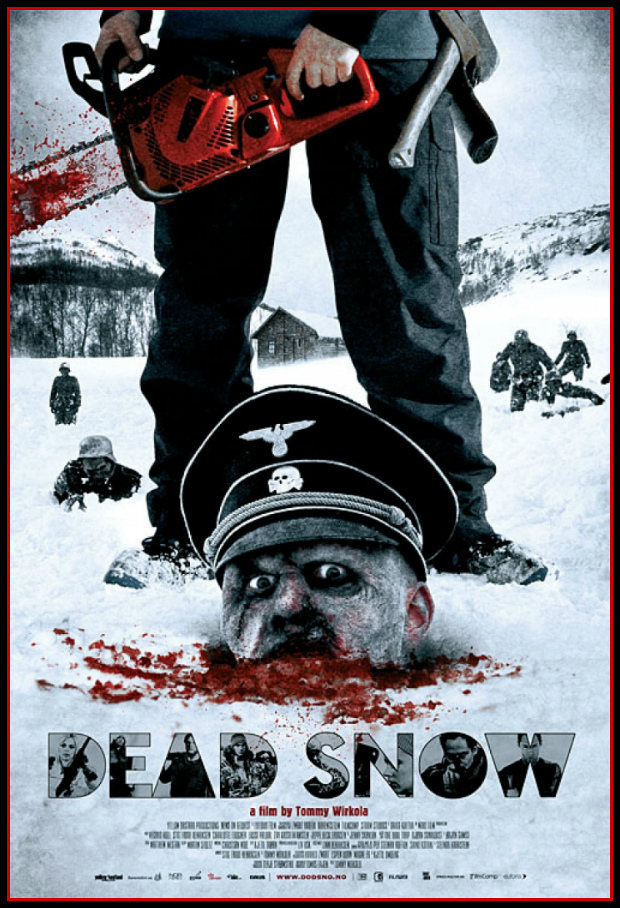
Quickie Horror Review: Dead Snow (dir. by Tommy Wirkola)


One thing about the zombie monster is that they’re pretty much a blank slate and anyone with an idea on how to use them can add their own spin to this undead staple in horror. Some have made zombies be undead Templar knights who hunted by sound. Some have even been made in combination with Egyptian mummies. There has even been zombies underwater fighting and trying to feed on sharks. In 2009, Norwegian Tommy Wirkola filmmaker took the zombie and combined it with that other icon of evil in entertainment, the Nazi. What he was able to create with this combo is the horror film Dead Snow.

The film begins with a lone woman running frantically through the snows somewhere in the mountain fjords of Norway with unknown figures chasing her. Like most horror films which begins like this her fate looks to be predetermined and how she finally buys it shows the audience that this is not going to be the usual zombie film as undead figures tear her apart and devour her while wearing the typical Nazi regalia. This gory start segues into the unfortunate group who will end up having to experience and deal with the sudden problem of WWII-era Nazis who had occupied Norway during the war and had ended up being buried (and presumed killed by the Norwegians near the end of the war) for decades in the snows of the Norwegian mountainside.

There’s really nothing too special about the seven students who decided to spend their Easter vacationing in the mountain cabin owned by the young woman killed earlier in the film. They’re not one-dimensional characters, but they’re also not the smartest tools in the shed as they make the usual mistakes young people make while staying at an isolated cabin high up in the mountain with a reputation for being haunted and cursed. The film’s director also co-wrote this script with screenwriter Stig Frode Henriksen and one could almost sense they were trying to emulate the group dynamics of the group in Edgar Wright’s instant zombie-comedy classic Shaun of the Dead. While Wirkola and Henriksen never reach the same level of creativity in their characters the actors playing them do a good enough job that we root for them to survive the siege of the suddenly hungry Nazi zombies outside their cabin.

Dead Snow does have something which raises the film from being dull and predictable into something very entertaining and thrilling through it’s many gory set-pieces. These scenes as the survivors try to fight their way and escape the Nazi zombies (or are they zombie Nazis) doesn’t skimp on the blood and gore. Wirkola may have known that the story of his film was very thin on plot with charactersa step or two above cardboard so decided to just let the grue fly. It’s here that Dead Snow suddenly becomes jet-fueled rollercoaster ride as bodies (both living and undead) get mutilated, decapitated, blasted, shot-up and everything in-between. The final stand-off with the final survivors and an increasing number of Nazi zombies makes this film worth watching.

Tommy Wirkola’s Dead Snow doesn’t bring too many new things to the zombie genre (Nazi zombies having been done decades earlier in films such as Shock Waves and Oasis of the Zombies), but he does add some dark humor and a healthy dose of over-the-top zombie mayhem that makes the film quite entertaining despite it’s flaws. Plus, how can one go wrong with picking something to watch that has Nazi zombies gallivanting their bloody way through Norwegian mountainsides with a hankering for Norwegian students.

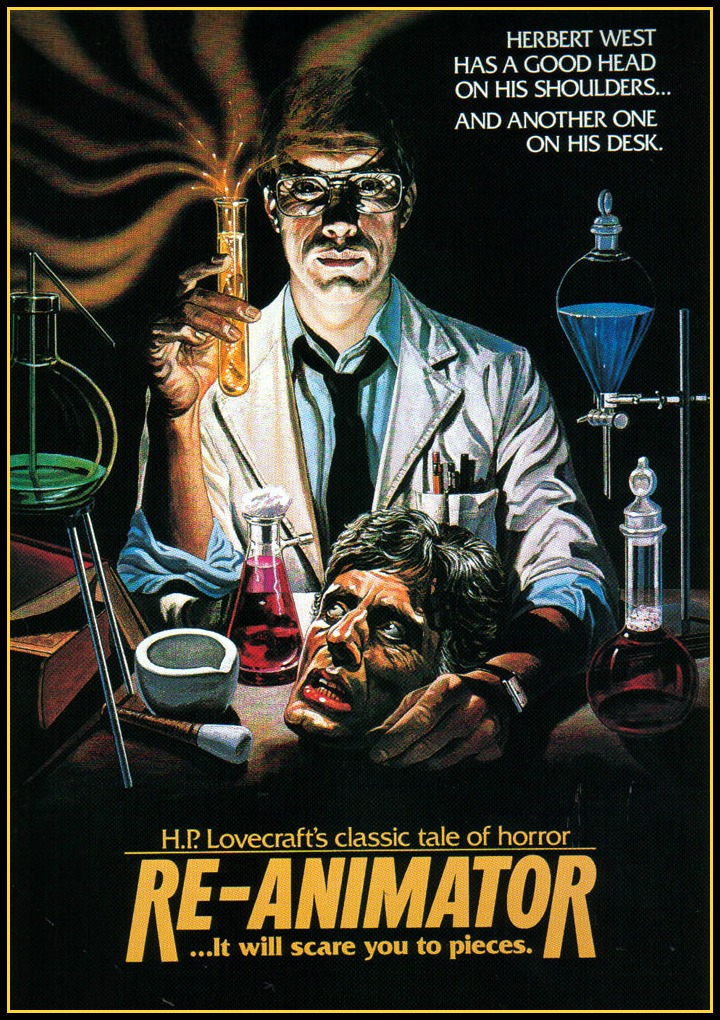
Quickie Review: Re-Animator (dir. by Stuart Gordon)


“Who’s going to believe a talking head? Get a job in a sideshow.” — Herbert West

When discussing horror films of the 1980s, the conversation almost always turns to whether one has seen a particular cult classic. One such film is Re-Animator, Stuart Gordon’s 1985 adaptation of a little-known H.P. Lovecraft short story originally serialized from 1921 to 1922. While the story itself isn’t considered one of Lovecraft’s best, it inspired Gordon to create his own grisly take on the classic “Frankenstein monster” tale—with a unique blend of horror, humor, and gore.

The film follows Herbert West, a young, promising medical student obsessed with bringing the dead back to life. After being expelled from a Swiss university for his unorthodox experiments, West relocates to Miskatonic University in Arkham, Massachusetts, to continue his research in secret. He soon gains an unlikely partner in Dan Cain, a fellow medical student and landlord, who discovers West’s glowing green reagent and the terrifying results it produces.

Re-Animator plays out much like an over-the-top EC comic from the 1950s and early ’60s, full of lurid visuals and melodramatic dialogue. It’s a pulp horror film with a sci-fi twist, reveling in slapstick gore as the zombie-like corpses injected with West’s reagent come violently back to life. Unlike the flesh-eating zombies popularized by George A. Romero, these reanimated corpses are unique in their behavior, making the film stand out from typical zombie fare.

If the blood and gore weren’t enough, Re-Animator etched its place in exploitation horror history with one of the most infamous scenes ever: Megan (played by Barbara Crampton) and the severed reanimated head of West’s nemesis (played by David Gale) in a tense and chaotic encounter. This scene remains one of the most widely discussed moments in horror film history.

Gordon’s attempt to create his own “Frankenstein movie” was a huge success within the horror community, leading to two sequels. Jeffrey Combs continued to portray Herbert West in the follow-ups, though they never quite reached the original’s cult status. Still, Re-Animator firmly put both Stuart Gordon and Jeffrey Combs on the horror map—and horror fans everywhere are thankful they did.

Horror Film Review: Black Sabbath (dir. by Mario Bava)


For my latest horror review, I will be reviewing another classic film from one of my favorite directors, Mario Bava.  Following the suggestion of my twitter friend Tom, I spent last night watching Bava’s 1963 classic Black Sabbath.

Starring Boris Karloff, Black Sabbath is a compilation film that’s made up of three different horror-themed stories.  Originally entitled Three Faces of Fear, Black Sabbath has been released in many different versions over the years.  Depending on which version you seen, the stories may be in a different order than in the order that Bava intended.  The version I watched was the original, uncut, Italian-language version that was released by Anchor Bay.  For those of you who want to truly experience the genius of Mario Bava, this is the version to see.

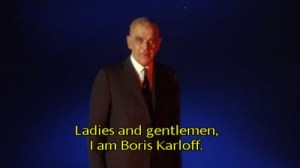
Black Sabbath begins with Boris Karloff playing himself, giving a deliberately over-the-top introduction and informing us that there could very well be vampires and werewolves sitting next to us in the theater.  Yes, it’s silly and yes, it’s campy but it’s also a lot of fun.  A lot of this is because these words are delivered by Karloff, an actor who could make even the silliest of dialogue sound important.  The other part is that, as silly as the introduction may be, it’s beautiful to look at.  Instead of going for the standard spooky narrator in a cobweb-filled library approach, Bava frames Karloff standing against a brilliant dark blue backdrop that establishes that this isn’t just your typical horror host … this is BORIS FREAKIN’ KARLOFF!

After Karloff’s introduction, we move on to the first of Black Sabbath’s three separate stories, The Telephone.

In The Telephone, Michele Mercier plays a Parisian prostitute who returns to her apartment after an evening out.  As she tries to change for bed, her bright red telephone rings.  Every time Mercier opens the phone, she hears a man’s voice taunting and threatening her.  Finally, the caller claims to be Frank, Mercier’s former pimp who has just escaped from prison.  The terrified Mercier calls her estranged lesbian lover (Lydia Alfonsi).  Alfonsi comes over to the basement to comfort Mercier.  However, what Mercier doesn’t realize is that it wasn’t Frank calling her.  It was Alfonsi, pretending to be Frank.  However, needless to say, there’s more twists to come before the night’s over.

Of the three segments, The Telephone is probably the least succesful if just because it has the most pedestrian plot.  At the same time, this segment also show just how good Bava was at creating tension even with so-so material.  Speaking as someone who has been stalked in the past, I can say that both Mercier and Bava perfectly captures the way that one seemingly simple intrusion on your privacy can leave you suddenly feeling very isolated and very alone.  Finally, even after the segment’s over, it’s impossible to forget the sight of that vibrantly red phone sitting like a lurking monster in that artfully drab apartment.

The Telephone is followed by probably the film’s most famous segment, The Wurdalak.

Based on a short story by Tolstoy, The Wurdalak opens with a Russian nobleman (played Italian exploitation mainstay Mark Damon) on a long trip through the Russian wilderness.  He comes across a headless corpse with a dagger plunged into its heart.  Damon takes the dagger as a morbid souvenir of his trip.

As night falls, Damon comes across a small cottage and asks the family inside for shelter.  Inside the cottage, Damon discovers a wall that is covered with daggers similar to the one he found earlier.  His hosts explain that the daggers belong to the family patriarch, Gorcha (Boris Karloff).  Gorcha left five days earlier to kill a wurdolak (or vampire, by any other name).  As the family waits for Gorcha to return, not knowing whether or not he himself is now a vampire, Damon finds himself falling in love with Gorcha’s daughter.  When Gorcha finally does return, it’s obvious that he’s not the same man he was when he originally left.

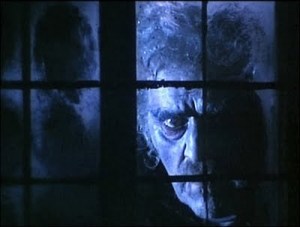
Of the three segments, The Wurdolak is probably the most obviously Bavaesque and a whole lot of the same images and themes would later turn up in Bava’s masterwork, Kill, Baby, Kill.  Everything, from the constantly howling wind to the sense of isolation to the well-meaning but ultimately impotent upper-class hero, is classic Bava.  Special mention should also be made of Boris Karloff’s performance here.  Because Karloff was best known for appearing in “monster” movies, he never gets enough recognition for being a pretty good actor.  His performance here, which is full of malice and threat, is just as menacing as his earlier appearance in the introduction was fun and campy.

The final segment of the film is entitled The Drop of Water.

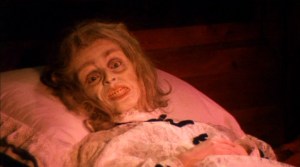
In many ways, The Drop of Water is the simplest segment of the film but for me, personally, it’s also the scariest.  In London, a nurse (Jacqueline Pierreux) is called to a large house to prepare a medium for burial.  While doing this. the nurse notices a large (and, quite frankly, kinda gaudy) ring on the medium’s finger.  The nurse steals the ring and returns to her own apartment.  As soon as she goes to her apartment, she finds herself haunted by increasingly ominous events: a buzzing fly refuses to leave her alone, the sound of water dripping echoes through the apartment, the lights go on and off, and — naturally — a mysterious figure suddenly appears in her bedroom.

Mixing the sense of growing paranoia that characterized The Telephone with Wurdolak’s sense of predestined, metaphysical doom, The Drop of Water is the perfect concluding chapter of Black Sabbath.  It also happened to scare the Hell out of me.  Along with Bava’s usual superb direction, this film was distinguished by some wonderfully creepy make-up work.  Seriously, once that mysterious figure reveals itself, you’ll wish it hadn’t.

I usually don’t enjoy compilation films because, too often, it seems that you’re lucky if you get just one above average story surrounded by a bunch of forgettable filler.  Far too often, the stories themselves don’t seem to go together.  Instead, they just appear to have been tossed together randomly with the weakest of possible connection.  Black Sabbath is an exception and that’s largely because of Mario Bava’s iconic direction.  The stories aren’t linked together by plot as much as their linked together by motif and theme.  Each story — from the emphasis on isolation to the creative use of color to suggest mood and menace — is linked by Bava’s style.  Boris Karloff may have been the name emphasized in the credits but the true star of Black Sabbath is Mario Bava.

The genius of Bava wasn’t in the originality of the stories he told but instead, in the new ways that he found to tell familiar stories.  Usually, I hate it when directors describe themselves as being about “style” as opposed to “substance.”  Too often, it seems like that’s just an excuse to not come up with an interesting story.  However, Bava is one of the few directors about whom the term “style over substance” can be used as a compliment.  Bava knew how to make style into art and he certainly did that in Black Sabbath.

Scenes I Love: Up


The passing of Steve Jobs has brought out condolences and praise for one of the most innovative and creative forces in technology, entertainment and how the world interacted in the digital age. One of the many things he has created and fostered was the animation studio we’ve grown to love and call Pixar. It’s difficult to fathom of anyone who doesn’t have at least one fond memory from watching a Pixar film. I have my favorite from several Pixar releases, but one that I really have enjoyed reliving over and over (sometimes with my brother who also loves the film) is the film Up from 2009. It’s from this cg animated film that I’ve chosen the latest “Scenes I Love” in honor of Steve Job.

I’m sure there’s many scenes other people love from this film. Whether it’s the great opening sequence that will bring the most cynical person to tears or scenes between crotchety, old Mr. Fredrickson and Wildlife Explorer Russell. I’m also sure that many would choose scenes involving their talking furry companion Dug. It’s the scene where Dug first meets up with Russell and Mr. Fredrickson which I love the best.

I would try and describe why I love this scene but I think watching it would be the best explanation why I love it so. The one below is a bonus and just shows why Dug is a favorite.


A Quickie Horror Review: Planet of the Vampires (dir. by Mario Bava)


Later tonight, I’m going to watch Mario Bava’s Black Sabbath but before I do, I want to take a few minutes to review another one of Bava’s films, 1965’s sci-fi/horror hybrid Planet of the Vampires.

Taking place in the far future, Planet of the Vampires begins with two space ships receiving a distress call from an unexplored planet.  While landing, the two ships are separated from each other.  As the Argos lands, its crew is possessed by an unknown force and suddenly start trying to kill each other.  Only the ship’s captain (Barry Sullivan, who gives a surprisingly good performance in a role that most actors would have just sleepwalked through) is able to resist and he manages to snap the rest of the crew out of their hypnotic state. 

Once the Argos lands, search parties are sent out to find the other ship.  They find themselves on a barren planet where the surface is obscured by a thick, multi-colored fog.  As they wander through the planet, it quickly becomes apparent that they aren’t alone.  The searchers may have left the ship as human but they return as something else all together.  It all leads up to a surprisingly bleak conclusion.

If the plot of Planet of the Vampires sounds familiar, that’s because it’s probably one of the most influential, if not widely known, films of all time.   The film has been imitated in several other, far more expensive films but few of them manage to capture Planet of the Vampires’ sense of isolation and impending doom.  With this film, Bava again showed that he was one of the few directors wh0 could accomplish so much with so little.  While this isn’t an actor’s film, fans of Italian horror will squeal with delight to see Ivan Rassimov pop up here in a small role.

I’ve mentioned Planet of the Vampires before on this site when I was giving 10 reasons why I hated AvatarTo me, Planet of the Vampires stands as proof that you don’t need a gigantic budget to make an effective horror (or sci-fi film).  In fact, often times, all a huge budget does is shut down the audience’s imagination and quite frankly, nothing on film will ever be as impressive as what the audience can imagine.  With Planet of the Vampires, all that Mario Bava had to create an alien world were two plastic rocks and a smoke machine.  Working without the crutch of CGI, Bava had to pull off most of the film’s special effects “in camera,” and he would later say that one of the benefits of all that smoke was that it helped to obscure just how low budget this film was.  In short, Bava was working under circumstances that James Cameron would refuse to even consider and yet Planet of the Vampires holds up better upon repeat viewings than Avatar ever will.  The low-budget forced Bava to emphasize atmosphere over effects.  Yes, this film has its share of gore (it’s an Italian horror film, after all) but ultimately, this is another example of a horror film that works because of what it doesn’t show.  This is a film that exploits your imagination, working its way into the darker corners of your consciousness.  Bava creates a palpable atmosphere of doom that makes Planet of the Vampires into a surprisingly effective film.

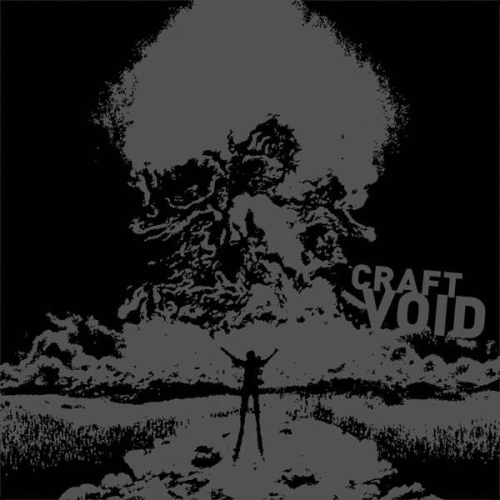
Review: Craft – Void


Here it is five days into October and I haven’t covered a black metal album yet. I ought to be ashamed. Allow me to belatedly kick off my favorite season in good proper satan-worshiping style.


Serpent Soul

Craft’s new album kicks ass. I might go on long analytic rants right and left about modern black metal hybrid bands standing at the forefront of innovative new metal today, but when it comes time to dig out the really sinister shit, tradition still carries the flag. Craft have spent the last ten years proving that corpse paint and spiked bracers still have a legitimate roll in black metal.

Void starts out by punching you in the nuts, then Mikael Nox gets about an inch from your face and compliments your tears with spittle while John Doe plants his foot on your chest and breaks out the tremolo. By the two minute mark they’ve finished chalking a pentagram around you and the ritual begins. If this transition strikes you initially as a disappointment, leaving the opening brutality behind too soon, just give it some time. As the three minute mark approaches, the tremolo guitar invokes a brief vision of awe and terror, soon to be lost in a chaotic haze. If you haven’t moved by now, you’ll probably find your intestines dangling from the ceiling beams.

The only real disappointment in the entire song is the fact that it ends.


The Ground Surrenders

It’s not that Serpent Soul, or any other track on the album for that matter, is aesthetically above standard. As song writers they follow the black metal status quo, and if you don’t like this genre of music they’re not the sort of band you’re likely to make an exception for. Rather, what makes Void as a whole so great is all in the details of delivery. The vocals, guitars, and drums all merge perfectly to create a single solid sound in which nothing seems out of place. It’s all so tight that every dynamic shift delivers; the impact never falls short of their intentions.


Succumb to Sin

Granted plenty of black metal bands have preferred moderate tempos, it’s one of Craft’s great consistencies on Void to always take maximum advantage of the sort of heaviness a slow and steady plod can offer. It’s almost as if the tension of each track is measured, with the opening brutality as the measuring stick. Any time it cuts back you’re practically guaranteed a return. Whatever’s built up is always properly released, whether it be in the form of the explosion at the end of The Ground Surrenders or through the more subtle bursts employed on Succumb to Sin. Add a quick guitar solo at the end to let out the leftovers, and here you’ve got an exceptionally well-formed song.

I’ve talked this album up quite a lot, but let me be clear as to why. It’s not great in any of the ways I usually get fired up about; it’s pretty plain and simple black metal. Like Total Soul Rape and Terror Propaganda (I never actually knew Fuck the Universe existed until I started writing this), it will probably be a fall staple for me when I’m itching for good black metal with no trappings, but the only thing I’m really going to remember is that I liked it. I’ll forget the intricacies of the songs that I’ve picked up on while writing this pretty quickly. But what really struck me when I paid attention to it (and what might subconsciously continue to draw me to their first two albums) is not ingenuity but the quality of their musicianship. This album shines because every member of the band does the right things at the right times every time, feeding off of each other’s performance to create a really tight, unified sound. It’s just really well crafted music, no pun intended.